Pedestrian Modular Glass Bridge Philadelphia, PA
Design: Massive Form
Location: Philadelphia, Pennsylvania, USA
Glass Bridge: A new vision for sustainable and transparent design
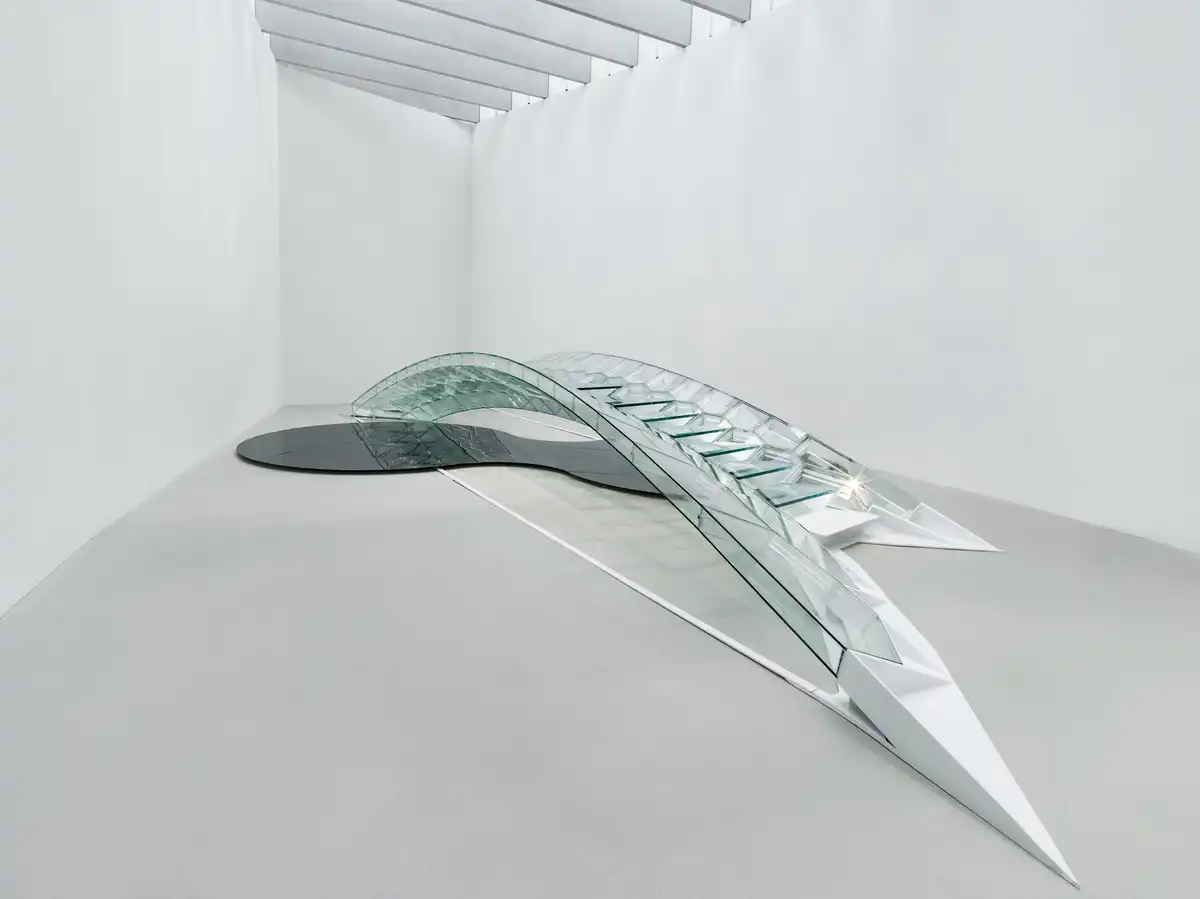
Digital images courtesy of The Corning Museum of Glass, Corning, NY, USA.
October 24, 2025
Philadelphia, Pennsylvania (USA) – Pedestrian Modular Glass Bridge, created by Massive Form, led by Dr. Masoud Akbarzadeh. The project has recently received a Special Mention at the Architizer Vision Awards 2025 for its bold rethinking of how glass can be used in architecture.
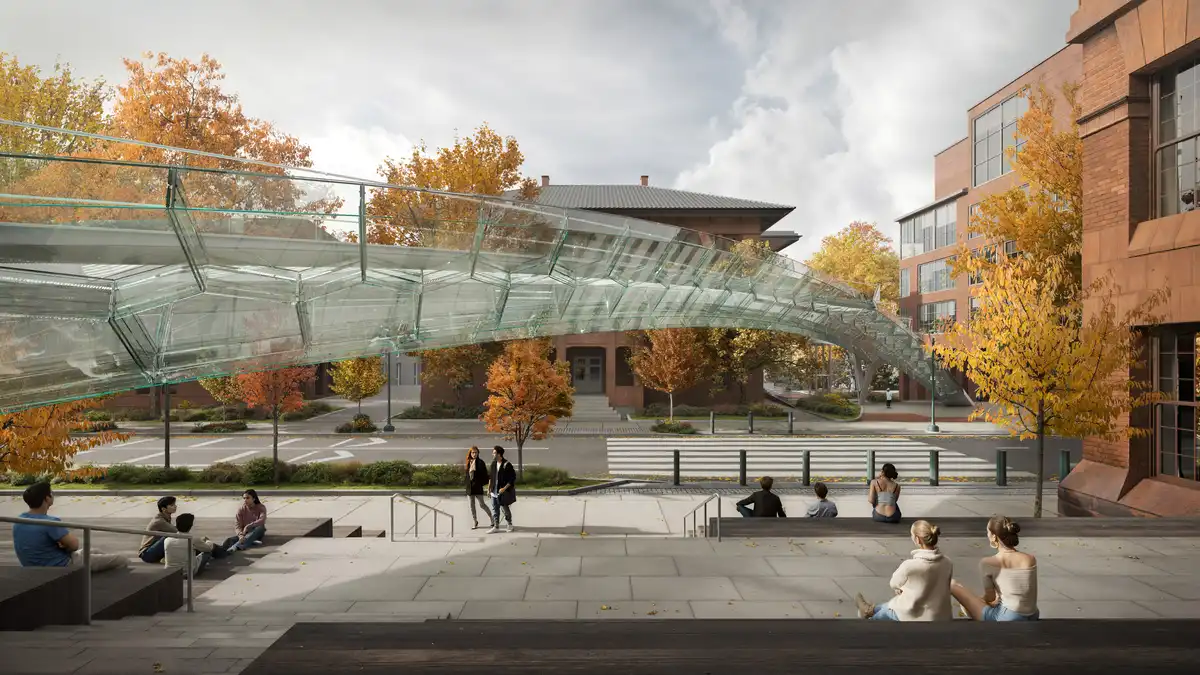
Visualization by Fortes Vision. Image Courtesy of Masoud Akbarzadeh and Massive Form__1
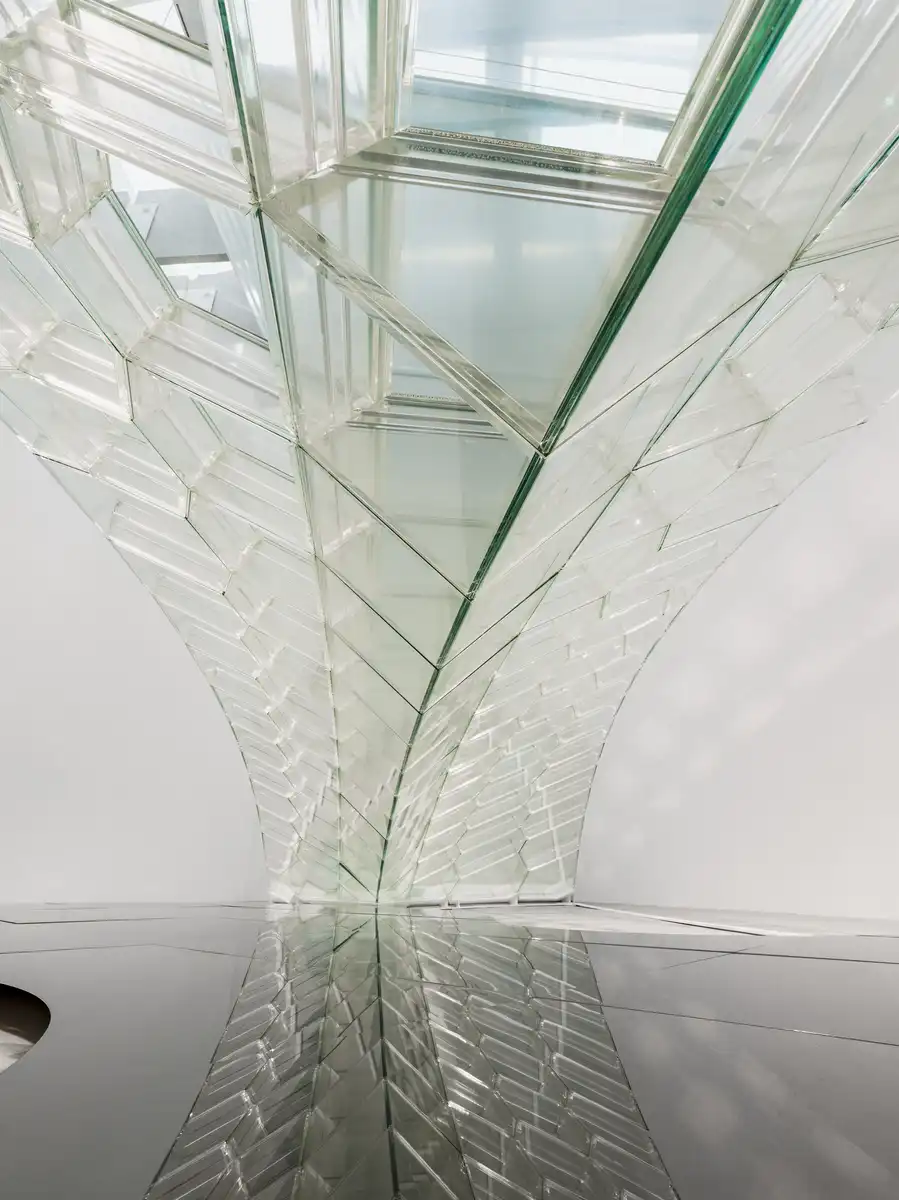
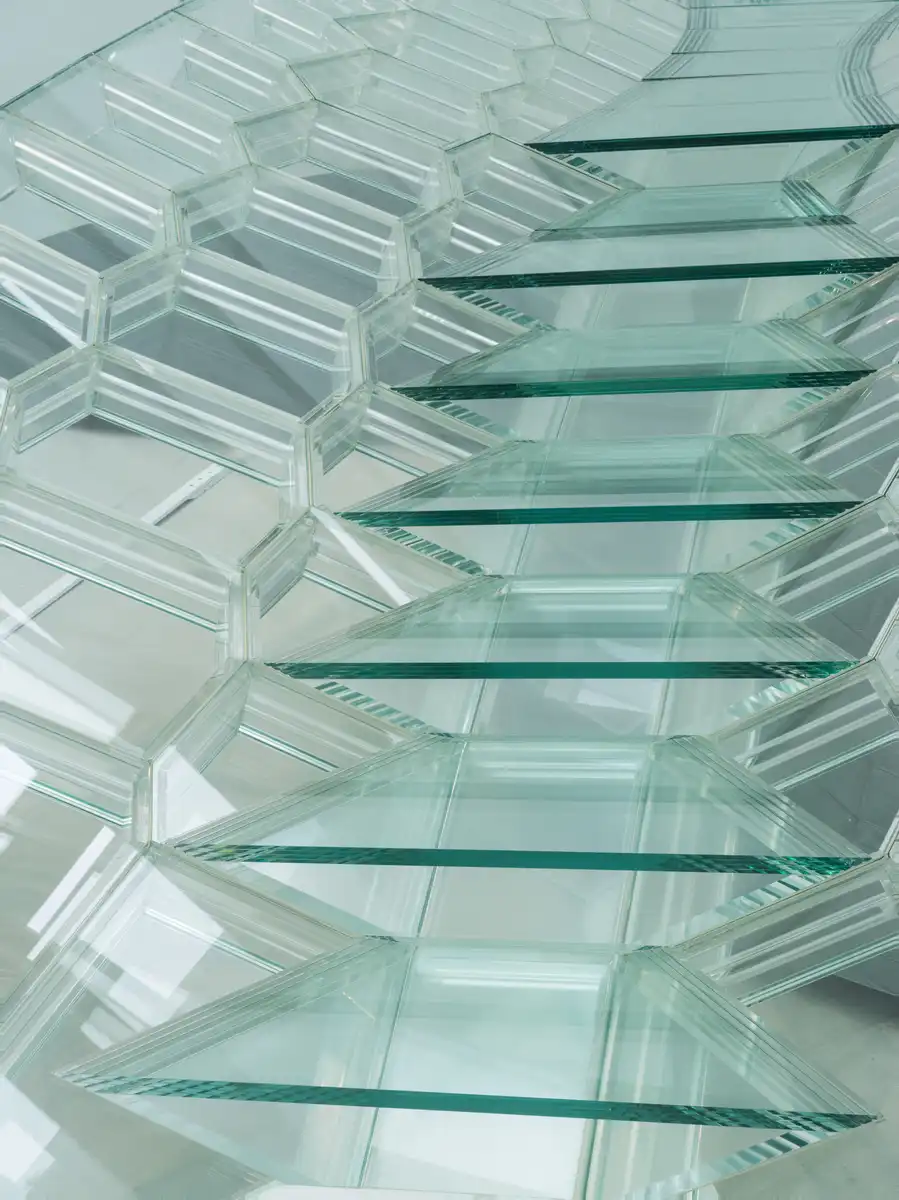
The project is based on a 10-meter experimental glass structure built at the Corning Museum of Glass. The structure is a demonstration of a research project at Polyhedral Structures Laboratory (PSL) at the University of Pennsylvania, led by Prof. Masoud Akbarzadeh, Prof. Joseph Robert Yost at Villanova University, Prof. Damon Bolhassani at the City College of New York, and Prof. Jens Schnieder at Darmstadt University. It is made entirely of modular glass elements that support weight through their shape rather than their mass.
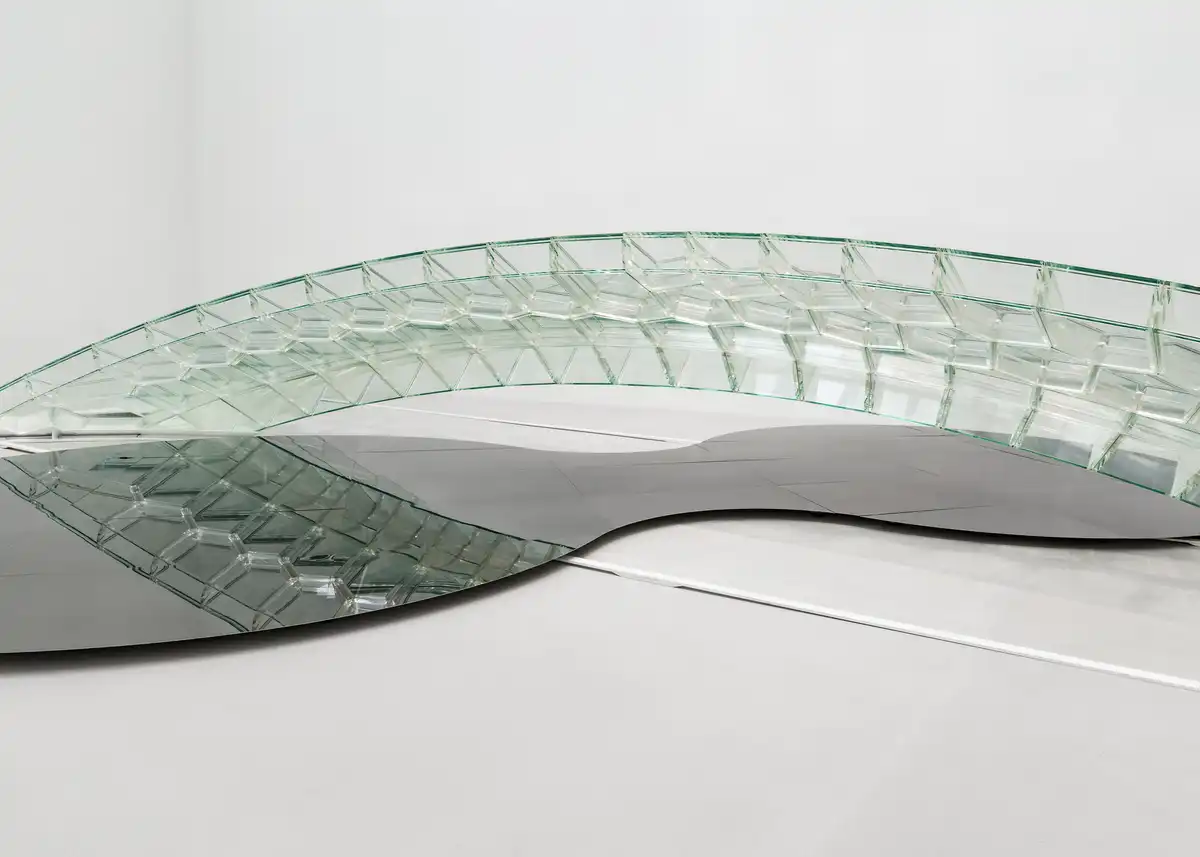
Built from 124 hollow elements of ultra-thin glass (just 16 mm thick), the bridge proves that lightweight glass structures can be strong, sustainable, and elegant. Each glass piece was manufactured with a precision of 10th of a millimeter and precisely assembled, and joined with acrylic connectors to form a compression-based system that needs no heavy metal frames or additional connections. The entire structure can be disassembled and recycled, which is a step toward circular, low-impact construction.
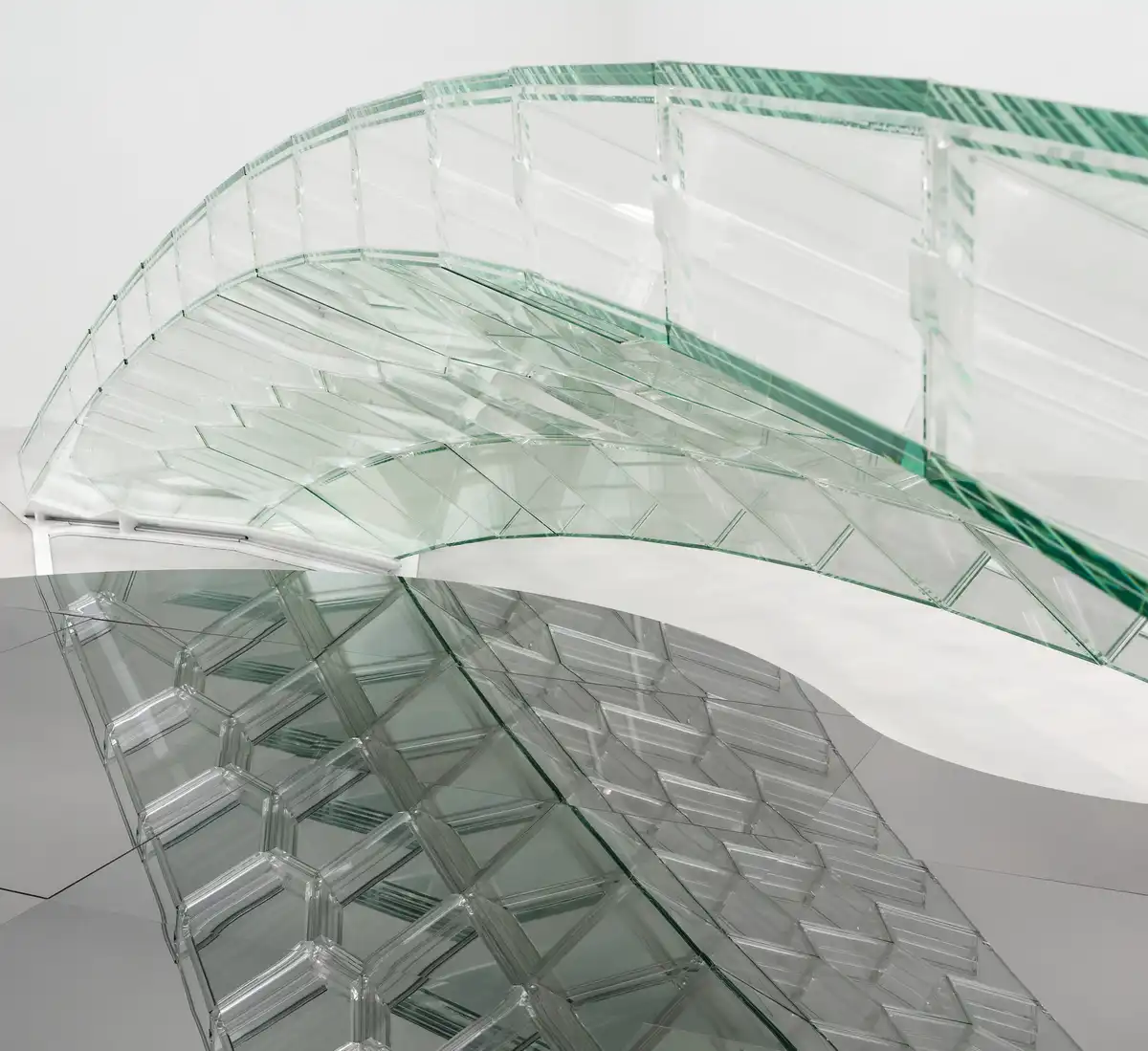
The idea for the project began with a question: Can glass, a material often thought of as fragile, become a structure? Inspired by natural arches and shells, Dr. Akbarzadeh’s team, including his former PhD student, Dr. Yao Lu, who is now at Jefferson University, used a geometric method called Polyhedral Graphic Statics to determine the most efficient shape for the bridge, enabling it to support weight solely through its form.
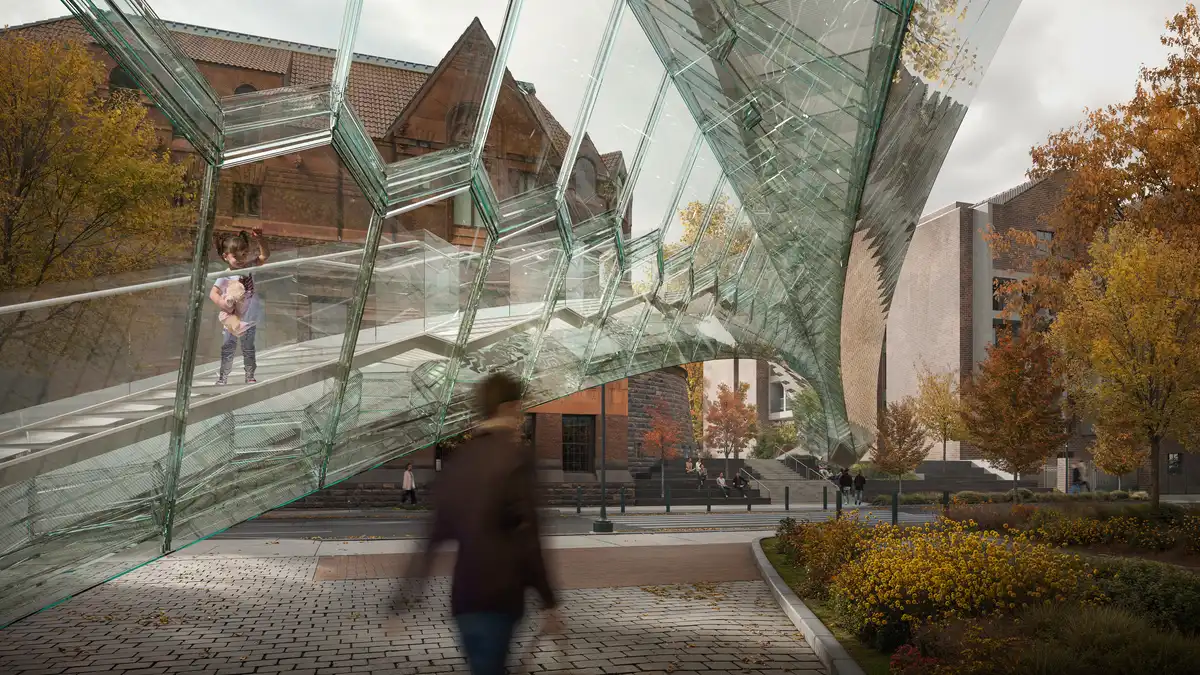
Visualization by Fortes Vision. Image Courtesy of Masoud Akbarzadeh and Massive Form__1
“Glass Bridge is more than a technical experiment; it’s about connection. Each fragile piece becomes strong only when linked perfectly to the others. That’s what makes it both a scientific and a human story,” says Dr. Masoud Akbarzadeh.
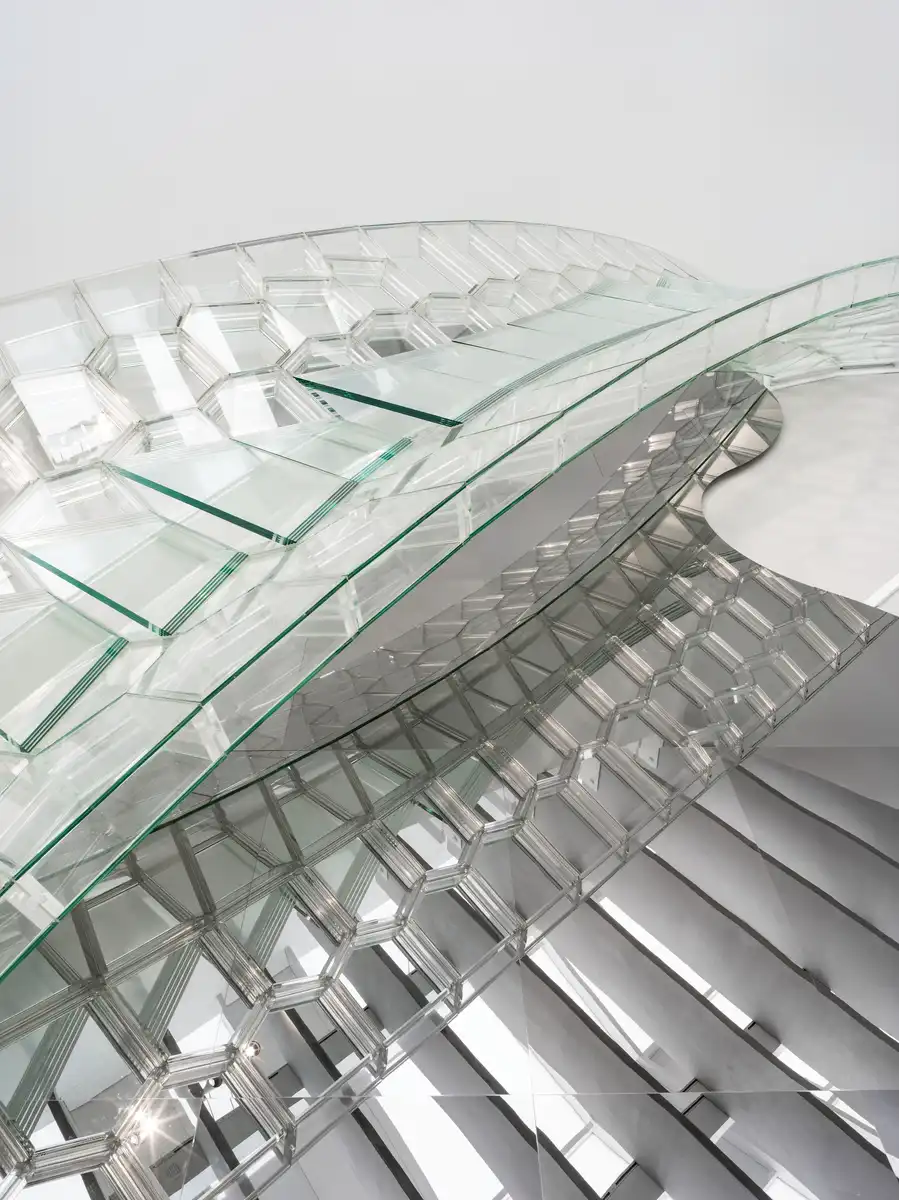
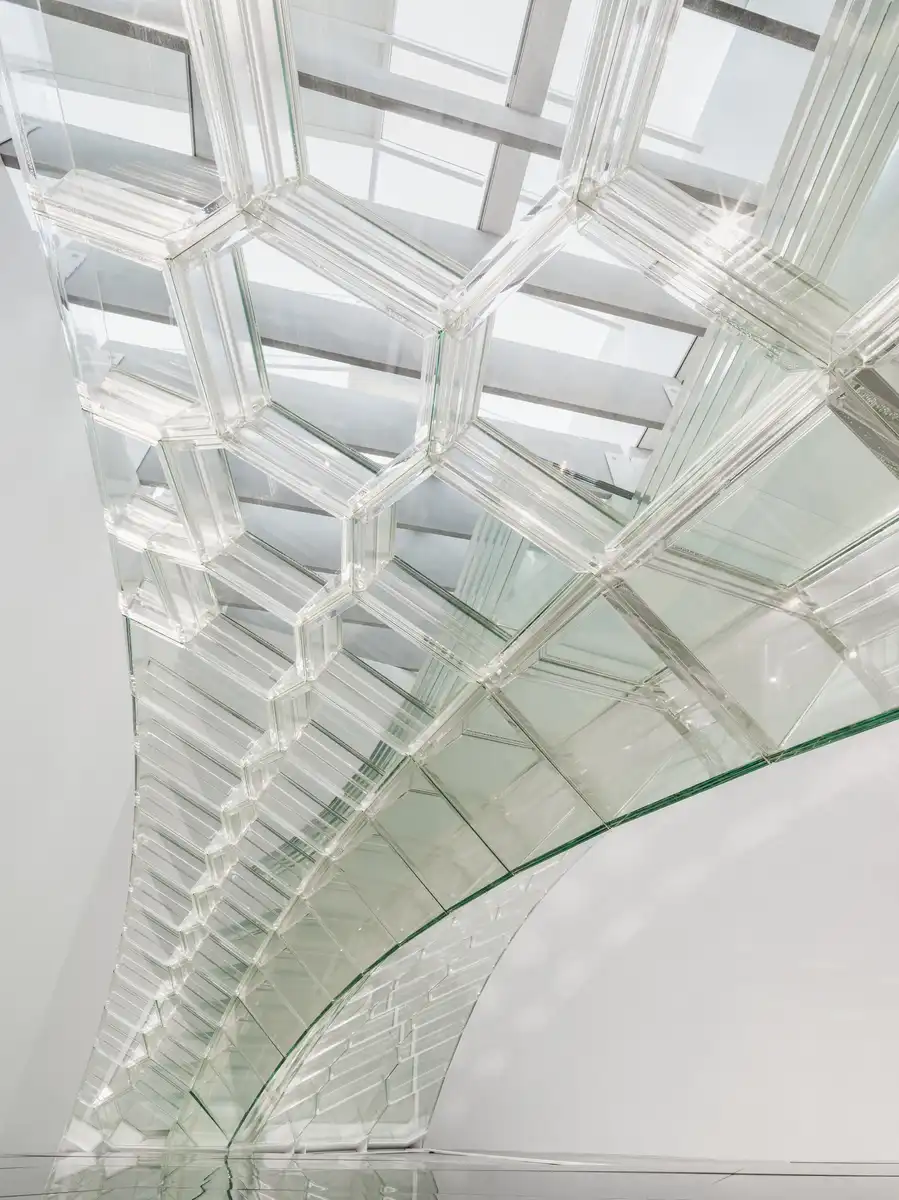
Building the bridge wasn’t easy. Every piece had to fit within fractions of a millimeter, since even the smallest misalignment could affect the structure’s balance. Over four years, the team ran numerous prototypes and load tests, supported by the National Science Foundation, until they achieved the final result. This bridge is light, precise, elegant, and surprisingly very strong.
The research continues at UPenn, where the team is now exploring how similar glass systems could be combined with materials like aluminum or recycled composites to build lightweight roofs, facades, and pedestrian bridges.
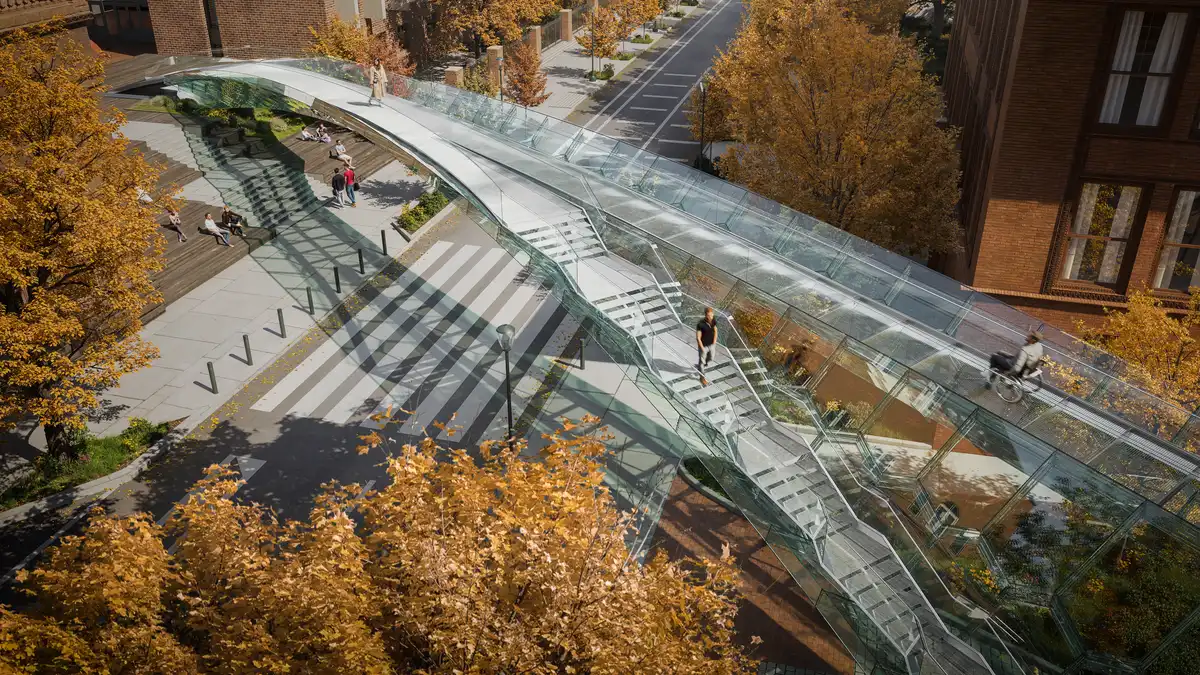
Visualization by Fortes Vision. Image Courtesy of Masoud Akbarzadeh and Massive Form__1
To help visualize how the bridge could look in a real city, Massive Form designed a new concept based on this research. It commissioned the visualization studio Fortes Vision to create cinematic renders of Glass Bridge in an urban context. The research team at Massive Form, including Dr. Masoud Akbarzadeh and Dr. Yao Lu is now exploring opportunities to bring the project to life at full scale.
Massive Form
Massive stands for Multifunctional Architected Structures and Systems Invented for Volatile Environments. Dr. Masoud Akbarzadeh founded Massive Form to provide design consultancy alongside advanced manufacturing and robotic fabrication.
This approach bridges the gap between design and engineering by advancing structural geometry and reconciling function, form, technology, and energy. Our planet’s resources are scarce, and our impact as humans is immense.
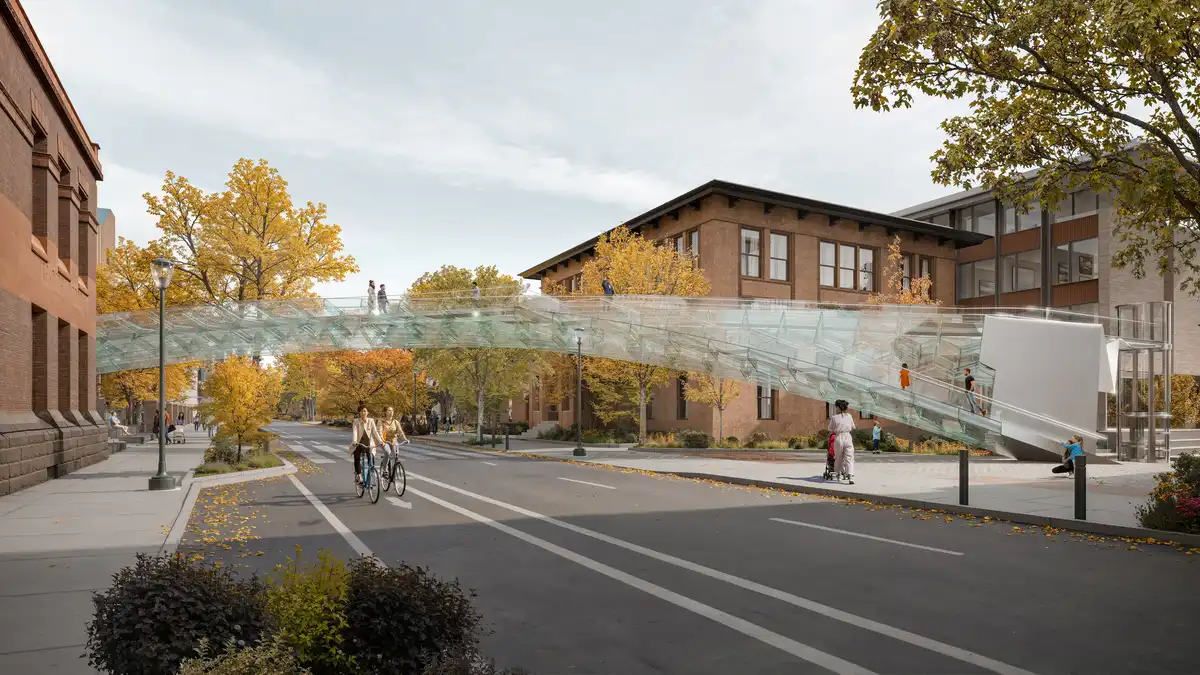
Visualization by Fortes Vision. Image Courtesy of Masoud Akbarzadeh and Massive Form__1
Polyhedral Structures Laboratory (PSL)
The Polyhedral Structures Laboratory at the University of Pennsylvania, founded and directed by Dr. Masoud Akbarzadeh, is a leading research group focused on computational design, geometry, and structural innovation. PSL develops new methods that merge architecture, mathematics, and engineering, exploring how form, material efficiency, and fabrication technologies can shape a more sustainable built environment
Fortes Vision
Fortes Vision is a full-service creative studio dedicated to producing impactful marketing content for real estate developers, architects, and interior designers.
Pedestrian Modular Glass Bridge Philadelphia images / information received 241025
Location: Philadelphia, Pennsylvania, USA.
New Philadelphia Architecture
Contemporary Philadelphia Architecture
Philadelphia Architecture Designs – chronological list
Philadelphia Architects Offices
Philadelphia Buildings – Selection
210 South 12th Philadelphia tower building, Center City
Design: RSHP, Architects
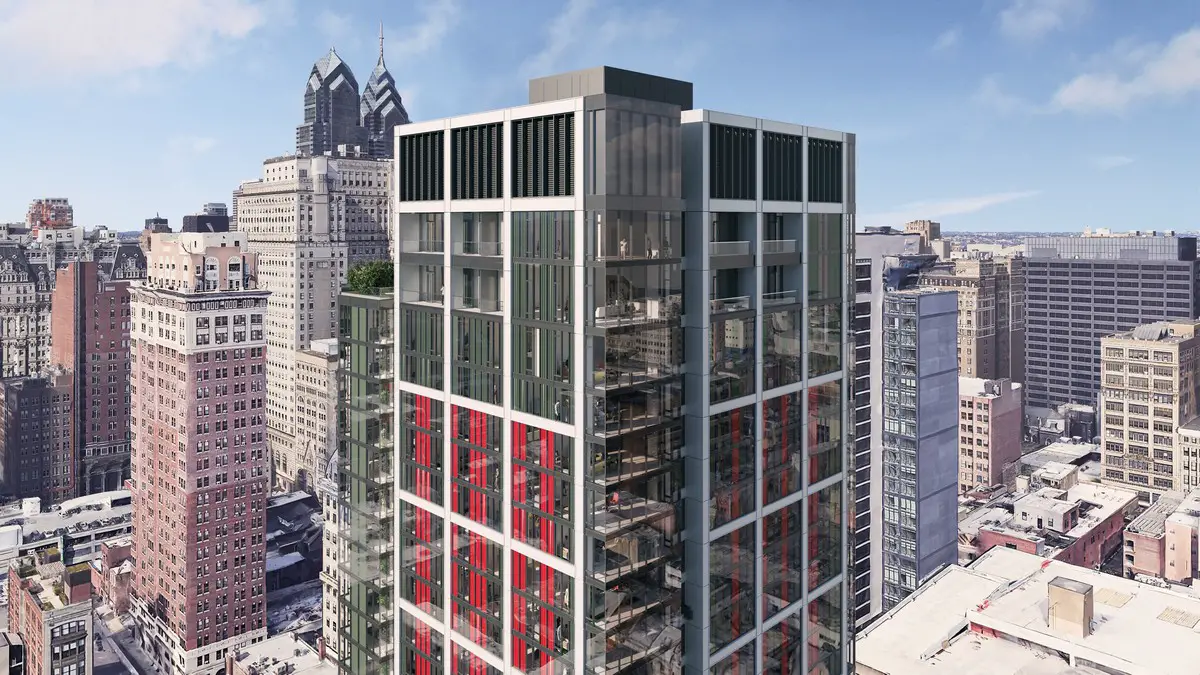
image : RSHP
University of Pennsylvania Building in Philadelphia
Design: Bohlin Cywinski Jackson
Drexel University Campus Building
Design: Diamond Schmitt Architects
Annenberg Public Policy Center in Philadelphia
Design: Maki and Associates
Translational Research Center at Penn in Philadelphia
Design: Rafael Vinoly Architects
Philadelphia Schuylkill Yards Master Plan
Design: Team SHoP + West 8 Urban Design & Landscape Architecture
Center for Human Rights Education Philadelphia
National Museum of American Jewish History in Philadelphia
++
American Architecture Designs
American Architectural Designs – recent selection from e-architect:
America Architecture News – latest building updates
Comments / photos for the Pedestrian Modular Glass Bridge Philadelphia design by Massive Form, led by Dr. Masoud Akbarzadeh page welcome.