Edifício Estação in Aveiro
post updated 7 July 2026
Architecture: Sónia Cruz Arquitectura
Location: Aveiro, Portugal
Photos: Ivo Tavares Studio
English text (scroll down for Portuguese):
4 August 2025
The proposal refers to the intention of building a multi-family housing building with commerce/services in a building located in the center of Aveiro, close to the railway station, more specifically on Rua Comandante Rocha e Cunha nº142A and B, corner with Rua Dr. Arlindo Vicente.
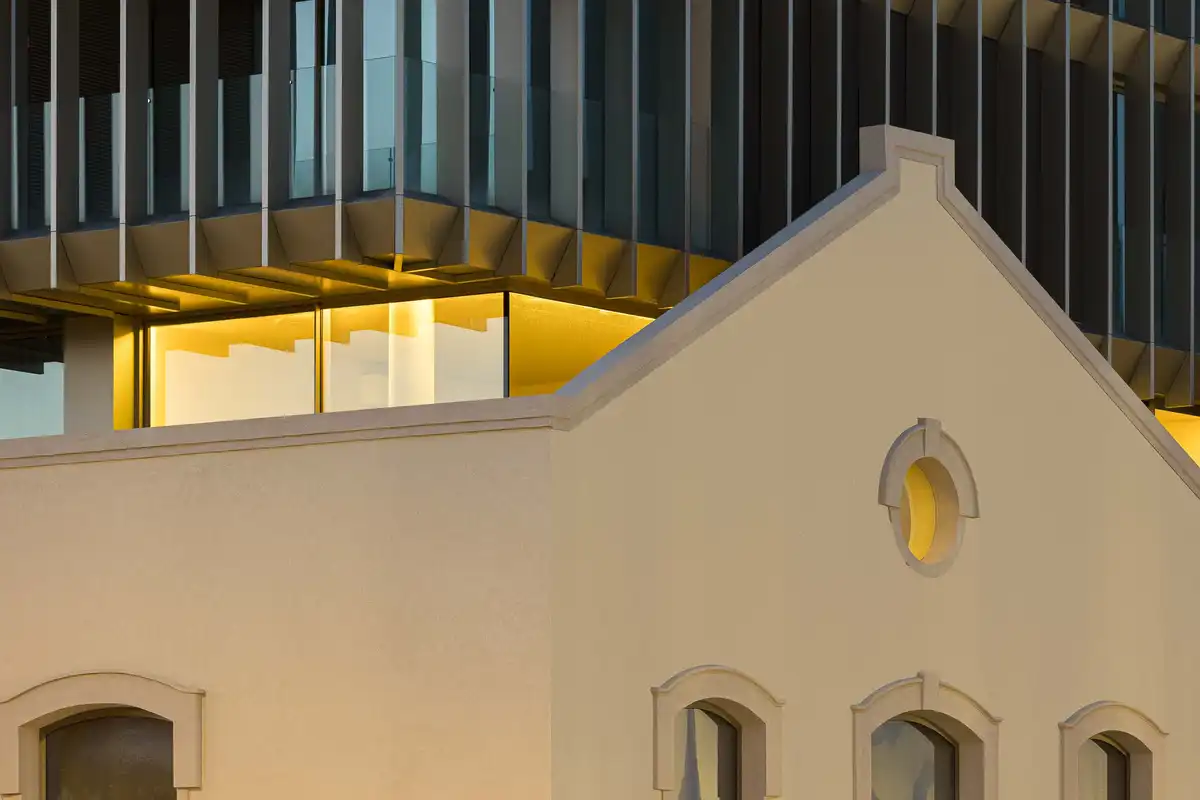
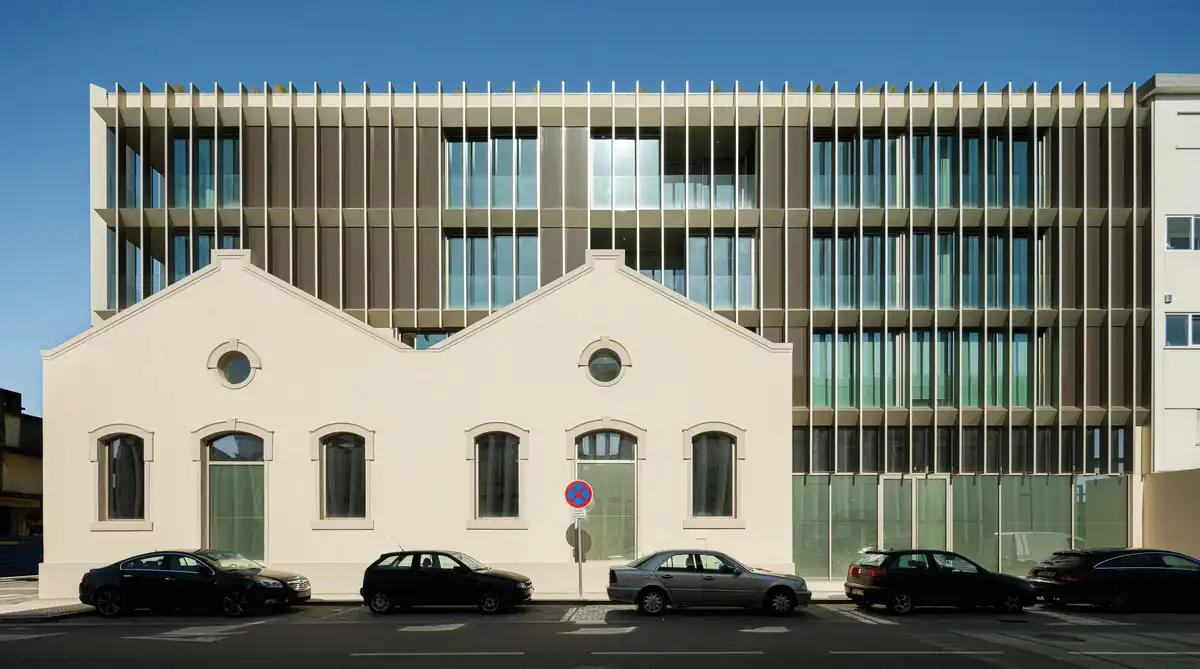
Originally the complex consisted of two deactivated industrial warehouses and a side patio. These are two industrial warehouses from the beginning of the 20th century, with identical elevation designs. The main elevation of the buildings (elevation on Rua Dr. Arlindo Vicente) has an architectural language characteristic of industrial buildings of the time, rhythmized by window – door (with raised threshold) – window and circular window along the axis of the door. Considering that the preservation and integration of the existing facades enhanced the value of the new construction, preserving a distant memory of the area’s former character.
The two pre-existing industrial warehouses were deactivated and were complemented by a side patio. These are two industrial warehouses from the beginning of the 20th century, with identical elevation designs. The main elevation of the buildings (elevation on Rua Dr. Arlindo Vicente) has an architectural language characteristic of industrial buildings of the time, rhythmized by window – door (with raised threshold) – window and circular window along the axis of the door.
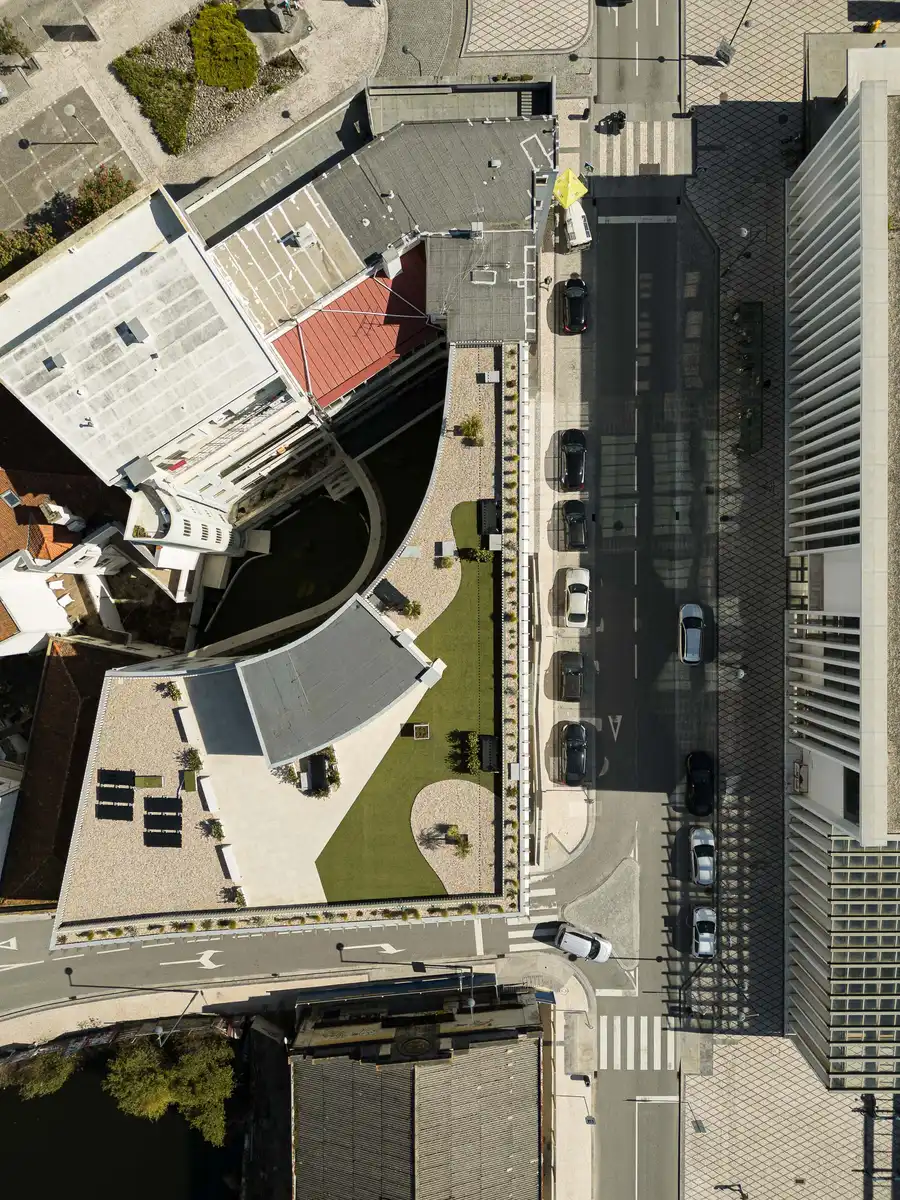
The urban intervention aimed to integrate the proposal into the circumstances, following the alignments of adjacent buildings and the development forecast for the block, considering the maintenance of the facades of the existing warehouses, examples of the industrial architecture that characterized the vicinity of the railway station at the beginning of the last century.
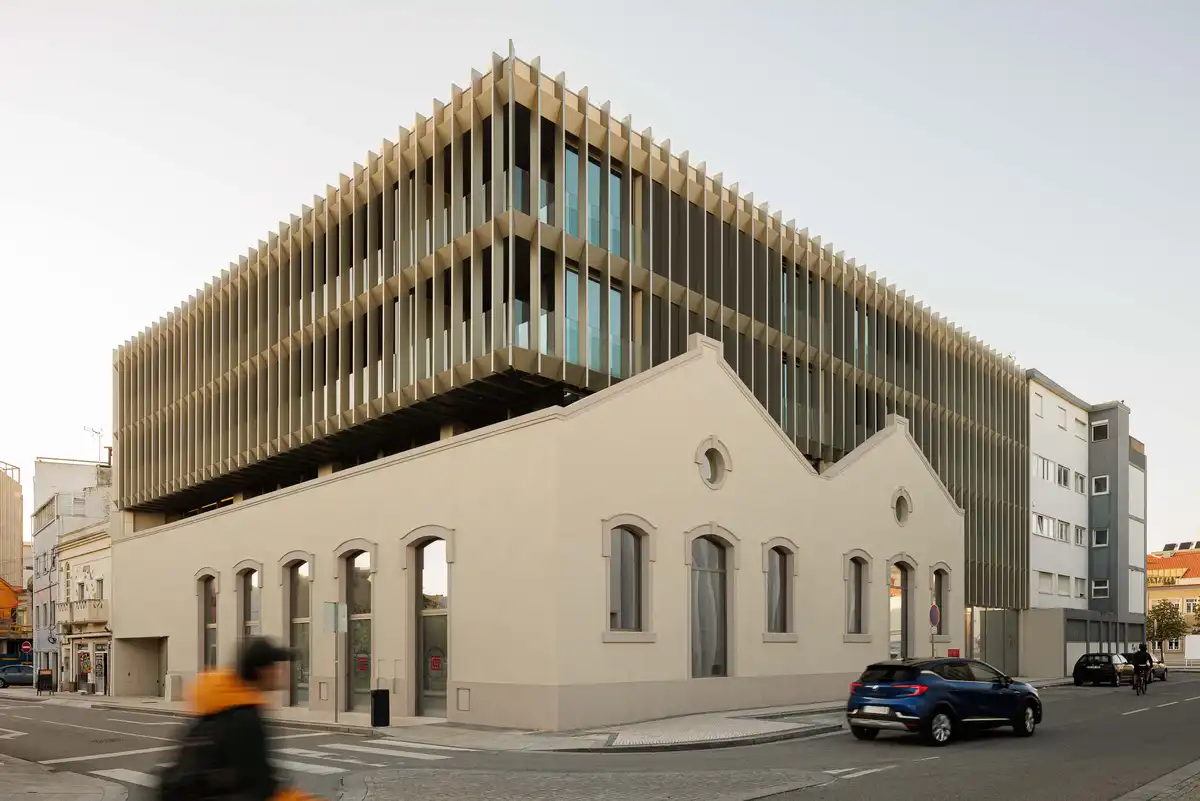
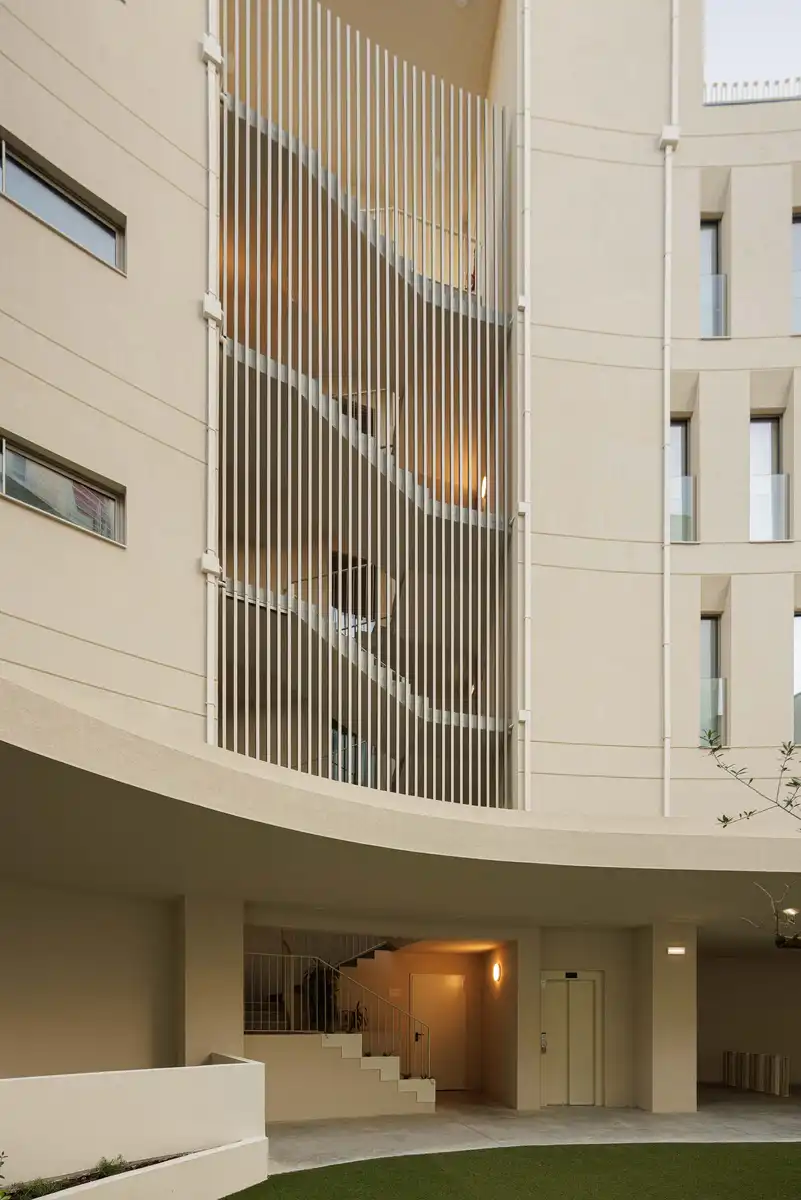
The building consists of four (4) commercial/service units on the ground floor, fifteen (15) housing units on the upper floors and a common car parking area on the basement floor. The basement floor occupies the entire area of the plot. On the upper floors, the construction forms a rear patio, moving away from the center of the block and touching only the gables of the adjacent buildings facing the respective streets.
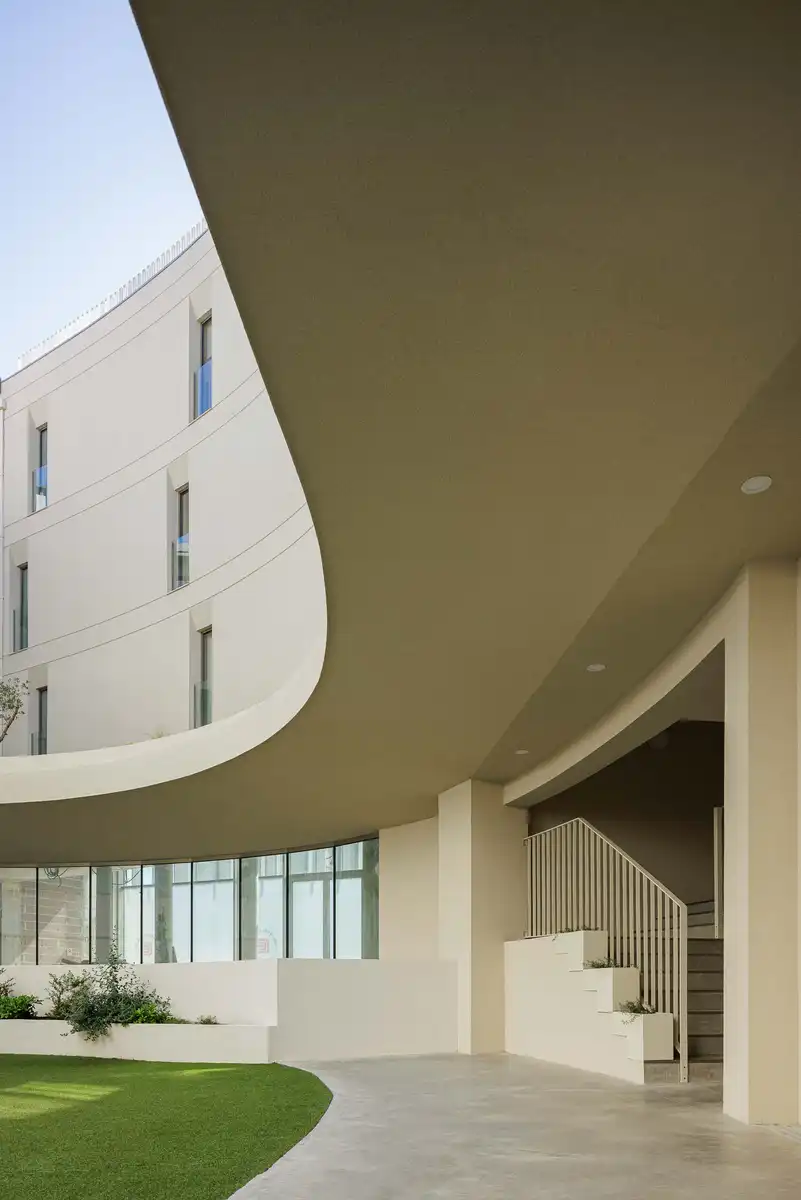
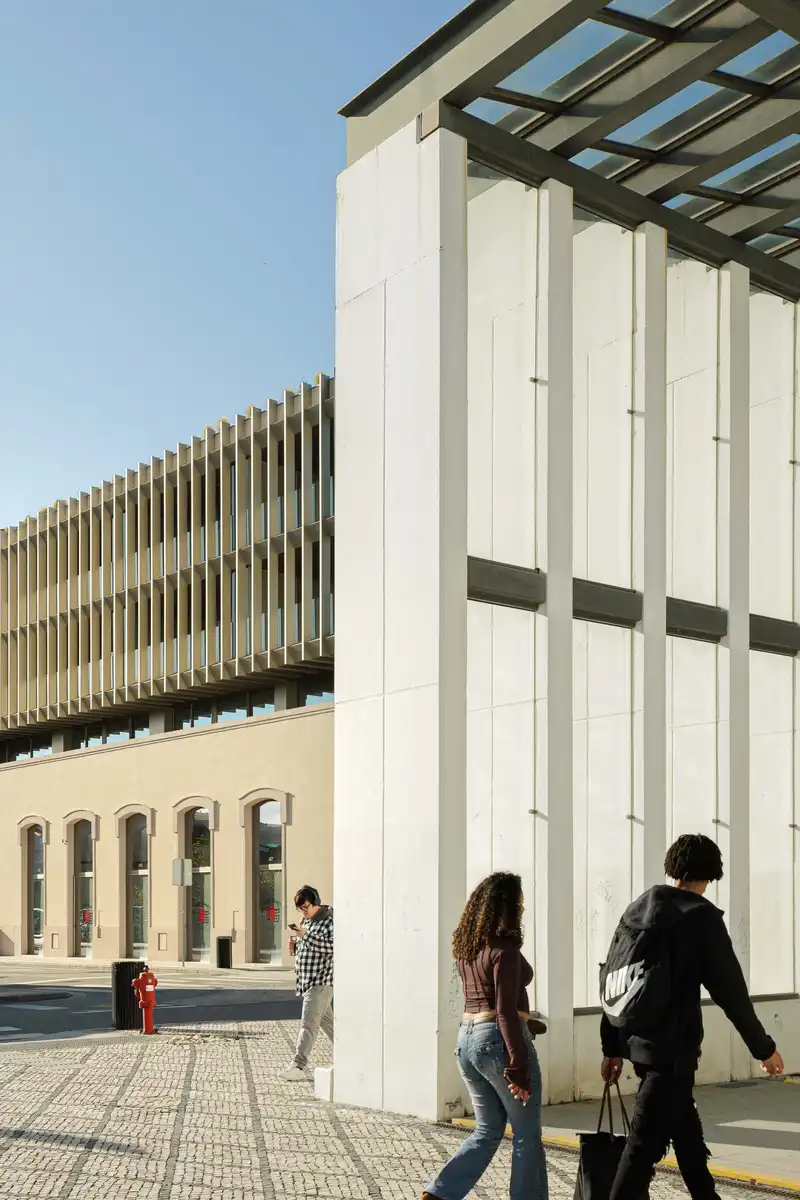
The formalization of the building aimed at the symbiosis between the new building and the pre-existing one, and its relationship with the nearby surroundings. The maintenance of the pre-existing facades, due to their size and opacity, conditioned the development and use of the building, with the decision being made to occupy the ground floor with units intended for commerce/services which, as it is a more versatile program, also more easily adapted to the openings and ceiling height induced by the pre-existing facades.
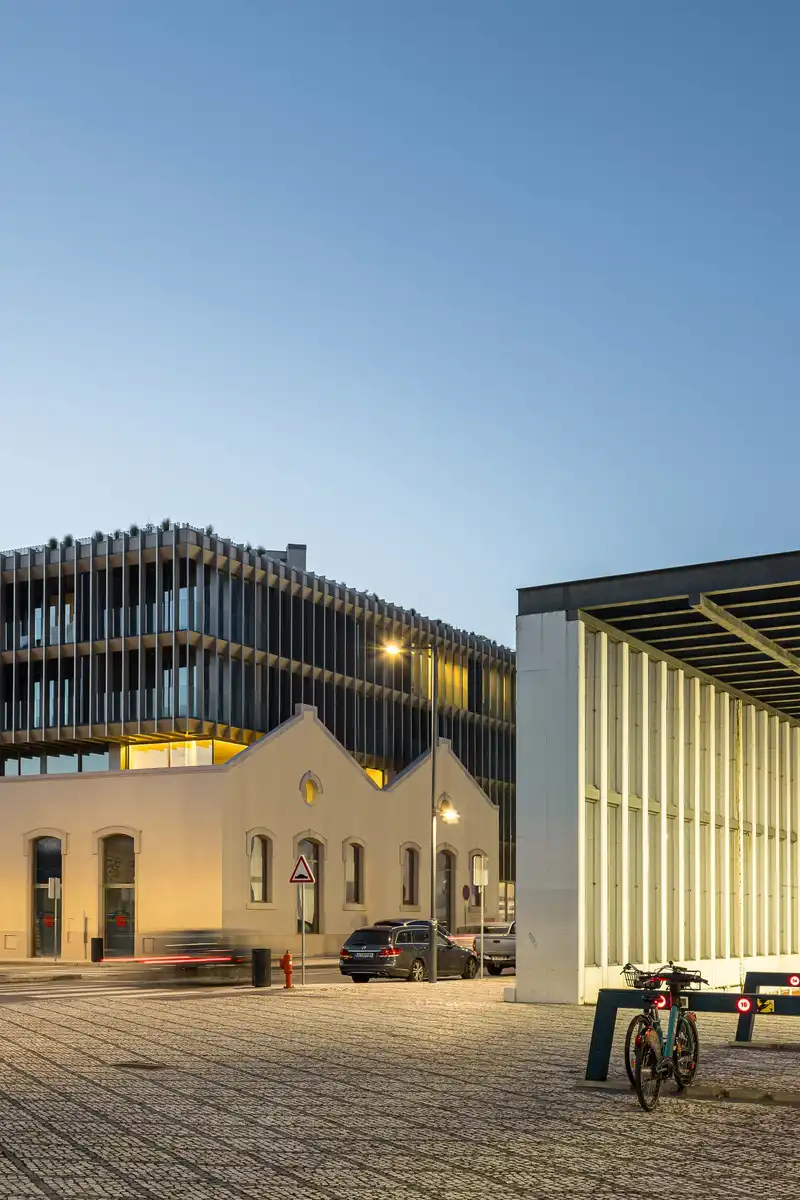
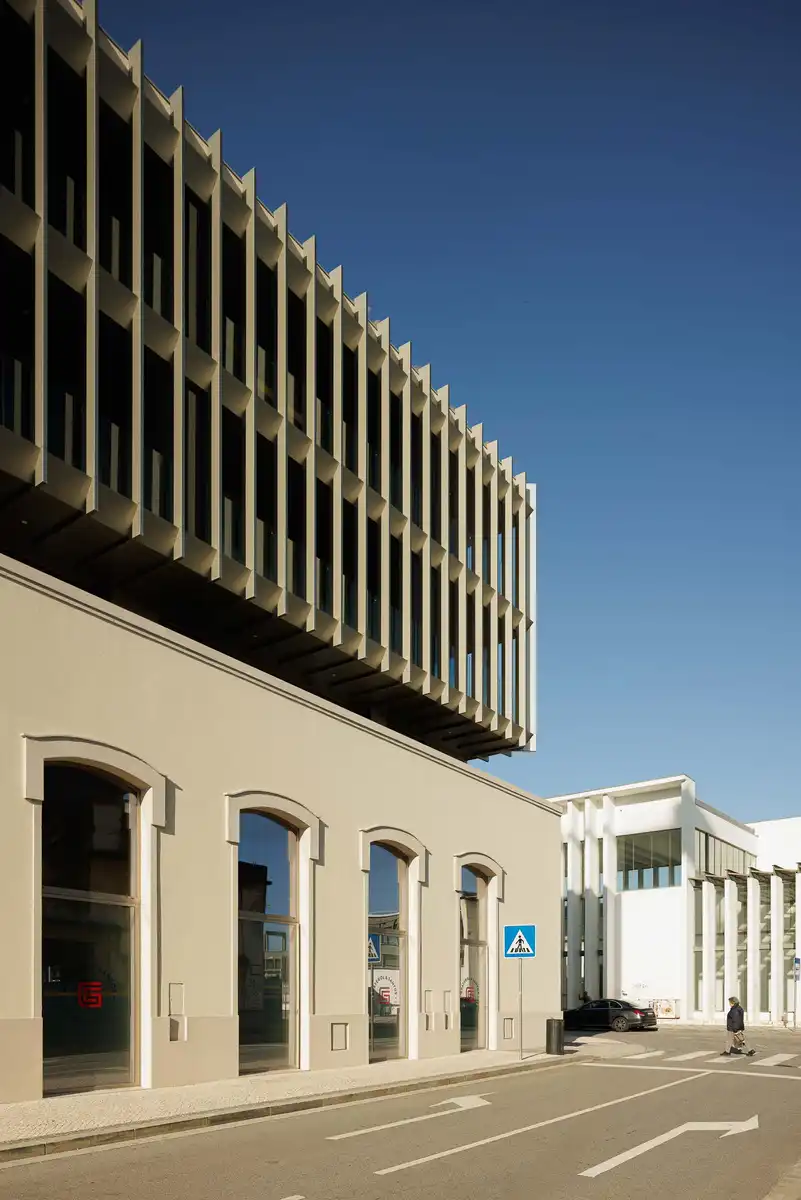
The new construction is related to the pre-existence, and appears in the recessed alignment of the upper floors of the adjacent building on Rua Dr. Arlindo Vicente. This volume extends to the limit of the plot on the Comandante Rocha e Cunha street side, releasing the last two floors and projecting over the pre-existing facade, reinforcing the altimetric alignment of the respective street. If on Dr. Arlindo Vicente’s strategy was to retreat the new volume so that it clearly detaches itself from the pre-existence, on the other side there is the intention of using the void/negative as a transitional element between the two distinct positives.
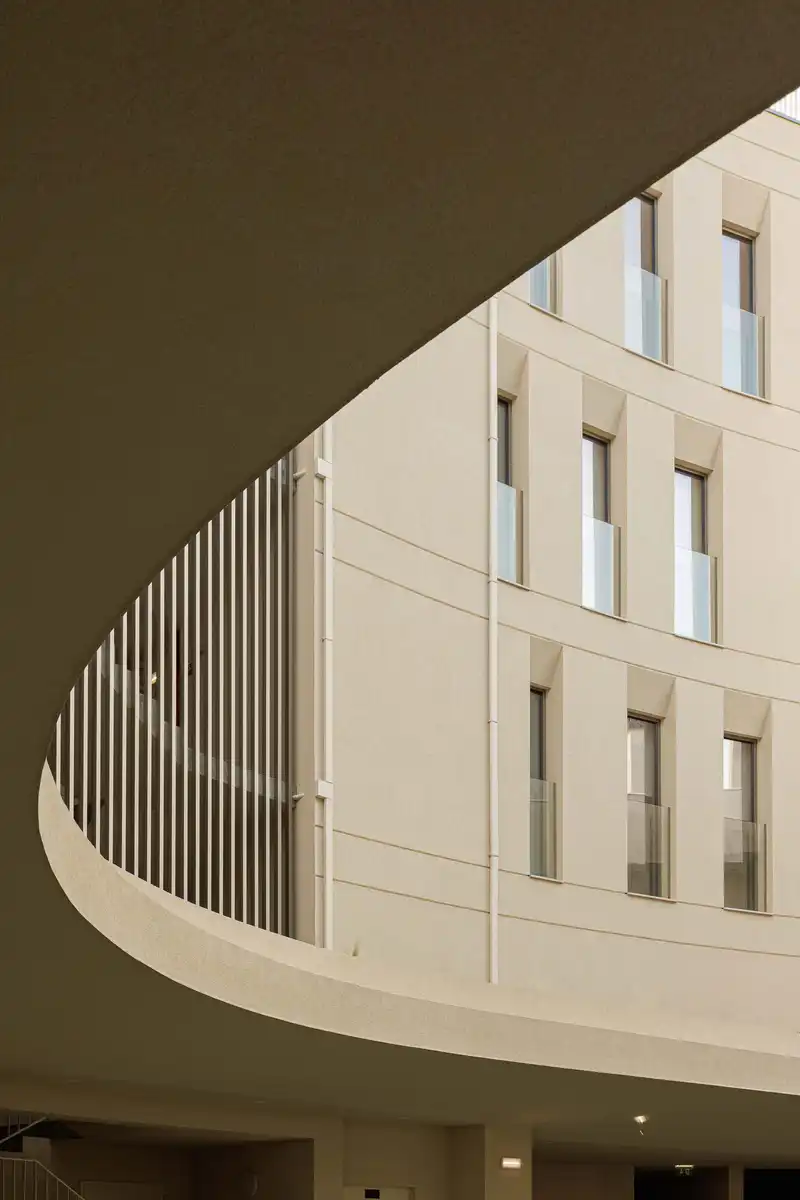
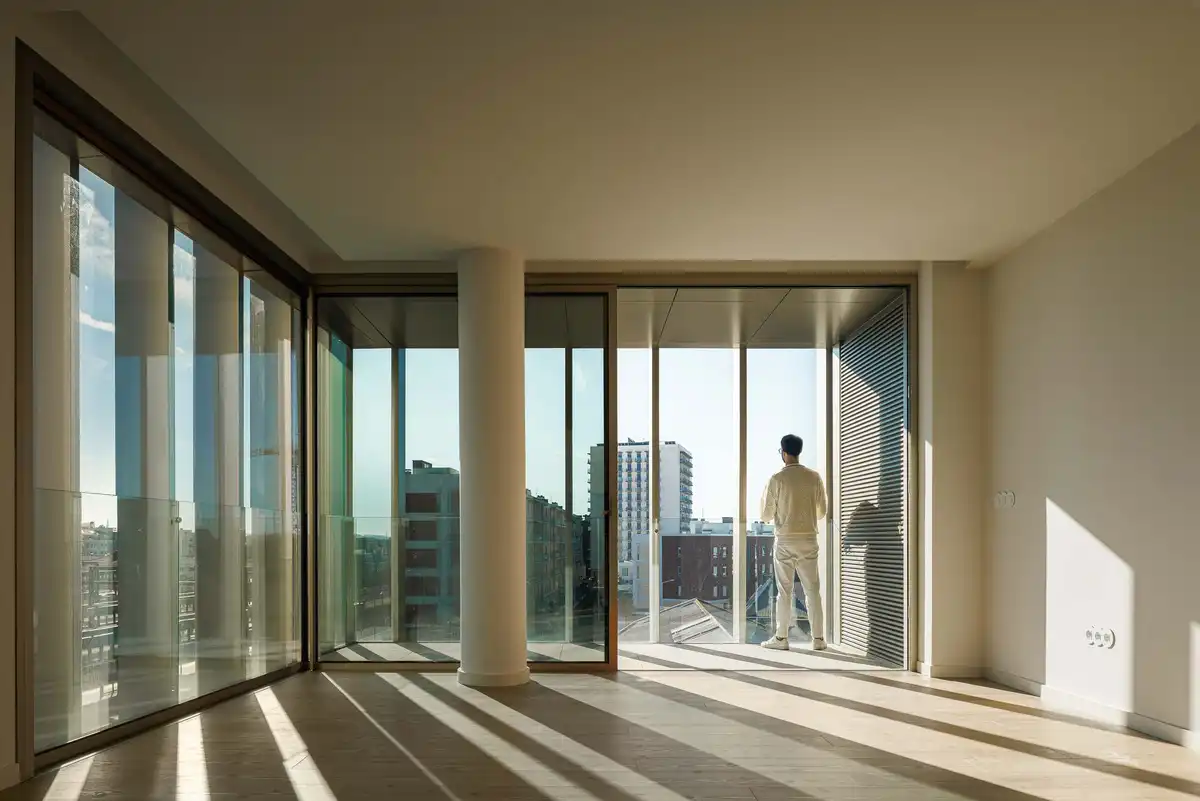
The void/negative makes the transition and is simultaneously an outdoor terrace space for the housing units on the first floor, taking advantage of the pre-existence planking as railings. The architectural language of the new volume is clearly and clearly distinct from the language of pre-existence. Since the pre-existence was an opaque, solid volume with traditional and heavy construction characteristics, the new volume appears as a lighter, organic, transparent and inevitably contemporary element. The consideration of all these relationship strategies and the search for an almost antithetical dialogue between these two devices resulted in an impactful, clear and enriching set for the place and its intrinsic memory.
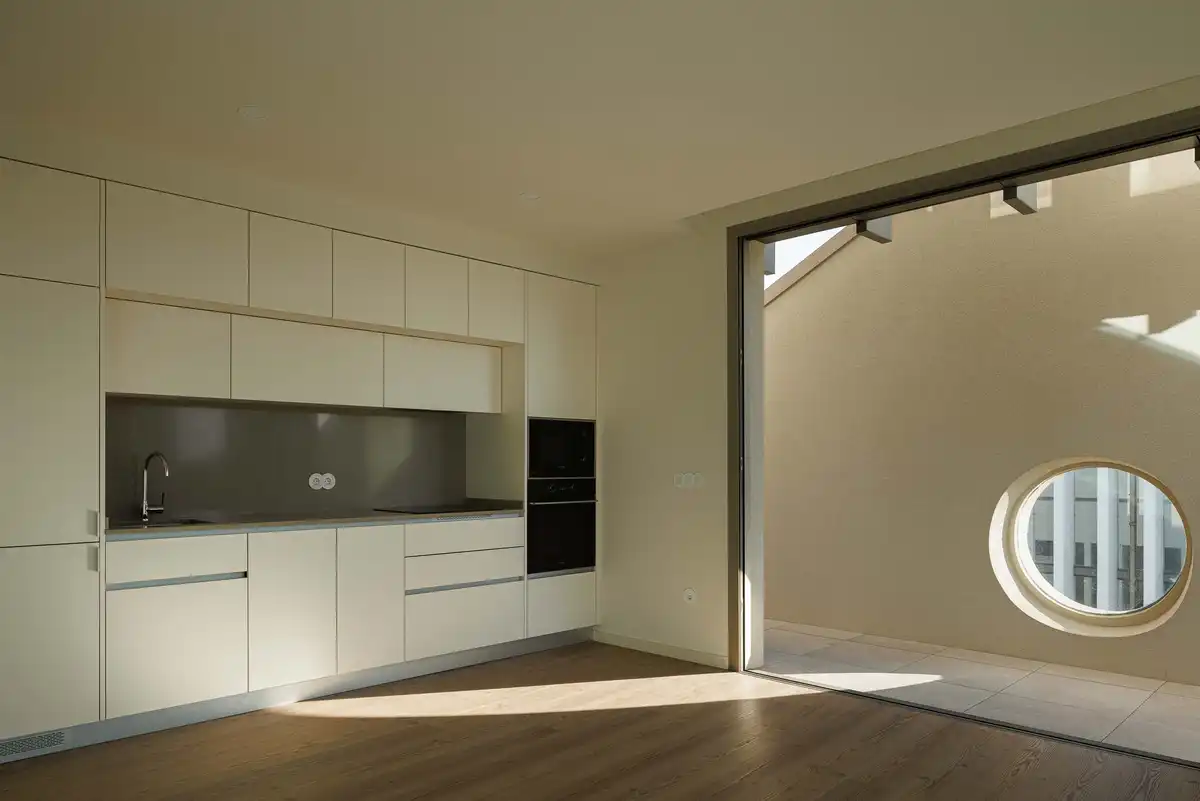
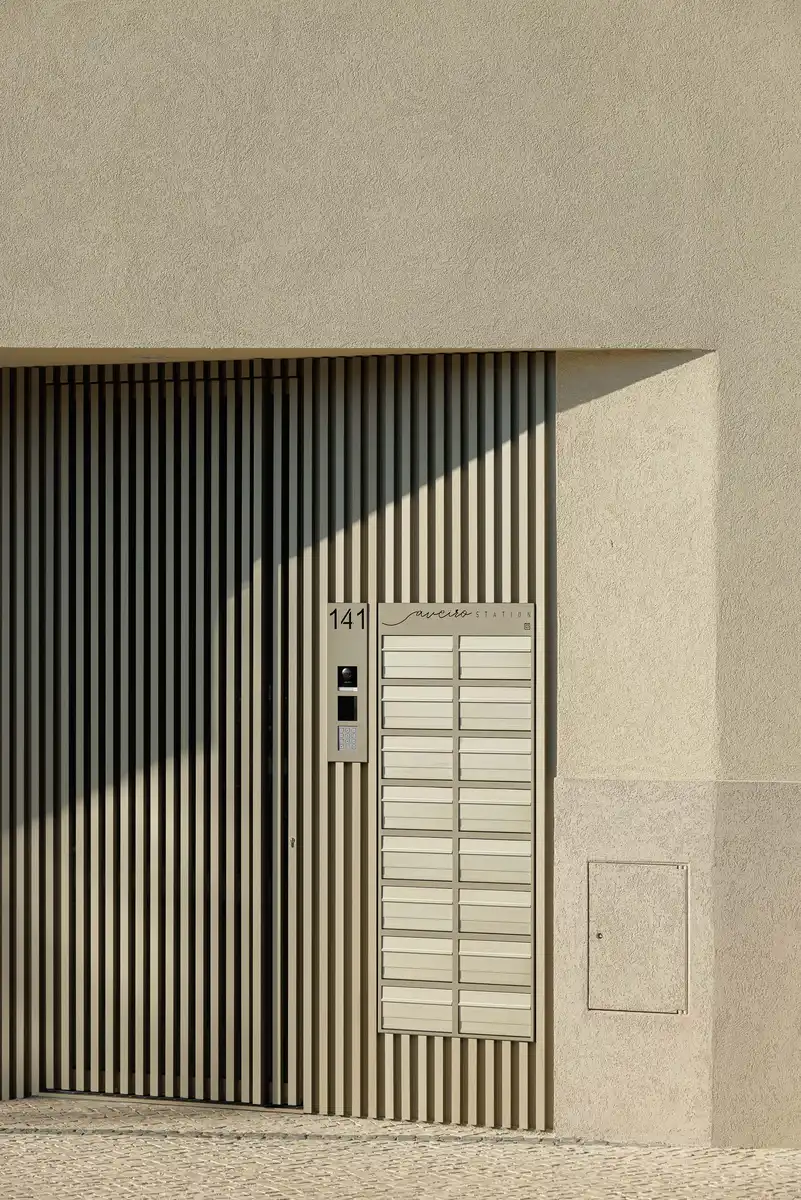
Access to the housing units and car access to the basement floor is located near the end of the west side in a recessed plane in relation to the facade that follows the alignment of the neighboring building, canceling out the gable that existed on the site. The common entrance of the housing units has direct access to the common patio where the vertical communications are located. Access to the commercial/service units is directly via the public sidewalk. The desire to maintain the high threshold openings characteristic of the pre-existence and the need to create an opening for shop windows/windows, led to the opening of new openings in the existing façade on the Comandante Rocha e Cunha street side, replicating the shape of the originals on Arlindo Vicente street.
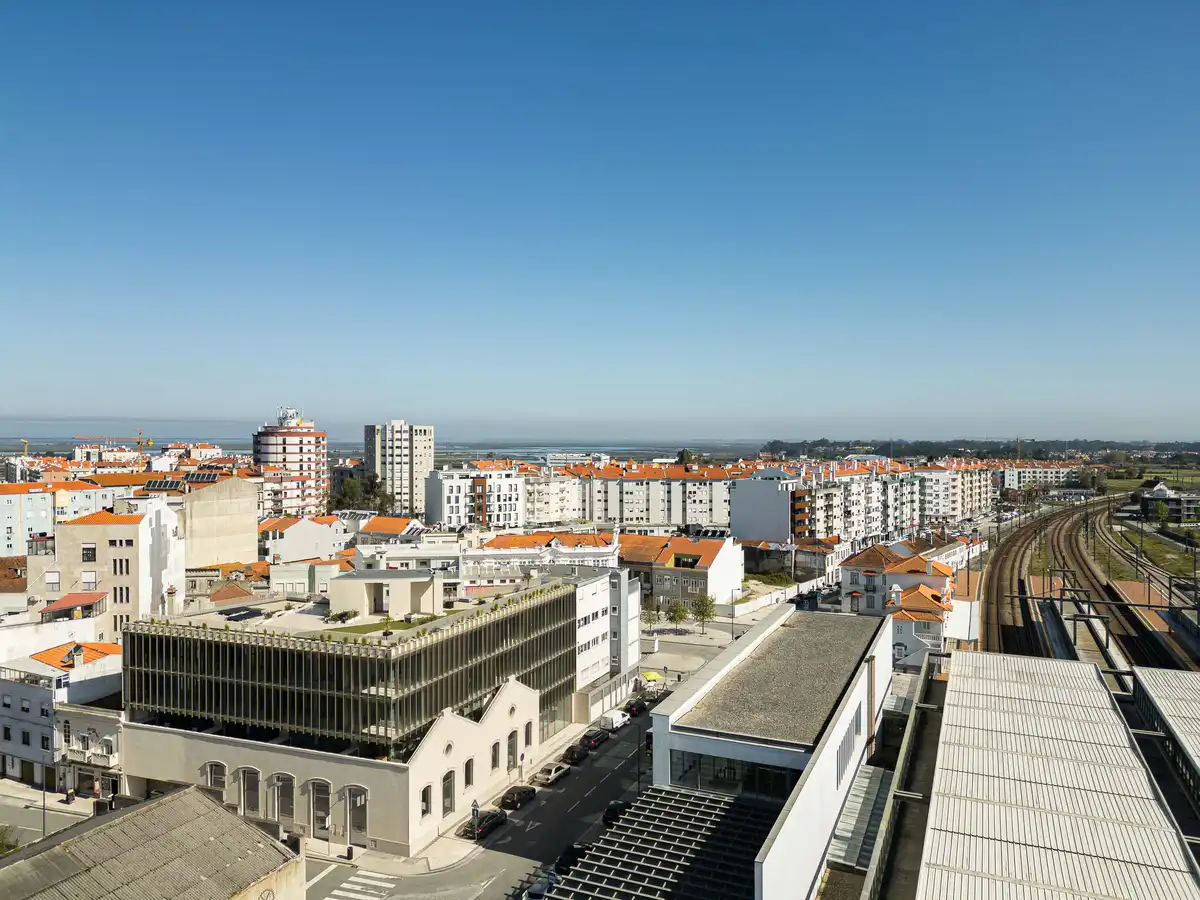
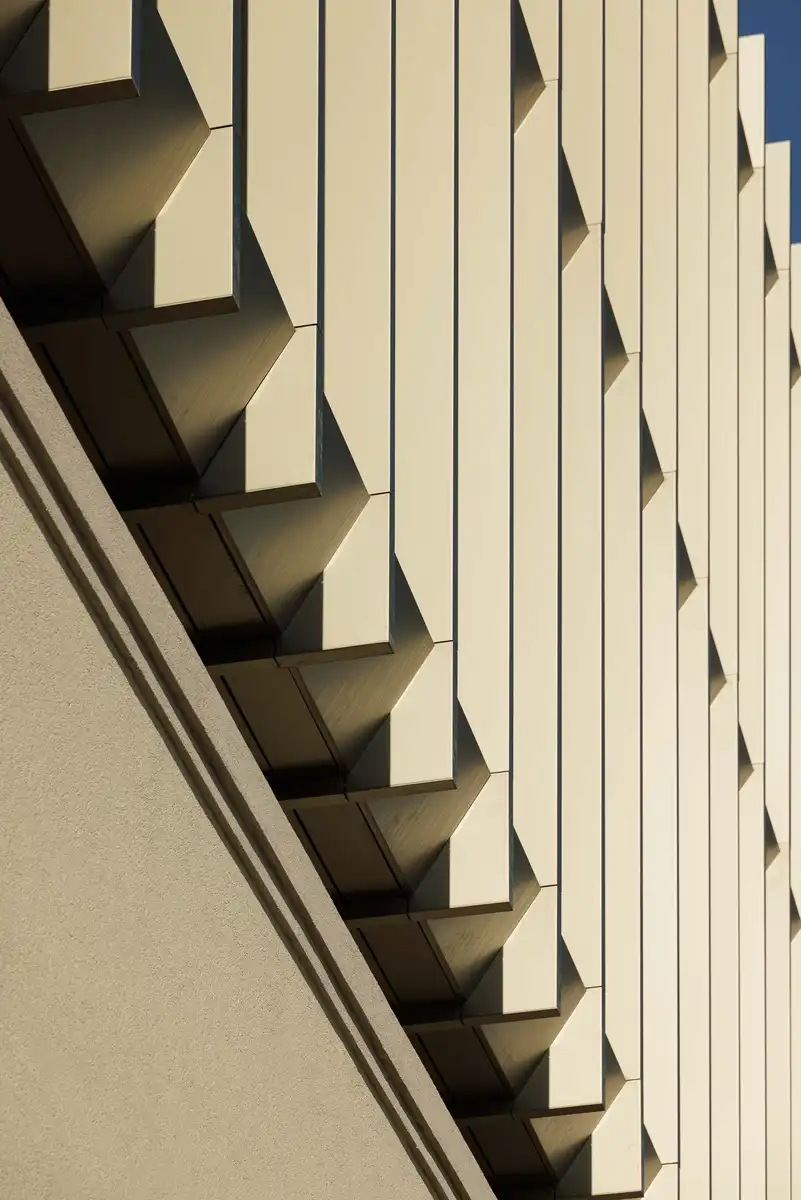
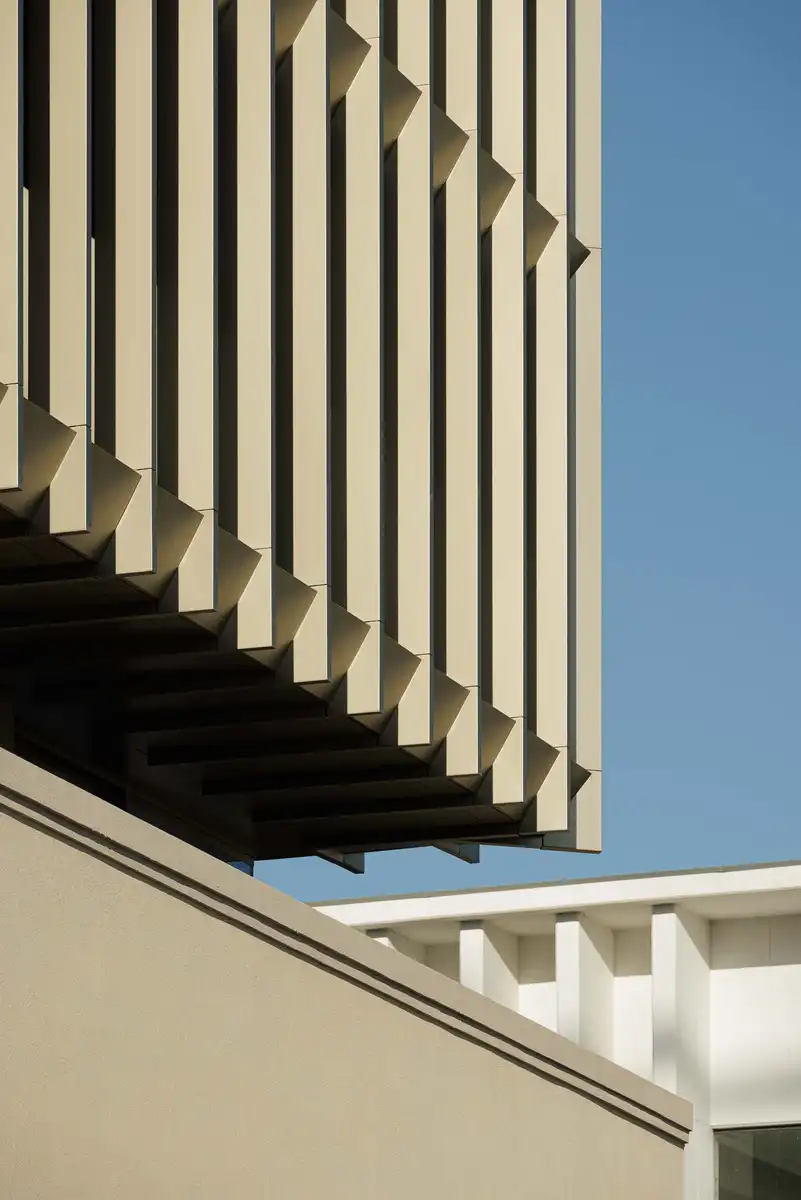
With regard to the material implementation of the proposal, in the pre-existence it was decided to maintain the original materiality of the facades, the plaster painted in an ocher tone and the smoothing and contours in a darker tone. In the new volume, a lighter approach was chosen, giving the volume a lightness contrasting with its pre-existence. To achieve this, a curtain facade is created with vertical elements in anodized aluminum that protect the mostly glass facade, opaque planes will be covered with tinted glass.
The roof floor constitutes a common space, which includes a technical area (for solar panels) and an area for leisure and enjoyment of its exceptional landscape and views over the city.
The architectural language formalized in the project through its materialization and its elevation design aims for an affirmatively contemporary design with a scale appropriate to the layout and proportion of the projected building. This option guarantees urban landscape integration and simultaneously marks two distinct moments in the construction of the city.
Portuguese:
A proposta refere-se à pretensão da construção de um edifício de habitação multi-familiar com comércio/serviços em prédio localizado no centro da cidade de Aveiro, nas imediações da estação de caminho de ferro, mais concretamente na rua Comandante Rocha e Cunha nº142A e B, gaveto com a rua Dr. Arlindo Vicente.
Originalmente o conjunto era constituído por dois armazéns industriais desactivados e um logradouro lateral. Tratando-se de dois armazéns industriais do início do século XX, com desenho de alçado idênticos. O alçado principal das construções (alçado rua Dr. Arlindo Vicente) possui uma linguagem arquitectónica característica dos edifícios industriais da época, ritmado por janela – porta (com soleira elevada) – janela e janela circular a eixo da porta. Considerando-se que a preservação e integração das fachadas existentes valorizou a nova construção preservando uma memória distante do antigo carácter da zona.
Os dois armazéns industriais pré-existentes encontravam-se desactivados e complementavam-se por um logradouro lateral. Tratando-se de dois armazéns industriais do início do século XX, com desenho de alçado idênticos. O alçado principal das construções (alçado rua Dr. Arlindo Vicente) possui uma linguagem arquitectónica característica dos edifícios industriais da época, ritmado por janela – porta (com soleira elevada) – janela e janela circular a eixo da porta.
A intervenção urbanística pretendeu a integração da proposta na circunstância, seguindo os alinhamentos das construções adjacentes e previsão de desenvolvimento do quarteirão, considerando a manutenção das fachadas dos armazéns existentes, exemplares da arquitectura industrial que caracterizaram as imediações da estação ferroviária no início do século passado.
O edifício é constituído por quatro (4) fracções de comércio/serviços no piso térreo, quinze (15) fracções habitacionais nos pisos superiores e área comum de estacionamento automóvel no piso em cave. O piso em cave ocupa toda a área da parcela. Nos pisos superiores, a construção forma um logradouro tardoz afastando-se do miolo do quarteirão e encostando-se apenas às empenas das construções adjacentes voltadas para os respectivos arruamentos.
A formalização do edifício pretendeu a simbiose entre a nova edificação e a preexistência, e a sua relação com a envolvente próxima. A manutenção das fachadas preexistentes, pela sua dimensão e pela sua opacidade, condicionou o desenvolvimento e o uso da edificação, tendo-se optado por ocupar o piso térreo com fracções destinadas a comércio/serviços que por ser um programa mais versátil , também mais facilmente de adequou aos vãos e pé-direito induzidos pelas fachadas pré-existentes.
A nova construção relaciona-se com a preexistência, e surge no alinhamento recuado dos pisos superiores da construção adjacente na rua dr. Arlindo Vicente. Este volume prolonga-se até ao limite da parcela do lado da rua Comandante Rocha e Cunha, soltando os últimos dois pisos e projectando-se sobre a fachada preexistente, reforçando o alinhamento altimétrico do respectivo arruamento. Se na rua dr. Arlindo Vicente a estratégia foi de recuar o novo volume para este se descolar claramente da preexistência, no outro lado existe a intenção de usar o vazio/negativo como elemento de transição entre os dois positivos distintos.
O vazio/negativo faz a transição e simultaneamente é espaço de terraço exterior para as fracções habitacionais do primeiro piso, aproveitando a plantibanda da preexistência como guarda-corpos. A linguagem arquitectónica do novo volume é clarra e assumidamente distinta da linguagem da preexistência. Sendo a preexistência um volume opaco, sólido com características construtivas tradicionais e pesadas, o novo volume surge como um elemento mais leve, orgânico, transparente e inevitavelmente contemporâneo. A consideração de todas estas estratégias de relação e a procura de um diálogo quase de antítese entre estes dois dispositivos resultou num conjunto impactante, claro e enriquecedor para o lugar e sua memória intrínseca.
O acesso às fracções habitacionais e acesso automóvel ao piso em cave, fazem-se junto à estrema do lado Poente em plano recuado relativamente à fachada que segue o alinhamento da construção vizinha anulando a empena que existia no local. A entrada comum das fracções habitacionais tem acesso directo ao logradouro comum onde se localizam as comunicações verticais. O acesso às fracções de comercio/serviços é feito directamente pelo passeio público. A vontade de manter os vãos de soleira alta característicos da preexistência e a necessidade de constituir abertura para vitrinas/montras, levou à abertura de novos vãos na fachada existente do lado da rua Comandante Rocha e Cunha replicando a forma dos originais da rua Arlindo Vicente.
No que diz respeito à concretização material da proposta, na preexistência optou-se pela manutenção da materialidade original das fachadas, o reboco pintado a cor tom ocre e os alisares e contornos com um tom mais carregado. No volume novo optou-se por uma abordagem mais ligeira, conferindo ao volume uma leveza contrastante com a preexistência. Para isso constitui-se uma fachada cortina com elementos verticais em alumínio anodizado que protegem a fachada maioritariamente de vidro, planos opacos serão revestidos com vidro escurecido.
O piso de cobertura constitui um espaço comum, que integra uma área técnica ( para painéis solares) e uma área de lazer e fruição da sua excepcional situação paisagística e vista sobre a cidade.
A linguagem arquitectónica formalizada no projecto através da sua materialização e do seu desenho de alçado objectiva um desenho afirmativamente contemporâneo com uma escala apropriada ao arruamento e proporção do edifício projectado. Esta opção garante uma integração paisagística urbana e em simultâneo a marcação de dois momentos distintos na construção da cidade.
Edifício Estação, Aveiro, Portugal – Building Information
Atelier de Arquitectura . Architecture Office: Sónia Cruz Arquitectura – http://romuloneto.net/
Nome do Projeto . Project name: Edifício Estação
Arquiteto responsável . Main Architect: Sónia Cruz
Colaboração . Collaboration: Rui Vieira, Inês Lopes
Website: soniacruz-arquitectura.com
E-mail: geral(at)soniacruz-arquitcetura.com
Facebook: https://www.facebook.com/soniacruz.arquitectura/
Instagram: https://www.instagram.com/soniacruz.arquitectura/
Localização . Location: Aveiro, Portugal
Ano de conclusão da obra . Year of conclusion : 2024
Área total construída (m2) . Total area: 2843m2
Promotor . Developer: Graterol & Santos, Lda
Construtora . Builder: Adiciona Developments, Unipessoal Lda.
Fiscalização . inspection: R5 Engineers
Engenharia . Engineering: R5 Engineers
Paisagismo . Landscape: Sónia Cruz Arquitectura
Projeto Luminotécnico . Light Design: Sónia Cruz Arquitectura
Acústica . Acoustic Design: R5 Engineers
Hidráulica . Fluids Engineering : R5 Engineers
Térmica . Thermal Engineering: R5 Engineers
Identidade Visual . Visual identity: Sónia Cruz Arquitectura
Ilustrações . illustrations: Sónia Cruz Arquitectura
Decoração de interiores . Interior Design: Sónia Cruz Arquitectura
Architectural photographer: Ivo Tavares Studio – https://www.ivotavares.net/
Facebook: www.facebook.com/ivotavaresstudio
Instagram: www.instagram.com/ivotavaresstudio
Edifício Estação, Aveiro, Portugal images / information received 040825 from Ivo Tavares Studio
Location: Aveiro, Portugal, southwestern Europe
Aveiro Property Designs
New Architecture in Aveiro
Fareja Pedestrian and Cycling Bridge, Aveiro
Architecture: Rómulo Neto Arquitetos
photo : Ivo Tavares Studio
Pure Tower Aveiro Apartments
Architecture: Mario Alves architect
photo : Ivo Tavares Studio
Mercantel Restaurant, Aveiro, central Portugal
Architecture: Paulo Martins Arquitectura & Design
photo : Ivo Tavares Studio
CS House, Agueda, Portugal, Agueda, Aveiro District
Casa Mortuária de Oliveirinha, Aveiro, Portugal
++
Portugal Property
New Homes in Portugal
Casa Oeiras Lisbon Region
Architecture: OODA
photo : Fernando Guerra
Casa SA Braga Property
Architecture: Sandro Ferreira arquitectura
photo : Ivo Tavares Studio
351 Foz Apartments in Porto property, Foz do Douro, Porto
Architects: dEMM arquitectura
++
Portuguese Architecture
Portuguese Architecture
Comments / photos for Fareja Pedestrian and Cycling Bridge, Aveiro, Portugal property design by Sónia Cruz Arquitectura page welcome