
Ismaili Center in Houston
Updated November 7, 2025
Architect: Farshid Moussavi
Location: Houston, Texas, USA
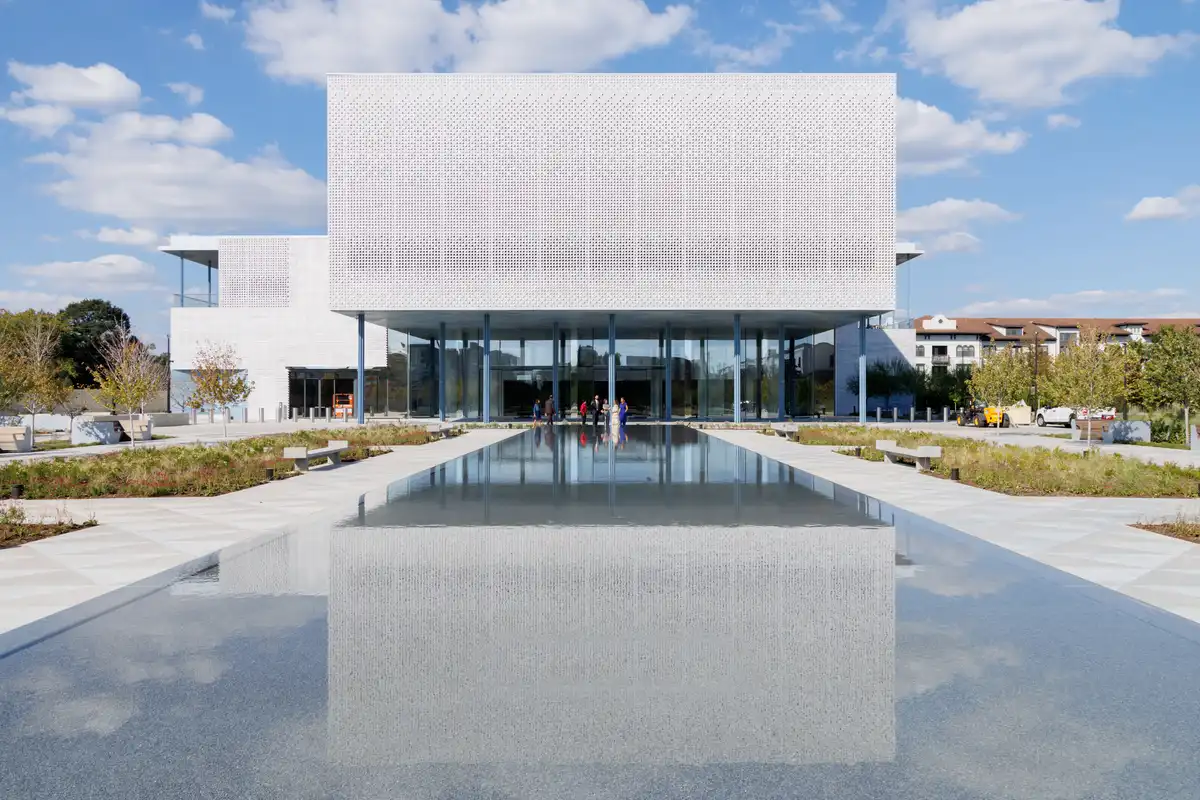
Photos © Iwan Baan, 2025
October 9, 2025
His Highness The Aga Khan And Houston Mayor John Whitmire Open The Ismaili Center, Houston
The Ismaili Center, Houston was formally inaugurated by Mayor John Whitmire in the presence of His Highness Prince Rahim Aga Khan V, the Imam (spiritual leader) of the world’s Shia Ismaili Muslims, on Thursday 6 November 2025 in a ceremony attended by civic and cultural leaders from Houston and beyond, as well as leaders and supporters from the Ismaili community from around the world. The Center is the nation’s first Ismaili civic and cultural complex dedicated to dialogue, culture, and shared human values.
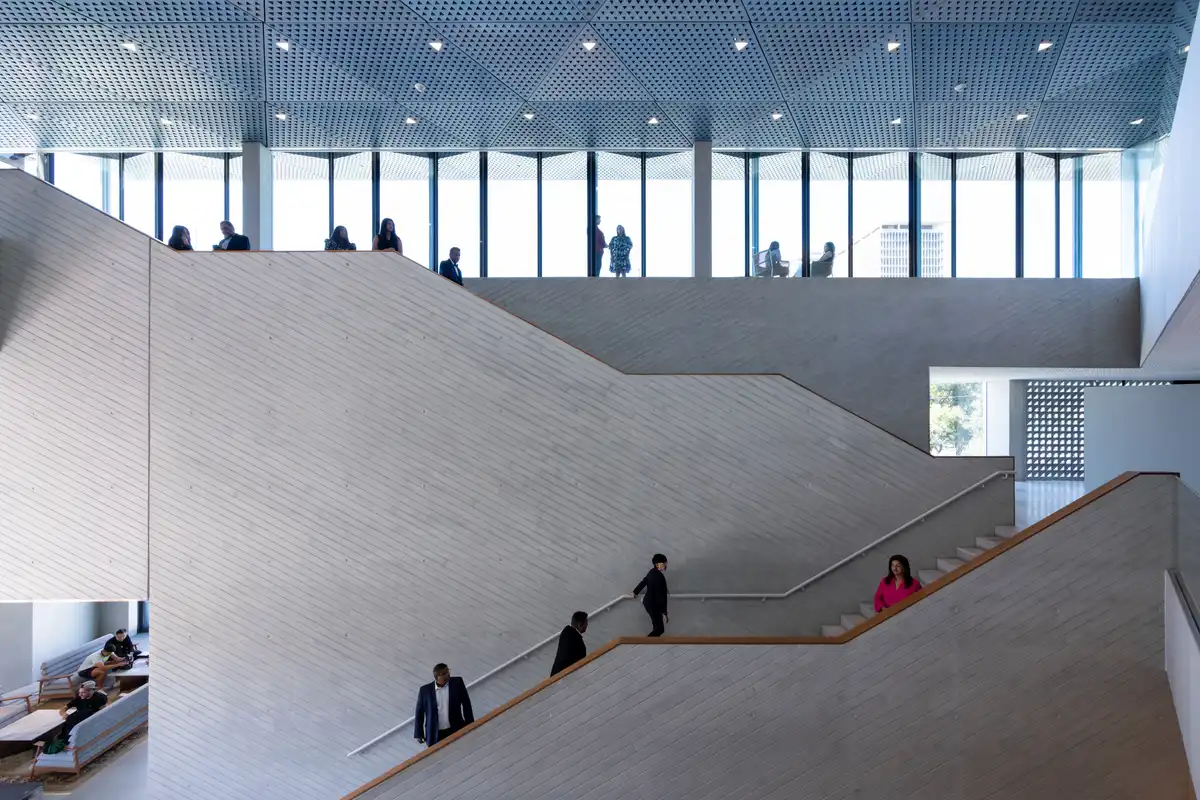
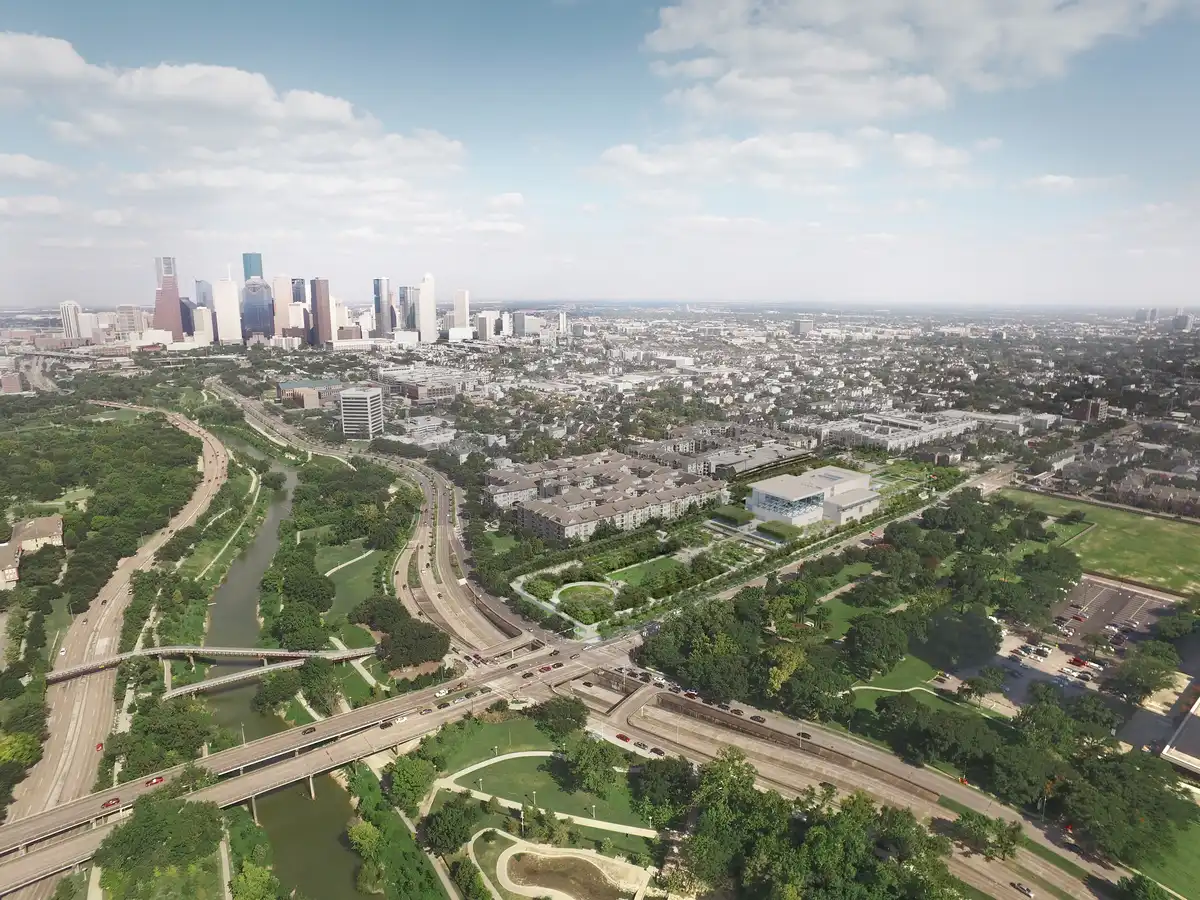
Set on 11 acres overlooking Buffalo Bayou Park, this achievement in architecture and landscape architecture marks a historic milestone for the Ismaili community and Houston’s dynamic cultural landscape. The Ismaili Center, Houston has been thoughtfully designed to serve both as a place of religious congregation for the Ismaili community and a welcoming space for the community at large. The Center’s facilities will be accessible for a wide range of public programming, community use, and collaborative initiatives.
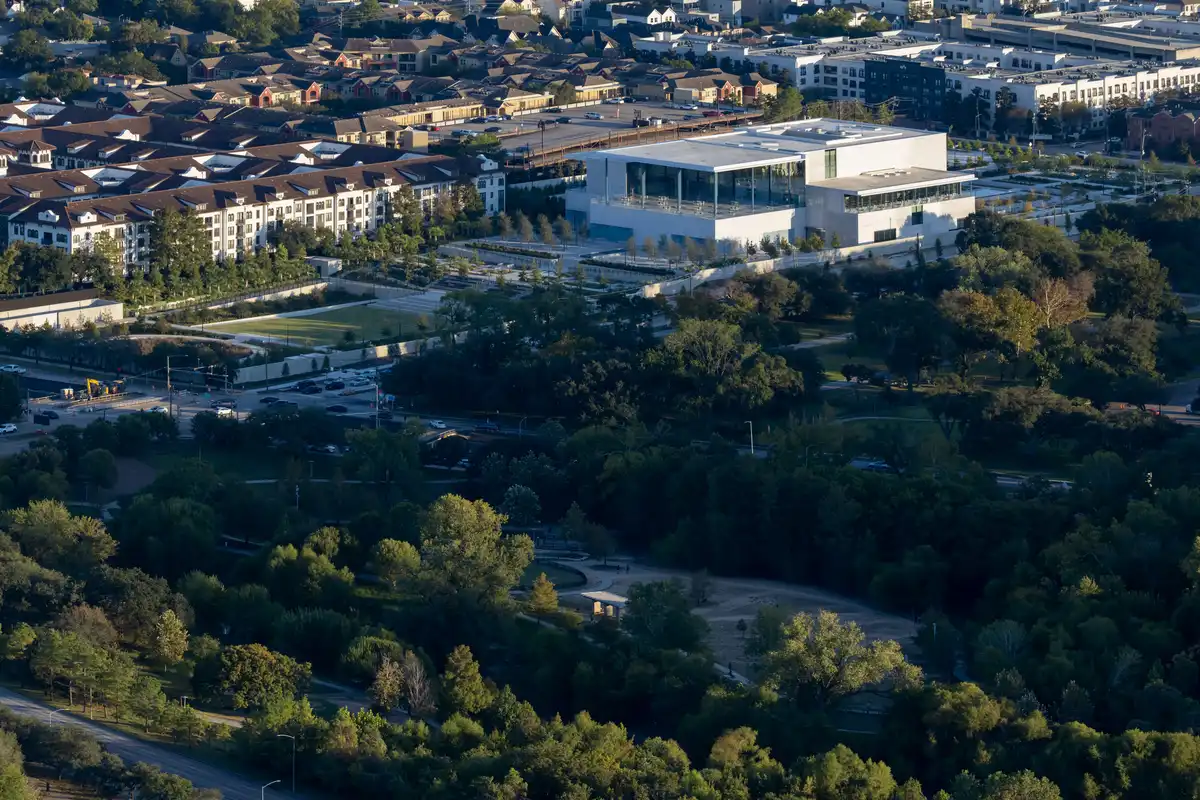
Situated prominently at the intersection of Allen Parkway and Montrose Boulevard, along the rapidly developing Allen Parkway corridor overlooking Buffalo Bayou Park, the Center fulfills a long-held vision of His Highness Prince Karim Aga Khan IV (1936–2025), which began to unfold with the 2006 purchase of the land and was brought to life under the leadership of his son and successor, His Highness Prince Rahim Aga Khan V.
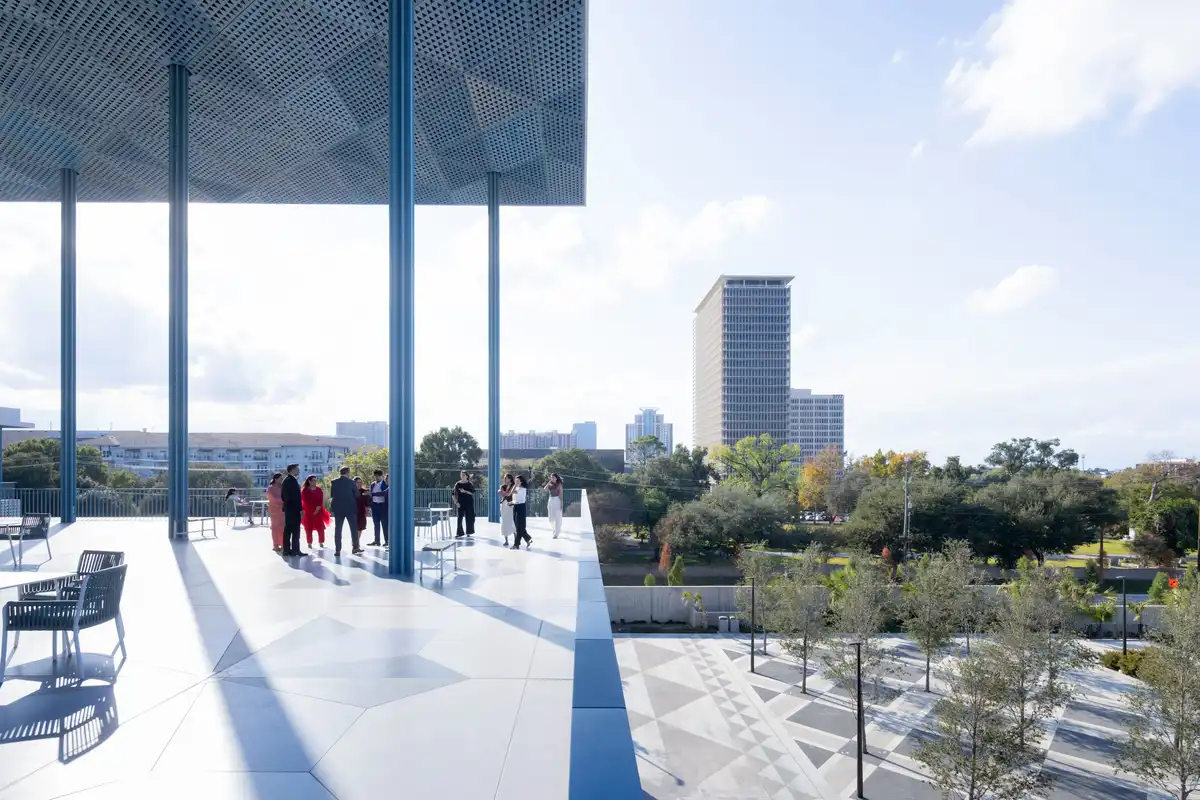
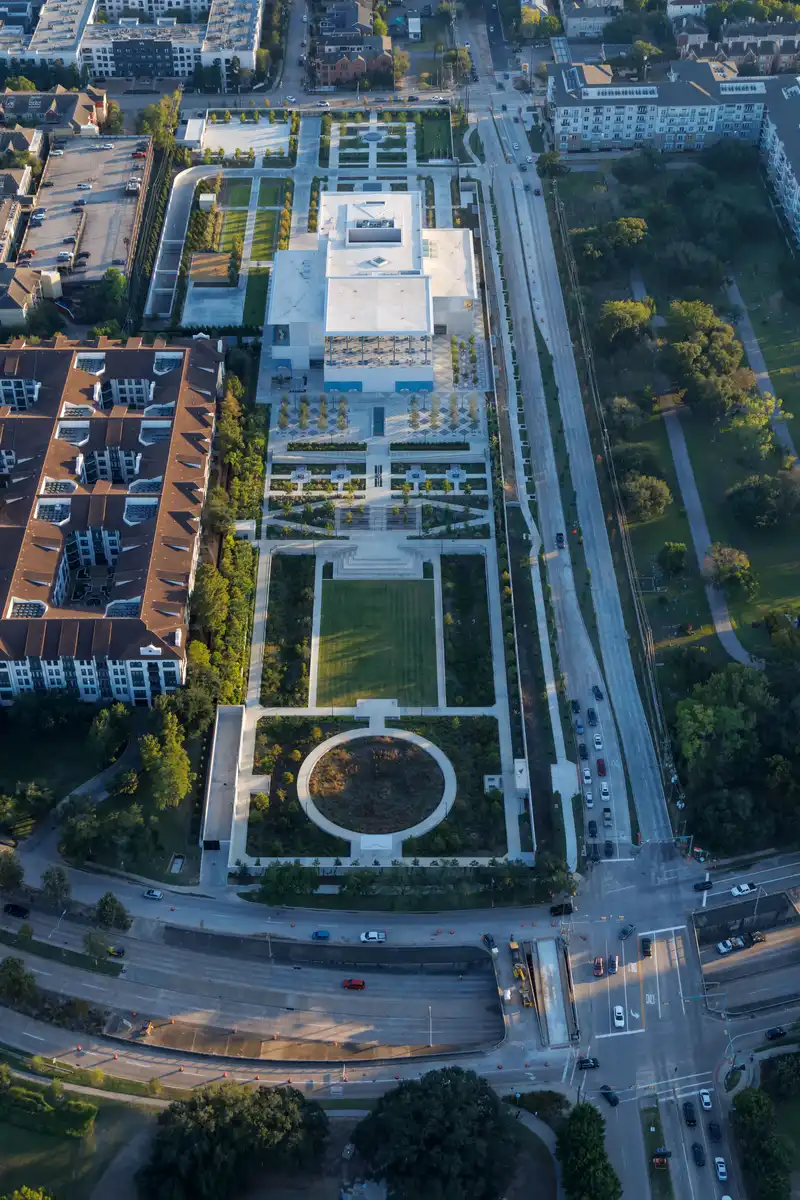
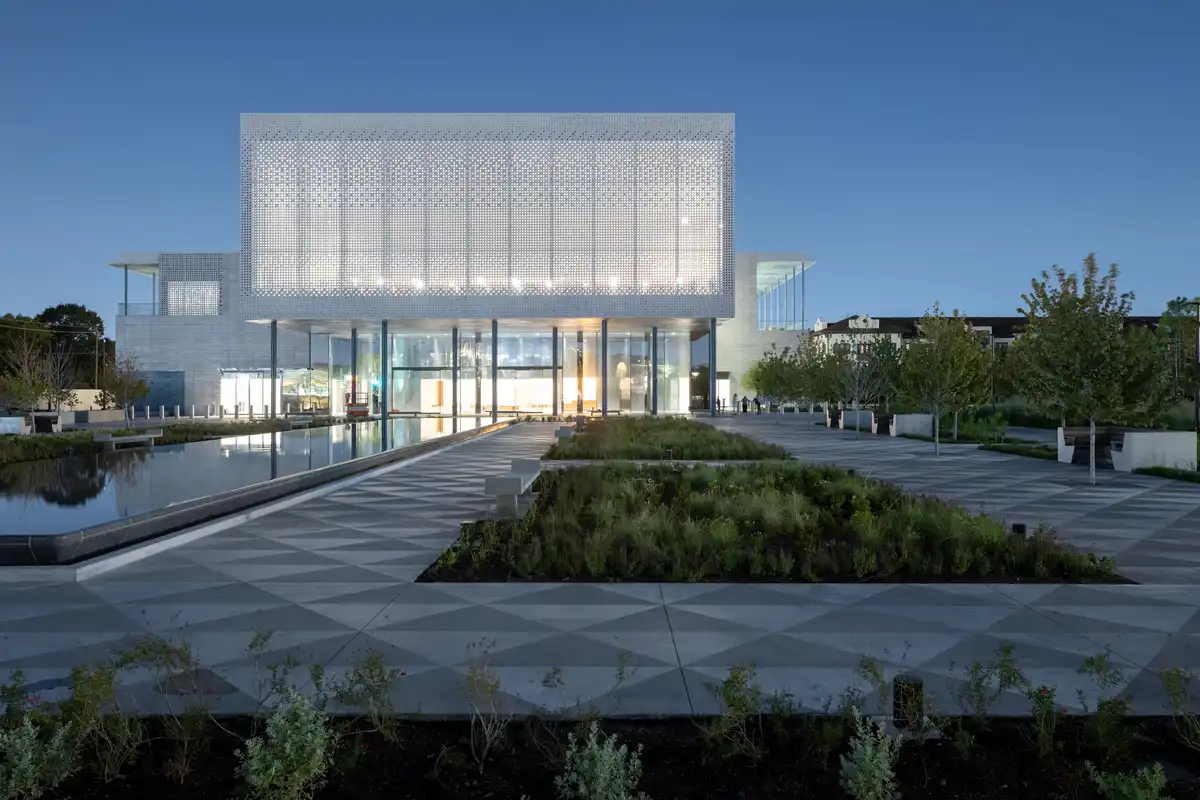
Comprising over nine acres of gardens and courtyards, the site unfolds around the Center’s luminous main structure, framed by tree-lined promenades, shaded terraces, and a series of tranquil water features, including a grand reflecting fountain at the primary entry. Together, the building and landscape form a serene civic sanctuary that embodies the Ismaili ethos of harmony between people, place, and nature.
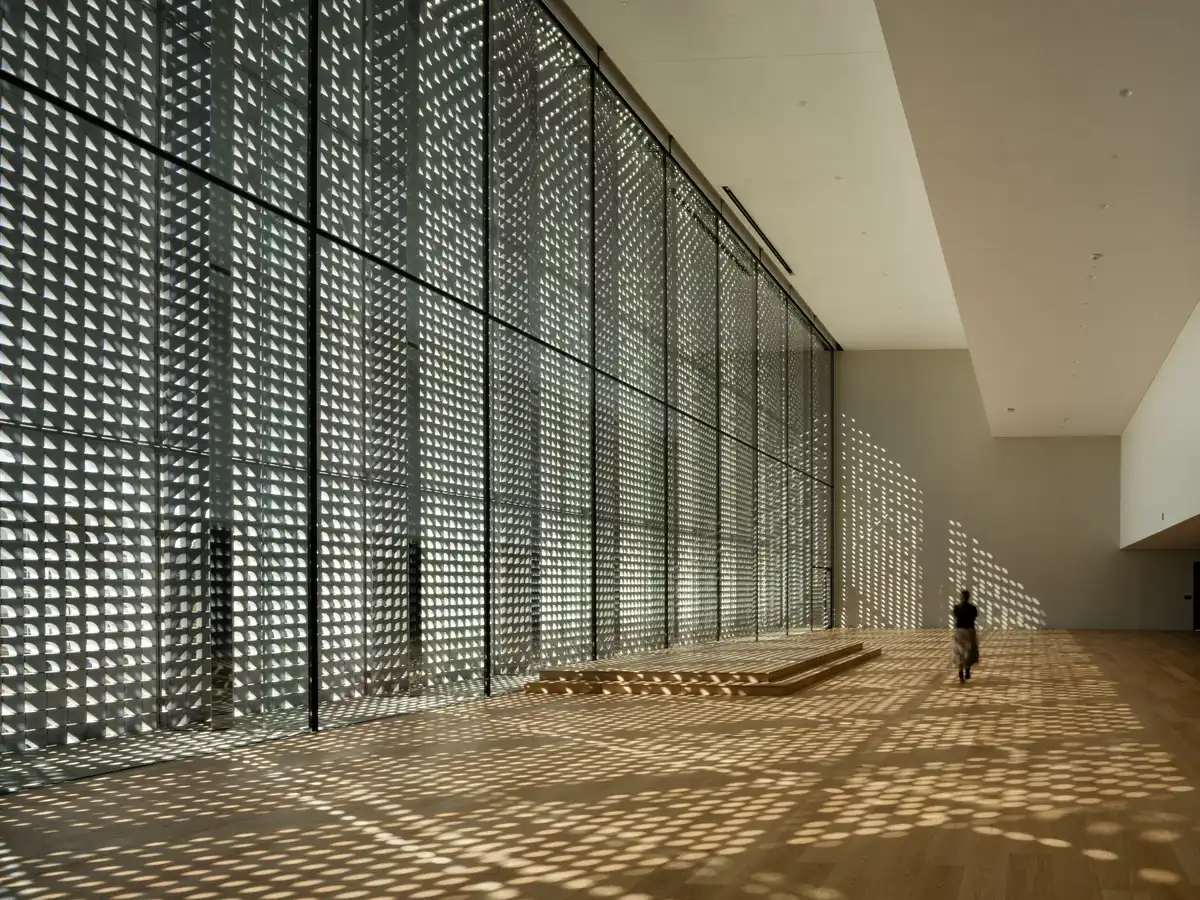
“The relationships between Ismailis and the communities in which they live have always been grounded in understanding and common purpose. Today, we honor that tradition, extending the hand of friendship to all, regardless of background or faith,” said His Highness Prince Rahim Aga Khan V. “This building may be called an Ismaili Center, but it is not here for Ismailis only. It is for all Houstonians to use; a place open to all who seek knowledge, reflection, and dialogue.”
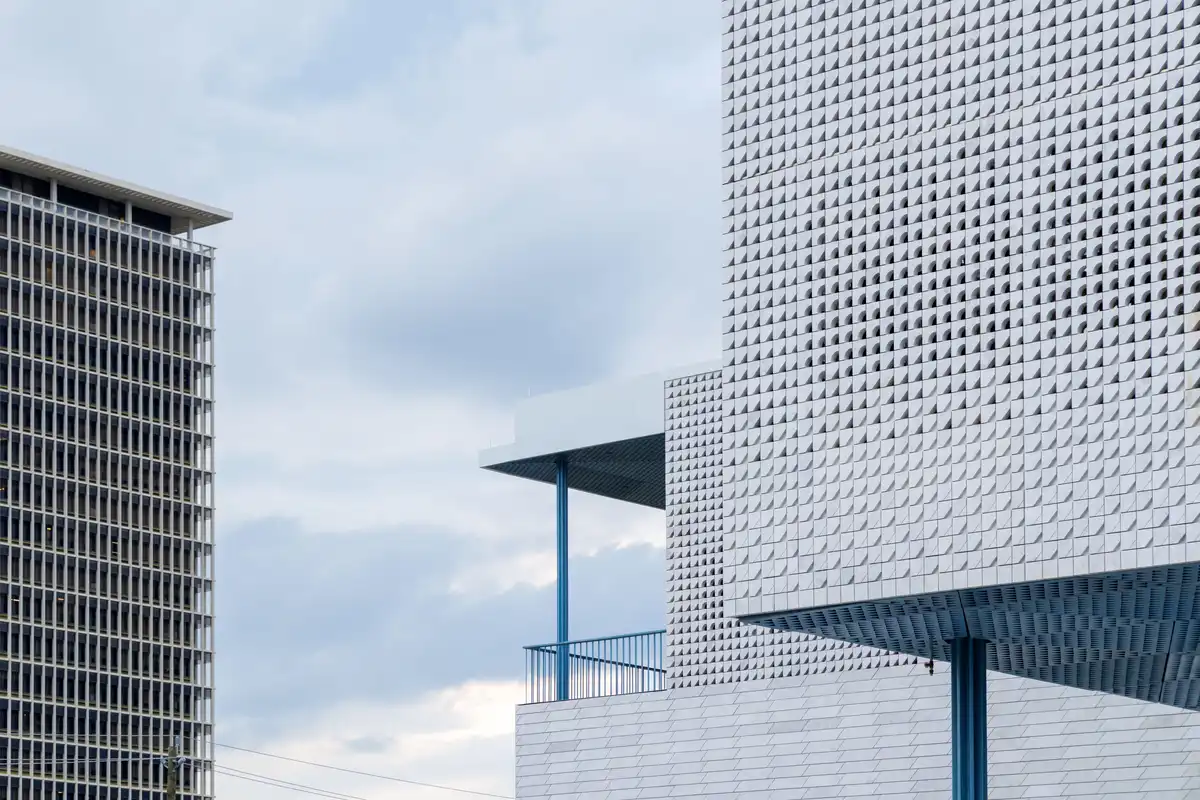
A Global Ethos Rooted in Local Context
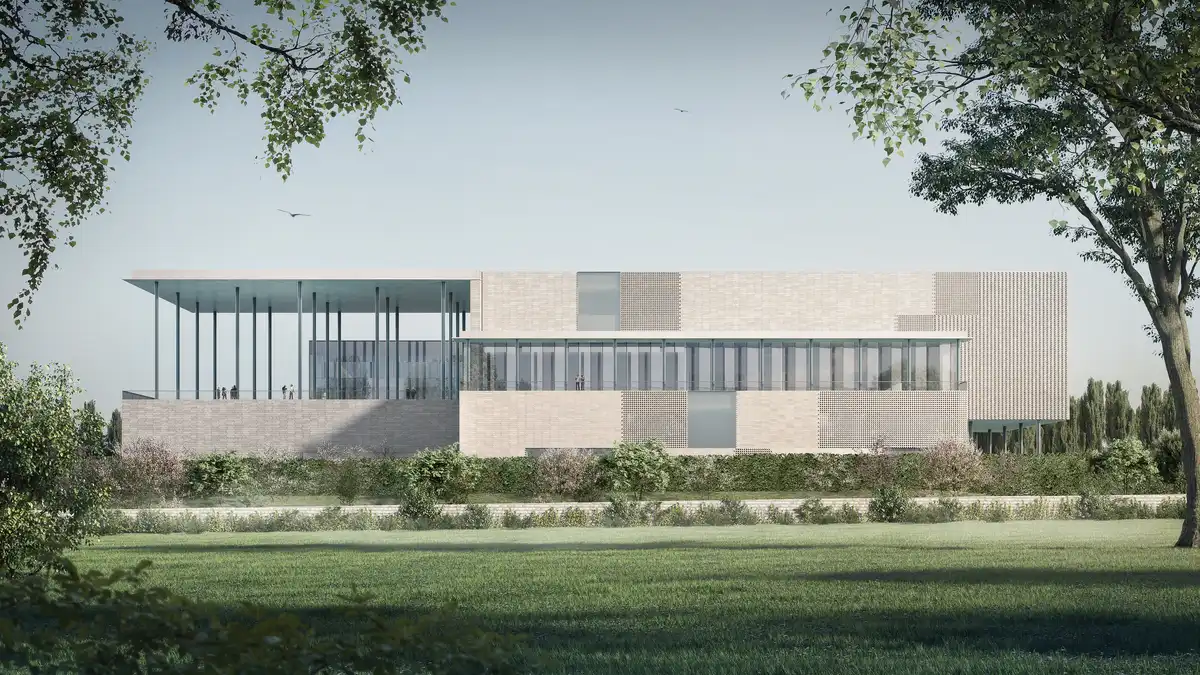
Featuring a 150,000-square-foot, five-story structure designed by internationally renowned architect Farshid Moussavi, founder of London-based Farshid Moussavi Architecture, with landscape architecture by Thomas Woltz of Nelson Byrd Woltz Landscape Architects, the Ismaili Center, Houston is the first in the United States and the seventh worldwide, joining those in London (1985), Vancouver (1985), Lisbon (1998), Dubai (2008), Dushanbe (2009), and Toronto (2014).
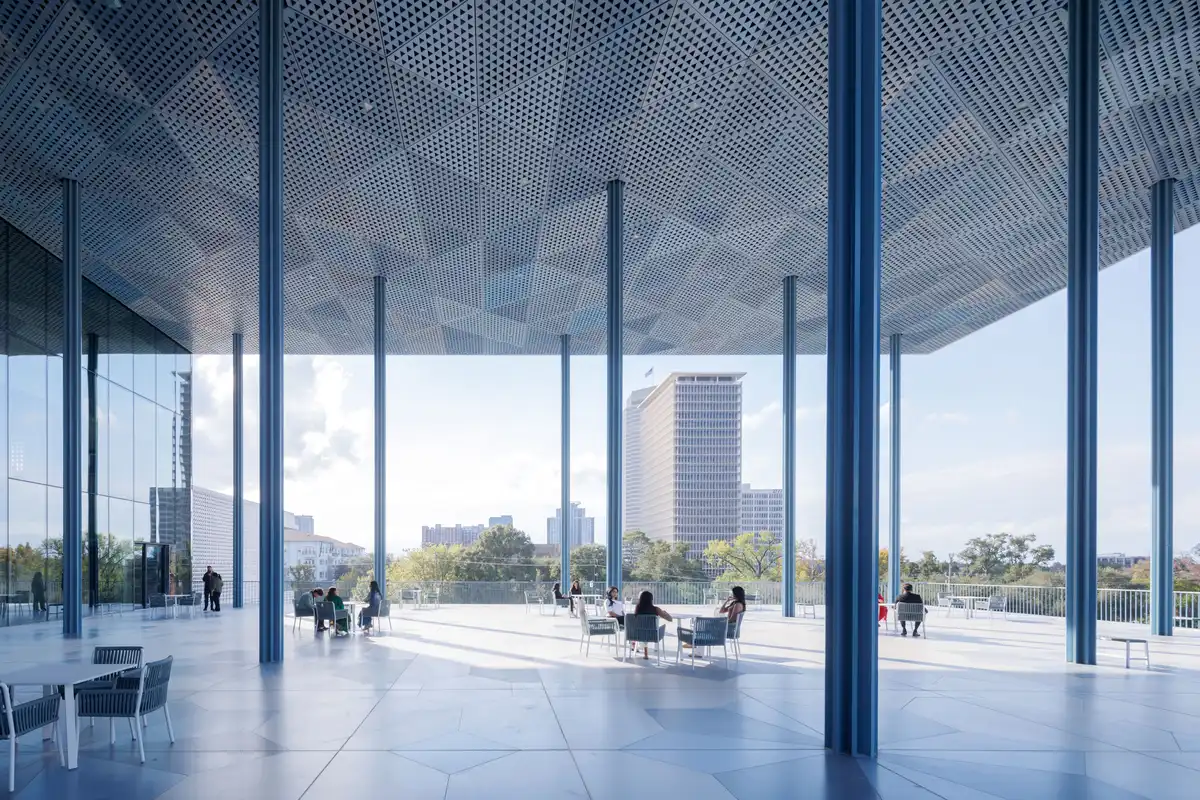
The project was realized in collaboration with AKT II (structural, civil, geotechnical, bioclimatic, and facade engineer), DLR Group (architect and engineer of record), and McCarthy (contractor). The team emphasized a holistic, client-led process in which architecture, engineering, landscape, and construction advanced together, minimizing surprises and enabling high craft.
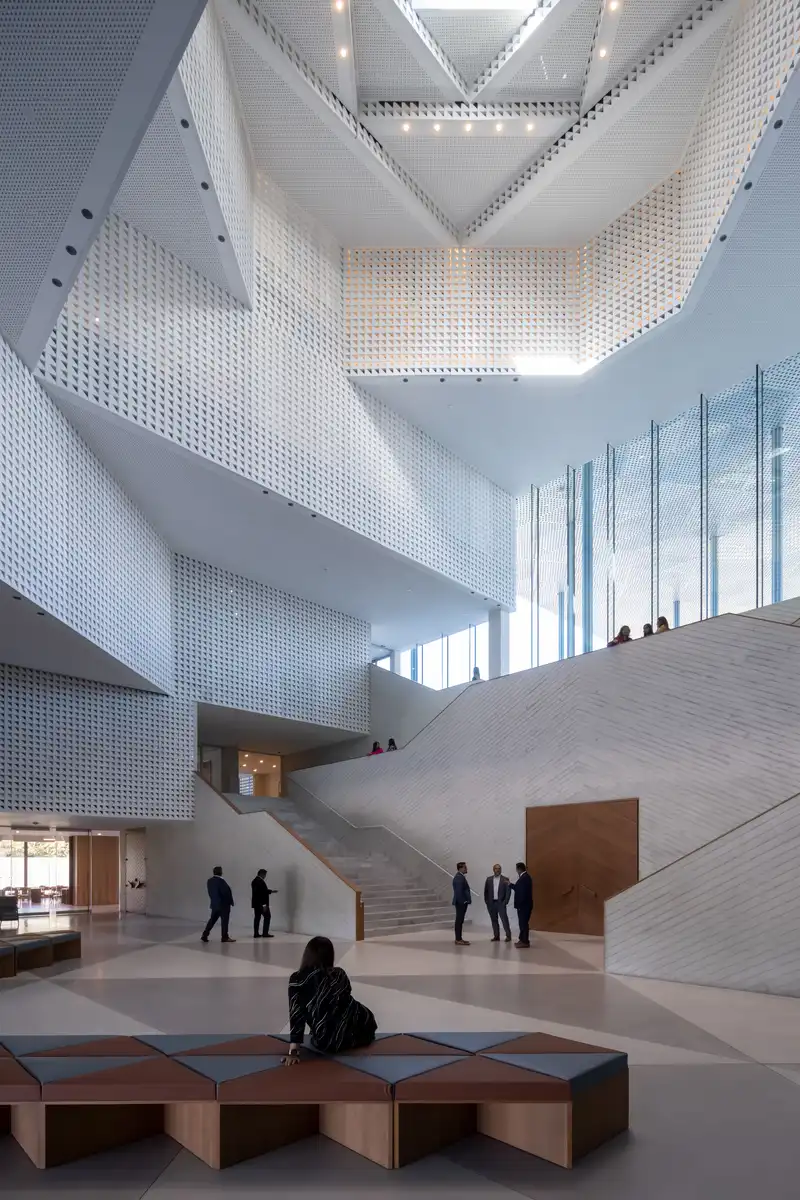
The Center is poised to become a major resource for Houston’s nonprofit and cultural sectors, offering access to spaces for meetings, conferences, lectures, performances, and events.
Welcome events for community partners and neighbors will take place on December 12 and 13. Additional details will be shared in the coming weeks.
A Space for Reflection, Dialogue, and Discovery
Ismaili Centers around the world serve as ambassadorial buildings, welcoming people of all backgrounds to explore the intersections of faith, culture, and civic life. Each embodies the Ismaili community’s commitment to peaceful pluralism, intellectual engagement, and shared humanity, offering a place for spiritual reflection, cultural exchange, and public dialogue.
The Ismaili Center, Houston continues this tradition, envisioned as a living home for the mind and spirit – a place where programs in education, art, music, performance, and conversation come together to foster understanding among people of all backgrounds.
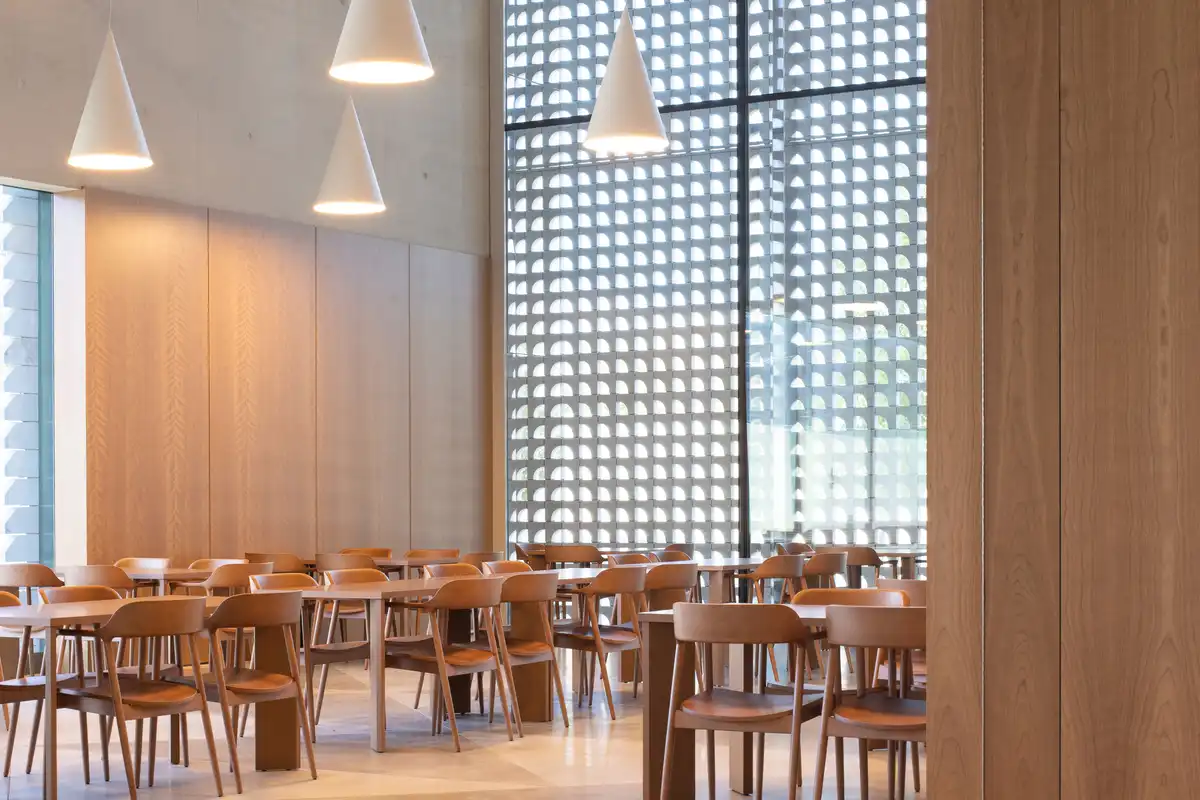
Within its walls, visitors will find permanent and rotating art exhibitions, a black box theater, function rooms, a café, administrative offices, classrooms, and a Jamatkhana (prayer hall for Ismaili Muslims) that anchors the complex in devotion and community. In keeping with the Ismaili ethic of service, the Center is staffed largely by volunteers.
By welcoming organizations that advance the common good, from education and the arts to public health, environmental awareness, and social equity, the Ismaili Center, Houston will be a place of connection, learning, and openness, nurturing the exchange of ideas that strengthens the fabric of civic life.
“The City of Houston is proud to welcome the Ismaili Center, a place where people from every background can come together in dialogue, understanding, and learning. When I visited the site during construction, I could already see what it would mean for our city. Now that it’s complete, it stands as a new monument along the Allen Parkway corridor, and a beacon of light surrounded by some of our most treasured neighborhoods and cultural institutions. The Ismaili Center truly reflects the best of Houston’s spirit: our diversity, our compassion, and our commitment to community. It’s a place that invites all Houstonians to come together and celebrate what connects us,” said Mayor Whitmire.
Architectural Dialogue Between Tradition and Modernity
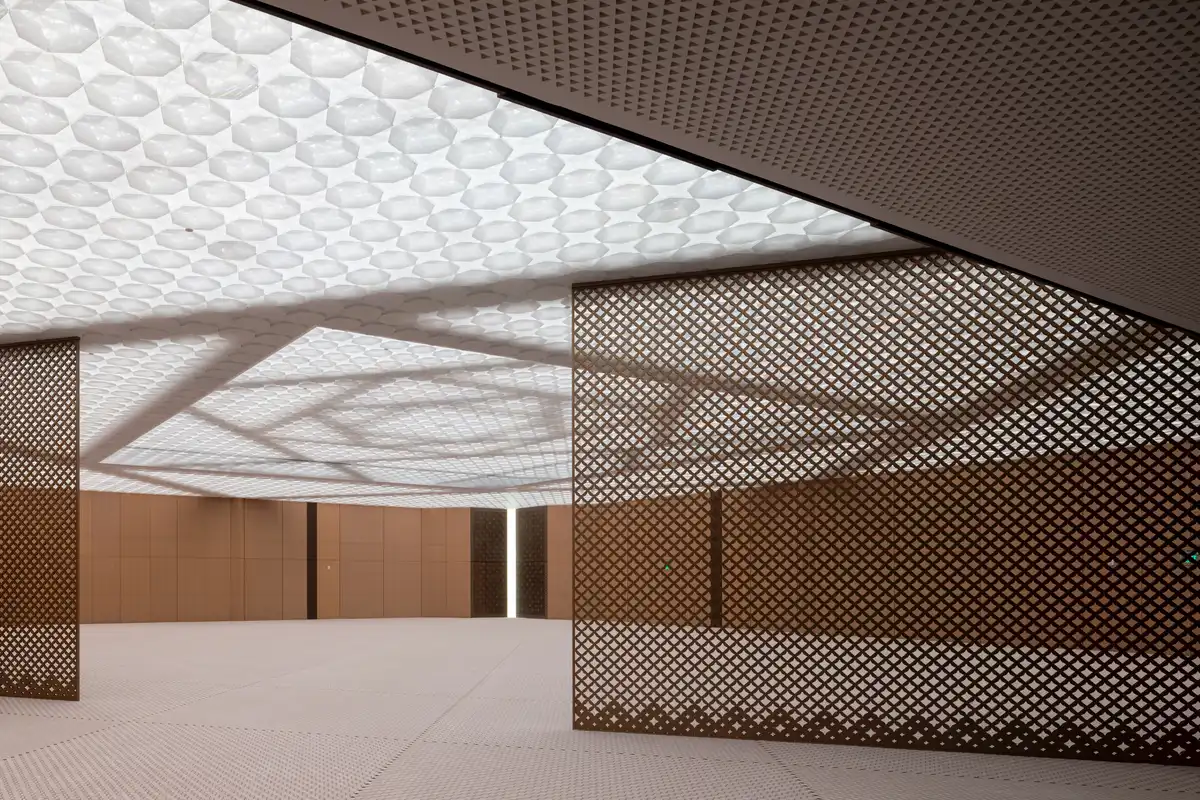
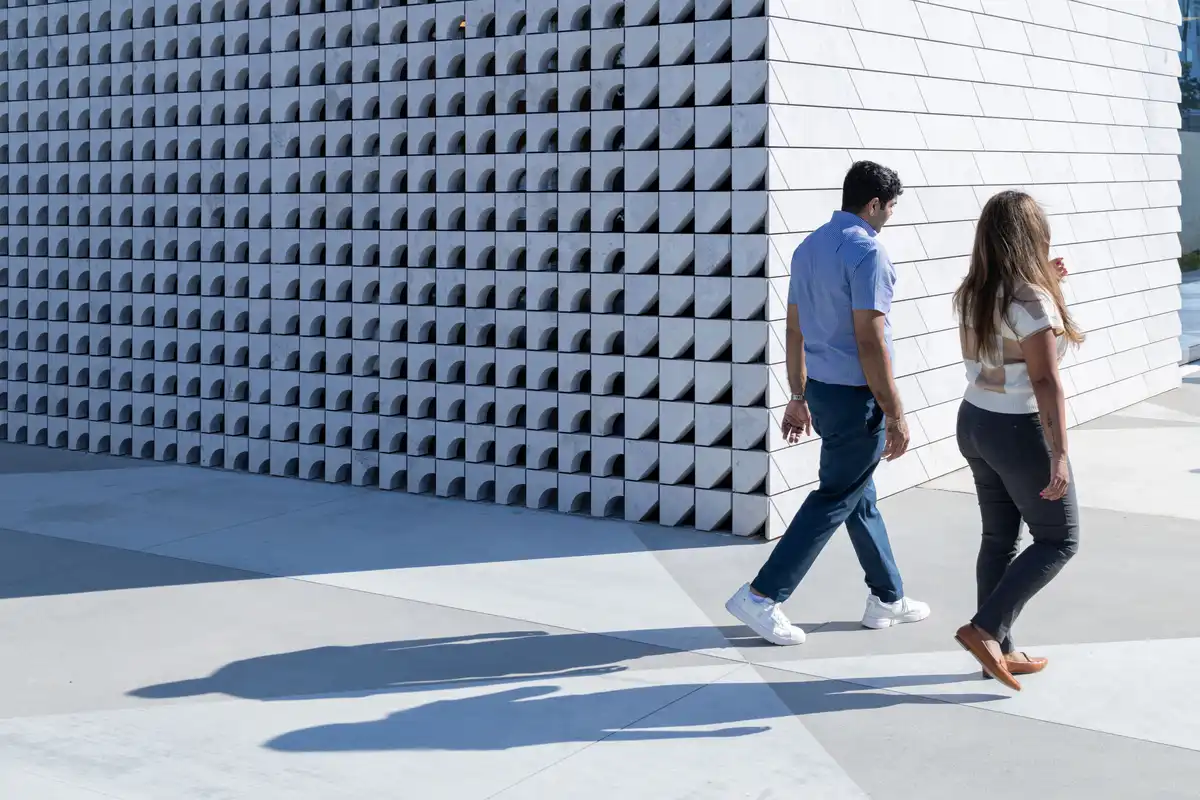
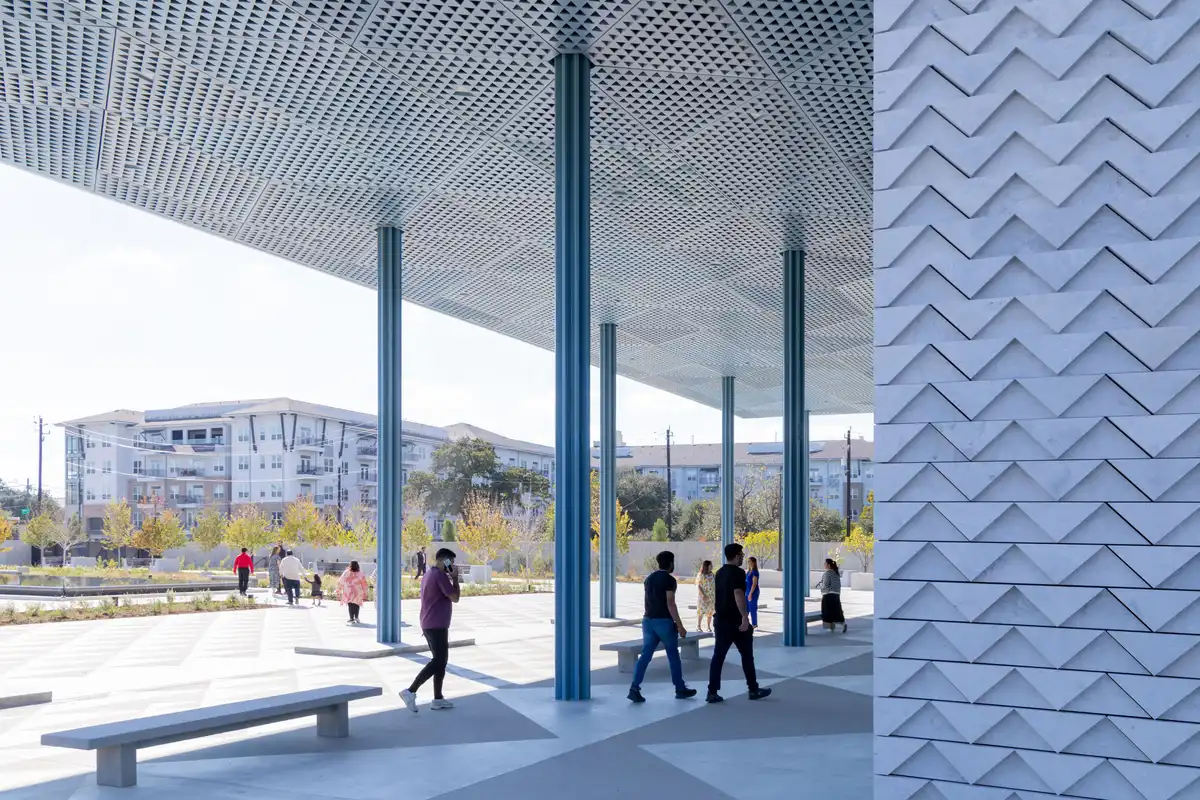
Rather than replicate historical styles, the architecture of the Ismaili Center, Houston translates enduring ideas from across the Muslim world – structure as legible order, ornament as human scale, repetition as unity, and light as material – through contemporary craft. Inspiration from Persian domestic and palace traditions is evident in the verandas (eivans) and in perforated stone screens that temper light and privacy. Large geometric moves resolve into intimate detail, yielding spaces that feel clear, calm, and timeless, rather than trend driven.
Shaped by Houston’s climate and the site’s geography, the Center choreographs a porous sequence of eivans (veranda in Persian) and atria that pair shaded outdoor rooms with luminous interiors. These covered thresholds invite year-round movement between inside and out and remain open for informal use beyond scheduled programs, reinforcing the Center’s civic mission as a daily destination for gathering, reflection, and exchange.
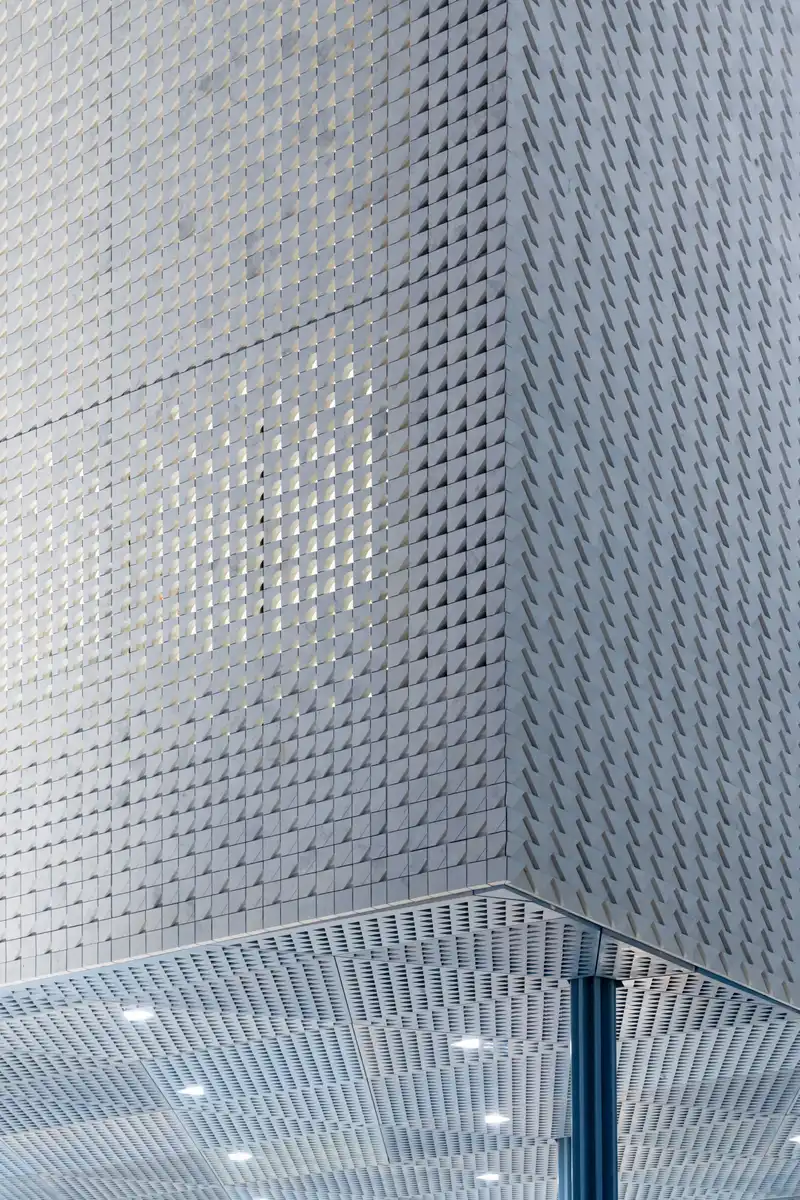
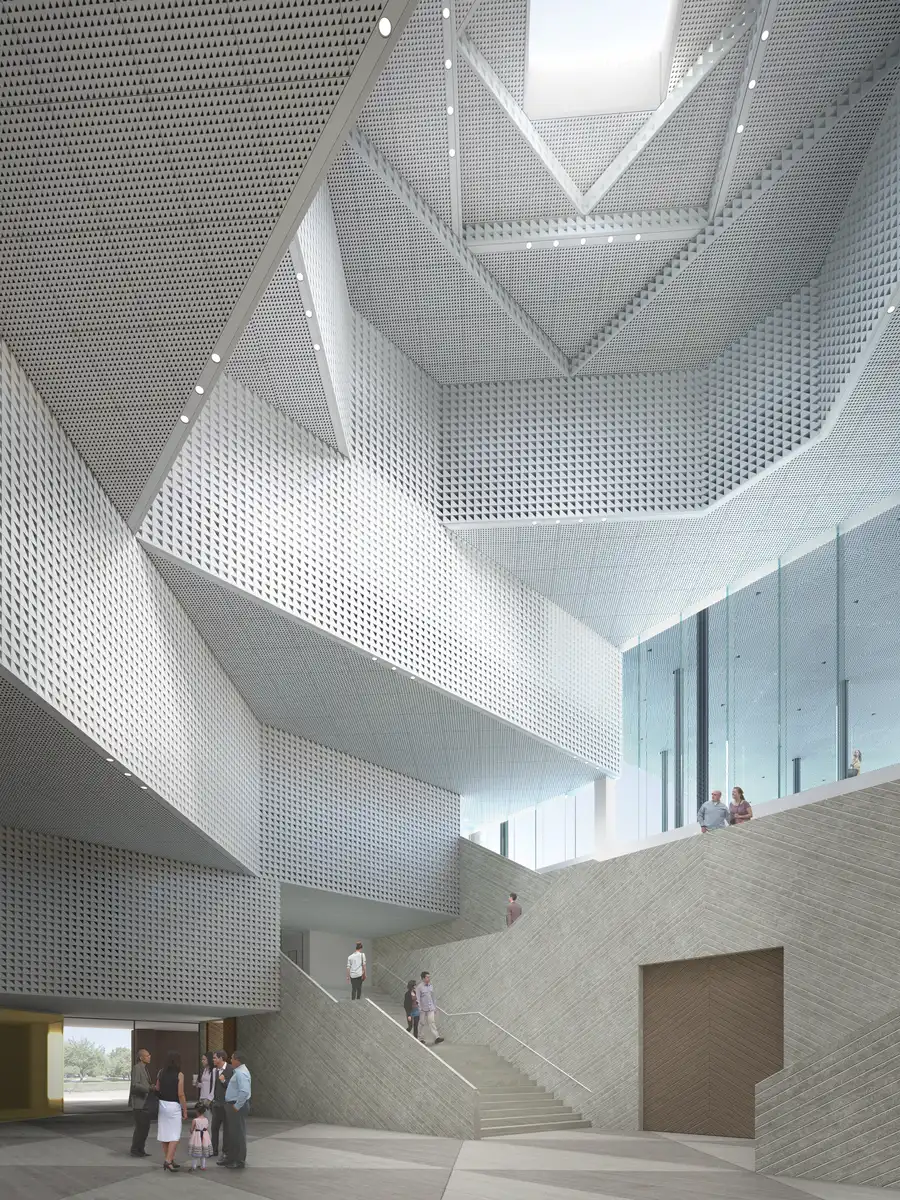
Materials were chosen for beauty, clarity, and a 100-year life. The exterior employs small, varied stone tiles that read as quiet massing from afar and refined ornament up close. Inside, a restrained palette featuring silk-laminated glass, steel, wood paneling, and ultra-high-performance concrete, elevates geometry over finish. Screens shift from triangular apertures to subtle scallops to widen seated views while maintaining structural integrity. Above, an oculus crowns the central atrium opposite the Jamatkhana (prayer hall) doors, aligning sky and sanctuary. Sited at the property’s highest point above the 500-year floodplain, the building is protected, and the underground parking garage is designed to take on water when necessary.
Landscape of Reflection and Resilience
For Woltz, the Ismaili Center, Houston represents the culmination of more than a decade of research into how the landscapes of the Muslim world can find new relevance in the 21st century. The Ismaili Center, Houston marks Nelson Byrd Woltz’s fourth project completed for the Aga Khan Development Network. When His Highness Prince Karim Aga Khan IV engaged the firm in 2011, he tasked Woltz and his team with a yearlong study across historic sites in Spain, Egypt, and India to explore the spatial, sensory, and cultural dimensions of Islamic gardens, such as the sound of water, the scale of walls, the rhythm of geometry, and the symbolism of enclosures. The insights from this study informed the firm’s approach to subsequent projects, including the Ismaili Center, Houston.
Drawing on those lessons, Woltz approached the Ismaili Center in Houston as both a work of environmental engineering and a living expression of cultural continuity.
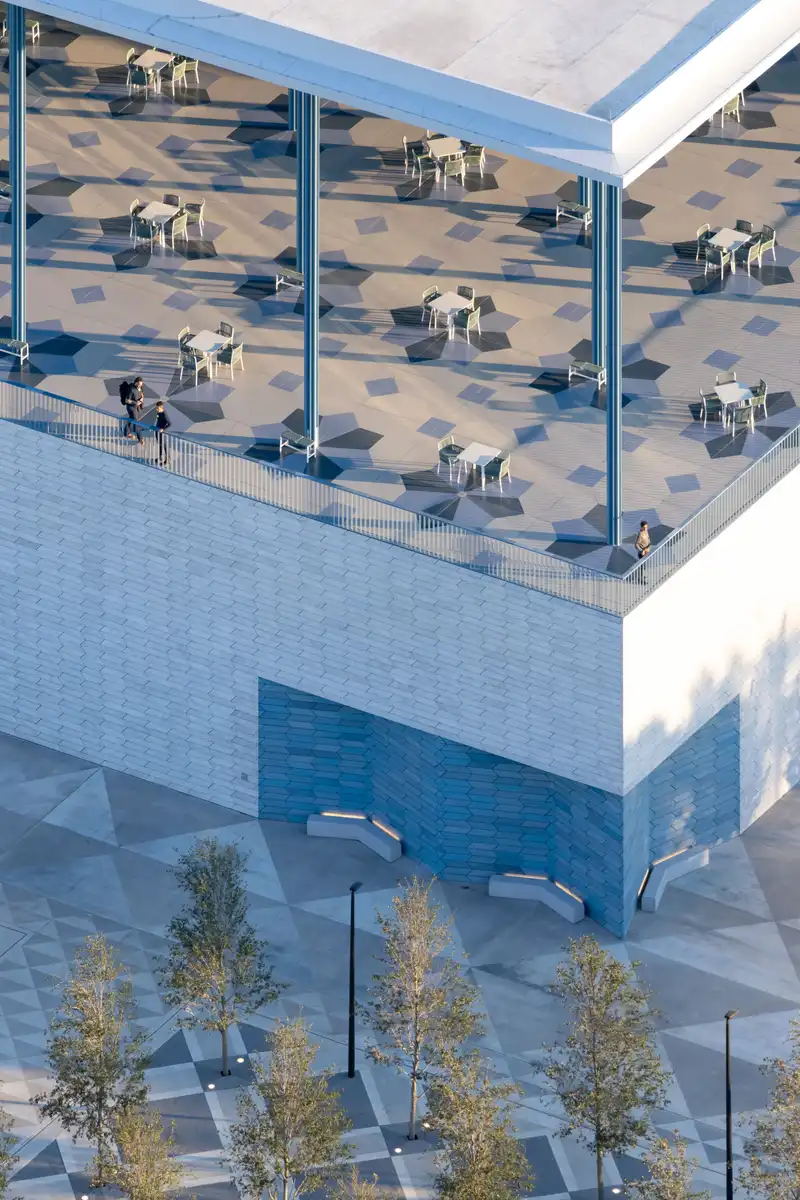
The site was selected for its gentle slope toward the Buffalo Bayou, a topography that echoes ancient Persian gardens stepping down to a river. Woltz’s design transforms this terrain into a resilient system of terraced lawns, reflecting basins, and flood-adaptive gardens, capable of withstanding Houston’s 500-year storm events. Working with Professor Hanif Kara of London-based structural engineering firm AKT II, the team embedded a subtle geometric grid through both building and landscape, ensuring that every path, fountain, and tree aligns in quiet visual harmony to follow ancient traditions of eastern cultures. Enclosed by sound-mitigating garden walls soon to be covered in creeping fig, the Center forms a tranquil enclave – shielded from the city yet deeply connected to its ecology.
Beyond its aesthetic and environmental ambitions, the landscape embodies the Ismaili ethos of community, stewardship, and belonging. Woltz conceived the plantings as a “transect of Texas,” beginning with desert species like paddle cactus and agave, and moving through the prairie to the Gulf Coast, mirroring the adaptability of the Ismaili people in new homelands. Designed not as a static garden but as a living, evolving ecosystem, the site will mature over time. “It’s not just about beauty,” Woltz notes. “It’s about creating a place that brings people together in calm and reflection – a landscape of connection, resilience, and care.”
A Collaborative Achievement and a Civic Gift
The Ismaili Center, Houston adds a defining new layer to the city’s reputation as a cultural capital of the American South, joining neighboring landmarks such as The Menil Collection, Rothko Chapel, Asia Society Texas, Cistern, and the Museum of Fine Arts, Houston.
More than a place of worship or art, the Center stands as a symbol of openness – a space where communities converge to learn from one another, celebrate shared values, and imagine a more connected world.
Photography © Iwan Baan, 2025
October 9, 2025
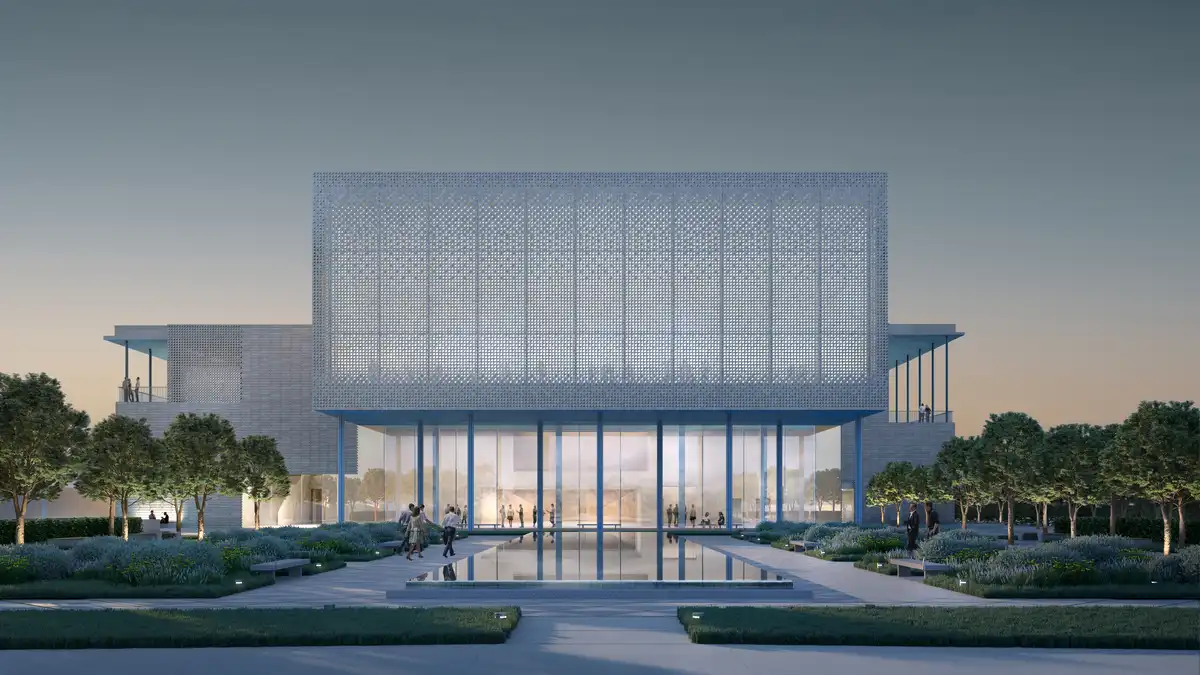
Renders courtesy of the Ismaili Center
Ismaili Center, Texas, USA
The new Ismaili Center will open in Houston, Texas in November 2025. Houston’s Center will be the first Ismaili Center to open in the USA and seventh globally. There are six other Ismaili Centres worldwide, located in London, Lisbon, Dubai, Dushanbe, Vancouver and Toronto.
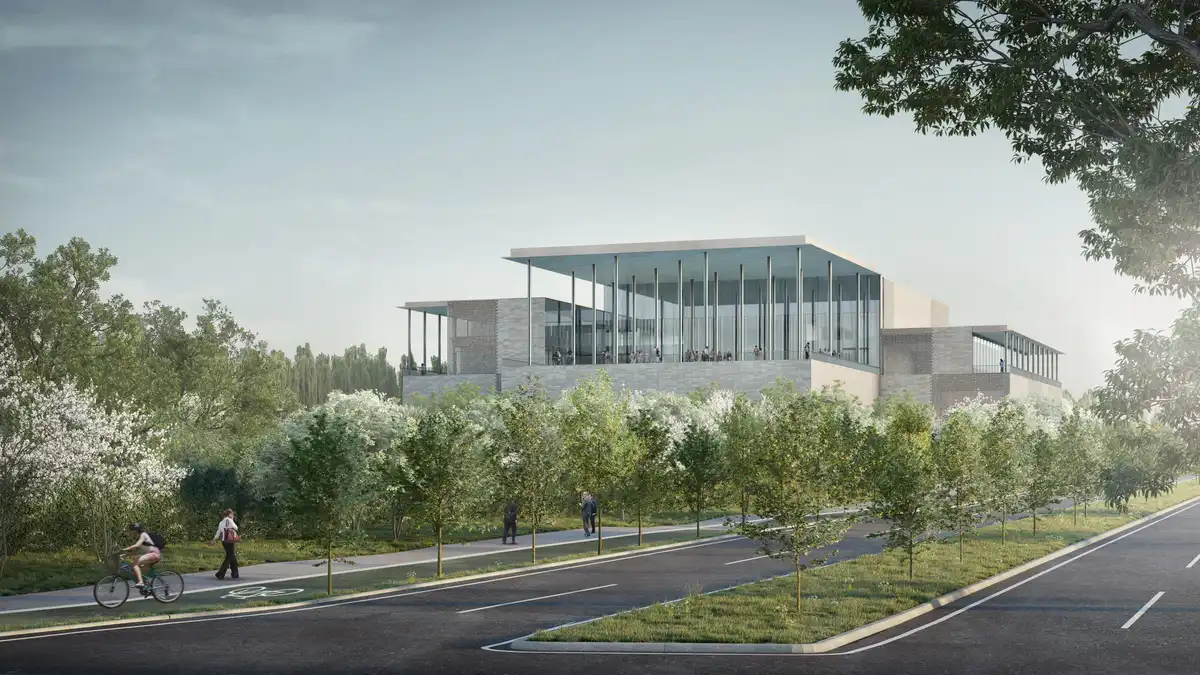
Designed by the internationally acclaimed architect Farshid Moussavi, the new 150,000 square feet Center will contain extensive cultural and civic spaces open to the public. These include an exhibition gallery, a black box theatre, banquet halls, meeting rooms, educational spaces, a café and a prayer hall, creating a vibrant hub for both spiritual reflection and civic life.
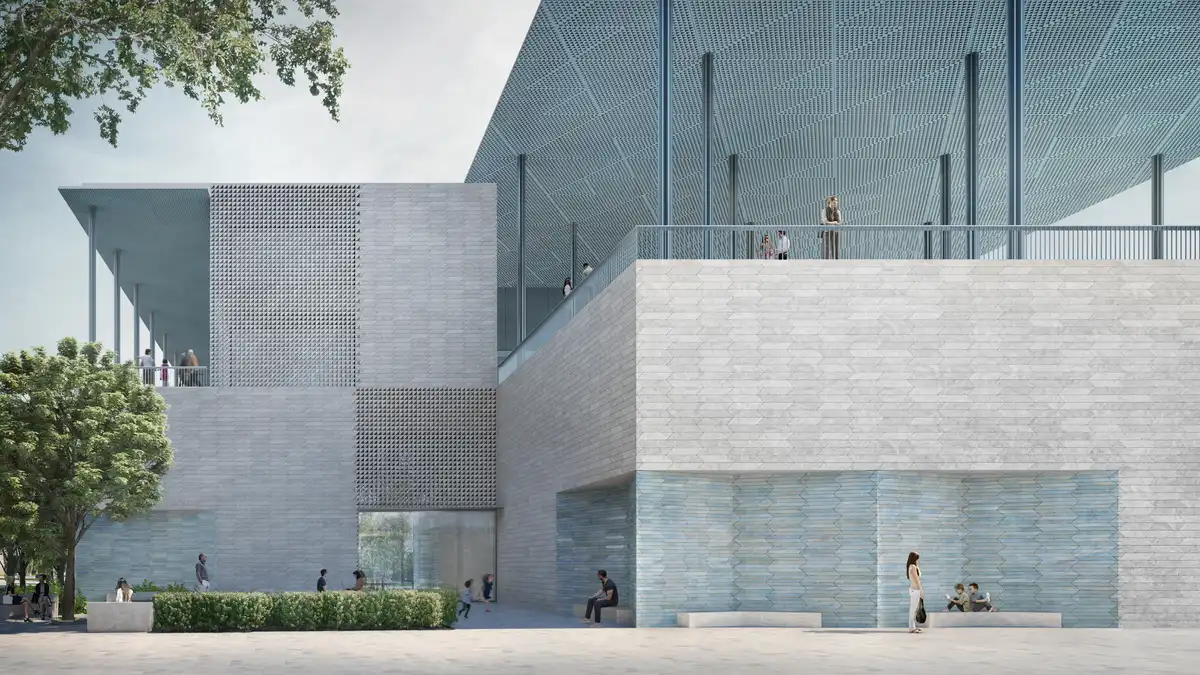
At the heart of the building is a five-storey atrium, flanked by two side atria that connect to soaring eivans (Persian for verandas), which allow light to flood the interior from all sides. Architectural surfaces are decorated with geometric patterns inspired by Islamic traditions.
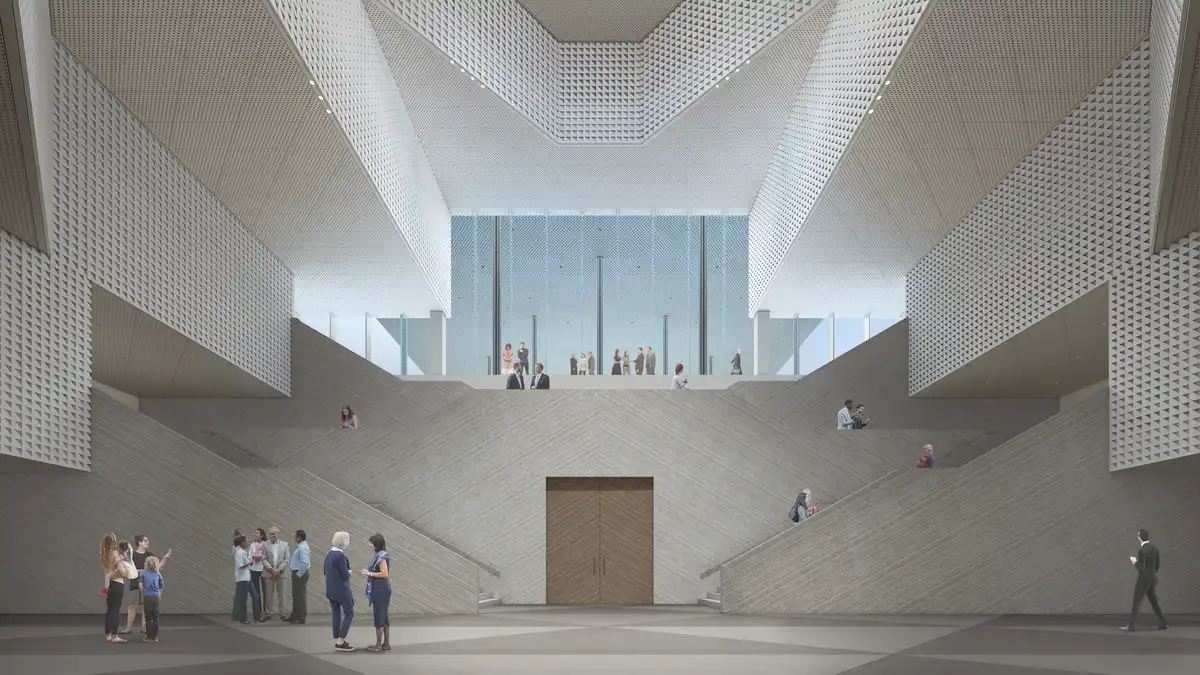
Farshid Moussavi, Architect, said: “The Ismaili Center Houston embodies His Highness the Aga Khan’s vision of a space that welcomes all, fostering dialogue, learning and cultural exchange. Its design, rooted in Islamic traditions yet responsive to Houston’s climate, combines open gathering space, light filled space and intricate craftsmanship to create a serene, inclusive environment that will endure for generations.”
The Center is set in 9 acres of gardens designed by the US landscape architects, Nelson Byrd Woltz, creating a contemplative oasis in the heart of Houston’s urban core, reinterpreting Islamic landscape traditions while grounding the centre in Texas’s diverse ecologies.
The site for the new Ismaili Center in Houston was selected by His Highness the Agha Khan IV (1936-2025), the then spiritual leader of the world’s Shia Ismaili Muslims.
For Houston, the Center will complement other iconic nearby institutions such as the Menil Collection, Rothko Chapel, Asia Society Texas, and the Museum of Fine Arts, Houston.
About the Ismaili Center Houston
The Ismaili Center Houston is the first in the United States and part of a group of architecturally significant spaces created by the Ismaili Muslim community in various parts of the world. Designed by Farshid Moussavi, in collaboration with Nelson Byrd Woltz Landscape Architects (gardens), AKT II (structure), and DLR Group (architect and engineer of record), the Center includes spaces for congregation, dialogue, learning, and civic engagement, including gardens, courtyards, an exhibition gallery, theater, banquet halls, and a prayer hall.
About the Ismaili Muslims
The Ismailis are a diverse global community of Shia Muslims living in more than 35 countries. They are guided by a hereditary Imam, currently His Highness Prince Rahim Aga Khan V, who succeeded his father in 2025. Rooted in a tradition of ethical leadership and civic responsibility, Ismailis are known worldwide for their commitment to pluralism, social progress, and service to the societies in which they live. In Texas, the community is especially recognised for its public service and volunteerism. Building bridges of peace and understanding, Ismailis are committed to the principles of unity, brotherhood, justice and goodwill.
About His Highness the Aga Khan
His Highness Prince Rahim Aga Khan V is the 50th hereditary Imam (spiritual leader) of the Shia Ismaili Muslims and a direct descendant of the Prophet Muhammad. He was educated at Philipps Academy in Andover and Brown University (Class of 1995). He became Imam in February 2025 upon the passing of his father, His Highness Prince Karim Aga Khan IV. The Aga Khan promotes an understanding of Islam rooted in values of generosity, tolerance, pluralism, environmental stewardship, and the shared unity of humanity. He also chairs the Aga Khan Development Network (AKDN), one of the world’s largest private development agencies, which works across more than 30 countries to improve quality of life for marginalized communities regardless of faith or background.
About Farshid Moussavi
Farshid Moussavi OBE RA – https://www.farshidmoussavi.com/ is an internationally acclaimed architect and Professor in Practice of Architecture at Harvard University Graduate School of Design. Alongside leading an award-winning architectural practice, Farshid Moussavi Architecture (FMA), she lectures regularly at arts institutions and schools of architecture worldwide and is a published author. Moussavi was the Chair of the Master Jury of the Aga Khan Award for Architecture in 2004, and a member of its Steering Committee between 2005 and 2015. She was elected a Royal Academician in 2015 and Professor of Architecture at the RA Schools in 2017, and appointed Officer of the Order of the British Empire (OBE) in the 2018 Queen’s Birthday Honours for services to architecture.
Images courtesy of the Ismaili Center
Ismaili Center, Houston, Texas Cultural Centre images / information received 091025 from Farshid Moussavi Architecture (FMA)
Location: Houston, Texas, USA
Houston Architecture
New Houston Architectural Designs
The Orange Show Center for Visionary Art, Houston
Design: Rogers Partners
Nancy and Rich Kinder Building Houston
Design: Steven Holl Architects
Flora Restaurant Houston
Architecture: Clayton Korte
Museum of Fine Arts Houston Expansion
++
American Architecture Designs
American Architectural Designs – recent selection from e-architect:
America Architecture News – latest building updates
Comments / photos for the Ismaili Center in Houston, Texas page welcome.


