
Ice Factory, Ballard Estate in Maharashtra
post updated 8 July 2026
Architects: Malik Architecture
Location: Lonavla, Maharashtra, India
Photos © Bharath Ramamrutham
13 August 2025
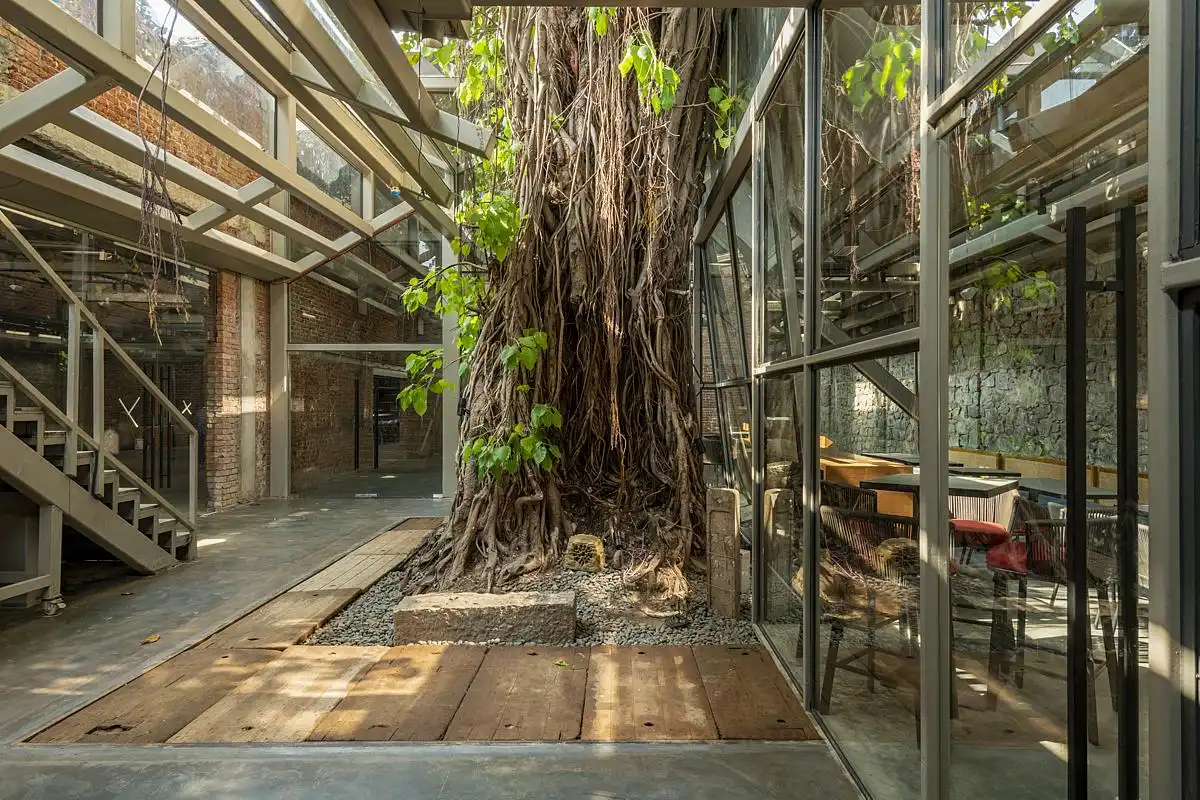
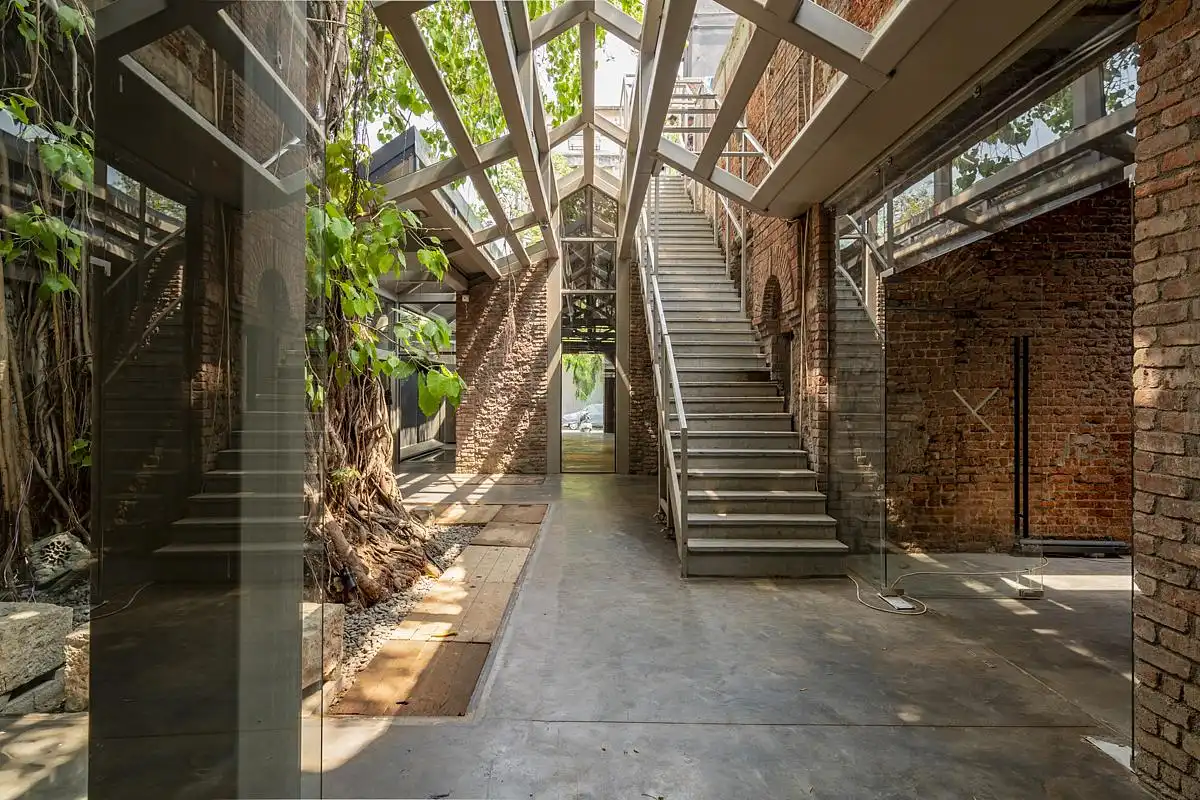
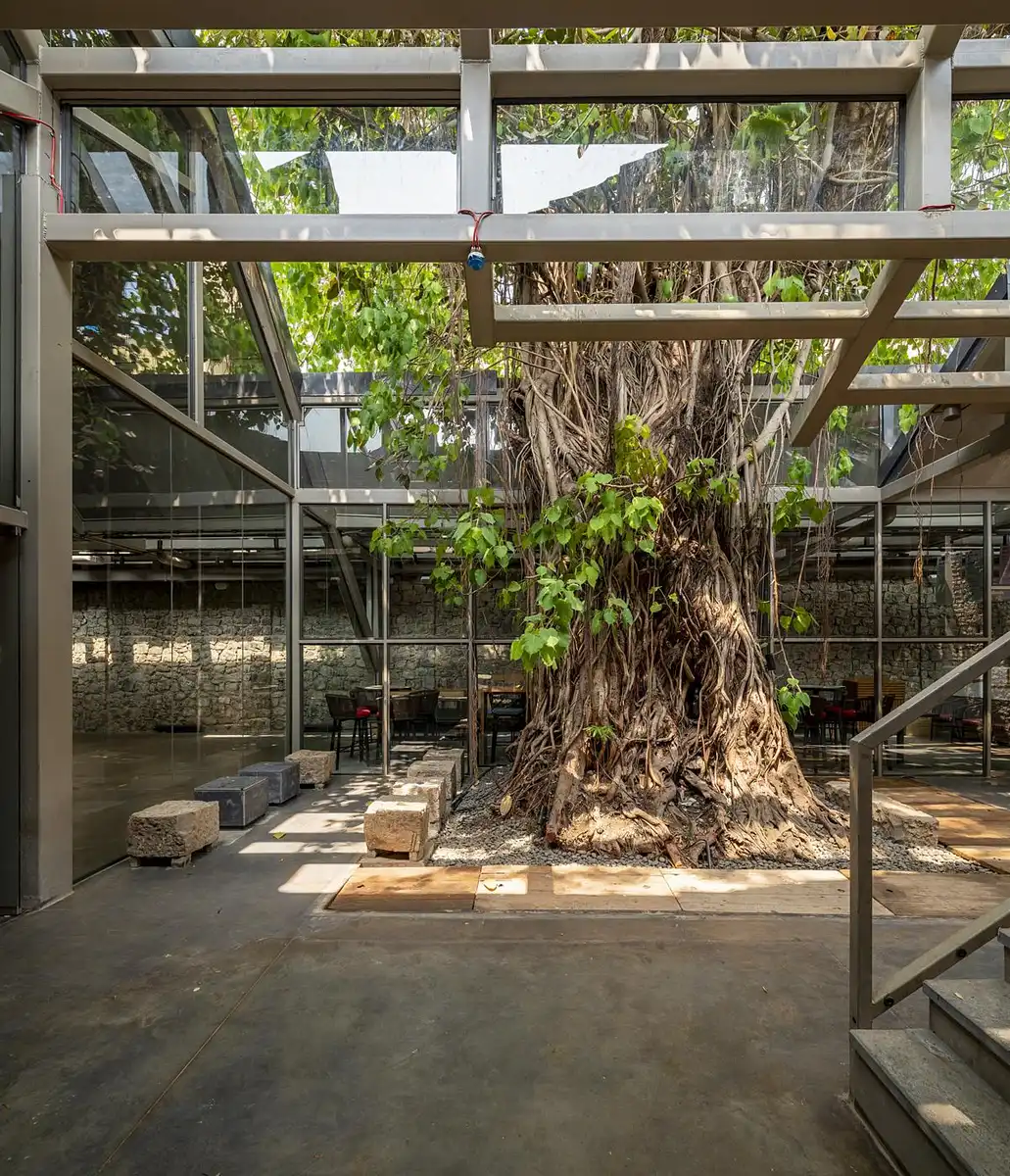
The 140-year-old Ambico Ice Factory is located in Ballard estate, the heart of Mumbai’s heritage precinct. We have re-imagined the space as IF.BE (Ice Factory Ballard Estate), an organism that merges art/exhibition/events/performance/gathering/food and design. Essentially it is a space for encounter, organized within beautiful but ageing structures surrounding a large Banyan tree.
Time, arbitrary additions, asymmetric structural and infrastructural loading had caused a level of damage and decay that was revealed through a patient and assiduous examination. The drawing archives revealed a continuous courtyard, which was now cluttered with ad-hoc structures and metal roofs.
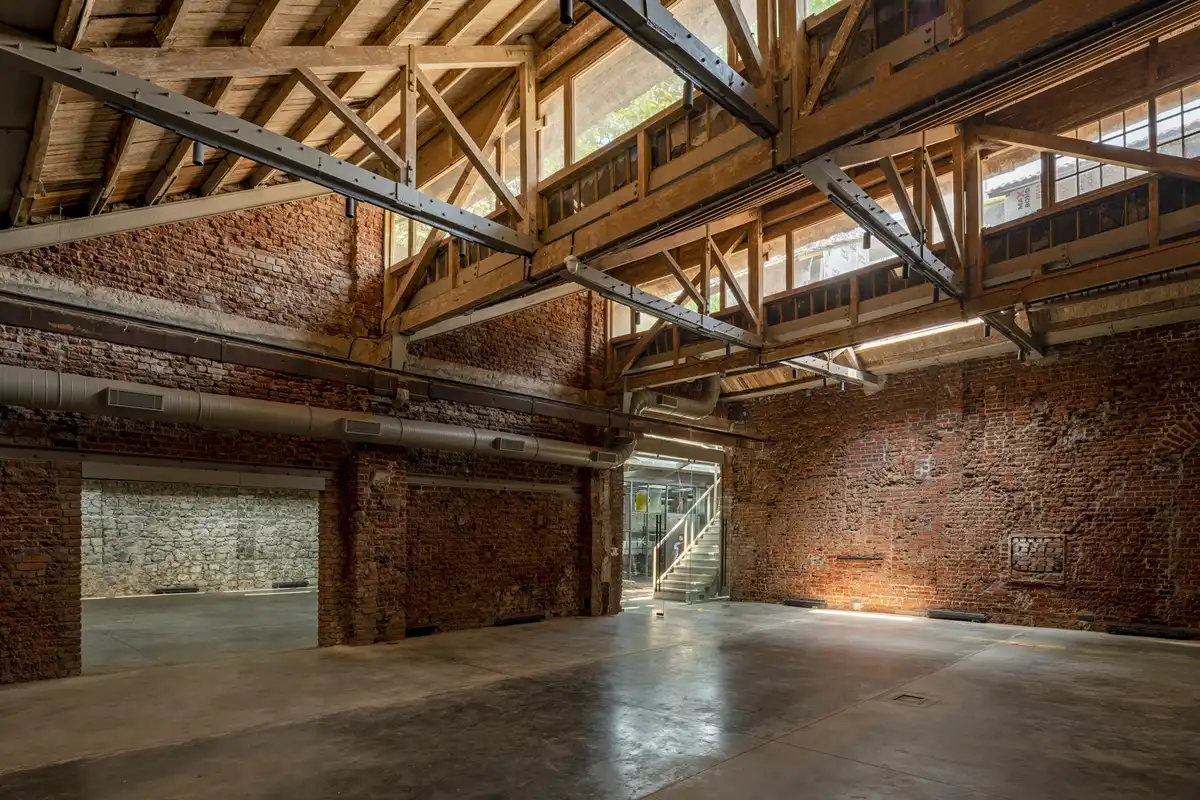
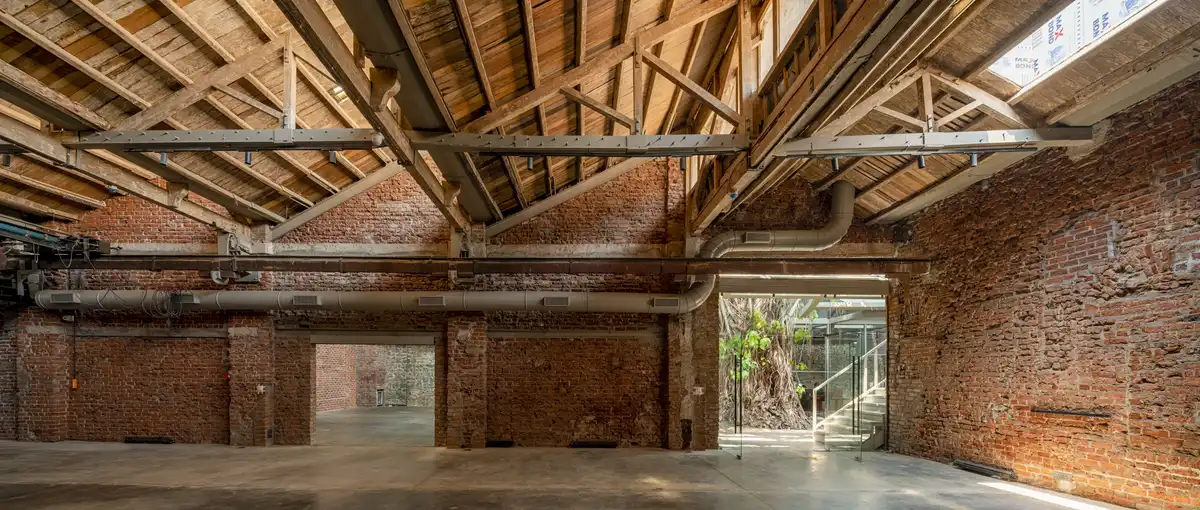
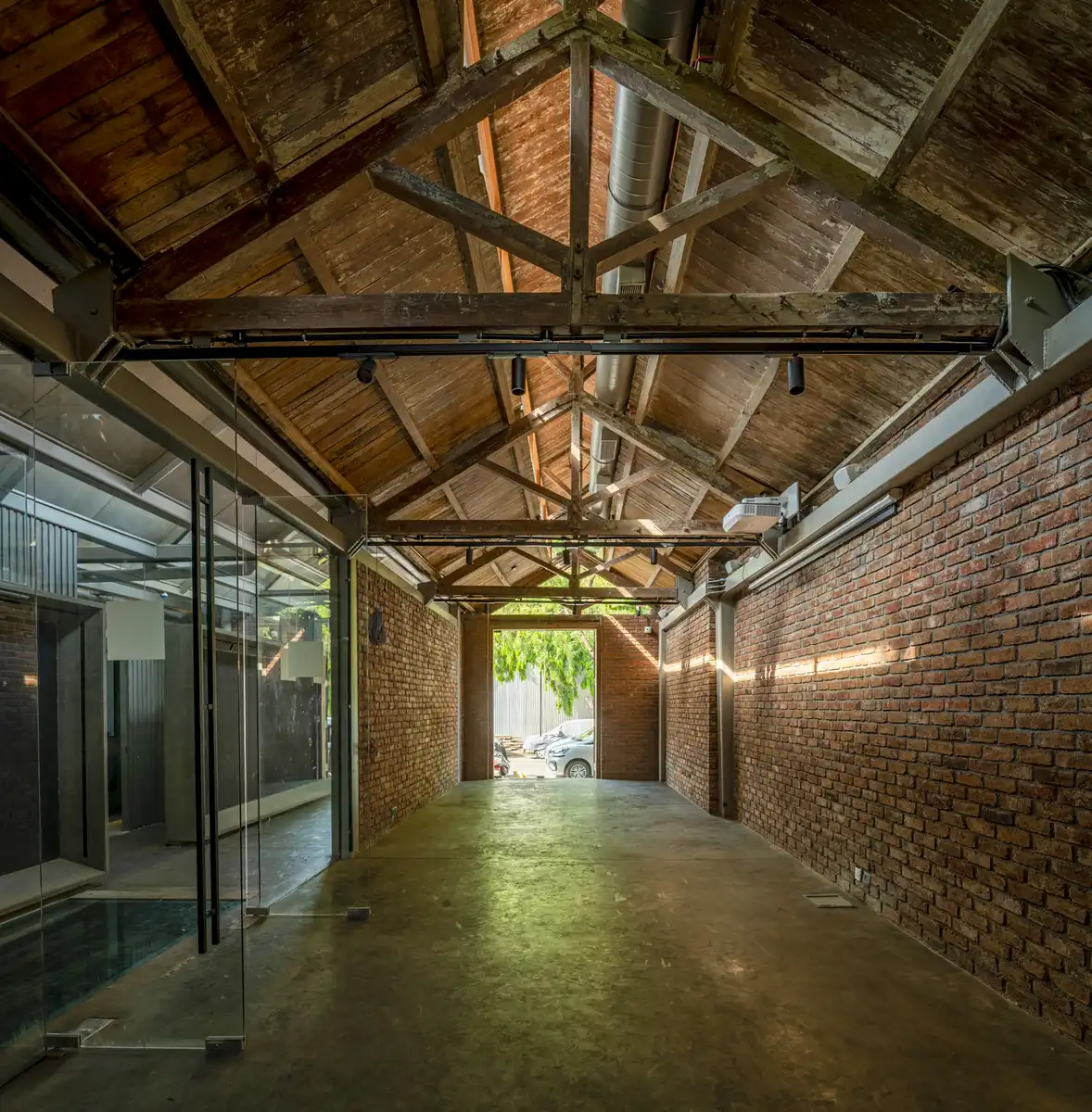
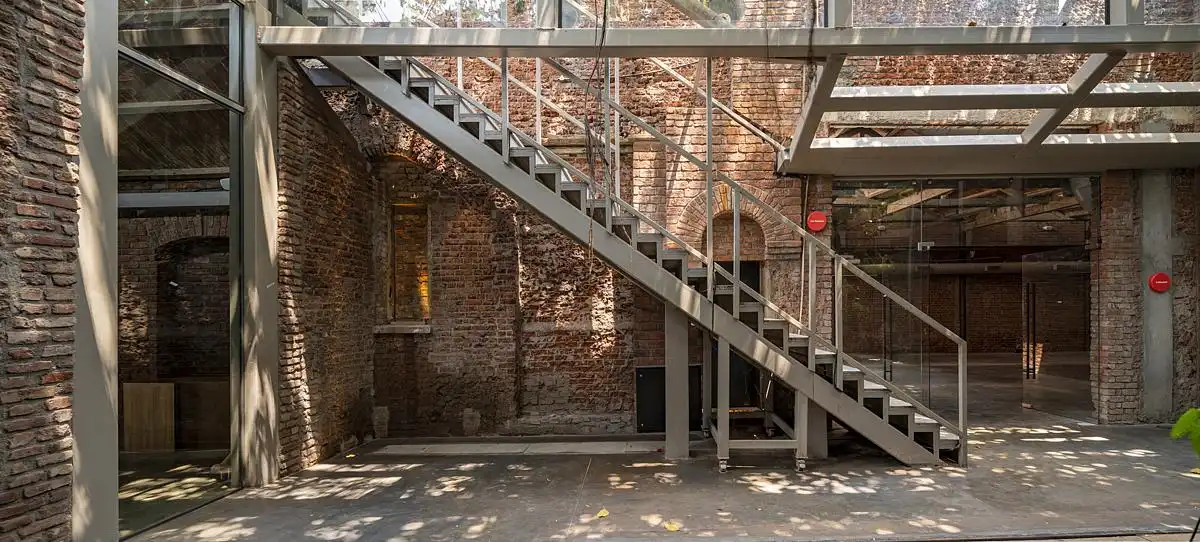
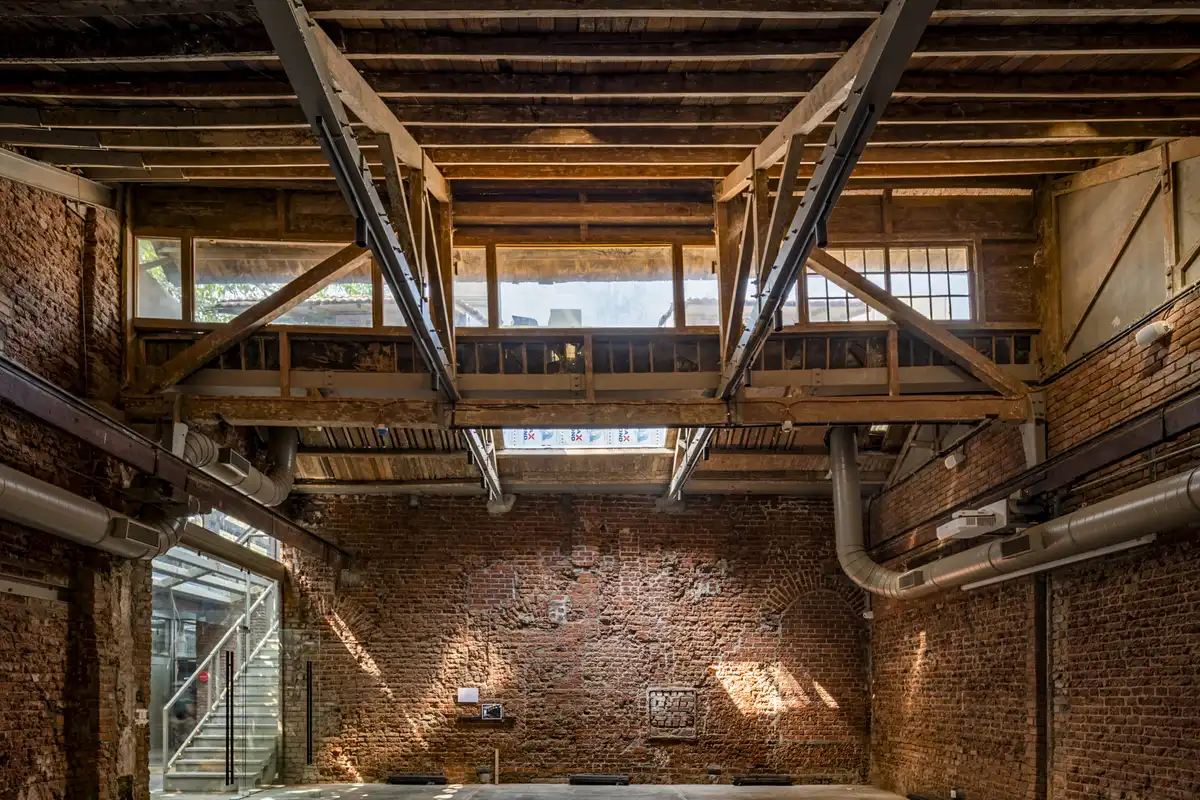
For four months, the factory’s decades-old plaster walls were gently scraped before the first semblance of brickwork could emerge. The building’s vintage Burma teak woodwork, lost to time, was slowly uncovered. The Ice Factory, sub-station, cold storage and the ice-cubing area required intensive examination and surgical intervention through retrofits to stabilize crumbling walls, sagging roofs and trusses. Eventually, a palimpsest of small material fragments and measurements were pieced together to understand the Ice Factory’s spatial vocabulary.
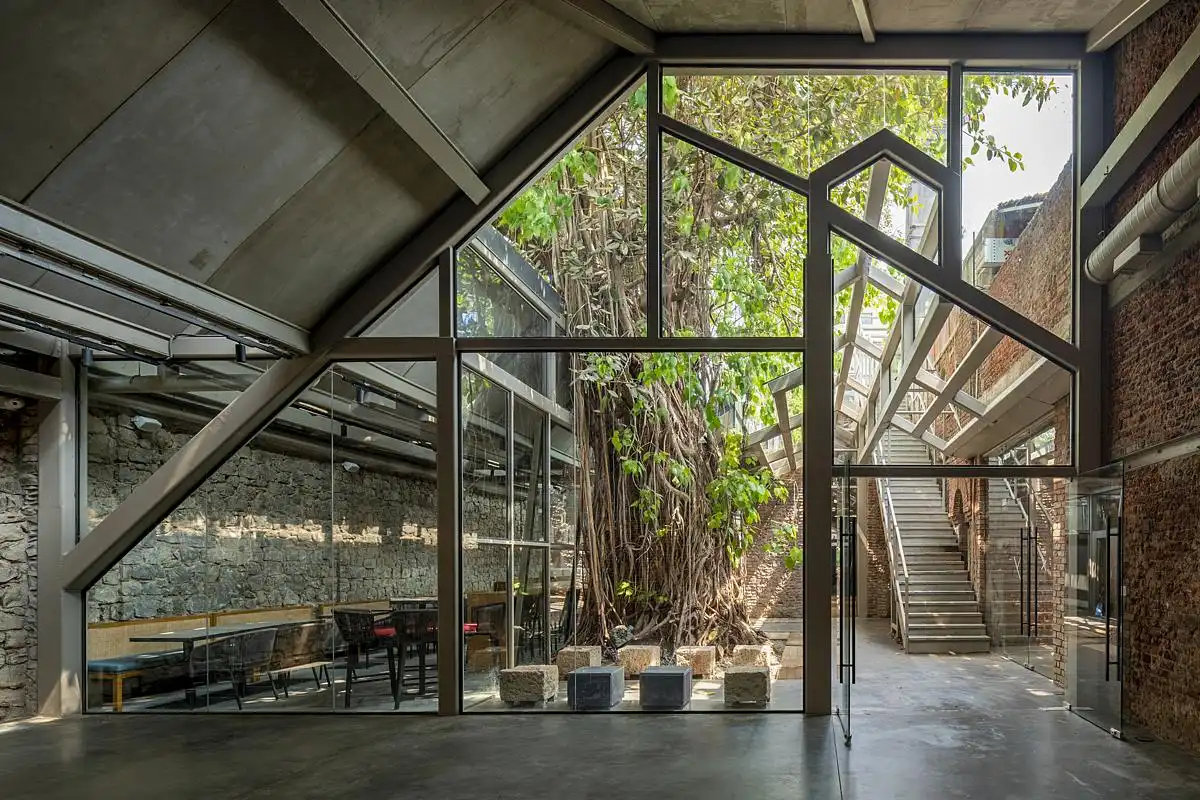
IF.BE is a “seed” for urban regeneration in a largely commercial heritage precinct. The suturing is imagined to heighten the fragile, almost tenuous relationship between the ‘Found’ and the ‘Made’.
Where did the idea for the project come from and how was the concept developed?
Next to the string of old yet thriving docks of Mumbai sits Ballard Estate – a heritage district with a dual characteristic of stately colonial architecture and decaying industrial spaces.
Malik Architecture has been situated here for over 25 years, observing the systematic erosion of the public domain due to rapid, unplanned developments. Founder Kamal Malik, chanced upon the functioning Ambico Ice Factory and was deeply moved by the old Banyan tree that was being asphyxiated. His first instinct was to rescue the tree; to give back to the city and engage with history.
This instinct led us to reimagine the space as IF.BE (Ice Factory Ballard Estate), a space for encounter; organized within beautiful but ageing structures surrounding a large Banyan tree.
Some thoughts about the project
A significant aspect of this project is that it has been imagined, mobilized, designed, built and funded (along with two equal partners) by Malik Architecture as a multi-pronged response to the rapid erosion of public space and institutions, as well as an unhealthy attitude towards our built history. In a way, it is an act of resistance towards the lack of physical space for open, healthy, democratic discourse and a hope that other like-minded individuals embark on a similar journey.
If your project has taken the aspects of sustainability and eco-compatibility into strong consideration, indicate which strategies, materials and technologies have been used.
Design of the space necessitated a hands-on approach and could not be dealt with conventional modes of practice.
For four months, the factory’s decades-old plaster walls were gently scraped before the first semblance of brickwork could emerge. The building’s vintage Burma teak woodwork, lost to time, was slowly uncovered. The original gantry used to move slabs of ice, continues to be housed and be mobilised as part of art installations as well as used to partition the room.
The project has received acclamation since its inauguration and continues to accommodate varied users due to its fluid functionality. Our founder and principal architect Kamal Malik was facilitated with the Excellence Award, ‘Custodian of Culture’ as a part of AD100 2023, acknowledging his work towards designing IF.BE.
Describe your project, highlighting its strengths and its defining characteristics
IF.BE is a “seed” for urban regeneration in a largely commercial heritage precinct. The current attitude towards development in this precinct favours demolition of industrial spaces that do not fall within the Grade-I heritage umbrella. IF.BE is meant to be an example of holistic and sustainable development, to serve as a reference for the present and future.
It becomes an exercise in micro-urbanism, adaptive reuse and a space for discourse in the public realm. Its message is material and notional. It serves as an example of sustainability through preservation.
Unlike other Grade-I heritage structures, industrial heritage need not comply with a fixed point of time reference and condition. Giving way to an open ended conversation, the journey of restoration is an intuitive process.
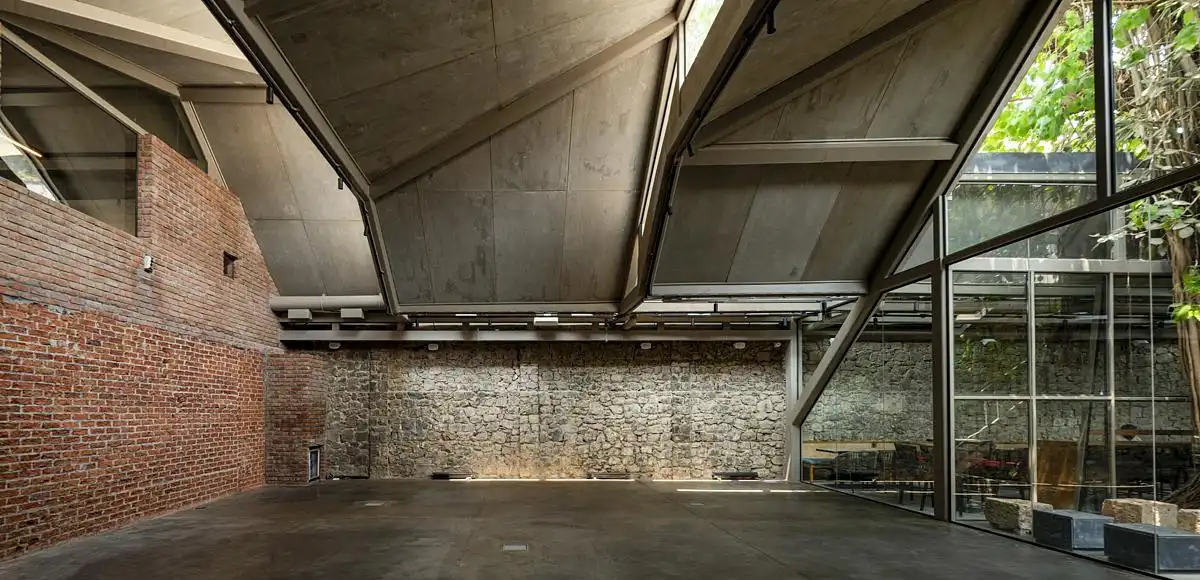
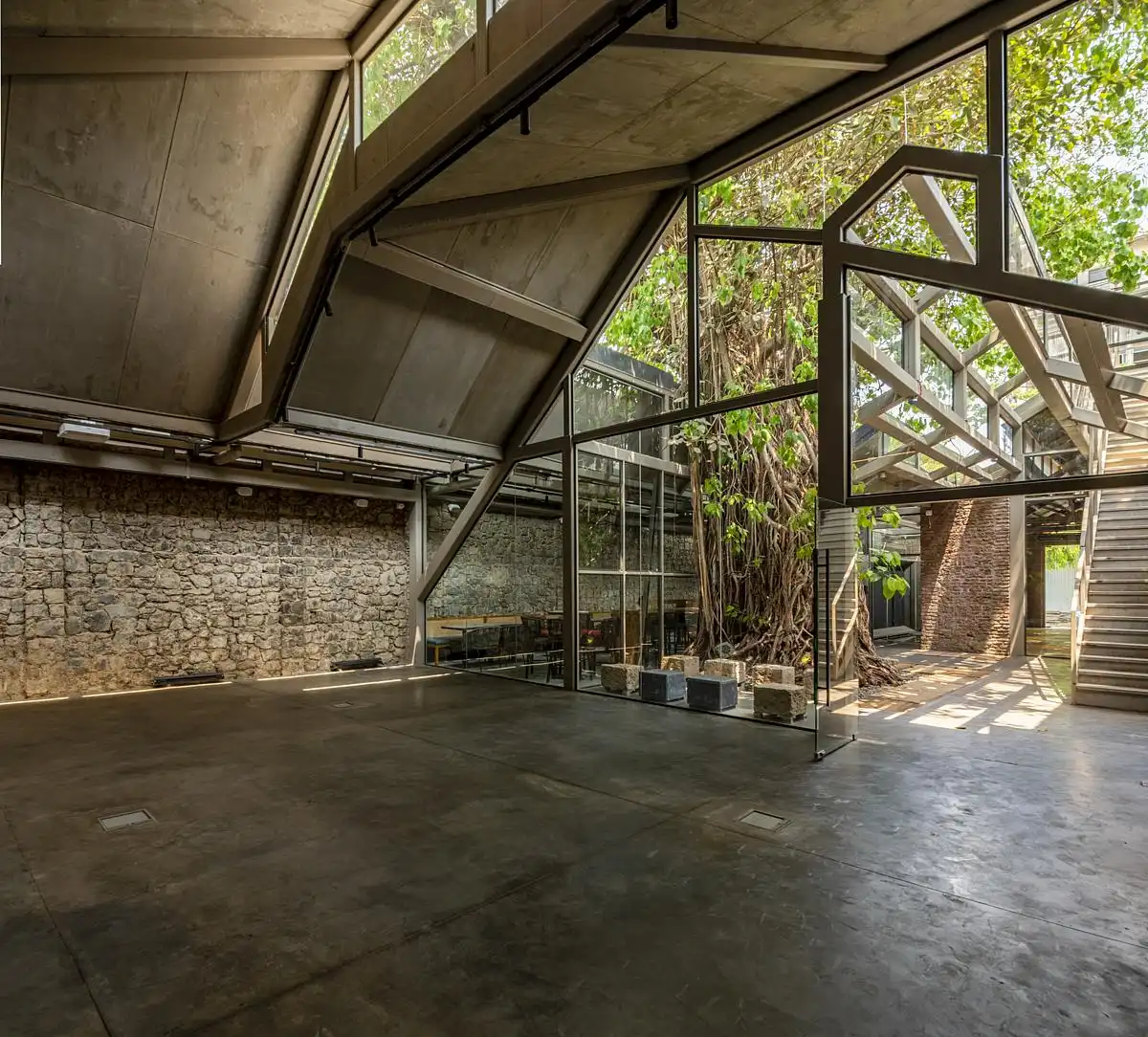
Soaring to a height of 22 feet, the Ice Factory continues to be the beating heart of this complex that was built over a century ago and is now IFBE. Entirely column-free, the Ice Factory is that rare expansive and meditative space in the midst of the city’s hustle and bustle. Natural light filters through North light trusses expressing the movement of the sun through the day.
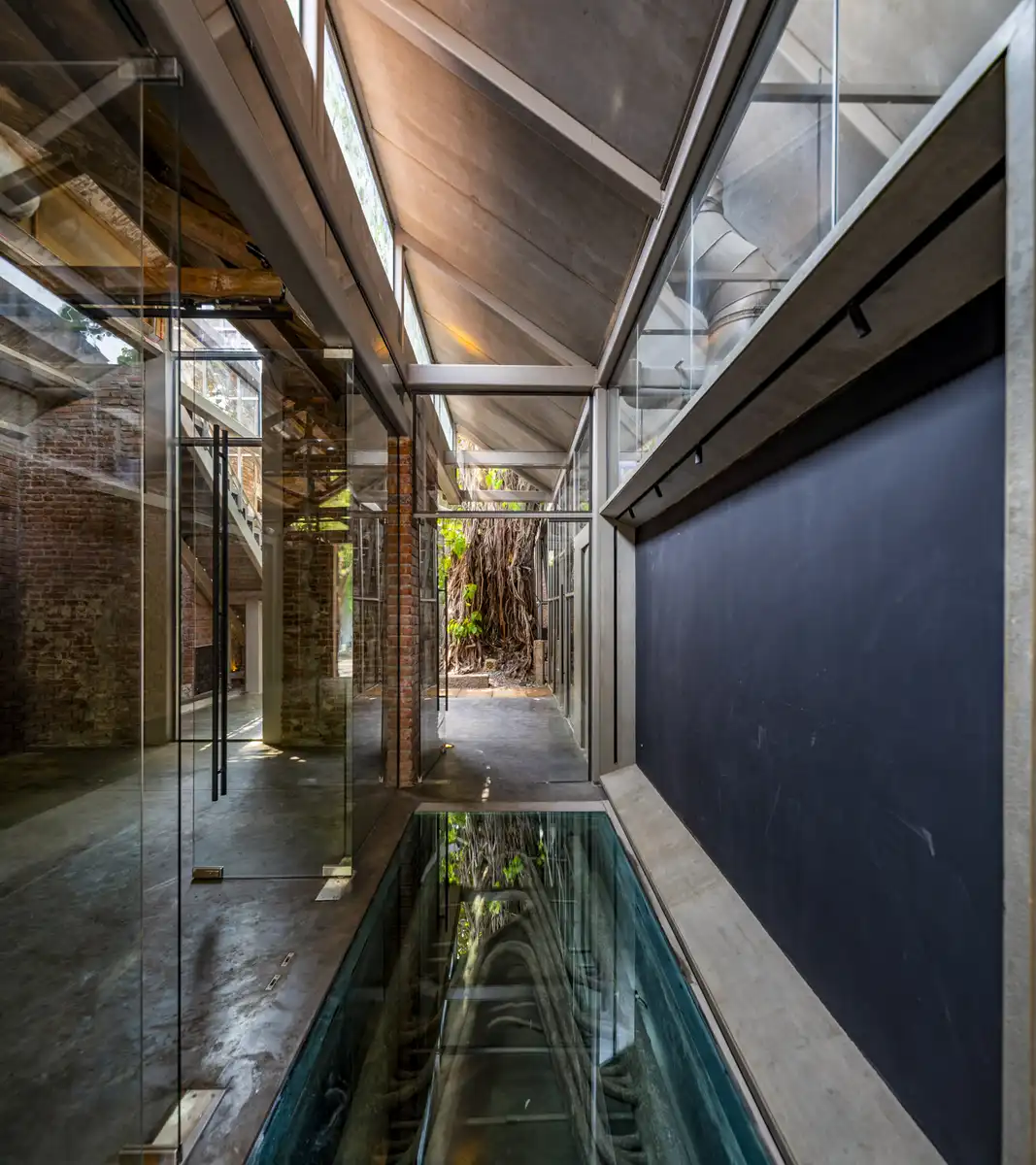
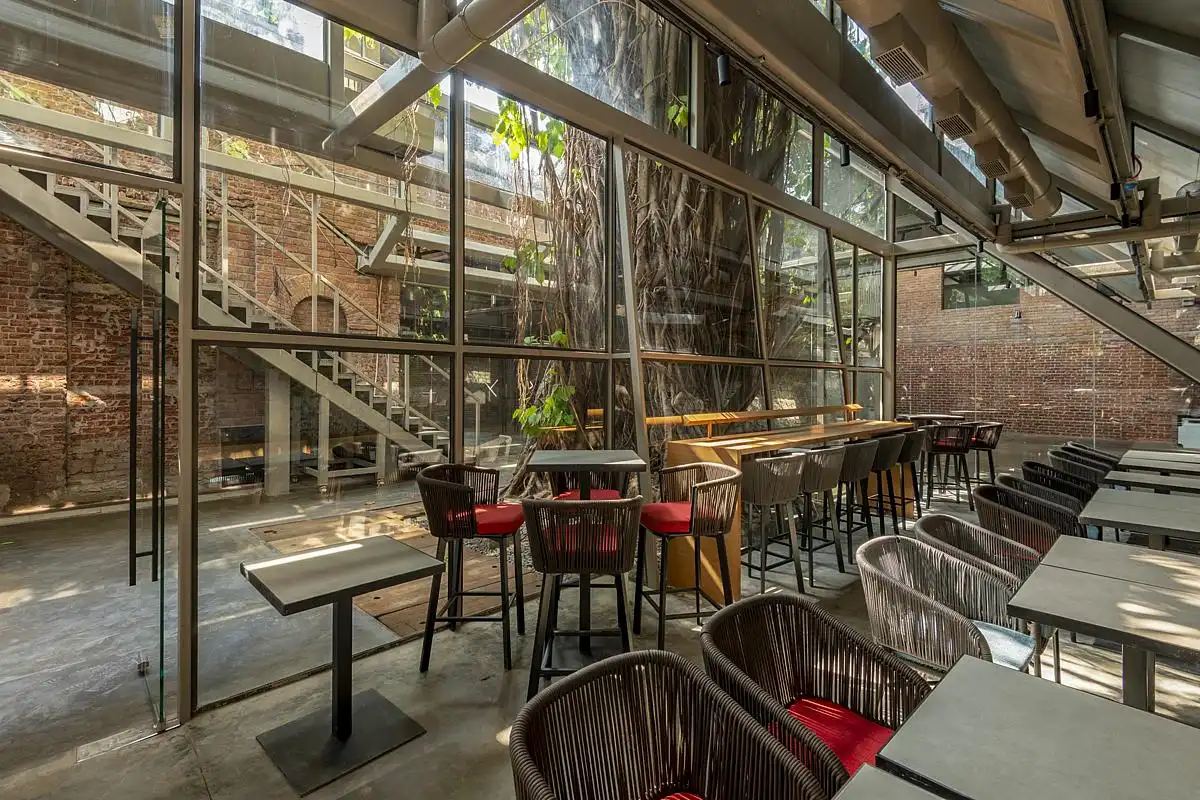
The suturing of spaces with different quantities of light, dimension, volume and material around the Banyan tree forces one to engage with the space in unconventional ways unlike the “all white” gallery spaces or “black box” performance venues. Users and curators are encouraged to formulate their own conversations with the space.

What is the dynamic between the project and the surrounding landscape and/or urban area?
Located in Ballard Estate, the heart of Mumbai’s heritage precinct, IF.BE is surrounded by stately colonial architecture. The ice factory being an industrial entity, was positioned in the business district to serve the well-heeled of Bombay.
The drawing archives revealed a courtyard connecting Calicut and Cochin Street which was cluttered with ad-hoc structures and metal roofs.
The adjacent structure on the West was identified as a residential unit. As part of recovery of the space, the existing North-light truss roof over the ice factory is extended over the Cathedral. This undergoes two mutations to rotate 90 degrees to form the East light roofs while simultaneously dipping sharply towards the existing stone boundary wall to preserve light and ventilation for the neighboring structure.
Ice Factory, Ballard Estate in Maharashtra, India – Building Information
Architects: Malik Architecture – https://www.malikarchitecture.com/, Kamal Malik, Arjun Malik
Project size: 1000 sqm
Site size: 1040 sqm
Completion date: 2022
Building levels: 2
Photographs © Bharath Ramamrutham
Ice Factory, Ballard Estate, Maharashtra, India images / information received 130825
Location: Maharashtra, Mumbai, India, South Asia.
Maharashtra Buildings
Contemporary Maharashtra Property Designs, western India
Palimpsest House, Panchgani, Satara
Architecture: S+PS Architects
photo : PHXINDIA
Enso House, Mumbai
Architecture: S+PS Architects
photo : PHXINDIA
The Hovering Gardens House, Pune
Architecture: Niraj Doshi Design Consultancy
Stacked Dwelling, Mumbai
Architecture: DIG Architects
++
Indian Architecture
Modern Indian Building Designs
Indian Architecture Designs – chronological list
Comments / photos for the Ice Factory, Ballard Estate, Maharashtra, India design by Malik Architecture page welcome

