Green Court House Ahmedabad property, Gujarat residential building photos, modern Northwest Indian architecture
The House of Green Court in Ahmedabad, Gujarat
13 May 2026
Architects: andblack design studio, Ishita Sitwala
Location: Ahmedabad, Gujarat, India

Photos by Ishita Sitwala, andblack design studio
Green Court House, Ahmedabad, Gujarat, India
A courtyard house in Ahmedabad that integrates brick jali screens, front and rear gardens, and passive cooling strategies to shape a climate responsive multigenerational home

Set within the climatic and cultural context of Ahmedabad, the House of Green Court draws from the courtyard typology to organize a three-generational family into an individualized yet cohesive whole. The project modulates privacy while responding to the present and evolving needs of its inhabitants.


The built form occupies the rear half of the plot, allowing the front to open as an expansive garden. Movement begins through a landscaped forecourt, where greenery and a water body introduce a sense of calm and guide a gradual transition from the outside into the house.

A parametric patterned flooring leads to the main entrance, where a filtered view through a brick Jali reveals the rear garden, and the threshold is marked by a crafted brass door. This sequence leads into the house, where the garden reappears as a central courtyard, establishing continuity between interior and exterior. Spaces are arranged around this core, with the formal living opening to the front garden, while the family room and dining extend into a more intimate rear garden.


The central courtyard anchors spatial distribution while functioning as a climatic moderator. Vegetation, combined with a large overhead skylight, brings in diffused daylight and supports air movement across the house. The resulting microclimate enhances thermal comfort and maintains a continuous relationship between interior and landscape. Brick and ceramic screens introduce calibrated permeability, shaping soft visual boundaries.


The house supports autonomy and proximity across generations through calibrated spatial separation and controlled visibility. A visually dense, exposed concrete lower volume accommodates shared functions along with guest and grandparents’ spaces, separated through a terracotta screen.


The upper level, defined as a floating slab, houses the younger generation. The courtyard maintains visual and spatial continuity across levels while enabling distinct patterns of occupation. Intermediate spaces, including a first-floor lounge, create zones of engagement that remain independent of the central core. Multiple access points allow varied movement patterns across the day, supporting different rhythms of use. Privacy is structured as a gradient, allowing spatial relationships to shift while supporting individual routines.
The grandparents’ room is positioned adjacent an existing Neem tree catering to the grandfather’s daily routine of sitting beneath it, embedding memory into the spatial framework. As the daughters are young, the playroom adopts a more playful language, incorporating platforms and level variations that support movement and exploration. Their study and sleeping room is composed with a more refined and feminine expression, allowing it to remain relevant over time. A liminal space, formed through an internal courtyard between the parents’ and children’s rooms, maintains spatial and emotional continuity, enabling gradual independence. Shared zones nurture specific relationships and allow everyday interactions to unfold with ease.


Material expression is defined through a restrained exterior palette of exposed concrete and brick, establishing permanence and solidity. This transitions into a more finished interiors, where a pallet of stone, wood and brass accents introduce texture and warmth. Hand-painted surfaces and crafted details adorned with engaging artwork bring individuality to this composition. The interior reflects personal identities while maintaining architectural coherence.
The House of Green Court positions the courtyard as a central device that reconnects the interiors with natural elements, directs movement, and establishes a clear spatial hierarchy. It advances a way of living where adaptability emerges from spatial variety, and where the architecture maintains continuity with its context.

The House of Green Court in Ahmedabad, Gujarat, India – Property Information
Architects: andblack design studio, Ishita Sitwala – https://www.andblackstudio.com/
Completion date: 2026
Building levels: 3

Photographers: Ishita Sitwala, andblack design studio
The House of Green Court in Ahmedabad, Gujarat images / information received 160326
Location: Ahmedabad, Gujarat, northwestern India, South Asia.
Gujarat Properties
Ahmedabad Building Designs – Selection
Potash Tower Ahmedabad
Architect: INI Design Studio

photo : Vinay Panjwani
Liquescent House in Ahmedabad
Architecture: Arkytos
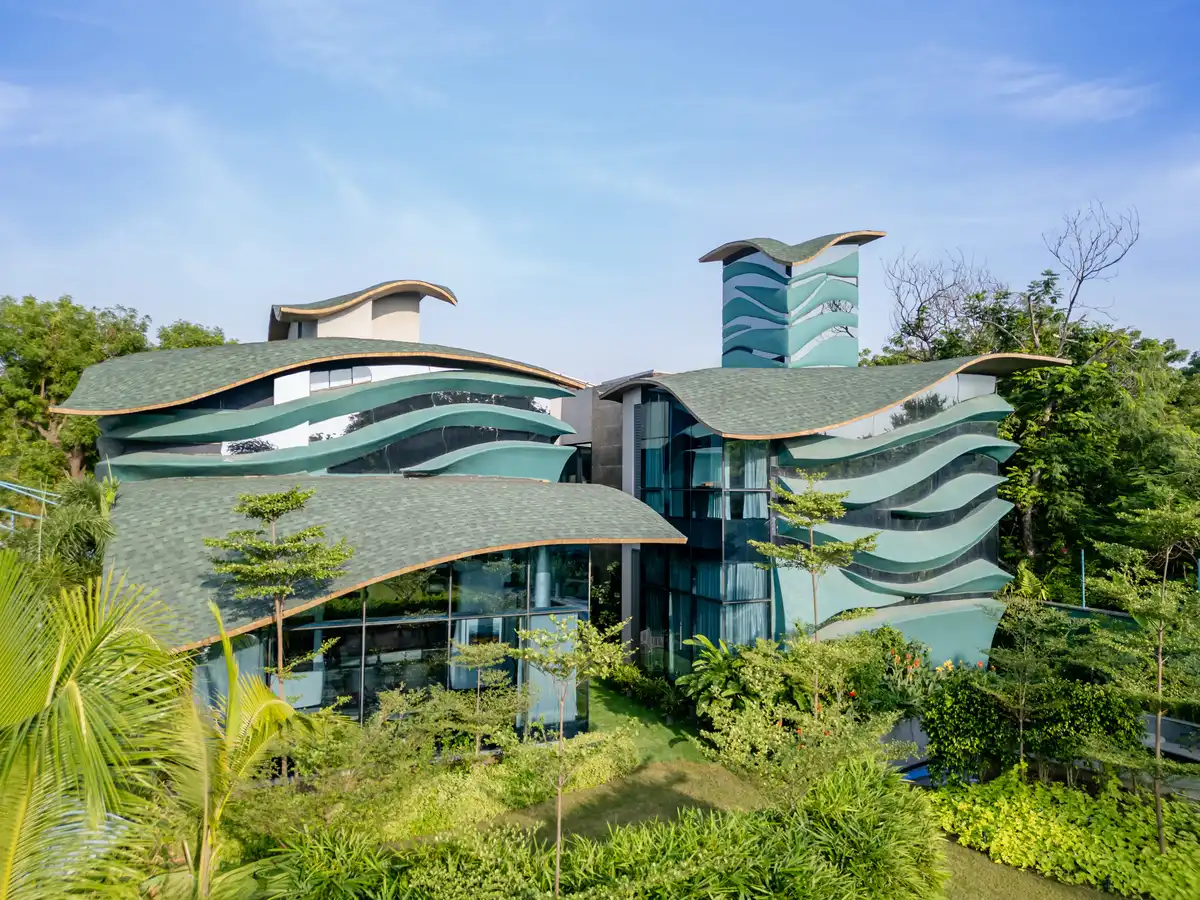
photo : Vinay Panjwani
Cantilevered Cube House, Sarkhej
Architecture: Prashant Parmar Architect | Shayona Consultants
++
Gujarat Buildings – Selection
Aalloa Hills Residence, Gujarat, Northwest India
Architecture: INI Design Studio
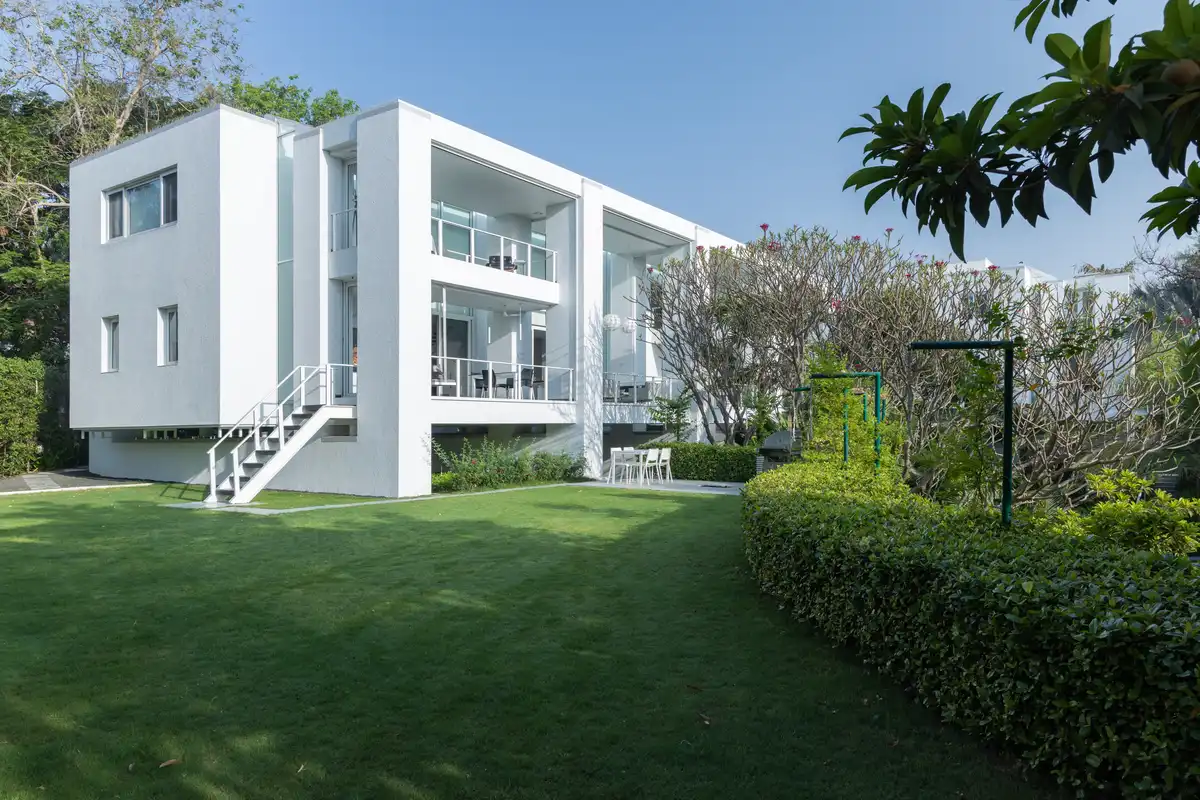
photos : Karan Gajjar / The Space Tracing Company
32 x 47 House, Ankleshwar, Gujarat, Northwestern India
Architect: P&D Associates
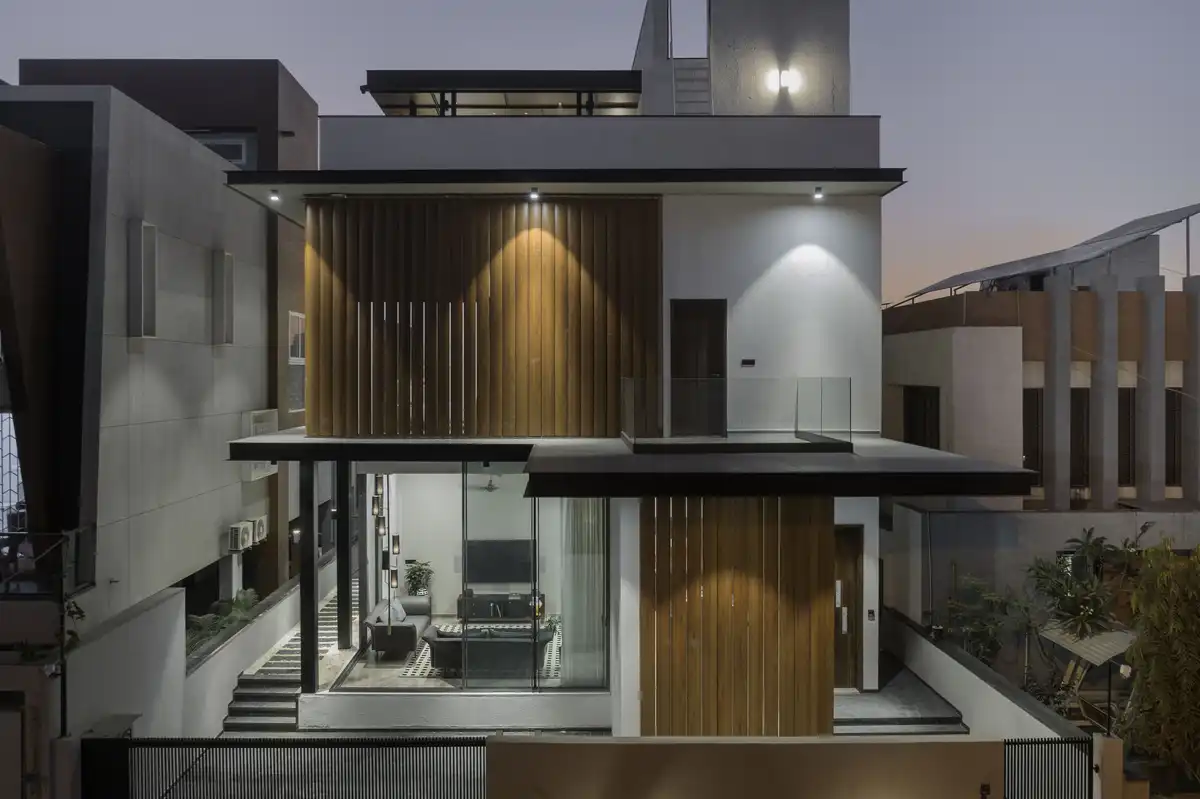
photo : Photographix 2023
++
Indian Architecture
India Architecture Designs – chronological list
Indian Architect : architectural office contact details on e-architect
Comments / photos for the The House of Green Court in Ahmedabad, Gujarat property design by andblack design studio page welcome.