

Banff National Park Visitor Centre, Alberta
May 28, 2026
Architecture: Paul Raff Studio and Kengo Kuma & Associates
Location: Banff, Alberta, Canada
Paul Raff Studio and Kengo Kuma & Associates Win Banff Visitor Centre Competition
A restrained, landscape-led proposal reimagines the gateway experience to Canada’s first national park.
images courtesy of architects practice
May 2026 – Paul Raff Studio (PRS) of Toronto, in collaboration with Kengo Kuma & Associates (KKAA) of Tokyo, has been selected as the winning team in the international design competition for the redevelopment of the 200 Block of Banff Avenue, home to the Banff National Park Visitor Centre. For international visitors, Banff remains one of the most enduring global images of Canada — a landscape that carries an outsized role in shaping perceptions of Canadian identity and the country’s relationship to nature. Organized by Parks Canada in partnership with the Royal Architectural Institute of Canada (RAIC), the competition brought together six shortlisted teams to reimagine the iconic civic site. The PRS–KKAA proposal was chosen by an independent jury of leading architects and designers for its clarity, restraint, and deep responsiveness to place.
Known for its synthesis of art, architecture, and sustainability, PRS has built a reputation for culturally resonant civic works and public installations that foreground material expression and environmental performance. KKAA, internationally recognized for its light, permeable architecture and innovative use of wood, brings a complementary sensibility focused on dissolving the boundary between building and landscape. For Kengo Kuma, the collaboration was deliberate: a project of this symbolic and environmental significance called not for scale, but for sensitivity, pairing global expertise with a studio deeply attuned to Canadian public space.
As Paul Raff notes, “Architecture at a site like this has one responsibility: to respect and reveal the landscape, not compete with it. Both practices share a deep conviction that light — how it moves, how it falls, how it connects us to the natural world — is the essential material of design.”
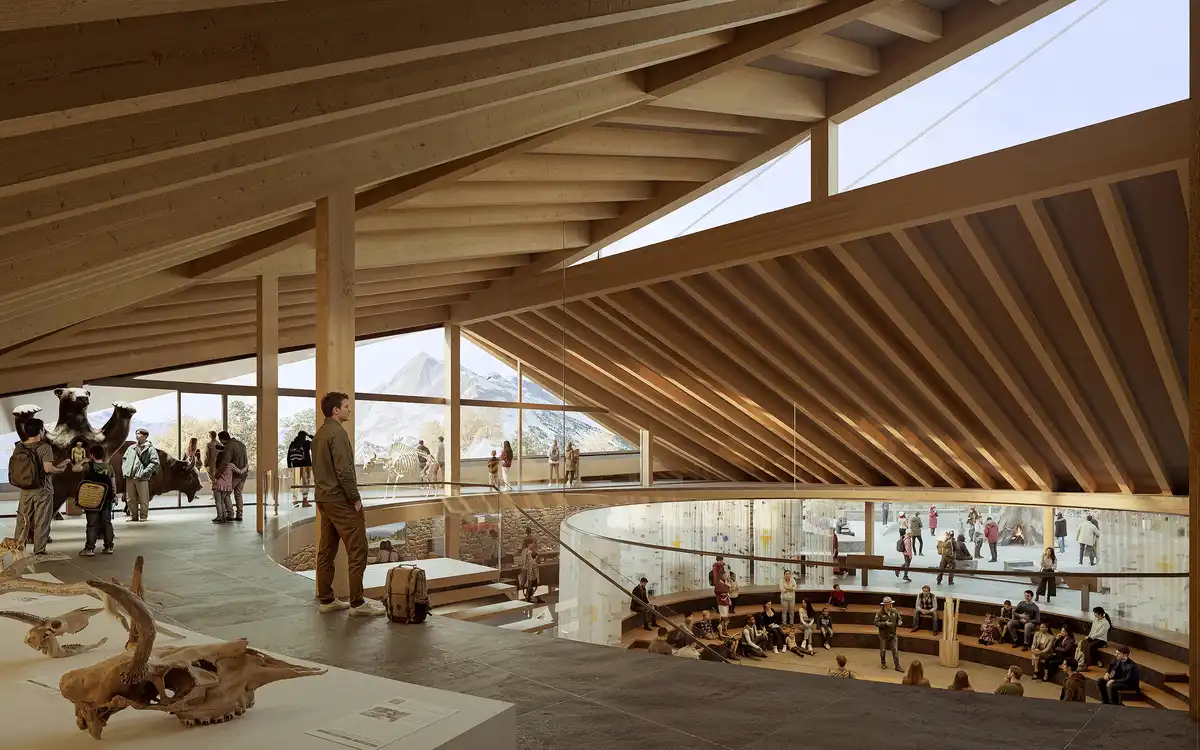
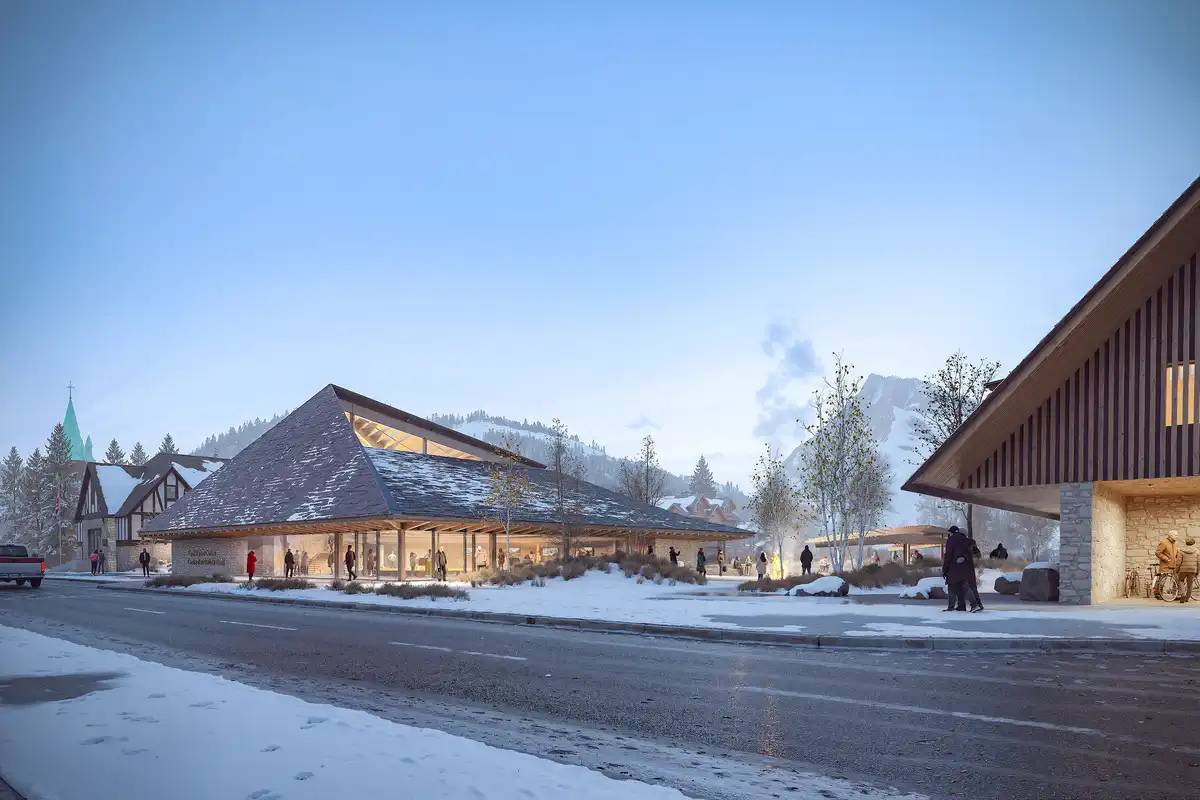
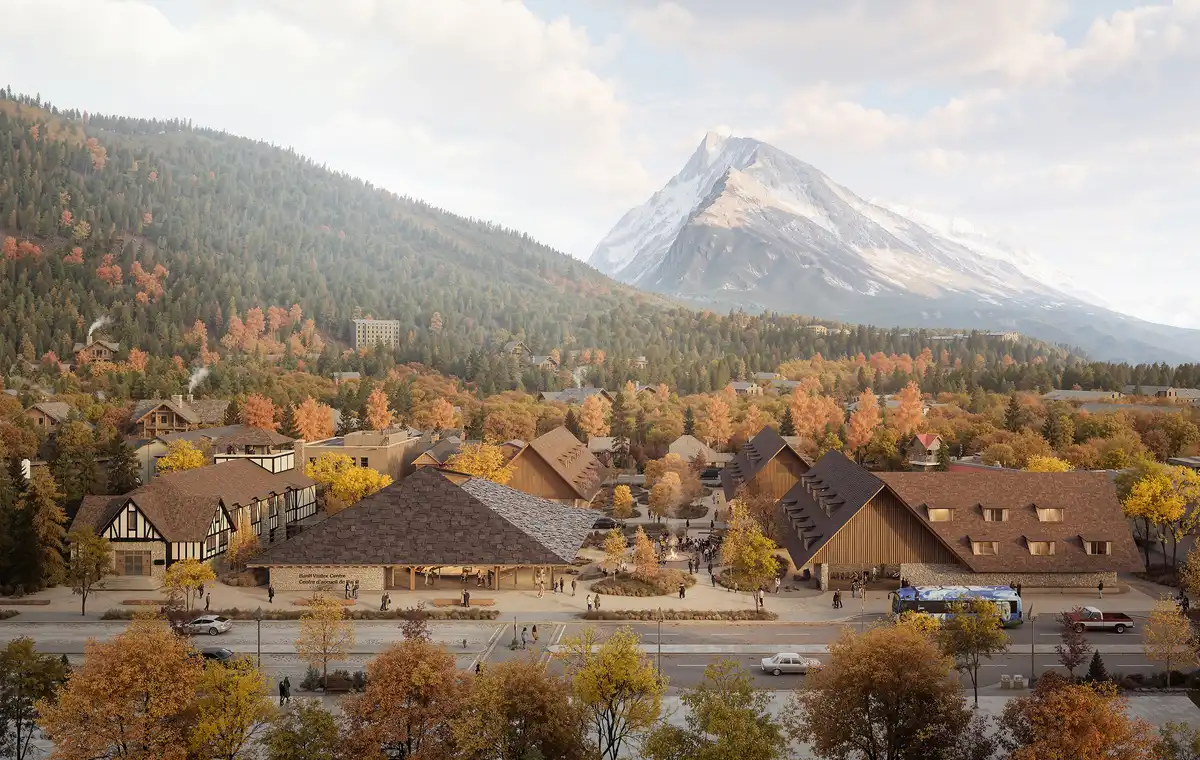
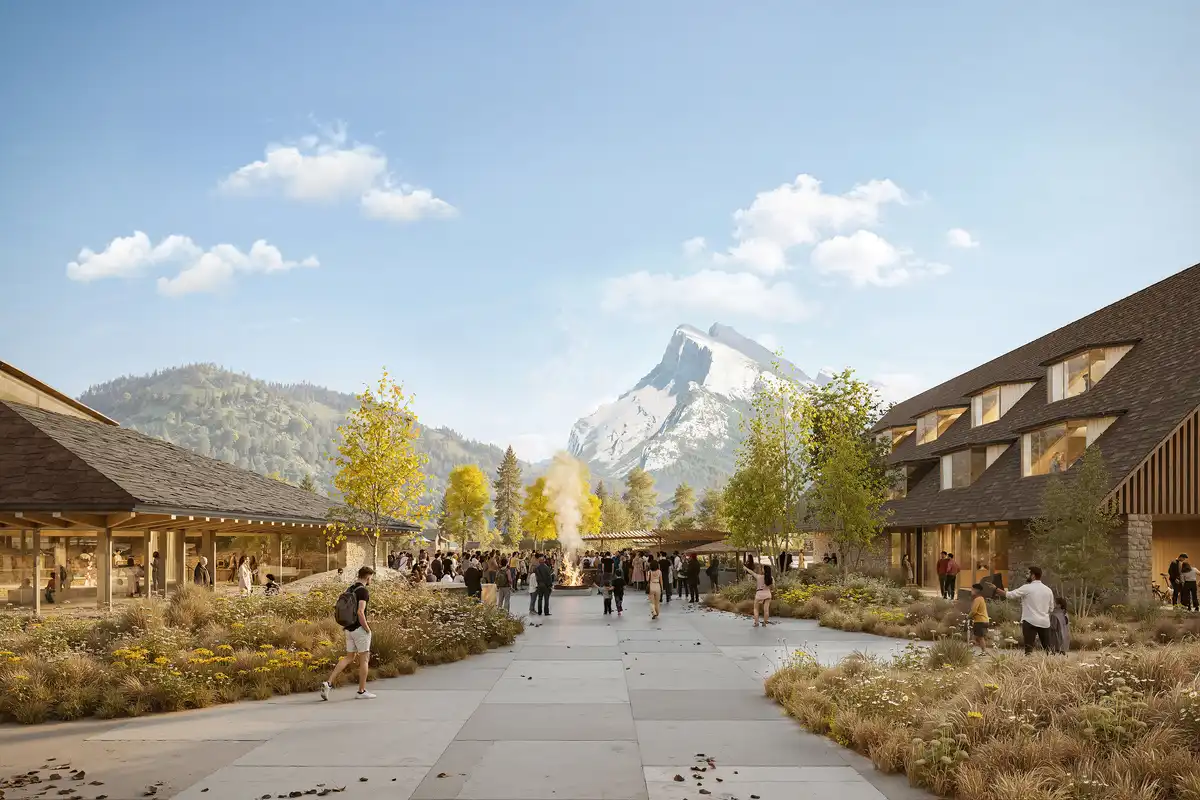
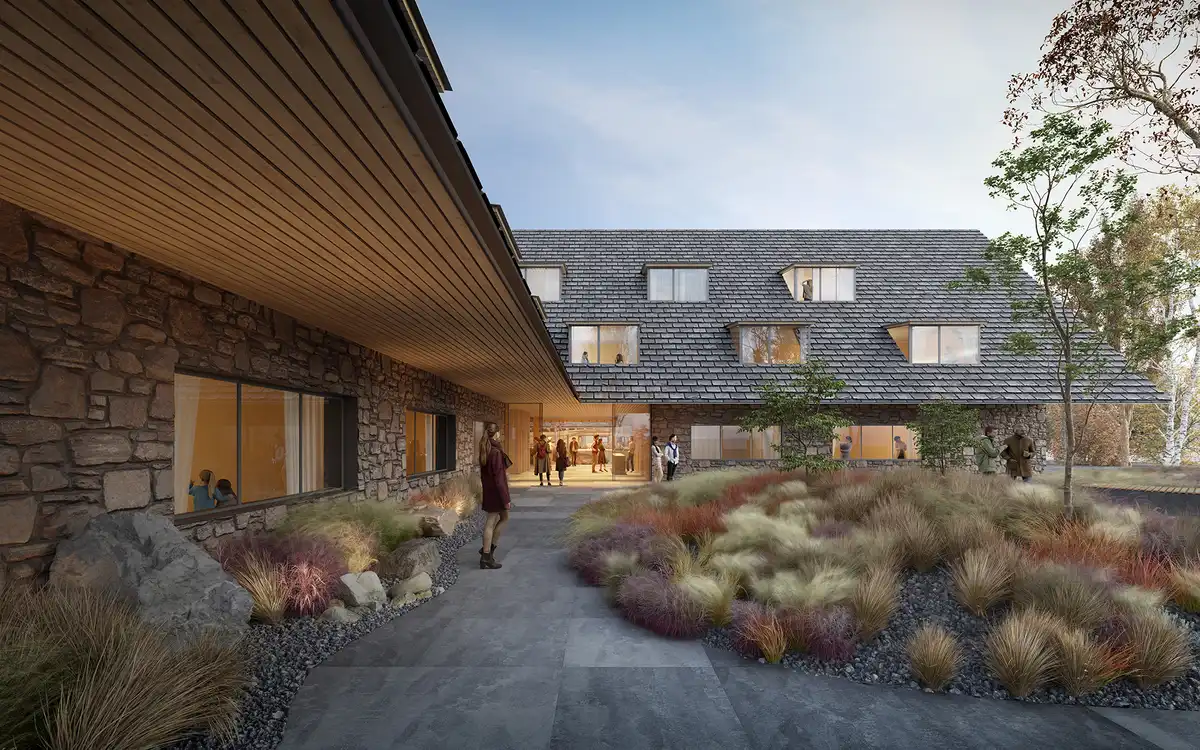
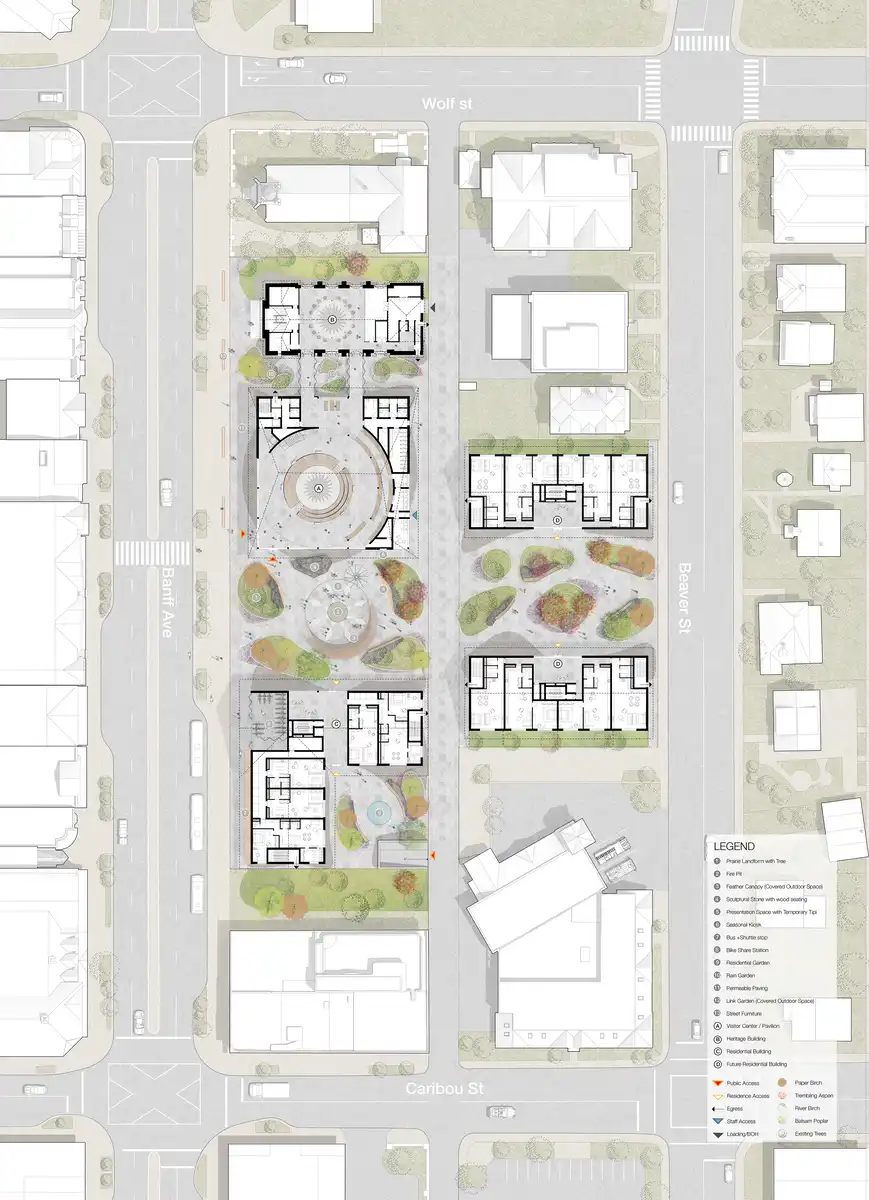
Set on a roughly three-acre site in Banff’s town centre, the proposal organizes the program as a series of low-profile, wood, stone and glass–clad structures arranged around a central plaza. The scheme comprises two linked buildings housing visitor services, interpretive spaces, and community programming, alongside a residential component and a discreet mobility hub. These elements are set within a landscape of stone paving, permeable surfaces, and native planting designed by Toronto firm DTAH for year-round use.
Subtle grading defines outdoor rooms for gathering and circulation, while buildings are carefully spaced to frame views toward the Bow Valley and Mount Rundle. The design process also involved extensive consultation and collaboration with local Indigenous communities, whose perspectives informed the project’s broader understanding of stewardship, gathering, materiality, and connection to landscape. “We are grateful to Parks Canada and the RAIC for entrusting us with one of Canada’s most symbolic civic landscapes,” says Paul Raff. “Learning from and engaging with local Indigenous communities was also fundamental to how we approached the project, and we look forward to bringing this shared vision to life.”
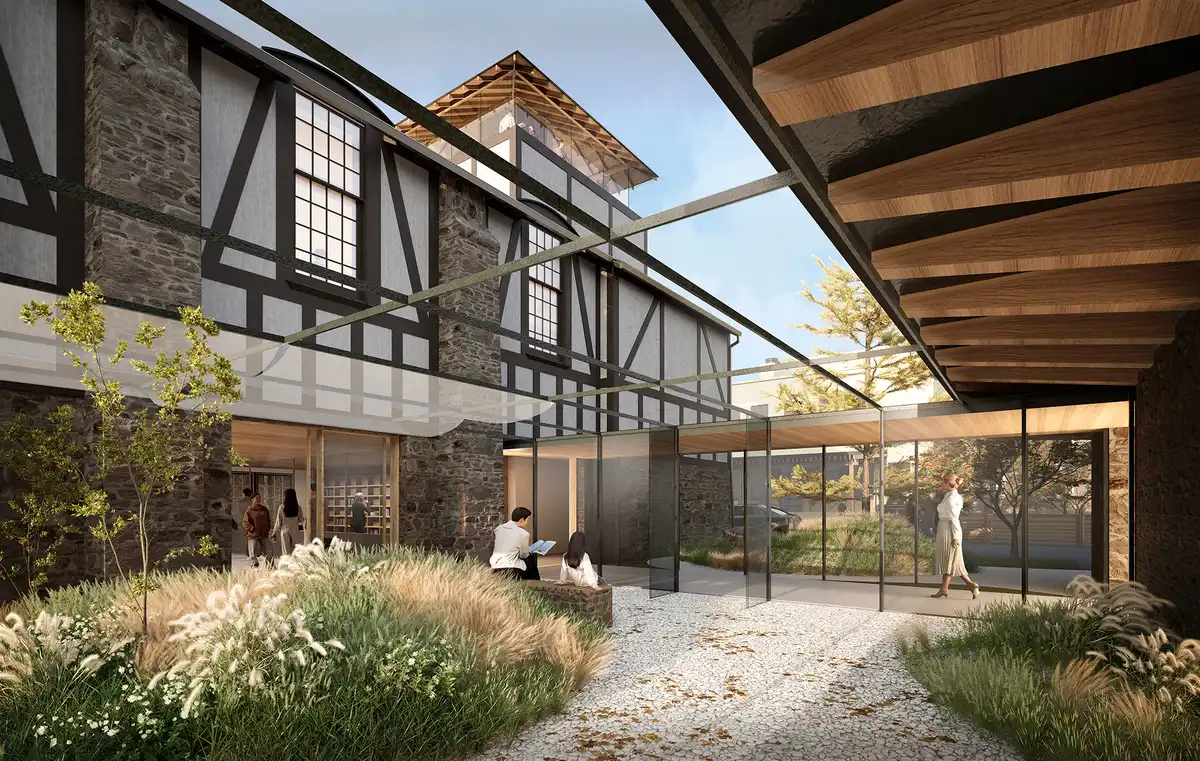
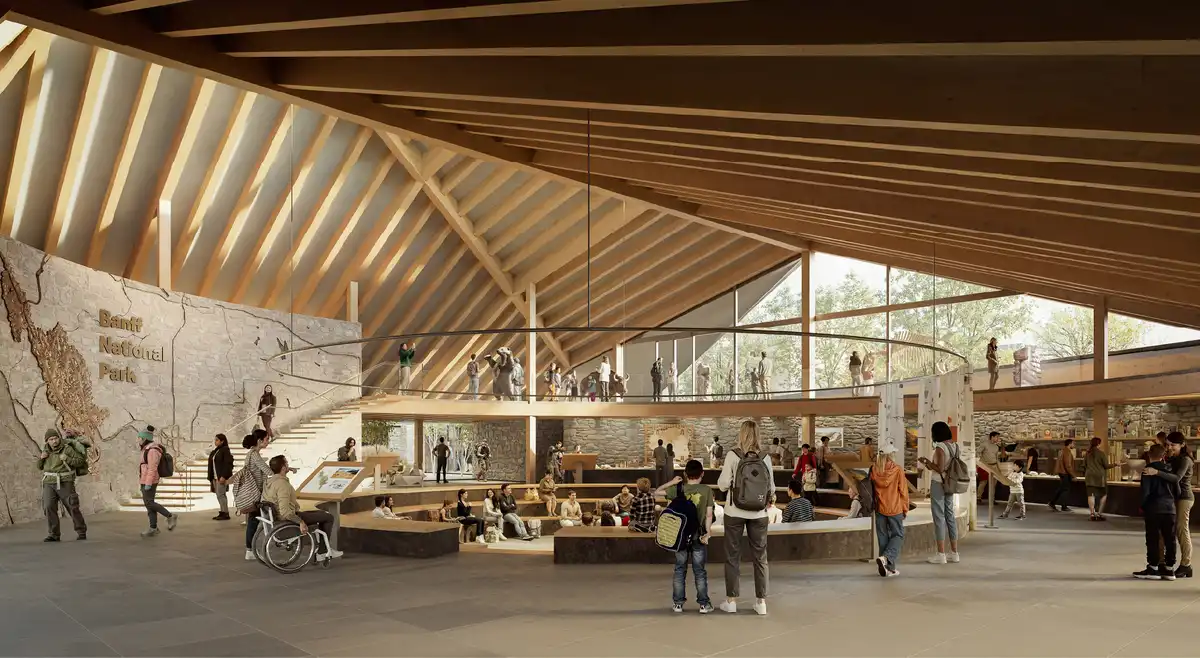
An adaptive reuse of the historic Parks Canada administration building anchors the scheme. The structure is reimagined as a circular gathering space organized around a central hall, with a new lookout tower offering 360-degree views across Banff. A new Visitor Centre Pavilion is connected to it by a transparent glazed link, clearly distinguishing old from new. Defined by a folded roof and expressed in timber, Rundle stone, and shale, the Pavilion introduces a mezzanine terrace oriented to the landscape and a light-filled interior that supports orientation, exhibitions, and gathering. Together, these elements position architecture as a lens for landscape rather than an object within it.
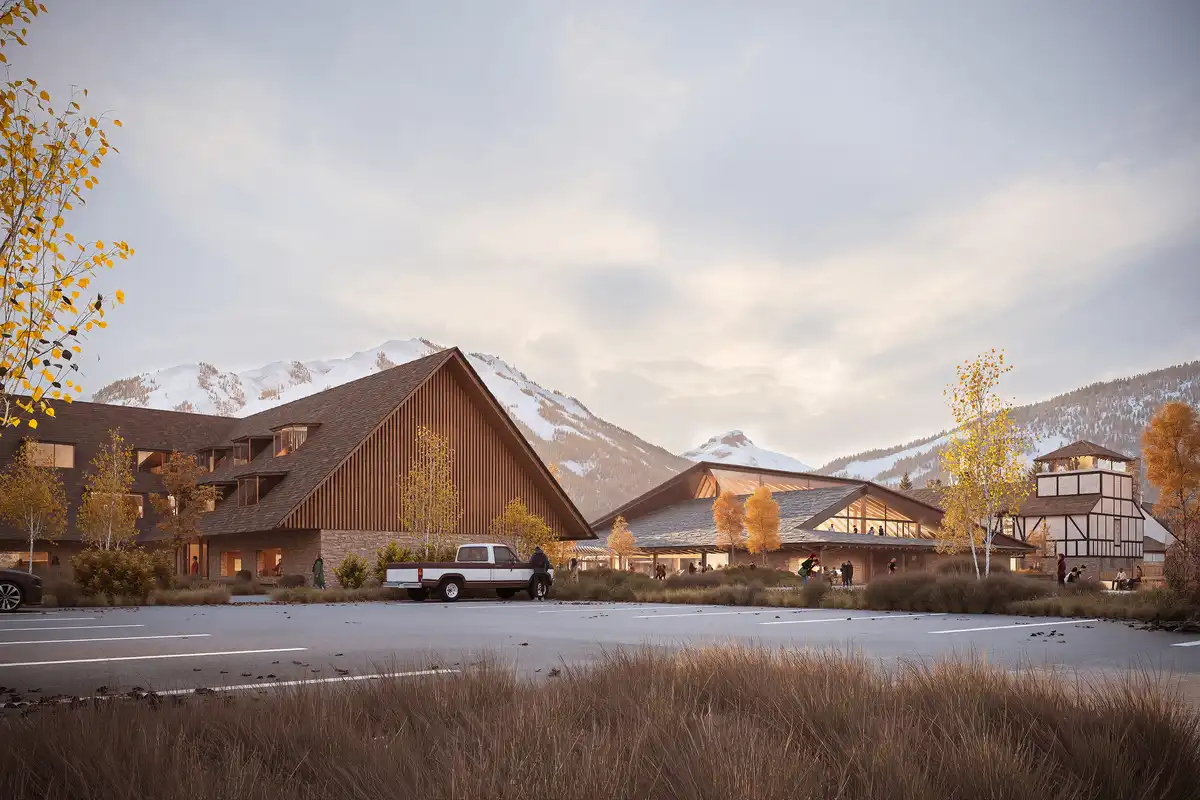
The winning team was selected from a distinguished shortlist that included fellow Canadian firms Alison Brooks Architects, EVOQ + Ryder, KPMB Architects, Revery Architecture, and Stantec Architecture. Parks Canada anticipates completion between 2030 and 2032. Upon finalization, the renewed visitor centre will serve an estimated 400,000 to one million visitors annually, acting as a gateway to Banff National Park and aligning civic space with the landscape it is meant to reveal. Learn more about the design here.
Paul Raff Studio (PRS)
Paul Raff Studio (PRS) is an architecture, art, and design practice dedicated to a creative vision of the highest calibre. Based in Toronto, Canada, it has achieved international distinction and is the only firm ever to receive both the Royal Architectural Institute of Canada’s Allied Arts Medal for artistic excellence and its Innovation Award for technical ingenuity. PRS embraces sustainability, integrating environmental performance with artistry to create designs that are as responsible as they are inspiring.
From intimate residences to transformative developments and sculptural landmarks, it approaches each project as unique and site-specific, crafted to deliver exceptional experiences and enduring value. Its global perspective, grounded in deep cultural literacy and experience working across diverse urban and natural landscapes, enriches every design.
Beyond architecture, PRS’s acclaimed public artworks explore the interplay of material, craft, meaning, and context. This, in turn, informs how it designs buildings of exceptional refinement and originality, distinctive in both form and execution.
paulraffstudio.com/
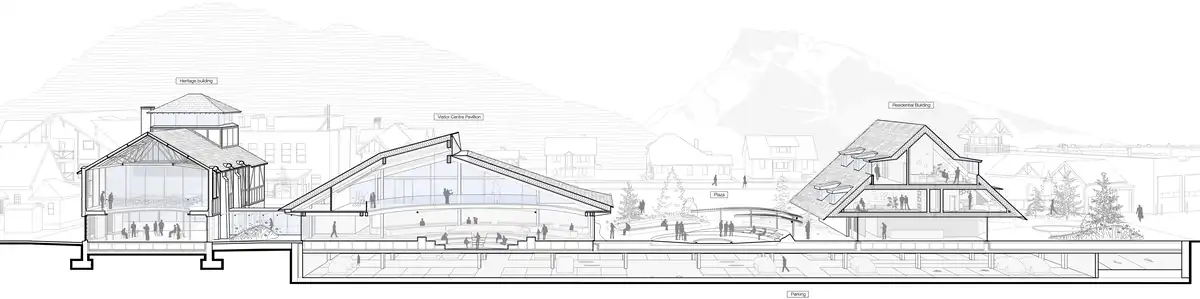
Banff National Park Visitor Centre competition-winning design, Alberta images / information received 280526 from Paul Raff Studio (PRS)
Location: Banff, Alberta, Canada, North America.
Alberta Buildings
New Alberta Building Designs
University Commons Re-Designed Edmonton, Alberta
Architecture: Zeidler Architecture
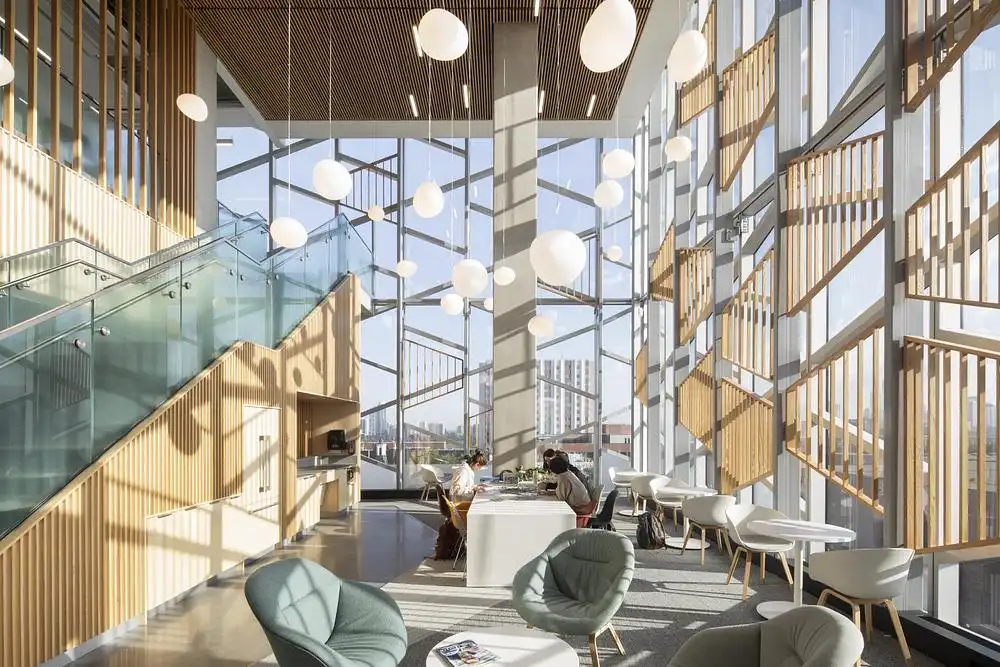
photo : Adrien Williams
The Dow Diamond Centre, Fort Saskatchewan, Alberta
Architects: Lemay
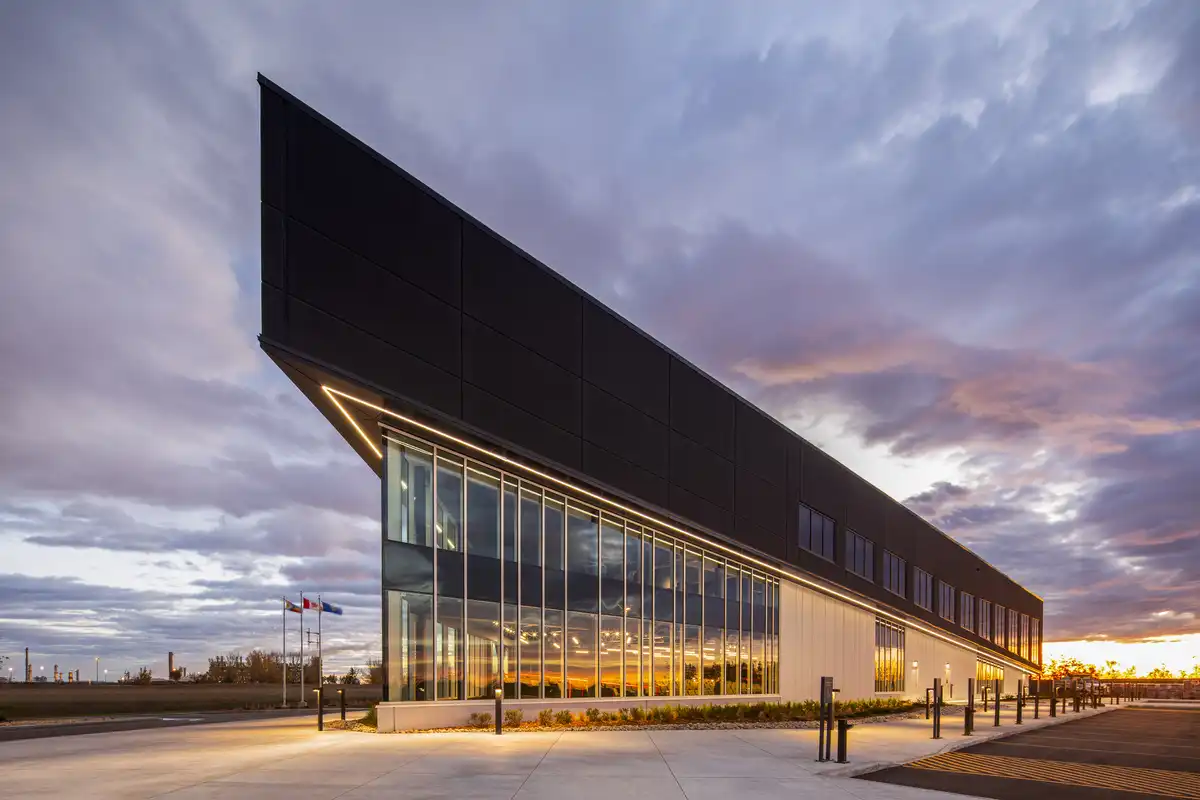
photo : Adrien Williams
++
Canada Architecture
Canada Architectural Design – chronological list
Comments / photos for the University Commons Re-Designed, Edmonton, Canada building design by Zeidler Architecture page welcome.

