B-One Office Building Berlin: Hyp Bank HQ
Architects: C.F. Møller Architects
Location: Budapester Strasse 1, Berlin City-West district, Germany
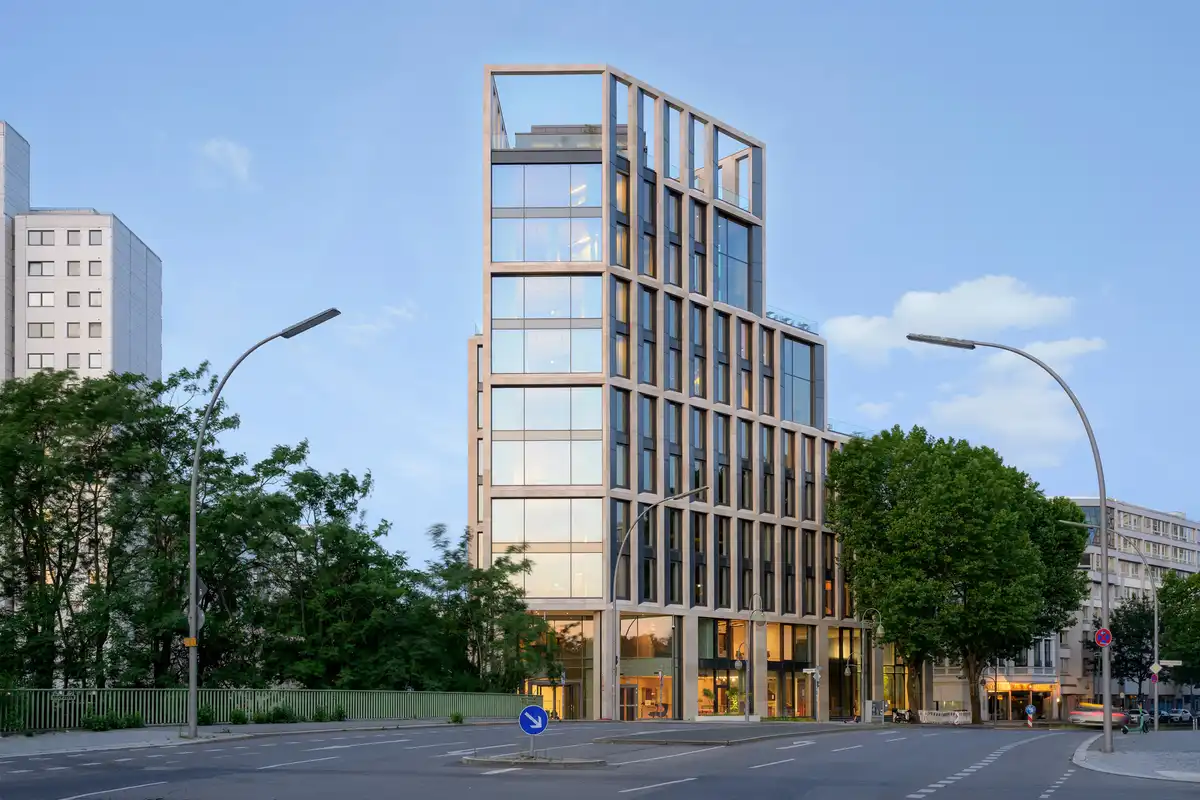
Photos by Franz Brück
17 September 2025
With the new B-One Office building at Budapester Strasse 1, C.F. Møller Architects has created one of Berlin’s most climate-friendly office buildings for Berlin Hyp. Officially inaugurated on 17 September 2025, the building provides a shared workspace for the Berlin-based employees of Berlin Hyp and Landesbank Baden-Württemberg (LBBW) and is pursuing DGNB Platinum and Diamond certification.
C.F. Møller Architects Designs Climate-Friendly New Office Building for Berlin Hyp
The 11-story building showcases how Nordic design principles can be successfully integrated into urban corporate architecture, with a strong focus on climate-friendliness, workplace flexibility, and employee well-being.
Nordic Design Meets Berlin’s Urban Context
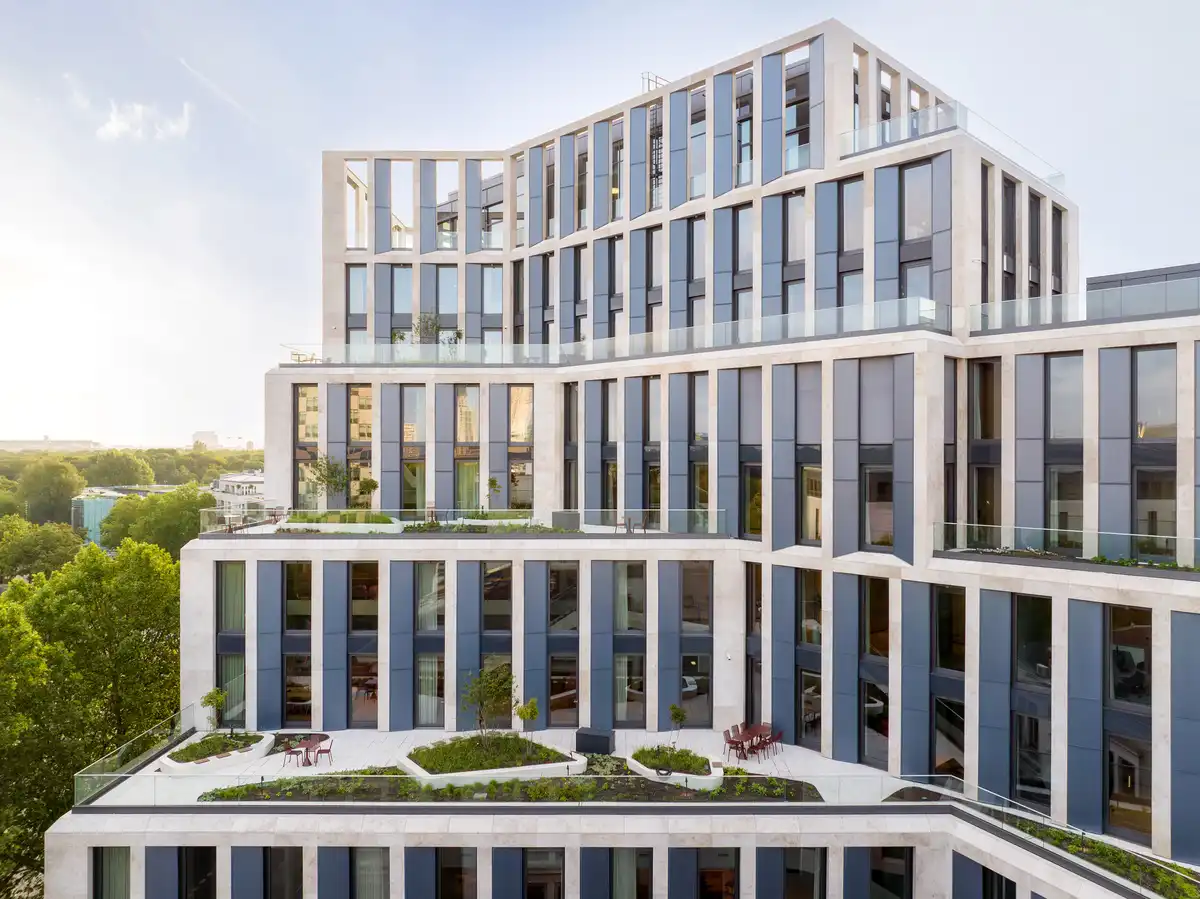
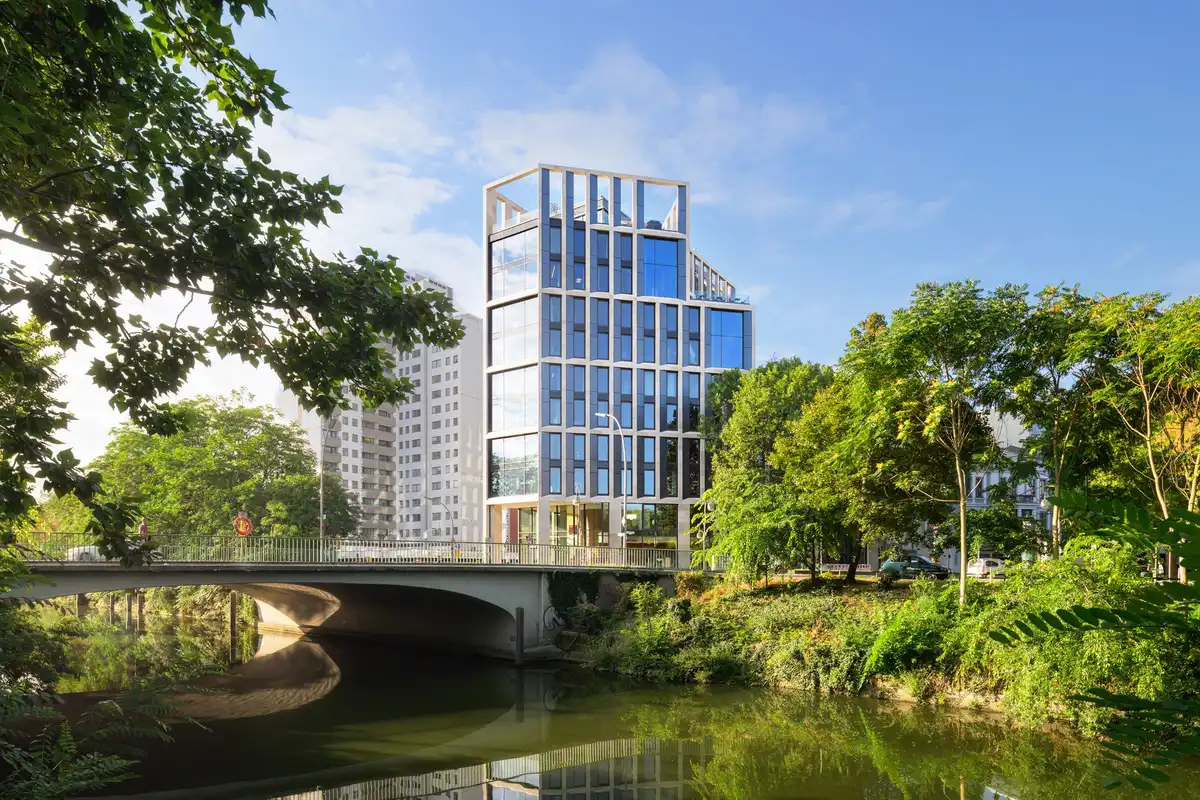
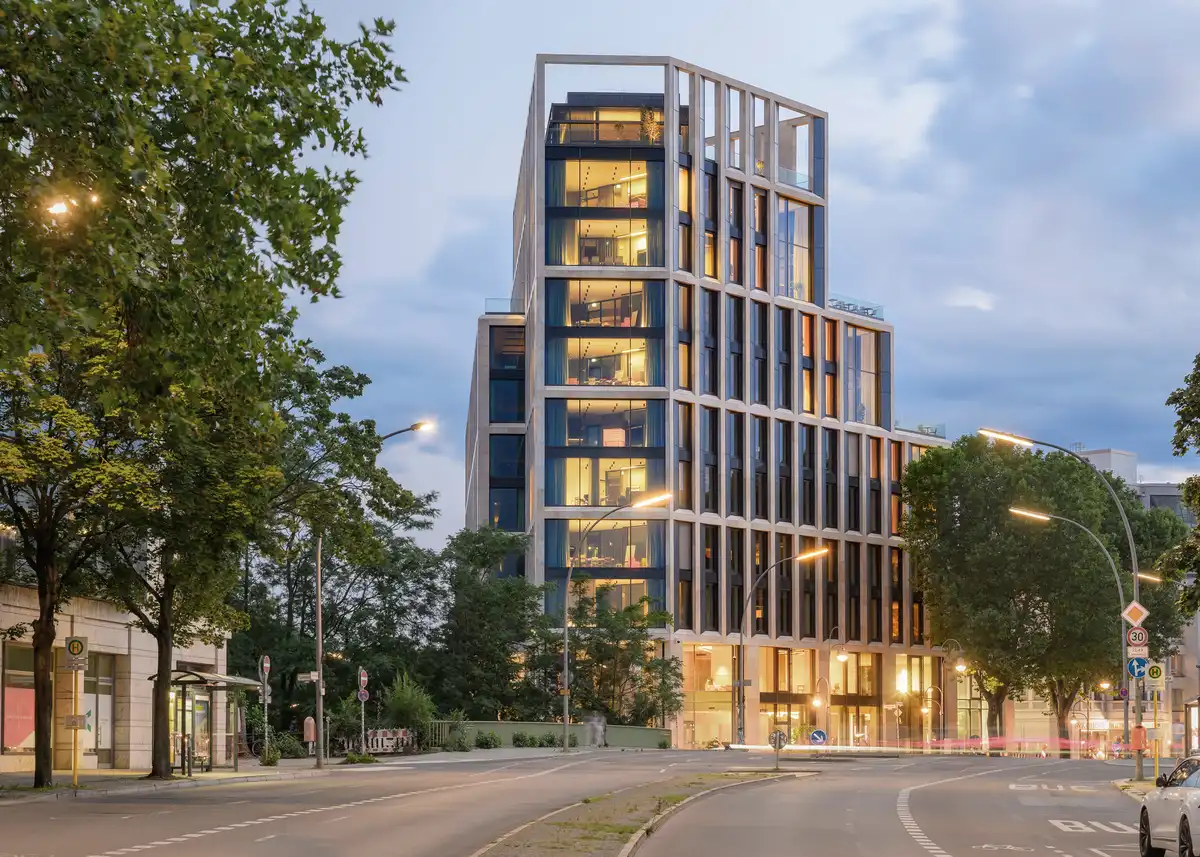
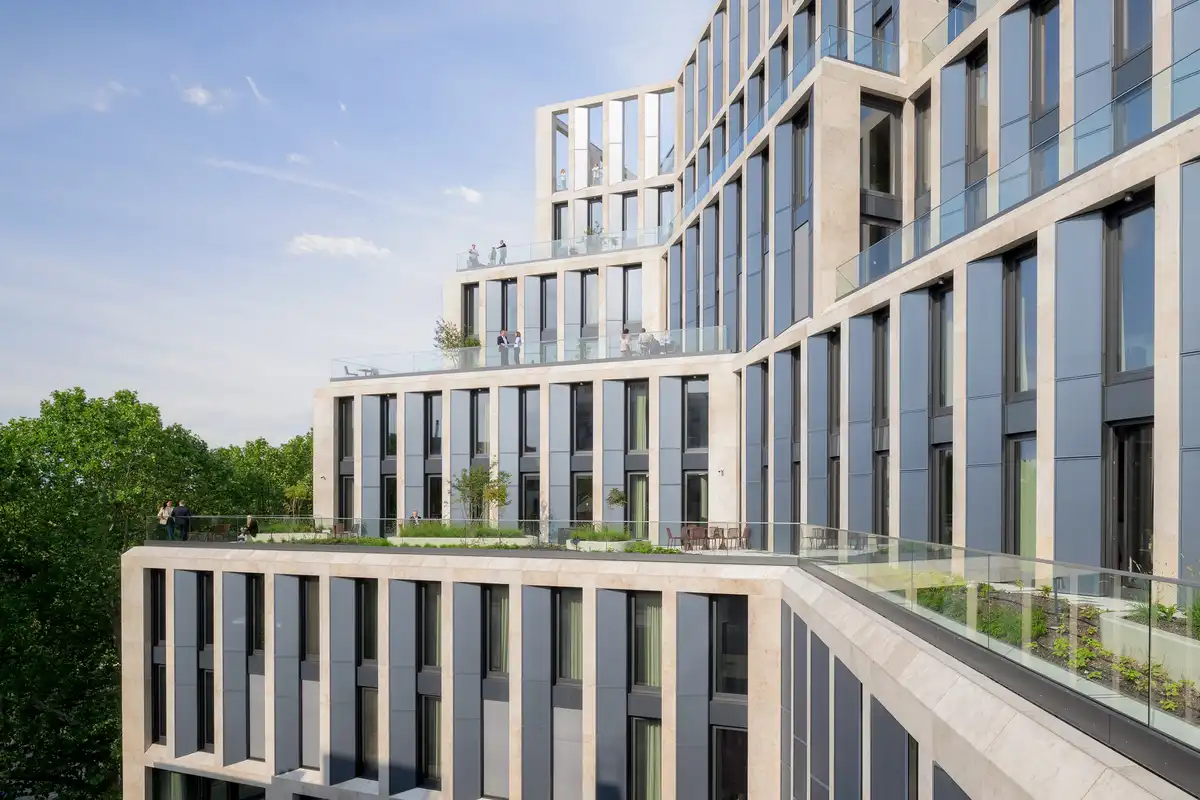
Located at the intersection of Landwehrkanal and Corneliusbrücke, B-One completes the existing city block and establishes a landmark at the edge of western Berlin’s city centre. The staggered, 45-meter-high building structure creates planted terraces that cascade from the rooftop to street level, providing a transition between the 11-story building and the neighbouring historic villa.
“Our Nordic approach emphasizes the relationship between building and landscape, between indoor and outdoor spaces,” explains Julian Weyer, Partner and Architect at C.F. Møller Architects. “We saw an opportunity to create something that goes beyond traditional corporate architecture – a building that supports the well-being of both people and the planet.”
Climate-Friendly Architecture as a Design Driver
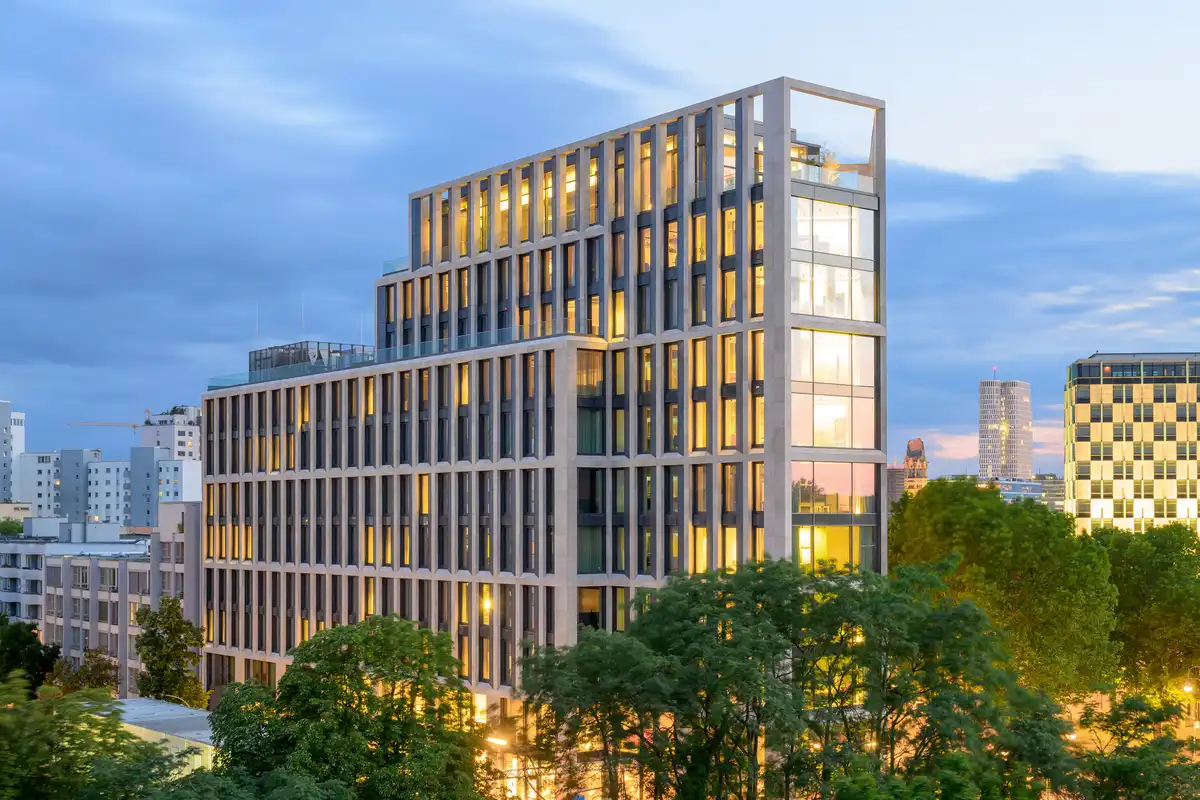
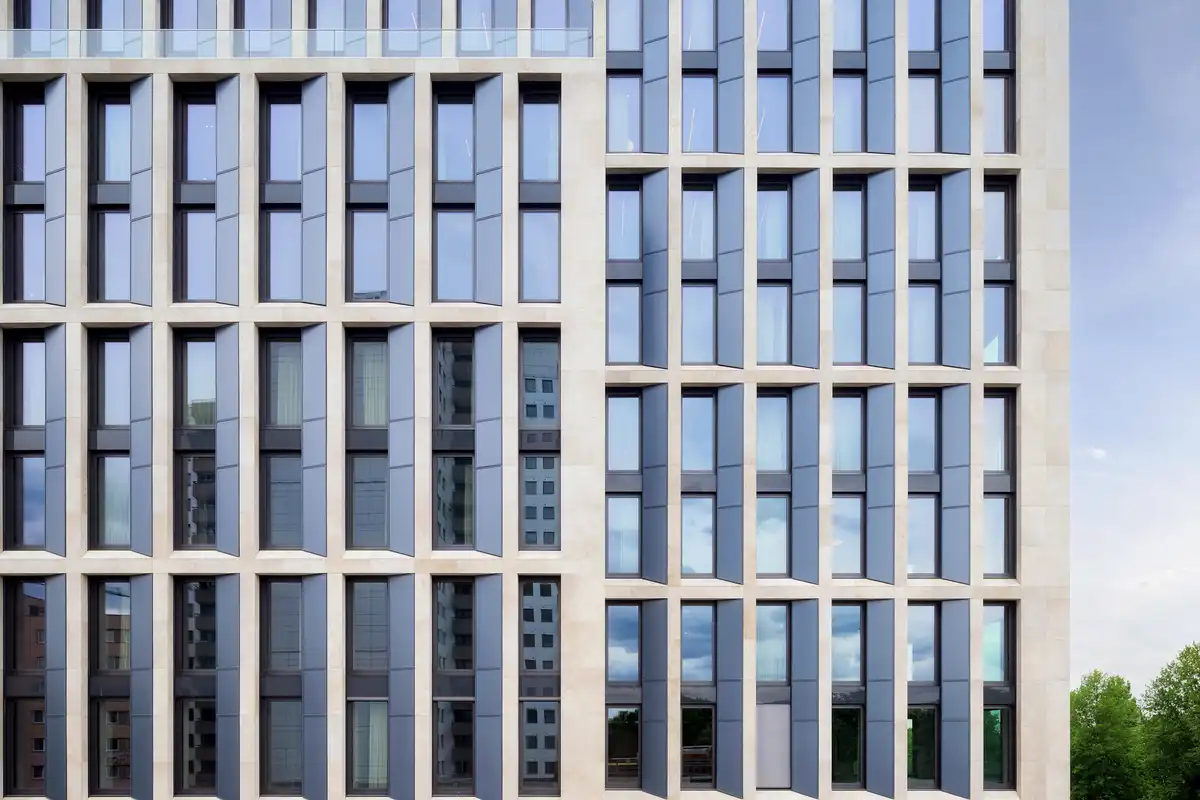
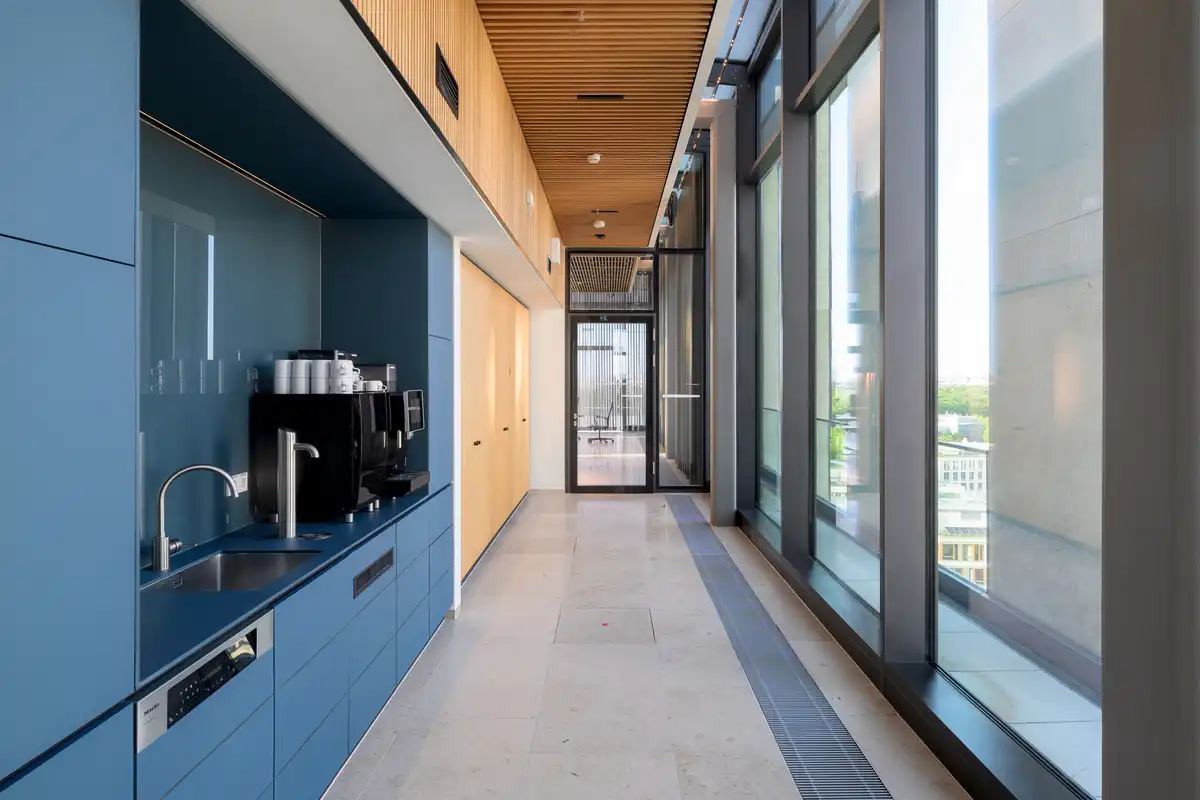
B-One reduces energy consumption by over 50% compared to its predecessor, achieved through integrated systems like photovoltaics embedded within the natural stone façade grid, geothermal heating systems, and concrete core temperature regulation within floor slabs. The decentralized underfloor hybrid ventilation, with heating and cooling functions, also allows users to choose between facade ventilation and natural window ventilation.
“In contemporary architecture, climate-friendliness cannot be an afterthought,” Weyer emphasizes. “From the earliest design phases, we integrated sustainable systems as architectural elements that improve both performance and function.”
The roof terraces and greenery hold back and delay rainwater, which is collected for reuse and cascades from terrace to terrace. This system ensures that rainwater never reaches the city’s surface drainage system, with all stormwater managed within the building’s landscape infrastructure.
Flexible Workplace Innovation
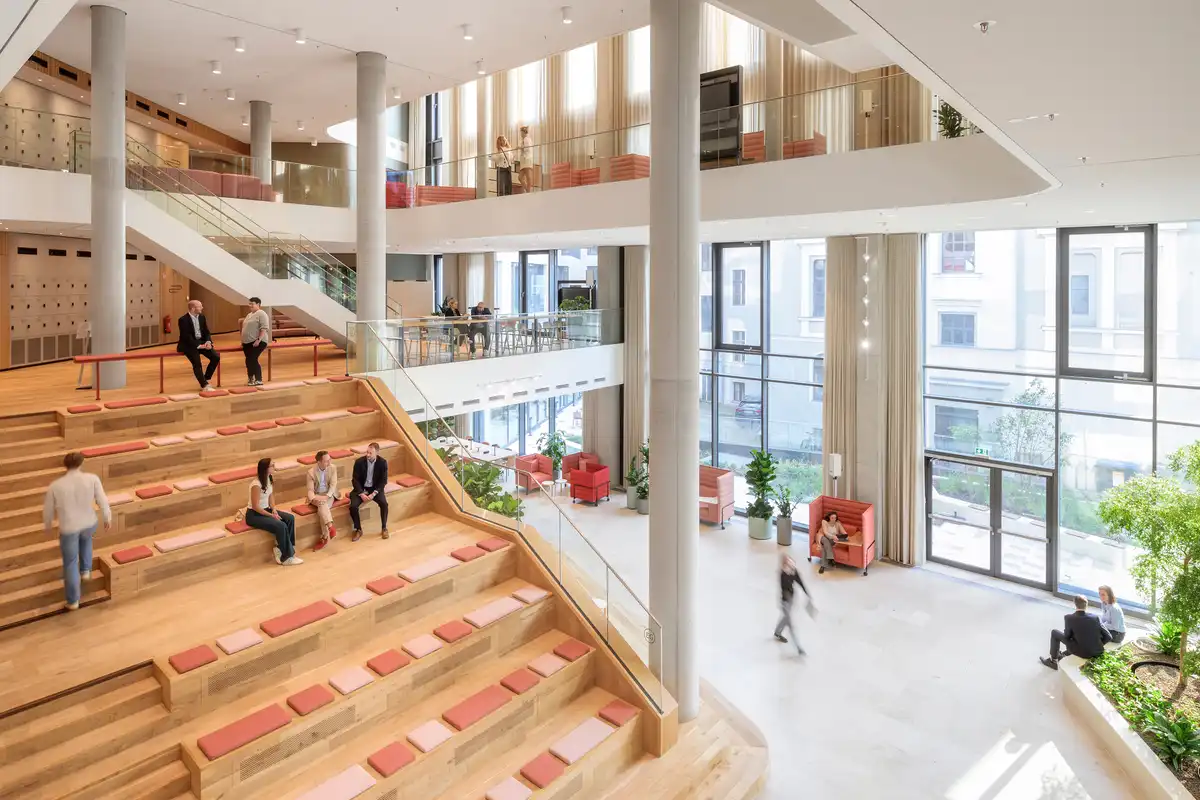
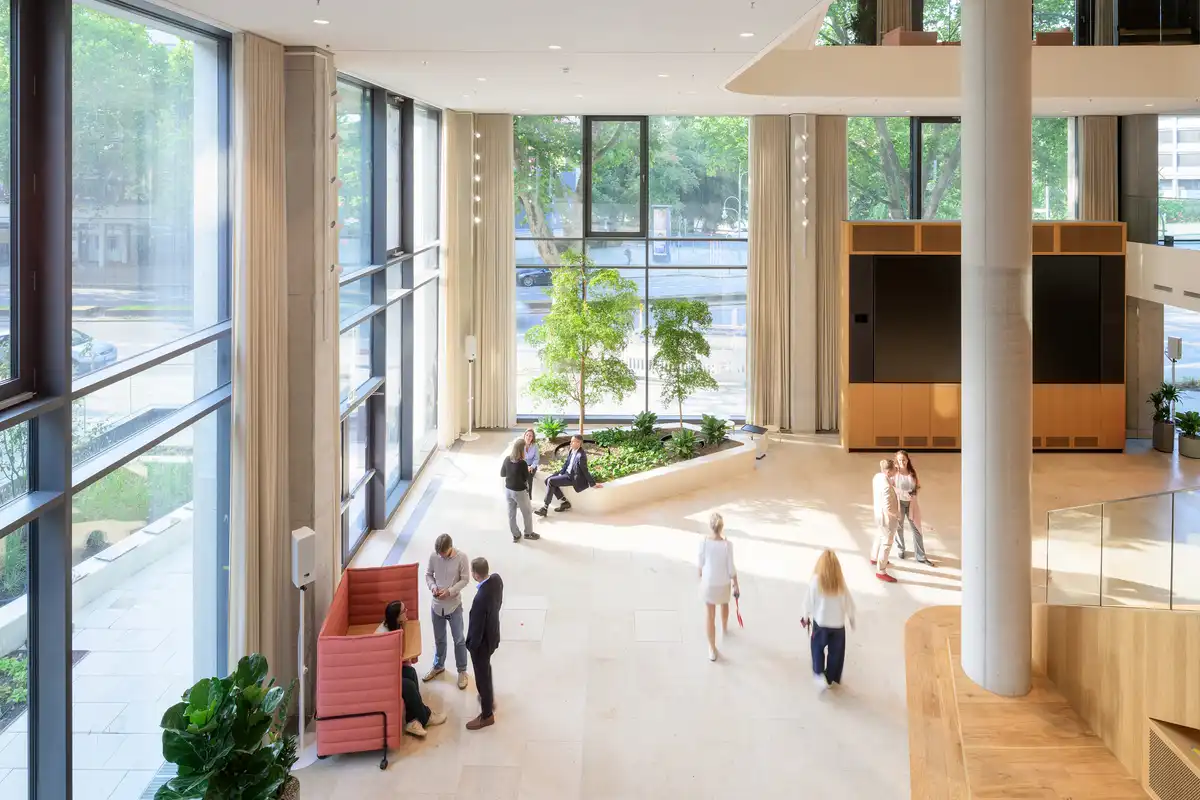
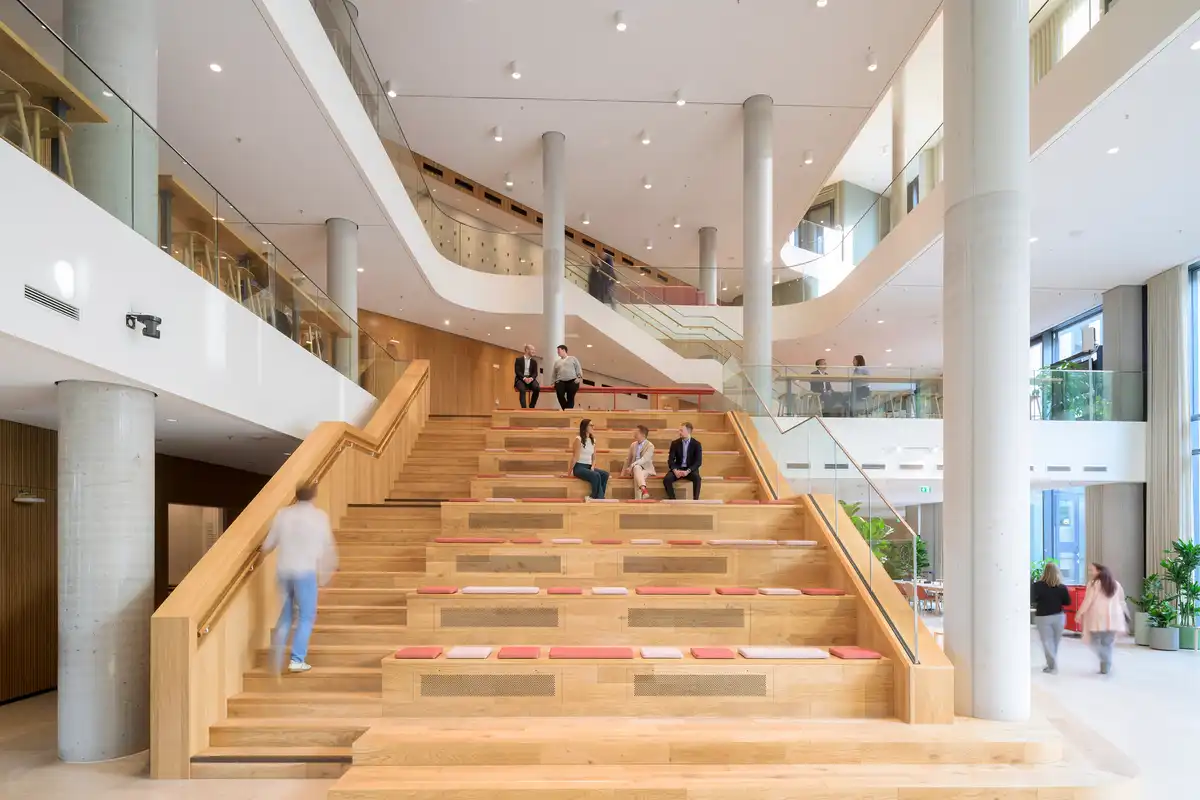
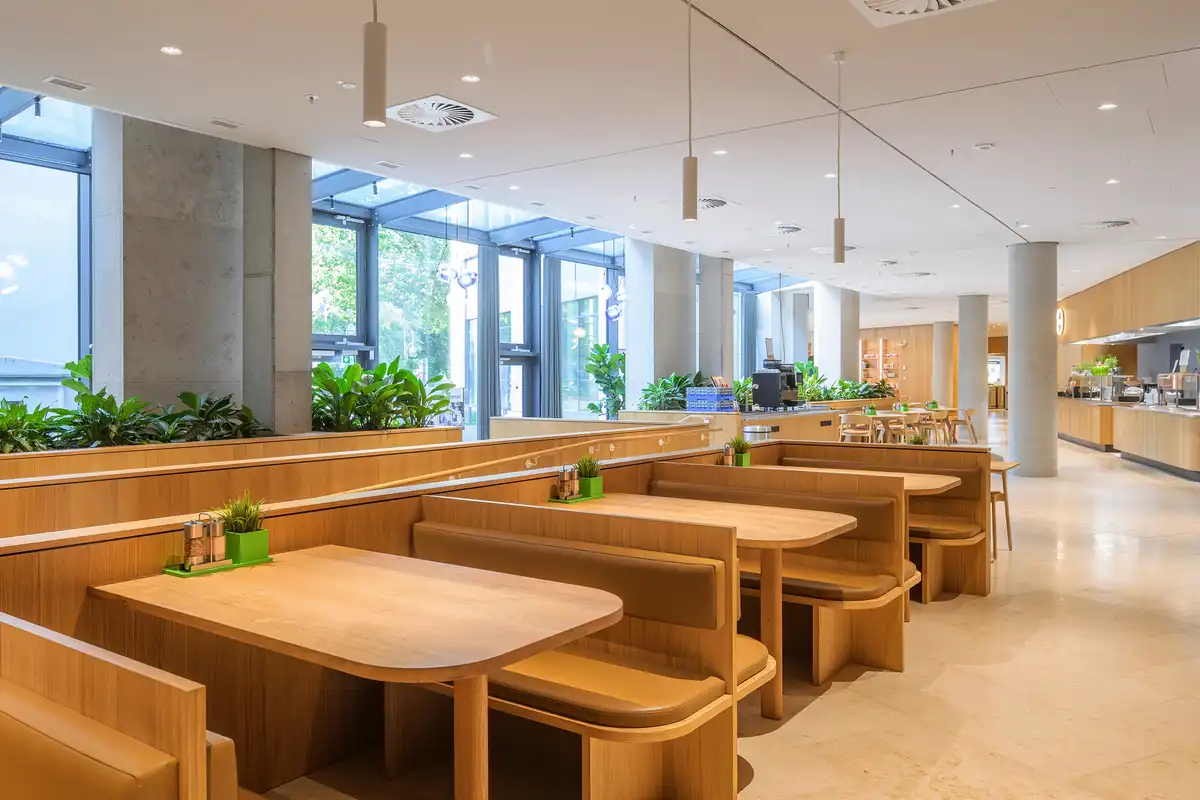
C.F. Møller Architects’ architectural concept prioritizes flexible, activity-based work environments. A central “Town Hall” with integrated tiered seating creates a multi-level social hub and creative workspace that is ideal for corporate events and client receptions.
“Flexibility isn’t just about moveable walls – it’s about creating spaces that inspire different types of work and collaboration”, Weyer notes. “We wanted to create a building that can evolve with Berlin Hyp’s changing needs.”
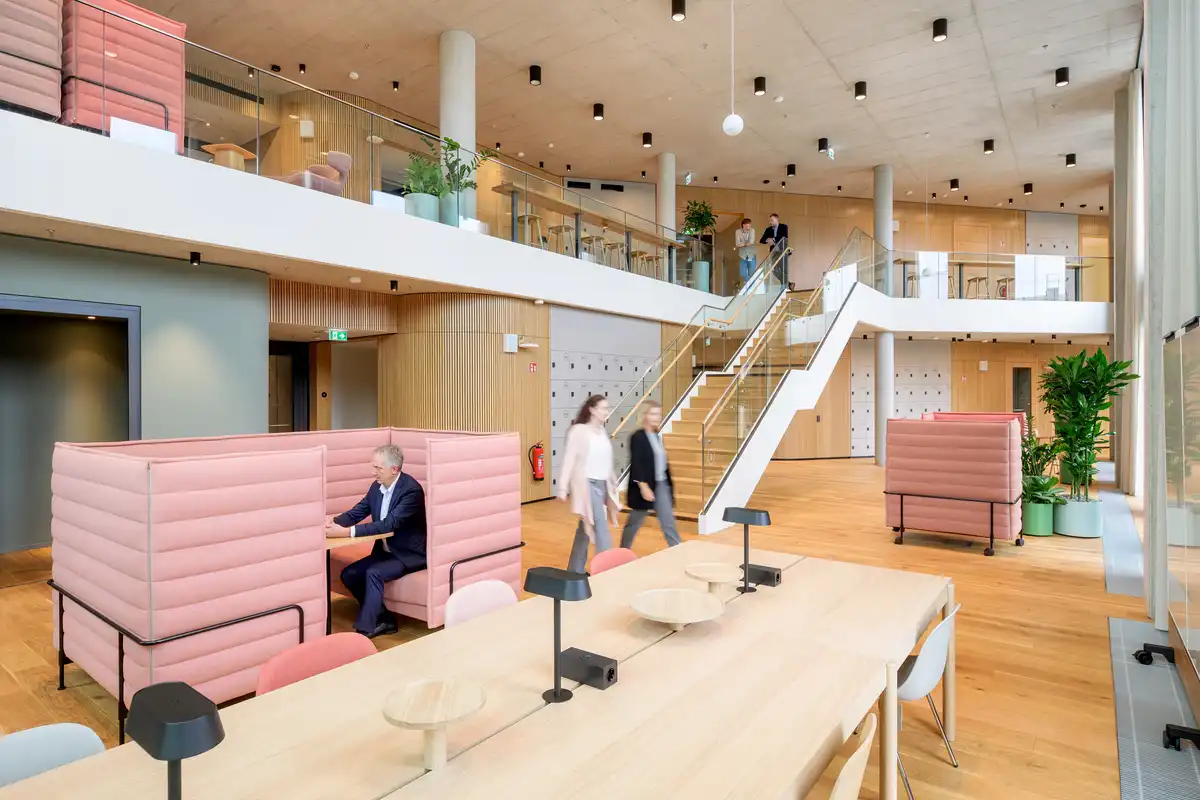
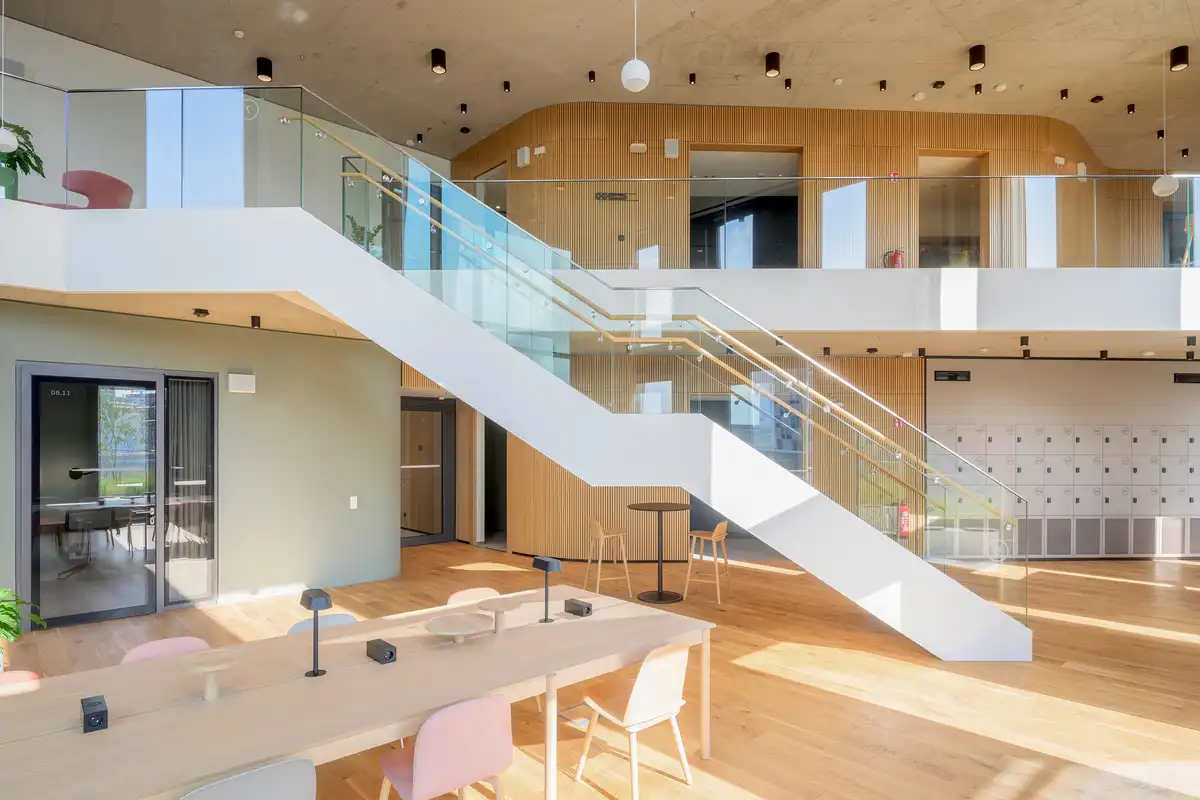
The double-height spaces follow the building’s stepped profile upward, creating diverse activity zones complemented by green outdoor terraces. The building’s crown features a roof garden and conference facilities offering views across Berlin.
C.F. Møller Architects was responsible for both the architectural design and the interior fit-out design, ensuring a cohesive integration between the building concept and the functionality of the workspace.
Client Perspective
Sascha Klaus, CEO of Berlin Hyp and Board Member of LBBW:
“With ‘B-One’ we have created a pioneering building that provides our employees with optimal working conditions in every respect. In addition, it offers maximum flexibility in its spaces and, in line with our corporate values, meets the highest standards of sustainability. The successful realisation of the project is in no small part due to the professional work of our project partners, to whom I extend my sincere gratitude.”
About the Project
B-One has a total gross floor area of approximately 19,000 square meters, spread across 13 floors, 11 of which are above ground. It offers flexible layouts with space for 500 workplaces for employees of Berlin Hyp and Landesbank Baden-Württemberg (LBBW). The two basement floors offer over 120 bicycle parking spaces and charging stations for electric vehicles, promoting sustainable mobility.
The ground floor incorporates areas designated for public use, including gallery spaces for art exhibitions, reflecting Berlin Hyp’s commitment to community engagement and cultural programming.
The building integrates its historical urban context with a contemporary design language, creating a work environment that embodies Berlin Hyp’s values of transparency, innovation, and environmental responsibility.
Photographs: Franz Brück
C.F. Møller Architects
C.F. Møller Architects is one of Scandinavia’s leading architectural firms with a century of award-winning work in the Nordic region and beyond. Based on innovation, experience, and Nordic values, C.F. Møller creates architectural quality daily that ensures climate-friendly and aesthetic solutions with lasting value for clients, users, and society. C.F. Møller Architects is internationally represented with offices in Berlin, Aarhus, Aalborg, Copenhagen, Malmö, Stockholm, and Oslo.
Berlin Hyp
Berlin Hyp is a leading institution for commercial real estate financing and serves as the CRE competence center of LBBW. With a direct presence in Germany as well as in the core markets of Europe and North America, extensive expertise, and modern processes, it supports investors and real estate companies in achieving their objectives.
It combines the agility of a specialist financier with the stability and broad range of services offered by the best medium-sized universal bank. Berlin Hyp provides German savings banks with a broad product portfolio in the field of commercial real estate financing. With its wide-ranging services and driven by the ambition to be the most modern and sustainable real estate financier, it continues to create new opportunities.
++
B-One – New Office Building for Berlin Hyp – Architectural Description
The new Berlin Hyp Office Building, named “B-One,” represents forward-thinking climate-friendly corporate architecture at the gateway to Berlin’s City-West district. Designed by C.F. Møller Architects, this 11-story building demonstrates environmental responsibility while establishing an architectural reference point at the intersection of Landwehrkanal and Corneliusbrücke.
Architectural Design and Urban Integration
The building’s architectural language responds to its urban context, completing the existing block perimeter in accordance with the city’s urban development regulations. The façade facing Budapester Strasse employs a staggered design that steps down from the building’s full height to transition to the neighbouring historic villa at Budapester Strasse 5. This approach demonstrates urban sensitivity, mediating between contrasting scales while maintaining the building’s presence as a corporate landmark.
B-One comprises a total of approximately 19,000 square meters of gross floor area, spread across 13 stories, with 11 of those being above ground. It offers flexible layouts with space for 500 workplaces for employees of Berlin Hyp and Landesbank Baden-Württemberg (LBBW). The two basement levels offer over 120 bicycle parking spaces and charging stations for electric vehicles, thereby promoting sustainable mobility. The building’s massing strategy creates planted terraces that descend like steps, establishing visual rhythm while integrating green space throughout the vertical composition.
Climate-Friendliness and Environmental Performance
B-One pursues DGNB (German Sustainable Building Council) Platinum and Diamond certification, reflecting Berlin Hyp’s commitment to environmental stewardship. The building achieves over 50% energy consumption reduction compared to its predecessor through integrated sustainable systems including photovoltaic installations embedded within the natural stone façade grid, geothermal heating systems, and concrete core temperature regulation within floor slabs.
The façade design incorporates self-shading elements that reduce solar heat gain while maintaining visual coherence through a calm aesthetic. Photovoltaic panels are integrated into the limestone cladding, combining renewable energy generation with architectural refinement.
The building features decentralized hybrid ventilation (including integrated heating and cooling) as part of the energy concept. Apart from central ventilation for the cafeteria, atrium and other major spaces, there is decentralised ventilation for each office space and minor spaces in the building. Users can determine whether to use the ventilation system built into the facade or simply open a window. This approach impacts both the perception of well-being and energy savings compared to conventional central ventilation systems.
Interior Organisation and Workplace Innovation
The architectural concept prioritises flexible, activity-based working environments that support contemporary collaboration patterns while providing spaces for focused individual work. The central organising element is a multi-level town hall space featuring a prominent staircase with integrated seating, serving as both a social gathering point and creative workspace capable of accommodating corporate events and client receptions.
From this town hall, a sequence of double-height spaces follows the building’s stepped profile upward, creating diverse activity zones complemented by accessible green outdoor terraces. While the interactive zones promote exchange, efficient sound insulation ensures the necessary acoustic comfort.
The building’s crown features a roof garden and conference facilities offering views across Berlin, completing the vertical sequence of shared spaces. The ground floor incorporates areas designated for public use, including gallery spaces for art exhibitions, reflecting Berlin Hyp’s commitment to community engagement and cultural programming.
C.F. Møller Architects was also responsible for the interior and workplace design process, ensuring coherent integration between architectural concept and workspace functionality.
Forward thinking Office Building
B-One establishes benchmarks for climate-friendly corporate architecture in Berlin, demonstrating that environmental responsibility and architectural excellence are mutually reinforcing objectives. The building strikes a balance between respect for its historic urban context and a contemporary design language, creating a workplace that embodies Berlin Hyp’s values of transparency, innovation, and environmental stewardship. Through its integration of sustainable technologies, thoughtful urban design response, and innovative workplace concepts, B-One represents responsible corporate architecture in Germany’s capital city.
+++
Berlin Hyp Office Building Q&A with Julian Weyer
B-One- New Office Building for Berlin Hyp
C.F. Møller Architects has completed the new B-One building for Berlin Hyp, one of Germany’s leading real estate financiers. The 11-story building at Budapester Straße 1 in Berlin, which offers space for employees from both Berlin Hyp and Landesbank Baden-Württemberg (LBBW) under one roof, is aiming for the DGNB Platinum and Diamond certification for climate-friendly corporate architecture in the capital. Julian Weyer, partner and architect at C.F. Møller Architects, led the design team for this project.
What was the key design challenge for the new Office Building for Berlin Hyp?
Julian Weyer: The challenge was creating a building that embodies Berlin Hyp’s vision as a climate-friendly, forward-thinking bank while responding to Berlin’s urban fabric. We needed to design something that goes beyond traditional corporate architecture – a building that demonstrates climate-friendliness, flexibility, and well-being for both people and the planet.
How does your Nordic approach manifest in this Berlin project?
JW: Our Nordic approach emphasises the relationship between building and landscape, between indoor and outdoor spaces. You can see this in the stepped terraces that descend like green steps from the roof, bringing nature into the workplace at every level. We believe architecture should connect people with nature, not separate them from it.
The building has a very distinctive stepped façade. Can you explain this design decision?
JW: The stepped massing serves multiple purposes. Architecturally, it creates a transition from our 11-story building down to the neighbouring historic villa, mediating between different scales in the urban context. Environmentally, it maximises green space while providing natural shading. And for the users, it creates outdoor terraces accessible from different floors, extending the workplace into the landscape.
How did sustainability goals influence the architectural design?
JW: Climate-friendliness cannot be an afterthought in contemporary architecture. From the earliest design phases, we integrated self-shading façade elements, photovoltaic systems, and green terraces as architectural elements that enhance both performance and function. Compared to its predecessor, the building achieves over 50% energy reduction, demonstrating that climate-friendly design can be architecturally sound.
What does “flexibility” mean in your design approach for B-One?
JW: Flexibility isn’t just about moveable walls – it’s about creating spaces that inspire different types of work and collaboration. The central “town hall” with its integrated staircase seating can transform from a meeting space to an event venue. The double-height spaces following the building’s profile upward provide various activity zones. We designed the building to evolve with Berlin Hyp’s changing needs.
How does the building promote employee well-being?
JW: Well-being architecture recognises that humans have a connection to nature. By bringing landscape into the building and extending the building into landscape, we create environments that support both productivity and personal renewal. The green terraces create microclimates, improve air quality, and provide employees with direct access to outdoor spaces throughout their workday.
What role does the “town hall” concept play in the overall design?
JW: The town hall reflects our democratic design philosophy. It’s the heart of the building – a space where large gatherings, client receptions, or informal meetings can happen. The prominent staircase with integrated seating creates a social landscape within the building, encouraging interaction and collaboration.
What do you hope this project demonstrates for corporate architecture?
JW: This project shows what’s possible when clients invest in sustainable design. B-One demonstrates that climate-friendliness, flexibility, and well-being are compatible with architectural quality. It proves these elements work together rather than compete with each other.
How does this project reflect C.F. Møller’s broader design philosophy?
JW: We believe architecture should improve life for people and the planet. B-One demonstrates this through every design decision – from the urban integration that respects Berlin’s history to the climate-friendly systems that protect our environment, to the workplace concepts that support human flourishing. It’s architecture with purpose and responsibility.
Previously on e-architect:
18 Aug 2020
C.F. Møller Architects win international competition for German bank
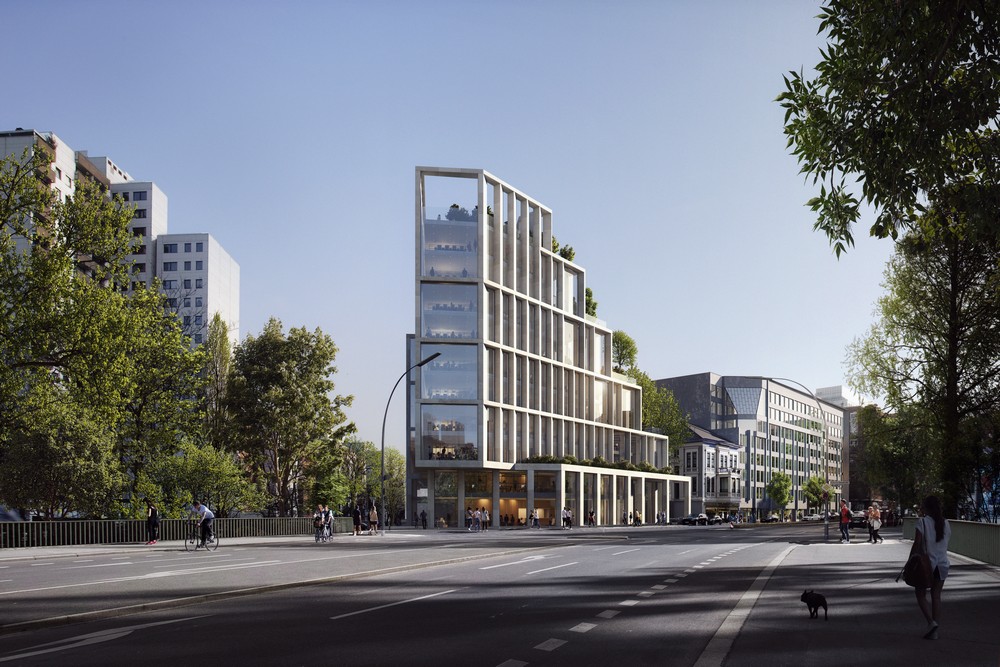
image courtesy of architects practice
Berlin Hyp Bank HQ Building
Images: C.F. Møller Architects
C.F. Møller Architects
Berlin Hyp Bank HQ in Germany office building images / information received 170925 from C.F. Møller Architects Denmark
Location: Budapester Strasse 1, City-West, Berlin, Germany.
Berlin Architecture
Berlin Architecture Designs – chronological list
+++
New Berlin Buildings
Dockyard Office Building
Design: tchoban voss architects
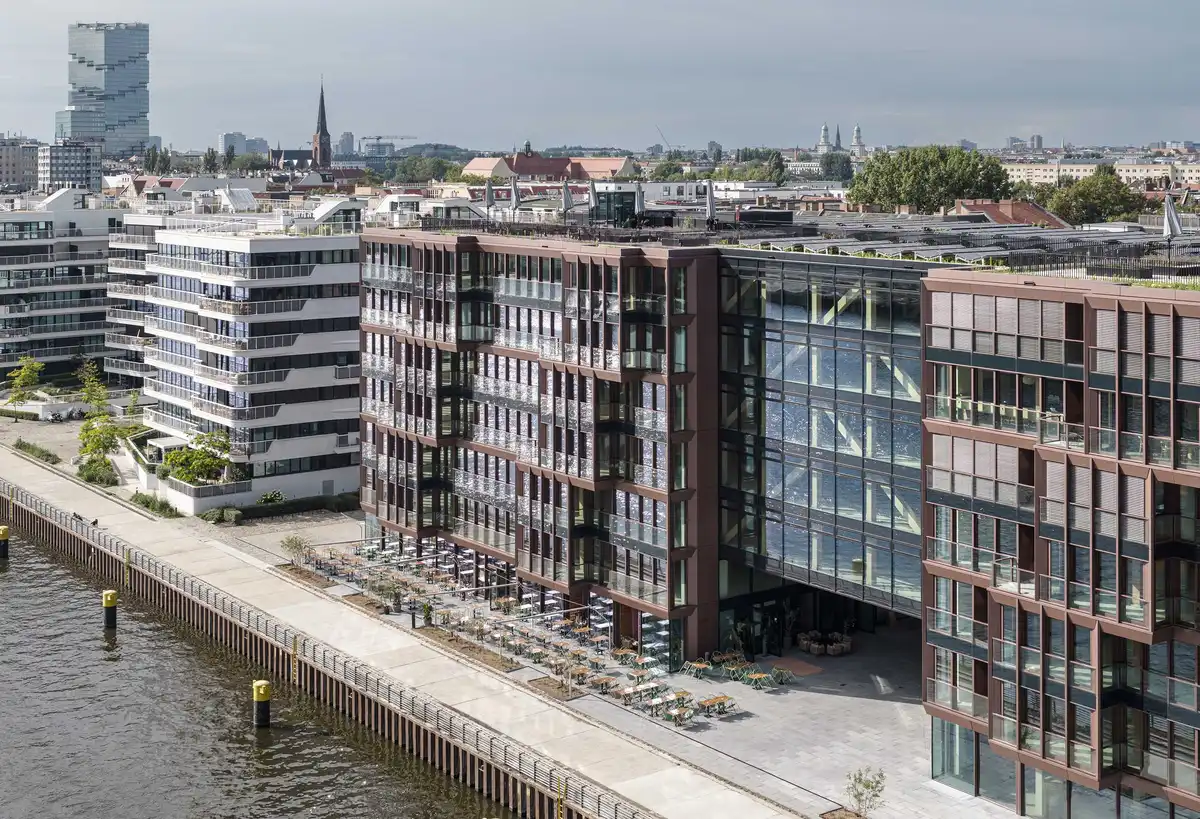
photo : HG Esch
Ray Kappe Home, Kleinmachnow
Architects: Ray Kappe
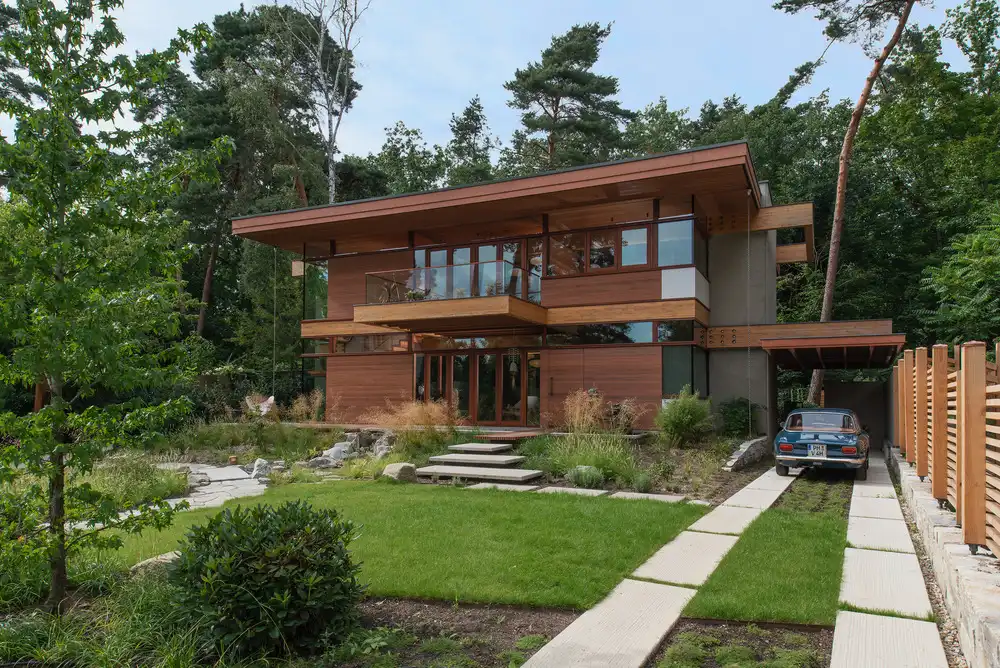
photo © Jürgen Nogai
Headquarters of Berliner Sparkasse, Benno-Koenig-Straße
Architects: TCHOBAN VOSS Architekten
Cube Berlin Building
Design: 3XN Architects, Denmark
++
Important Berlin Buildings
Jewish Museum Berlin
Design: Daniel Libeskind Architect
Neues Museum
Design: David Chipperfield Architects
National Gallery Building
Design: Mies van der Rohe Architect
Comments / photos for the Berlin Hyp HQ in Germany office building design by C.F. Møller Architects page welcome.