Plou Prou? Pavelló Mies van der Rohe Barcelona
29 July 2026
Design: Cierto Estudio, h3o architects and Metrònom
Address: Pavelló Mies van der Rohe, Av. de Francesc Ferrer i Guàrdia, 7, Sants-Montjuïc, 08038 Barcelona, Spain
Plou Prou? by Cierto Estudio, h3o architects and Metrònom

Photos by Simone Marcolin
Artistic intervention at the Mies van der Rohe Pavilion
From 17 to 30 July 2026
Opening: July 16 at 9:30 p.m. with dance by Jou Serra + Aurora Bauzà and Pere Jou
Closing: July 30 at 9:00 p.m. with a gastromusical experience with Tiberi Club and Clara Aguilar
From 17 to 30 July 2026 Cierto Estudio, h3o architects and Metrònom intervene in the Mies van der Rohe Pavilion with Plou Prou?, an artistic intervention selectedin the open call for Barcelona 2026 World Capital of Architecture.

Plou Prou? (Is it raining enough?) invites us to rethink the relationship between architecture, water and the climate crisis. The work activates the Mies van der Rohe Pavilion as a space for experimentation, encounter and cultural production around water management as a resource and collective experience.

In the words of the three architecture studios: “The collaboration arose as a result of our joint participation in the competition for the curatorship of the Catalan Pavilion at the Venice Biennale 2025 (then under the title It Doesn’t Rain). Until then we had never worked together, but the experience was very stimulating. After being finalists, and coinciding with the open call for Barcelona 2026 World Capital of Architecture, we decided to continue developing that research by giving a new shape to the Mies van der Rohe Pavilion, and changing the statement for a direct question to the visitor: Does it rain enough to sustain the consumption we make of water?”

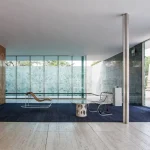
The ephemeral intervention highlights the dynamics of the Pavilion’s ponds, key elements of its architectural identity. The overheating and evaporation of water requires constant technical maintenance in order to preserve the famous “reflective sheet” of the building.

The intervention focuses on this water that imperceptibly evaporates and disappears without a trace and turns it into the central material of the installation through a cycle of elements that quantifies, makes visible and records this volume of water that evaporates and is constantly refilled:
- 12 elevated industrial tanks accumulate the volume equivalent to that which will evaporate from the large pond in the fourteen days that the intervention lasts, of groundwater (ceded by BCASA, the company that manages the supply to the city of Barcelona): more than 12,000 litres.
- An elevated channel crosses the Pavilion space as a temporary aqueduct and conducts water to the main pond through a constant drip. The water thread connects architecture with the city’s hidden infrastructures and physically measures the passage of time.

In addition, on the exterior wall of the Pavilion, six one-square-metre panels are installed where the research of six professionals from different fields (Marina Garcés, Pol Guasch, Pol Esteve, Miriam García, Marcos Navarrete, Marina Povedano and Arnau Pascual) are collected) on the ecological, water and political history of Montjuïc mountain. The particularity of the exhibition is that the texts are hidden from plain sight: visitors have to spray the panels with water sprayers to activate them and be able to read them.

Plou Prou? connects the Pavilion with the invisible infrastructures of the water and with the waterscape of Montjuïc, to understand architecture not as an isolated object, but as an active part of an ecosystem and a shared responsibility. During two weeks of the intervention, Plou Prou? invites us to gather around this symbolic source to explore this theme from very different points of view through performance, poetry, debate, research, gastronomy and music.

With the aim of awakening reflection, the installation recovers the role of fountains as a meeting space and is accompanied by a public program designed to expand the debate through the senses during the two weeks that the intervention lasts:
● The inaugural event, which will take place on Thursday, July 16 from 9:30 p.m., proposes a reading of the cloud as atmospheric architecture through a poetic dance performance by Jou Serra + Aurora Bauzà and Pere Jou. Tickets available here.
● Two round tables, which will take place on July 21 at 7:00 p.m. with Arnau Pascual, Miriam García and Marcos Navarrete; and on July 22 at 7:00 p.m. with Marina Povedano, Pol Guasch and Pol Esteve; allow research to be shared with the public and open the debate on water, landscape, city, thought and architecture. Tickets available here and here.
● The gastronomic and musical event, as a closing, on July 30 at 9:00 p.m., with Tiberi Club and Clara Aguilar, which will link rainwater with the senses of hearing and taste, recovering culinary knowledge, dry memories and forms of coexistence rooted in the Montjuïc territory. Enter here.

Plou Prou? connects the Pavilion with the invisible infrastructures of the water and with the waterscape of Montjuïc, to understand architecture not as an isolated object, but as an active part of an ecosystem and a shared responsibility. During two weeks of the intervention, Plou Prou? invites us to gather around this symbolic source to explore this theme from very different points of view through performance, poetry, debate, research, gastronomy and music.
*General admission fees to the Pavilion apply.
Free invitations are available through the World Capital of Architecture.
Photos: Simone Marcolin
+++
Mies van der Rohe Pavilion Building, Barcelona
Barcelona Pavilion Photos
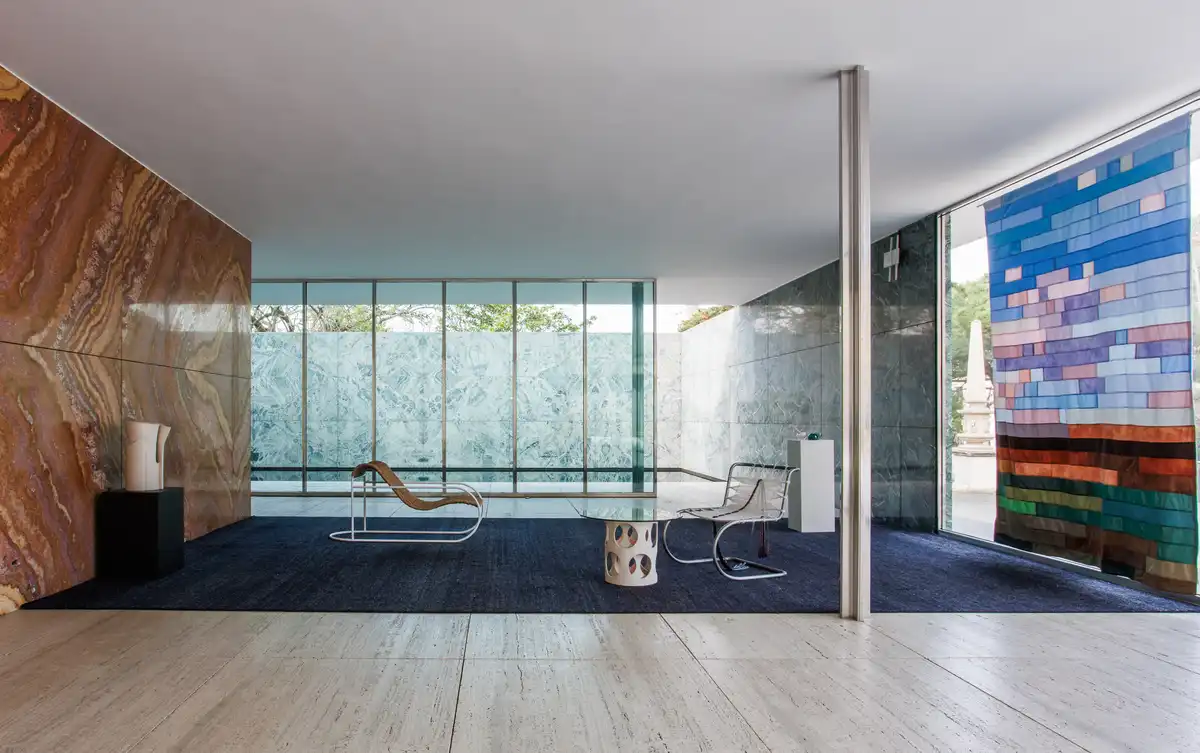
photo : Anna Mas
English text:
Mies van der Rohe Pavilion Building
Spanish text:
Pabellón Mies van der Rohe
Barcelona Pavilion architect : Mies van der Rohe
The Lilly Reich Grant for Equality in Architecture.

photograph : Pepo Segura, courtesy FMvdR
The Lilly Reich Grant for Equality in Architecture
Location: Montjuïc, Barcelona, Catalonia, Northeast Spain
Comments on Plou Prou? Barcelona Pavilion – major 20th Century building located in Catalunya, Northeast Spain article are welcome.
+++
Architecture in Barcelona
Some recent Catalan architecture designs on e-architect:
Museu Gaudí Teresianes
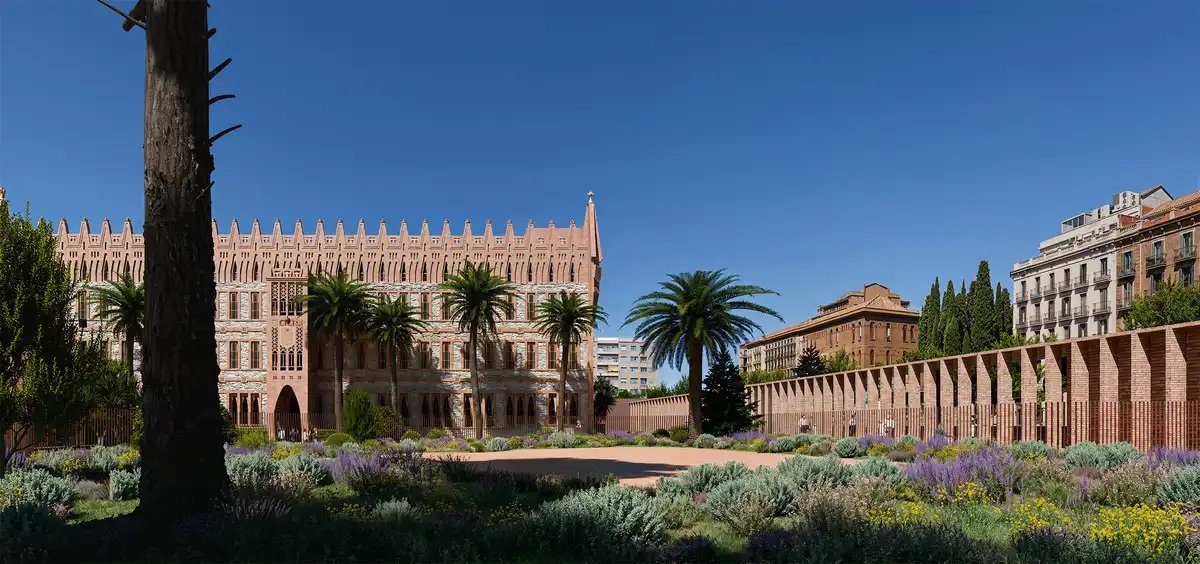
image : Arquitectura Genís Planelles
Sagrada Familia tower of Jesus Christ, Bellit Street, Caldes de Montbui
Architects: Sulkin | Marchissio

photo : Marta Vidal
ACCIONA Energía Pavilion building, Moll de la Fusta
Architects: Institute for Advanced Architecture of Catalonia (IAAC)
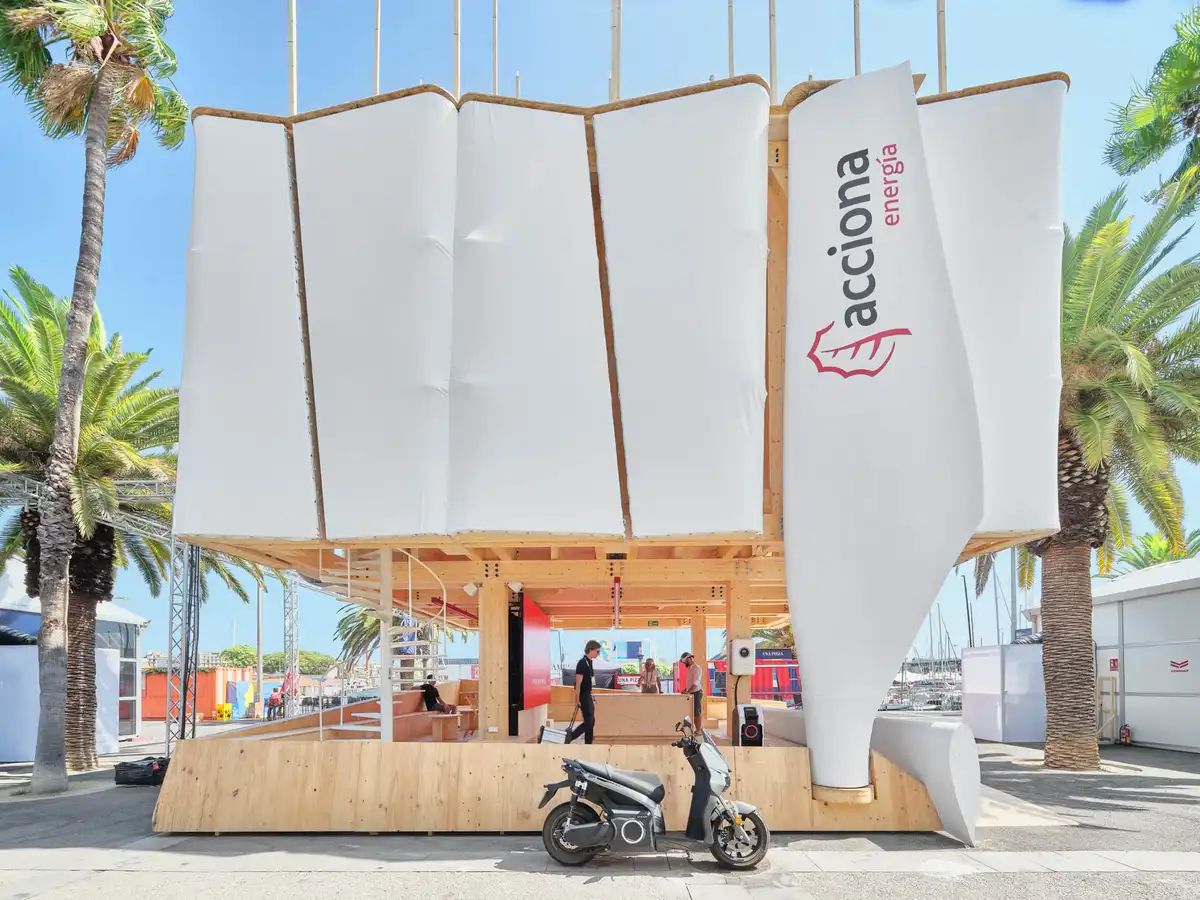
photo : Adrià Goula
Modulus Matrix Social Housing, Cornellà
Architects: Peris + Toral Arquitectes
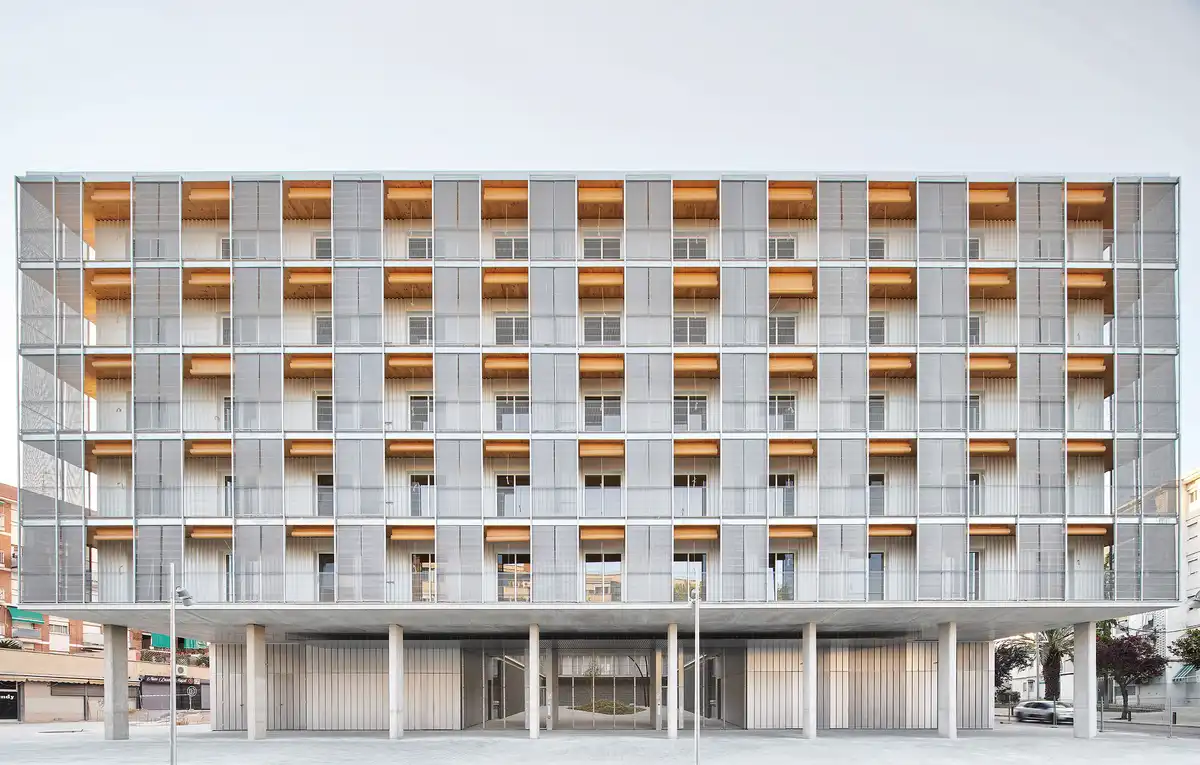
photo © José Hevia
Casa Batllo – Quayola façade mapping of this famous Gaudi building
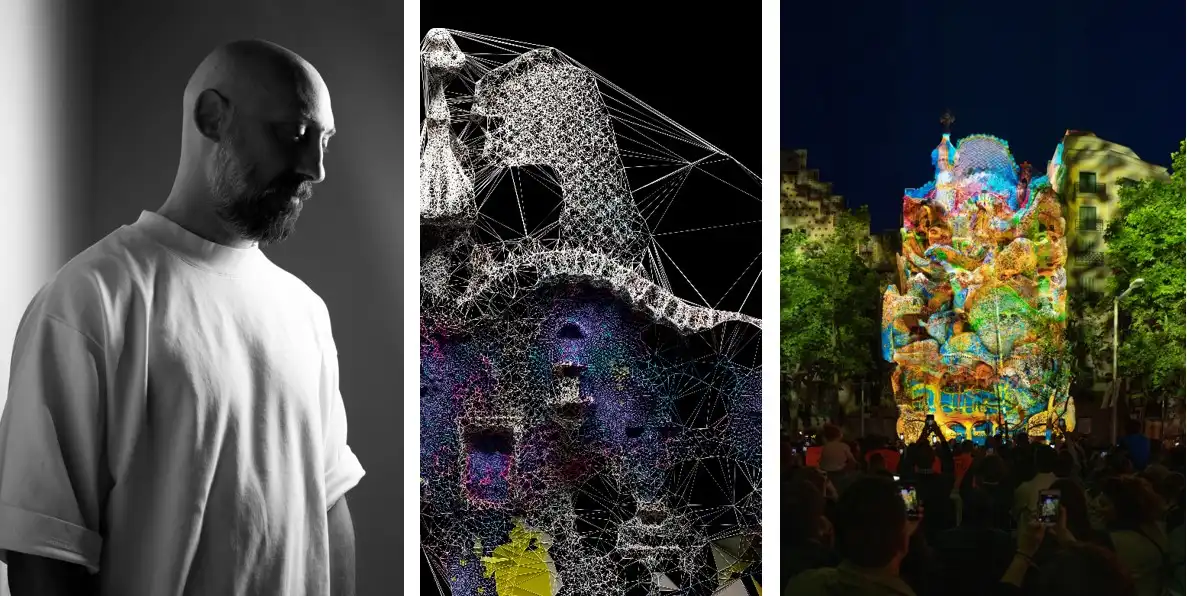
image : Claudia Maurino
Barcelona Architecture Walking Tours – Catalan capital city walks by e-architect
+++
Tugendhat Villa Brno building design by architect Mies van der Rohe
Comments / photos for the Plou Prou? Barcelona Pavilion Photographs page welcome