
Product Visualisation Improves Furniture Presentation for Architects
April 1, 2026
Architectural and interior projects are increasingly resolved through visual communication long before anything is built or delivered. Design concepts move through client presentations, stakeholder reviews, tender submissions, and specification approvals — stages where the clarity of visual material has a direct effect on how confidently decisions get made.

Furniture and product selection sits at an interesting point in this process. Pieces are often chosen relatively early, when physical samples may be unavailable, incomplete, or limited to a single finish option. Specification teams working with lead times, procurement windows, and client review deadlines rarely have the luxury of waiting for full physical prototypes before a presentation needs to happen. That gap — between a product existing on paper and a client being able to genuinely evaluate it — is where 3D product visualisation has become practically useful.
Why Product Presentation Matters Earlier in the Design Process
The timeline of a typical interior project does not always align with the production timeline of the products being specified. A furniture range might be finalised in one finish configuration while the project requires three. A new lighting collection might be announced before samples are manufactured. A bespoke piece may exist only as a technical drawing at the point when the design team needs to present it to a client.
In these situations, a rendered product image — produced to a level of photographic realism, showing accurate proportions, correct material surfaces, and appropriate scale — does something a mood board reference or a spec sheet cannot. It gives clients and collaborators something specific to respond to. Approval processes move more easily when the subject of the discussion is visible rather than described.
What 3D Product Visualisation Helps Teams Communicate
Form, proportion, and detailing
Scale and proportion are properties that drawings communicate imperfectly, particularly to non-technical clients. A rendered product image shows silhouette, leg weight, seat depth, backrest height, and joinery detail in a way that a flat elevation does not. For furniture with refined detailing — stitching lines, edge profiles, hardware placement, handle geometry — close-up renders can communicate construction intent at a level that supports both client understanding and supplier briefing.
Materials, finishes, and surface realism
Surface quality is often what determines whether a piece of furniture reads as appropriate for a given interior. The difference between a brushed and a polished metal finish, or between an oiled and a lacquered timber, registers immediately in a visualised image. Clients making decisions about upholstery fabrics, veneer selections, or painted RAL colours benefit from seeing those options rendered accurately against each other, rather than assessing them from swatch samples in isolation.
Photorealistic rendering can represent texture, reflectivity, grain direction, and surface variation in a way that supports genuine material evaluation — not just aesthetic preference.
How a product fits into a wider interior concept
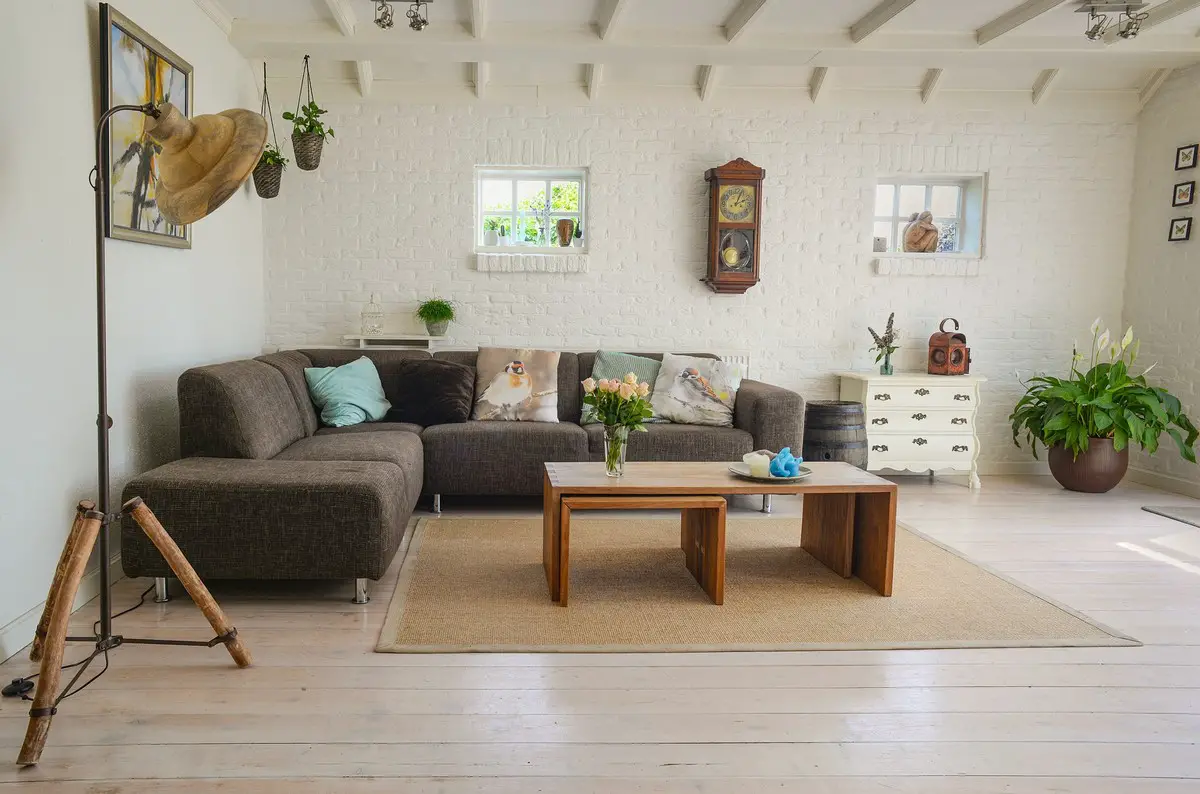
Products are not selected in isolation. A chair that reads well as a standalone object may or may not hold its scale against the architecture of a specific room, or complement the material palette of the wider scheme. Product visualisation that places a piece within an interior context — showing it against the right floor, wall finish, and adjacent objects — helps designers and clients judge fit in a more useful way than a white-background packshot allows.
Where It Adds Value for Architects, Interior Designers, and Furniture Brands
Client presentations and design approvals
Interior designers presenting a product selection to a client are making a case for specific choices. That case is stronger when it is visually grounded. A rendered product image — or a room-set visual showing a group of specified pieces together — gives clients something concrete to approve rather than something abstract to imagine.
Design reviews where visualised material is available tend to generate more specific feedback, which is generally more useful than broad uncertainty. Fewer rounds of revision, and fewer misunderstandings about what is actually being proposed, are consistent benefits of stronger visual communication at this stage.
Specification-stage communication
At tender or specification stage, the communication challenge shifts. The audience is often more technical, but the need for clarity about appearance and finish remains. Product imagery that accurately represents the specified configuration — rather than a generic catalogue image in a different colour or scale — reduces the risk of misinterpretation between design intent and delivered outcome.
Product launches, catalogues, and showroom preparation
For furniture and lighting brands, the value of product visualisation extends beyond the design workflow. Consistent, high-quality imagery is a prerequisite for catalogue production, digital distribution, and showroom presentations. Visualised assets can be produced across a full range — multiple finishes, multiple configurations, multiple viewing angles — with a consistency that location photography across the same range would rarely achieve.
Brands launching new collections also use rendered imagery to prepare marketing assets ahead of manufacturing completion, supporting sales and specification activity from an earlier point in the launch timeline.
Why Digital Product Imagery Can Reduce Friction in the Workflow
Physical samples and photography remain valuable at various stages of a product’s lifecycle. But dependence on them as the primary communication format introduces friction: samples take time to produce and ship, photography requires completed products and organised shoots, and neither is easily updated when a finish option changes or a dimension is revised.
Visualised product assets are more amendable. A change to a finish, a dimension adjustment, or the addition of a new configuration can be reflected in imagery without reproducing the physical object. For design teams working with products that are still in development, or for brands managing collections where variants are added progressively, that flexibility has practical value.
Better alignment between design intent and what clients or procurement teams actually understand also reduces the downstream friction of corrections, late-stage substitutions, and mismatched deliveries — all of which carry real project costs.
From Product Concept to Presentation-Ready Asset
The point at which product visualisation becomes most useful tends to be when the design is resolved but physical production is not yet complete. For brands that need presentation-ready imagery before manufacturing samples or full-room photography are available, 3d product visualisation services can help communicate form, finish, and design intent more clearly — whether the end use is a client presentation, a specification document, or a launch catalogue.
The asset produced serves multiple purposes. The same rendered image, produced to a consistent standard, can appear in a design presentation, a tender submission, a product specification sheet, and a brand’s ecommerce product page. That reusability makes the investment in quality imagery easier to justify across larger collections or multi-stage projects.
Good Visualisation Should Clarify, Not Oversell
There is a version of product rendering that prioritises impressiveness over accuracy — environments that flatter proportions, lighting that misrepresents surface quality, contexts that bear no relation to how a product will actually be used. That approach creates a specific problem: it generates approvals based on something the delivered product cannot match.
Useful product visualisation is honest about scale, truthful about materials, and representative of the design as it exists — not an idealised version of it. Architects and interior designers specifying products need imagery they can stand behind in a client meeting or a tender submission. The standard for quality should be realism in the service of decision-making, not realism as a marketing technique.
Visual communication has always been central to architectural and interior practice. What has changed is how early in the process strong product imagery is now expected, and how many stages of a project — specification, approval, procurement, launch — can benefit from it. 3D product visualisation, applied with care for accuracy and design context, is increasingly less a production shortcut and more a professional communication tool that design teams, brands, and their clients are working with as a matter of course.
Comments on this How 3D Product Visualisation Improves Furniture Presentation for Architects and Designers article are welcome.
Houses
Contemporary Property Articles – architectural selection below:
Buildings
Property and Furniture Posts
Interior designer living room trends
Comments / photos for the How 3D Product Visualisation Improves Furniture Presentation for Architects and Designers page welcome


