What It Actually Costs to Prepare a Los Angeles Home for Sale
August 6, 2026
Ask what it costs to sell a house and you will be told a commission percentage. That number is the largest single line and the least interesting one, because it is broadly fixed, broadly known, and has almost no bearing on what the property achieves.
The interesting money is the few thousand dollars spent, or not spent, in the six weeks before the listing goes live. That spend is discretionary, it is poorly understood, and in a market like Los Angeles it has a materially larger effect on the outcome than a point of commission either way.
Here is the actual list, line by line, with the ranges that apply in Southern California and an honest note on which items return their cost.

The fixed costs, briefly
Get these out of the way, because they are the ones you cannot influence.
Agent commission remains the dominant figure and remains negotiable at the margins rather than in principle. Escrow and title run to a few thousand dollars depending on price and county practice. Los Angeles adds a documentary transfer tax, and properties above certain thresholds within the City of Los Angeles carry an additional transfer levy that has materially changed the arithmetic on higher-value sales since it took effect, check the current thresholds for your address, because they are indexed and they move.
None of that is where decisions get made. Everything below is.
Photography, and why it is the highest-return line on the list
The largest gap between what something costs and what it does sits here.
A professional shoot in Los Angeles starts around $250–$300 for a standard listing and rises through packages in the $400–$700 range that add twilight, aerials, a floor plan or a 3D tour, with full luxury media on a significant property running past $1,500. Against a seven-figure sale price these are rounding errors. Against the mechanics of how the property is actually discovered, they are the whole transaction.
The mechanics deserve stating plainly. A buyer sees your house as a single thumbnail in a scrolling list, at roughly the size of a playing card, and decides in a fraction of a second whether to open it. Every other marketing decision, the copy, the floor plan, the open house, the price positioning, only reaches the buyers who cleared that hurdle. Understanding here does not save money. It reduces the population of people who ever see the rest of the work.
Los Angeles makes this harder than most markets. A great deal of the desirable stock is hillside or canyon property with short, elevation-specific light windows; the marine layer clears the Westside hours after it clears the eastern hillsides in early summer; and any house with a significant glazed elevation is only honestly photographable during the twenty-odd minutes at dusk when the interior and the sky reach the same value. A handful of Southern California studios publish their rates outright rather than quoting on request. House of Pix lists a Los Angeles base shoot at $265 and its packages up to $1,600, and once you have one published figure to anchor against, the quotes that arrive without one become far easier to read. What you are paying for at the upper end is mostly scheduling, because the difference between a competent shoot and a poor one in this city is almost entirely which hour it happened.
Verdict: spend here first, and spend properly. It is the only line on this list where the cheap option is more expensive.
Staging, and the case for the partial version
Full staging of a family home in Los Angeles runs into the thousands per month and is normally taken for a minimum term, which on a stalled listing compounds unpleasantly. Occupied or partial staging, bringing in a defined set of pieces and editing what is already there, costs a fraction of that.
Virtual staging is the third option and is now inexpensive enough, at roughly $30–$50 an image, that the objection to it is no longer cost. The objection is disclosure. A virtually staged photograph must be labelled as such, and a buyer who works out for themselves that the furniture is not real has learned something about the listing that you did not want them to learn.
The honest rule: virtual staging is excellent for an empty room a buyer struggles to read, and poor as a substitute for addressing a room that is genuinely unattractive.
Verdict: partial staging on an occupied house, virtual on vacant rooms, full staging only on high-value vacant property.
Condition: the line that decides whether the others matter
Everything above is presentation. This is the one that determines whether the presentation survives contact with a buyer’s inspector.
Los Angeles housing stock has predictable weaknesses, and they cluster. Rain arrives in a small number of concentrated winter systems onto flat or shallow-pitched roofs that spent nine dry months collecting debris, so slow roof failures are common and frequently surface some distance from the actual breach. Hillside properties add subsurface drainage. Mid-century glazed elevations add condensation running off cold steel frames into timber sub-sills. Slab-on-grade houses built before under-slab vapour retarders became standard move ground moisture upward continuously, which is invisible until somebody lays a modern floor finish over it.
A pre-listing assessment costs a few hundred dollars. The same discovery made by a buyer’s inspector on day four of a contingency period costs whatever the buyer decides it costs, on the buyer’s timeline, from a report you have not read. That asymmetry is the entire argument.
If the property is older, has had any water event, or has already lost one buyer to a contingency, an independent mold inspection before listing is among the highest-leverage few hundred dollars in this list. Two practical notes: commission it yourself so the report is yours to use or not, and prefer an assessor who does not also sell remediation, a firm that profits from finding something is being asked to grade its own homework, and buyers’ agents in Southern California have learned to check.
Whatever surfaces, fix the moisture source rather than the finish. A repair that reappears three months later converts a maintenance issue into a credibility issue, and credibility is not recoverable inside one transaction.
Verdict: spend here second, immediately after photography.
Repairs and improvement: what returns and what does not
The general finding across decades of remodelling cost-versus-value data is consistent and counter-intuitive: modest, exterior, envelope-facing work returns better than expensive interior renovation undertaken specifically to sell.
Paint, landscaping tidy-up, a working front door, functioning lighting, clean glazing and repaired hard landscaping all return well because they operate on the first ten seconds. A new kitchen installed six weeks before listing rarely returns its cost, because the buyer who wanted a new kitchen wanted their new kitchen, and the buyer who did not care is not paying for it.
The specific exception in Los Angeles is anything that removes a financing or insurance obstacle, a roof at the end of its life, unpermitted work that can be resolved, defensible-space compliance in a high fire hazard severity zone. Those are not improvements. They are removals of reasons to walk away, and they price differently.
Verdict: fix, clean and tidy. Do not renovate to sell.
Timing, and what it is worth
Los Angeles seasonality is milder than most of the country but real. Activity concentrates in spring and again in early autumn; late November through the New Year is genuinely thin. If the choice is between listing unprepared in a strong window and listing well-prepared three weeks later, take the three weeks. A listing only launches once, and the first ten days generate the majority of the attention it will ever receive.
The whole picture
For a straightforward Los Angeles property, preparation lands somewhere in the low thousands: photography in the hundreds, partial staging in the low thousands if used, an inspection in the hundreds, and a repair budget that depends entirely on what the inspection turns up. For a significant hillside or architectural property, the media budget alone can reach four figures and is still the best-value line on the sheet.
Set against a commission measured in tens of thousands and a price reduction measured in the same, the preparation budget is small enough that under-spending it is difficult to justify and easy to regret. The sellers who do best are not the ones who negotiated hardest on commission. They are the ones who launched once, properly.
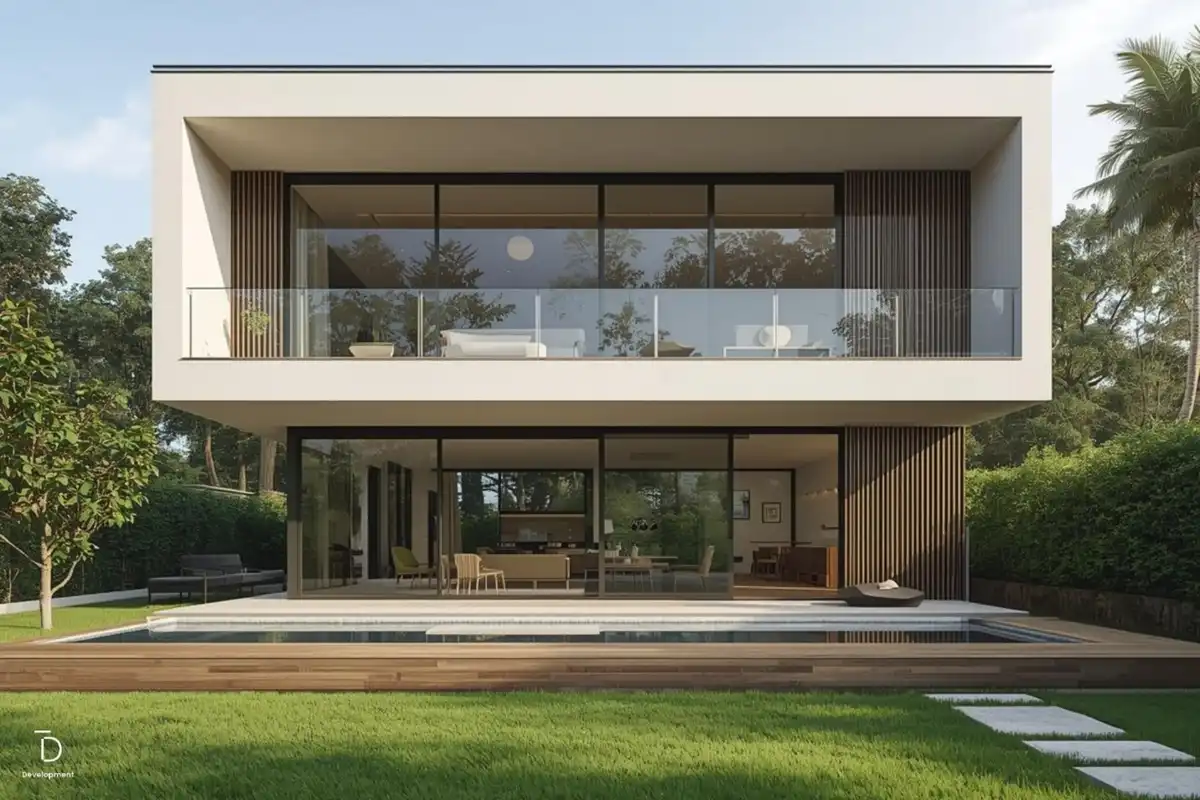
Comments on this guide to Cost to prepare a Los Angeles home for sale article are welcome.
Los Angeles Buildings
Los Angeles Architecture Designs
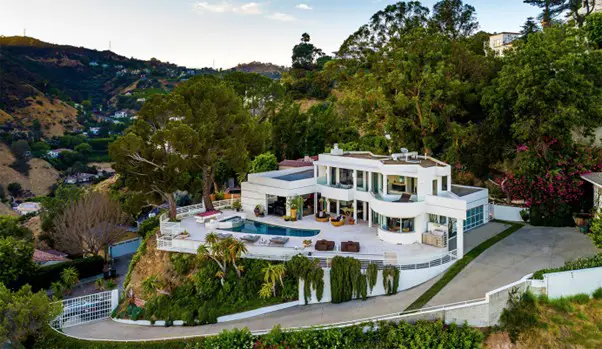
Contemporary Los Angeles Architecture
Case Study House 18, Pacific Palisades, LA
++
Building Articles
Residential Architecture
Comments / photos for the Cost to prepare a Los Angeles home for sale page welcome