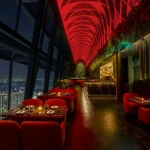
Grand Hyatt Singapore – Oasis in South East Asia
1 May 2026
Design: NAO Taniyama & Associates
Location: 10 Scotts Road, Singapore, South East Asia

Photos: Edmon Leong and Chantal Arnts
Located in the heart of Singapore, the Grand Hyatt Singapore – Oasis is a luxurious pool bar restaurant that offers a serene escape from the city’s hustle and bustle. Situated at 10 Scotts Rd, Singapore 228211, this stunning establishment is part of the prestigious Grand Hyatt Singapore hotel, completed in 2024.
The Oasis pool bar restaurant is a masterclass in hospitality, providing an unforgettable experience for its guests with its picturesque setting and exquisite cuisine. This poolside oasis is the perfect spot to relax and unwind, surrounded by modern design and exceptional service.

The Grand Hyatt Singapore – Oasis is a testament to the hotel’s commitment to excellence, offering a unique and indulgent experience that showcases the best of Singapore’s hospitality scene. With its completion in 2024, the restaurant marks a new era in luxury dining and entertainment in Singapore, making it a must-visit attraction in the city.
The Grand Hyatt Singapore – Oasis is a true gem, offering an unparalleled level of sophistication and elegance, ideal for those looking to soak up the sun or enjoy a refreshing cocktail. Its stunning atmosphere and exceptional service make it a premier destination for both locals and tourists alike, providing an unforgettable experience that will leave a lasting impression.

Project overview?
Oasis Restaurant forms a central element of the Grand Hyatt Singapore’s extensive outdoor renewal, conceived as a dining destination fully integrated within a reimagined tropical landscape. Originally operating as a semi–indoor, semi–outdoor venue, the project evolved as part of a broader transformation of the hotel’s garden amenities, including the introduction of a children’s pool, a lap pool, and new circulation strategies linking the entire outdoor area. Rather than addressing the restaurant in isolation, the design responds to a wider ambition: to create a cohesive and layered outdoor experience rooted in Singapore’s subtropical, jungle-like environment.
At the core of the concept is the exploration of a symbiotic relationship between landscape and pavilion — between the lush density of tropical planting and a refined architectural structure where people gather. The new outdoor bar is positioned deliberately between the two pools, acting as a social anchor and connective element within the garden. Surrounding it, pavilion-like lounge structures introduce a new scale of intimacy. These nest-like pavilions provide shaded, semi-private seating immersed in greenery, encouraging guests to engage with the space in varied ways throughout the day.
To allow the architecture to blend seamlessly into the surrounding trees, structural columns were refined to their utmost slenderness and integrated as delicate vertical elements within the overall composition. Inside, the former semi-open restaurant was enclosed with glass to improve comfort while preserving transparency. A modular hexagonal geometry inspired by forest structures ensures continuity across interior and exterior, while integrated lighting references the nutmeg tree once native to the site, anchoring the project in local memory.

Description of the restaurant?
Originally conceived as a semi–indoor, semi–outdoor restaurant set within the gardens of the Grand Hyatt Singapore, Oasis Restaurant formed part of a comprehensive renewal of the hotel’s outdoor amenities. The brief extended far beyond the addition of a new outdoor bar. It required a complete reorganization of the garden environment, including the introduction of a children’s pool, a lap pool, and clearer circulation between zones. The primary challenge was therefore to create spatial coherence across multiple programs while preserving the immersive quality of Singapore’s lush subtropical landscape.
NTA approached the project as an exploration of symbiosis: how a pavilion where people gather could coexist harmoniously within a dense, jungle-like setting. Rather than asserting a dominant architectural object, the design seeks to dissolve into its surroundings. Structural columns were refined to their utmost slenderness, transforming necessary load-bearing elements into delicate vertical lines that echo tree trunks. This refinement allows the pavilion structures to visually merge with the surrounding vegetation, enhancing the perception that architecture and landscape operate as a single ecosystem.
The outdoor bar is strategically positioned between the two pools, serving as both a visual focal point and a social connector. Around it, a constellation of pavilion-like “nests” introduces intimate, semi-private lounge environments embedded within planting. These structures create varied degrees of enclosure, offering guests moments of retreat while maintaining connection to the wider garden activity. Close collaboration with landscape designers Grand Associates ensured seamless integration of architecture, planting design, circulation paths, and sightlines.

A key transformation involved redefining the relationship between interior and exterior. The former semi-open dining area was enclosed with glass to improve climatic comfort while maintaining visual permeability. Rather than establishing a rigid boundary, the design creates a fluid transition between indoor dining, outdoor terraces, and the surrounding pavilions. A modular system based on hexagonal geometry — inspired by the organic rhythm of forest structures — was developed and applied consistently across architectural and interior elements. This system generates variation in height, depth, and openness, producing spatial richness while maintaining coherence.
From an operator perspective, the reorganization clarified circulation, improved service efficiency, and enhanced the visibility of key functions. The open kitchen is centrally positioned and visible from multiple viewpoints, animating the restaurant with movement and reinforcing the culinary identity of the venue. The modular system also facilitated construction precision and coordination across disciplines.
From a guest perspective, comfort, orientation, and experiential layering were paramount. Shaded pavilion lounges provide protection from intense sun while maintaining airflow. Transparent enclosures allow year-round usability without sacrificing connection to nature. The spatial sequencing encourages discovery — from poolside vitality to intimate garden retreats.
Sustainability was addressed through passive strategies that maximize shading, cross-ventilation, and integration with existing mature trees. By minimizing structural bulk and working with, rather than against, the landscape, the project reinforces a sustainable relationship between built form and tropical environment.
Through its integration of architecture, landscape, and social programming, Oasis Restaurant transforms dining into an immersive garden experience — where structure and nature coexist in quiet balance.

What is this design, and what makes this design different from others, the strengths and unique features of this design.
Oasis redefines the relationship between architecture and tropical landscape at Grand Hyatt Singapore. Rather than imposing form, the design dissolves into its lush surroundings through slender structures, hexagonal modular systems, and pavilion-like “nests.” This integrated approach creates a fluid sequence of spaces that enhance both guest experience and operational clarity, transforming dining into an immersive garden ecosystem.
What inspired you to come up with this project? What were your motives, thoughts etc? Where did you get the inspiration for this design or project? What is the technical or research background?
The project was inspired by the challenge of integrating architecture within Singapore’s dense subtropical landscape. Rather than introducing a dominant object, the design explores symbiosis between built form and nature. Research into climatic comfort, passive shading, and airflow informed the spatial strategy, while hexagonal geometries reference organic forest patterns, enabling a modular system that unifies architecture, landscape, and user experience.
Provide insights about how your design was made, while you could provide some notes on production technology, materials etc for physical products, for others you could talk about the techniques you used for coming up with the design, methodology.
The pavilion structures are custom-designed in aluminum with a wood-pattern finish, fabricated locally in Singapore to ensure precision and durability in a tropical climate. Lighting elements were developed in collaboration with a local maker using 3D printing technology. The bulb design references nutmeg, recalling the site’s historical identity as forest land, embedding cultural memory within contemporary fabrication techniques.

How can this object be operated, how does it transform, how the interaction happens, what are the key frames, how does it deal a better result, why does it perform better.
Guests move fluidly between indoor dining, outdoor terraces, and garden pavilions, guided by clear circulation and visual connections. The central outdoor bar acts as a social anchor, linking different zones and encouraging interaction. Intimate pavilion “nests” offer retreat while maintaining connection to the surroundings. This layered spatial experience balances openness and privacy, enhancing comfort, orientation, and social engagement.
What was the hardest part of this design activity.
A key challenge was reconciling the initial intent to use timber structures with local regulations that restricted its application. The design was adapted using aluminum with a wood-like finish to maintain a natural appearance while ensuring durability in a tropical garden environment. This required careful detailing for long-term maintenance. Roof design was also developed to respond to heavy rainfall and climatic conditions.

Grand Hyatt Oasis in Singapore, South East Asia – Building Information
Architects: NAO Taniyama & Associates – https://nt-a.jp/
Completion date: 2024
Photography: Edmon Leong and Chantal Arnts
Grand Hyatt Oasis Singapore, South East Asia restaurant images / information from 010526
Location: Singapore, Southeast Asia.
New Singapore Architecture
Contemporary Buildings in Singapore
Singapore Architectural Designs – chronological list
The Clifford at Raffles Place, Singapore office tower
Design: PLP Architecture

image courtesy of architects practice
Mandai Rainforest Resort by Banyan Tree
Architecture: WOW Architects | Warner Wong Design
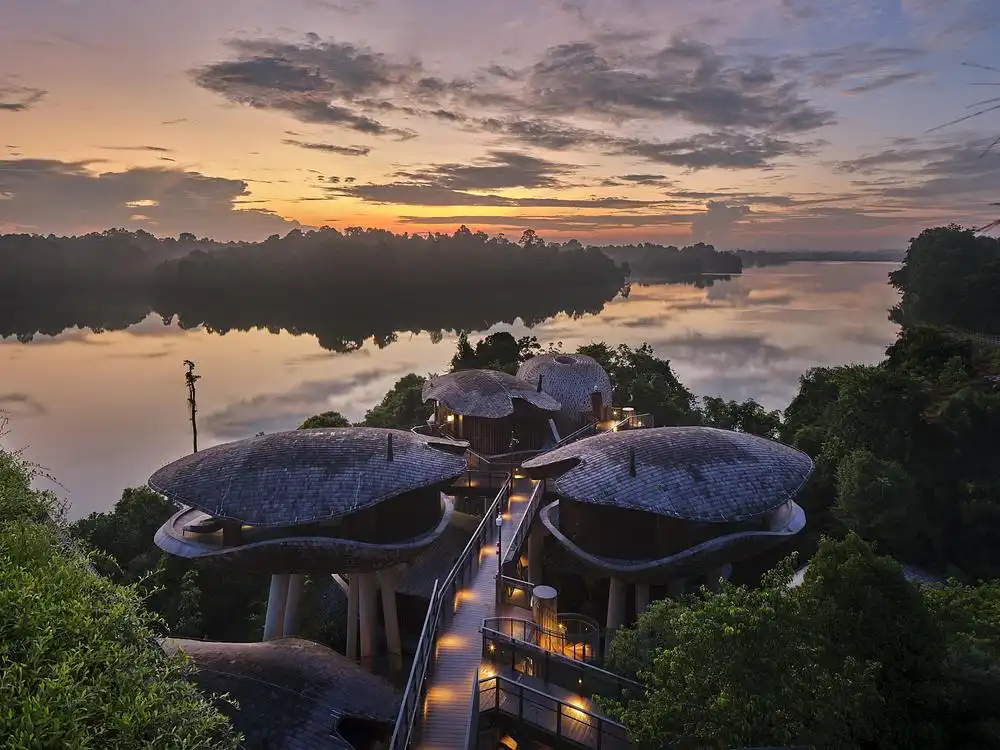
photo : Aaron Pocock Photography
++
Southeast Asian Buildings and Architects
Comments / photos for the Grand Hyatt Singapore Oasis designed by NAO Taniyama & Associates page welcome.