
Discovery Bay House, Washington
July 18, 2025
Design: Dekleva Gregoric Architects
Location: Port Townsend, Washington, United States of America
Oceanview Timber Residence Immersed in a Pacific Northwest Forest, USA
Photos: Flavio Coddou
Discovery Bay House, Pacific Northwest Forest, USA
Discovery Bay House: A Spatial Narrative of Rhythm and Discovery
Nestled in the tranquil scenery of the Pacific Northwest, Discovery Bay House exemplifies a harmonious blend of intellectual depth, artistic innovation, and natural harmony. This custom home was designed for Michael Ross, a discerning client who discovered the architectural studio Dekleva Gregoric Architects after being captivated by an ocean-view residence they designed in Maui, Hawaii. Originally from New York and having spent years in Los Angeles’s entertainment sector, Michael aimed to create a spacious retreat with sweeping views, allowing him to host family and friends. His first meeting with the architectural team and the discussion about their design philosophy set the tone for an engaging creative process.
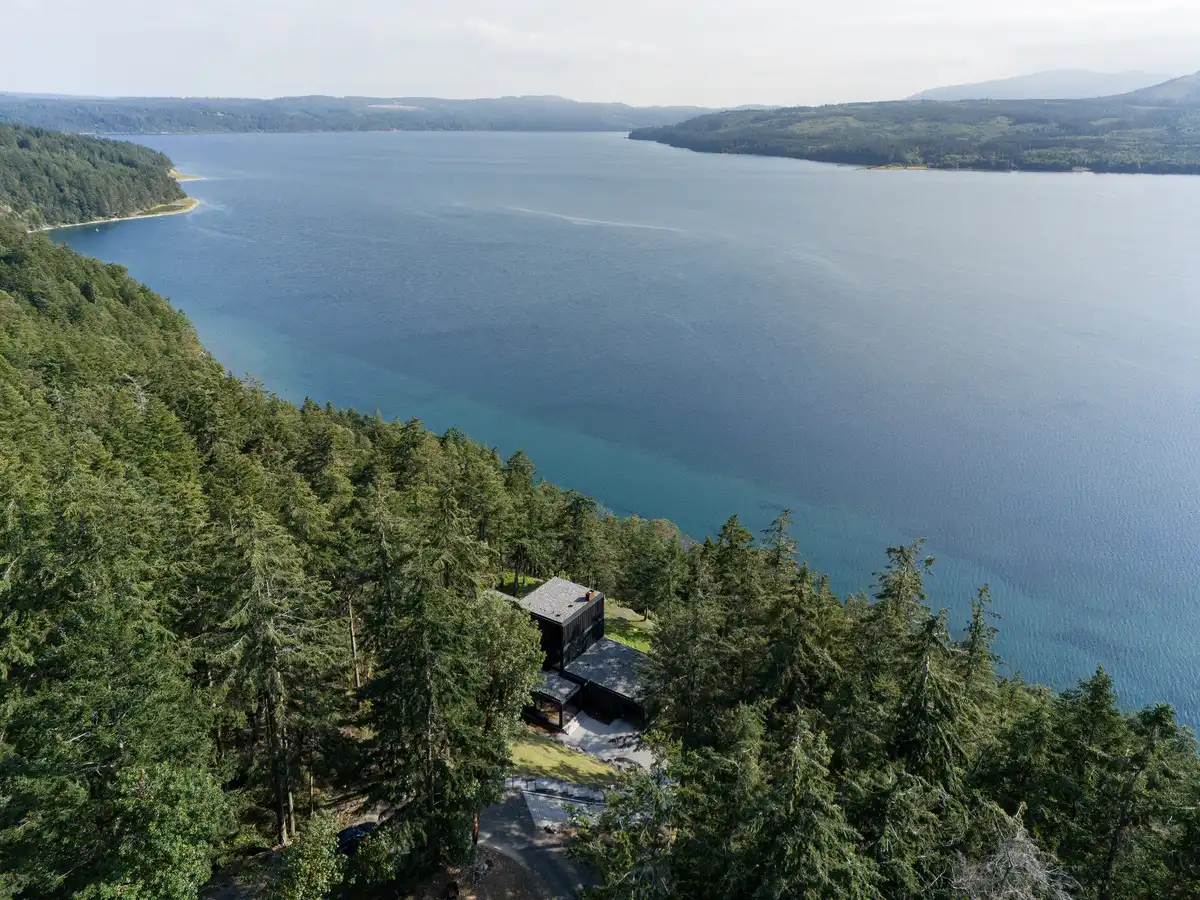
Upon meeting Michael, his vision and personal needs came through clearly. He favored order and equilibrium and expressed an affinity for orthogonal, Euclidean shapes over curved or irregular forms. This preference guided the design philosophy, emphasizing rectangular volumes and modular organization. While selecting a site together, the studio provided immediate insights into each plot’s potential, ultimately settling on a location overlooking Discovery Bay with a south-facing orientation toward the Olympic Mountains. This topographically interesting site featured a gentle decline toward the main ocean view, presenting both a challenge and an opportunity to craft a design that would preserve the landscape while maximizing visual connections to nature.
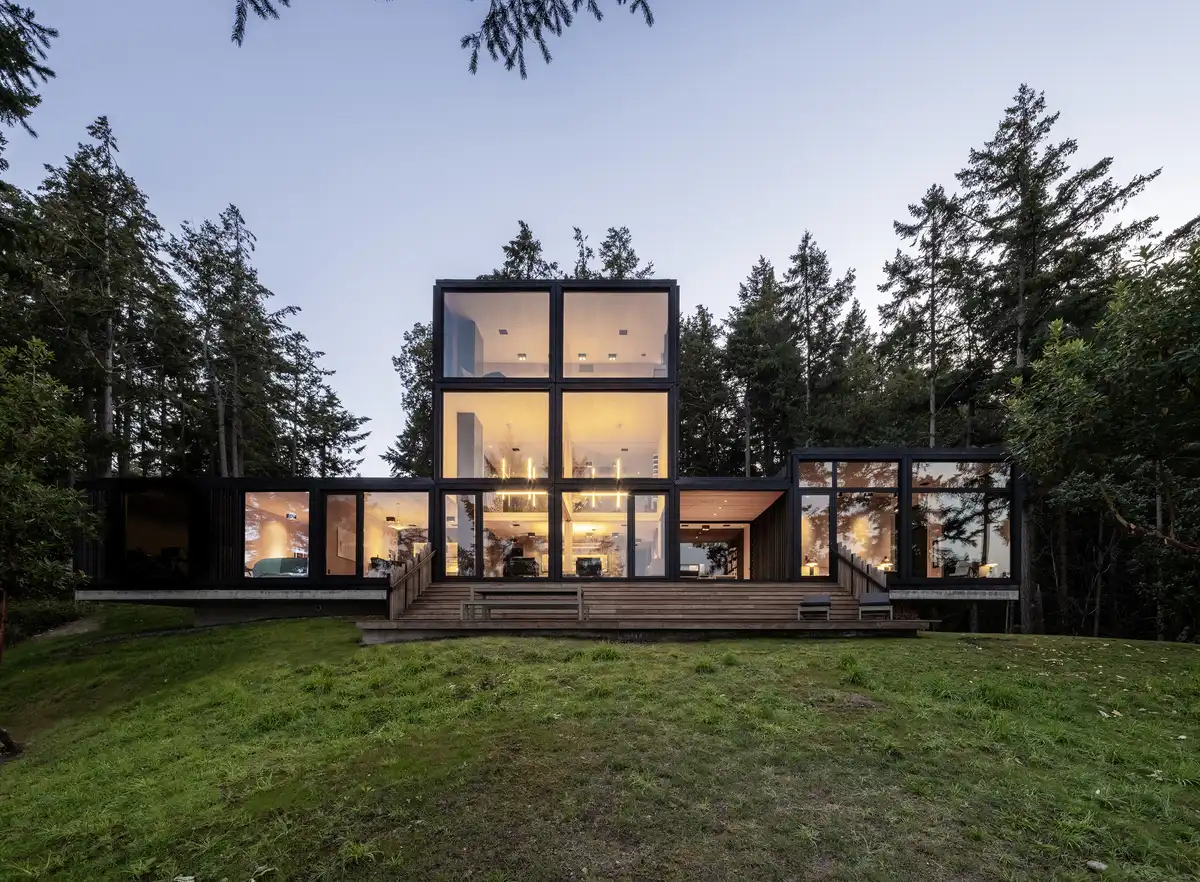
Michael envisioned a horizontal living experience, a retreat where he could enjoy expansive, single-level comfort while simultaneously wanting his guests to have a distinct and engaging experience within the home. The studio’s core idea emerged: Michael’s experience would remain on the ground level, while guests would embark on a vertical journey within the home. This layering of experiences created a nuanced spatial dynamic, aligning with Michael’s programmatic desires while offering autonomy and privacy for both him and his visitors.
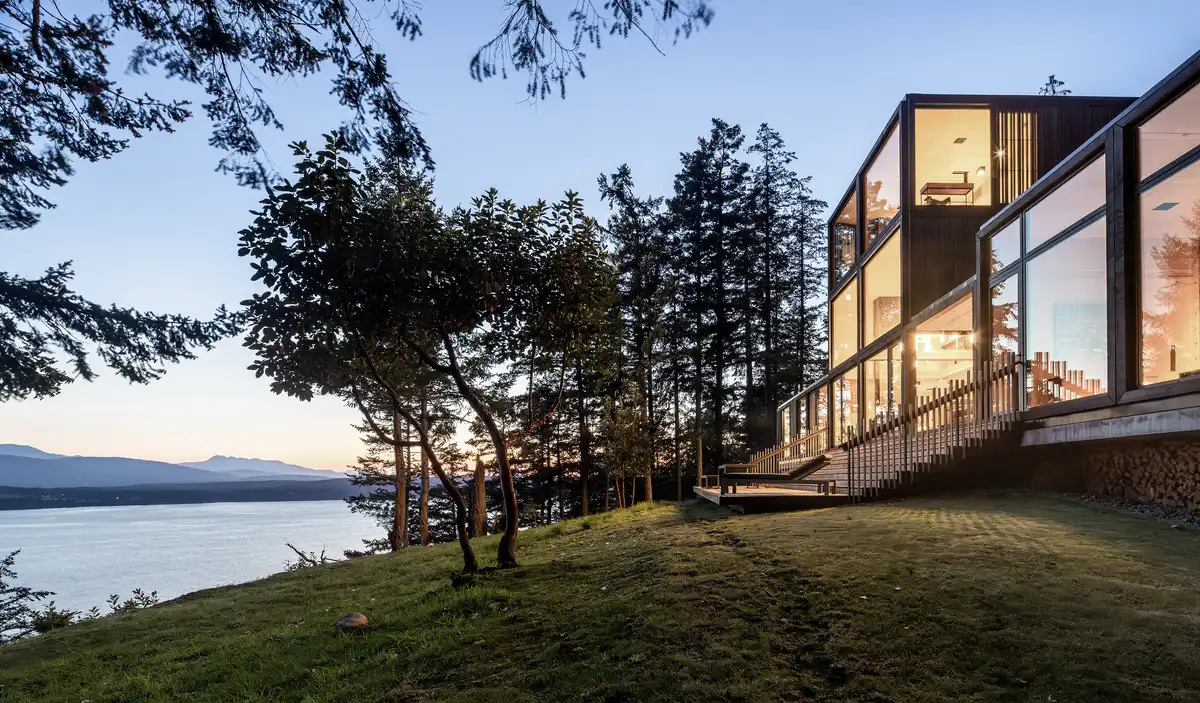
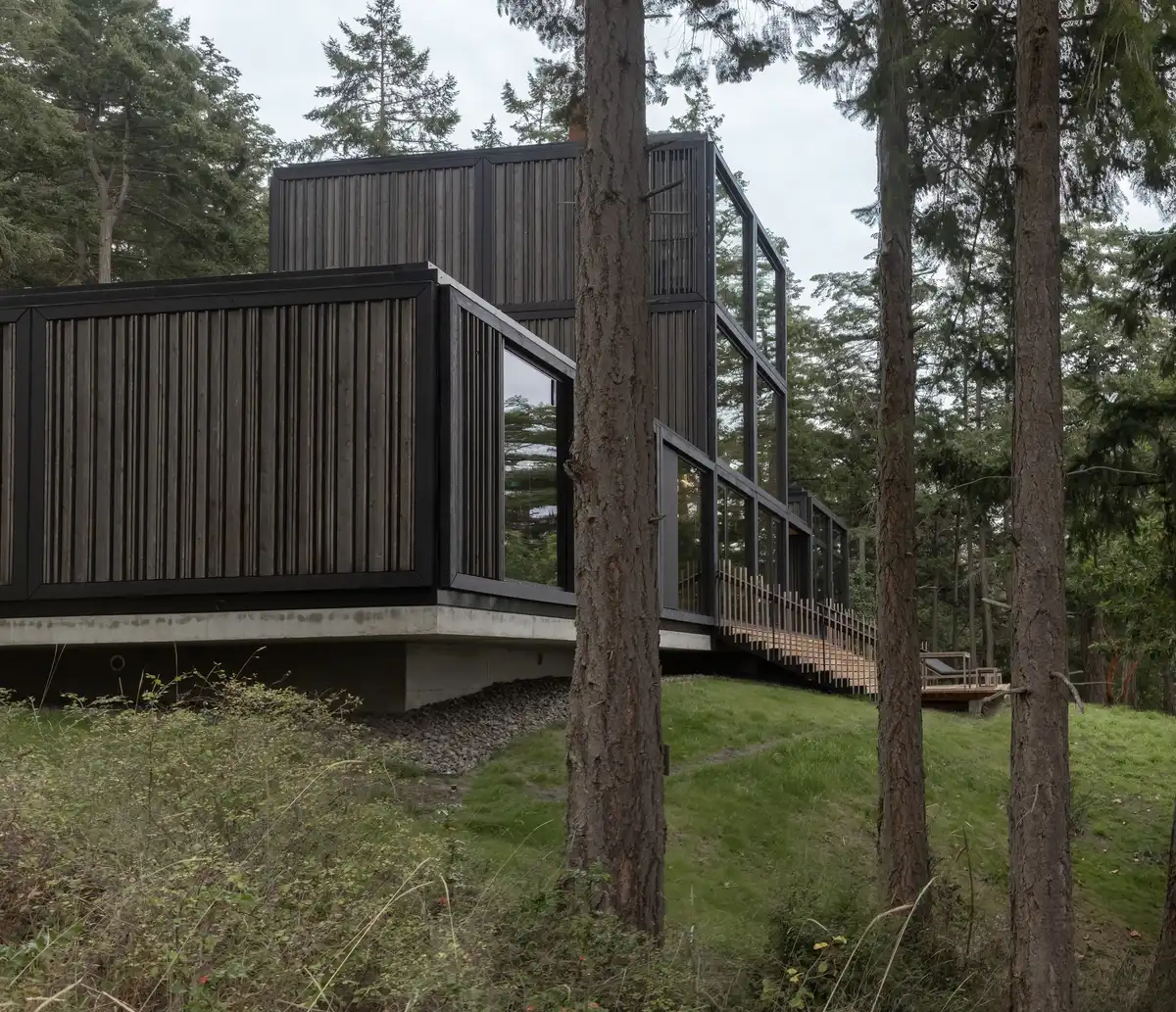
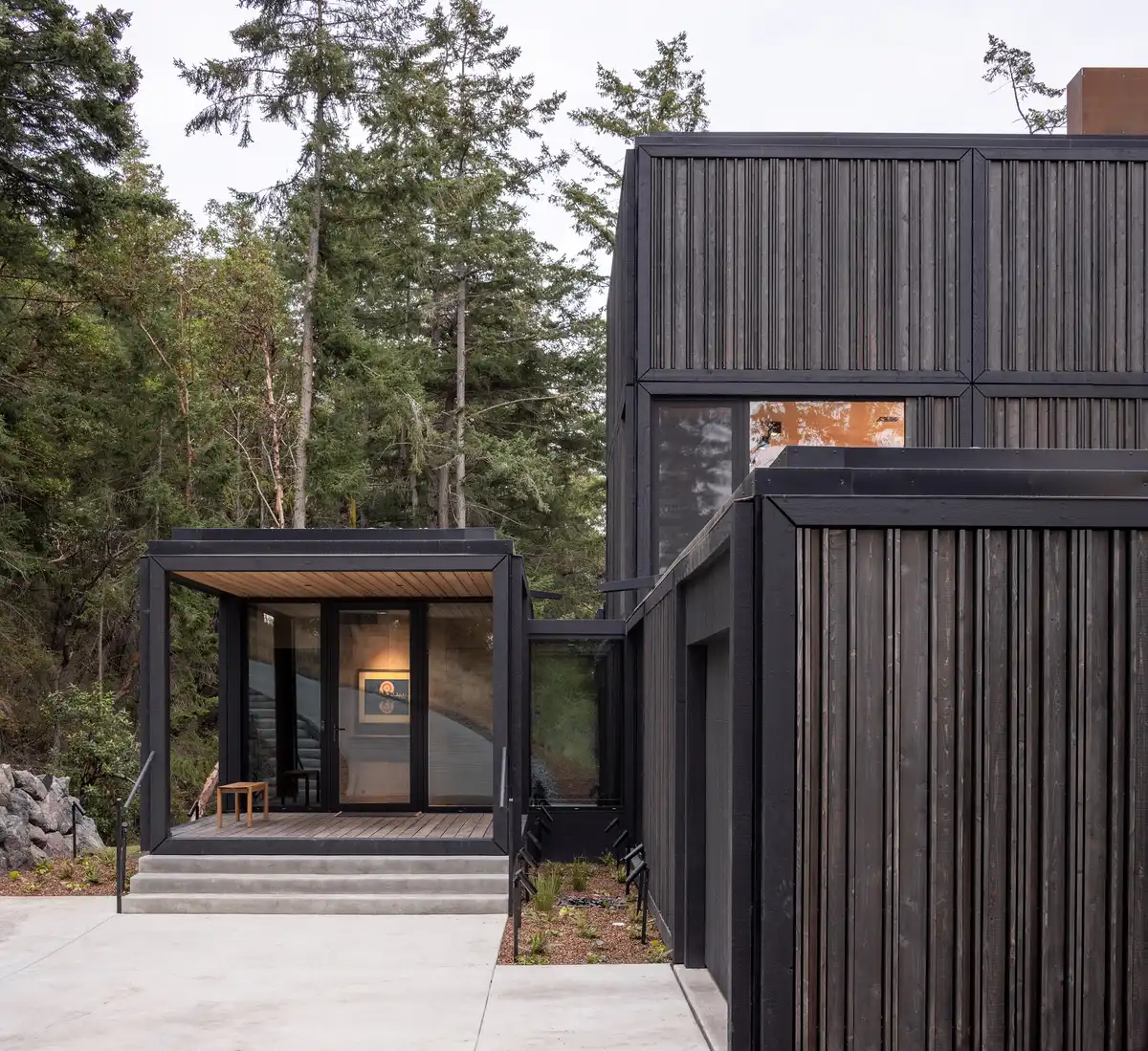
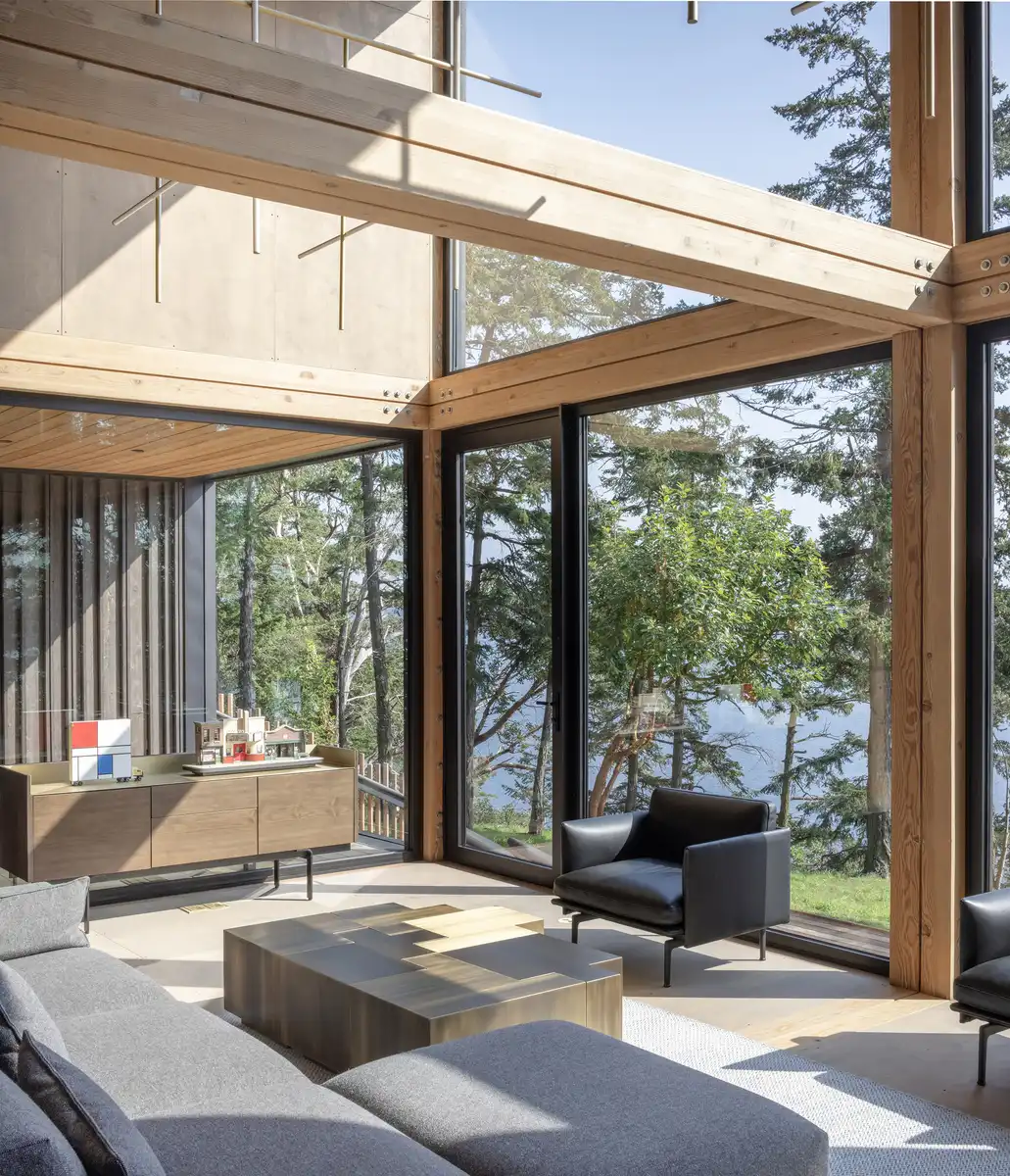
To honor the site’s natural configuration, the foundation is designed as a reinforced concrete slab strategically positioned to allow the house to blend seamlessly with the landscape without flattening it. From this stable base rises the essence of the structure: an inhabited three-dimensional structural grid of Douglas fir posts and beams, creating the orthogonal framework that defines Discovery Bay House. Beyond the foundation, the entire house is built from wood, including all cladding, screens, and detailing, highlighting ecological architecture. This choice of materials fosters a warm, tactile experience throughout the house while reducing its environmental impact.
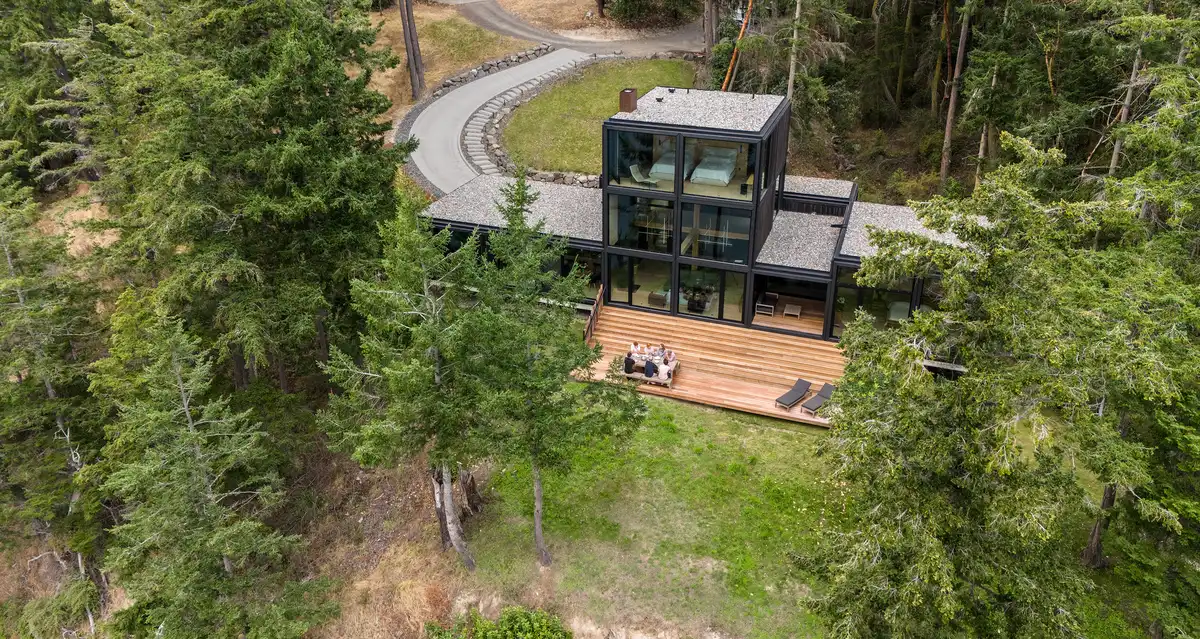
The design achieves a negative carbon footprint by actively sequestering carbon and adhering to a low-impact design philosophy. This modular system reflects Michael’s love of orthogonal geometry and functions as both a visual and tactile element. Visible and celebrated throughout the house, the Douglas fir structure invites occupants to engage with it directly, allowing them to touch and experience the natural warmth of the wood as they navigate the space. All structural fixing elements are exposed to highlight traditional American building techniques.
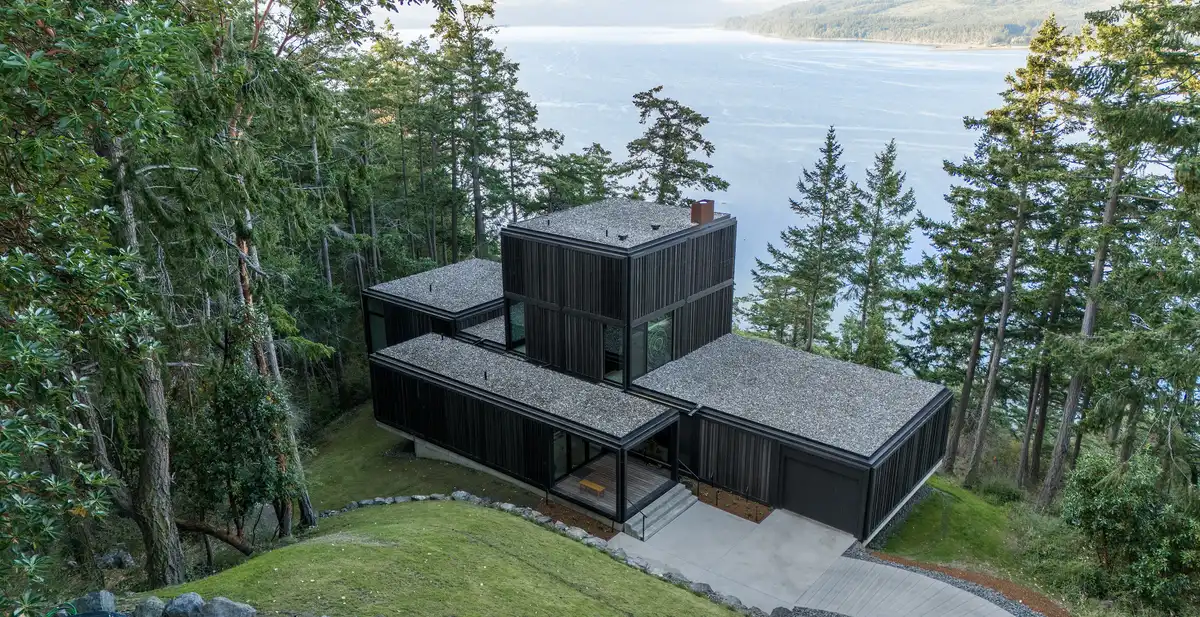
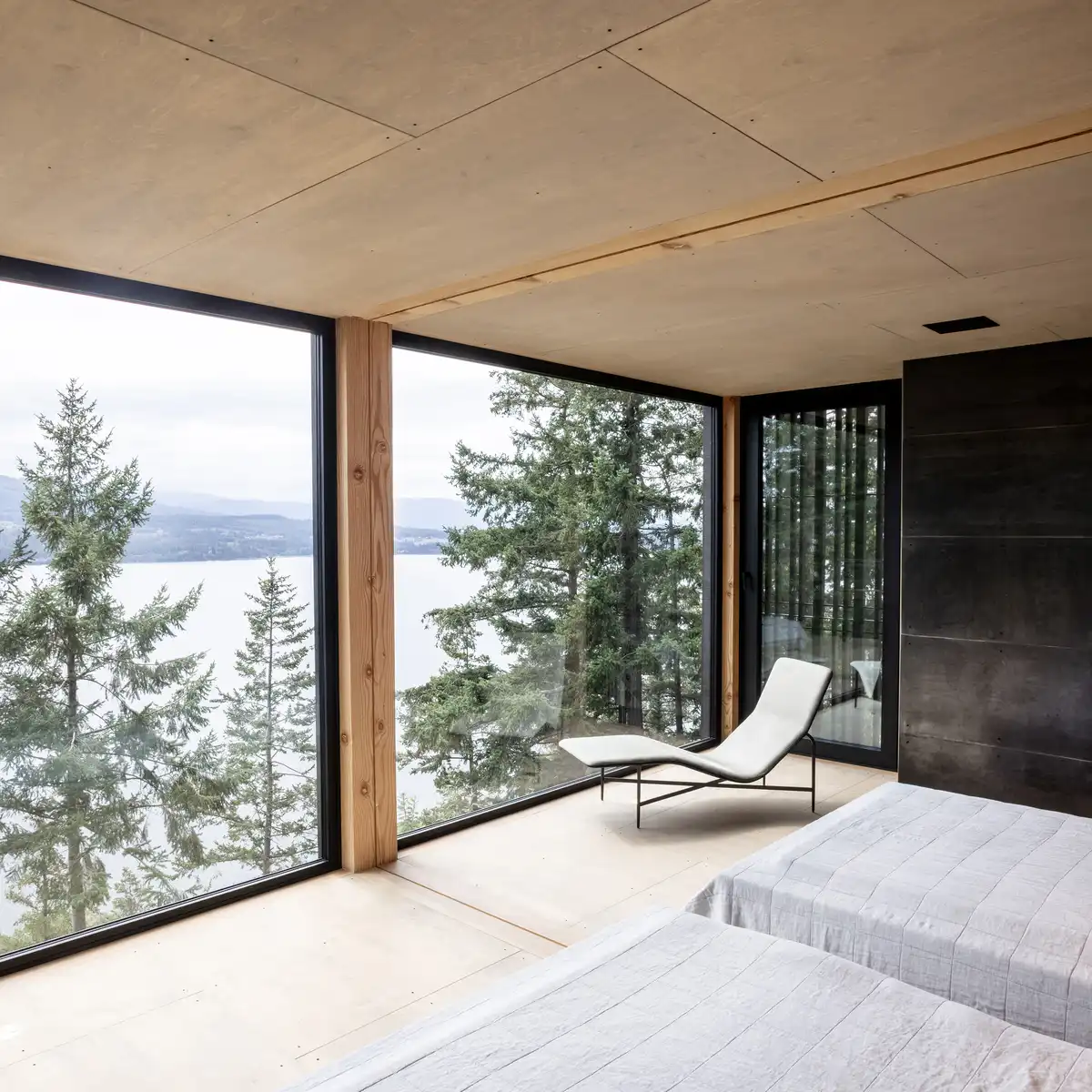
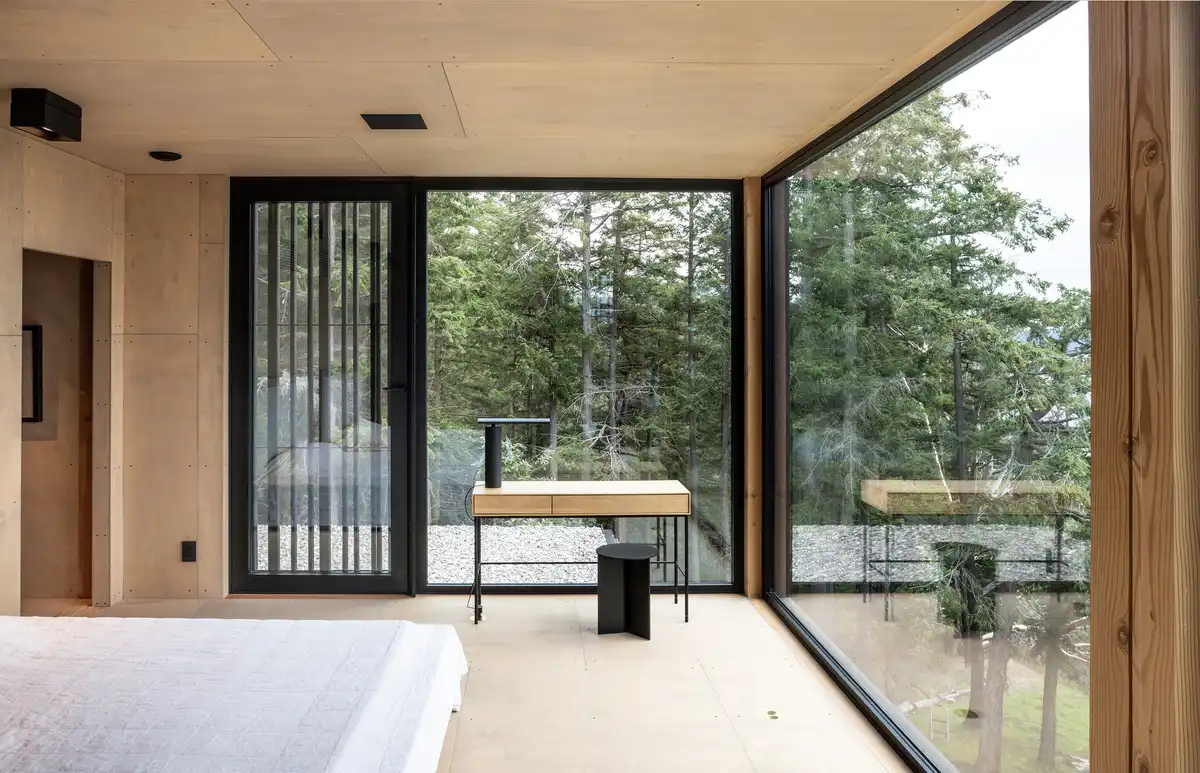
Between these structural beams, birch plywood panels clad the floors, walls, and ceilings, fastened with visible black screws in a handcrafted aesthetic. Each plywood surface is stained with a tinted finish in two tones: a light grey defining all primary living spaces and a charcoal brown highlighting specific volumes within the house. This careful application of color creates a subtle hierarchy of spaces, guiding the eye and adding depth to the experience of moving through the home.
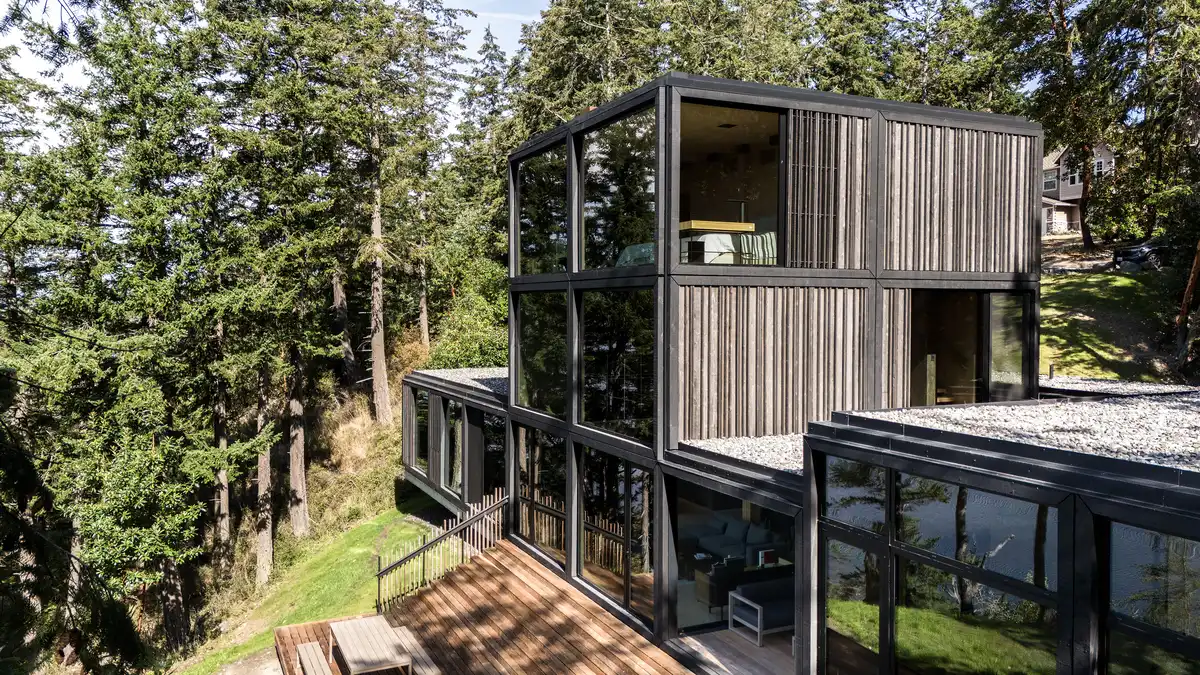
Ventilation and natural light are vital elements of the design. Each room includes windows positioned diagonally across from each other, facilitating cross-ventilation and ensuring a fresh, airy interior environment. The spaces between volumes further enhance this natural ventilation, reflecting the studio’s dedication to sustainable design practices. This deliberate spatial rhythm—fostered by structural modulation and airflow—imbues the house with a quiet dynamism as occupants navigate through light, shadow, and ventilation areas.
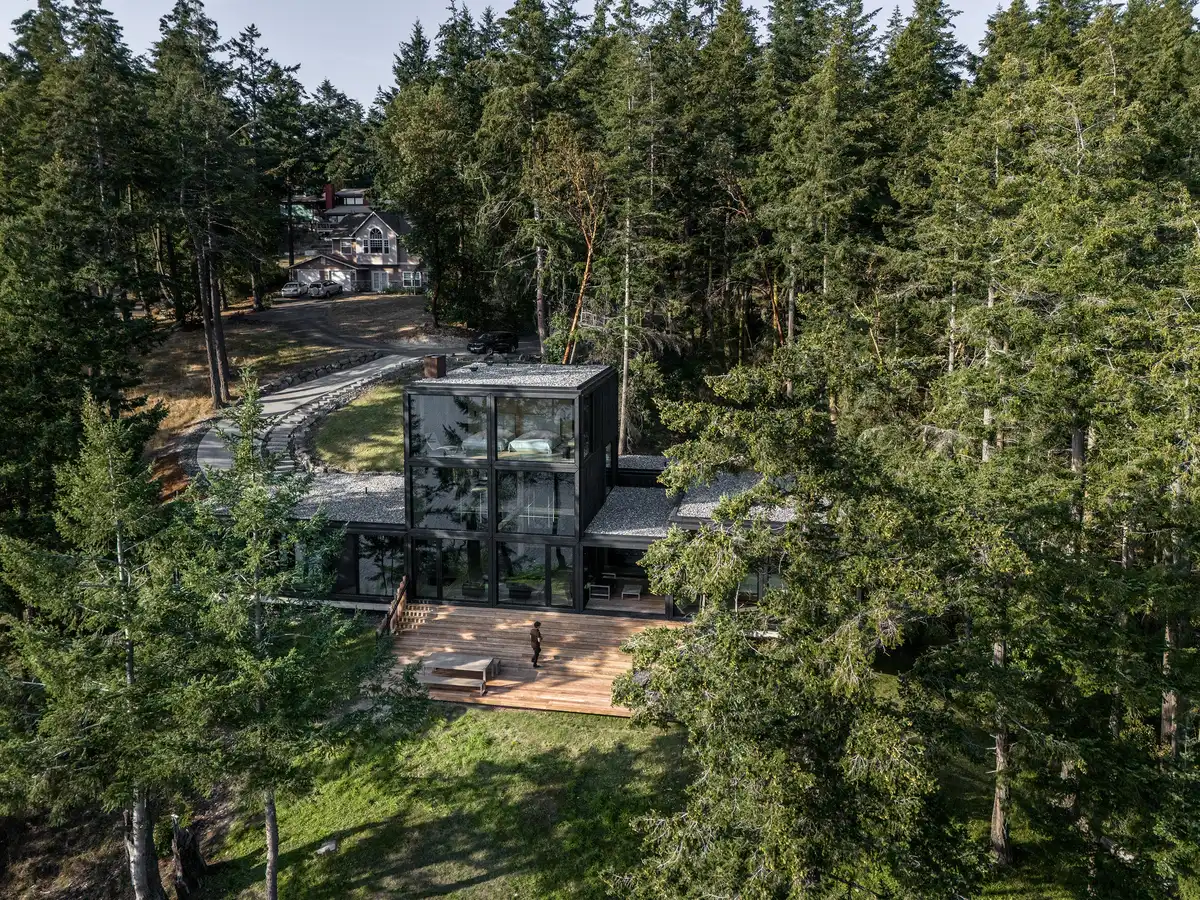
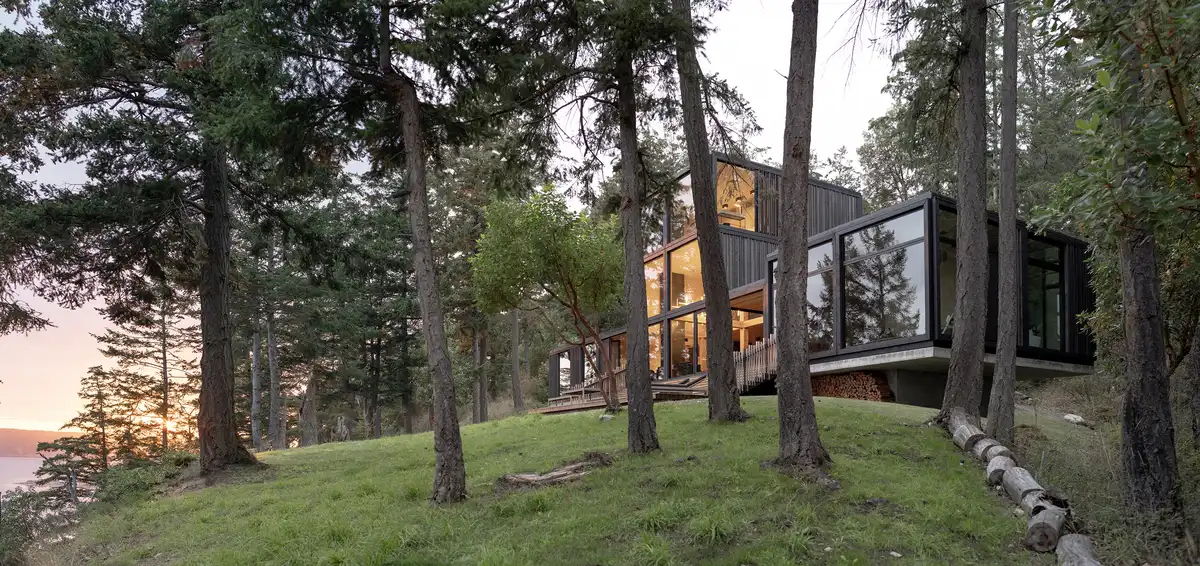
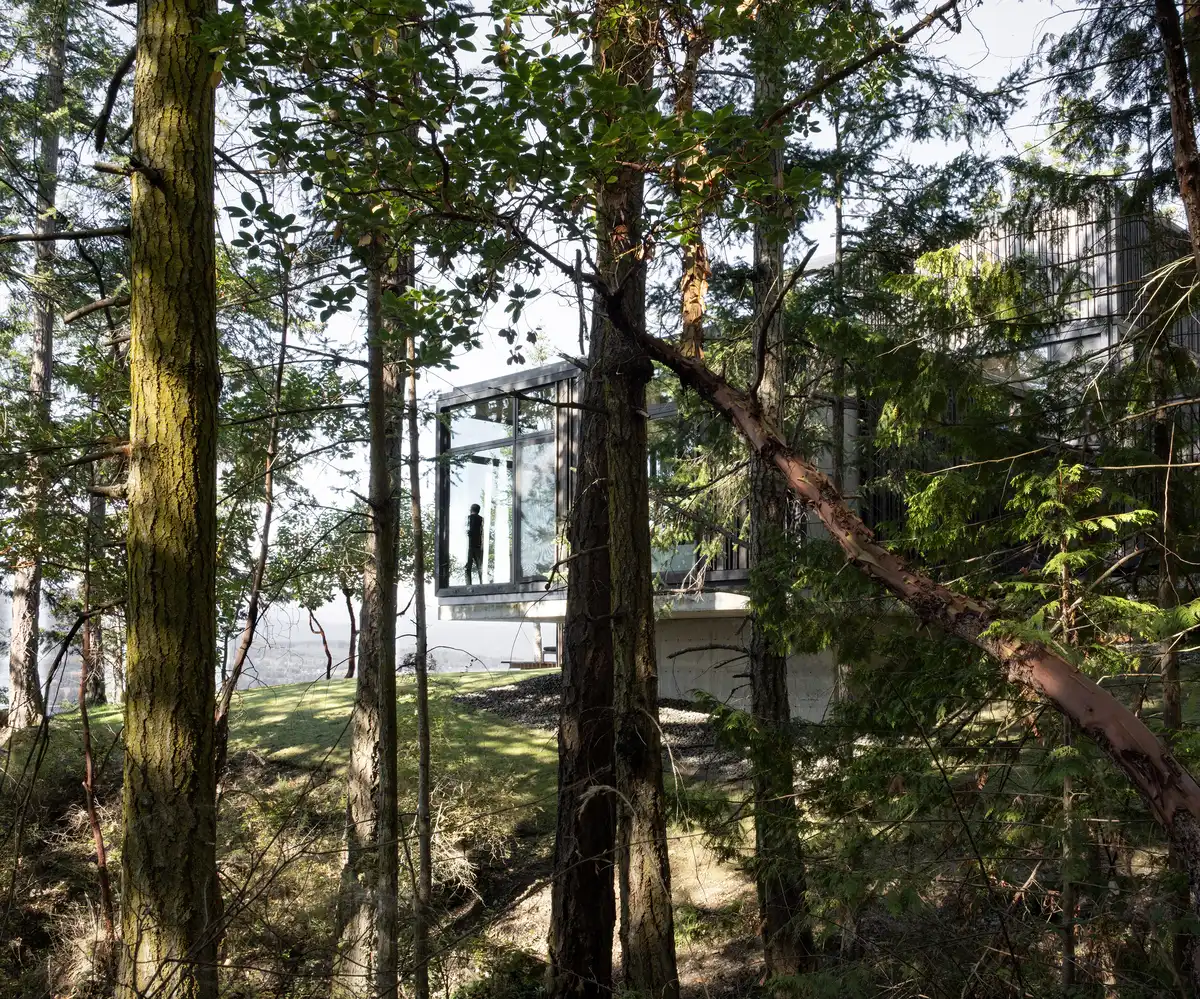
The façade cladding, made from cedar wood, is treated with a darker varnish that allows the structure to blend seamlessly into the landscape. Vertical wooden planks, arranged in two directions, replicate the texture of tree trunks, fostering a visual dialogue between the house and the surrounding forest. This design choice enables the house to resonate with its environment, standing proudly yet unobtrusively amidst the Pacific Northwest wilderness. As light filters through the trees and onto the house, the façade shifts in tone and texture, creating a dynamic interplay between architecture and nature.
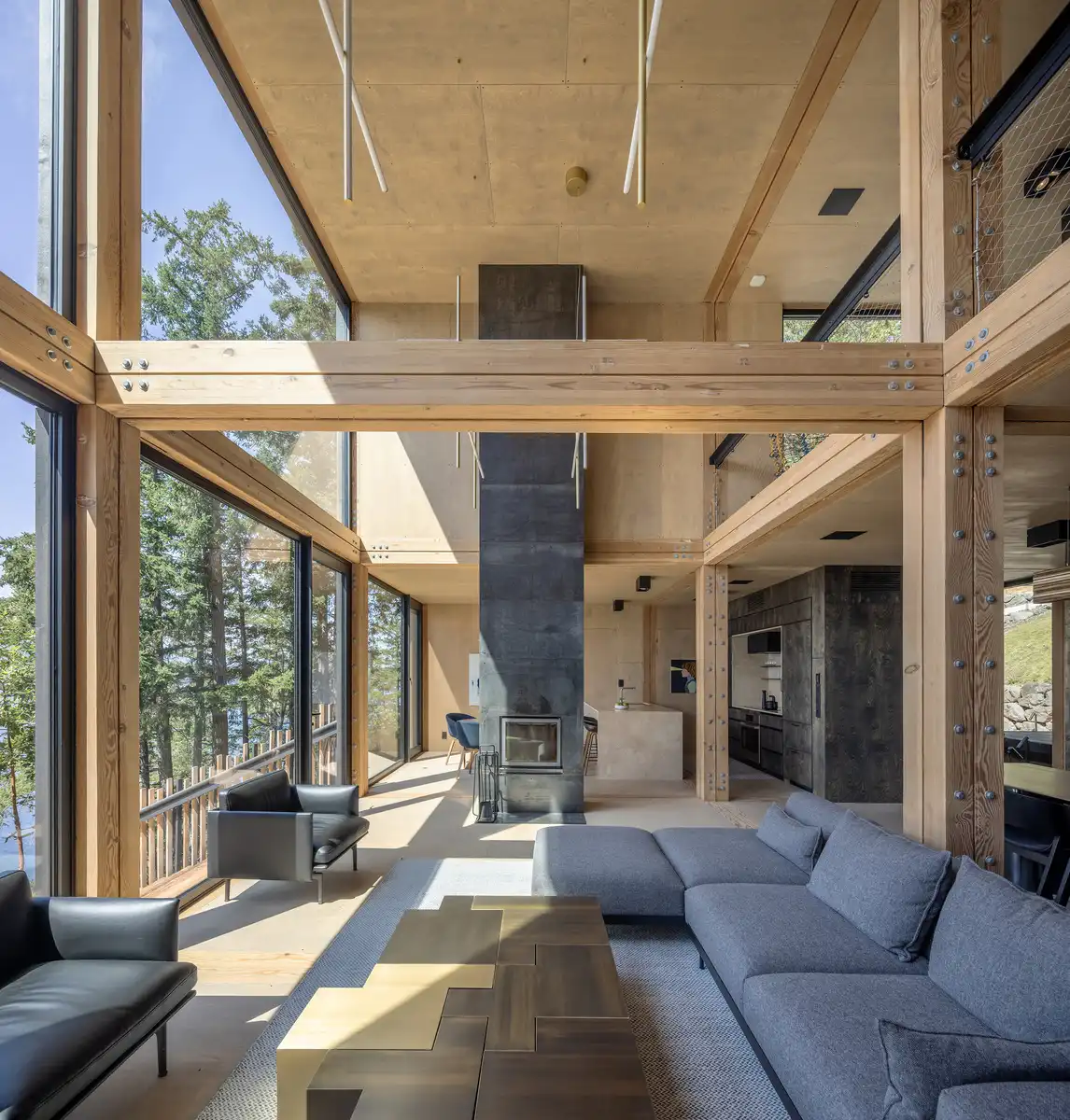
Ultimately, the house serves as a spatial narrative of rhythm and discovery. The carefully crafted grid establishes a consistent, intellectually rigorous framework that aligns with Michael’s aesthetic preferences. However, as one journeys through the house, the warmth of the wood, the subtle tonal variations, and the interplay of light and shadow transform this spatial grid into a natural and inviting experience. The design reflects a duality: a mathematically precise home deeply connected to the organic world it inhabits. A three-dimensional structural grid facilitates a series of intriguing spatial relations: indoor-outdoor transitions via a covered terrace, double-height spaces, and an observation tower.
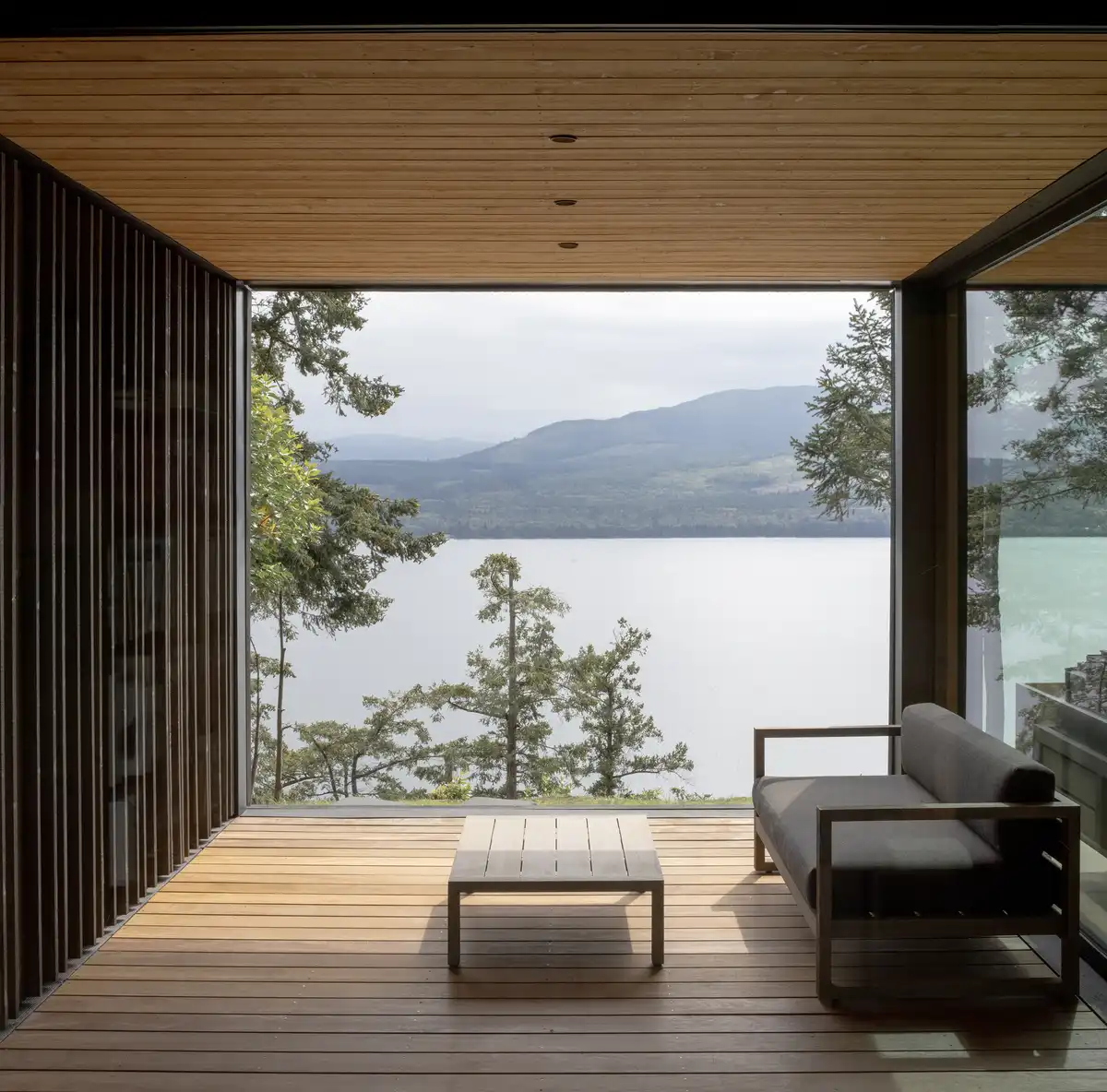
In Discovery Bay House, architecture becomes an experience for both mind and body—a carefully orchestrated journey where each step, each touch of the Douglas fir beams, and each transition from one volume to another reveal the beauty of thoughtful design. For Michael, this home is more than a place to live; it’s an invitation to explore and connect, offering both sanctuary and a platform for hosting, all while celebrating the natural environment that inspired it.
+++
Dekleva Gregoric Architects
Dekleva Gregoric Architects, founded in 2003 by Aljosa Dekleva and Tina Gregoric, is an international architecture studio operating in the EU and the USA. Both founders received their postgraduate Master’s degrees in Architecture with Distinction from the renowned Architectural Association in London, where they initiated their research on participation, responsive environments, and mass customization. They later documented this research in their acclaimed book Negotiate my Boundary!
Their studio design philosophy revolves around “research by design” and “design by research,” encompassing various modes (spatial, social, material, historical, etc.), different scales and programs, as well as diverse climates and localities. Understanding the specific constraints and conditions of the context serves as the fundamental generative tool, aiming to challenge the obvious and offer specific responses. They utilize a systematic design approach to establish an intense structuring of space and to challenge the use of materials by exposing their primary natures. Prioritizing user experience, participation, and interaction, the studio fosters new forms of collectivity and customization while addressing contemporary social and environmental challenges. Their portfolio spans diverse typologies, from experimental houses to large affordable housing neighborhoods, university campuses, public buildings, and cultural institutions.
Key projects include the XXS House (2004), Clifftop House in Maui (2012), Compact Karst House (2015), Science Centre (2019), Affordable Housing in Novo Brdo (2022), and the Pavilion of Slovenia for Expo Osaka (2024). These projects have received prestigious accolades such as the Architizer and WAN House of the Year awards, the AR House Award 2015, the WALLPAPER* award for Best Breakthrough Designers, as well as nominations for the Mies van der Rohe and Swiss architectural awards, and the recent 2024 Buildner Unbuild Award. Their work has been celebrated worldwide for redefining tradition, materiality, and sustainability.
Besides their architectural practice, Aljosa and Tina play a significant role in architectural education. Tina holds the position of Full Professor of Architecture and Chair at the Institute of Architecture, Vienna University of Technology (TU Wien). Aljosa is the Programme Head for the AA Nanotourism Visiting School at the Architectural Association in London. In 2019, they both served as the Frank Gehry International Visiting Chairs in Architectural Design at the University of Toronto. They lead research initiatives like nanotourism, which offers a participatory, community-oriented alternative to conventional tourism, and actively lecture and exhibit worldwide. As curators of the Slovenian Pavilion at the 2016 Venice Architecture Biennale, they addressed critical issues of home and dwelling with Home at Arsenale, a curated library and site-specific spatial installation exploring the concept of home in contemporary society.
Discovery Bay House in Port Townsend, Washington, USA – Property Information
Project Name: Discovery Bay House
Subtitle: Oceanview Timber Residence Immersed in a Pacific Northwest Forest
Location: Port Townsend, Washington 98368, USA
Region: Pacific Northwest
Project Date: 2019 – 2021
Realization Date: 2024
Client: Michael Ross
Architecture: Dekleva Gregoric Architects
project team: Aljosa Dekleva, Tina Gregoric, Martin Kruh, Lea Stipanic, Jan Zuzek, Zan Sabeder, Karla Ritosa, Jakob Zuzula.
Client’s representative: Project Planning Partners: Jody Elsom
2960 4th Ave South, Seattle, WA, USA
Structural engineering: Swenson Say Fagét: Lori DeBoer, Ryan Anderson
2124 Third Avenue, Suite 100, Seattle, Washington 98121, USA
Contractor: G. Little Construction: Gage Little, Trent McKnight
911 Commerce Loop, Port Townsend, Washington 98368, USA
Lot Area: 5 acres
Net Floor Areas
Indoors: 3.507 sq. ft. (325 m2)
Covered Outdoors: 313 sq. ft. (29 m2)
Uncovered Outdoors: 691 sq. ft. (64 m2)
Project date: 2019
Completion date: 2024
Photographs: Flavio Coddou
Film by Dekleva Gregoric Architects
video 1: “Hosting Friends”
Flavio Coddou (video), Hamid Martin (sound designer)
video 2: “Personal Sanctuary”
Jan Krek, Zan Sabeder
Contacts:
Architects
Dekleva Gregoric Architects
Dalmatinova 11
SI-1000 Ljubljana
Slovenia
Europe
tel: +386 1 430 52 70
mail: press(at)dekleva-gregoric.com
web: https://www.dekleva-gregoric.com/
IG: (at)dekleva.gregoric.architects
LI: Dekleva Gregoric Architects
Photographer and Videographer for “Hosting Friends”
Flavio Coddou
mail: flaviocoddou(at)gmail.com
web: http://www.flaviocoddou.com/
IG: (at)tetraedrik
LI: Flavio Coddou
Videographer for “Personal Sanctuary”
Jan Krek, Zan Sabeder
mail: info.itemscollective(at)gmail.com
web: www.itemscollective.com
IG: (at)collect.items
LI: items collective
Discovery Bay House in Port Townsend, Washington: Pacific Northwest Forest images / information received 180725
Location: Port Townsend, Washington 98368, United States of America.
+++
Washington Property Designs
Seattle Architecture Designs – chronological list
Washington Residential Property Designs – recent selection on e-architect:
Union Bay Residence
Architecture: Silk Cavassa Marchetti
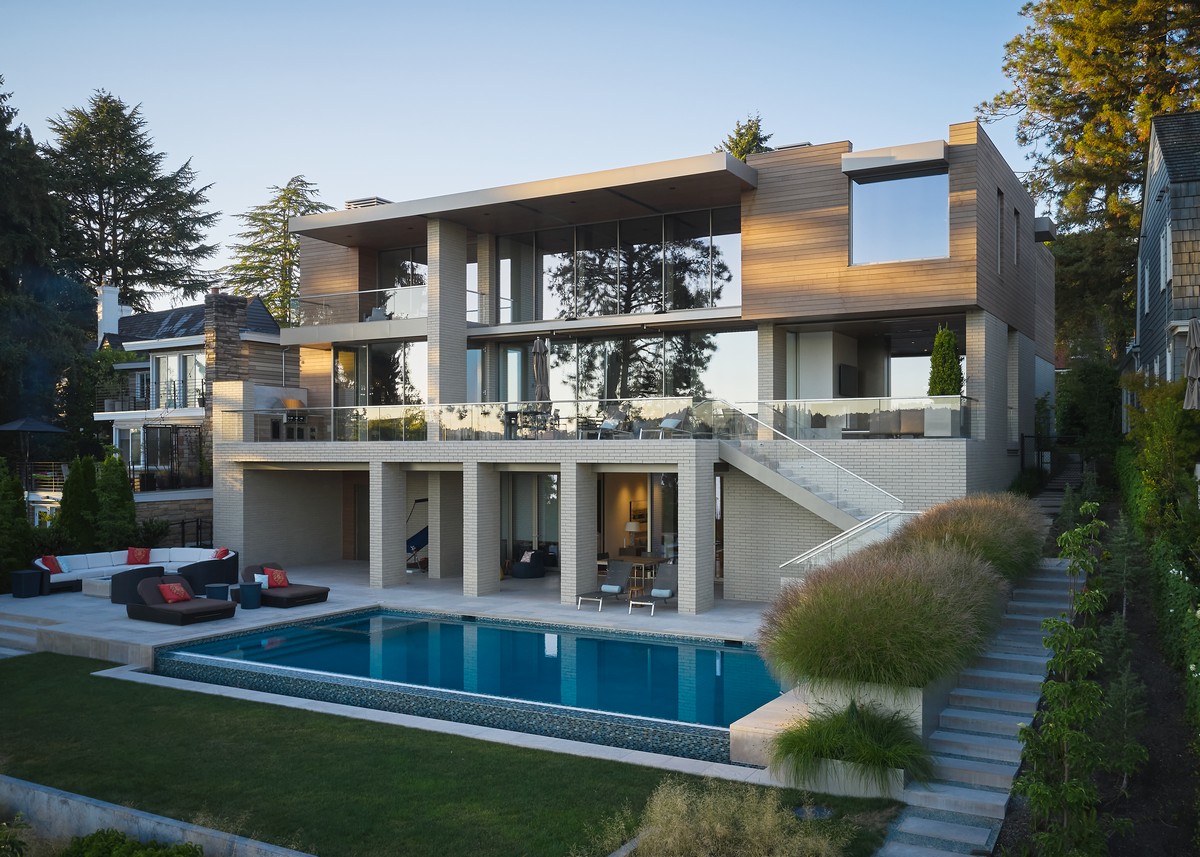
photos : Kevin Scott
The Rambler House, Kitsap Peninsula, Washington, USA
Architecture: GO’C
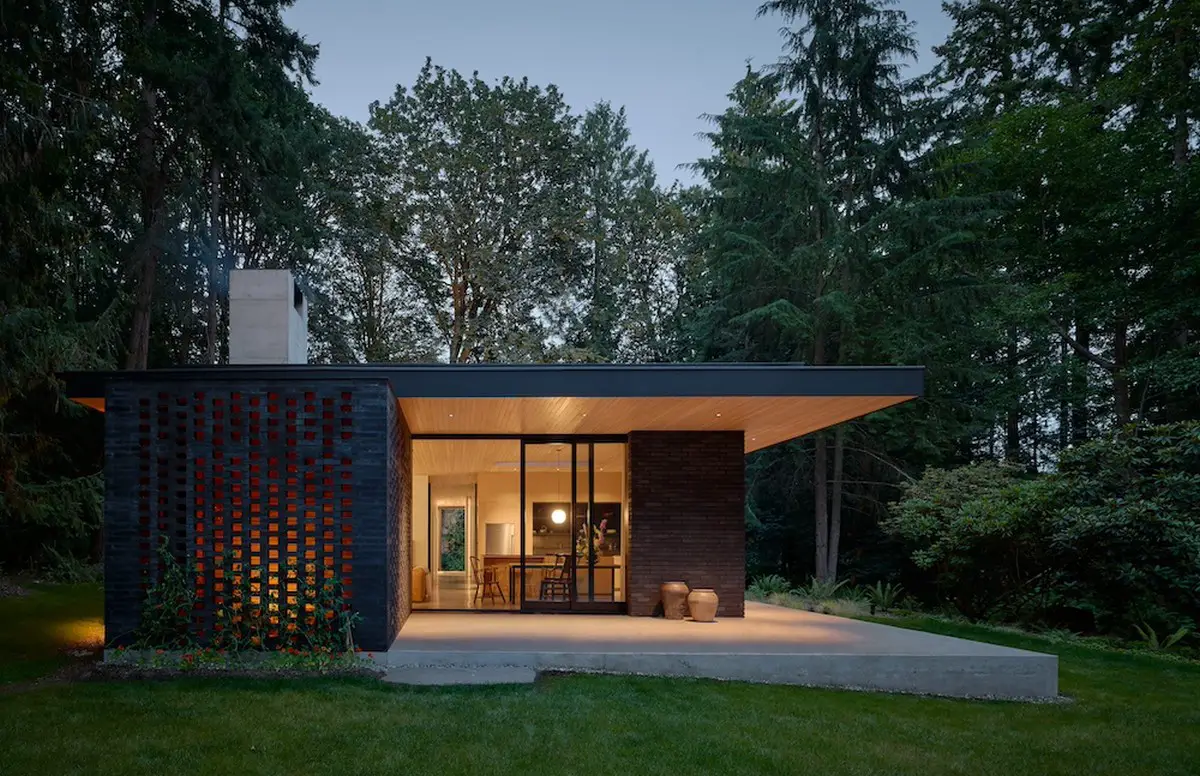
photo : Kevin Scott
San Juan Islands Boathouse, Washington State
Architect: Prentiss + Balance + Wickline
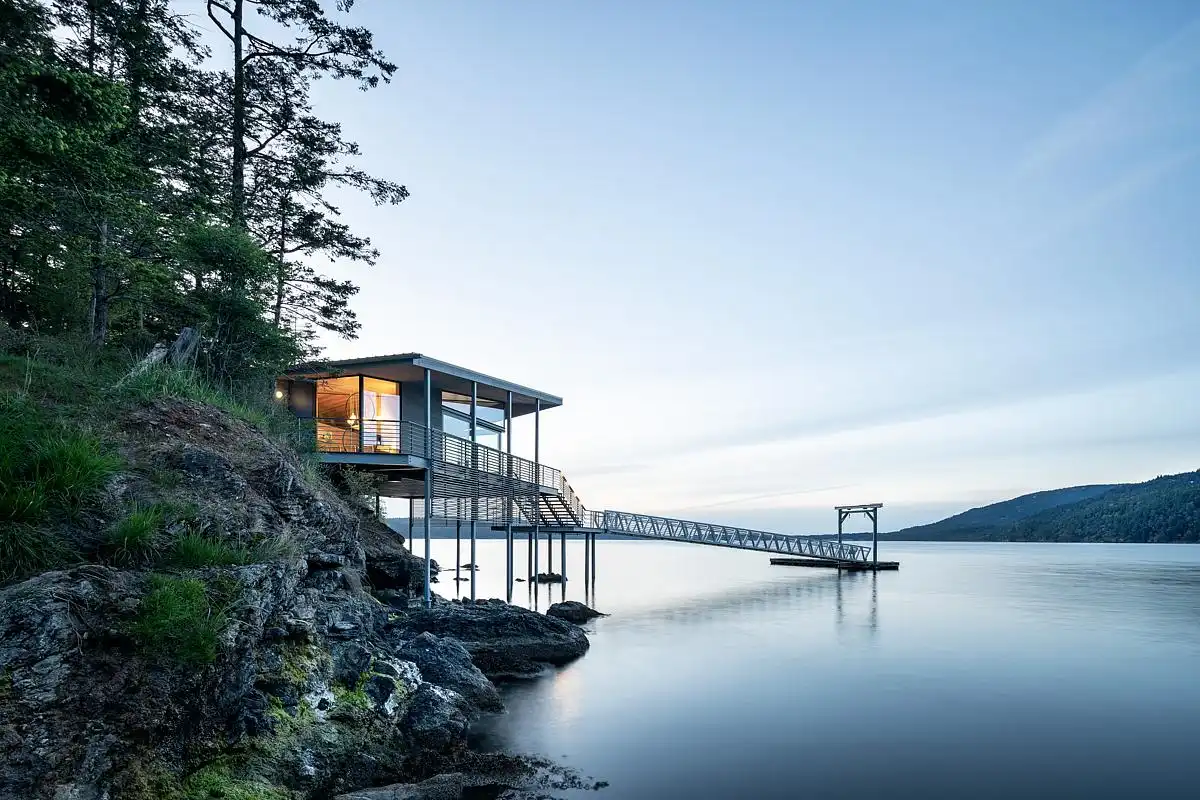
photo : Andrew Pogue Photography
Seattle Architect Offices – Design studio listings
+++
American Architecture Designs
American Architectural Designs – recent selection from e-architect:
Comments / photos for the Discovery Bay House, Washington: Pacific Northwest Forest building design by Dekleva Gregoric Architects page welcome.
