Tiny House LUX in Niederanven
Architecture: ODA Architects and Coral Architects
Location: Niederanven, Luxembourg, northern Europe

Photos by BoysPlayNice
11 November 2025
Luxembourg faces a clear housing shortfall. The country needs about 7,000 new homes each year, yet only around 3,600 are built, and fewer than 200 of those fall under public or affordable programs. Municipalities are searching for ways to use the small, leftover plots that sit inside existing neighborhoods. Many of these parcels are written off as too narrow or too irregular for conventional construction. The Tiny House project asks a simple question. What if these sites became a new source of compact, high-quality homes that keep people close to their communities?

The Idea
The idea originated with architect Bujar Hasani of ODA Architects, working in close collaboration with the Municipality of Niederanven. Together, they identified a path for small homes that meet Luxembourg’s structural and thermal standards, while supporting young residents who want to stay in the area. From the outset, the team chose 3D construction printing as the production method. The goal was not a temporary cabin or a lightweight box. The goal was a durable, efficient home that performs like a traditional dwelling and can be delivered with speed and precision.

The Solution
To make that promise real on a jobsite, ODA partnered with ICE Industrial Services and its Coral Construction Technologies division. ICE focuses on industrial automation. Coral, launched in 2021, develops effective on-site concrete printing solutions. Coral translated Hasani’s architectural model into a printable digital file, complete with the data that robotic systems need on site. The collaboration followed a true design and build rhythm. Architecture defined the intent. Digital fabrication made it constructible, repeatable, and fast.

The first pilot stands on a long, tight site at the edge of a residential area in Niederanven. The plot measures 3.5 meters in width and 17.7 meters in depth, which yields a net usable area of only 47 square meters. The plan responds with a strong central axis that keeps the main perspective open from front to back. Storage, furniture, and service zones line both sides. The eye reads the home as longer and calmer than the dimensions suggest, which helps the compact footprint live larger.

This house sets two firsts in Luxembourg. It is the first 3D-printed residential building that uses local aggregates. It is also the first to be printed on a wooden floor platform with screw foundations rather than concrete footings. That foundation choice reduces weight, minimizes groundwork, and makes potential dismantling or relocation simpler later in the building’s life.

Construction centers on Coral’s mobile printer and on-site 3D concrete printing. Only a very few systems globally can print with standard concrete delivered from local batching plants in a transport mixer. This capability avoids reliance on imported dry mixes, improves cost control, and cuts emissions tied to the transport of various special ingredients. Printing on site takes about one week. The full build, including finishing work, can be completed in about four weeks only. Digital fabrication also allows technical elements to be formed directly during printing. In this project, the shower niche and the cavity for a wall-mounted toilet are printed as part of the wall. The crew spends less time cutting and patching, and the finished spaces align exactly with the design.

Today
The superstructure continues the low-impact approach. The frame and the roof are wood. Insulation and reinforcement are entirely mineral-based, with no synthetic components. The wooden base and lightweight roof reduce overall mass and support a circular mindset for future disassembly. The printing process itself is tuned to place only the material that is needed, which conserves resources and lowers embodied carbon. Solar panels on the roof provide electricity for the home and for the film-based floor heating system. South-facing windows deliver useful solar gains that reduce heating demand.
Tiny House LUX operates as a municipal pilot as well as a home. The Municipality of Niederanven supported the project on public land to test an alternative construction model under real conditions. The result is a compact dwelling that maintains design quality and environmental performance while adding gentle density inside an existing neighborhood. Because the model relies on a digital workflow, standard batching-plant concrete, and a mobile printer, it can be adapted to sites with similar constraints without starting from zero each time.

Coral’s role is to bridge design ambition with field execution. The company brings a design-to-print pipeline that converts architectural intent into robotic toolpaths with millimeter precision. It brings a mobile printer that runs ordinary local mixes. It brings the know-how to integrate architectural and technical components during printing, which reduces trades, cuts waste, and shortens schedules. These capabilities turn small, overlooked parcels into buildable opportunities.

The Future
The larger significance lies in replicability. Many towns hold a long tail of narrow or irregular plots that sit idle. With a clear approvals framework, a library of printable details, and an on-site printing process that uses local concrete, cities can add well-built, energy-smart homes where people already live, study, and work. Tiny House LUX shows that this is not a theory. It is a working method that respects local craft, meets national performance standards, and can scale with municipal demand. Innovation and tradition are not at odds here. They meet in a precise, compact house that proves what can be done when design, engineering, and site-ready automation move in step.

Tiny House LUX in Luxembourg, northern Europe – Building Information
Architecture: ODA Architects – https://oda-architecture.com/ and Coral Architects
Materials
3DPC – walls
glass – windows, doors
composite – glass fiber reinforcement, connectors, glass fiber insulation
wood – interior cladding, furniture, foundation, roof
photovoltaic panels – roof
Products and Brands
Cocon armchair, UM barstool, Coffee Boy table — Master & Master \www.masterandmaster.eu
Bandaska vase — DECHEM studio\www.dechemstudio.com

About ODA Architects and Coral Architects:
ODA Architects is a multidisciplinary studio of architects, designers, and researchers dedicated to exploring innovative approaches to building. Inspired by the Albanian “oda” — a space for gathering, dialogue, and creativity — the studio bridges cultural identity with contemporary architectural innovation. Combining digital design methods, local materials, and sustainable technologies, ODA creates spaces that harmonize human warmth with technical precision. The studio’s work emphasizes innovation, sustainability, and material honesty. By integrating 3D concrete printing, timber and hybrid structures, modular and circular construction methods, and energy-recovery systems, ODA redefines how architecture can respond to ecological and social challenges. Their projects aim to deliver resilient, efficient, and meaningful spaces that anticipate the needs of future generations while respecting local context and resources.
Coral Architects specialize in 3D Concrete Printing (3DCP) and a comprehensive architectural approach to new technology – from parametric design, through material and structural optimization, to preparation of data for printing. This enables them to create functional, modular, and sustainable buildings where architecture and technology work hand in hand.
ICE Industrial Services is a European leader in industrial automation. With a strong track record of delivering more than 1,500 projects in over 40 countries, ICE combines cutting-edge engineering, advanced robotics, and digital solutions to transform manufacturing and production processes. This know-how gives Coral a technological edge that few in construction can match.
Coral Construction Technologies is a pioneer in 3D concrete printing and construction automation. It combines cutting-edge technology, research, and timeless organic design. This future-ready technology has wide application in commercial and residential buildings, as well as urban infrastructure, wherever long lifespan, durability, and fast, efficient construction are expected. Thanks to its mobile 3D printing system, Coral can carry out construction almost anywhere in the world. The company was founded as a joint venture of two strong partners, MTX Group and PURPOSIA Group, which gives it a solid foundation in both industrial automation and construction engineering.

Photography: BoysPlayNice, www.boysplaynice.com, info(at)boysplaynice.com
Tiny House LUX, Niederanven, Luxembourg images / information received 111125
Location: Niederanven, Luxembourg, northern Europe.
Luxembourg Homes
Contemporary Luxembourg Architecture – selection of contemporary architectural designs:
Hercule House, Luxembourg property, Mondorf-les-Bains
Architects: 2001 TBSI
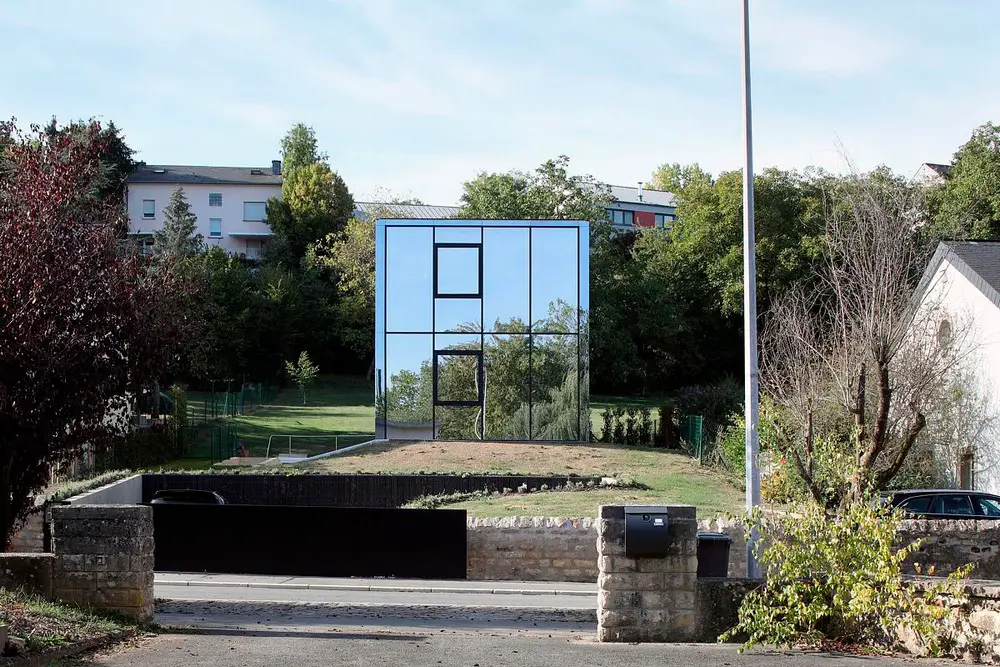
photo : Maxime Delvaux
Luxembourg House
Design: Richard Meier & Partners
+++
Building Designs in this Country
Luxembourg Architecture Designs – chronological list
Luxembourg Building Designs – selection from e-architect
The European Investment Bank Luxembourg building – EIB Headquarters, 98-100 boulevard Konrad Adenauer – Kirchberg campus
Architects: Schmidt Hammer Lassen
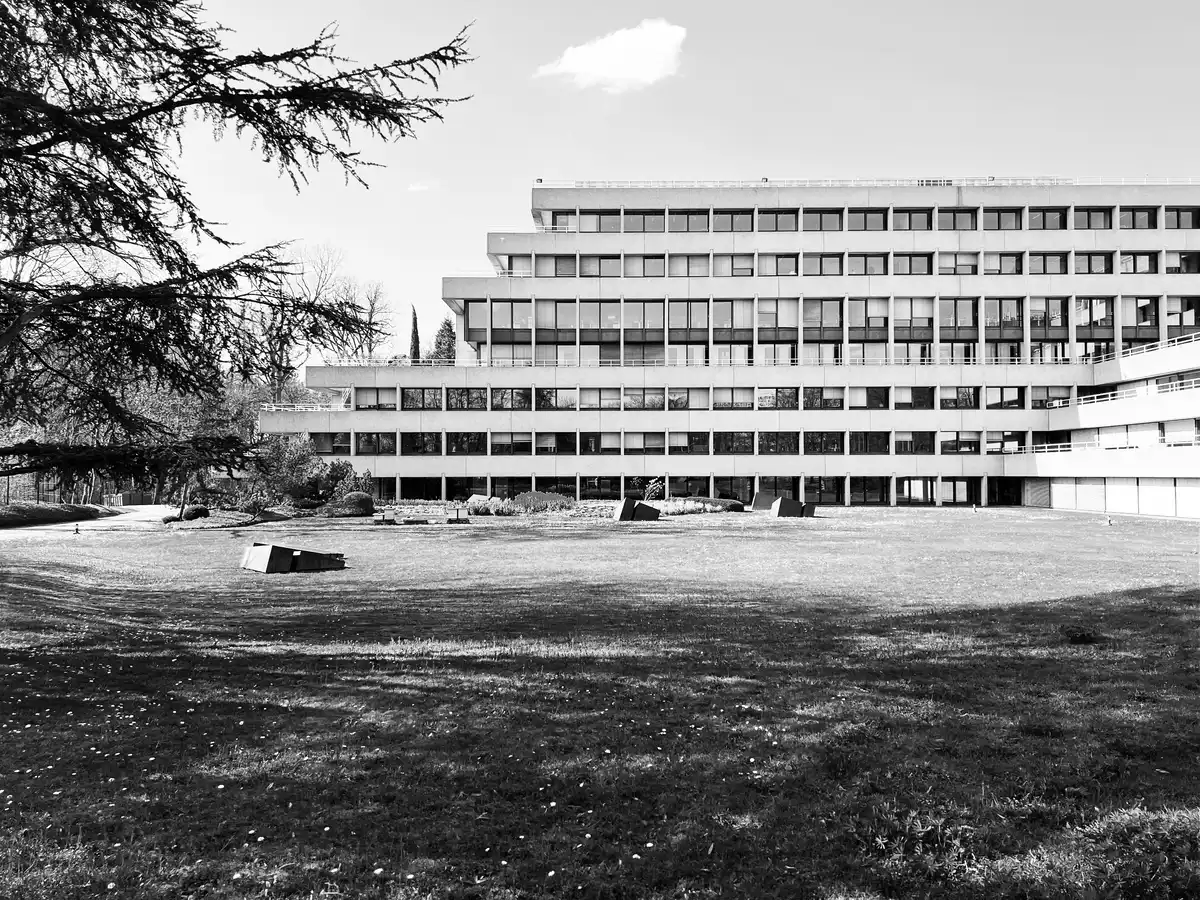
rendering © SHL
Kyklos office building in Belval, Belval
Architects: UNStudio
Apartment Building Luxembourg
Design: Metaform architecture
LUX – Stahlhof Belval-Ouest, Esch-sur-Alzette Landscape
Design: AllesWirdGut Architektur
Dommeldange Housing
Design: Metaform architects
Comments / photos for the Tiny House LUX, Luxembourg designed by ODA Architects page welcome.