Tselinny Center of Contemporary Culture, Almaty
Design: Asif Khan architect
Location: Almaty, Kazakhstan
Tselinny Center of Contemporary Culture, Designed by Asif Khan, Opens in Almaty
Tselinny Center, 2025:
Photos Copyright Laurian Ghinitoiu and Asif Khan Studio.
27 September 2025
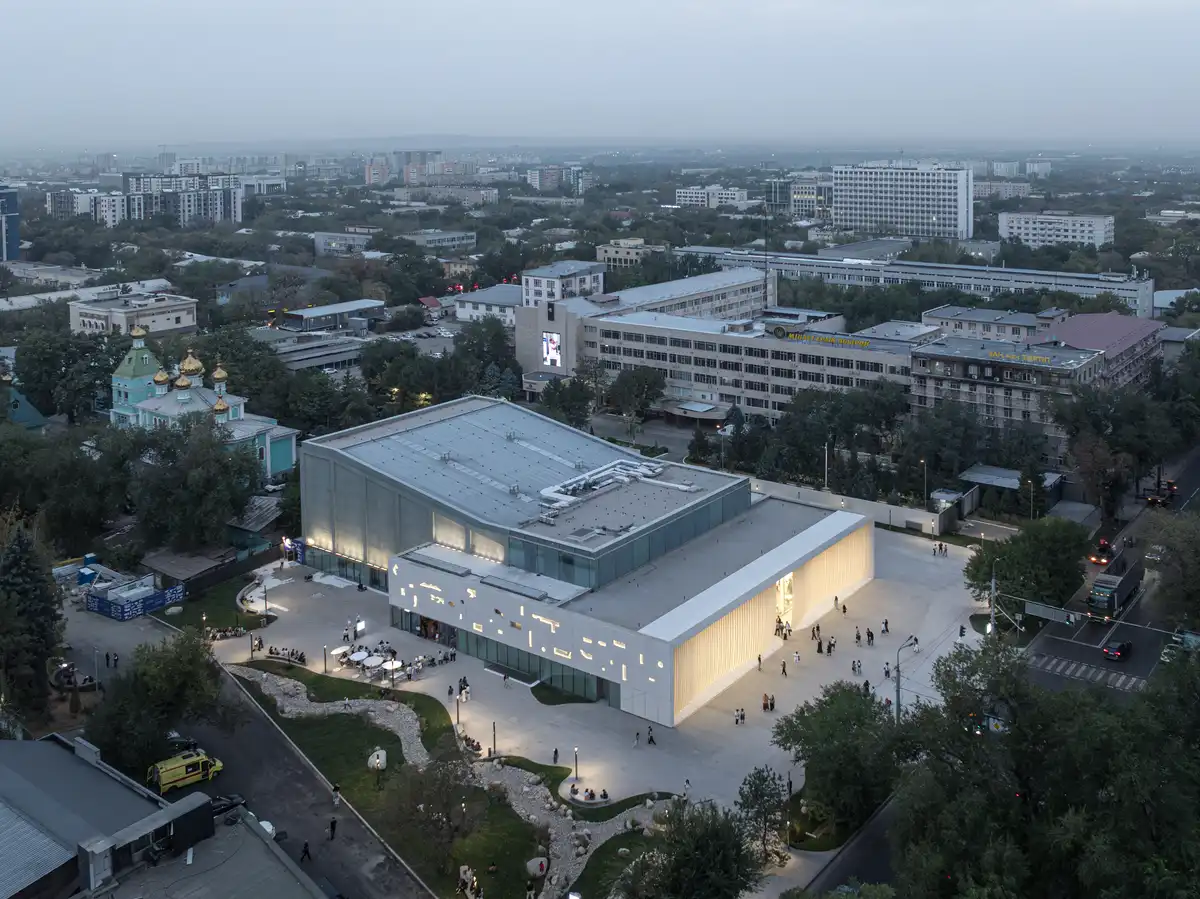
Almaty, Kazakhstan — September 2025. The Tselinny Center of Contemporary Culture – Kazakhstan’s first independent cultural institution, which provides an unprecedented international platform for artists in Almaty and the wider Central Asia region – has officially opened, completing the transformation of Almaty’s historic Tselinny cinema into a new cultural landmark for Central Asia. Designed by Asif Khan, this deeply personal project encompasses almost 6,000 square metres of renovated space alongside 6,000 sqm of landscaping, at the heart of Almaty’s ‘golden square’, representing a reimagining of one of the city’s most symbolic Soviet-era structures.
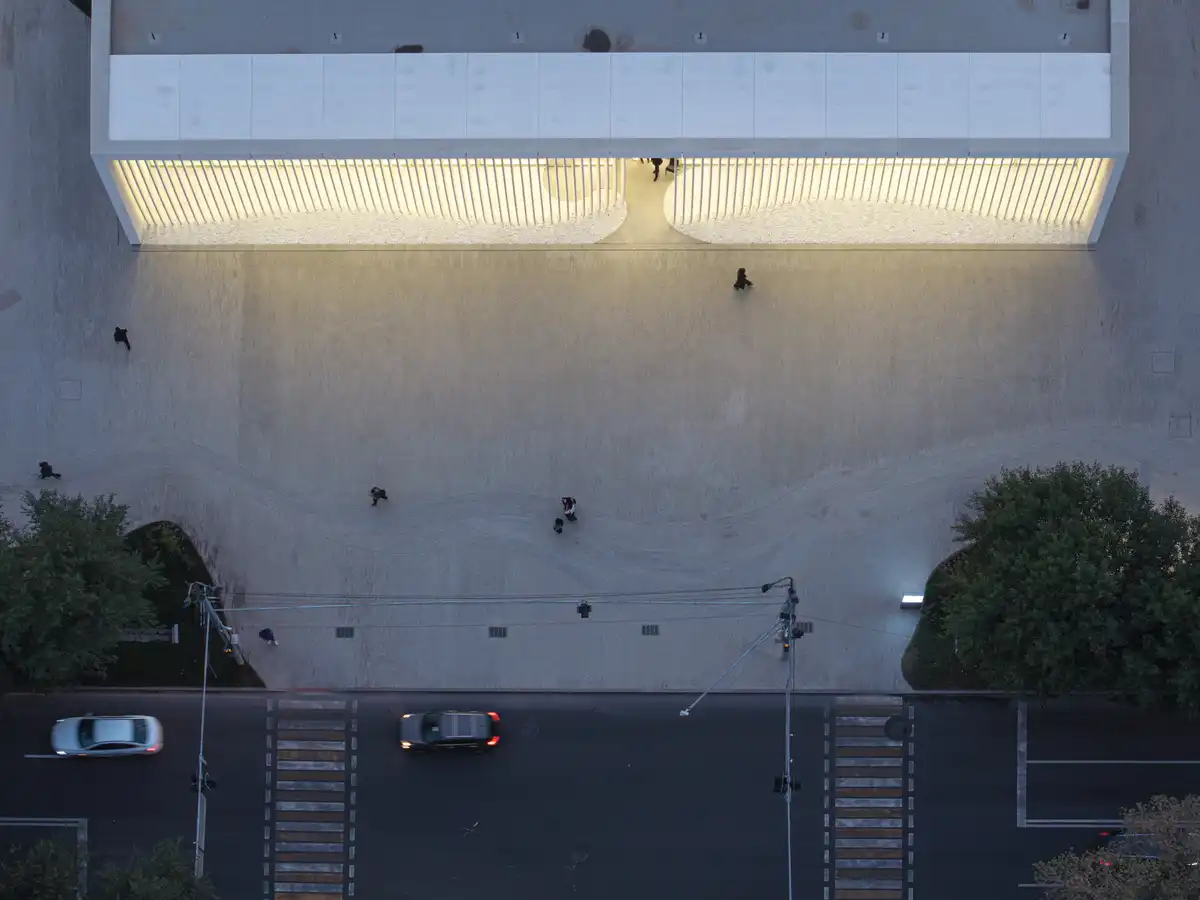
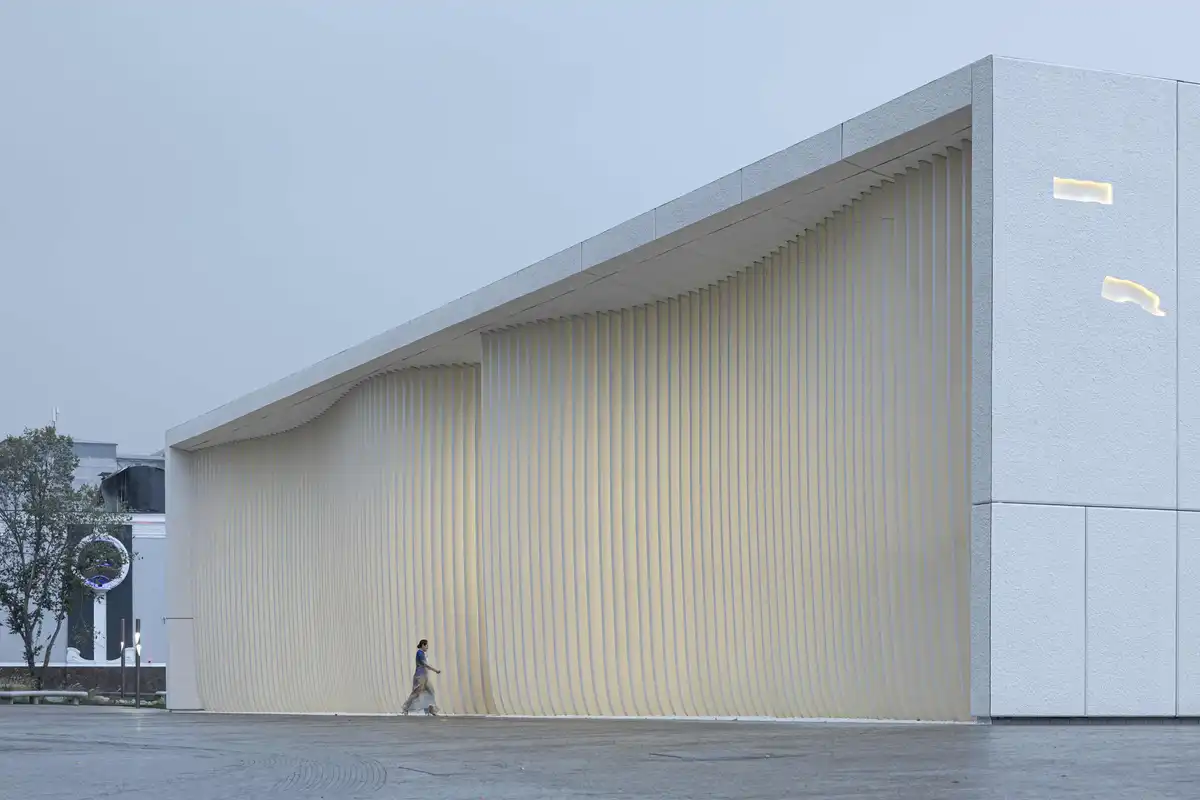
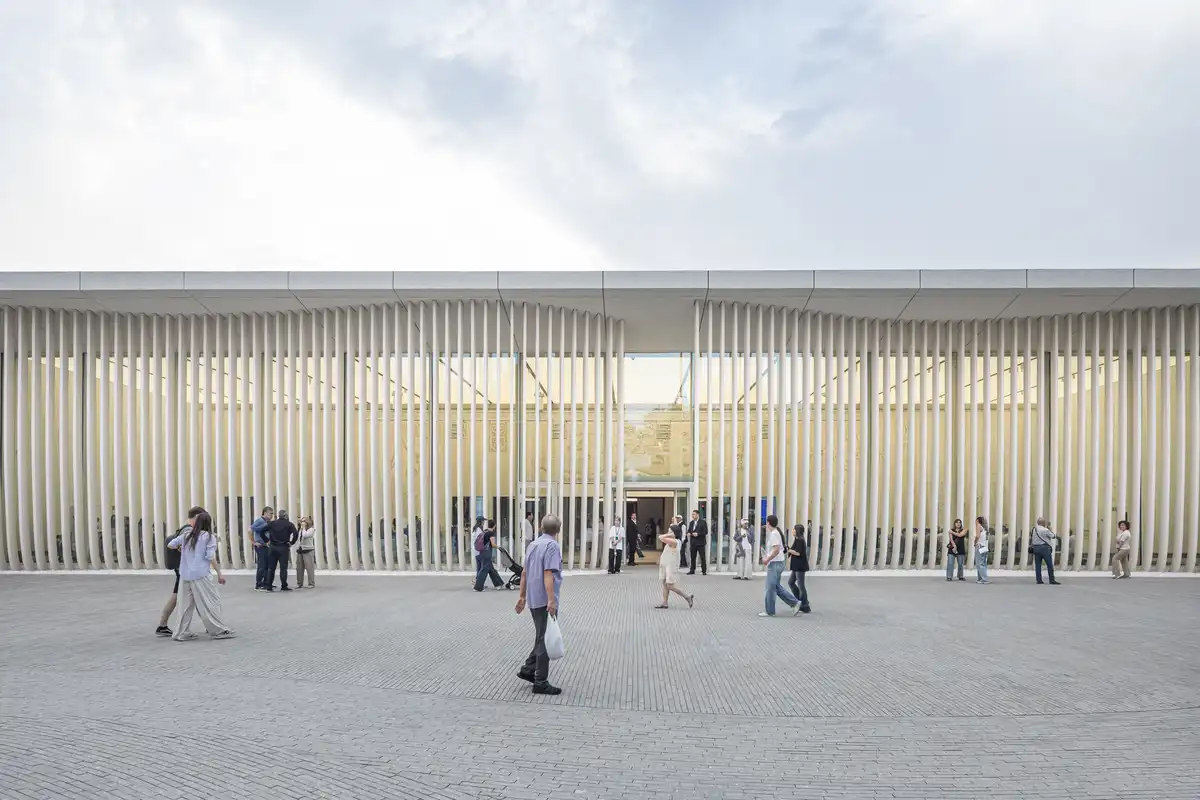
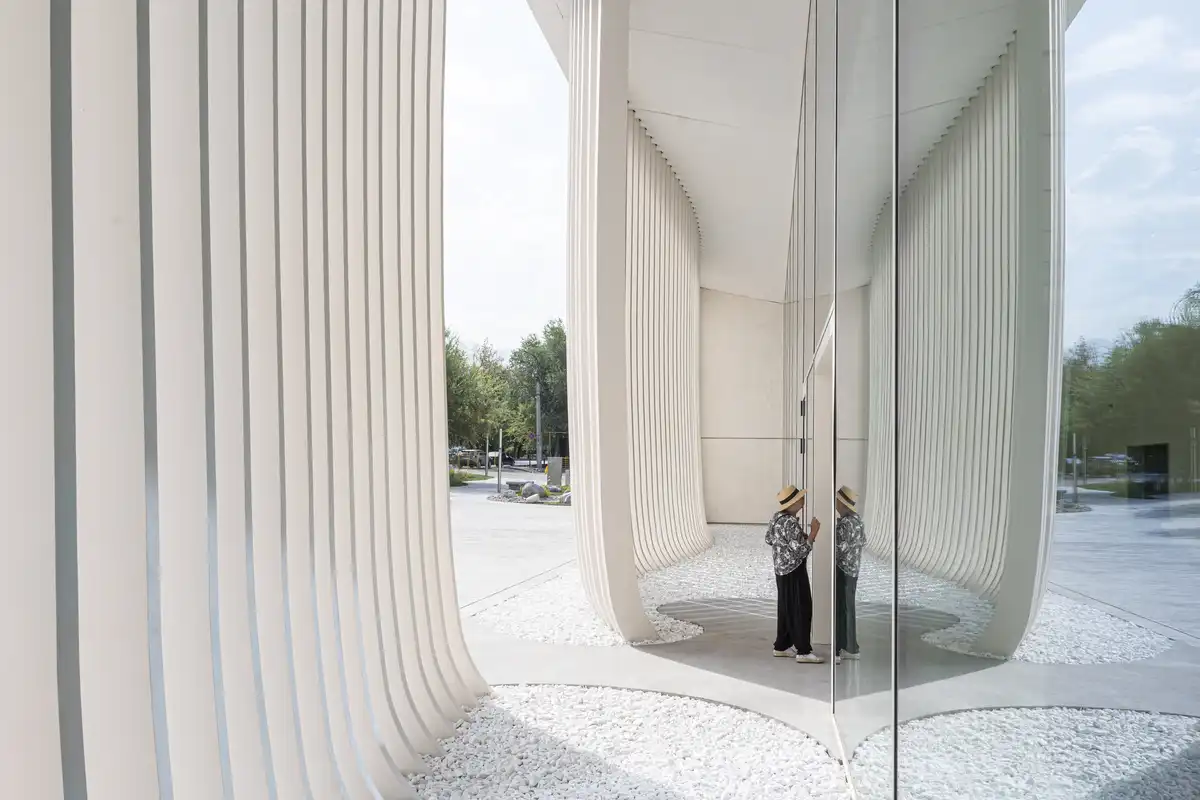
“Instead of an entrance, there is a cloud-like threshold, softening the rigidity and control of the Soviet concrete frame. Its form recalls the moment of my first visit to Almaty, when I saw a cloud hovering over the steppe. I believe this cloud was an incarnation of the ancient Kazakh god Tengri waiting to return to Earth, to Umai.
The entrance now holds this cloud permanently as an almost formless, dissolving threshold through which people enter. Conceptually, to arrive at Tselinny today is to pass between Tengri and Umai — male and female forces — sky meeting earth — and to receive ancient energies for life and for art.”
Asif Khan
History and Transformation
The cinema was constructed in 1964 to commemorate the 10th anniversary of the Soviet “Tselina” (Virgin Lands) agricultural campaign — a programme that permanently altered the rights and relationships of Kazakhs with their sacred steppe through mass migration and colonisation. Its name, Tselinny, was overtly political, celebrating the conquest of the steppe and projecting Soviet ideology into the heart of Almaty.
The building was also deliberately positioned to conceal the St. Nicholas Cathedral from the city. One imperial layer was thus used to obscure another: Soviet modernity suppressing religious presence. This act is emblematic of Almaty’s complex history. Today the city is celebrated for its leafy boulevards and mountain views, yet beneath its surface lie archaeological remains pointing to more than a thousand years of habitation, trade, and cultural exchange.
At its core, the cinema housed an 18-metre-high auditorium — the largest in the C.I.S. region — designed to project the Soviet ultra-wide panoramic film format. Yet over its 61 years, the building’s identity was steadily eroded. It struggled into the 1980s, was subdivided into a multiplex, added to with nightclubs and lounge bars, then a pizza restaurant, a photo studio, and a furniture showroom in the foyer, before collapsing into commercial failure.
In late 2017, the Tselinny Center of Contemporary Culture, an unprecedented international platform for Kazakh and Central Asian art and artists, took stewardship of the building, and Asif Khan Studio began work on the project following the completion of the UK Pavilion at Expo 2017 in Astana. Asif Khan collaborated closely with Kazakh architect Zaure Aitayeva — then Chief Architect of Expo 2017, who later became his partner in life, lead architect of the project, and today co-director of his studio. Over nearly eight years of discussion, public consultation, and design, the Tselinny Center – under the direction of Jamilya Nurkalieva and artistic director Alima Kairat – sustained its artistic programme, delivering more than 500 public events across Almaty as well as 12 publications, while work steadily progressed on the transformation of what was to be its permanent home.
Jamilya Nurkalieva, director of Tselinny Center of Contemporary Culture, said: “Tselinny is an example of a rare moment when the project was conceived at the same time as the decision was made to transform the space; and during these past years we have developed our own institutional voice while simultaneously dealing with the creation (reconstruction) of the building. These two rivers of flow and thought, about which aspect of the project holds influence, has culminated in a wonderful solution where our interdisciplinary programme reveals the best of Asif Khan’s spatial imagination.”
Architecture and Seismic Reconstruction
The project removed intrusive reconstructions, including additional columns and a full mezzanine inserted into the foyer during the early 2000s. These interventions destroyed large sections of the original monumental sgrafitto created in 1964 by Soviet artist Evgeny Sidorkin (1930-1982). For years the work was thought lost; a partial replica for the exterior was even commissioned by Sidorkin’s son in the early 2000s.
In 2018, however, the damaged original sgrafitto was rediscovered during construction works. Over the following six years, extensive discussion took place with local experts, including veteran architect and cultural historian Almaz Ordabayev, a contemporary of Sidorkin, the designers agreed that artisans should restore its lost areas using ghosted areas of white, repairing its damage while reintroducing Sidorkin’s 1964 tonal articulation lost over decades of repainting. The muted palette ensures that the work does not dominate but instead shares space with new generations of artists.
Because of seismic instability, the entire foyer and wings were reconstructed. Their replacement introduces new facilities: a learning atelier at upper level, a café opening onto the landscape, institutional offices and meeting spaces, technical rooms, workshops, a loading bay, and a future hidden tearoom adjacent to the cathedral.
Following intense work with local seismic institute Kazniisa, a plan was developed to enable the auditorium’s original walls and roof structure to be extensively strengthened and fully retained. The transformation reveals the auditorium’s true scale, stripped of its former seating and decoration. The upper walls and ceiling are lined with acoustic absorbent material to achieve the best possible conditions within the inherited structure, while the lower walls have been finished with versatile plaster surfaces and integrated speaker systems to support a range of exhibition and performance uses.
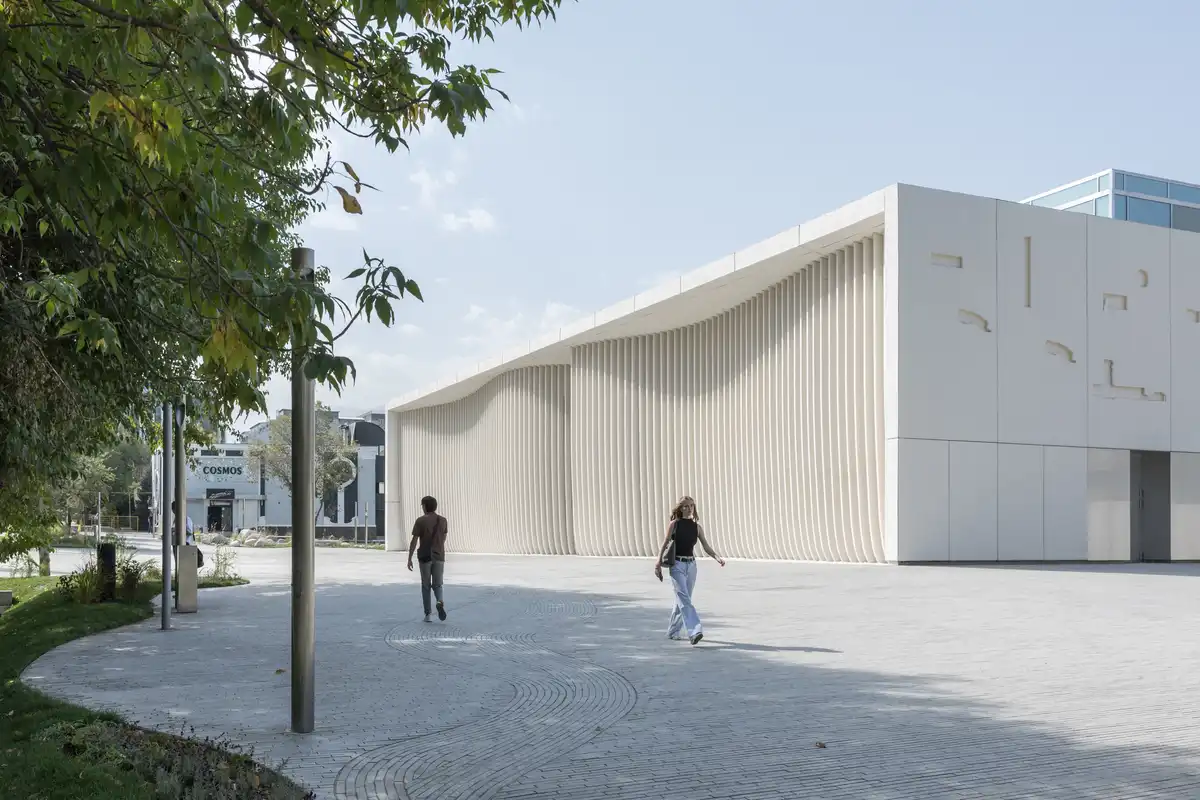
A new “cloudscape” spans the north and south façades: a non-figurative embossed language of symbols developed from “found forms within the Sidorkin replica.” This abstract visual script signifies lost memory and detachment from the past — an unknown but familiar language to local people, akin to Kazakh ornament, a distant memory which might one day be known again. These forms re-appear in the building as the shape of windows, in its lighting and as motifs in staircases. The wayfinding system, also developed by Khan, extends this idea, using “eroded” pictograms and numbers that visually connect to the bronze-age Tanbaly petroglyphs, which are deeply ingrained in the local consciousness.
Materials and New Thresholds
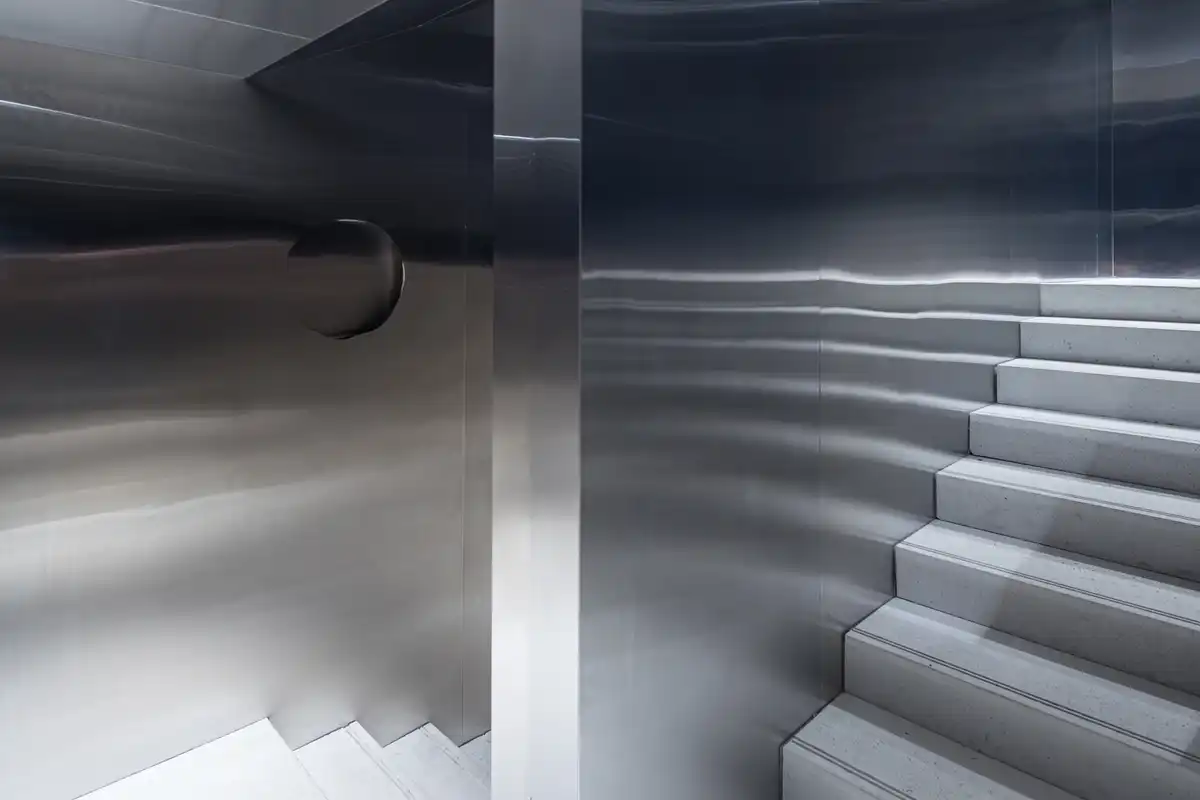
The rear auditorium and front block retain exposed concrete, preserving their monumental qualities. Daylight is introduced through a stainless steel and glass ribbon that wraps the ground floor, illuminating the auditorium interior with natural light for the first time. Symbolising the ancient glacial rivers around Almaty, the ribbon also provides 360-degree access into and out of the building —with potential to link the auditorium to the adjacent park, the cathedral, new public squares to the north, and the riverbed landscape to the south.
As part of the reconstruction, the floors of the entire ground level were lowered to remove all internal level changes. The four steps at the main entrance were eliminated, establishing a single continuous ground plane that flows outwards in all directions into the surrounding landscape. This surface forms a literal ground for public life and a metaphorical steppe, linking the building to Kazakhstan’s vast natural horizons.
The landscape and interior finishes continue this geological language: rounded river stones unearthed during excavation and gathered from the Almaty region are used in the landscaping; fossil-rich limestone from the ancient seabed in the Mangystau region of Kazakhstan forms a reception desk; and earth-toned pigmented concrete is laid throughout the foyer.
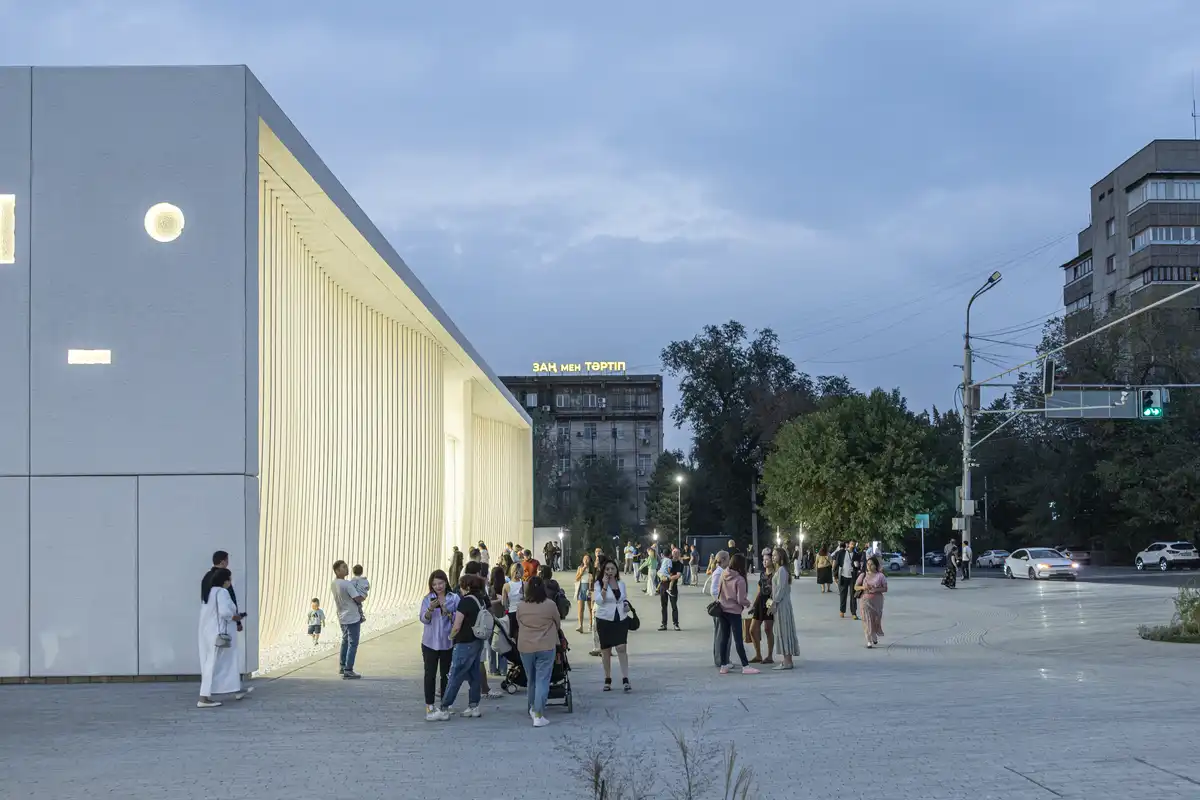
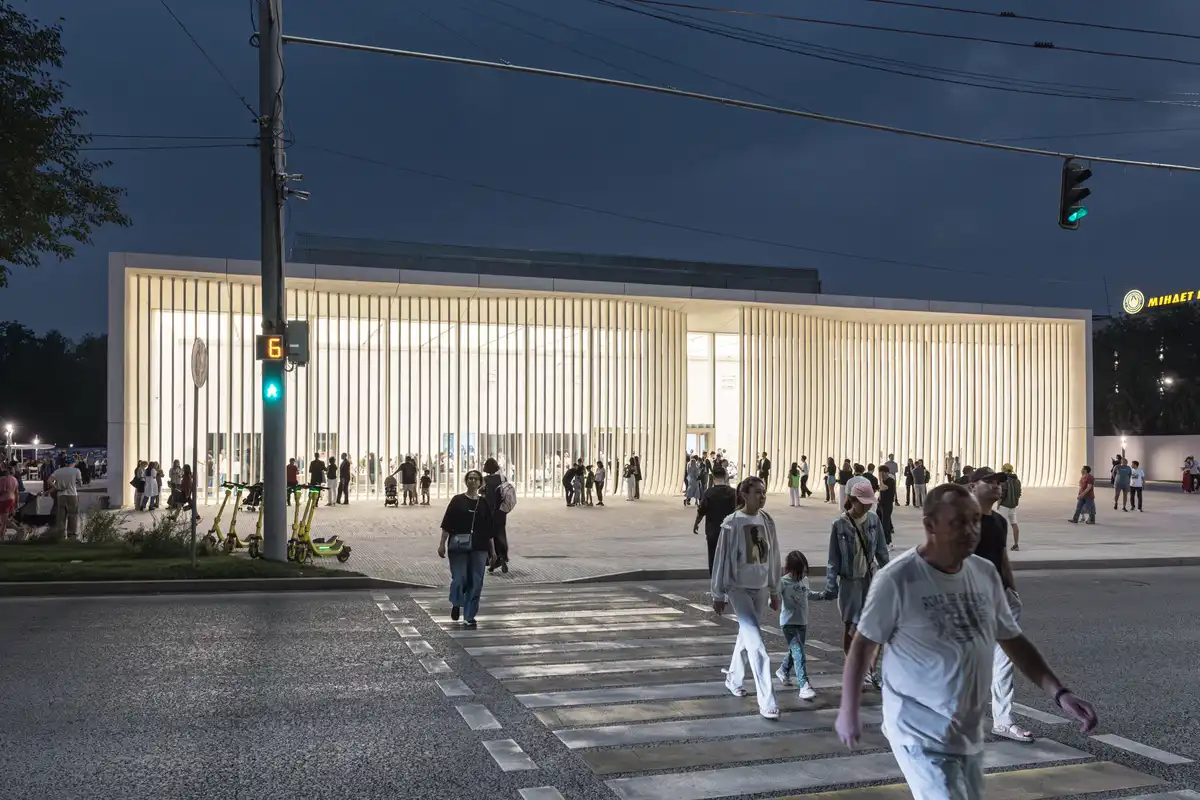
The cloud-like curving entrance threshold softens the box-like concrete frame, bringing life and femininity into its monumental geometry, while also recalling the tradition of brise-soleil screens common in Almaty.
Inside, the reconstructed foyer Orta 1 connects to the new café JER (Earth), designed by local studio NAAW, the white box Capsule gallery, the transformable Orta 2 gallery, and the vast Orta 3 auditorium. A new basement beneath the building houses a cloakroom, WCs, a quiet room for prayer and neurodiverse visitors to the building, back-of-house areas, and kitchens.
The top floor is named Gülfairus after Gulfairus Ismailova, one of Kazakhstan’s most important artists and actresses of the 1960s and wife of Evgeny Sidorkin. Her name appears throughout the wayfinding system, serving as a vital reminder of her creativity and inspiration — qualities that made both Sidorkin’s work and, by extension, today’s Tselinny project possible. A roof terrace restaurant crowns the building, offering panoramic views across the Ile-Alatau mountains and city skyline.
The next phases of the project will incorporate improvements to neighbouring Baitursynov Park and the creation of an inclusive pedestrian public territory between the adjacent church, the park and Tselinny, finally re-opening barriers which have been in place for 61 years.
A New Ground for Artists
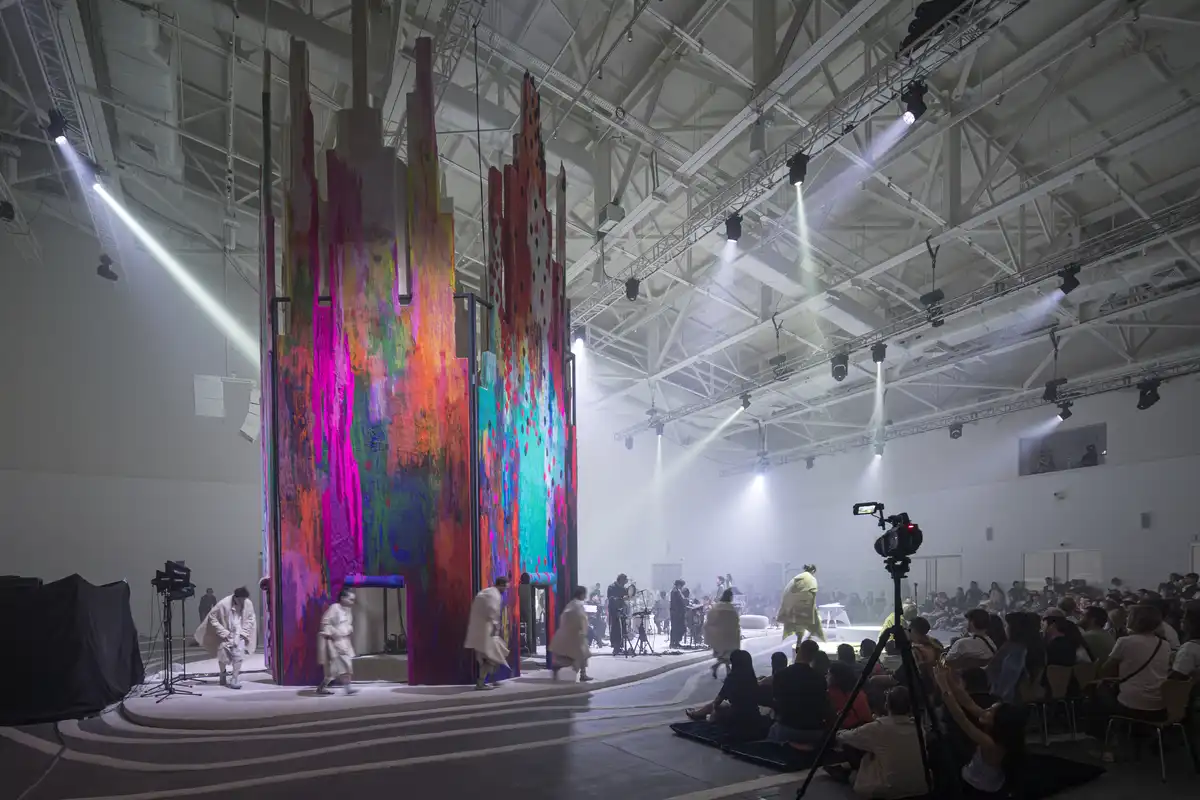
The commission privileges a multi-format approach, favouring a freely programmable space rather than a hall defined by strict orientation, format, or fixed seating. This allows the auditorium to accommodate a spectrum of artistic practices without constraint.
Keeping the name Tselinny is a deliberate act of disarmament by the team, redirecting a word once associated with colonisation into a signal of fertile ground for artistic life. The Center’s inaugural programme, titled BARSAKELMES, is centred around a live performance staged in-the-round in the vast auditorium, bringing voices, costumes, and sounds of the ancient past into dialogue with the renewed building — a form of shamanic healing and repair for this site and for the wider region.
With its layered symbolism — from the rediscovered Sidorkin mural to the cloud of Tengri brought to earth — together with structural renewal and openness to the public, the Tselinny Center of Contemporary Culture is both a cultural gift and a historical reckoning: a bridge between earth and sky, past erasures and future imagination.
+++
Contact details:
Tselinny Center of Contemporary Culture
59 Masanchi St
Almaty 050000
Kazakhstan
http://tselinny.org
(at)tselinnycenter (at)korkut.tselinny
About Tselinny Center of Contemporary Culture and its inaugural programme
Tselinny Center of Contemporary Culture is a regional institution that engages with all art forms, aiming to empower the local general public and support intellectual and artistic communities to build cultural dialogue within Kazakhstani horizons and to imagine new perspectives for Central Asia.
Founded in 2018 by Kazakh businessman and entrepreneur Kairat Boranbayev as the country’s first private cultural institution, the Center has been operating since 2018 and opened in 2025 in its permanent venue, a former cinema of 1964. Reconstruction was made under the direction of the architect and artist Asif Khan.
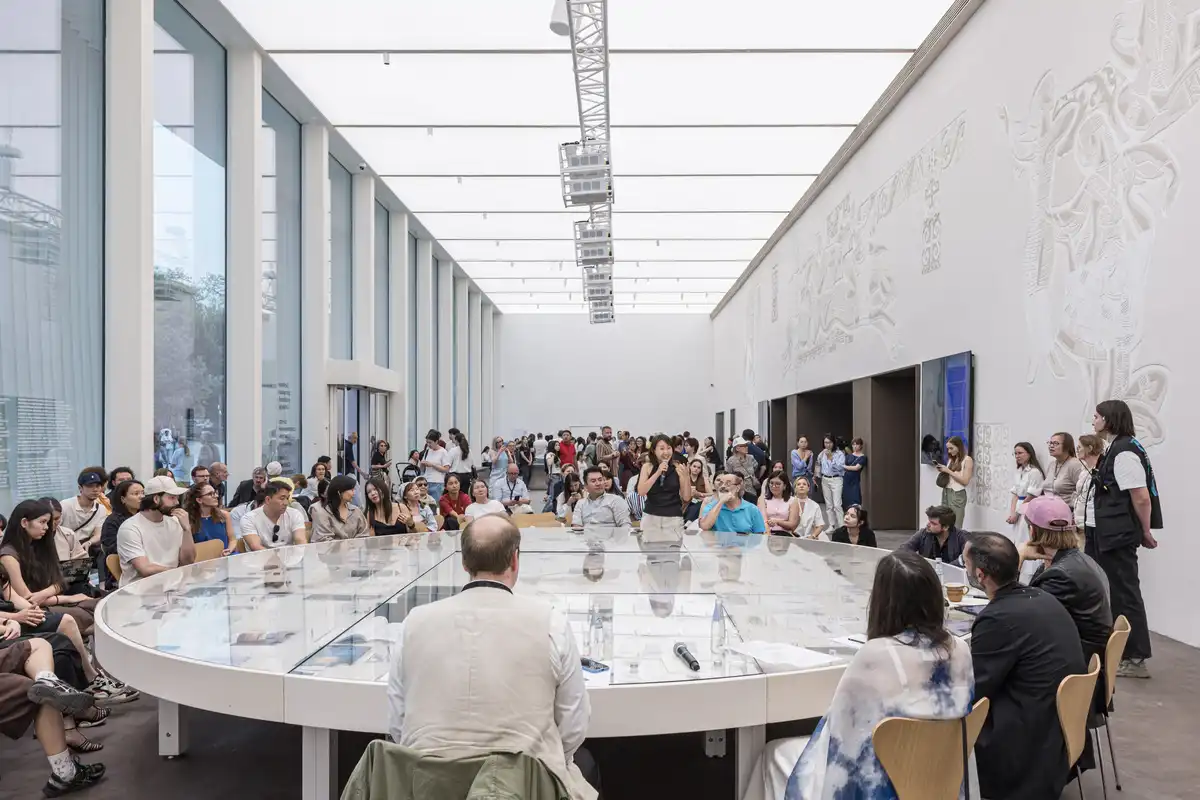
The Tselinny Center of Contemporary Culture opened to the public on 5 September 2025. Its inaugural exhibitions and installations are complemented by a discursive programme of lectures, discussions, book launches, family workshops and roundtables, as well as a series of events under the title BARSAKELMES, a live performance staged in the auditorium that brings voices, costumes, and sounds from the ancient past into dialogue with the renewed building, evoking shamanic healing and repair. BARSAKELMES is grounded in the nomadic, performative character of Kazakh culture and is a collaboration between the Tselinny Center creative team and the Kazakh independent music label qazaq indie collective, featuring artists SAMRATTAMA, Балхаш снится (Balkhash snitsya), dudeontheguitar, Steppe Sons, lovozero, Zere and Saadet Türköz, as well as two female Kazakh visual artists: Gulnur Mukazhanova and Dariya Temirkhan. Their installations, created specifically for Tselinny Center, are standalone works that engage in dialogue with other participants’ practices during the performance.
Two exhibitions run concurrently to the opening programme: an architectural exhibition exploring the transformation of Tselinny from a Soviet-era cinema to a multifunctional arts space, From Sky to Earth: Tselinny by Asif Khan, curated by historian and curator of architecture, Markus Lähteenmäki; and Documentation: Imagination of Central Asia on the Map of Contemporary Art, an archival exhibition curated by Asel Rashidova exploring the Tselinny Documentation project, a digital data set that collects and gives public access to archives of Central Asia from 1985.
Kairat Boranbayev
Founder of Tselinny Center of Contemporary Culture — Kairat Boranbayev
Kairat Boranbayev is a Kazakh businessman, philanthropist and founder of Tselinny Center of Contemporary Culture, President of Kazakhstan’s National Paralympic Committee, chairman of the supervisory board of FC Kairat, founder of the biggest group of companies in Kazakhstan Almaly devoted to the investment in advanced technologies and business practices.
Jamilya Nurkalieva
Jamilya Nurkalieva is director of Tselinny Center of Contemporary Culture in Almaty, Kazakhstan since 2018. In 2015-2018 she was involved in the management and programming of Astana Contemporary Art Center, in 2014 she founded Arkaim Festival of Contemporary Culture in Almaty and, since 2009, she has participated in different state and private cultural projects as a writer and arts manager. Nurkalieva graduated from Almaty State Conservatoire in the class of piano and obtained her MA in musicology at the Sorbonne Paris IV in 2012.
Alima Kairat
Alima Kairat is artistic director of Tselinny Center of Contemporary Culture in Almaty, Kazakhstan. She obtained her BA in History of Art in 2014 at the Courtauld Institute of Art, London and an MA in Contemporary Theory in 2021 at Goldsmiths, University of London. Kairat has held positions including art consultant, assistant curator, curator and deputy head of exhibitions in both state and private cultural institutions. She is passionate about raising the bar for the emerging artists; and creating public dialogue and systematic studies on artistic and cultural processes.
Asif Khan MBE
Asif Khan (born 1979, London) is a British artist and founder of Asif Khan Studio, the award-winning London-based architecture and design practice. His projects include the new London Museum opening in 2026; the Barbican Art Centre Renewal (2022-), London; the Museum of the Incense Road, AlUla. Recent projects include the public realm of Expo 2020 Dubai, including the carbon fibre Mashrabiya entrance portals. Khan was awarded an MBE for Services to Architecture (2017) and the FX Award for Outstanding Contribution to Design (2024). He was awarded the Grand Prix for Innovation by Cannes Lions (2014). For ten years he has served on the board of the Design Museum in London, including four years as Vice Chairman.
Tselinny Center of Contemporary Culture building design in Kazakhstan images / information received 270925
Location: Almaty, Kazakhstan, Central Asia.
Another architectural design by architect Asif Khan on e-architect:
Canada Dock Pedestrian Bridge in London
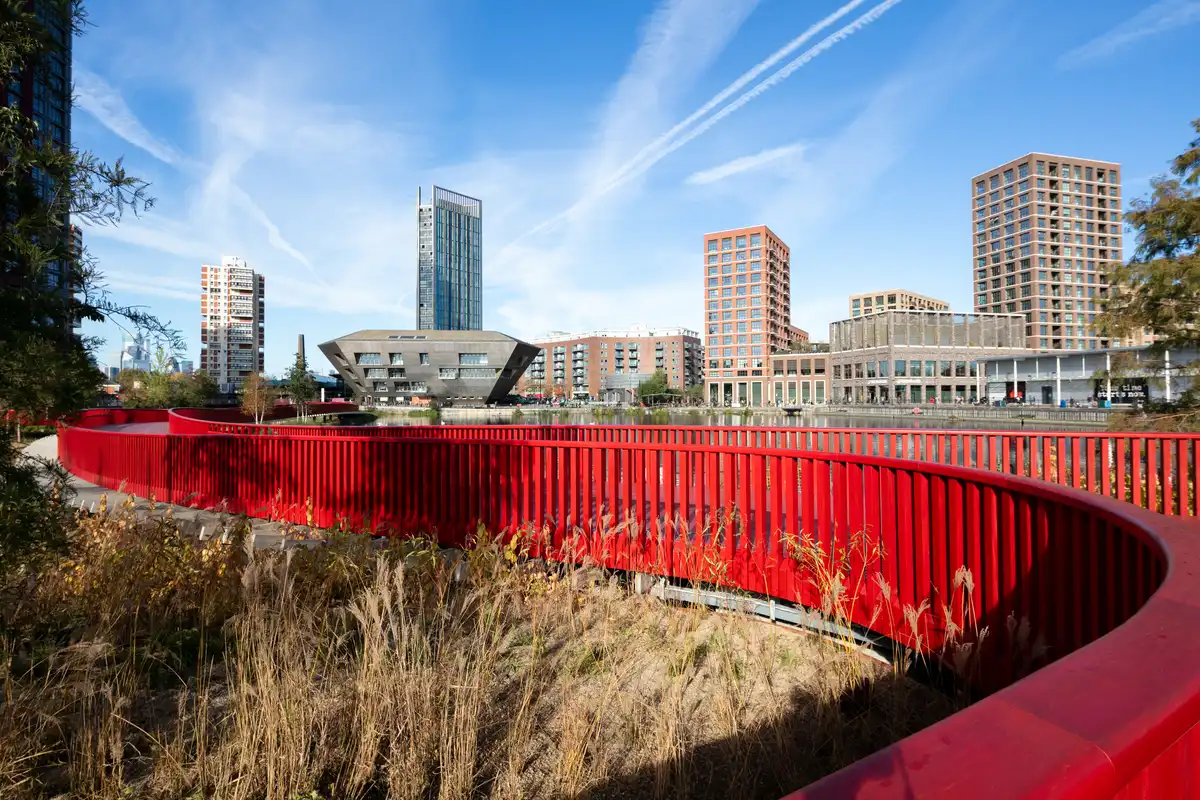
photo © Brendan Bell
++
Kazakhstan Buildings
Kazakhstan Architecture News
photo © Daniel Lomholt-Welch
Contemporary Kazakhstan Architectural Designs – selection:
Educational Complex, Nur-Sultan
Design: ATRIUM
Pedestrian Green Bridge Kazakhstan
Design: ATRIUM
Tulip City Astana Expo City
Design: Fundamental Architects with Omega Render
Memorial of Kazakhstan in Astana
Architect: Maciej Jakub Zawadzki
EXPO-2017 in Astana
Design: Adrian Smith + Gordon Gill Architecture (AS+GG)
Kazakhstan Architecture Designs
Contemporary Kazakhstan Architectural Selection
Kazakhstan Architecture Designs – chronological list
Astana Kazakhstan State Auditorium building
Comments / images for the Tselinny Center of Contemporary Culture building in Almaty Kazakhstan designed by Asif Khan architect page welcome.