What to Look for in an Oregon Neighborhood That Makes Everyday Life Better
September 22, 2026
Choosing where to live in Oregon often begins with the property itself. Buyers naturally think about how many bedrooms they need, whether the kitchen has enough room for everyday cooking, how much storage is available, and whether there is outdoor space where they can relax. Those details are important, but the experience of living somewhere is shaped by much more than what is contained within the property lines.

This is particularly true in the Portland metropolitan area, where communities can offer noticeably different lifestyles even when they are relatively close to one another. Some neighborhoods place residents near busy commercial districts, restaurants, parks, and public spaces, while others are primarily residential and offer a quieter setting. A home may meet nearly every requirement on your list, but the surrounding area still needs to make sense for the way you actually spend your time.
Think about what happens during an ordinary week rather than focusing only on weekends or special occasions. You may need to stop for groceries after work, take the dog outside in the evening, meet a friend for coffee, find somewhere convenient for dinner, or squeeze some exercise into an already busy schedule. When the places you use regularly are reasonably close to home, these routines become easier to manage and require much less planning.
That is why neighborhood amenities deserve serious consideration when choosing where to live in Oregon. The goal is not to find the community with the longest list of features, but to identify a place where the surroundings support the routines, priorities, and lifestyle you expect to maintain after moving.
Look Beyond the House When Comparing Portland-Area Communities
It is easy to spend most of a home search comparing prices, square footage, lot sizes, architectural styles, and interior finishes. These factors certainly deserve attention, but they provide only part of the picture because they do not tell you what living in a particular area will feel like once the excitement of buying a home has passed.
This becomes especially important when looking at communities surrounding Portland. Lake Oswego, for example, has several distinct residential areas, and proximity to parks, shopping districts, schools, recreation, and other everyday destinations can vary depending on where you live. When comparing Lake Oswego neighborhoods, buyers can benefit from considering how areas such as First Addition, Lake Grove, Mountain Park, and neighborhoods surrounding the downtown and lake areas differ in terms of convenience and daily routines.
Someone who enjoys walking to coffee shops, restaurants, or local businesses may be drawn toward areas closer to downtown Lake Oswego or Lake Grove, while another buyer may prefer a more residential setting with convenient access to parks, trails, or larger green spaces. Families may place greater emphasis on routes to schools and recreation, while commuters may be more concerned about how easily they can reach major roads and destinations elsewhere in the Portland area.
Rather than asking which Lake Oswego neighborhood is universally considered the best, it is more useful to ask which one works best for the way you already live. A neighborhood can be attractive, well established, and full of amenities while still being a poor match if the features you value most are inconveniently located.

Parks and Green Spaces Can Become Part of Your Routine
Access to outdoor space is one of those neighborhood features that can initially seem like a bonus rather than a necessity. Once you live close to a park, trail, playground, or natural area, however, it can become something you use much more regularly than expected because enjoying some time outside no longer requires extensive planning.
A nearby park can provide somewhere to walk before starting work, take children to play, spend an afternoon with friends, or simply get outside after being indoors for most of the day. Even people who do not consider themselves particularly outdoorsy may appreciate having trees, open spaces, and walking opportunities close to home.
This can be particularly appealing in Oregon, where access to natural surroundings is often an important part of the lifestyle people associate with the region. Within the Portland metropolitan area, however, access to parks and trails can vary considerably between communities and even between neighborhoods within the same city.
The important question is not simply whether a park appears on the map. Consider what the space actually offers and whether you are likely to use it. Someone who regularly walks several miles may value access to interconnected trails, while a household with young children may care more about playgrounds, fields, and open spaces where spending an hour outside is easy.
A beautiful green space has much more practical value when it fits naturally into your routine instead of remaining somewhere you occasionally drive past.
Shopping and Dining Can Make Daily Life More Convenient
Grocery stores and pharmacies are rarely the most exciting considerations during a home search, but their locations can have a surprisingly large influence on how much time everyday errands require. When every basic task involves driving across town, the inconvenience can gradually become noticeable.
Living reasonably close to grocery stores, cafés, restaurants, pharmacies, and other useful businesses gives you more flexibility throughout the week. You may be able to stop for groceries on the way home instead of making a separate trip, pick up something you forgot without losing a large part of the evening, or decide at the last minute to go out for dinner without having to travel far.
Restaurants, cafés, and shopping areas can also contribute to the character of a community. They create destinations beyond home and work where residents naturally spend time, whether that means having breakfast on a Saturday morning, meeting someone for coffee, or running several errands during the same outing.
Still, having businesses nearby is not automatically preferable for everyone. Some buyers enjoy living close to commercial activity, while others are perfectly comfortable driving a little farther if it means returning home to a quieter residential setting. Neither preference is inherently better, which is why visiting an area in person can reveal much more than simply measuring distances on a map.
Recreation Is Easier to Enjoy When It Is Close to Home
Most people understand the benefits of remaining physically active, but finding enough time can be difficult when exercise requires additional driving or extensive planning. Recreation becomes much easier to incorporate into everyday life when walking routes, trails, parks, fitness facilities, and other options are conveniently located.
That does not mean you need to choose a neighborhood based around an entirely new lifestyle you hope to adopt after moving. In fact, it is usually more useful to think about the activities you already enjoy.
If you currently walk several times each week, access to pleasant walking routes may have a meaningful impact on your quality of life. If you enjoy spending weekends outdoors, proximity to parks or trails could reduce the amount of driving required to do something you already value. Someone who prefers organized fitness or indoor recreation may care more about convenient access to facilities than natural areas.
The key is to distinguish between amenities that genuinely complement your habits and those that merely sound attractive in a real estate listing. Living near a trail will not necessarily turn someone into an enthusiastic hiker, just as having a fitness center nearby does not guarantee it will become part of the weekly routine.
When recreational opportunities align with activities you already enjoy, however, proximity can remove some of the practical barriers that make those activities harder to maintain.
Community Spaces Help Neighborhoods Feel More Familiar
Not every useful amenity exists because it saves time or makes an errand easier. Some neighborhood features matter because they create places where people can spend time and gradually become more familiar with the community around them.
Parks, libraries, community facilities, public spaces, local cafés, and neighborhood gathering areas can all provide opportunities for casual interaction. You might begin seeing the same people while walking in the evening, recognize families who regularly visit a nearby park, or become familiar with local businesses simply because they are part of your normal routine.
These interactions do not have to develop into close relationships to influence how connected a neighborhood feels. Familiarity itself can make a place feel less anonymous, particularly for someone who has recently moved to a new part of Oregon and is still learning the surrounding area.
When visiting a prospective neighborhood, pay attention to more than the appearance of individual homes. Look at the places where residents spend time, how public spaces are used, and whether there are natural gathering points nearby. These details can provide useful clues about how the area functions beyond what you can learn from property listings.
Schools and Everyday Services Shape Busy Weekday Routines
For households balancing work, school, appointments, errands, and other responsibilities, relatively small differences in location can have a major effect on the week. A trip that takes only a little longer may not seem significant on its own, but repeating it several times each day can quickly add hours of unnecessary travel.
That makes proximity to schools, childcare, healthcare services, grocery stores, and other frequently used destinations worth considering before choosing a home. The goal does not have to be finding a neighborhood where everything is within walking distance. Instead, look for an area where the destinations you regularly use can be reached without turning ordinary errands into complicated trips.
One practical approach is to imagine a normal weekday. Think about where you would travel in the morning, what might need to happen during the afternoon, where you typically shop, and which trips could be combined. Then consider how those routines would work from the neighborhood you are evaluating.
This exercise may not be as exciting as comparing kitchens, yards, or views, but it can reveal practical advantages and disadvantages that are easy to overlook during a showing.
Lake Oswego’s Waterfront Character Adds Another Consideration
Among communities in the Portland area, Lake Oswego has an identity that is closely connected to its namesake lake. The water contributes to the city’s character and can be an important consideration for buyers who are specifically interested in recreational opportunities or simply enjoy living near a waterfront environment.
However, buyers should avoid assuming that choosing a Lake Oswego address automatically provides the same relationship with the lake in every neighborhood. Properties and neighborhoods can differ considerably in their proximity to the water and in the types of access or recreational arrangements associated with them.
Anyone who considers lake recreation an important part of the decision should therefore investigate the details of the specific property and neighborhood rather than relying on general assumptions about the city. Questions about access, facilities, and usage should be considered alongside more familiar factors such as commute routes, nearby parks, shopping, and schools.
For some residents, proximity to the lake may be one of the strongest reasons for choosing a particular area. For others, the greater appeal of Lake Oswego may come from its residential neighborhoods, parks, commercial areas, or location within the wider Portland metropolitan area. Understanding that distinction can help buyers avoid paying too much attention to an amenity that may not play a significant role in their actual lifestyle.
Consider How the Neighborhood Connects With the Rest of the Area
A neighborhood does not exist in isolation, particularly within a metropolitan region such as Portland. Even if most of your daily needs are available nearby, you may still regularly travel elsewhere for work, entertainment, appointments, shopping, or visits with family and friends.
For that reason, it is useful to consider how easily a prospective neighborhood connects with the places you expect to visit regularly. A location that looks convenient based purely on distance may feel quite different when traffic patterns, road connections, and the timing of your normal trips are taken into account.
Try driving important routes at approximately the times you would normally use them. If you expect to commute during weekday mornings, making the trip on a quiet Sunday afternoon will not tell you much about the experience you are likely to have. The same applies to routes used for school drop-offs, recurring appointments, or regular trips into Portland.
These practical tests can help you understand whether a neighborhood works as part of your broader routine rather than simply functioning well within its immediate boundaries.
Focus on Amenities You Will Genuinely Use
It is tempting to create a long wish list when comparing Oregon neighborhoods. Parks, trails, restaurants, cafés, shopping, recreation, schools, healthcare, community facilities, and entertainment may all sound desirable, particularly when they appear together in a property description.
The problem is that few people use every available amenity equally. Having ten different features nearby is not necessarily better than having convenient access to the three or four things that genuinely shape your week.
Think about how you currently spend your time. If weekends regularly involve walking, hiking, or visiting parks, nearby green space deserves serious consideration. If you often meet friends for coffee or dinner, easy access to dining and gathering areas may contribute more to your lifestyle. For households with complicated weekday schedules, convenient routes to schools, workplaces, stores, and services could outweigh recreational amenities entirely.
It is also helpful to separate what sounds appealing from what you actually use. Buyers sometimes imagine that moving will completely transform their habits, but everyday routines tend to be more persistent than expected. Choosing a neighborhood that supports the lifestyle you already enjoy can therefore be more practical than selecting one around activities you hope to start someday.

Find a Neighborhood That Still Works After Moving Day
There is a significant difference between choosing a home that makes a strong impression during a showing and choosing a neighborhood that continues to work months or years after moving in. The house itself will remain important, but the streets, businesses, parks, services, recreation, and destinations around it will gradually become part of everyday life.
That is why spending time in a neighborhood before making a decision can be so useful. Visit at different times of the day if possible, drive the routes you would regularly use, walk around nearby streets, and see how long it actually takes to reach the places that matter to you. An area that feels peaceful on a weekend afternoon may have a very different rhythm during the weekday commute, while a store that appears conveniently close on a map may require a less convenient drive than expected.
Most importantly, imagine an ordinary Monday rather than moving day. Think about getting ready in the morning, commuting or taking children to school, handling errands, finding time for exercise or relaxation, and returning home at the end of the day. The question is whether the surrounding area makes those routines easier or requires you to regularly travel elsewhere for the things you need.
Across Oregon, and particularly within the Portland metropolitan area, there is no universal combination of amenities that makes one neighborhood better than every other option. Some people prioritize green space and recreation, while others care more about dining, shopping, schools, commuting, or a quiet residential atmosphere.
Ultimately, the most valuable amenities are rarely the ones that create the most impressive list on a real estate page. They are the parks you actually visit, the stores that make errands easier, the routes that save you time, the restaurants you return to, and the everyday places that allow your neighborhood to function naturally as part of your life.
Comments on this guide to What to look for in an Oregon neighborhood, United States of America, article are welcome.
Oregon Buildings
America Architectural Designs – latest building updates
Oregon Architecture News in 2024 – latest additions to this page, arranged chronologically:
Julia West House, Downtown Portland
Architects: Holst Architecture
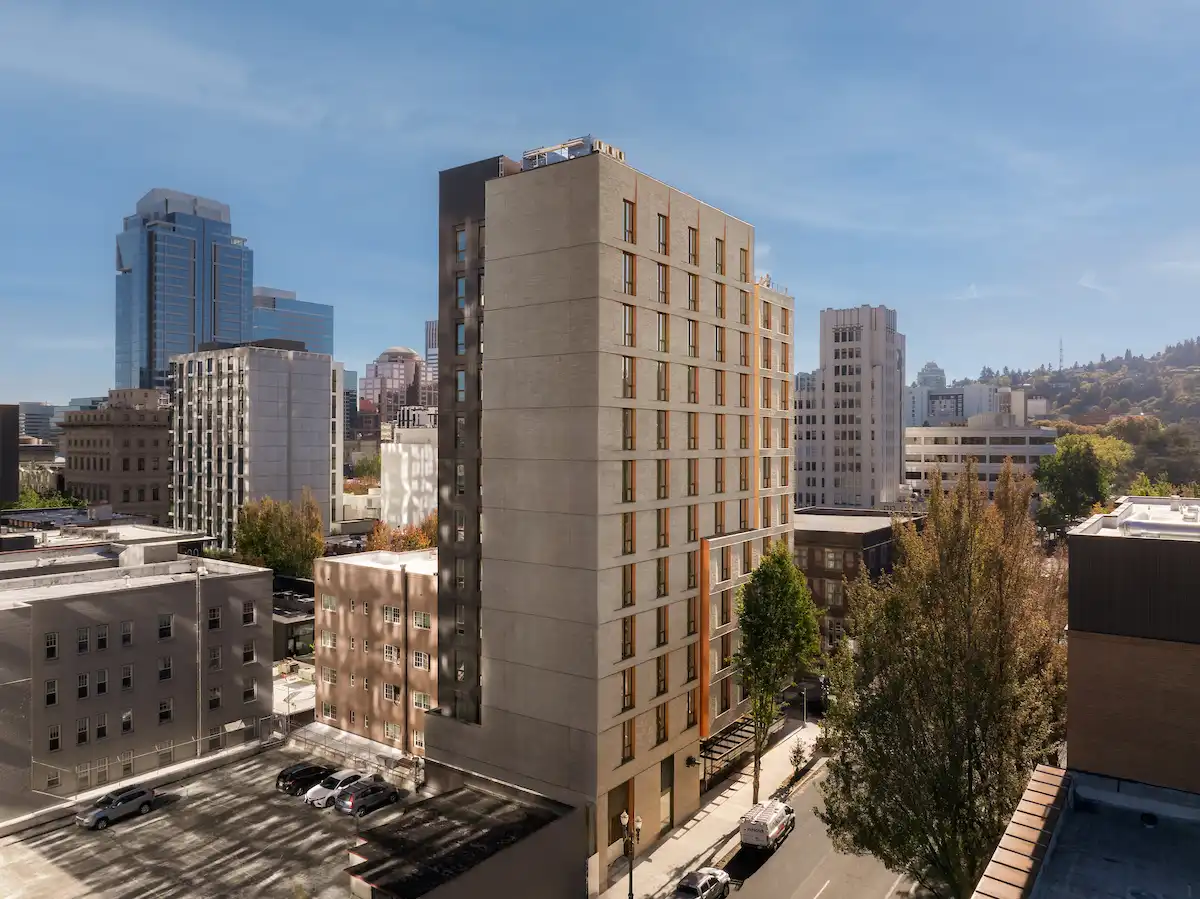
photo © Christian Columbres
Oregon State Supreme Court Rehabilitation, Salem
Architecture: Hennebery Eddy Architects

photo : Josh Partee
+++
Building
Residential Architecture Articles
Comments / photos for the What to look for in an Oregon neighborhood, USA, advice that makes everyday life better page welcome.