Cut 30% Panel Failure: Sheet Metal Precision Guide
3 September 2026
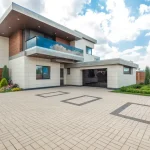
Figure 1: Implementing precision fabrication techniques with strict tolerance controls successfully eliminates over 30% of on-site panel assembly failures.

Introduction
More than 30% of problems caused by on-site failures in big metal panels are due to lack of proper bending springback control, not sticking together of the coatings, and not doing DFM validation early on. For architectural sheet metal fabrication and commercial facade engineering, using CNC bending machines to compensate within 0.2 mm range, selecting corrosion-resistant materials suitable for actual operating conditions, it can prevent dimensional conflicts at the design stage itself.
Why Do Large Metal Enclosure Panels Suffer Dimensional Defects?
Large prefabricated panels often exhibit waviness, twisting, and gap overruns. The root cause is a lack of high-precision fiber laser blanking and multi-axis CNC bending dynamic compensation. Without these, internal stresses lead to unpredictable geometry after springback.
The main strategy for achieving defect-free parts lies in in-process inspection that is in line with ISO 9001 quality standards. Main types of defects:
- Springback variability: anisotropy of the material leads to different angular recoveries.
- Inadequate process gates: without mid-line verification, deviations get out of hand.
- Thermal distortion: cutting operation with uncontrolled heat input can cause tiny warping.
A custom sheet metal fabrication services business that integrates fiber laser cutting with dynamic compensation will be sure that prefabricated building components always comply with close-tolerance specifications.
How to Select Alloys Using the Sheet Metal Material Selection Guide?
Materials selection involves assessing mechanical properties, resistance to the environment, and finishing compatibility. A well-designed sheet metal material selection guide will help teams do a direct comparison between alloys.
Comparing Key Material Properties
- 5052-H32 aluminum gives great formability and corrosion resistance for cold-bent panels.
- 6061-T6 aluminum is stronger for sub-assemblies but is less formable.
- 304/316L stainless steel is very durable; 316L incorporates molybdenum against coastal pitting.
- Corten steel changes color when exposed to air and creates a stable patina, so no need to paint it.
Environmental and Finishing Alignment
In a high-salt environment, you have to use 316L or a full anodized 5052-H32; industrial acidic environments would be better off with PVDF-coated aluminum or stainless steel. Post-processing gives additional protection per ISO 14001. Checking up on sheet metal fabrication materials latest data helps us architectural metalwork to be a durable and economic choice.
Which Forming Technologies Ensure Repeatable Precision in Production?
Hydraulic CNC press braking is still the leading choice for long bends; it has been a workhorse in this field. Though, to ensure repeated precision, it is also necessary that there be advanced compensation in place. Press bed deflection is counteracted by modern machines having mechanical crowning systems. Also, a closed-loop laser measures angular deviation continuously to correct the punch entry depth to eliminate springback. Roll forming is suitable for high-volume profiles whereas deep drawing is ideal for complex parts. The key is selecting a sheet metal forming services partner with both technology and expertise.
Mass production transition is only possible when the precision sheet metal fabrication services are able to show statistical stability. Top producers have proven that by measuring bend-angle deviation and feeding these results as correction of machine parameters not only can they maintain angular deviations at a remarkable tolerance ±0.1° but also for extremely long parts. This method not only prevents the rejection of parts at the site.
Figure 2: Modern CNC press brakes use real-time laser angular feedback systems to neutralize material springback and maintain consistent precision across long bend lengths:

How Does DFM Optimization Lower Unit Costs for Custom Metal Parts?
DFM leverages cost-effective features to lower unit prices. When a specialist of sheet metal fabrication for custom parts gets into collaboration with the design team the savings come up in different ways:
- Constant bend radii: having the same minimal internal radii eliminates the need for special tooling.
- Properly located fasteners: placing clinicians or rivets in strategic ways simplifies the assembly.
- More efficient nesting: using high-density patterns can reduce wastage by up to 15%.
Implementing IATF 16949 defect prevention at the drawing stage allows one to detect unrealistic radii and the lack of clearance cuts before production starts. Such a certified custom metal fabrication services team will be able not only to give their instant manufacturability feedback but also to save lead time and tooling expenses.
How to Audit Precision Sheet Metal Suppliers for High-Spec Projects?
A supplier audit isn’t just about looking at the basic capabilities. You should check how the sheet metal fabrication services is able to:
- Machine setup: Multi-axis CNC press brakes, fiber lasers, automated bending cells.
- Inspection capabilities: In-house CMM machine and material analyzers.
- Traceability systems: Original mill certificates and batch-level tracking capabilities.
- Depth of Certification: having AS9100D means that there have strong measures to control the process and also mitigate the risks.
A full-process manufacturer like LS Manufacturing enables one-stop precision assurance from 3D CAD to finished delivery, minimizing interface risks.
Conclusion
The long-term stability of high-spec metal enclosures depends on rigorous process control. From material selection and springback compensation to DFM optimization, only integrated precision manufacturing eliminates cumulative tolerance errors. Submit your STEP or IGES drawings to LS Manufacturing for professional manufacturability feedback and a cost-effective quotation.
FAQs
What are standard achievable tolerances for precision custom sheet metal?
Under common commercial standards, the tolerance is ±0.5 mm. High-end CNC bending and laser cutting techniques can reliably keep tight engineering tolerances at ±0.1 mm to ±0.2 mm between parts.
Which aluminum alloy delivers optimal formability and corrosion resistance?
Aluminum 5052-H32 is the go-to choice for cold forming of complicated parts and for materials that will be exposed to the weather. 6061-T6 is mostly used for structural small parts that are under tension and require high mechanical strength.
How do CNC crowning systems eliminate angular deviations across long bends?
Dynamic crowning modules create hydraulic or mechanical counter-pressure along the workpieces in the press brake, so machine deflection is compensated and angular accuracy remains the same along the whole bend.
How does an AS9100D certification benefit industrial commercial manufacturing?
AS9100D certification guarantees strict lot traceability of materials, statistical process control, complete risk reduction, so that defect levels are kept to a minimum and the traceability of components reliability is ensured for critical parts.
At what project phase should engineers initiate DFM reviews with manufacturers?
Engaging fabrication specialists during the preliminary 3D modeling stage identifies unfeasible bend radii and assembly clashes early, preventing costly re-tooling and shortening product development lead times.
About the Author
Gloria Wu, Director of Technical Support & Solutions, has extensive engineering experience across precision CNC machining, sheet metal forming, and advanced manufacturing processes, assisting engineering consultants and industrial hardware developers in turning complex technical blueprints into high-tolerance metal assemblies.
Comments on this guide to Cut 30% Panel Failure | Sheet Metal Precision article are welcome.
Sheet Metal Construction Articles
Construction Posts
Commercial construction is turning to sheet metal fabrication
Metal 3D printing in architecture
Choose the right stainless steel perforated sheet
++
Building Posts
Residential Architecture
Comments / photos for the Cut 30% Panel Failure | Sheet Metal Precision Guide page welcome