
Renovation vs. New Construction: Comprehensive Risk Review and Assessment
8 December 2025
When you plan any construction project, whether it is a renovation or the construction of a new house, it is essential to assess potential solutions from different angles. Creating a brand-new building in line with your custom design is 100% an attractive perspective. However, repairs may also ensure no less suitable results in many cases, while always requiring lower costs and less time.
Apart from reasonable budgeting, there are many other aspects, most of which are never lying on the surface. These are structural risks, sustainability, selecting the right materials, and ensuring energy efficiency, to mention a few.
Both options—repairs and new construction—remain on the table and can be effectively utilized, taking into account the owner’s plans. In this review, we will shed light on the issues touched on above but rarely discussed.
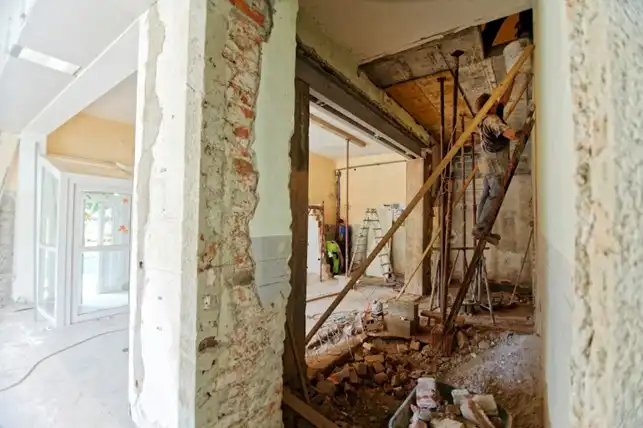
image source : unsplash.com
Key Highlights
Professionals always assess each construction plan and quote individually. Still, at a glance, there are three key must-have aspects for consideration. If you decide between renovation and new construction, use these criteria for proper assessment:
- The building’s state. First, it is vital to carry out its comprehensive inspection. Among others, scrutinize the foundation, framing, and other major building systems. Depending on the outcomes of the structural assessment, a new construction may be a better choice and a much safer long-term investment as well.
- Budget and deadlines. Costs matter, without a doubt. However, it is crucial to remain in balance and allocate sufficient funds. Sacrificing the quality of the planned changes is a big and costly mistake. It may potentially lead to paying for the same things twice. New development projects are always more predictable when assessing both funding and deadlines. In contrast, when you plan repairs, you should always be ready for unexpected costs and potential delays. They will almost always appear on the agenda during the work on an older building.
- Long-term goals. If you have some sentiments associated with your existing home, its look, and location, making repairs is a better option; sometimes, the only option for homeowners. However, if you want a modern home, bolstered by energy-efficient and other cutting-edge technologies, building a new house is the best option.
Understanding Risks
At a glance, the main risk is the building’s existing condition. New construction implies starting with a blank slate, providing an opportunity to design with the latest technologies, materials, and codes, avoiding the complications of existing issues. In contrast, TQN Construct’s construction and maintenance specialists note that any repair is almost always associated with much higher risks that may touch everything, from outdated foundations to hidden structural weaknesses. Hidden structural weaknesses may impose extra risks. However, in some cases, such as limited budgets and personal sentiments, renovation remains the only option. Let’s delve into details.
- State, Integrity, and Age
The building’s age deserves special attention for an obvious reason. However, its current condition and the overall structural integrity are even more crucial. If you decide between repairing old and building new houses, assess these three points.
For instance, older houses may have been erected using old materials and outdated building techniques. They are not only no longer relevant. They almost certainly fail to comply with effective industry norms and standards. In the end, it may turn out that a building is unsuitable for living even after repairs. This trouble may appear on the agenda in the short-term perspective.
In addition, some crucial structural aspects, such as beams, columns, or foundations, almost certainly degrade over time. The most common causes are standard wear and tear, moisture, or settling.
When you assess the potential for repair or new development, the key consideration is whether the existing structure can effectively support the anticipated changes. It may also require reinforcement to become 100% compliant with the existing norms and standards.
Thus, conducting a well-rounded structural risk assessment well ahead is crucial for the overall success of your endeavour. It will help you assess more accurately, whether some elements need to be replaced or upgraded.
- Building Envelope and Its Quality
Assessing this aspect correctly is vital for both new development projects and scheduled repairs. At a glance, the envelope is the outer surface of any building. Among others, it includes walls, roof, windows, and doors. This envelope plays an essential role in the overall home’s aesthetics. In addition, it also serves better energy efficiency and moisture control.
When you carry out repairs, make sure that your house’s envelope is properly upgraded. Among others, utilize modern insulation and weatherproofing materials. These easy measures create a big difference. They help to mitigate long-term damage from temperature and moisture fluctuations.
Most often, older buildings also don’t have the same level of insulation or vapor barriers as newer counterparts. Outdated materials and technologies almost certainly increase energy consumption. They also encourage various moisture problems. Over time, they may even lead to structural decay.
On the other hand, new buildings allow architects and developers to start fresh. They can utilize top-notch, high-quality, and optimized materials without any limitations. These ensure maximal energy efficiency and moisture control.
- Choosing the Right and Sustainable Materials
The choice of materials is always troublesome but crucial. It is relevant for both repairs and new construction projects, especially when it touches sustainability and performance.
First, it is reasonable to emphasize multiple sustainable options, such as recycled wood, low-VOC paints, and energy-efficient insulation and windows. They significantly reduce the building’s environmental footprint. Apart from that, they also ensure the building’s long-term durability. It is 100% much simpler to choose the right materials and implement sustainable designs when developing new structures.
During repairs, material selection can become even more complicated because of the different backgrounds each project may have. In addition to ensuring energy efficiency, homeowners may want to retain the building’s original aesthetics while upgrading to more sustainable, durable materials at the same time. Choosing the right materials is particularly challenging when dealing with historic buildings, where sustainable materials should also complement the original design.
Comments on this guide to Renovation vs. new construction risk review article are welcome.
Building Designs
House Designs – contemporary property additions on e-architect:
Mulholland Drive Annex, eastern Santa Monica Mountains of Southern California
Bundy Drive Residence, Los Angeles
Quality planning matters in property renovation projects
++
Home Articles
Residential Architecture
Comments / photos for the Renovation vs. new construction risk review page welcome.


