
Modern Building Lobby Design: Quiet Luxury
20 January 2026
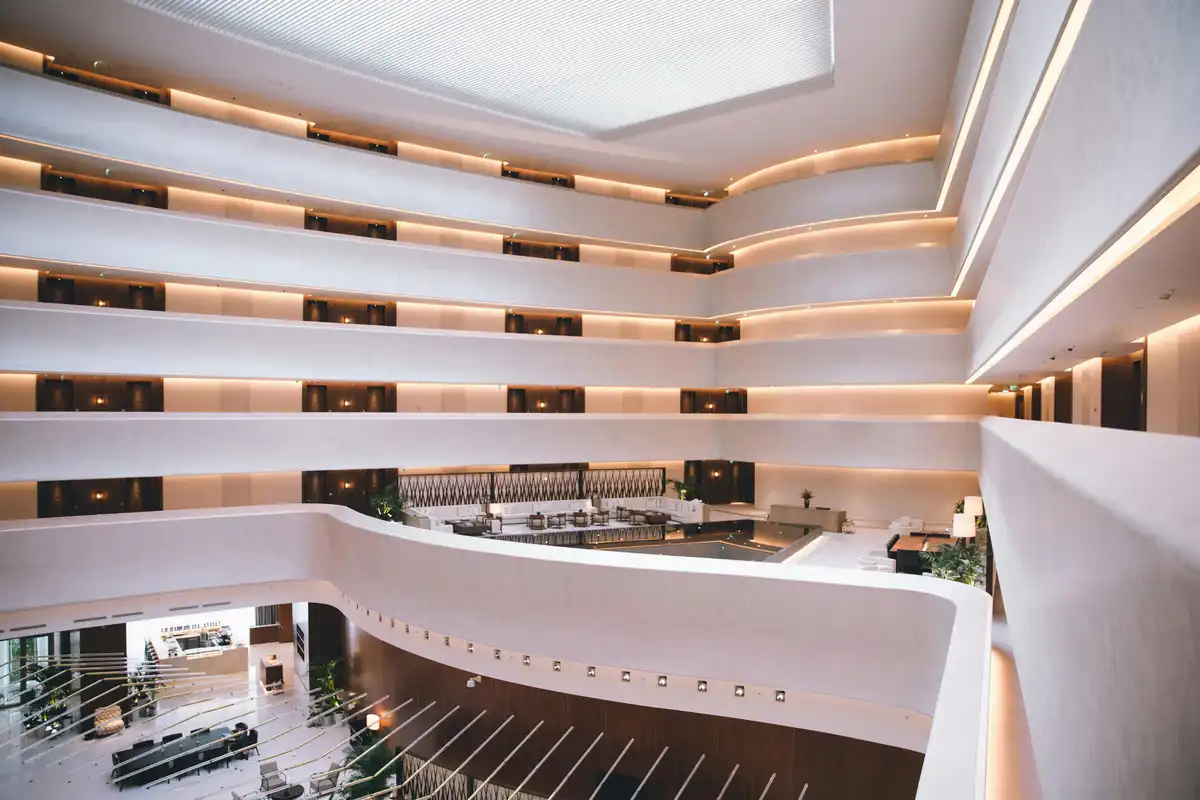
Modern Lobby Design That Feels “Quiet Luxury”
A lobby is the first handshake. And most of them waste it. They are too shiny, too loud, or so “minimal” they feel empty. Quiet luxury is different. It’s calm on purpose. It’s soft light, great proportions, and materials that feel expensive because they’re chosen well, not because they scream. You notice the comfort before you notice the design.
The space guides you without loud signage. And it holds up to real life. Foot traffic, luggage, rainy days. It still won’t look tired. Done right, a lobby becomes a pause, not a hallway. It becomes a place people actually want to be.
Start With a Grounded “Arrival Zone” Using Designer Rugs
The first 10 seconds in a lobby do a lot of heavy lifting. Before anyone reaches the desk, they’ve already decided if the place feels polished, welcoming, and worth trusting. That’s why the “arrival zone” matters. It’s the brand handshake. And one of the simplest ways to make it feel grounded is to use designer rugs intentionally, not as an afterthought.
A rug can quietly draw a boundary around the welcome area without adding walls. It tells people where to pause, where to sit, and where the space begins. For a quiet luxury look, skip anything loud. Go for a restrained pattern, a texture you can feel, and color that’s rich but calm. Think depth, not drama.
Size matters more than people think. The rug should fit the seating cluster so it looks anchored, not like a floating island in the middle of the floor. In real lobbies, performance counts too: choose a dense weave and durable fibers that can handle traffic.
Add a quality underlay for comfort and better acoustics, and have a stain and cleaning plan so it stays sharp. Place rugs under the main lounge grouping, use runners along the primary path, or layer a big neutral base with a smaller statement piece when it makes sense.
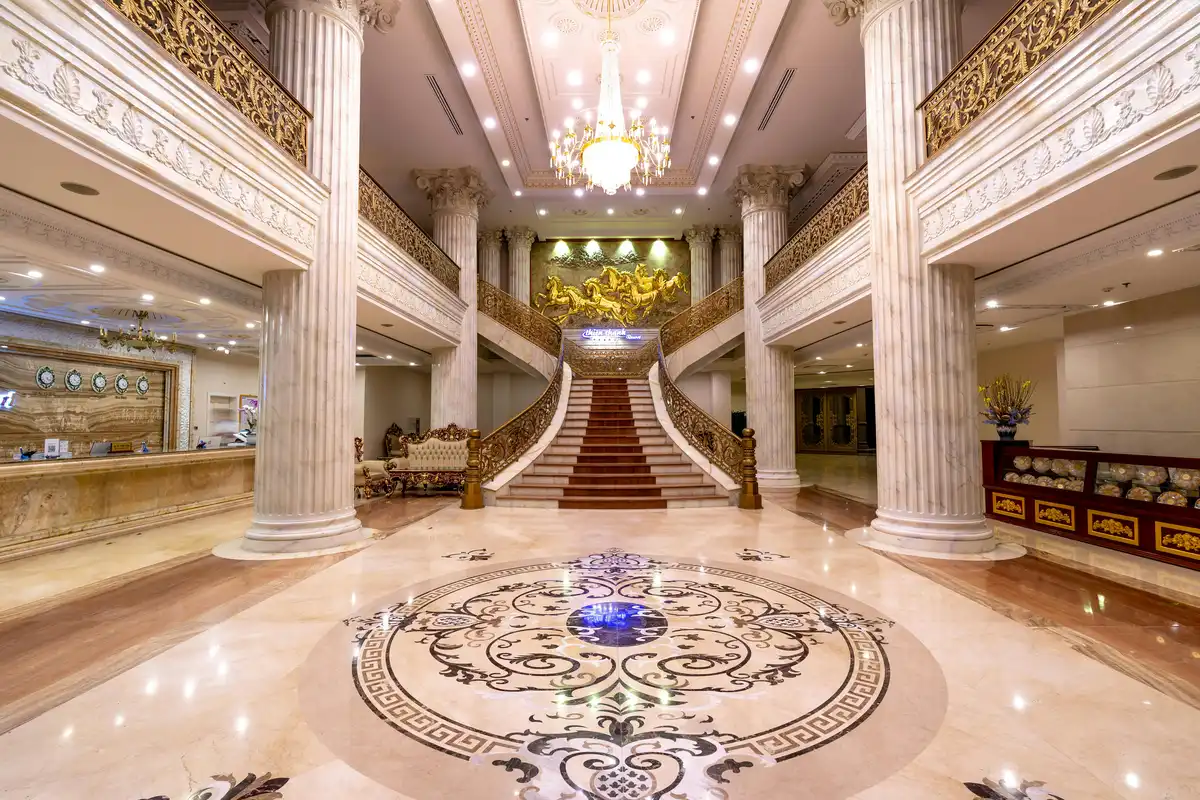
Define Quiet Luxury for Lobbies: Restraint, Precision, and Comfort
Quiet luxury in a lobby isn’t about showing off. It’s about restraint, precision, and comfort. It is the kind of space that feels expensive because everything is considered.
Think less but better: fewer materials, fewer “moments,” and a couple of strong choices that carry the whole room. That could be one beautiful stone, one perfectly detailed wood wall, or a single sculptural light. Done properly, not piled on.
The key difference between quiet luxury and bland minimalism is warmth. Bland minimalism can feel empty or unfinished. Quiet luxury still feels calm, but it’s layered with quality. Subtle texture, soft edges, and details you notice up close.
Look for three signals:
- Craftsmanship: clean joints, great finishes, nothing flimsy.
- Proportion: furniture and spacing that feel balanced, not squeezed or oversized.
- Tactility: materials that feel good. Matte, textured, and human.
Plan the Lobby Like a Sequence, Not a Room
Plan a lobby like a sequence, not a single room. People don’t arrive and “take it in” like a gallery. They move. So design for the flow: arrival, pause, orient, then move. The entry should feel obvious and calm, with a clear place to slow down before the next decision.
That pause is where guests get their bearings, check directions, and decide where to go next. Good circulation is basically the lobby doing the talking for you.
From there, protect sightlines. When the doors open, guests should quickly see the reception, or at least know where it is, the elevators, and key amenities. That one move alone reduces friction and stress. No one wants to feel lost in a space that looks high-end.
Finally, build in micro-destinations. A lobby works best when it has small, intentional stops: a seating bay for quick waits, a concierge nook for questions, a quieter corner for calls. These pockets help the space feel welcoming and human. More like a great living room and less like a corridor.
Use Zoning to Create Intimacy at a Human Scale
Zoning is what makes a big lobby feel human. Instead of one giant “waiting area,” break it into smaller seating clusters where people can actually talk without feeling on display. Think two to four seats at a time, with a table close enough to use, and chairs angled slightly toward each other. That simple move signals “stay a while,” not “pass through.”
A good lobby also has layered zones: a more public edge near the main path and semi-private pockets tucked away for quieter chats, quick calls, or waiting. You don’t need walls. You just need smart placement, a change in lighting, or a shift in furniture type.
For comfort and circulation, leave clear walkways. About 3 feet is a solid baseline. Don’t cram furniture into perfect rows. Rows are what create the “airport lounge” feel. Mix clusters, vary seating types, and keep a little negative space so the layout feels curated, not crowded.
Material Palette: Warm, Matte, and Touchable
A quiet luxury lobby starts with the materials, not the mood board. The best palettes feel warm, matte, and touchable. Like they’re meant to be lived with. Wood brings softness, stone adds weight, and plaster or textured paint gives walls that gentle depth you can’t fake with flat color. Those finishes catch light calmly, which is exactly the point.
When it comes to metal, the finish matters. Brushed finishes read softer and more understated, while polished ones bounce light around and can feel flashy fast. In a quiet luxury lobby, brushed finishes usually win.
Pick one “hero” material moment and let it lead. Maybe a stone reception desk, a wood wall behind the concierge, or a plaster feature that frames the entry. Keep everything else supportive so the space feels intentional, not busy.
Then tie it together with textiles: upholstery, curtains, and cushions should share a similar tone or texture family, even if they’re not an exact match.
Calm Wins
Quiet luxury isn’t a style. It’s a decision. Make the first steps feel grounded, guide people without fuss, and let materials do the talking. Keep the palette warm, the layout human, and the details sharp. When comfort leads, and everything has a purpose, the lobby stops being a pass-through and becomes a place people remember.
Comments on this guide to Modern building lobby design style article are welcome.
Building Design
Recently added Building posts
Sub-zero refrigerator repair technician hire
New hot water system installation
Home built-in furniture design
++
Property
Residential Property
Comments / photos for the Modern building lobby design advice guide page welcome.


