How Caribbean Villa Architecture Changed After Irma
August 5, 2026

Building for Wind, Salt and Light: How Caribbean Villa Architecture Changed After Irma
The Caribbean villa has a familiar image: white walls, a flat roof, a wall of glass folded back to the sea. It is a look that reads as effortless. On an island that sits in the hurricane belt, that effortlessness is entirely engineered, and the engineering changed after 2017.
When Hurricane Irma crossed Sint Maarten as a Category 5, it became an unplanned stress test of every design decision on the island. The houses that failed and the houses that held told a clear story, and the architecture built since has been written in response to it. For anyone designing in a coastal, high-wind, high-salt environment, the lessons travel well beyond one island.
Wind decides the roof
Before the storm, plenty of villas here used the low-slope or flat roof that suits the modernist vocabulary. Many of those roofs left during Irma. Wind does not push on a building so much as it tries to lift it, and a broad flat plane is an efficient wing.
The rebuilt generation treats the roof as the primary structural problem, not the last cosmetic one. Hip roofs, which present a sloped face to wind from any direction, have returned even on otherwise contemporary houses. Where flat roofs remain, they are ballasted, mechanically anchored, and tied into a continuous load path that runs from the ridge down through the walls and into the foundation. The metal standing-seam roof, clipped and screwed to a rated pattern rather than nailed, has become close to standard.
The visual consequence is subtle. A well-designed hurricane roof does not announce itself. It simply sits a little lower and a little more deliberately on the house, and it does not blow away.
Glass is the argument
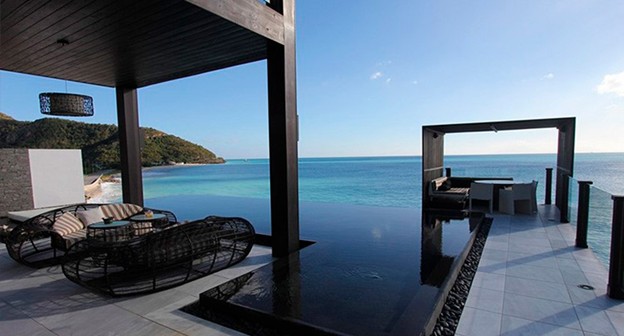
The signature move of the tropical villa is the disappearing wall: sliding panels that open the living room to the terrace and the view. That move is also the building’s greatest vulnerability, because a single breached opening pressurizes the interior and lifts the roof from inside.
The resolution has been impact glass. Laminated hurricane-rated glazing lets the architecture keep its transparency, its light, and its indoor-outdoor life while surviving a wind-borne projectile. It is expensive, it is heavy, and it has quietly saved the aesthetic that defines the island’s luxury housing. The alternative, steel shutters bolted over every opening before a storm, works but belongs to a different, more defensive architecture.
A house like Villa El Grande Azure, a recent Terres Basses build with five en-suite bedrooms opening to the Caribbean, is a clear example of the new logic: the glass walls that make the sea feel like part of the living room are the same walls rated to take a storm without shutters. Transparency and resilience stopped being a trade-off. It is one of a wave of luxury villas in St Martin designed to this rebuilt standard, where the engineering is total and completely invisible.
Salt is the slow storm
Wind arrives once a season. Salt arrives every single day. On a beachfront site, salt-laden air is relentless, and it is the reason so many older villas looked tired long before they were old.
The material palette has adjusted accordingly. Marine-grade stainless steel for every exposed fastener and railing. Powder-coated or anodized aluminum for window frames. Ipe and other dense tropical hardwoods for decking, chosen because they hold up to sun and salt with oil rather than paint. Concrete mixes specified for chloride resistance. These are not glamorous decisions, and a guest will never notice them directly. They notice only the absence of rust streaks and the fact that a ten-year-old house still looks composed.
Light is the reason you came
For all the talk of wind and salt, the client is buying light. The quality of Caribbean daylight, hard and bright at noon, gold and long in the last hour, is the actual luxury, and good design here is mostly about managing it.
The tools are old ones used with care. Deep overhangs and covered terraces that push the harsh overhead sun off the glass while keeping the view. Cross-ventilation that lets a house breathe without air conditioning for much of the day, orienting the main rooms to the prevailing east-northeast trade winds. Pools placed to throw reflected light up onto ceilings. Terraces stepped so that the horizon line sits where you want it from the sofa.
Get the light right and the house feels calm in a way that has nothing to do with its size. Get it wrong and no amount of marble recovers it.
What the island teaches
The villas being built on Sint Maarten today are quietly more sophisticated than the ones the storm took. They look, at a glance, like the same relaxed modern boxes by the sea. Underneath, they carry a continuous structural load path, rated glazing, corrosion-planned detailing, and a real understanding of how to hold off sun and channel wind.
That is the useful lesson for anyone designing on an exposed coast anywhere: resilience does not have to cost you the architecture. On this island it turned out to be the thing that let the architecture survive to be enjoyed at all.
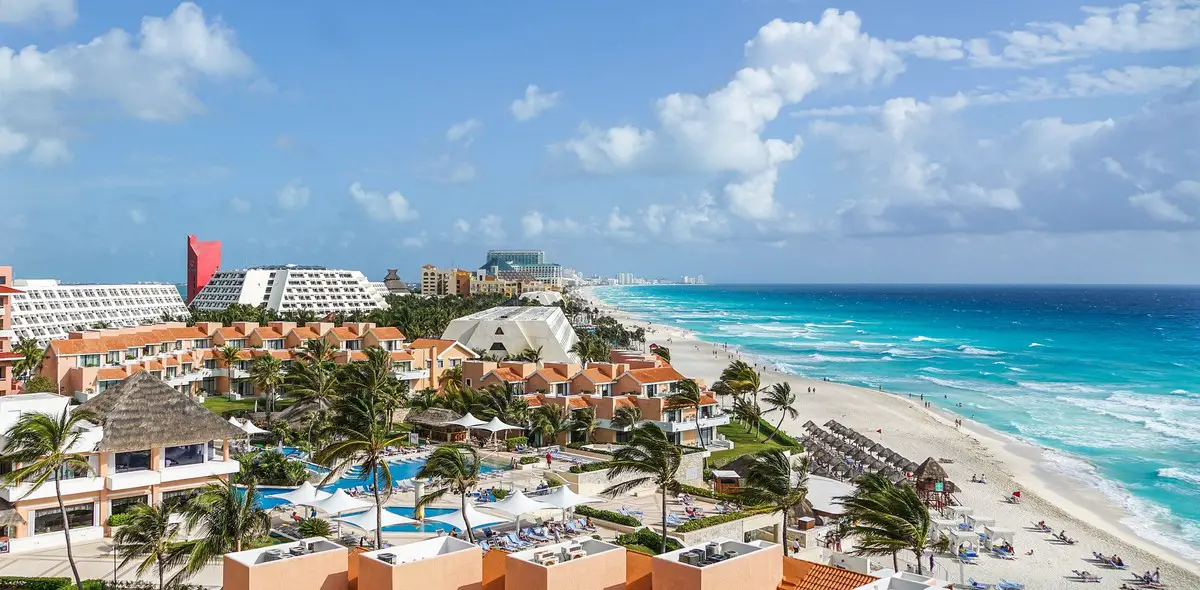
Comments on this guide to How Caribbean villa architecture changed after Irma – El Grande Azure luxury properties in St Martin article are welcome.
New Architecture in the Caribbean
Contemporary Costa Rican Architectural Projects
Costa Rica Architecture Designs – chronological list
Esencia Cabo Rojo, Puerto Rico coast destination

rendering : Eleven Visualisation
Casa Akiga, Cabo Velas, Guanacaste
Architecture: Studio Saxe

photo : Thibault Cartier
Casa Komorebi, Bahía Ballena
Architecture & Landscape Design: Studio Saxe

photo : Depth Lens – Alvaro Fonseca
Joya Villas Santa Teresa Property
Architects: Studio Saxe
Cumayasa Residential Development, Dominican Republic
Design: A-cero Architects
++
American Properties
++
Caribbean real estate
Caribbean Property Designs
5 tips for buying Caribbean beachfront property
Advantage of buying Caribbean real estate
Caribbean Yacht charter for a holiday
Comments / photos for the How Caribbean villa architecture changed after Irma guide – Villa El Grande Azure luxury property in St Martin page welcome