
Hanqin Tang on Urban Memory, Adaptive Reuse, and Civic Imagination
29 November 2025
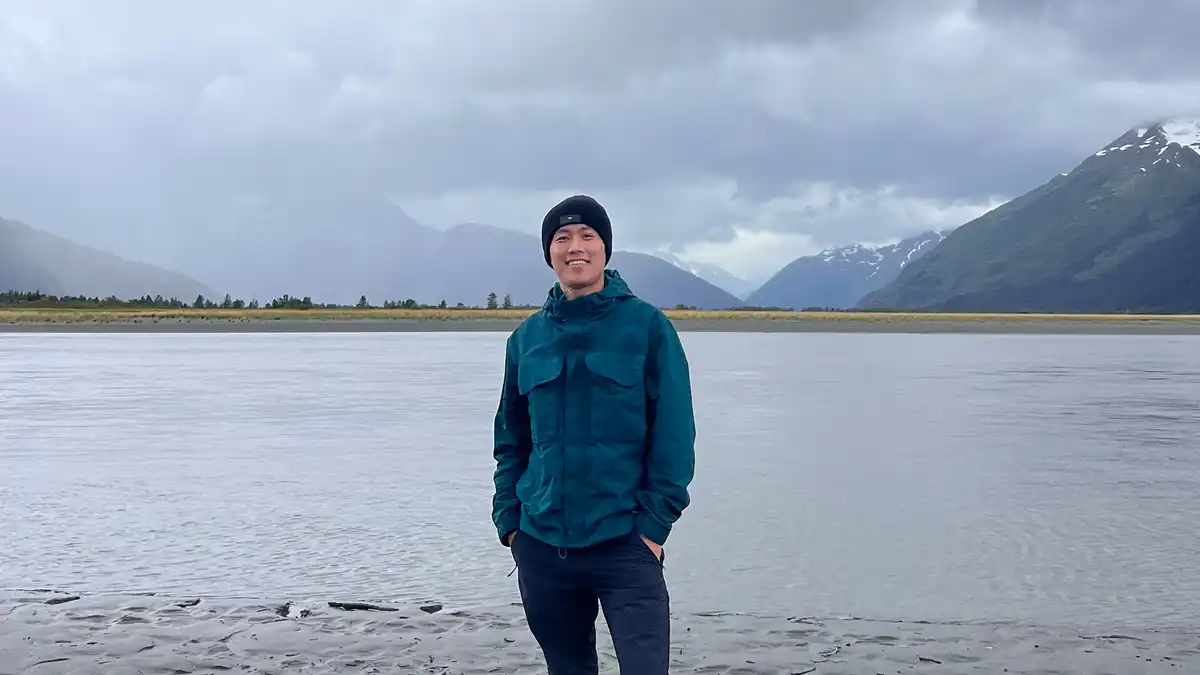
Born in China and now based in California, designer Hanqin Tang works at the intersection of memory, community, and architectural imagination. Trained at the University of California, Berkeley and shaped by experiences across China, Europe, and the United States, Tang’s work investigates how built environments can hold cultural traces while opening new possibilities for civic life. His design approach moves fluidly between adaptive reuse, conceptual urbanism, and the shaping of spatial narratives, often using section, daylight, and landscape-like forms to connect architecture with larger social questions.
Early Encounters with Architecture
Tang’s encounters with architecture were shaped not only by the layered urban environments of his upbringing, but also by early professional experiences that took him across China, Europe, and the United States. Before and during his graduate studies, he gained exposure to major international practices — including contributing to design research for Ateliers Jean Nouvel (AJN) and project efforts with DLR Group — experiences that broadened his understanding of architectural culture and the varied conditions that shape contemporary urban life. Working within different design environments allowed him to observe how projects evolve across distinct social, spatial, and regulatory contexts, and how global practices interpret questions of memory, innovation, and civic identity.
These encounters formed a foundation that was later strengthened during his time at UC Berkeley, where research-driven studios helped him synthesize global perspectives into a cohesive design approach. Moving between international practice and academic inquiry, Tang developed a belief that architecture must respond simultaneously to cultural specificity and universal human experience. This combination of early professional exposure and intellectual exploration continues to inform the conceptual rigor and civic sensibility visible in his work today.
Design Philosophy
Tang approaches architecture as a negotiation between past and future — a discipline capable of translating cultural memory into new spatial frameworks. He begins by uncovering latent narratives embedded within each site and imagining how these narratives might be reinterpreted to support contemporary communal needs. For Tang, adaptive reuse is both a technical and cultural inquiry: a way to respect historical layers while generating fresh opportunities for public life.
Sectional thinking is central to his design process. Tang uses slope, topography, and vertical layering to shape spatial hierarchies that encourage diverse forms of occupation. Daylight becomes another medium of transformation — carved apertures, clerestories, and voids soften boundaries between programs and reveal subtle shifts in atmosphere. He is particularly interested in how architecture can hold both public vibrancy and quiet reflection within a single spatial continuum.
Across civic centers, conceptual towers, and residential spaces, Tang emphasizes architecture’s social dimension. He seeks forms that feel rooted yet forward-looking, inclusive yet expressive, grounded in community needs while remaining open to conceptual imagination. His work positions architecture as a participant in cultural continuity, collective memory, and the evolving life of cities.
Another Side Community Center
The Another Side Community Center exemplifies Tang’s interest in civic architecture and adaptive reuse. Located in San Francisco’s Mission District, the project transforms a former funeral home into a community-oriented space centered on remembrance, renewal, and collective growth. Rather than erasing the building’s past, Tang treats its history as a generative condition — an emotional and spatial backdrop that informs the new public program.
The site’s natural slope becomes the project’s organizational framework. The ground plane folds into a series of stepped interiors, producing an occupiable topography that connects classrooms, workshops, gathering areas, and terraces. These shifts in elevation encourage fluid movement while maintaining functional clarity, allowing the building to operate as a hybrid of civic center, informal social space, and setting for quiet reflection.
Light plays a pivotal role. Carved openings and continuous skylights draw daylight deep into the previously enclosed interior, transforming heavy rooms into soft, atmospheric spaces. The contrast between the memory-laden ground floor and a lifted rectangular volume above — calm and deliberate in its presence — reframes the site’s former role within the community. Instead of an endpoint, the building becomes a platform for shared growth and intergenerational connection.
Recognized internationally for its conceptual depth, the project has received multiple awards for its thoughtful approach to adaptive reuse and civic engagement.
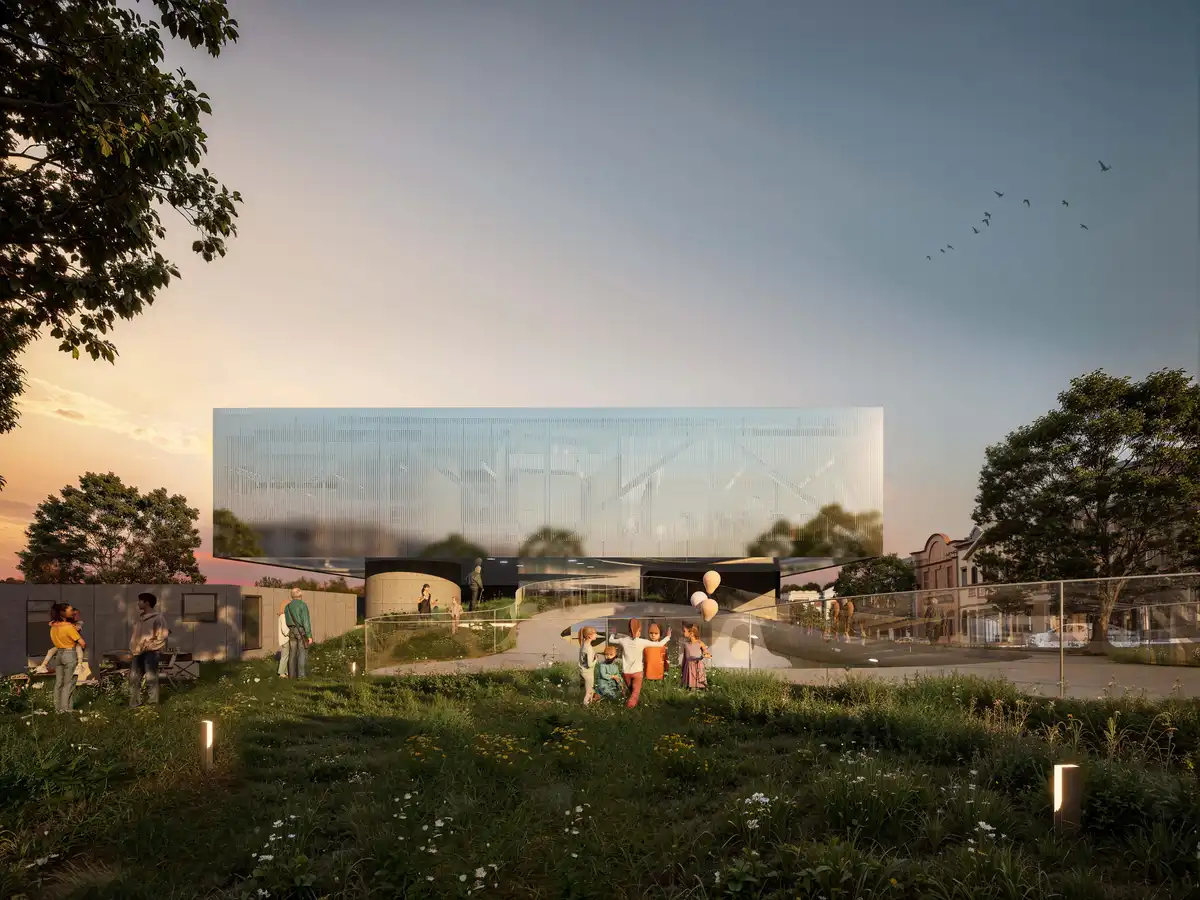
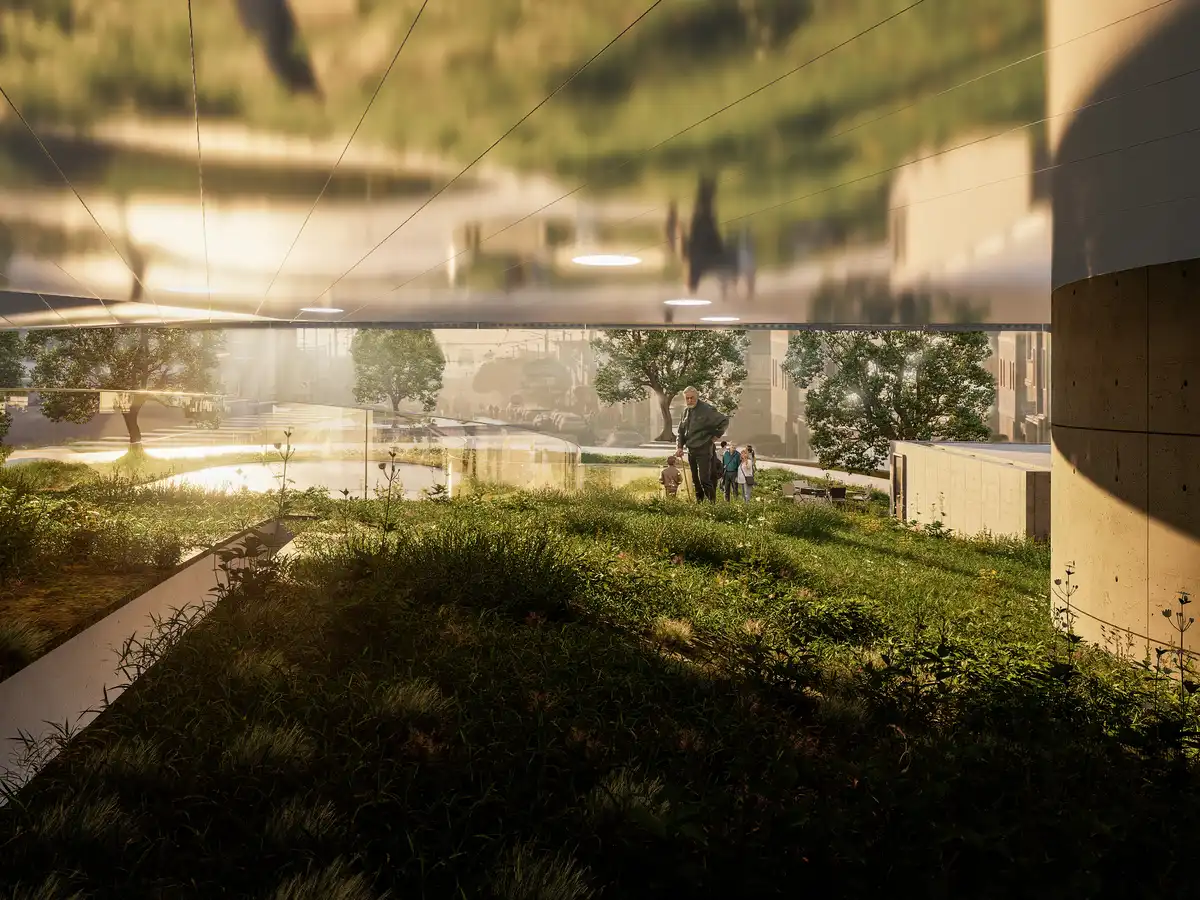
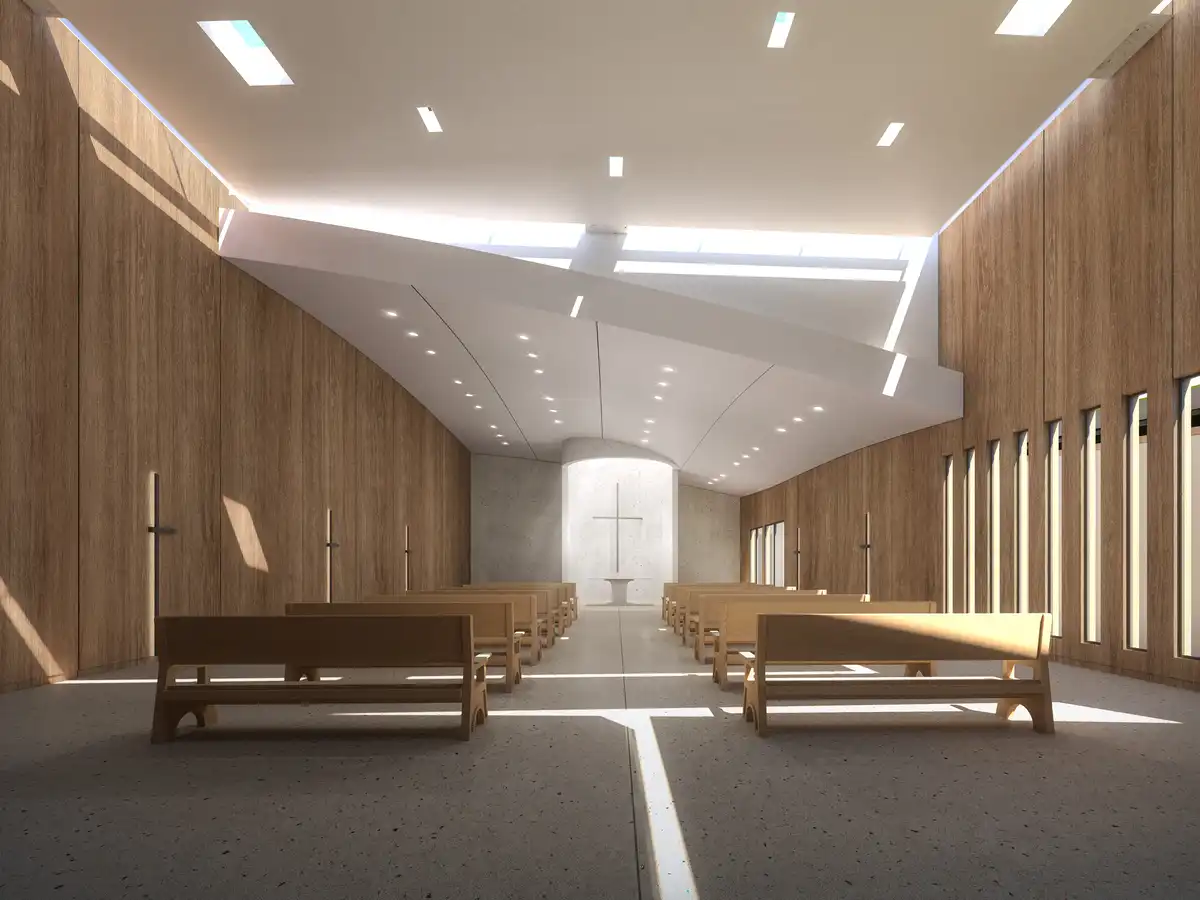
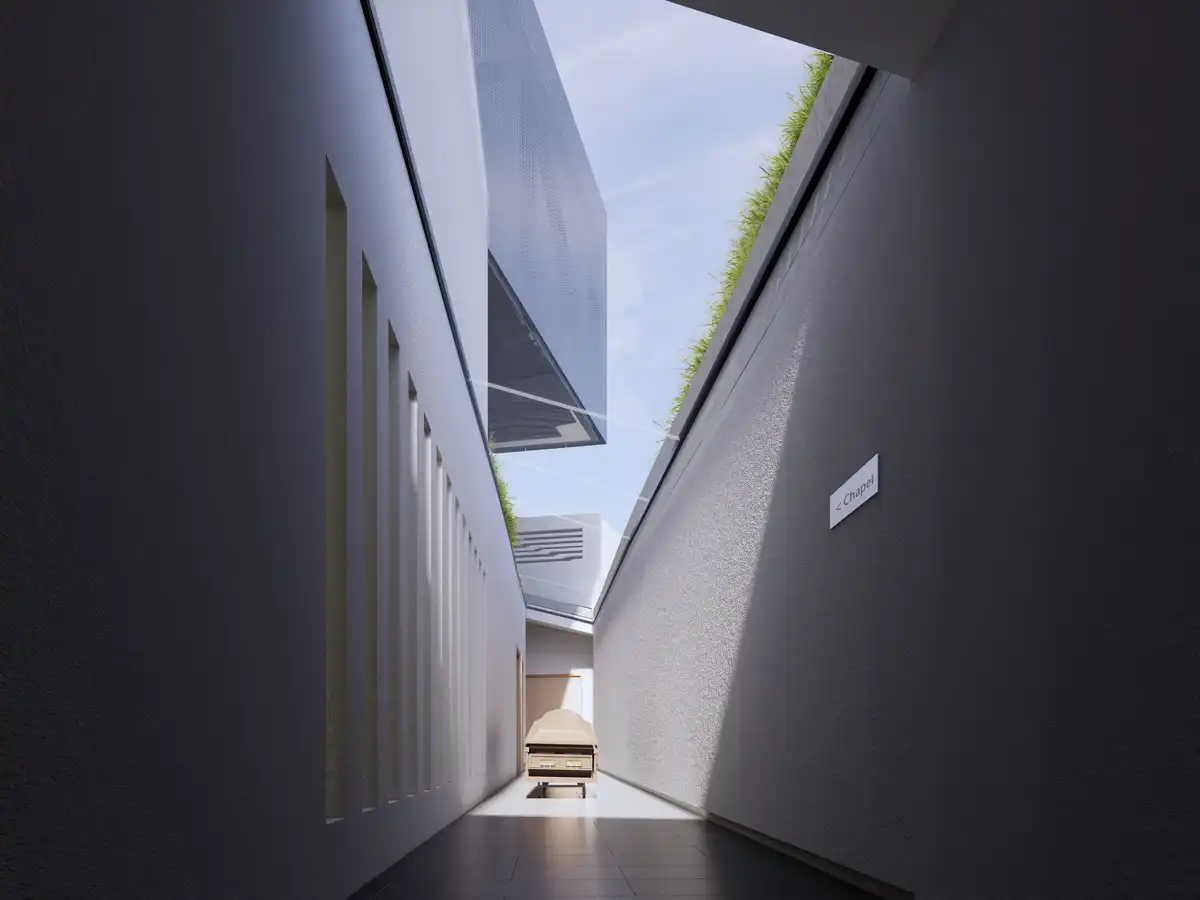
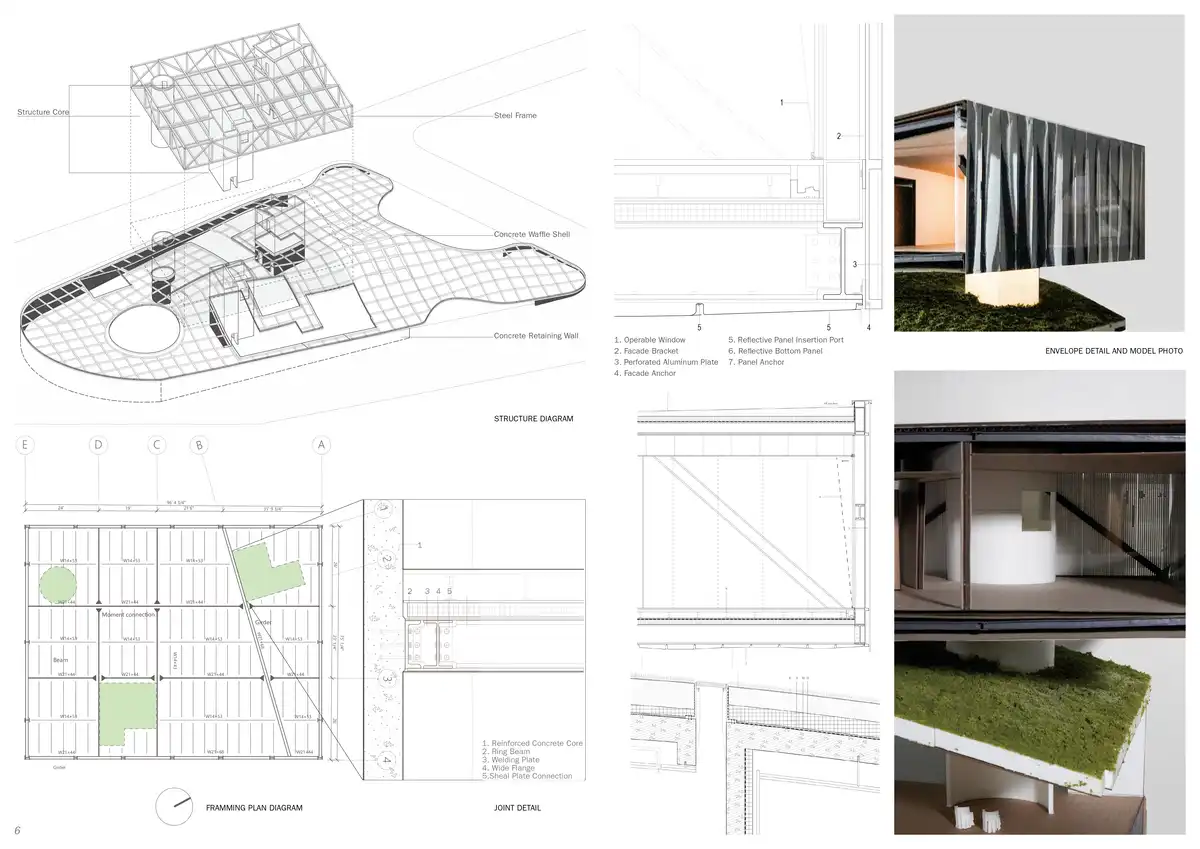
images : Hanqin Tang
Guangbo HQ Twin Towers
Tang’s interest in conceptual urbanism and workplace culture emerges in the Guangbo HQ Twin Towers, a corporate high-rise complex in Ningbo. Composed of two offset towers connected by vertical gardens, the project explores how tall buildings can function as social and ecological infrastructures rather than isolated objects. The staggered massing creates a dynamic skyline profile, while the sky terraces introduce breathing space into the dense urban fabric.
Inside, the project reimagines the contemporary workplace by incorporating landscape-like communal environments throughout the towers. By blending corporate programs with moments of openness and greenery, Tang proposes a new typology of vertical workplace culture — one that prioritizes well-being, collaboration, and the human experience within high-density urban contexts. The project received a Gold Award in competition, underscoring its conceptual ambition and spatial clarity.
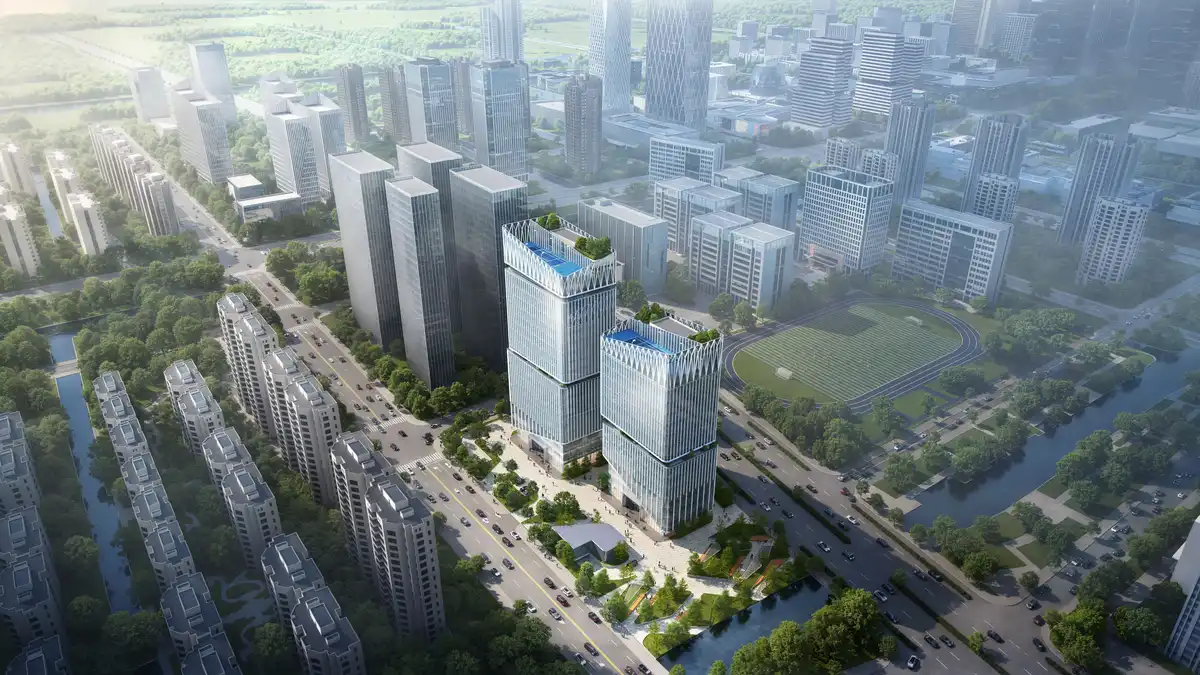
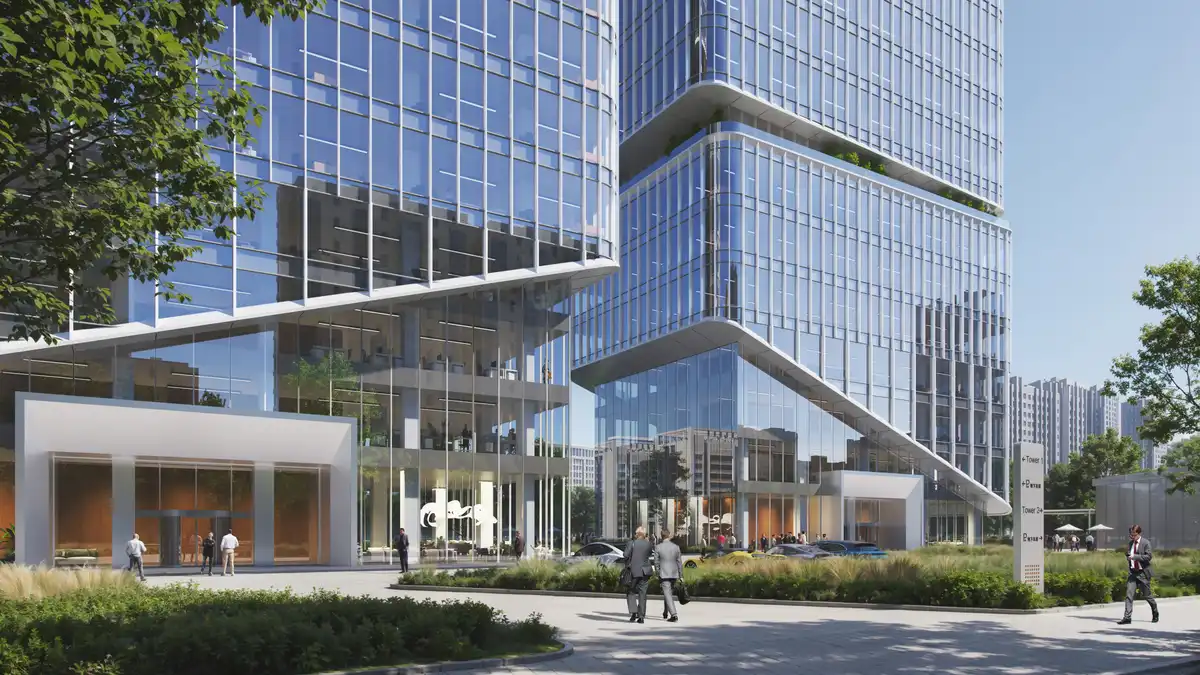
images : Hanqin Tang
Practice and Recognition
Tang’s architectural trajectory has evolved along two intertwined paths. In his full-time role at WRNS Studio, he engages deeply with large-scale civic and cultural projects, learning from the collaborative complexities of real-world practice. Alongside this, he leads CED Studio, his personal platform for experimentation through competitions and small residential commissions. Moving between these two modes of practice — institutional and independent, built and conceptual — has shaped his belief that architecture’s strength lies in its ability to connect discipline, imagination, and everyday life. His independent projects have earned international recognition, including awards from the American Good Design Award, London Design Awards, 4Future Awards, and MUSE Design Awards.
Looking Forward
Tang continues to explore the relationship between memory, civic life, and the evolving landscape of contemporary cities. He remains interested in how adaptive reuse, sectional design, and conceptual frameworks can shape spaces that support community well-being and cultural continuity. Through both professional work and independent research, he aims to contribute to an architectural practice grounded in thoughtfulness, inclusivity, and a belief in the transformative potential of design.
Comments on this guide to Hanqin Tang architecture design approach article are welcome.
Home Plumbers
Property Plumbers Posts
Recently added Building posts
Home lightning protection installation methods
Prefabricated steel buildings are the future
Structural steel in modern architecture
Building
Residential Property
Comments / photos for the Hanqin Tang architecture design approach page welcome.


