
Full Kitchen Cabinet Collections At Home
12 December 2025
Designing the Heart of the Home:
How Full Kitchen Cabinet Collections Enhance Architectural Cohesion
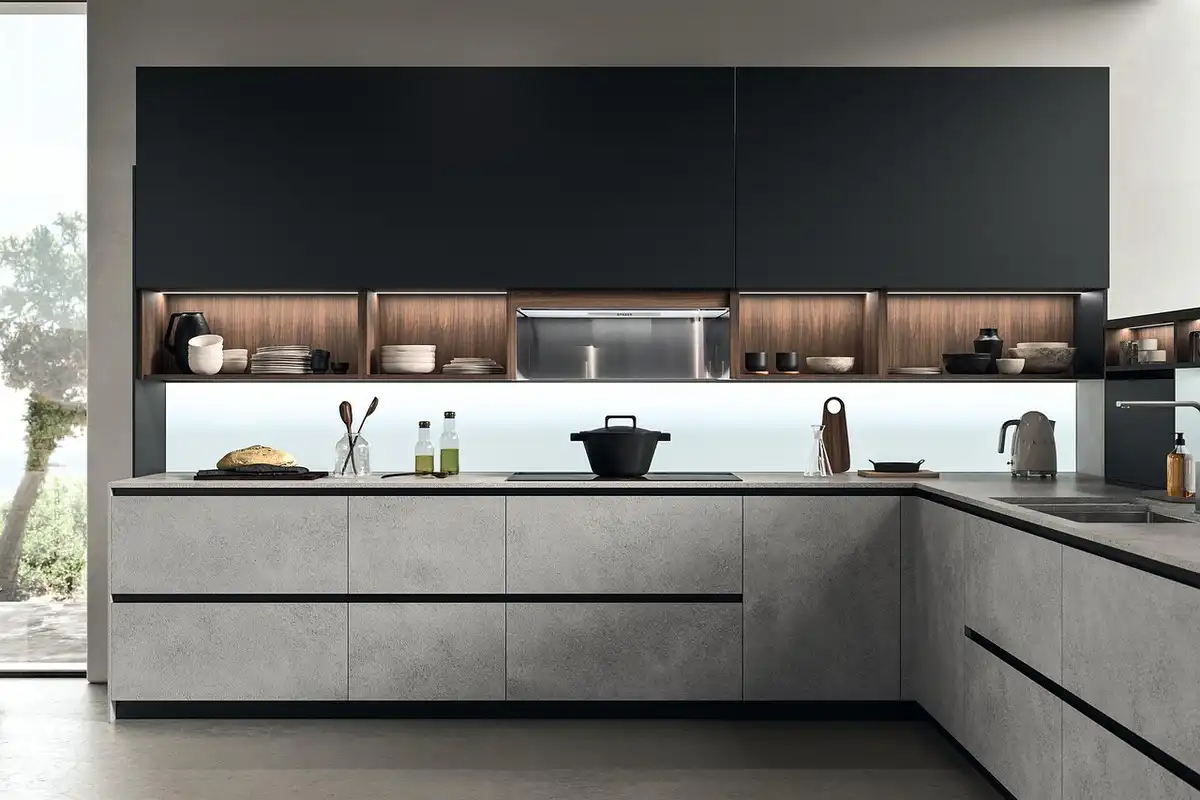
The Kitchen’s Central Role in Contemporary Home Design
In modern residential architecture, the kitchen is no longer a separate, utilitarian zone. It has become a focal point of both daily life and design, where function meets hospitality and materials influence atmosphere. Open-concept layouts have increased the kitchen’s visibility and connectivity to surrounding spaces, prompting architects to consider its design early in the process—just as they would with primary structural elements.
This approach requires cabinetry to be seen not as a finishing touch, but as a defining part of the architectural plan. When specified thoughtfully, cabinetry can reinforce spatial relationships, support visual consistency, and contribute to the home’s overall material language.
Full Cabinet Collections: A Systematic Approach to Design
Full kitchen cabinet collections provide a coordinated set of components designed to work together in terms of proportions, finishes, and configurations. These systems typically include base, wall, and tall units, as well as accessories and integrated panels, offering architects a reliable toolkit for planning spaces that are both functional and visually cohesive.
Specifying from a complete collection gives architects greater control over layout and detailing. It also reduces mismatches and the need to resolve design inconsistencies later in the project. In homes where the kitchen connects to dining or living areas, consistent cabinet lines can improve transitions and maintain a unified appearance across zones.
For projects with firm timelines or complex spatial requirements, working with full kitchen cabinet collections can simplify installation. With compatible components, the risk of dimensional errors or on-site adjustments decreases, supporting both the build schedule and design intent.
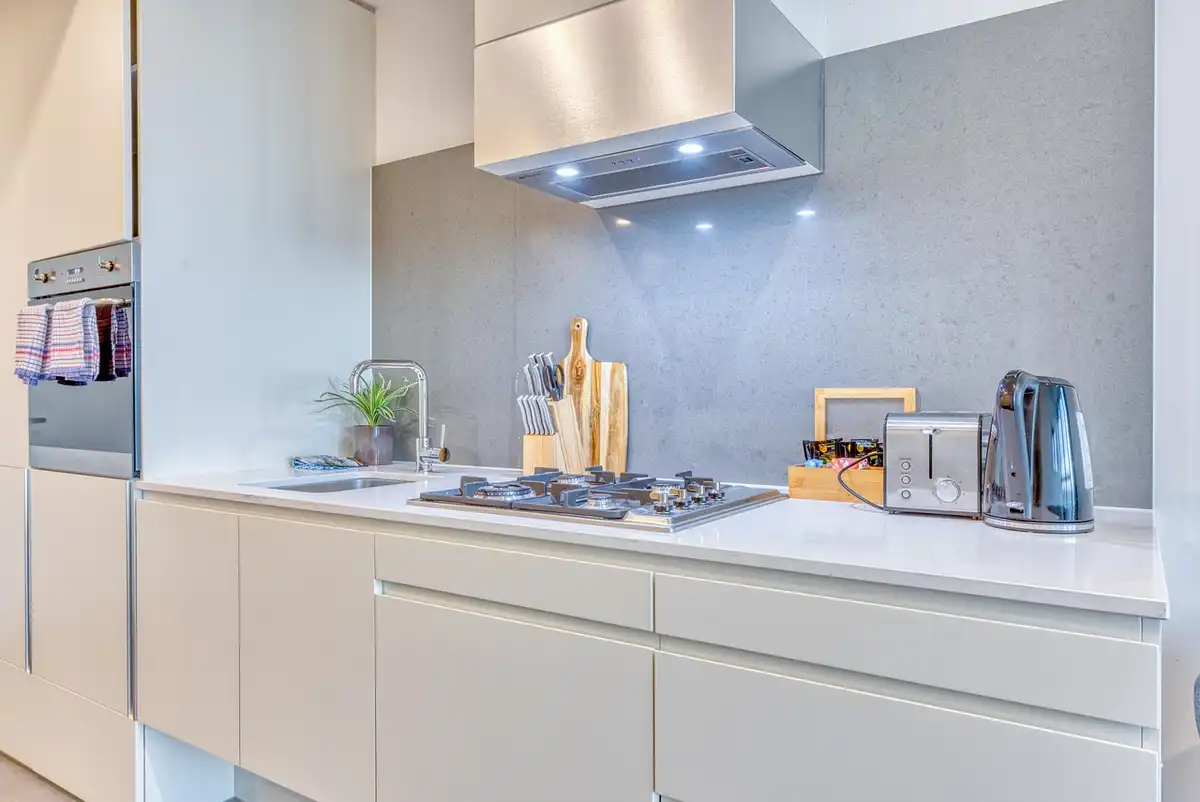
Supporting Spatial Flow and Functional Clarity
Cabinetry plays a critical role in determining how people move and work within the kitchen. Full cabinet collections offer a range of unit types that help define specific zones—preparation, cooking, cleanup, and storage—without disrupting flow or visual alignment.
By using components designed to integrate seamlessly, architects can maintain circulation routes and reinforce clear sightlines throughout open or semi-open floor plans. Tall storage units, integrated appliances, and drawer systems become part of a larger spatial framework rather than isolated elements.
In spaces that serve multiple functions, such as combined kitchen-living areas, cohesive cabinetry also helps anchor each zone without relying on walls or partitions. This subtle architectural boundary supports both usability and visual rhythm.
Materiality and Mood: Aligning Cabinets with the Broader Palette
Cabinetry surfaces occupy a large portion of the visual field in a kitchen, influencing how the space feels as much as how it functions. When part of a full collection, these surfaces can be selected to reinforce the home’s broader material themes—natural, industrial, minimalist, or transitional.
Establishing a consistent architectural materials palette helps architects create environments where finishes, tones, and textures relate across rooms. A unified cabinet collection simplifies this coordination by offering options in a controlled range of colors, grains, and hardware details.
Rather than standing apart from the architecture, cabinetry becomes an extension of it—contributing to the desired atmosphere and reinforcing the home’s visual identity.
Simplifying Specification and Collaboration
Standardized cabinetry systems reduce ambiguity in documentation. Since dimensions and materials are predefined, architects can produce cleaner specifications and shop drawings, saving time and minimizing the need for ad hoc decisions.
This clarity improves coordination among teams. When architects, builders, and designers work from the same structured set of products, the risk of miscommunication decreases. The result is a smoother workflow from design development to installation.
In integrated project delivery or design-build collaboration, the predictability of full cabinet collections supports accurate budgeting and scheduling. Installers work more efficiently with familiar systems, and architects can trust that what’s built on-site will align with their vision.
Reframing Cabinetry as Architecture
The kitchen’s role in shaping daily experience makes it a natural focal point in residential design. By incorporating cabinetry into early-stage planning and treating it as part of the architectural language, architects can create homes that feel more unified and intentional.
Full cabinet collections offer practical advantages—streamlined specification, coordinated components, consistent materials—but they also support the larger goal of architectural cohesion. When cabinetry is planned as an integrated system rather than an afterthought, it enhances not just the kitchen but the entire home experience.
Comments on this guide to Full kitchen cabinet collections article are welcome.
Kitchen Cabinet Design
Home Kitchen Cabinets Design
Latest kitchen cabinet ideas for stylish renovation
Extend Kitchen Cabinets to the Ceiling
Do custom cabinets make your home more convenient?
Advantages of custom color cabinets
Selecting the Right Storage Cabinets for Your Kitchen
++
Home Design
Home Design Articles
Comments / photos for the Full kitchen cabinet collections advice page welcome.


