Building for Chennai’s Climate
22 September 2026
How Homes in South India Are Being Rethought for Heat, Humidity and Heavy Rain
Spend a May afternoon in Chennai and you stop asking why local builders bring up climate before they even get to floor plans. It’s brutal — temperatures past 40°C, humidity that makes the air feel solid, and then a few months later the monsoon shows up and turns entire neighbourhoods into shallow lakes. For years, the standard response from Indian construction was pretty blunt: pour more concrete, install a bigger AC, move on. That’s finally starting to shift, and Chennai happens to be a good place to watch it happen.

Passive Cooling Is Making a Comeback
Old Tamil houses got a lot of this right, honestly, before it all got forgotten in the concrete rush of the 2000s. Thick walls slow down heat. A courtyard pulls air through a house in a way no split AC can replicate. A well-placed roof overhang can matter more to indoor comfort than people give it credit for. Builders and architects in the city are bringing a lot of this back, just paired with newer materials.
A few things showing up more often on residential sites these days:
- Cavity walls and hollow concrete blocks instead of solid brick, which cuts down heat transfer noticeably.
- Roof overhangs and sunshades angled specifically to block the brutal west-facing afternoon sun.
- Cross-ventilation actually designed into the floor plan, instead of just hoping the windows happen to line up.
- Lighter, more reflective roofing so the top floor doesn’t turn into an oven by mid-afternoon.
None of this is groundbreaking or expensive on its own. What’s actually changed is the attitude — builders are starting to treat these as part of the base design rather than something a homeowner has to specifically ask for.
Water Is Finally Being Taken Seriously
The 2015 floods, and the water crisis a few years after that, left a real mark on how people in Chennai think about water — too much of it one year, not nearly enough the next. Rainwater harvesting used to be something builders added purely to tick a compliance box. Now there’s actual thought going into recharge pits, how much storage makes sense, and where the water goes when a downpour hits harder than expected.
This matters even more on the city’s outskirts, where a lot of the soil simply doesn’t drain well once the rain starts. HireAndBuild, a construction company in Chennai with over 250 homes built across the region since 2020, now runs soil testing alongside site-specific drainage planning before a single brick goes down — rather than fielding waterlogging complaints months after handover. Small change in process, but it says something about builders designing for the actual site instead of copy-pasting a standard template onto it.
Materials Are Getting a Second Look
Fly ash bricks, AAC blocks, locally sourced stone — all of it is being used more than it was ten years ago, partly because it’s cheaper and partly because it just performs better in this climate than plain red brick does. Solar water heating and rooftop panels are creeping in too, helped by cheaper equipment and homeowners genuinely fed up watching their electricity bills climb every summer.
It’s not a revolution, to be clear. Plenty of construction in the city still runs on the old formula of thick concrete and heavy AC load, and adoption of anything newer is patchy at best. But the direction things are moving in isn’t really in doubt.
Why Any of This Matters Outside Chennai
Hot, humid, flood-prone, occasionally short on water — none of that is unique to Chennai. Plenty of cities across South and Southeast Asia deal with some version of the same problem, which makes Chennai a decent test case for climate-responsive housing that doesn’t lean on expensive imported tech to work. Most of what’s being learned here is coming from trial and error on real building sites, not some master plan drawn up in a conference room — and that kind of practical knowledge tends to travel.
If you’re the sort of person who follows residential architecture and how it’s adapting to a hotter, wetter world, Chennai is worth keeping an eye on. Not for one big breakthrough, but for how many small, sensible fixes are quietly turning into standard practice here.
Comments on this guide to Building for Chennai’s Climate article are welcome.
Chennai Buildings
Chennai Architectural Designs
Music Institute at IIT Madras, Chennai
Design: Ekarth Studio

photo : Ekarth Studio
Learning Centre at Quest, Chennai, Tamil Nadu, southern India
Design: KSM Architecture
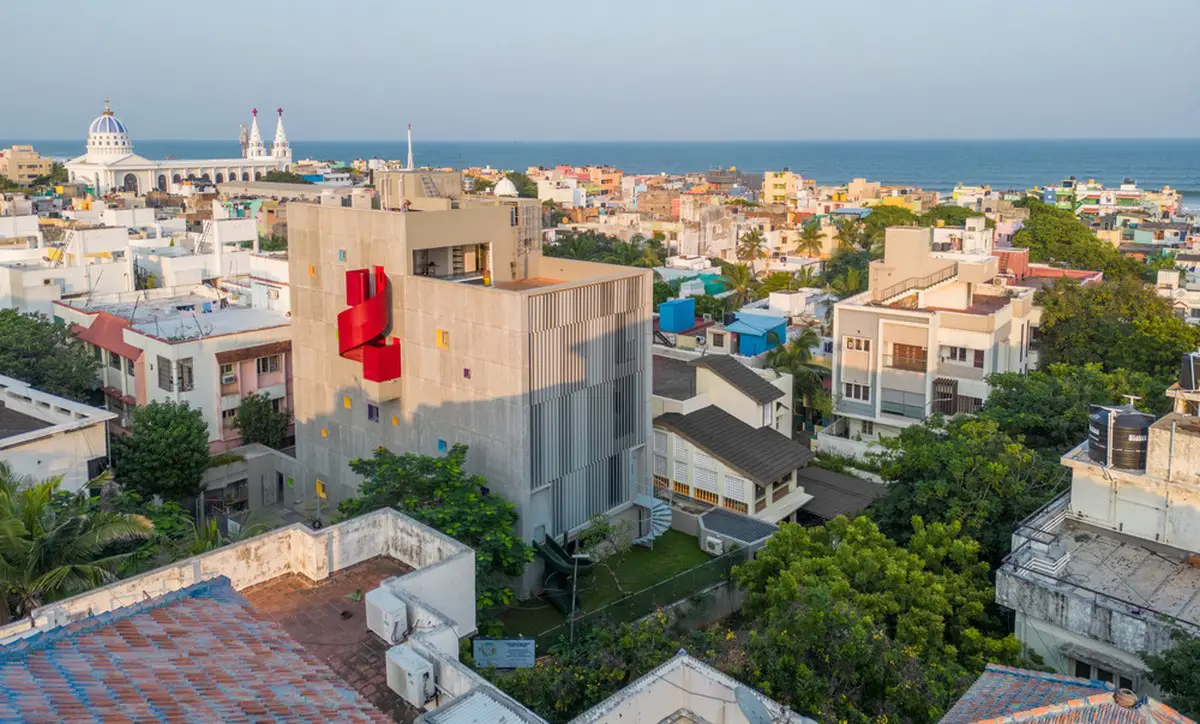
photo : Sreenag BRS
Akshaya 27 Chennai Office Building
Design: Sanjay Puri Architects
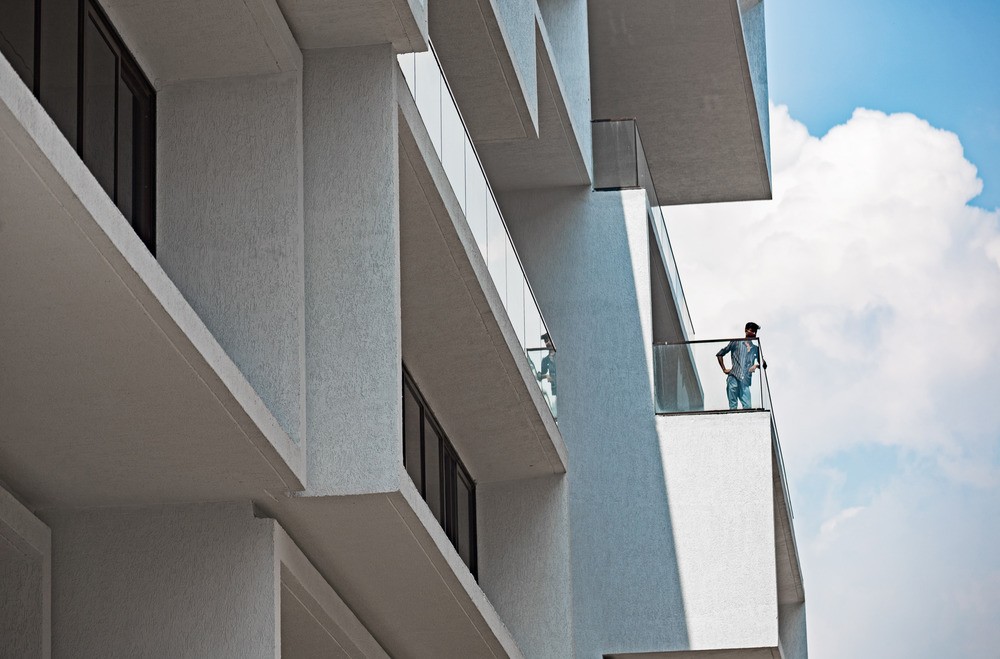
photos Courtesy BRS Sreenag, Sreenag Pictures
+++
Indian Building Developments
Indian Architectural Designs
India Architecture Designs – chronological list
The Camellias in Gurugram, Haryana, northern India
Prestige Liberty Towers, Mumbai
++
Building Articles
New Architecture Designs
Comments / photos for the Building for Chennai’s Climate page welcome.