
La Ballena in Rosario Property
Design: Brigatti Polak Architects
Location: Closed neighborhood Los Pasos – Rosario, Santa Fe, Argentina, South America
Photos © Ramiro Sosa
1 October 2025
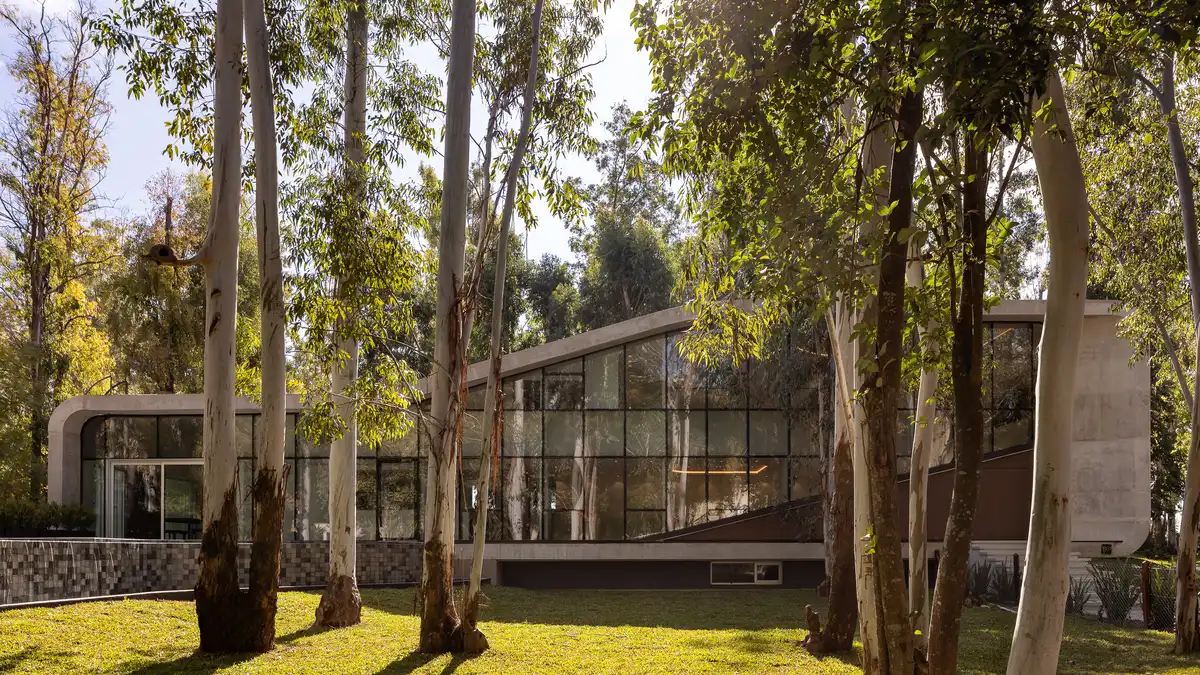
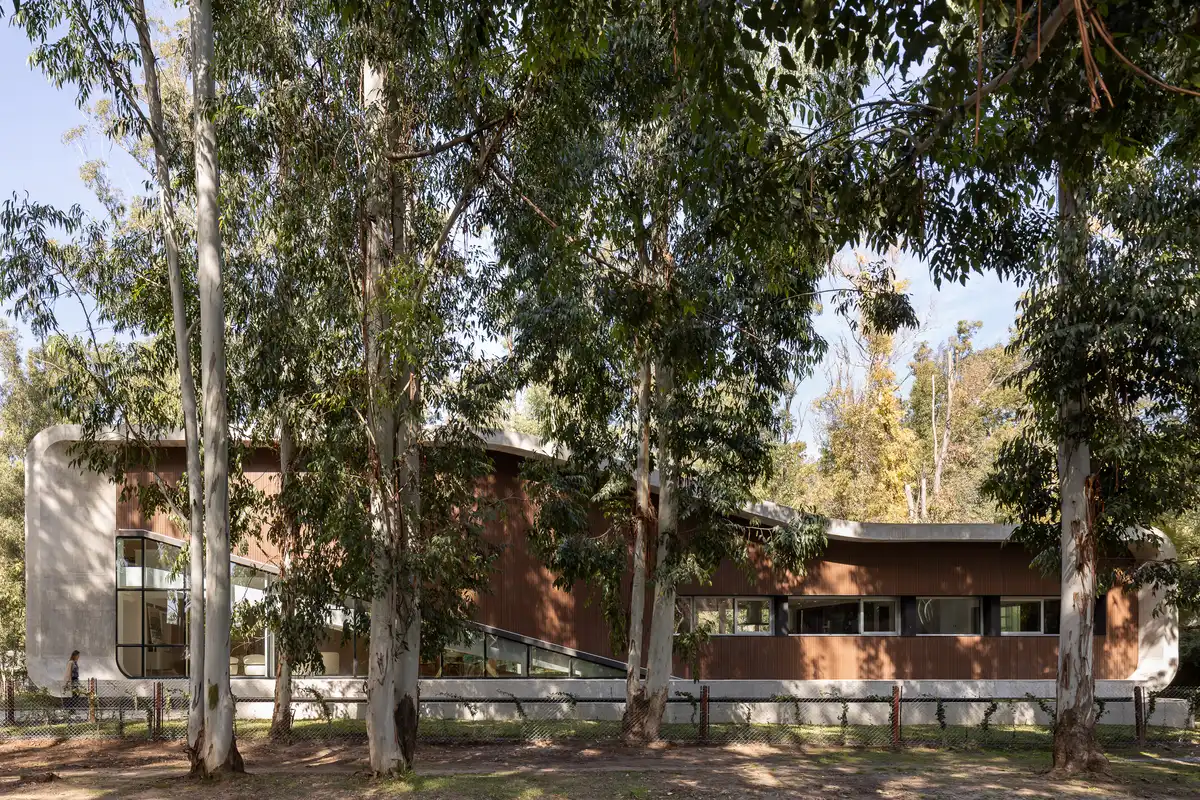
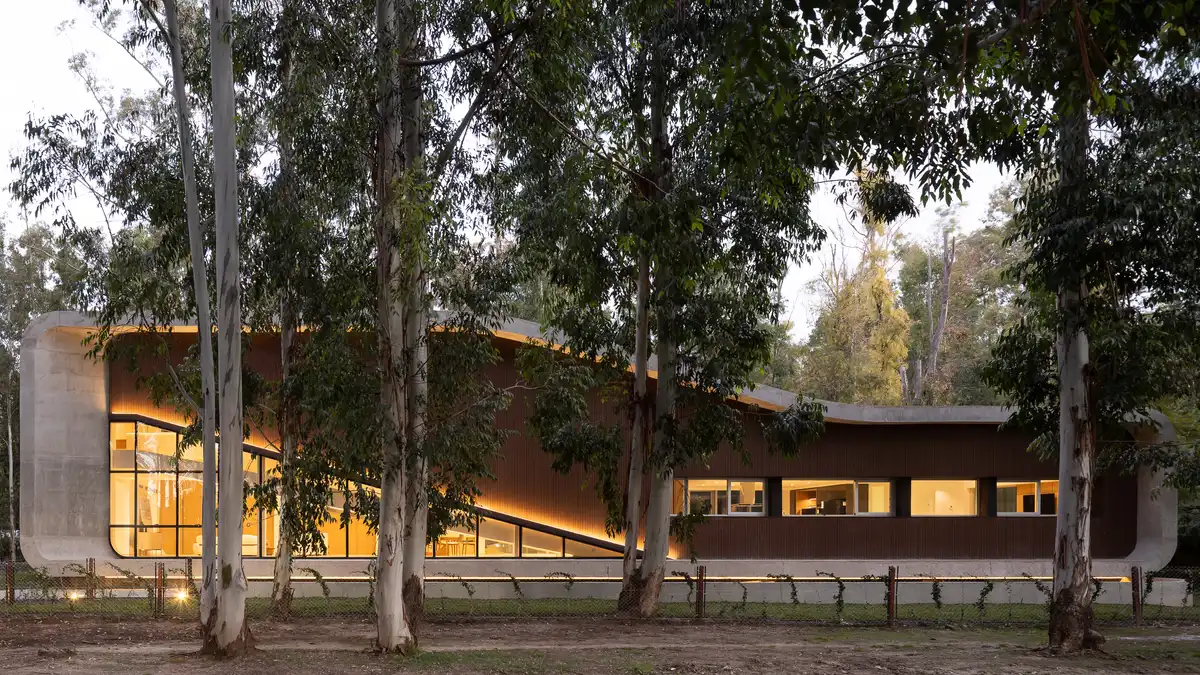
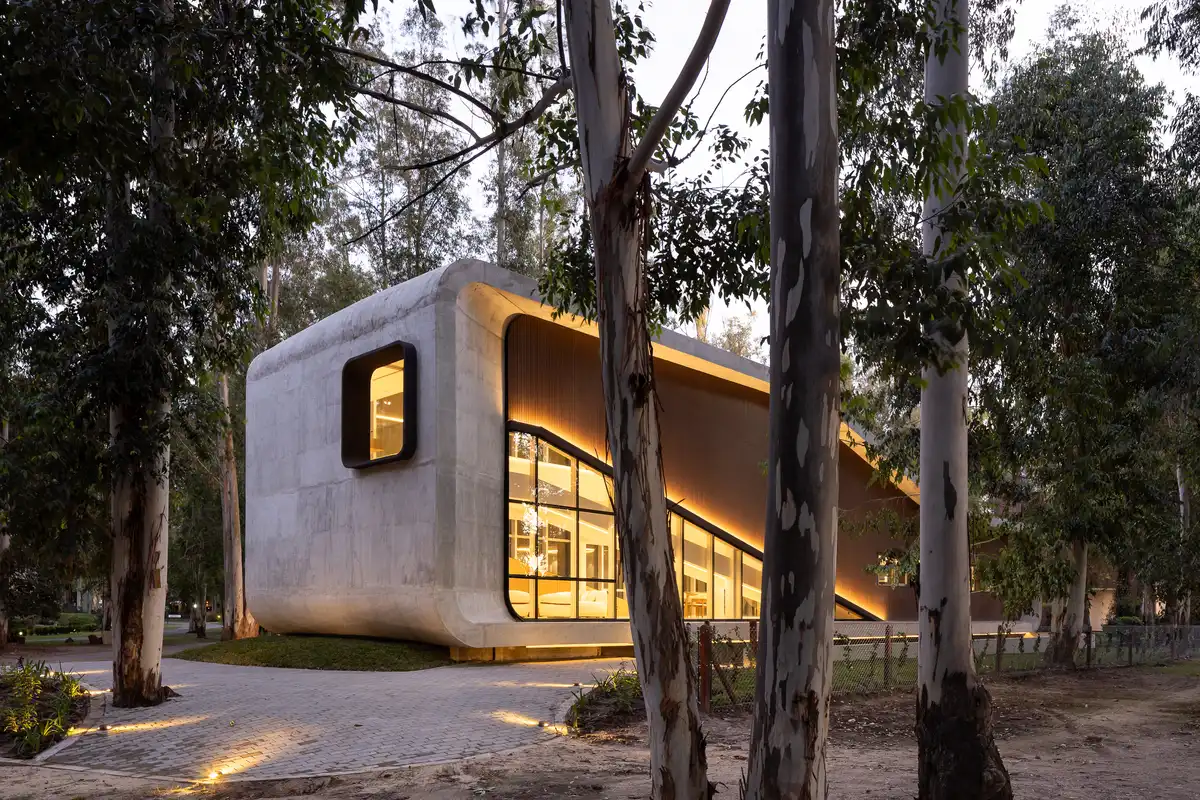
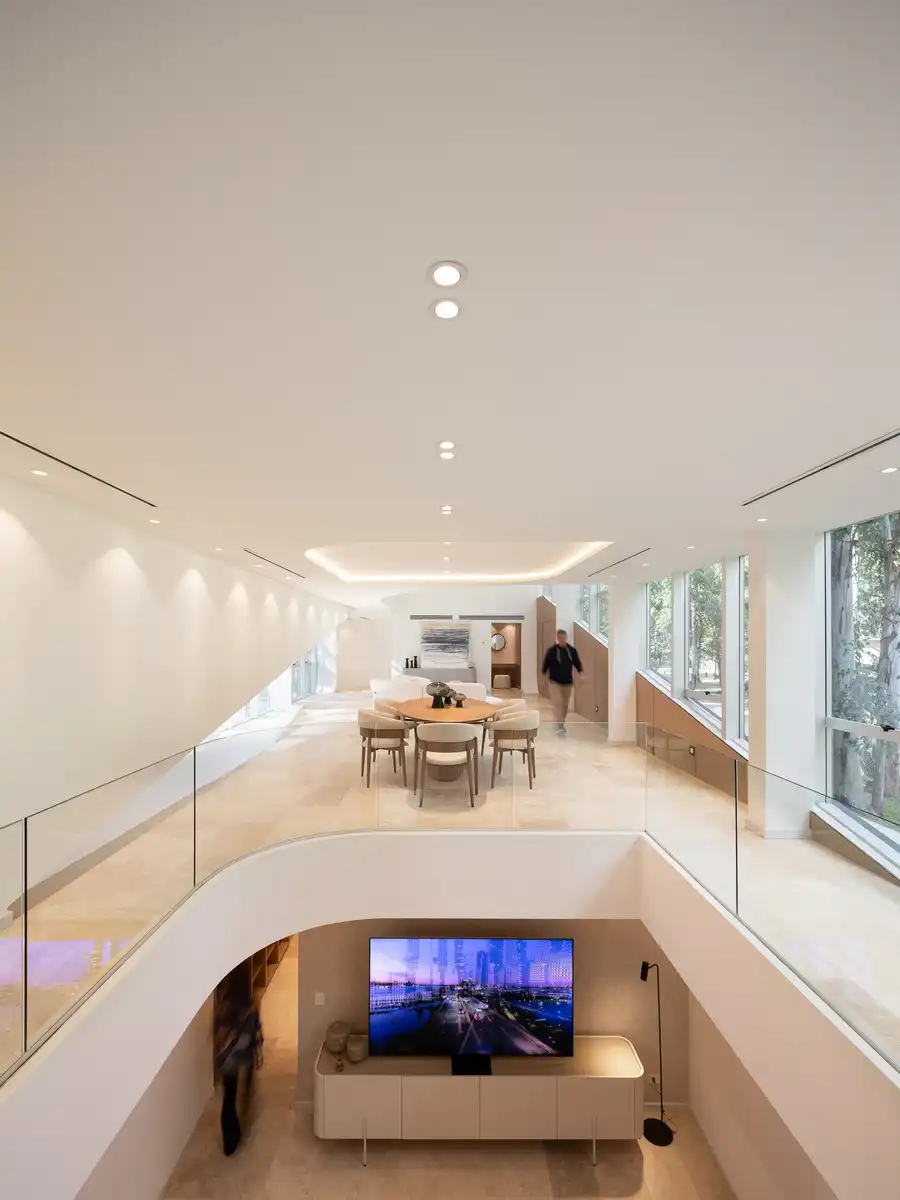
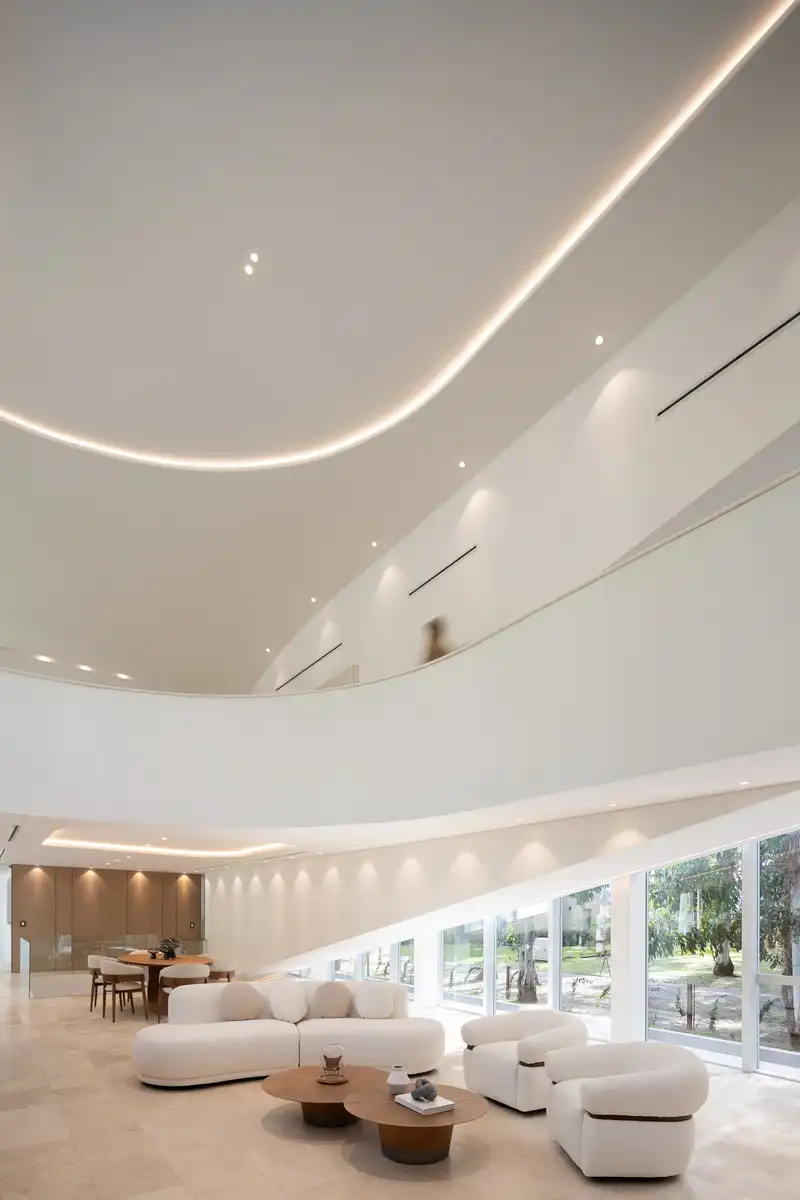
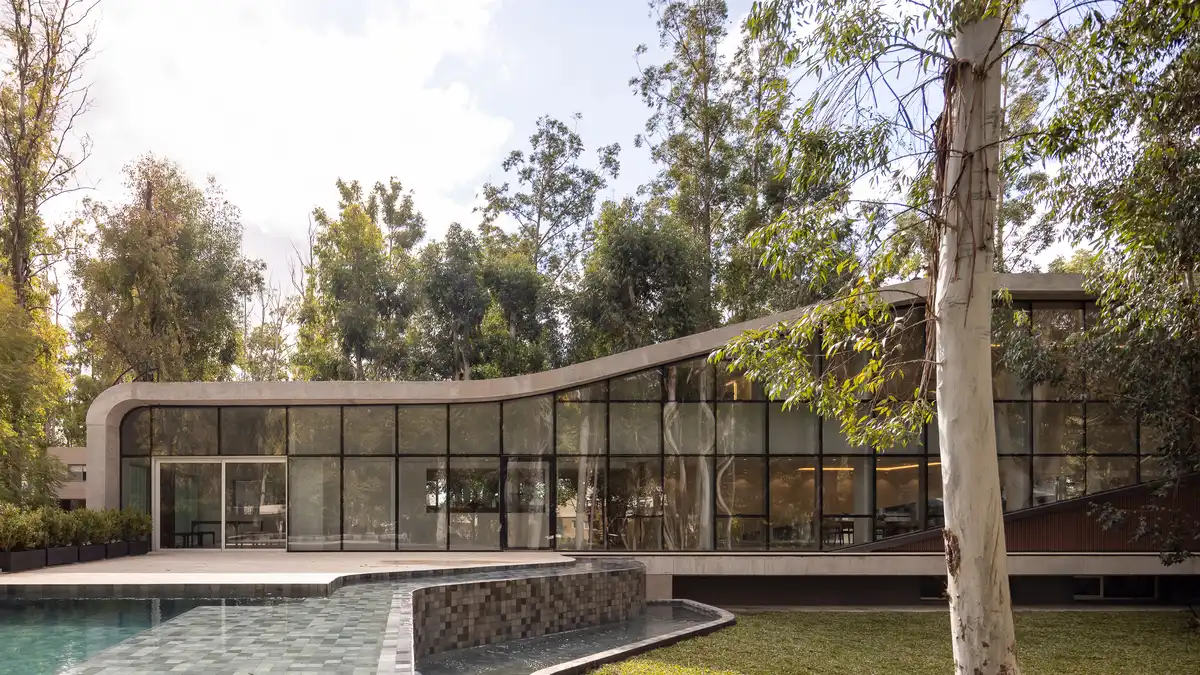
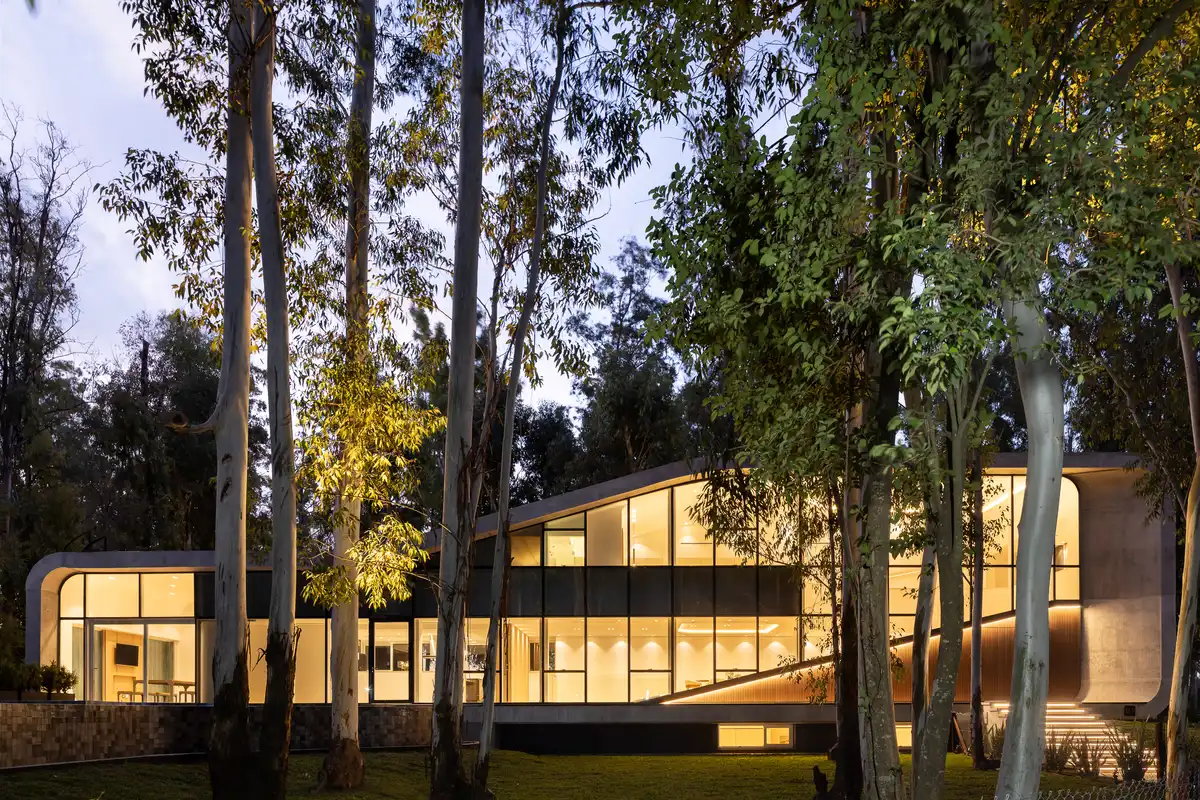
The La Ballena project is located in a suburban setting, 40 kilometers from the city of Rosario, Argentina, in a clearing of old-growth eucalyptus trees that frame and define the atmosphere of the project. The presence of this forest influences the implementation and gives it a distinctive character: the architecture does not dominate the site, but rather coexists with it, recognizing the value of time and nature as protagonists.
Idea and Poetics
In our studio, we conceive each project as an opportunity to reflect on changes in the way we live. The house is not understood as a static piece, but as an organism that responds to current lifestyles and the constant transformation of families.
The quest does not lie in satisfying external expectations—neither of clients nor of juries—but in generating a research process that, although challenging, allows us to establish authentic and valid premises for future projects. We know that abandoning reflective architecture can lead to dissatisfaction; Therefore, each work is presented as an open essay, ready to propose a new vision.
Spatiality and Program
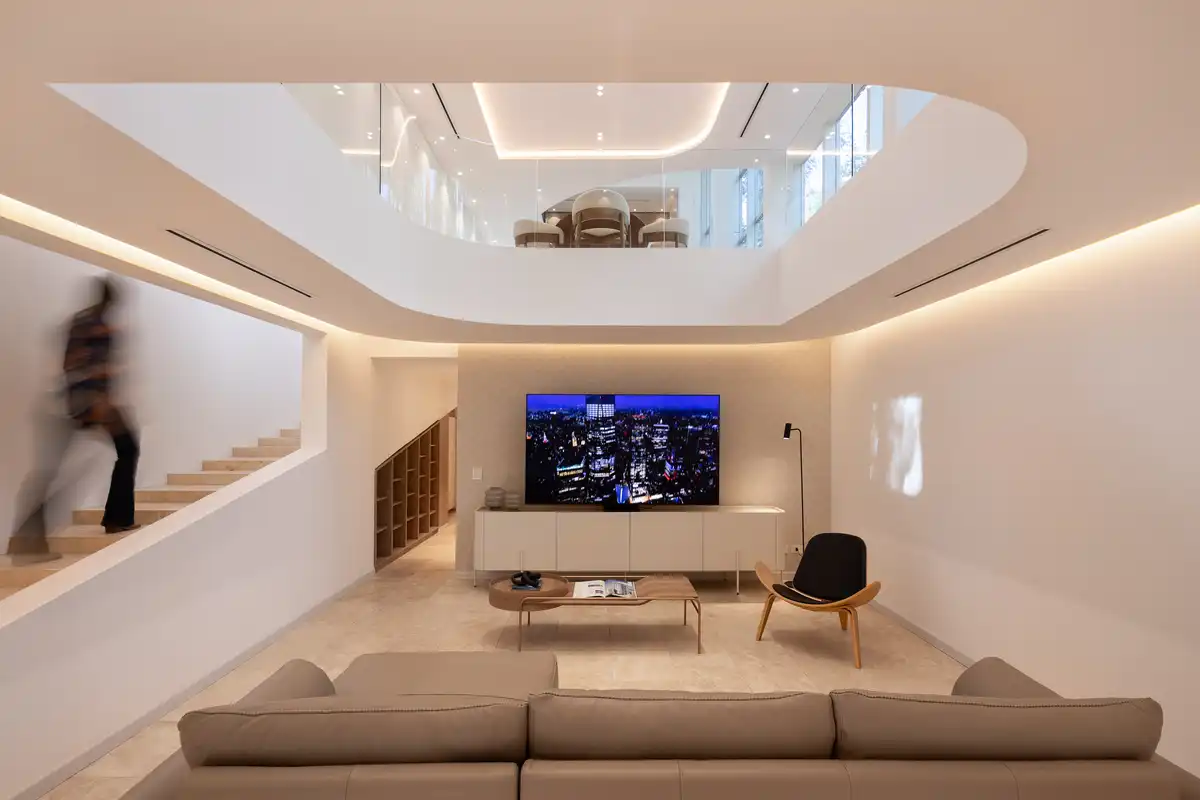
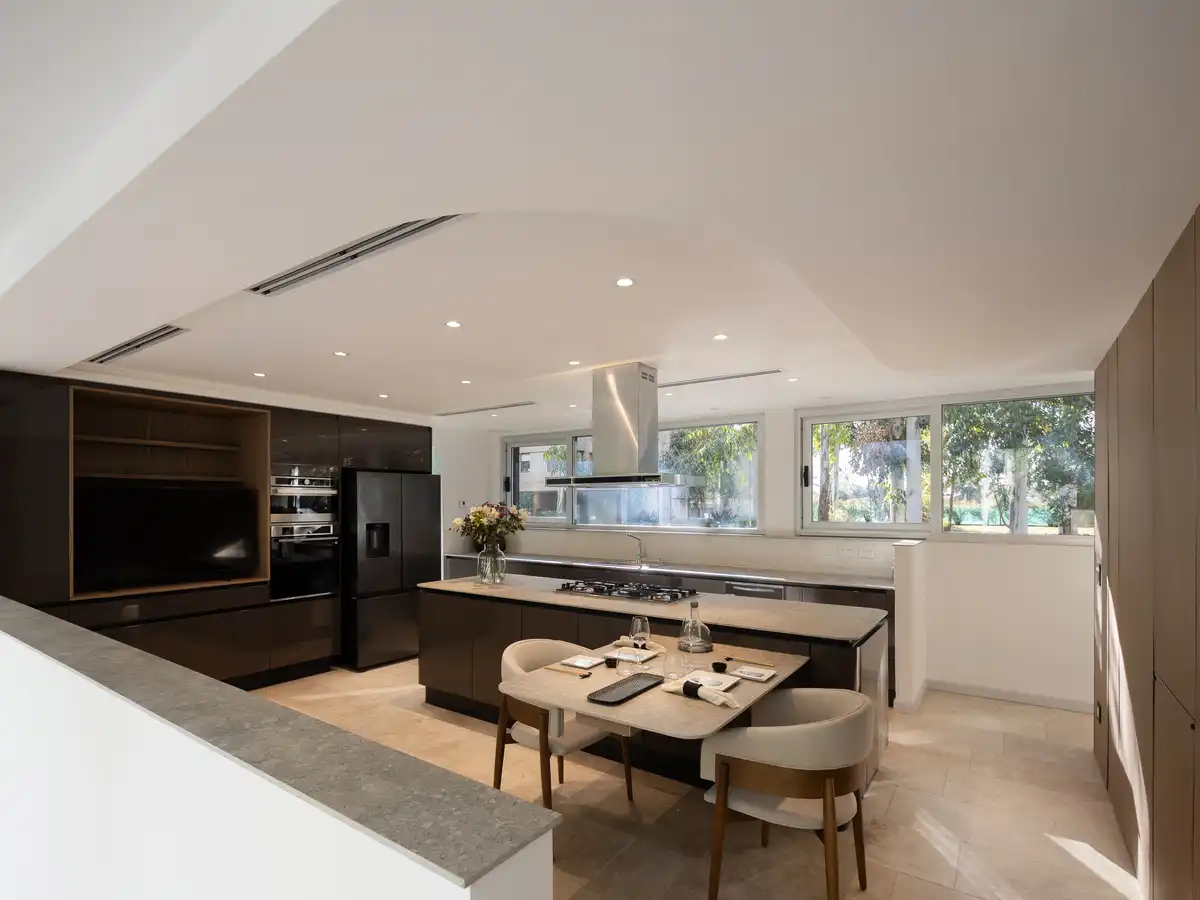
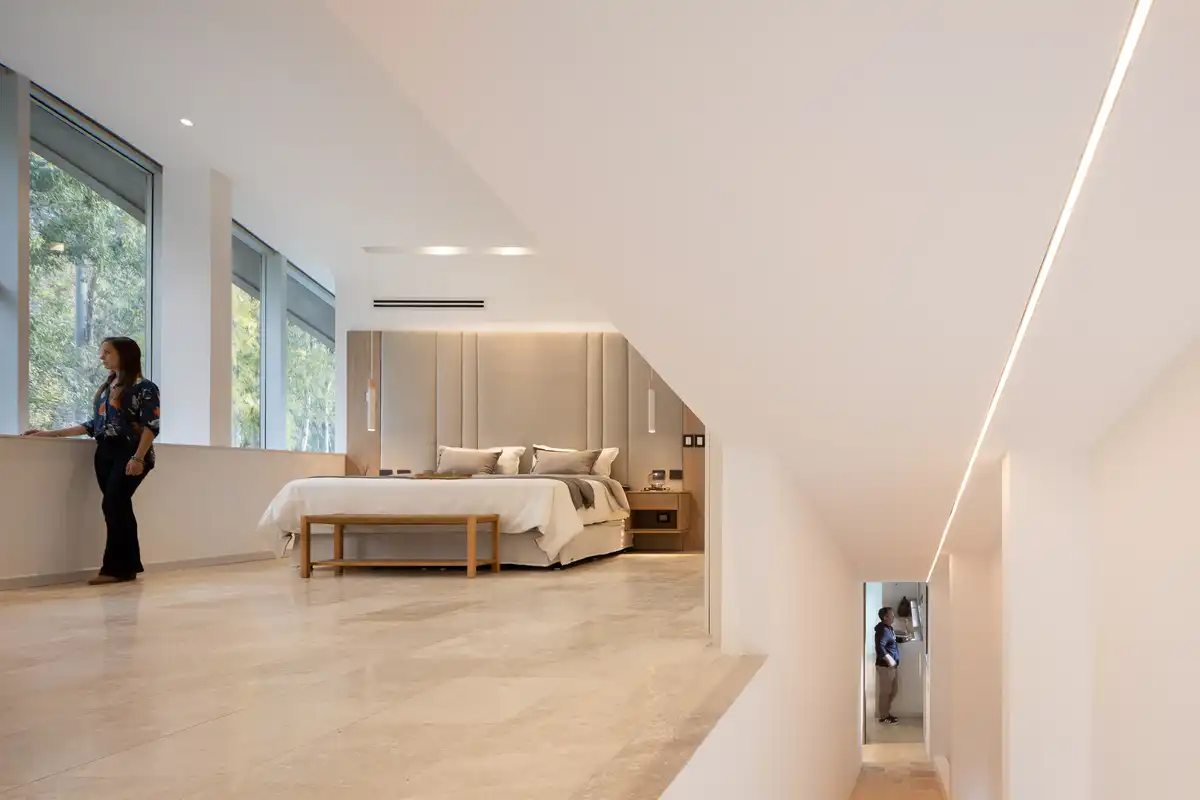
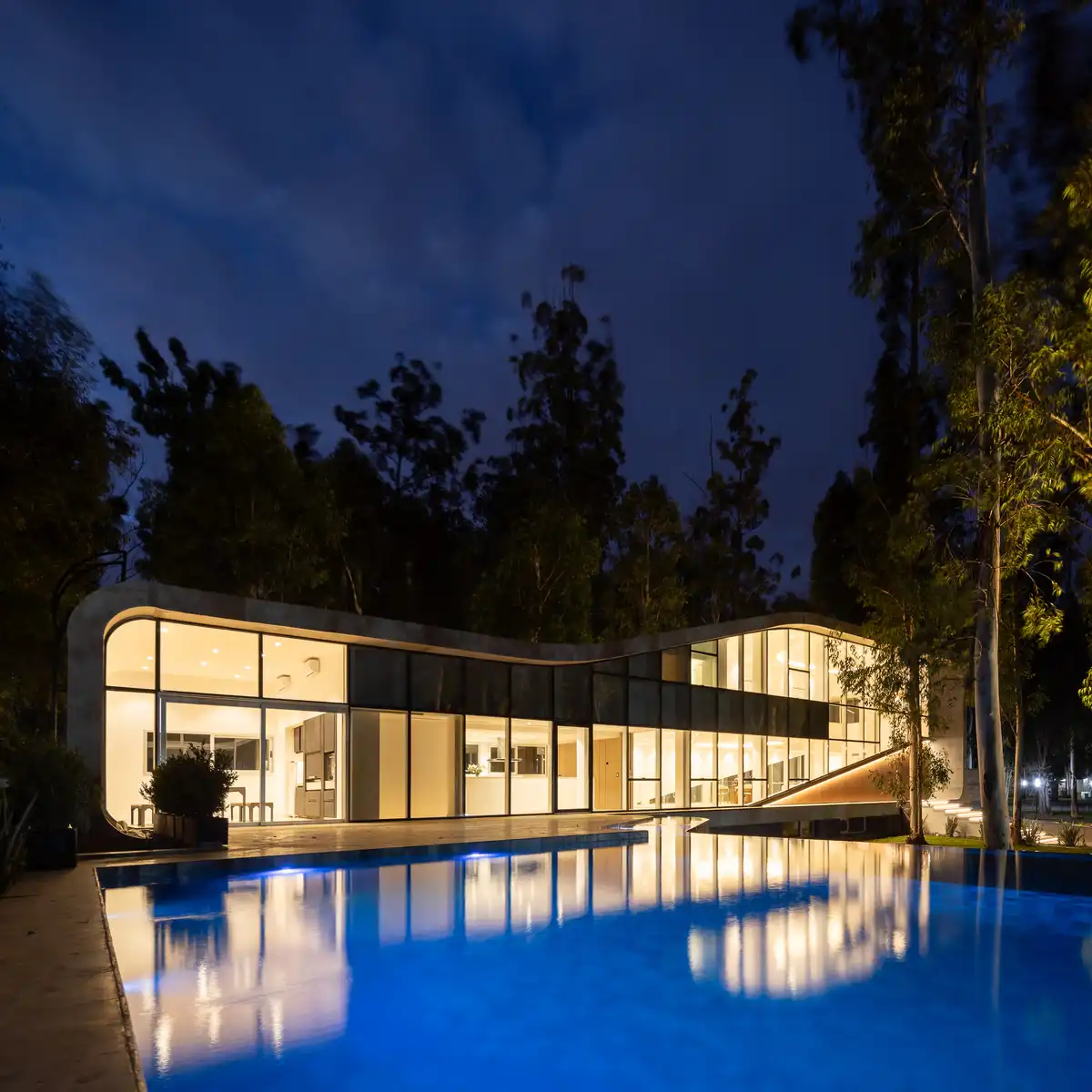
The project recognizes the new uses of contemporary life: the flexibility of spaces, the blurred boundaries between public and private, social and personal space, the need for spaces of encounter and, at the same time, refuge.
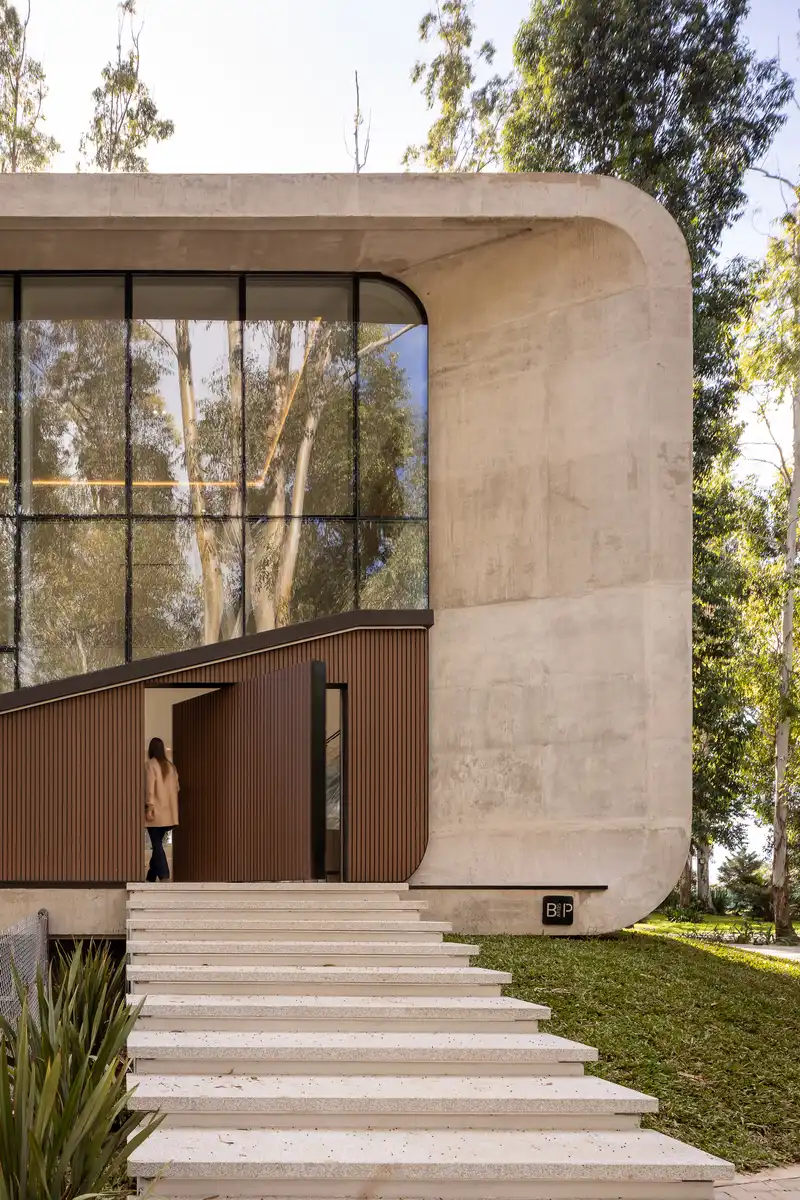
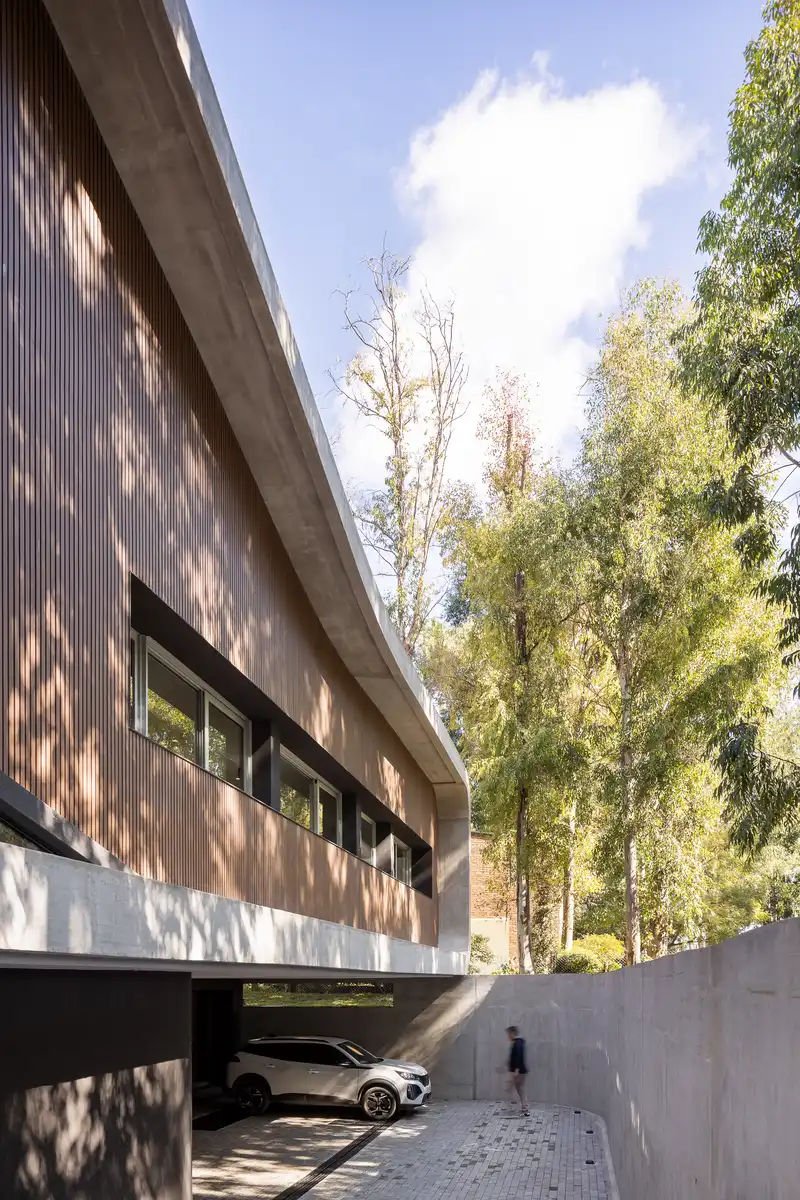
Thus, repetitions and familiar formulas were avoided, seeking to ensure that each space finds meaning in its relationship with the surrounding forest. Transparency, diagonal paths, and strategic openings generate a permanent connection with the eucalyptus trees, integrating domestic life into a landscape of shade, aroma, and memory.
Materiality and Technology
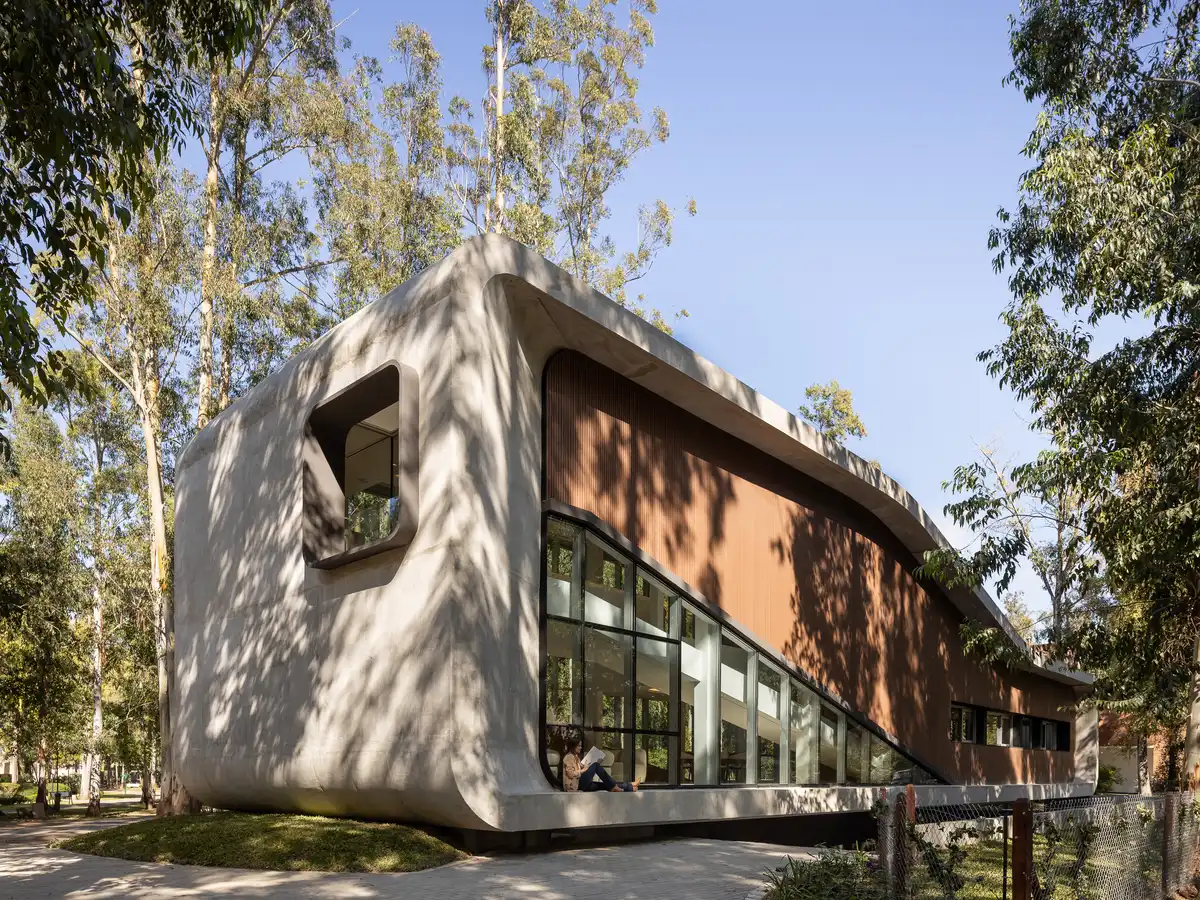
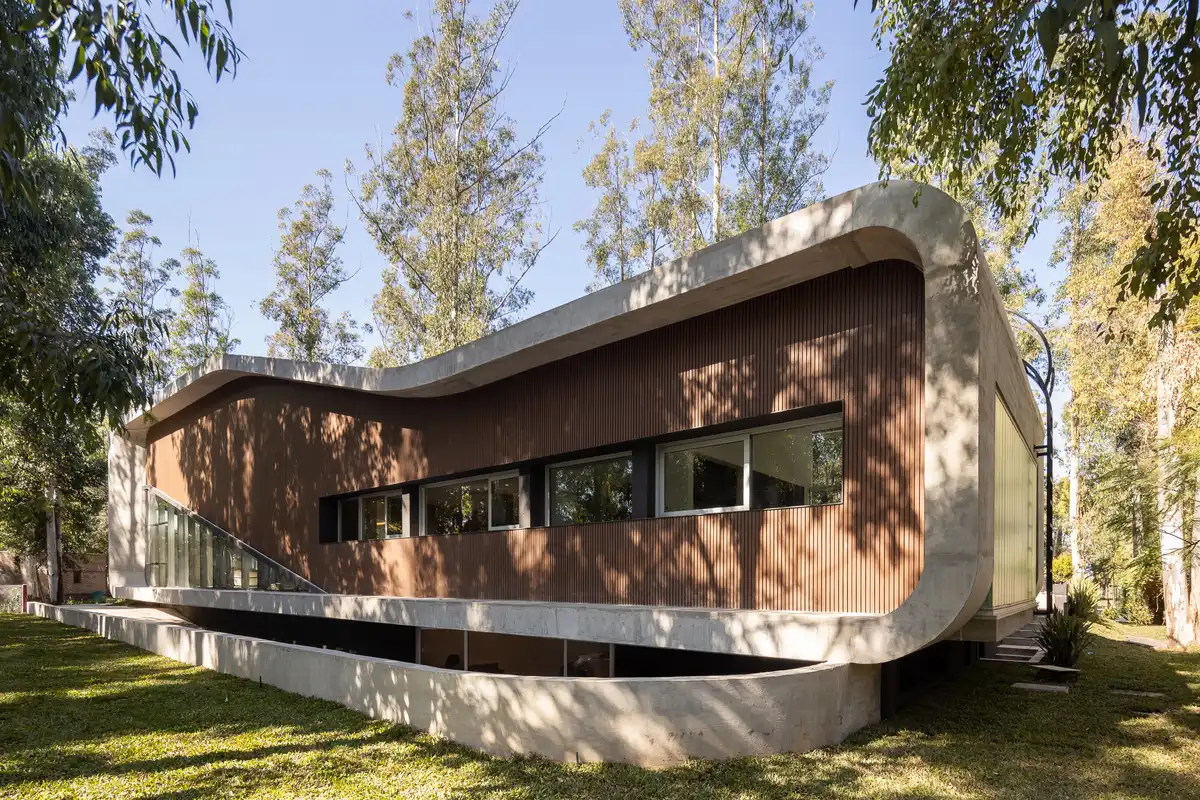
The chosen materials respond to both the constructive nobility and the poetic intention: exposed concrete and wood to consolidate the structure and grounding; glass and steel to emphasize lightness and dialogue with nature. The materiality reinforces the desired duality between permanence and change, between weight and lightness, between refuge and openness. Each work must technologically respond to the period of history it occupies and answer the questions pertinent to that period. Ours was the extraction of energy, so in response to this question so deeply rooted in our time, the answer was geothermal energy, using the Earth’s crust as a thermodynamic engine, thereby generating air conditioning, the production of sanitary water, and solar radiation as a backup energy source.
Conclusion
This house is not intended to be an isolated object or an authorial gesture, but rather a piece inserted in time and in the forest. An architectural essay that seeks to identify changes in living, propose new ways of life, and avoid repetition, in a constant process of research. In each work, we aspire for architecture not to be limited to resolving a need, but to become an opportunity to question the present and project the future.
Spanish:
La obra se ubica en un entorno suburbano, a 40 kilómetros de la ciudad de Rosario, Argentina, en un claro de eucaliptus añejos que enmarcan y definen la atmósfera del proyecto. La presencia de este bosque condiciona la implantación y otorga un carácter distintivo: la arquitectura no llega a dominar el lugar, sino a convivir con él, reconociendo el valor del tiempo y de la naturaleza como protagonistas.
Idea y poética
En nuestro estudio concebimos cada obra como una oportunidad para reflexionar sobre los cambios en la forma de habitar. La casa no se entiende como una pieza estática, sino como un organismo que responde a los modos actuales de vida y a la transformación constante de las familias.
La búsqueda no radica en complacer expectativas ajenas —ni de clientes ni de jurados—, sino en generar un proceso de investigación que, aunque desafiante, permita dejar premisas auténticas y válidas para proyectos futuros. Sabemos que desistir de la arquitectura reflexiva puede derivar en insatisfacción; por eso, cada obra se plantea como un ensayo abierto, dispuesto a proponer una nueva visión.
Espacialidad y programa
El proyecto reconoce los nuevos usos de la vida contemporánea: la flexibilidad de los espacios, la difusa frontera entre lo público y lo privado, lo social y el espacio personal, la necesidad de ámbitos de encuentro y, al mismo tiempo, de refugio.
Se evitaron así repeticiones y fórmulas conocidas, buscando que cada ambiente encuentre sentido en su relación con el bosque circundante. La transparencia, los recorridos diagonales y las aperturas estratégicas generan un vínculo permanente con los eucaliptus, integrando la vida doméstica a un paisaje de sombra, aroma y memoria.
Materialidad y tecnología
Los materiales elegidos responden tanto a la nobleza constructiva como a la intención poética: hormigón visto y madera para consolidar la estructura y el arraigo; vidrio y acero para enfatizar la ligereza y el diálogo con la naturaleza. La materialidad refuerza la dualidad buscada entre permanencia y cambio, entre peso y liviandad, entre refugio y apertura. Cada obra debe responder tecnológicamente al periodo de la historia que ocupa y responder a las preguntas pertinentes a dicho periodo. La nuestra fue la obtención de la energía, así que en respuesta a esta pregunta tan arraigada a nuestra época la respuesta fue la geotermia, usando la corteza terrestre como máquina termodinámica, generando por este medio la climatización, la producción de agua sanitaria y la radiación solar como fuente de energía de apoyo a la principal.
Conclusión
Esta casa no pretende ser un objeto aislado ni un gesto de autor, sino una pieza que se inserta en el tiempo y en el bosque. Un ensayo arquitectónico que busca identificar los cambios en el habitar, proponer nuevas formas de vida y evitar la repetición, en un proceso constante de investigación. En cada obra aspiramos a que la arquitectura no se limite a resolver una necesidad, sino que se convierta en una oportunidad para interrogar el presente y proyectar el futuro.
Casa La Ballena in Rosario, Santa Fe – Property Information
Architecture: Brigatti Polak Architects – https://www.instagram.com/brigatipolak/
Construction: La Ballena
Project And Direction: Arch. Federico Brigati – Arch. Gustavo Polak
Interior Design: Arch. Ziomara Cevey
Structural Calculation: Eng. Fernando Fabbro
Collaborators: Arch. Maria Laura Casasola; Arch. Aldana Zitta, Arch. Nestor Gabas, Lucas Cosalini
Client: Private Client
Building Purpose: Single-family Home
Building Name: La Ballena
Location: Puerto Paraiso Neighborhood. L20. General Lagos
Urban District: Gran Rosario
Project/construction Year: 2023 / 2025
Land Area / Built-in Area: 1,360 sqm / 650 sqm
Photography: Ramiro Sosa https://www.instagram.com/ramirososafotografia/
Casa La Ballena, Rosario, Santa Fe images / information received 011025
Location: Rosario, Santa Fe, Argentina, South America.
Santa Fe Home Designs
Contemporary Santa Fe Home Designs – selection from e-architect:
Casa IL, Rosario, Santa Fe property
Design: Arq. Pablo Gagliardo
Casa CM, Rafaela in the Province of Santa Fe
Design: Lateral Arquitectos studio
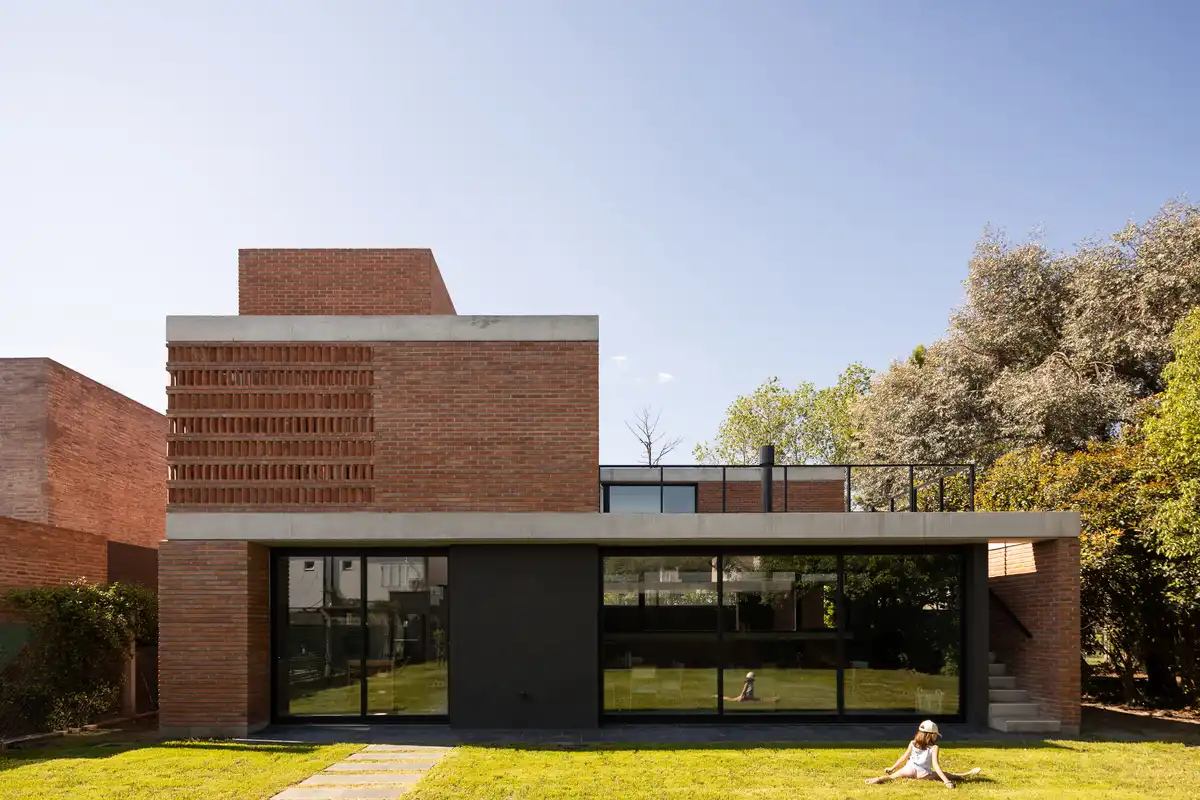
photo : Ramiro Sosa
House on the River, Santa Fe, Arroyo Leyes, Santa Fe
Architecture: Arq. Alfaro Juan Francisco – Arq. Lafranconi María Emilia
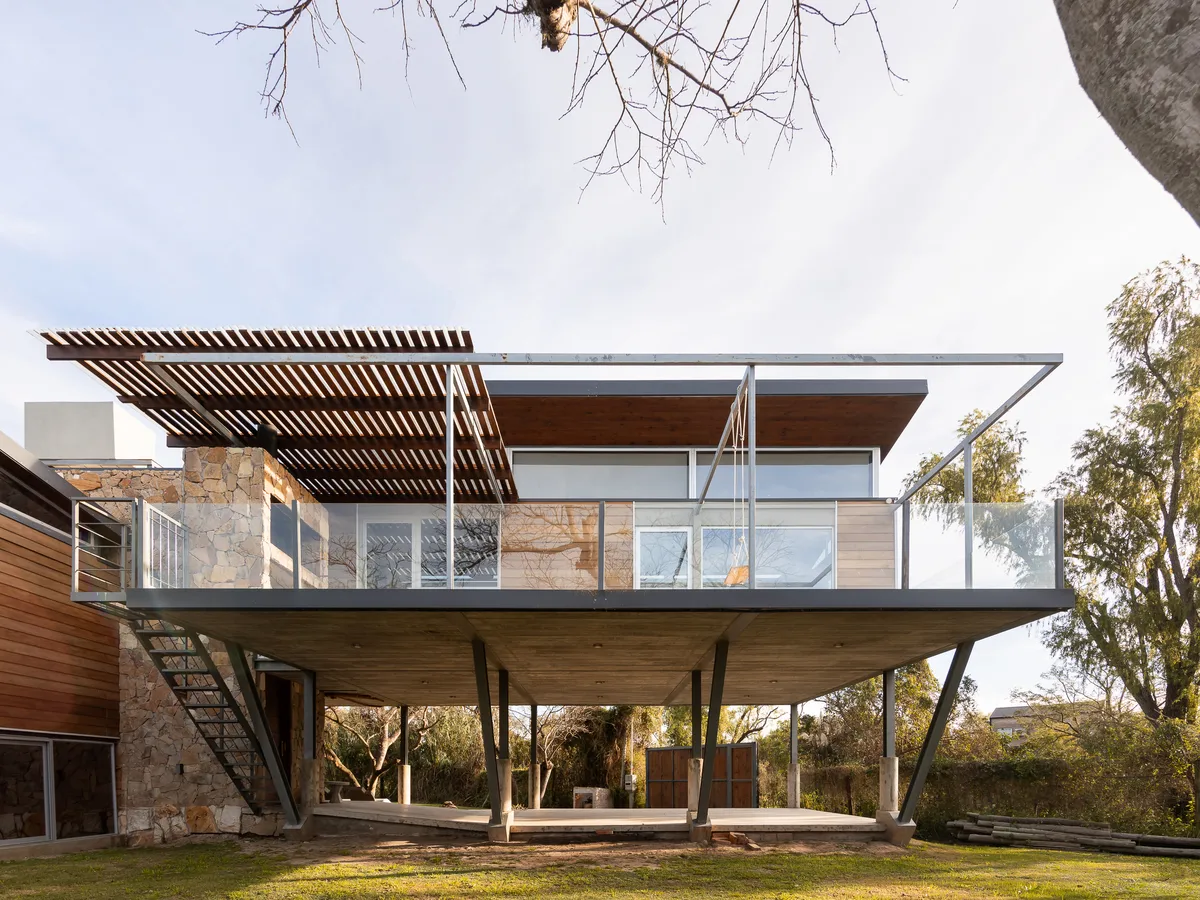
photo : Architect Ramiro Sosa
++
Architecture in Argentina
Argentina Architecture Designs – chronological list Argentina Architecture News
Contemporary Argentina Architectural Projects – selection
Comments / photos for the Casa La Ballena in Rosario, Santa Fe designed by Brigatti Polak Architects page welcome.

