Casa Cosmos in Córdoba
6 March 2026
Architecture Office: Architect Cristián Nanzer
Location: Córdoba, Argentina

Photos by Gonzalo Viramonte
English text (scroll down for Spanish):
Casa Cosmos — so named by its owner upon seeing it standing upright on the site—is located in the foothills of the Punilla Valley, in Capilla del Monte, Province of Córdoba, Argentina. The plot borders a protected natural reserve characterized by a dense woodland of red quebrachos, black algarrobos, chañares, and aromitos—species endemic to the semi-arid region. The topography presents a pronounced east–west slope and a steep southern descent toward the reserve.

Casa Cosmos – The Diaphanous Cave, Argentina
Concept
The house is conceived as a panoptic device: from a central point on the site, its geometry unfolds in response to three focal landscape vistas. To the south, the natural reserve with Las Gemelas hills as backdrop; to the northeast, Mount Uritorco; to the west, El Cajón Dam.

This decision establishes a triangular matrix typology that organizes the centrifugal disposition of the rooms around a central social space. Arranged around it are the kitchen-dining area—fully integrated with the core—alongside an en-suite bedroom and a studio. The latter are articulated through heavy walls that regulate privacy while contributing thermal mass and environmental stability.

At the core of the house, a triangular skylight filters daylight in a diffuse manner, introducing a constant reference to the diurnal cycle. As it shifts, light operates as a chronometer, measuring the passage of time.

The spatial experience evokes the atmosphere of a diaphanous cave: a heavy polyhedral promontory, hollowed out at three strategic and equivalent points. These voids, endowed with thickness, materialize as deep galleries that provide shelter and dense shade to the large openings. Complementing them, three semi-heavy expanded metal sliding shutters modulate luminosity, regulate airflow velocity, and enhance security.
The project capitalizes on the terrain’s slope to gain height in the principal spaces. A plinth absorbs the existing topographic gradient and establishes a new datum for the main floor. Within it are housed an autonomous residential unit, technical rooms, and storage areas.

Materiality
The plinth is resolved through 40 cm thick rammed stone walls, capable of retaining the earth and consolidating the new ground level. Above it, the main floor is constructed with board-formed exposed concrete walls; thermal insulation is integrated within the wall assembly of the exterior enclosures, reinforcing the building’s hygrothermal performance.
The architectural expression derives directly from its exposed materiality, rendering construction processes and local techniques explicit. The aridity of the surrounding landscape finds continuity in the exterior walls and an echo in the ascetic character of the interior spaces.
In these latitudes, light is the omnipresent material. Its choreography and chromatic variations register the hours and the cycles of the year. The house embraces this condition and offers itself to its inhabitants as a primitive artifact for “seeing” time—a device through which to enact communion with its context.

Spanish:
La Casa Cosmos —nombre acuñado por su propietaria al verla erguida sobre el terreno— se emplaza en el pedemonte serrano del Valle de Punilla, en Capilla del Monte, provincia de Córdoba. El lote linda con una reserva natural caracterizada por un bosque denso de quebrachos colorados, algarrobos negros, chañares y aromitos, especies propias de la región semiárida. La topografía presenta una pendiente marcada en sentido este–oeste y un declive abrupto hacia el sur, en dirección a la reserva.
Concepto
La casa se concibe como un dispositivo panóptico: desde un punto central del predio, su geometría se despliega en función de tres visuales focales del paisaje. Hacia el sur, la reserva natural con el cerro Las Gemelas como telón de fondo; hacia el noreste, el Cerro Uritorco; hacia el oeste, el Dique El Cajón.

Esta decisión configura una tipología de trama triangular que ordena la disposición centrífuga de los ambientes en torno a un espacio central destinado al ámbito social. A su alrededor se disponen la cocina-comedor —absolutamente integrada al centro—, un dormitorio en suite y un estudio, estos últimos segregados por muros pesados que regulan la intimidad y la inercia térmica.
El núcleo de la casa incorpora un lucernario triangular que filtra la luz de manera difusa, introduciendo una referencia constante al ciclo diurno. La luz, en su desplazamiento, opera como un reloj que mide el transcurrir del tiempo.
La experiencia espacial propone la atmósfera de una caverna diáfana: un promontorio poliédrico y pesado, socavado en tres puntos estratégicos y equivalentes. Estos vacíos, dotados de espesor, se materializan como galerías que ofrecen reparo y sombra neta a las grandes aberturas. A ello se suma el filtro de tres postigones corredizos de metal desplegado semipesado, que colaboran en el control lumínico, la regulación de la velocidad del aire y la seguridad de la vivienda.

La obra aprovecha la topografía para ganar altura en los espacios principales. Un basamento absorbe el desnivel existente y establece un nuevo plano de apoyo para la planta principal; en él se aloja una unidad residencial autónoma, además de dependencias técnicas y depósito.

Materialidad
El basamento se resuelve mediante muros de piedra encofrada de 40 cm de espesor, capaces de contener el terreno y consolidar el nuevo nivel cero. Sobre este, la planta principal se construye con muros de hormigón visto encofrado con tablas; en los cerramientos exteriores se incorpora aislación térmica en el alma del muro, reforzando el desempeño higrotérmico del conjunto.
La expresión arquitectónica deriva de la materialidad expuesta, que hace explícitos los procesos constructivos y las técnicas locales. La aridez del paisaje circundante encuentra continuidad en los muros exteriores y un eco en el ascetismo de los espacios interiores.

En estas latitudes, la luz es el material omnipresente. Su coreografía y su color dan cuenta de las horas y de los ciclos del año. La casa asume esa condición y se ofrece a sus habitantes como un artefacto primitivo para “ver” el tiempo: un dispositivo para oficiar una comunión con el contexto.


Casa Cosmos in Cordoba, Argentina – Property Information
Architecture Office: Architect Cristián Nanzer – http://www.cristiannanzer.ar/
Covered area: 355.40 sqm
Technical Direction: Architect Cristián Nanzer / Architect Ricardo Tesoreiro
Collaborators: Architect Lourdes Cuadro / Architect Juan Dimuro
Structural Engineering: Engineer Edgar Morán
Construction: Architect Ricardo Tesoreiro
Builder: Juan Pacheco
Electrical Installations: Gabriel Canelo
Execution: 2022–2024
Author’s Statement Cristián Nanzer

Photography (completed work): Architect Gonzalo Viramonte
Casa Cosmos, Cordoba, Argentina house images / information received 060326
Location: Cordoba, Córdoba, Argentina, South America.
Argentina House Designs
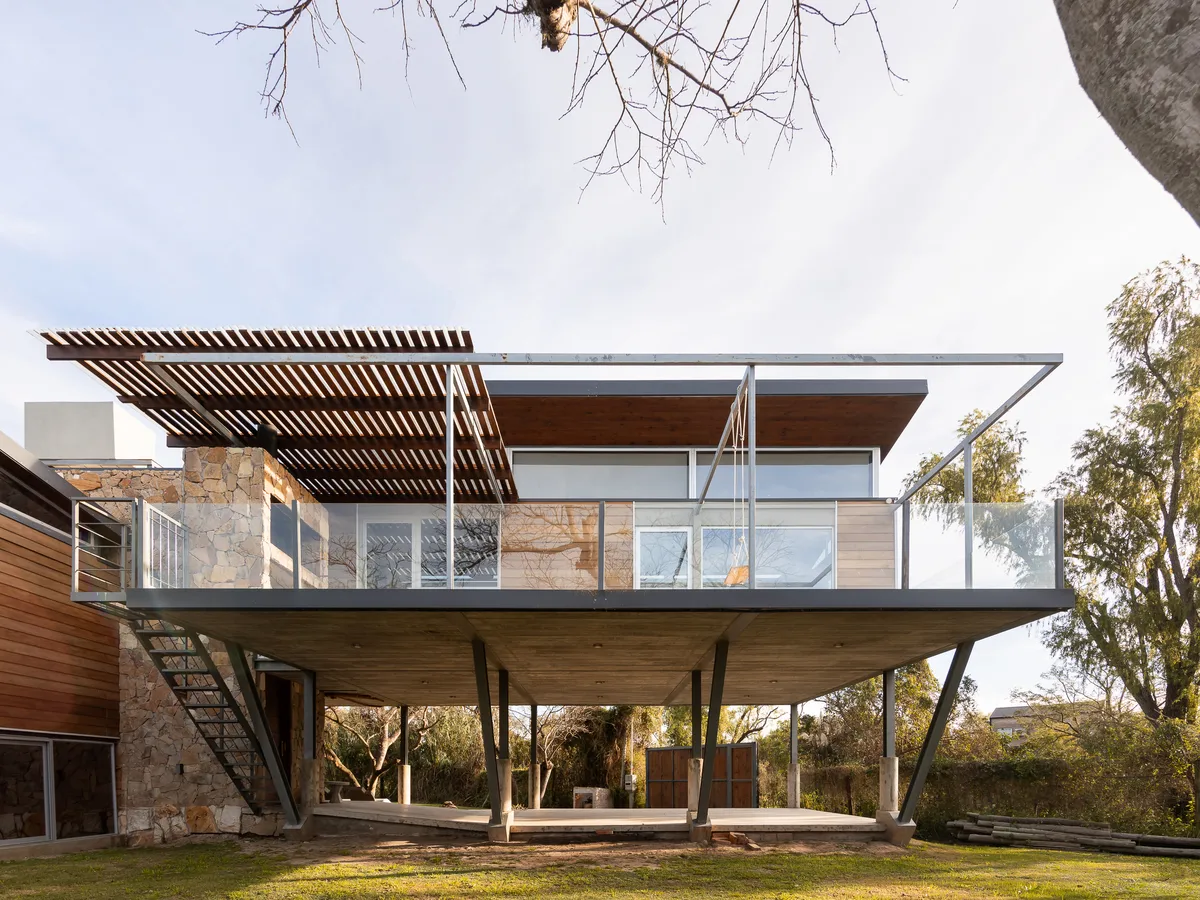
House on the River, Santa Fe
Architecture: Arq. Alfaro Juan Francisco – Arq. Lafranconi María Emilia
803181″ />
photo : Architect Ramiro Sosa
FRN House, Buenos Aires, Argentina property
Architects: Najmias Office for Architecture
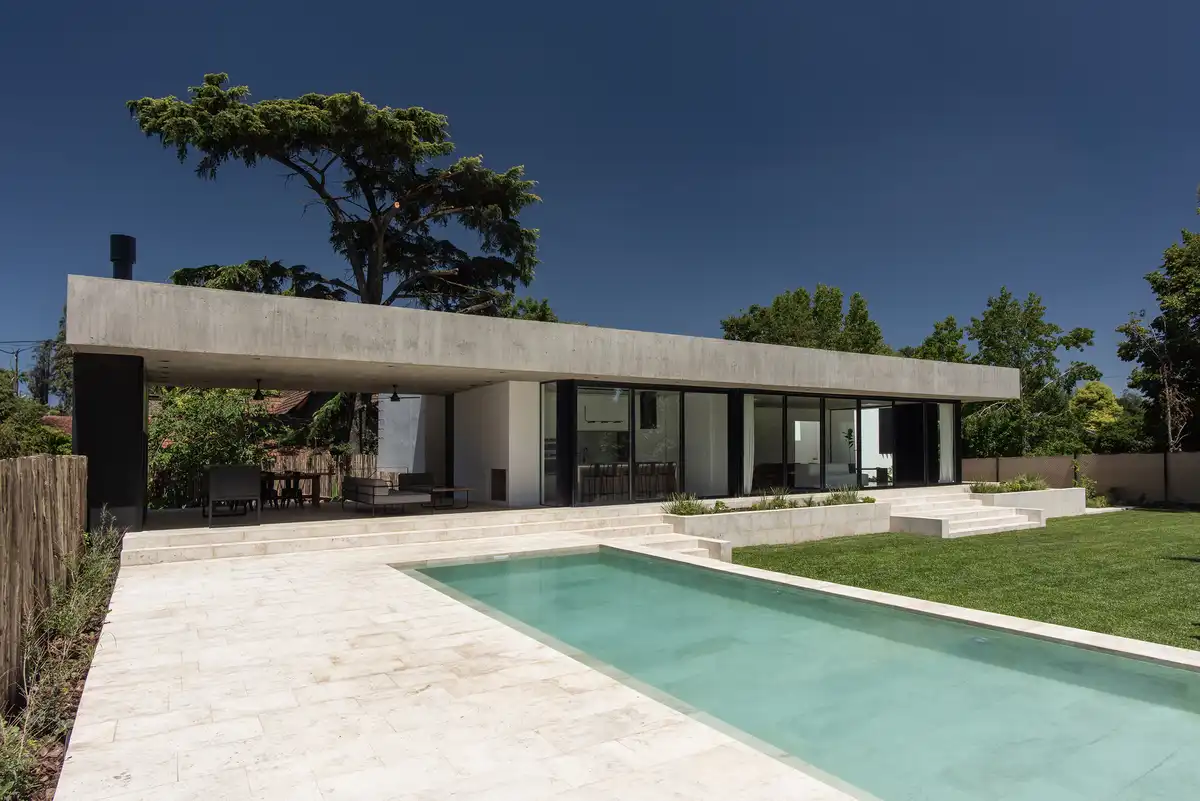
photo : Daniela Mac Adden
Casa El Terron, Mendiolaza Cordoba home
Architects: Fabric Estudio
House IV, La Serena private neighbourhood, Cordoba
Architecture: Palmero Vucovich
++
Architecture in Argentina
Contemporary Argentina Architectural Projects
Argentina Architecture Designs – chronological list
Comments / photos for the Casa Cosmos, Cordoba in Argentina design by Architect Cristián Nanzer page welcome.