
Architecture Books – New Publications
Contemporary Building Titles in 2026 – Architectural Publication News
Architecture Books Links – chronological list
This page contains a selection of recent architectural publications, with links to individual book pages. We select the key architecture books.
The focus is on contemporary architect books but information on key traditional architecture publications is also welcome.
+++
Inside The White House Book

“Inside The White House: A Cutaway 3-D Tour of America’s Most Famous Home”
By Kurt Wahlner
November 3, 2026
Bushel & Peck Books
“Kurt Wahlner’s extraordinarily detailed drawings allow readers to understand the White House and its evolving history as never before – I learned new things about the building from Kurt’s drawings even after having worked there for over 20 years. You’ve never had a tour of the White House like this before!”
—Melissa Naulin, former associate curator of decorative arts, the White House
Kurt Wahlner’s ground-breaking drawings show the People’s House as it truly is in amazing detail, quite literally from top to bottom. Learn where presidents and their families live, work, and have fun, all from incredible see-through vantage points you won’t find anywhere else.”
—Robert S. Martin, former deputy director, the White House (East and West Wing)
When architectural illustrator Kurt Wahlner first began his book of detailed drawings of each room of the White House, he never imagined that one of America’s most historic buildings would be subject to dramatic change. Its occupants and decor might be altered, but the building itself, he presumed, would remain. Now, as his book, Inside Our White House: A Cutaway 3D Tour of America’s Most Famous Home is prepared for a November release, what he initially envisioned as a timeless project has become a document of what once was.
“My drawings take me a long time to make,” said Wahlner. “Never in six years of drawing the White House would I have imagined that, suddenly, some of it would disappear on a Monday morning with no warning. How do I finish my book idea with a big hole in the ground?”
On the day the White House’s East Wing was razed, Wahlner was already in the finishing touches stage, preparing the book for publication. Now in presale, the book debuted at number one in Amazon’s “Hot New Releases” Children’s Architecture Books category. But with the East Wing demolished and plans for a ballroom in limbo, Inside Our White House comes at a poignant moment in the history of “The People’s House.”
Kurt Wahlner has been a graphic designer for longer than he can remember. He worked his way up from newspapers to magazines and has spent many years designing picture books. Along the way, he began drawing buildings that captured his imagination, bringing extraordinary research and detail to his large-format color drawings. A digital review copy of the book is available. Also, visit Kurt’s YouTube channel for videos detailing his process of creating the book.
+++
Victorian Railways Book
Victorian Railways: new Victorian Society publication explores Britain’s railway heritage
Publication date: 3rd November 2026
160 pp. Price: £25
Victorian Railways, a new publication from the Victorian Society, brings together leading historians and conservation experts to explore the history, architecture and preservation of Britain’s Victorian railways.
Edited by Simon Bradley and Steven Brindle, it is the tenth volume of the Society’s Studies in Victorian Architecture and Design. Its eight chapters range from the creation of the national railway network and the great termini and trunk lines of the early railway age to station design, excursion travel and the preservation and reuse of redundant railway structures.
Colin Divall examines how Britain’s railway network took shape, focusing on a brief episode in the mid-1840s when the emerging system was subject to strategic official guidance. Steven Brindle traces the history of the old Euston Station, from its beginnings in the 1830s to the destruction of the much-enlarged complex in the 1960s, while Robert Thorne explores the North Midland Railway, the pioneering Stephenson route from Derby to South Yorkshire. Richard Pollard examines the design and operation of Isambard Kingdom Brunel’s first Bristol Temple Meads terminus, a remarkable survival from the early 1840s.
Benedict O’Looney looks at the distinctive stations designed by C. H. Driver for the London, Brighton & South Coast Railway in the 1860s, drawing on his own experience of restoring several of the buildings. John Minnis explores the repeated use of standard station designs by consulting engineers and how identical buildings came to appear on widely separated lines across Britain and Ireland.
The railway’s social history is explored by Susan Major, who uses contemporary records to reconstruct the experience of working-class Victorian women travelling on the ‘cheap trips’ offered by excursion trains. Finally, Simon Bradley examines the afterlives of redundant railway buildings and structures, hundreds of which – from stations to signal gantries – have been relocated and preserved within the heritage sector.
The volume also reflects the Victorian Society’s long involvement in railway conservation. The Society played a prominent role in the campaign to save St Pancras Station in the 1960s and in the battle over the future of Liverpool Street Station in the 1970s and 1980s. Today it is once again campaigning against major redevelopment proposals at Liverpool Street.
Simon Bradley and Steven Brindle, editors of Victorian Railways, said:
“Britain’s railways are among the most extraordinary legacies of the Victorian period, but their familiarity can sometimes disguise just how innovative, varied and surprising they are. This volume brings together different approaches to railway history – architectural, engineering and social – while also considering what has survived, what has been lost and how railway heritage has been preserved and given new life.
“We hope these essays will encourage readers to look afresh at buildings and structures that remain part of the everyday experience of travelling by rail, as well as at some of the less familiar aspects of the railway story.”
James Hughes, Director of the Victorian Society, said:
“Britain’s Victorian railways are an extraordinarily rich subject, encompassing architecture, engineering and social history, and this new volume brings together some illuminating new research. I am hugely grateful to its editors and authors, and delighted that the Victorian Society is publishing it.”
Victorian Railways will be issued to all members of the Victorian Society in November 2026 as part of their membership. It will also be available to purchase from the Society’s website.
Membership of the Victorian Society supports its work campaigning for Victorian and Edwardian buildings across England and Wales. New members will also receive Victorian Railways as part of their membership.
+++
A 1stDibs survey of over 600 interior designers found that 25% now cite Art Deco as their primary source of inspiration — and 81% are actively sourcing mid-century modern vintage pieces. The revival of both eras isn’t a trend anymore — it’s a permanent shift in how people think about design.
Hardie Grant North America is launching two new books that meet that moment head-on: Design: Art Deco by Penny Craswell and Design: Mid-Century Modern by Jenna M. McKnight, both publishing April 7. Together they mark the debut of the Design series — a new collectable library covering the movements shaping how we live and decorate today:
Design: Mid-Century – Modern
Design Inspiration from Copenhagen to California
by Jenna M. McKnight
Hardcover – April 7, 2026
Hardie Grant Books
Your handy, inspirational reference guide to the iconic Mid-Century Modern Style.

Spanning the mid-1940s to the 1980s, the mid-century modern movement was an influential era celebrated for its clean lines, modest proportions, and functional approach to design. Prioritizing form and function, designers defined a post-war aesthetic that embraced new materials like molded plastic, metal, and teak wood that could be crafted into practical, contemporary forms.
Design: Mid-Century Modern introduces you to the celebrated icons that define the era, from Scandinavian furniture and the Bauhaus of Weimar to Brazilian concrete architecture and the sleek houses of Palm Springs. Discover this humanist design era that celebrated innovation and embodied the needs and desires of the world at that time. Starting with an introduction by a leading design expert, you will discover the creatives and craftsmen that defined the era―from living room decor to the urban architecture of the age.
This collectable guidebook helps you learn the basics of Mid-Century Modern style in architecture, graphic design, fashion, and interiors, and shows you how to incorporate these aesthetics into your home.
+++
Design: Art Deco
Design Inspiration from Paris to New York
By Penny Craswell
Hardcover – April 7, 2026

Hardie Grant North America are proud to be publishing Design: Art Deco, a richly illustrated sourcebook that traces the movement from the Paris salons of the 1920s to the skylines of Manhattan and the first great streamlined vehicles of the industrial age.
Searches for “Art Deco vintage” on Pinterest have surged by over 745%, and a survey of more than 600 interior designers by 1stDibs found that 25% now cite the 1920s and ’30s Art Deco era as their primary source of inspiration. The style’s revival is no longer a footnote — it’s the story.
Part design history, part inspiration guide Design: Art Deco profiles 60 key pieces and the designers who defined Art Deco’s sleek and stylized forms — spanning architecture, graphics, interiors, ceramics, fashion, and textiles. With 80 full-colour photographs and an introduction by a leading design expert, it also shows readers how to bring the movement’s glamour into their own homes today.
Sleek, Stylized, and Suddenly Everywhere:
HARDIE GRANT NORTH AMERICA | APRIL 7 2026 | HARDBACK | 176pp | RRP $19.99
www.hardiegrantbooks.com Instagram: (at)hardiegrantusa
“At a time when sustainability is essential, the Art Deco style attracts with its focus on high-quality materials and objects designed to last.”
— Samantha Hauvette & Lucas Madani, interior designers- Dezeen, 2025
“Art Deco adds a touch of old-world charm and sophistication to modern interiors, making it a perennial favorite among design enthusiasts.”
— Niko, interior designer Homes & Gardens
Design: Art Deco launches simultaneously with Design: Mid-Century Modern, together marking the debut of the Design series — a new collectable library covering iconic design movements, for enthusiasts, practitioners, and collectors alike. Further titles are forthcoming.
About the Author
Penny Craswell is an Australia-based editor, writer, and curator specialising in design, craft, architecture, and interiors. Former editor of Artichoke and deputy editor of Indesign magazine, she is also the author of The New Sustainable House, Reclaimed: New Homes from Old Materials, and Design Lives Here: Australian Interiors, Furniture and Lighting.
+++
4 March 2026
Dwelling on Earth: The Past and Future of the Places We Call Home
Stefan Al | W. W. Norton & Company | April 22, 2026
From the architect and urban-planning scholar behind Supertall comes this sweeping history of humanity’s most fundamental creation—the home—and its effects on the land, cities, and people themselves.

Dwelling on Earth: The Past and Future of the Places We Call Home
+++
Architecture Books 2025
Architecture Publications in 2025
August 20, 2025
Richard Neutra and the Making of the Lovell Health House, 1925-35

photo © Grant Mudford
This new book tells the story of the Lovell Health House, designed and built by Austrian American architect Richard Neutra (1892–1970).
Richard Neutra and the Making of the Lovell Health House, 1925-35
+++
Brutalist Interiors: a design book
A new book on Brutalist interiors released by Blue Crow Media
September 2025 — Blue Crow Media, the independent publisher known for its architectural city guide maps and annual Brutalist Calendar, announces the publication of Brutalist Interiors — a global survey of the most compelling interior spaces shaped by Brutalist architecture.
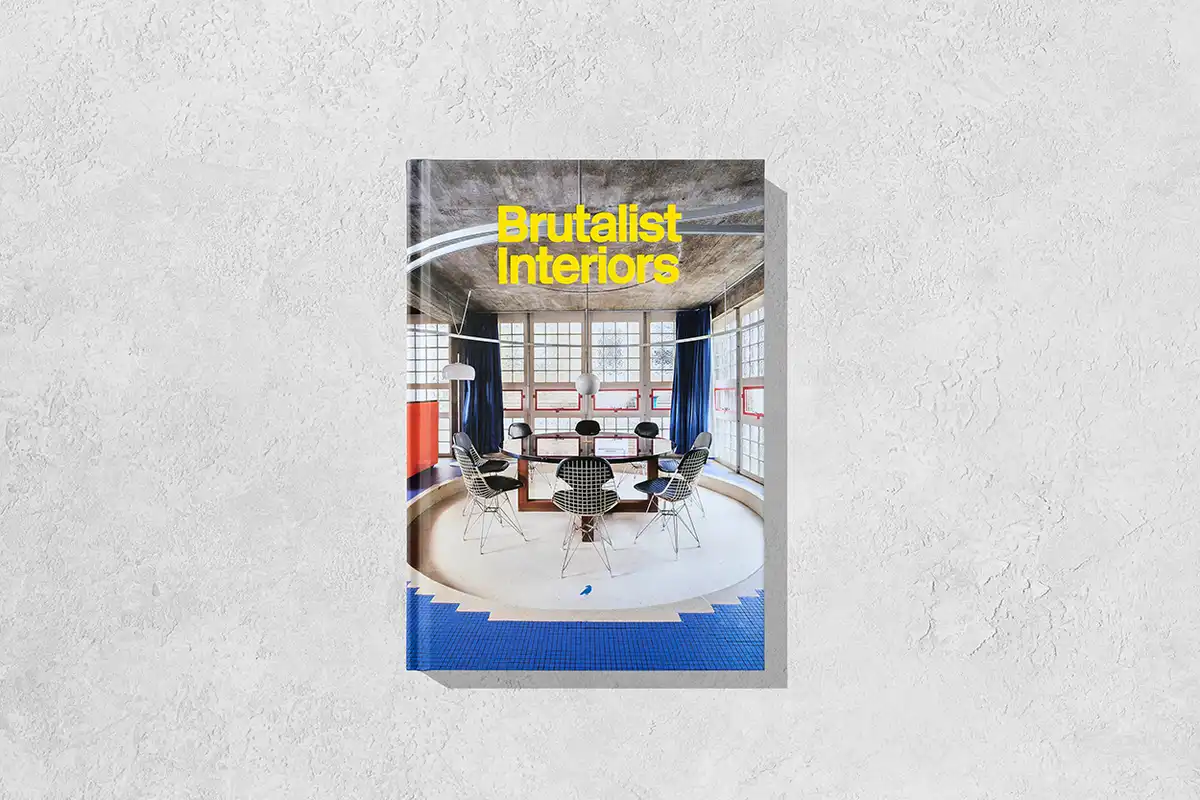
Brutalist Interiors is the first title to explore interior spaces of concrete architecture at an international scale. From sacred spaces and civic monuments to residential environments and contemporary reinterpretations, the book documents the sculptural logic, spatial clarity and material richness of interiors rarely seen or photographed.
Featuring photography by Iwan Baan, Roberto Conte, Leonardo Finotti, Stefano Perego, Simon Phipps and others, the book presents over 100 interiors in 30 countries. Brutalist Interiors is edited by Derek Lamberton, with essays by the architectural historians and critics Blake Gopnik, Naomi Pollock, Felix Torkar, Ewan Harrison, Gili Merin, Ljubica Slavković, Deane Madsen and Rixt Woudstra.
The selection of essays reflect the global influence of Brutalist architecture with subjects ranging from Tadao Ando’s concrete interiors in Japan to the Washington, DC Metro, and Denys Lasdun’s work in Ghana to Moshe Safdie’s Habitat 67 in Montreal, alongside interiors from across Europe, Asia, North and South America. Many of these sites remain largely inaccessible, making the book an essential visual and intellectual record for architects, designers and Brutalism enthusiasts.
Brutalist Interiors presents a critical investigation into the spatial, ethical and ideological dimensions of interior architecture in concrete. The book considers how Brutalism’s core materials were employed to create spaces that are both functionally rigorous and sensorially expressive, and thoroughly explores the legacy of Brutalist practices in contemporary interiors.
Brutalist Interiors continues Blue Crow Media’s commitment to high-quality architectural publishing and thoughtful visual documentation. With large-format photography, refined typography and tactile production, the book is designed for both study and display.
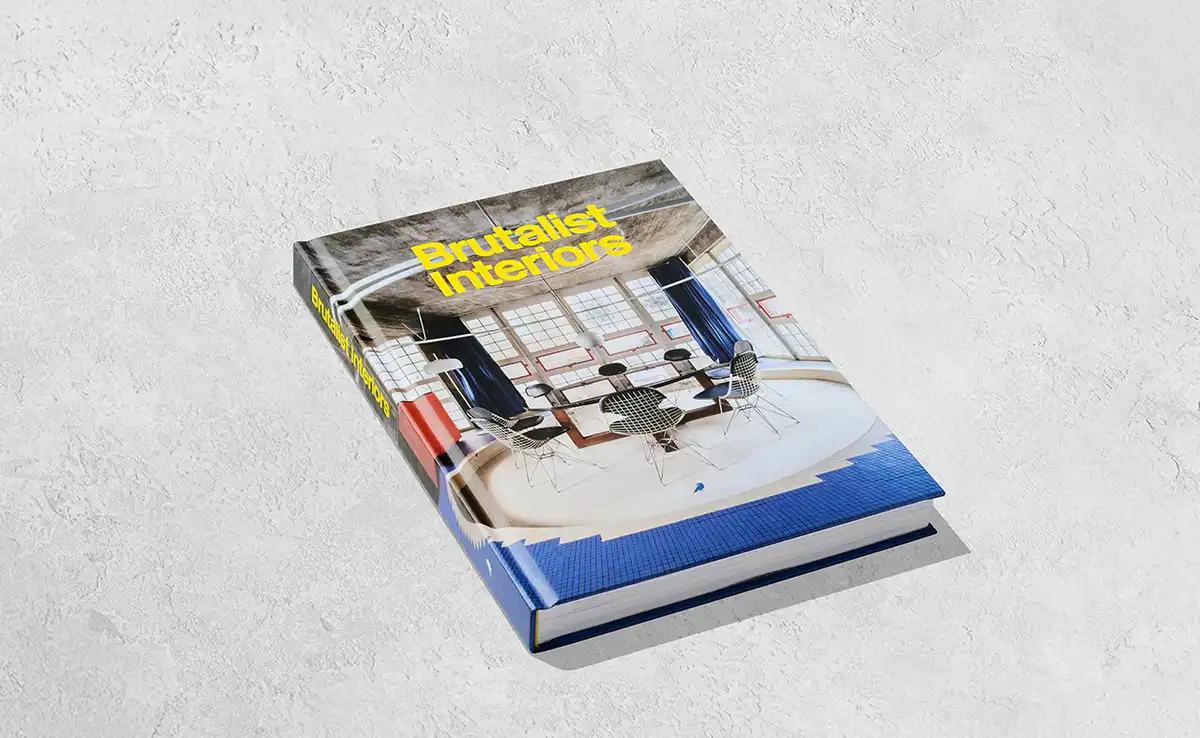
Availability: Brutalist Interiors will be available from September 2025 directly from bluecrowmedia.com and through bookshops and design retailers internationally.
Contact: Derek Lamberton at info(at)bluecrowmedia.com
About Blue Crow Media:
Founded in 2010, Blue Crow Media is an independent publisher of architecture and design titles, known for its acclaimed series of architectural city maps and calendars. Its work has been featured by The New York Times, Wallpaper, The Guardian, Dezeen, ArchDaily and Curbed, among others.
Titles include Brutalist London Map, Modernist New York Map, Concrete Tokyo Map, Brutalist Paris and London Underground Architecture & Design Map.
bluecrowmedia.com
Brutalist Interiors Essays by Blake Gopnik, Naomi Pollock, Felix Torkar, Ewan Harrison, Gili Merin, Ljubica Slavković, Deane Madsen and Rixt Woudstra
Photography by Iwan Baan, Roberto Conte, Leonardo Finotti, Stefano Perego, Simon Phipps and others
Edited by Derek Lamberton
Published by Blue Crow Media
ISBN: 9781912018222
Hardcover, 192 pages
Release date: 4 September 2025
Retail: £35 / $50
+++
Acoustic Essentials for Architects
J. Ross Publishing Releases Acoustic Essentials for Architects
The Primer Many Architects Wish They Were Offered in School
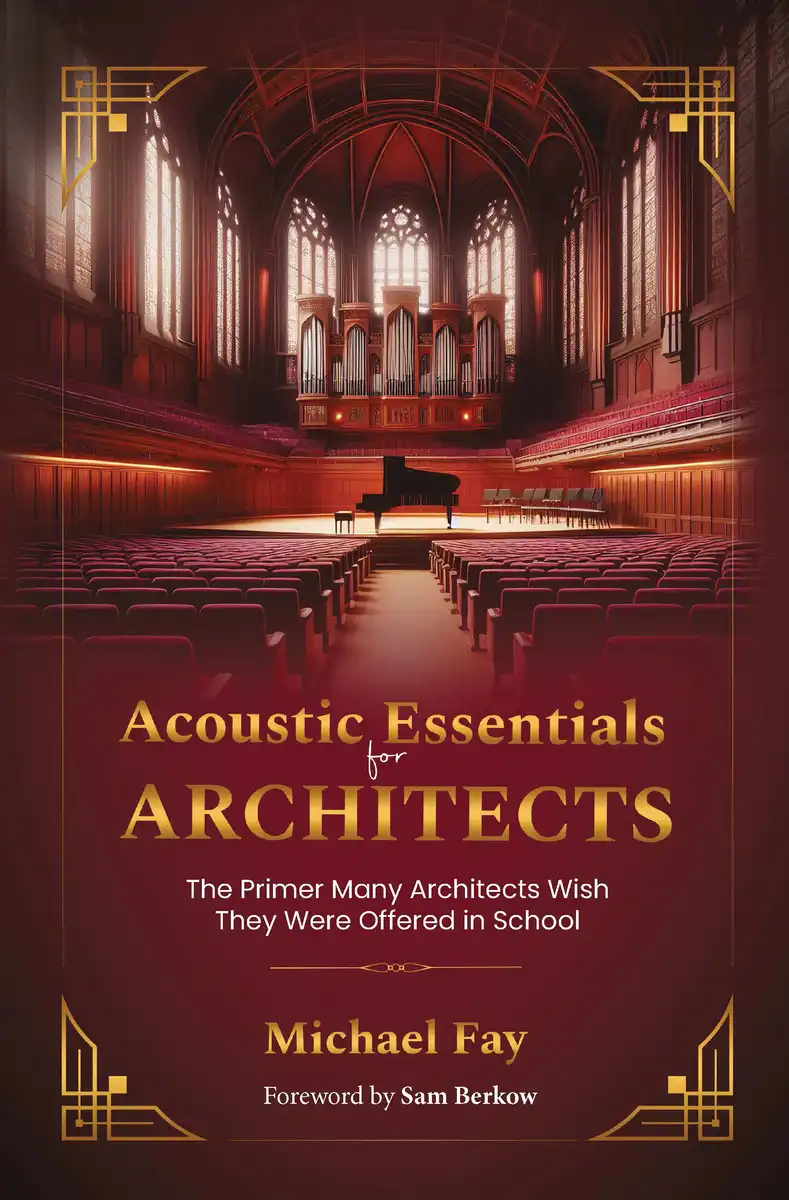
Plantation, FL — June 6, 2025 — J. Ross Publishing is proud to announce the release of Acoustic Essentials for Architects, now available in paperback and e-book formats through all major online retailers.
Authored by Michael Fay, a 45-year veteran AV and acoustical design engineer and former editor of Recording Engineer/Producer magazine, the book introduces many fundamentals as well as practical insights into the acoustic principles that shape our built environments. Presented in a low-tech, conversational tone, it offers clear explanations, examples, and real-world relevance—bridging the gap between architectural design and acoustical performance.
For more information use this link: Acoustic Essentials for Architects or https://jrosspub.com/catalog/science/acoustics-1/acoustic-essentials-for-architects/
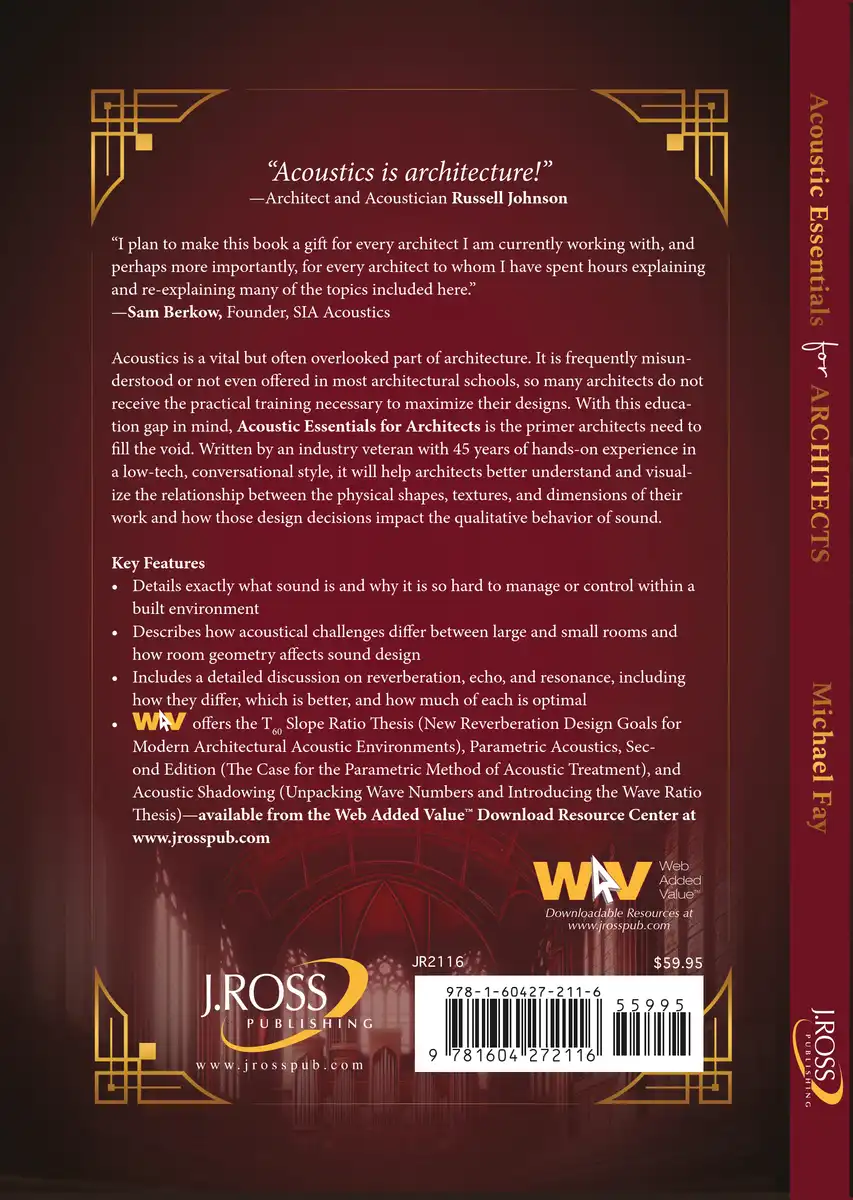
“This is not a textbook,” Fay explains, “but a reference guide for anyone with a keen interest in how sound interacts with physical spaces.” The book is ideal for architects, interior designers, contractors, venue owners, musicians, and educators alike.
The foreword is contributed by Sam Berkow, Founder of SIA Acoustics, who writes: “I plan to make this book a gift for every architect I am working with, and perhaps more importantly, for every architect to whom I have spent hours explaining and re-explaining many of the topics included here.”
Shannon McKnight, Principle Engineer at Sonawaves, LLC states, “Received from Amazon yesterday. Read in a single sitting last night. Michael Fay, this is a perfect summation to share with design team partners. Well done sir! Well written, logical, concise, and it has the perfect amount of technical data for the intended audience. I know what I’m giving for business gifts this year.
Michael Fay is the owner and principal of GraceNote Design Studio based in San Diego, California.
Book Review:
Review: Acoustic Essentials for Architects by Michael Fay
By: Shannon McKnight, CTS-D, PMP
If you’re an architect who’s ever watched your carefully crafted space fall flat when the room sounds harsh, muddy, or unintelligible—or a building owner wondering why your new facility looks incredible but makes it hard to hear clearly—you’re not alone. If you’re an AV consultant like me, brought in after the fact to “fix the sound,” you know how common (and frustrating) that scenario is. Acoustic Essentials for Architects by Michael Fay is the kind of book that can prevent these problems before they start. It’s a practical, approachable guide that gives architects the tools to design with sound in mind, creating spaces that not only look stunning but also deliver clarity, comfort, and connection for the people inside them.
This isn’t just another dry academic tome filled with complex equations and esoteric jargon. Fay brings a working knowledge of architectural acoustics and communicates it with clarity, purpose, and relevance. This book fills a long-standing gap between design intent and acoustic reality, and it does so with the grace of a teacher who’s been in the trenches.
As an AV design consultant specializing in houses of worship and performance-critical spaces, this book is a breath of fresh air. I often find myself brought in after the walls are up, the ceiling grid is in, and everyone’s wondering why the expensive sound system still sounds terrible. Fay’s book helps bridge that gap by educating architects on how to make acoustics an integrated part of the design process, not an afterthought.
Architecture Meets Sound Science
What sets this book apart is its accessibility. Fay respects the intelligence of his audience without assuming deep technical expertise. He explains concepts like reverberation time, absorption coefficients, and speech transmission index (STI) in a way that makes them not only understandable but design relevant. The visuals and diagrams throughout are crisp, useful, and practical — a rarity in a field where the visual aids are often either too simplistic or over-complicated.
The first few chapters focus on the physics of sound—how it behaves, how it interacts with surfaces, and what that means in an architectural context. Where this book shines is when Fay translates those principles into design implications. Instead of just telling the reader what flutter echo is, he shows you how it arises in architectural geometry, how to identify it during the design phase, and what types of treatments will fix it without compromising the visual aesthetic.
This is essential knowledge for architects working on performance venues, schools, sanctuaries, courtrooms, or any space where speech intelligibility and acoustic comfort are critical. It’s a valuable tool for those of us in AV and acoustic consulting that we can hand to our design partners to get everyone on the same page before the value-engineering axe starts swinging.
Practical, Not Prescriptive
One of my favorite aspects of Acoustic Essentials for Architects is that it doesn’t pretend there’s a one-size-fits-all solution. Fay is refreshingly honest about the trade-offs inherent in acoustic design. He walks the reader through case studies and design options, showing how to weigh competing priorities: aesthetics vs. performance, budget vs. benefit, architectural vision vs. acoustic necessity.
There’s also a generous amount of real-world application here. Fay doesn’t just talk about NRC values in isolation — he shows how material selections like wood, concrete, glass, and gypsum affect both form and function. For anyone who has sat across the table from an architect defending a design dominated by hard reflective surfaces, this book arms you with the language and rationale to advocate for better acoustic outcomes.
A Resource, a Reference, and a Reality Check
This book is not a substitute for a professional acoustic analysis — and it never claims to be. It is an excellent primer for understanding when to bring in a consultant, what questions to ask, and what design decisions will either help or hinder acoustic success. It empowers architects to engage more deeply and more confidently in acoustic conversations. It makes our job easier for those of us providing AV and acoustic consulting when the design team has already absorbed the basics and understands why we’re recommending what we are.
I also appreciate how Fay addresses the acoustics of building types beyond the obvious. He touches on multipurpose rooms, open-plan offices, and educational spaces—each with their own set of challenges. Churches, of course, get attention too, and rightly so. Any architect designing a worship space without a working knowledge of acoustics is heading for a major challenge.
Who Should Read It?
If you’re an architect working on spaces where people speak, sing, play instruments, or need to hear each other clearly—this book should live on your desk, not your shelf. If you’re an AV consultant, this is the book you hand to your clients when they want to understand why “just putting in a better mic” won’t solve their room’s problems. If you’re an acoustician, it’s the perfect outreach tool to help design teams understand the why behind the what.
Final Thoughts
Fay’s Acoustic Essentials for Architects accomplishes what few books in this niche manage to do: it educates without overwhelming, advises without preaching, and supports collaboration without dumbing anything down. In a field where communication between disciplines can make or break a project, this book is a welcome translator.
It is highly recommended for anyone who wants to design spaces that don’t just look great, but sound great too.
Shannon McKnight, CTS-D, PMP
Principal Engineer
Sonawaves, LLC
sonawaves.com
+++
27 February 2025
Franklin D. Israel: A Life in Architecture
Acclaimed architect Franklin D. Israel (1945–96) became best known for his innovative residential projects and office interiors in Los Angeles. This new volume offers the first account of Israel’s career of nearly thirty years.
Architectural historian Todd Gannon draws on archival resources from the Getty Research Institute, analyses of Israel’s buildings, and interviews with the architect’s colleagues, clients, and contemporaries, including Frank Gehry, Thom Mayne, and Robert A.M. Stern Architect.
The author guides readers through the Los Angeles architectural context, Israel’s influential teaching at UCLA, his dalliance with Hollywood, and the personal motivations behind his architecture and design work—all aspects of an influential career that was cut short by his death from AIDS-related complications at the age of fifty.
Endorsements:
“This study is a necessity for students and scholars to understand the idiosyncrasies of Los Angeles architecture. Gannon sensitively articulates the mark that Frank Israel left on the identity of this complex, ever-changing city.”
—Thom Mayne
“Weaving together the creative and personal histories of one of all too many architects felled by HIV/AIDS, Gannon’s engaging study reveals that the deliberate heterogeneity of Frank Israel’s architectural palette and the broad reach of his ideas made his work a centripetal force that turned Los Angeles into a global architectural capital.”
—Sylvia Lavin, Professor of History and Theory of Architecture, Princeton University
Publication Information:
Franklin D. Israel: A Life in Architecture
Todd Gannon
Getty Research Institute
256 pages, 9½ x 10 inches
182 color and 55 b/w illustrations
Hardcover
ISBN 978-1-60606-926-4
US $60 / UK £50
Publication Date: January 14, 2025
Media Contact:
Sydney Almaraz-Neal, Getty Publications
(310) 440-6536
About Getty Publications:
Getty Publications produces award-winning titles that result from or complement the work of the J. Paul Getty Museum, Getty Conservation Institute, and Getty Research Institute. This wide variety of books covers the fields of art, photography, archaeology, architecture, conservation, and the humanities for both the general public and specialists.
Publications include illustrated works on artists and art history, exhibition catalogues, works on cultural history, research on the conservation of materials and archaeological sites, scholarly monographs, critical editions of translated works, comprehensive studies of Getty’s collections, and educational books on art to interest children of all ages.
Getty Publications
1200 Getty Center Drive, Suite 500
Los Angeles, CA 90049-1682
USA
+++
Architectural Books
Architecture Books : Current Publications (this page)
Architects Books : Recent Publications up to and including 2017
Architecture Publications : Recent Publications
Architectural Books : Older Publications
+++
Architecture Books 2024
Architecture Publications in 2024
30 October 2024
JOY – Kim Utzon
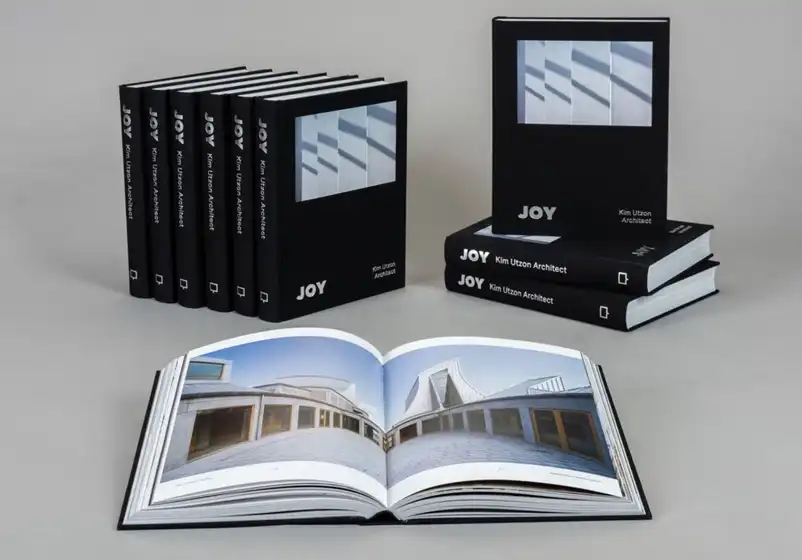
As the son of one of the world’s most celebrated architects, Jørn Utzon, Kim Utzon accompanied his father around the world as he worked on different projects, perhaps most notably spending a long time in Sydney while Jørn worked on the Sydney Opera House.
post updated 12 September 2024
“What If We Stopped Tolerating Design That Causes Boredom,
Disease, and Depression?”- Tye Farrow
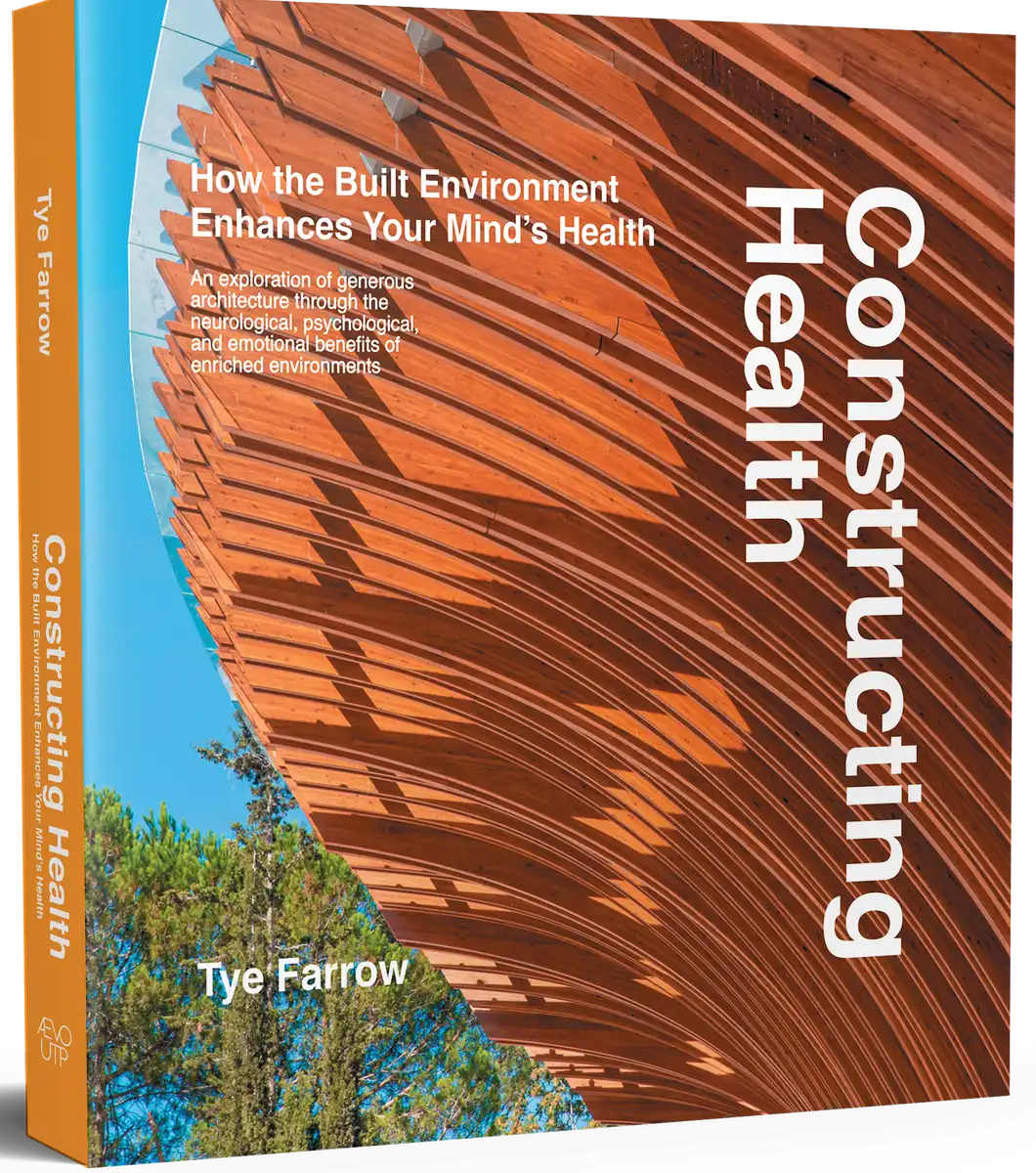
image courtesy of publishers
Tye Farrow’s Groundbreaking Book “Constructing Health” Calls for a Paradigm Shift in Architectural Design to Promote Mental Health and Physical Well-Being
Toronto, September 11 , 2024 — Tye Farrow, the internationally acclaimed Canadian architect, is setting a new standard for how we think about the spaces we inhabit with the release of his first book published by University of Toronto Press, Constructing Health: How the Built Environment Enhances Your Mind’s Health ( Aevo UTP, $150). This landmark publication delves into the intricate relationship between architecture and human health, offering a unique perspective on how our surroundings can actively contribute to our mental, physical, and emotional well-being, asking questions like “How do buildings make us feel?” and “How can they make us feel better?”
Farrow has long championed the idea that architecture should be judged by how it impacts health and asks: “What if health is the basis for judging every public space and building that we occupy?” In Constructing Health, Farrow challenges conventional architectural practices by advocating for a salutogenic approach—a design philosophy that focuses not just on preventing illness, but on fostering health and well-being. Drawing on interdisciplinary insights from neuroscience, psychology, and architecture, Farrow explores how thoughtfully designed environments can enhance cognitive function, productivity, social interactions, and overall quality of life. His approach underscores the importance of creating spaces that are not merely functional but are also enriching and supportive of human health.
Farrow’s book explores how architects, urban planners, and policymakers can create environments that not only prevent disease but actively promote a thriving society. It’s a must-read for professionals and advocates in the fields of architecture, city planning, and public health administration, and arrives at a pivotal moment, as the world grapples with the long-term implications of the built environment on public health.
Statistics from the Chan School of Public Health highlight that 90% of our time is spent indoors, making the design of these environments a critical factor in our health outcomes. Moreover, studies have shown that environments rich in natural elements, light, and air quality can significantly reduce stress and improve well-being.
“Architects and designers should understand the profound impact their work has on health,” says Farrow. “By prioritizing natural elements, ample light, and social interaction, we can create spaces that foster resilience and long-term well-being.”
Constructing Health is not just a book—it’s a call to action. It challenges architects, designers, governments and all those involved in the creation of our built environments to rethink how we approach design, placing health and well-being at the forefront of our considerations. Farrow’s vision for a healthier, more holistic approach to architecture is poised to influence the future of design and construction for years to come.
Copies of Constructing Health are available now, and the book can be purchased online or at leading bookstores across Canada and the U.S.
###
About Tye Farrow
Tye Farrow is a globally recognized architect known for his work at the intersection of neuroscience and architecture. He has been at the forefront of integrating health-promoting principles into architectural design, with projects spanning from healthcare facilities to urban environment, like Ontario, Canada’s Credit Valley Hospital and St. Michael’s Hospital, and the Venice Aqua-emerald Archipelago in Venice Italy and the Grip Global Tower in London, UK. Farrow’s work is dedicated to creating spaces that enhance well-being and promote human flourishing.
About University of Toronto Press and Aevo UTP
Founded in 1901, University of Toronto Press (UTP) is Canada’s premier academic publisher and one of the largest university presses in North America. UTP publishes approximately 200 new books each year, encompassing scholarly works, course materials, and general interest titles. Aevo UTP, an imprint of UTP, publishes books that delve into major issues facing today’s world, written by leading experts and intended for the intellectually curious.
Previously on e-architect:
8 July 2024
South Bank: Architecture & Design
South Bank
Architecture & Design
By Dominic Bradbury, photographed by Rachael Smith
Published by Batsford, 10 October 2024
ISBN: 9781849948074
RRP £40
Hardback
An illustrated celebration of the South Bank and its buildings.
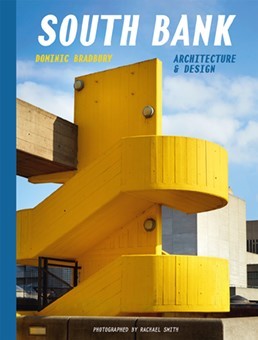
In the first comprehensive overview about the architecture and design of the South Bank, Dominic Bradbury draws back the curtain on this iconic complex, providing an unrivalled insight into the buildings that populate one of London’s epicentres of art and entertainment.
Encompassing an art gallery, theatres, performance halls and a cinema, the South Bank is a focal point of art and entertainment in the heart of London. This riverside enclave has been evolving since the 1951 Festival of Britain catapulted it onto the scene, with renowned architects and designers helping to shape this space throughout the mid-century and beyond.
South Bank: Architecture & Design explores the sublime, community-focused architecture of this iconic cultural hub, providing an unrivalled insight into the buildings that populate it.
Architecture and design specialist Dominic Bradbury provides an in-depth look at the Royal Festival Hall, the Hayward Gallery, Queen Elizabeth Hall and The Purcell Room, the National Film Theatre/BFI and the National Theatre, all of which are richly illustrated with beautiful photography by Rachael Smith.
This sumptuous book is a must-read for anyone intrigued by Britain’s built heritage and cultural spaces.
Dominic Bradbury is a journalist and lecturer specialising in architecture and design. He has written for Wallpaper, World of Interiors, Elle Decoration, Vogue Living, The Telegraph and The Financial Times.
His books include The Atlas of Mid-Century Modern Houses, Mid-Century Modern Complete, New Brazilian House, The Iconic House, The Iconic Interior, Mountain Modern and Waterside Modern. He lives in Norfolk and is available for interview.
Rachael Smith is a leading interiors and architectural photographer, she works for a wide variety of publications including the World of Interiors, House and Garden, Elle Decoration, Guardian and The Times supplements, as well as numerous foreign publications. Rachael has travelled extensively with her work to most of Europe, New Zealand America and China. This will be her 4th published book. She lives in Lincolnshire and is available for interview.
B.T. Batsford Ltd
43 Great Ormond Street, London, WC1N 3HZ
www.batsfordbooks.com
Five Critical Essays on Architectural Ethics
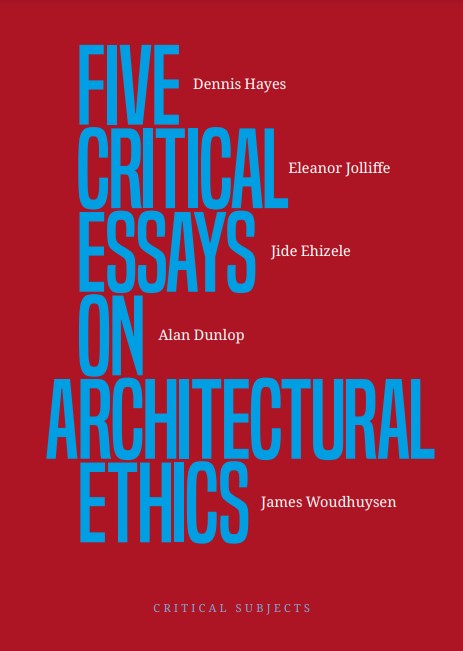
FIVE CRITICAL ESSAYS will explore the general discussions affecting, inter alia, design, architecture, culture and politics. The ideological premise of the journal is to facilitate a critical engagement with ideas, and to interrogate established topics objectively. Taking a leaf out of EP Thompson’s review of New Society, the 1960s cultural review magazine, we aim to offer ‘hospitality to a dissenting view (as) evidence that the closure of our democratic traditions is not yet complete.’ Our purpose is to re-open civic debate.
FIVE CRITICAL ESSAYS will introduce a theme for each issue and recruit five writers to comment freely and openly on the subjects to generate space for a conversation and further enquiry. The conclusion of each journal will not necessarily mean a resolution. Indeed, it is intended that there will be five robust views on display and that their interventions will be a spark to further discussion.
FIVE CRITICAL ESSAYS will be an agora where genuine interpretations are proposed and where arguments that will hopefully advance the understanding of the subject are confidently proposed. We aim to provide a nuanced perspective on a variety of issues, whether exploring ethical dilemmas, interrogating contemporary arguments or challenging well-established orthodoxies.
Published by: TRG Publishing
ISBN: 978-1-903094-06-8
Design and typeset by: Alex Cameron
Printed by: Swallowtail Print (www.swallowtailprint.co.uk)
More Architecture Books online soon
+++
Architecture Books Archive
Architecture Books posted on e-architect:
Architects Books : Recent Publications up to and including 2017
Architecture Publications : Recent Publications
Architectural Books : Older Publications
+++
Architectural Publications By Geographic Area
Comments for the Architectural Books – Building Publications page welcome.