Hidden Mountain Dwelling Taiwan
9 February 2026
Design: WSAA
Location: mountain valleys of central Taiwan
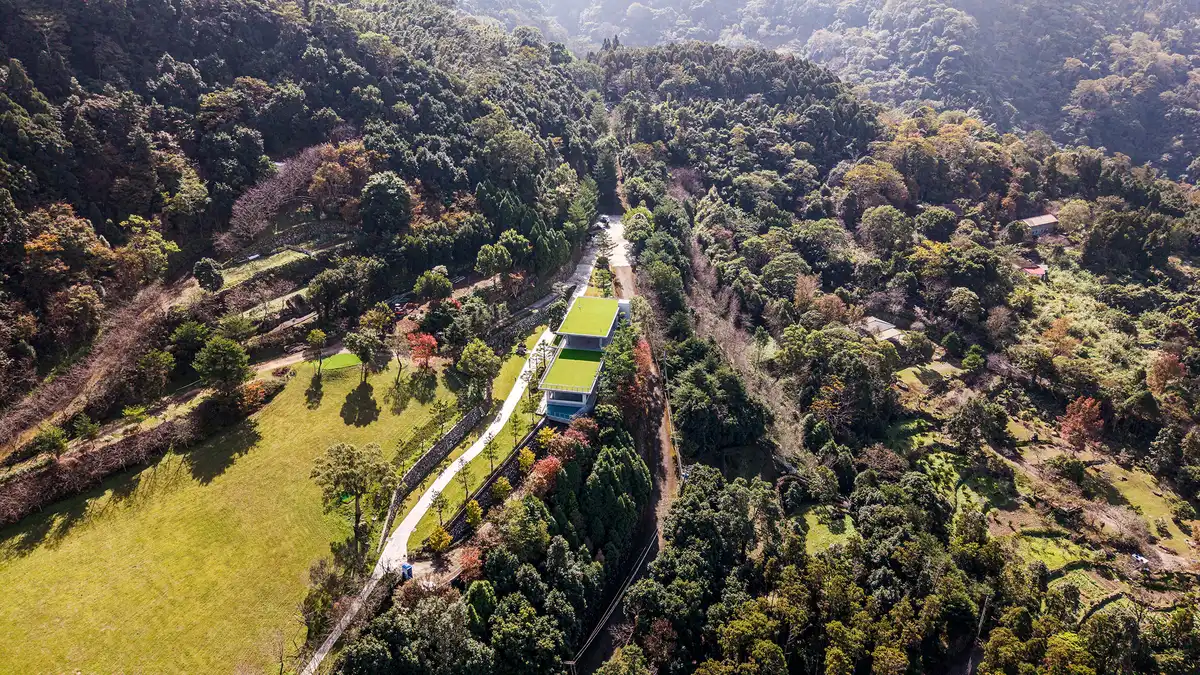
The architecture is integrated into the valley landscape:
Photos Courtesy of Lanyuphoto
A Forest Habitat, A Borrowed Home — Living as Nature’s Neighbor
Project Overview
Hidden Mountain Dwelling carries a double meaning. One speaks of a habitat within the forest; the other is a phonetic metaphor suggesting that humans are merely temporary neighbors—borrowing a place to live within nature’s domain. To borrow is not to possess. It implies humility, respect, and a shared responsibility toward the land—an ethos of coexistence where architecture steps back, and life in nature begins to speak.
A horizontal band of lines forms the architectural frame, drawing distant mountains and drifting mist indoors like a scroll painting, quietly collecting the valley’s four seasons:
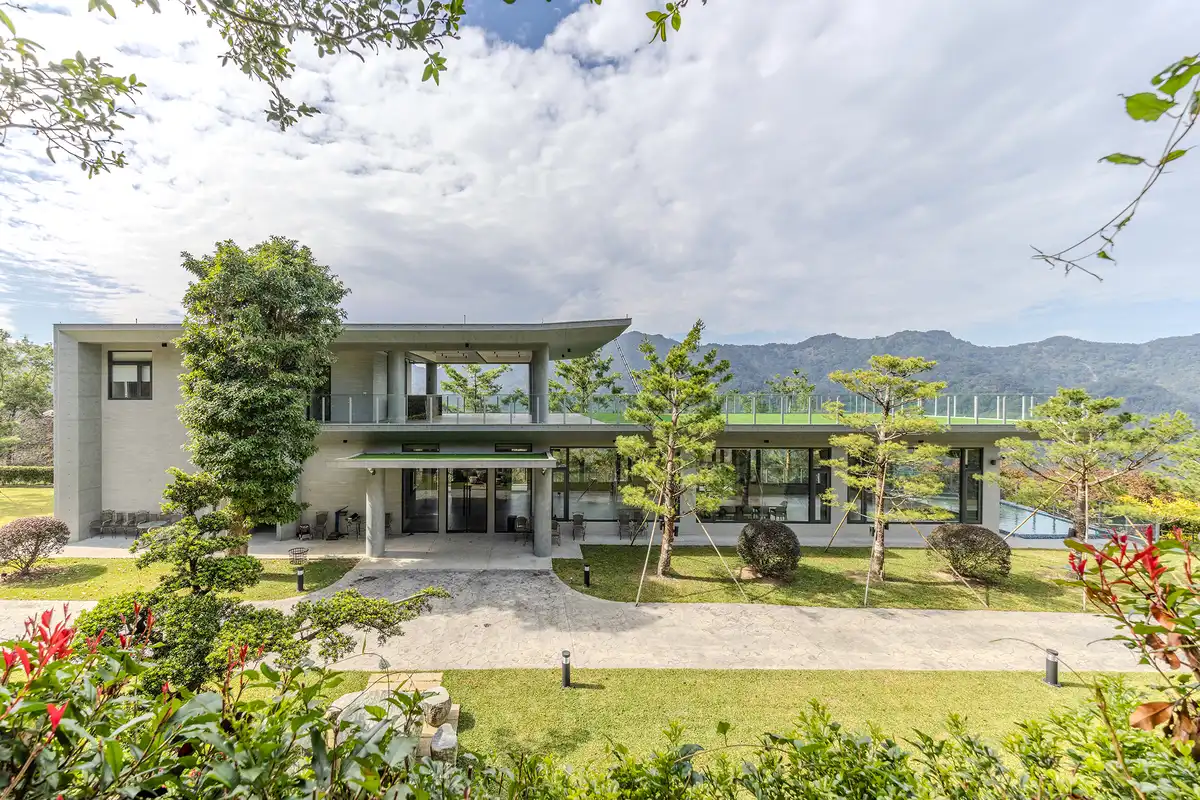
Commissioned by a successful couple preparing for retirement, the project is conceived as a secluded retreat in the mountain valleys of central Taiwan. Their intention was not to build a trophy house, but a quiet residence where everyday rituals could return to a slower rhythm—one that is measured by light, wind, mist, and the changing seasons.
Approach to the entrance:
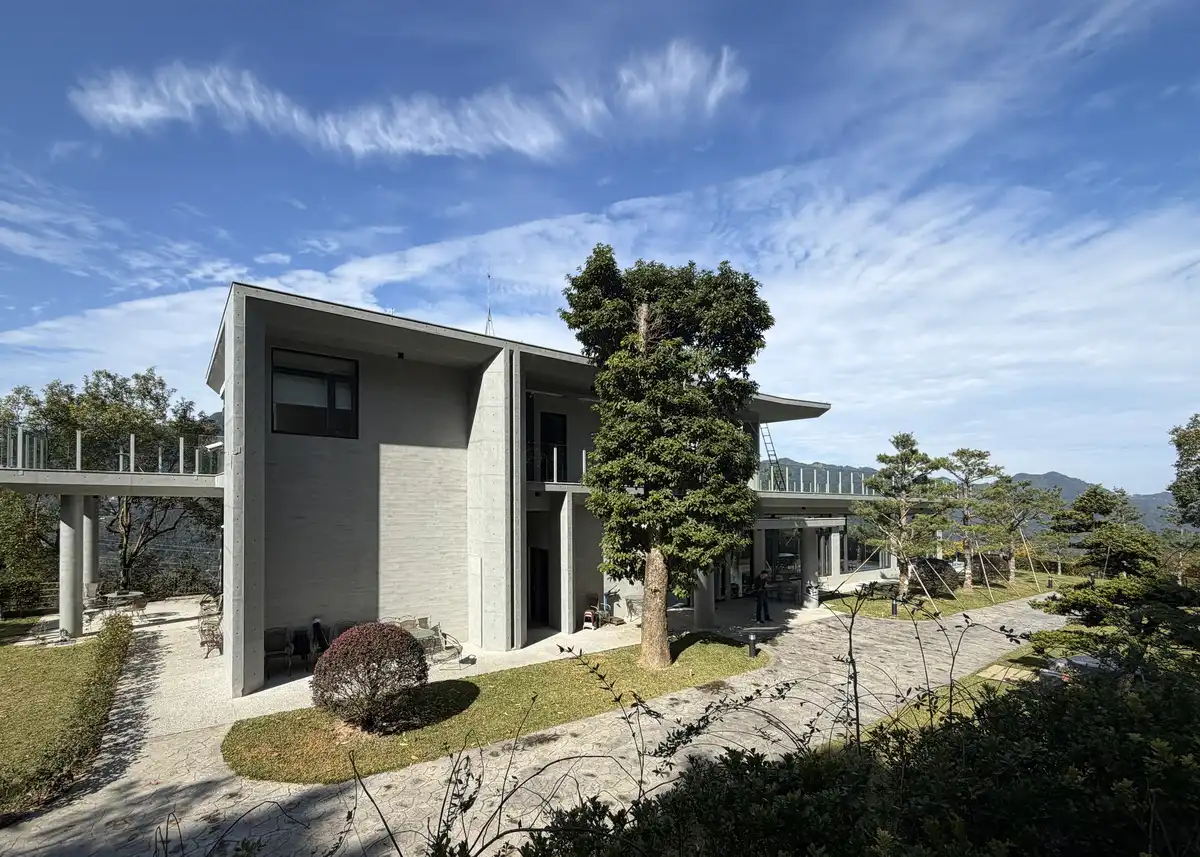
Site & Context
The site is a long and narrow hillside parcel situated between two terraces at different elevations. The upper platform offers an open clearing, while the lower terrace is embraced by dense woodland. Beyond the immediate trees, layered ridgelines unfold in the distance, with clouds and fog drifting through the valley. This duality—open plateau above and forest enclosure below—became the foundation of the spatial narrative.
The horizontal ribbon-like lines frame the view at night:
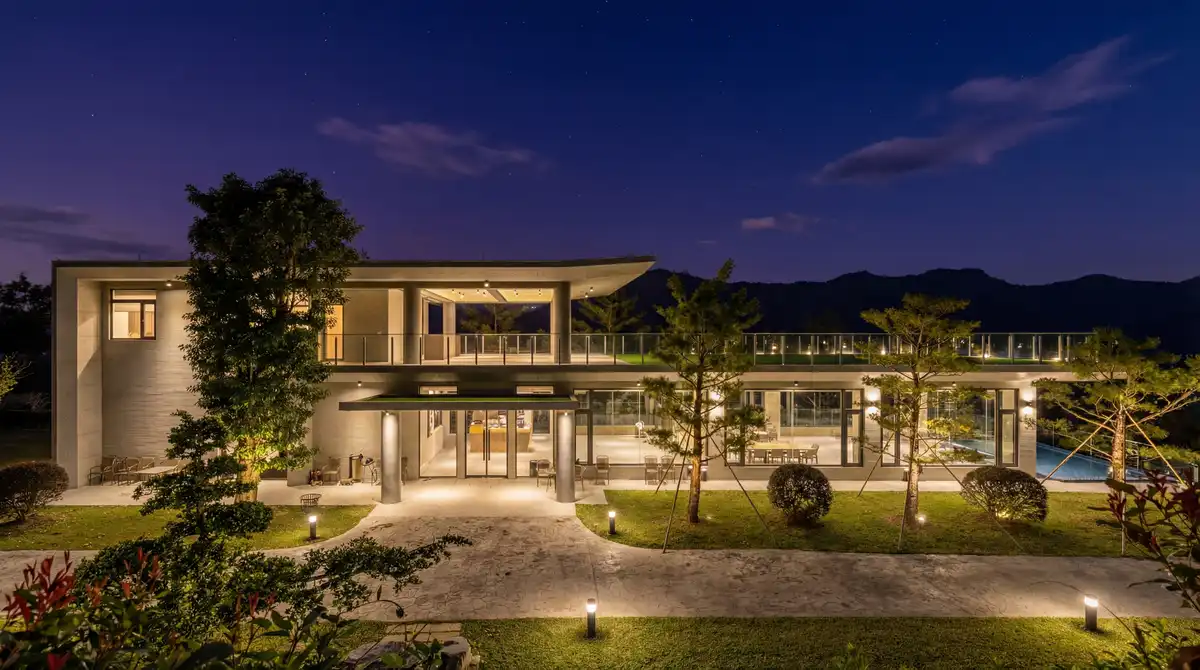
Rather than treating the landscape as a background view, the design sought to dismantle the boundary between architecture and nature. Here, dwelling is not defined by watching the scenery, but by becoming part of it.
Rather than treating nature as a backdrop, the house invites residents to inhabit the landscape:
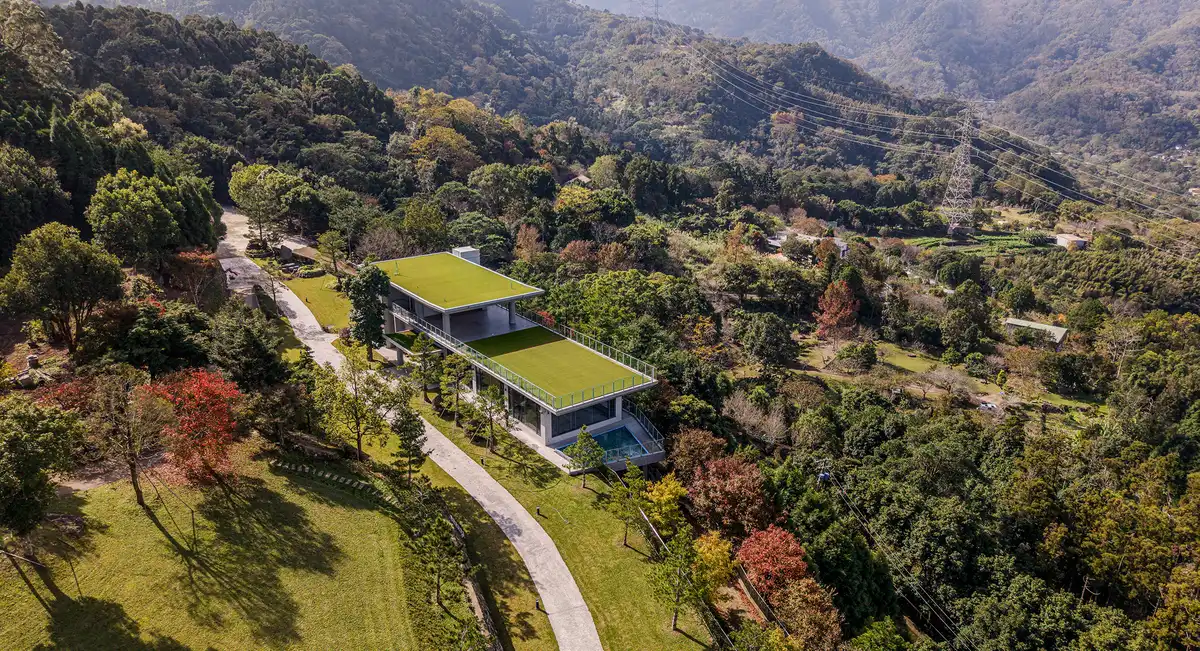
Design Strategy
Horizontal Framing / Vertical Roaming
The design is guided by a simple yet layered concept:
“Framing nature horizontally; roaming the forest vertically.”
Horizontal (Static / Visual):
A continuous horizontal language forms the architectural “frame,” pulling distant mountains and drifting clouds into the interior like a scroll painting. The home becomes an instrument of collection—capturing seasonal atmospheres and holding them gently within daily life.
Vertical (Dynamic / Experiential):
In contrast, the vertical experience is composed through cantilevered corridors and layered circulation paths. Vegetation and ferns are allowed to grow beneath these routes, creating a sense of walking within the forest rather than merely beside it. Light filters through branches, wind plays along the passage, and soft rain scatters petals onto the ground like a natural carpet. The corridor is not simply a connection between rooms—it becomes an ecological promenade.
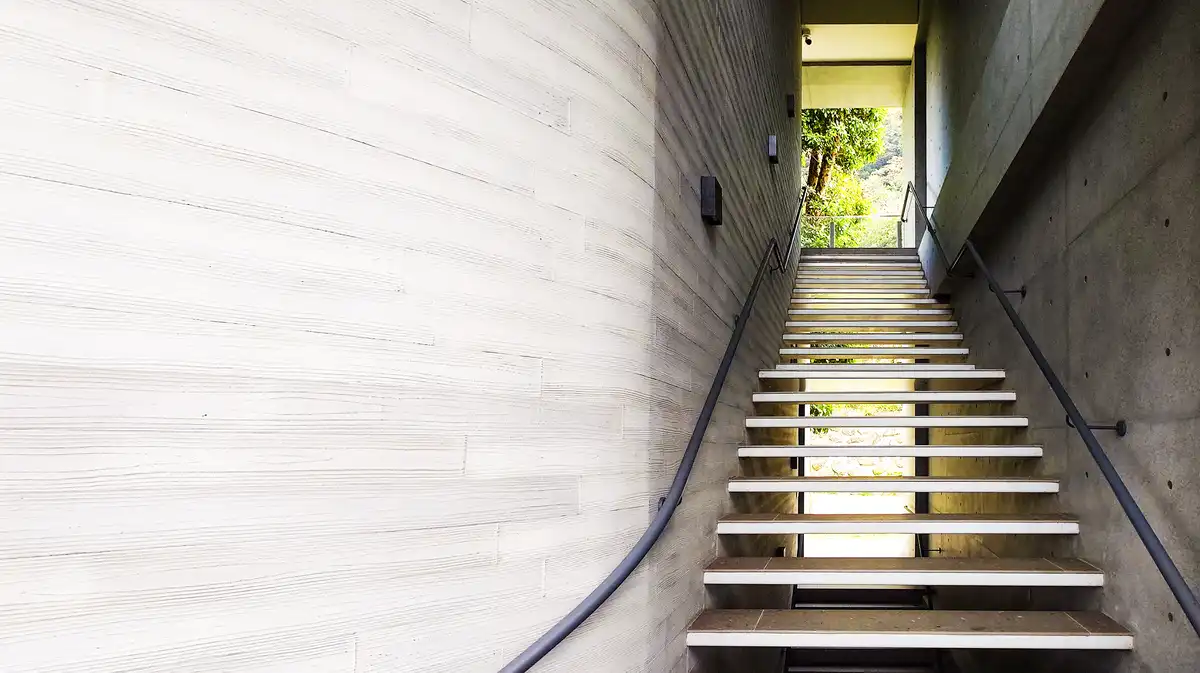
The staircase breathes with the landscape, letting sunlight and leaves drift through its open structure:
Spatial Organization
Root / Stitch / Nest
The architecture is organized in a vertical sequence, each level defined by its relationship to the terrain and the inhabitant’s daily rhythm.
B1 — Rooted (Root):
Embedded into the hillside and interwoven with the retaining structure, the basement forms a stable foundation—like roots gripping the slope. It connects to the outer movement routes and stores farming tools, gardening equipment, and hiking gear, supporting a life grounded in the landscape.
1F — Sutured (Stitch):
Aligned with the upper terrace, the first floor acts as the social core and the hinge of the home. It stitches together the distant panorama and the close-up forest ecology, linking macro and micro scales of nature. A large-span glass façade enhances transparency, allowing daylight to rotate slowly through the interior like a moving calendar.
2F — Inhabited (Nest):
The highest level hosts the primary suite and roof terrace. Overlooking the valley, clouds, and constellations, it becomes a private sanctuary in the sky—where dawn fog, starry nights, and mountain breezes shape a daily sense of wonder.
Filtered Stair Light:
To preserve uninterrupted views, the stair is conceived as a vertical contour—an open, permeable structure that filters light, air, and scenery. The porous steps frame shadows and greenery as one moves, turning circulation into a continuous act of viewing.
Interior view of the living room:
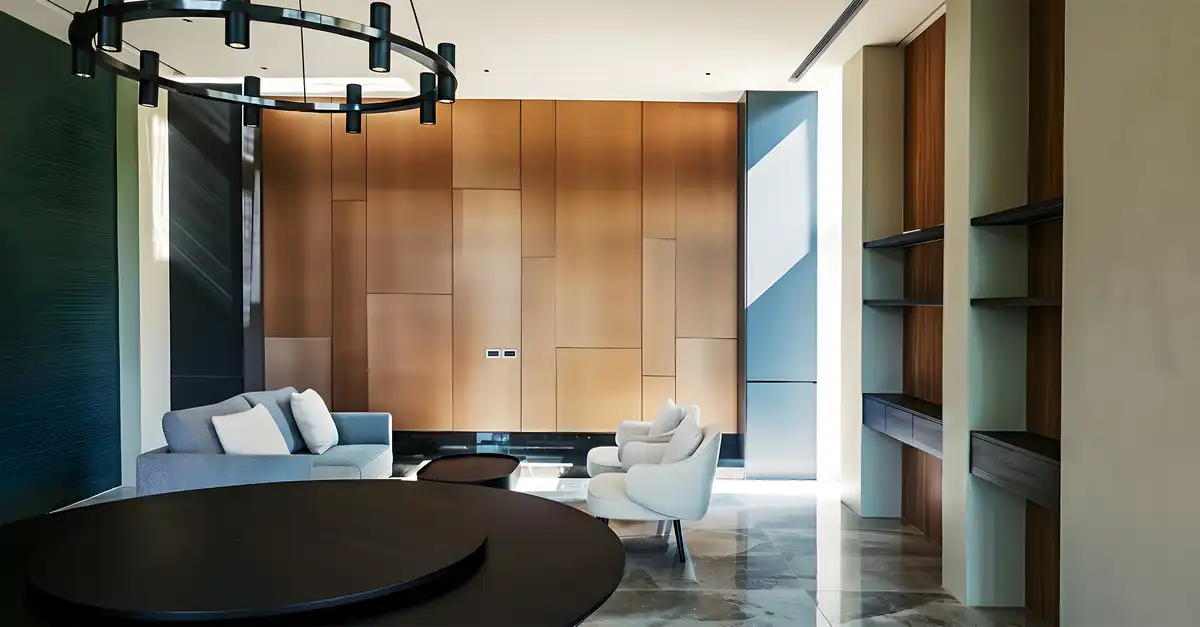
Sustainability & Coexistence
Sustainability in this project is not treated as a checklist, but as an attitude of restraint and respect. The building does not dominate the hillside; it negotiates with it—minimizing disturbance and allowing nature to remain present as the primary character of space.
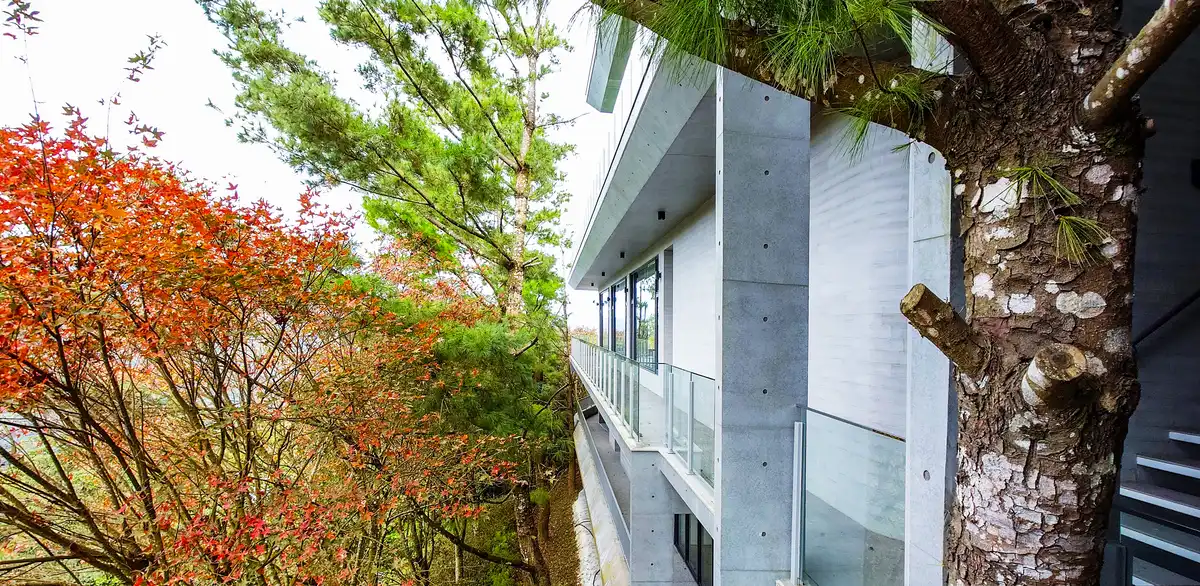
By lifting and cantilevering key circulation elements, the ground is preserved for vegetation growth and ecological continuity. The house embraces natural light, wind, and seasonal humidity as part of its atmosphere, reducing reliance on excessive artificial control. Here, architecture becomes an interface—helping humans live gently within a complex natural system.
Exterior night view:
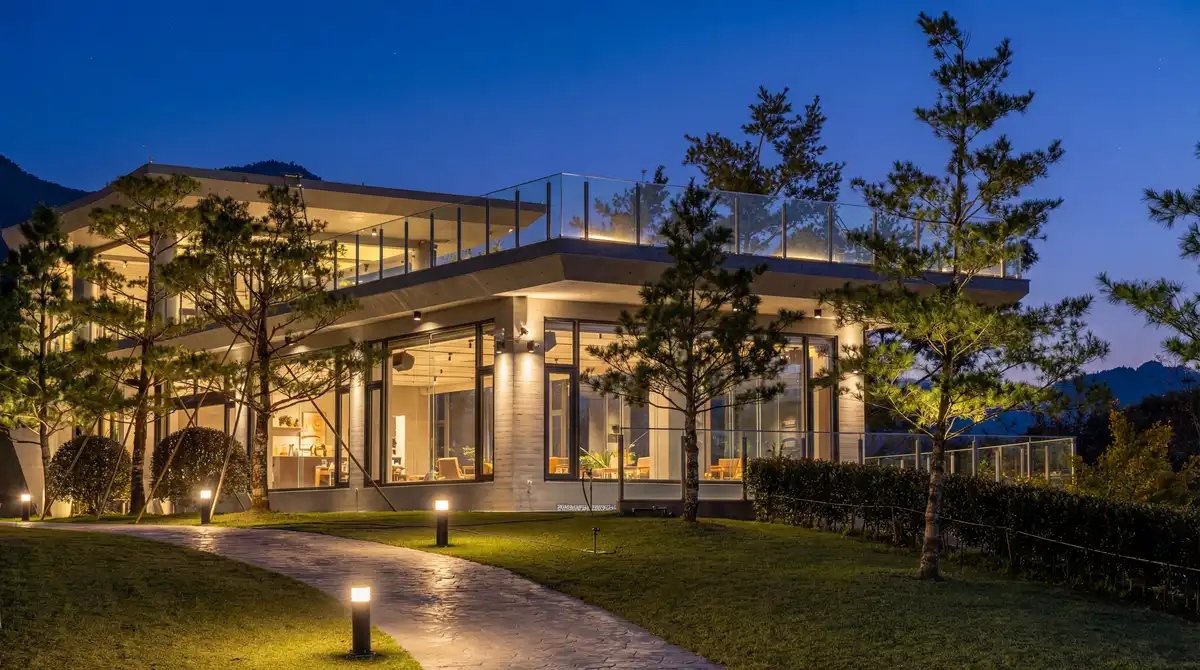
Materiality & Atmosphere
Material choices emphasize tactility, permeability, and calmness—supporting the intent of a “borrowed” dwelling. Transparency is used not as spectacle, but as a tool to dissolve edges: glass surfaces extend sightlines into the valley, while layered structural frames establish rhythm and proportion without overwhelming the landscape.
The architecture is designed to host time. Light becomes a material, shadow becomes ornament, and rain becomes sound. Instead of competing with nature, the building reveals it—making the forest visible, audible, and inhabitable.
The architecture lightly touches the ground, fostering coexistence with nature:
Conclusion
Hidden Mountain Dwelling is simultaneously a frame for distant ridgelines, a corridor weaving through woodland, and a bridge reconnecting human life with nature. It steps back with humility, allowing wind, light, rain, and greenery to lead the story.
Here, time is not measured by clocks, but by the changing of leaves and the drifting of light—slowly, quietly, like a landscape breathing.
+++
WSAA 設計團隊|翁崧豪建築師
WSAA 設計團隊串聯公共服務、環境關懷、以人為本的設計思維與美學表現。從公共建設到廠辦空間,我們以「科學+美感」為方法,打造更具包容性並能長久延續的價值。
Design Team:
WSAA DESIGN TEAM- Weng Sung Hao Architect
WSAA Design Team bridges public service, environmental care, firm human-centered design, and aesthetics. From civic works to factories, we use science + beauty to create inclusive, lasting value.
Image credits: Courtesy of Lanyuphoto
Hidden Mountain Dwelling Taiwan images / information received 090226 from WSAA
Location: Central Taiwan, eastern Asia.
Taiwan Buildings
Taiwan Architecture Designs – chronological list
Contemporary Taiwan Architecture Design – architectural selection:
The Island, Taichung
Design: MVRDV
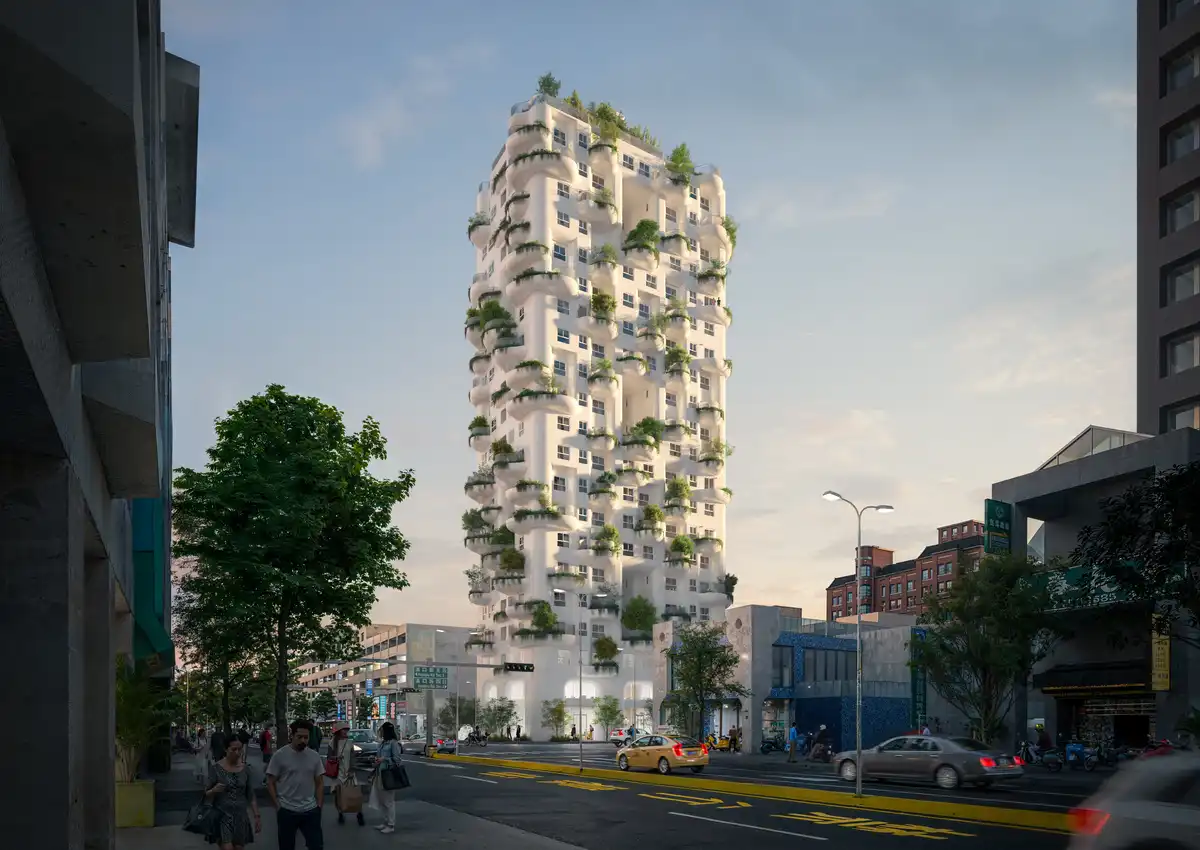
Image : MVRDV
Nature Rocks, Pingtung County, southern Taiwan tourist facilities
Architects: MVRDV and HWC Architects
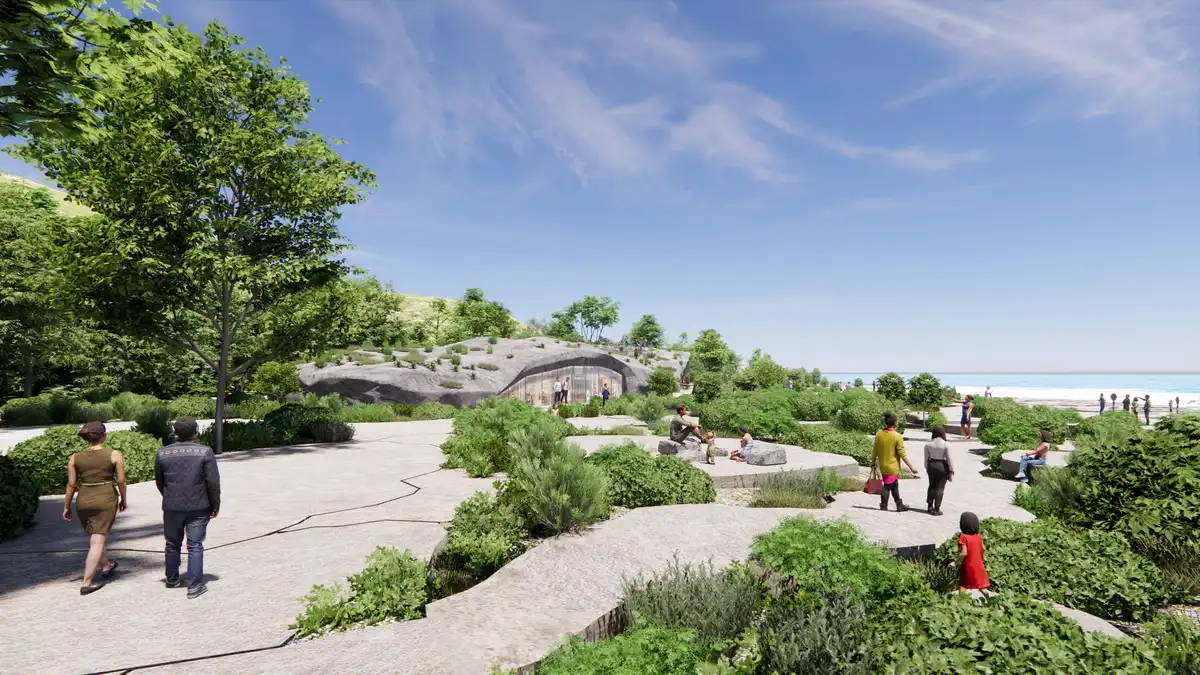
image : MVRDV
+++
Taiwanese Architecture
Taiwanese Architecture Design – selection:
Sun Rock by MVRDV, near to Taichung
Architects: MVRDV
Lè Architecture in Taipei
Architects: Aedas
Taipei Performing Arts Center by OMA
Design: OMA
Comments / photos for the Hidden Mountain Dwelling Taiwan building design by WSAA Architects page welcome.