
Casa de Retiro Espiritual Seville
11 December 2025
Design: Emilio Ambasz architect
Location: Seville, southwestern Spain
Architecture: Emilio Ambasz and the Casa de Retiro Espiritual 50 years later
Photos (at) Emilio Ambasz & Associates
In 2025, the 50th anniversary of the project of the Casa de Retiro Espiritual (Seville, Spain) by Emilio Ambasz is celebrated, a stunning imaginative reference to the primordial notion of home, an optical vision among the most celebrated in the world.
“This house is not a building: it is a thought,” says Ambasz. “It is a place where silence has an architecture and the landscape a voice.”
Casa de Retiro Espiritual Seville building by Emilio Ambasz Architect
It is 1975, and a thirty-two-year-old, Argentine by birth and cosmopolitan by adoption, conceives a project capable of dialoguing with the masters of architecture and with the most advanced debates on ‘making architecture’.
His name is Emilio Ambasz, graduated from Princeton University in record time, who only 3 years earlier, in 1972, became famous worldwide for having organized at the Museum of Modern Art of New York (MoMA) – as Curator of Design for the Department of Architecture and Design from 1969 to 1976 – also the legendary exhibition “Italy: the new domestic landscape”, bringing Italian design to world prominence.
In those years, the young architect had earned great and early fame thanks to a series of brilliant exhibitions, debates, and conferences at MoMA, with which he questioned everything: from the very concept of “domestic landscape” to the philosophical foundations of cultural institutions such as the museum and the university.
It is 1975, and the project of the Casa de Retiro Espiritual is immediately awarded the first in a long list of prizes and recognitions: the prestigious Progressive Architecture.
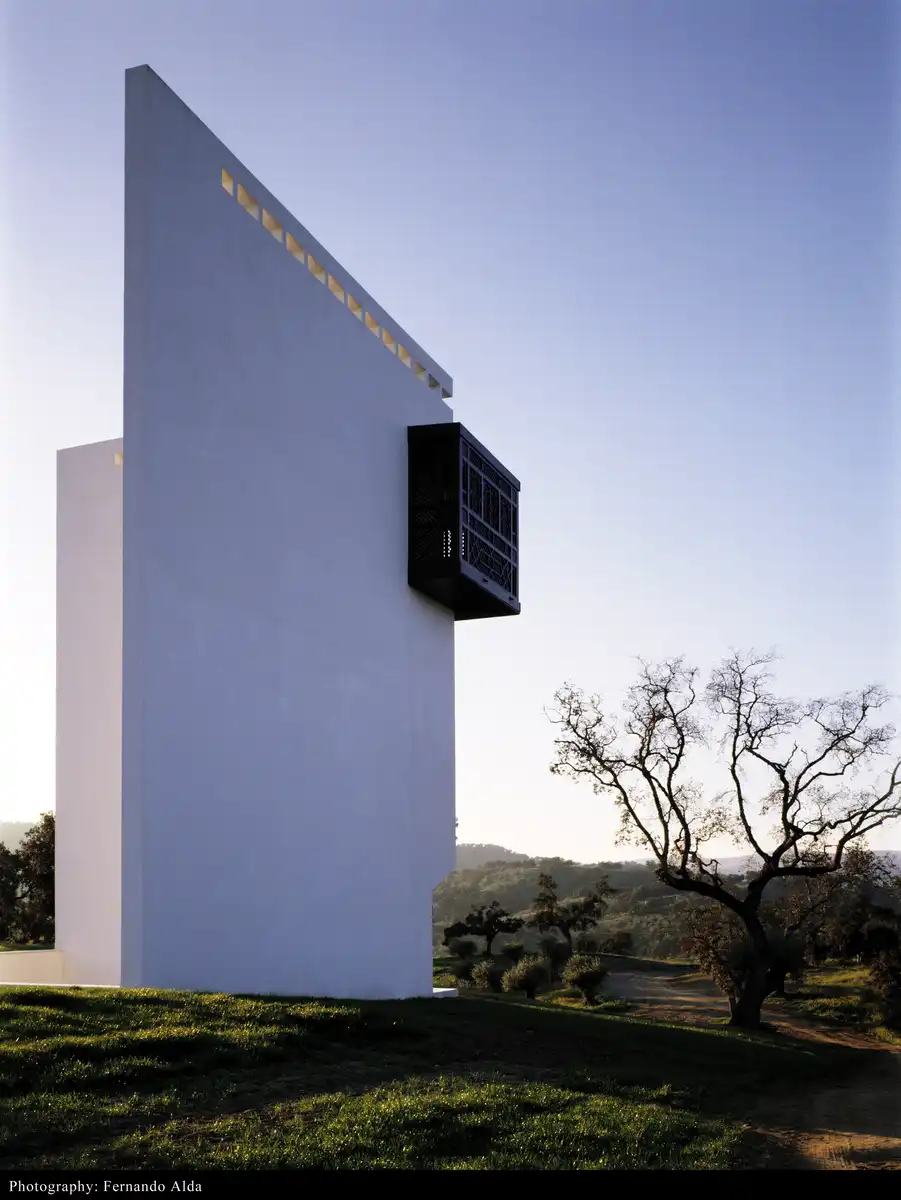
From the outset, it presents itself clearly as a work that challenges the conventions of dwelling.
The project becomes a privileged access point to the world of Emilio Ambasz: while groups like Superstudio and Archizoom projected a dystopian future in which inhabiting the Earth seemed impossible, Ambasz reacts by embracing the earth, seeking redemption in an architecture that is both monumental and introspective. The Casa de Retiro Espiritual proposes itself both as a manifesto and as a completed work, at the same time exceptional in its enigmatic qualities and a ‘Rosetta Stone’ for interpreting the entire practice of Ambasz and emblematic of his architectural poetics.
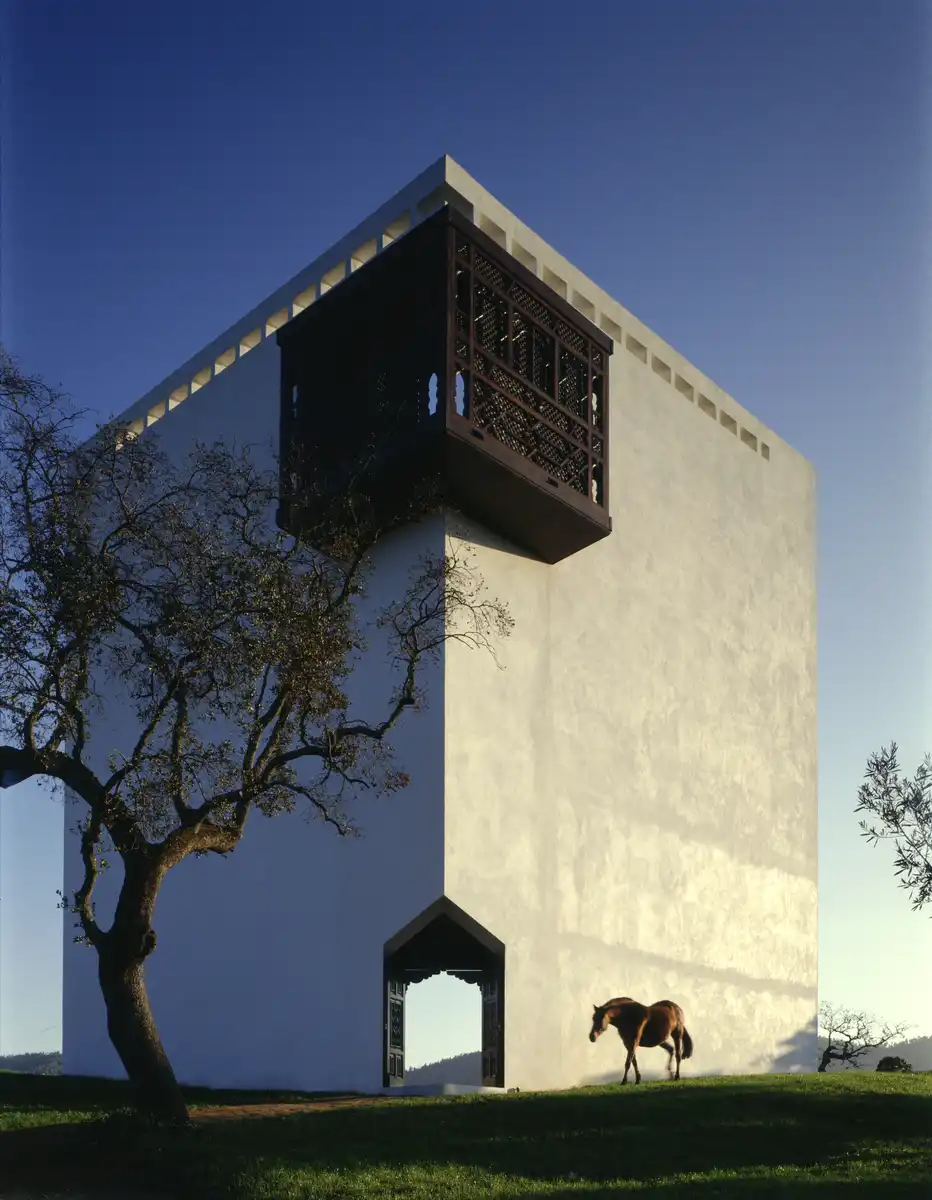
“At the Casa de Retiro Espiritual – it has been written – there are walls without an inside. How can one understand the work of an architect whose most autobiographical work is a house whose facades do not enclose rooms and whose rooms are almost without facades?”
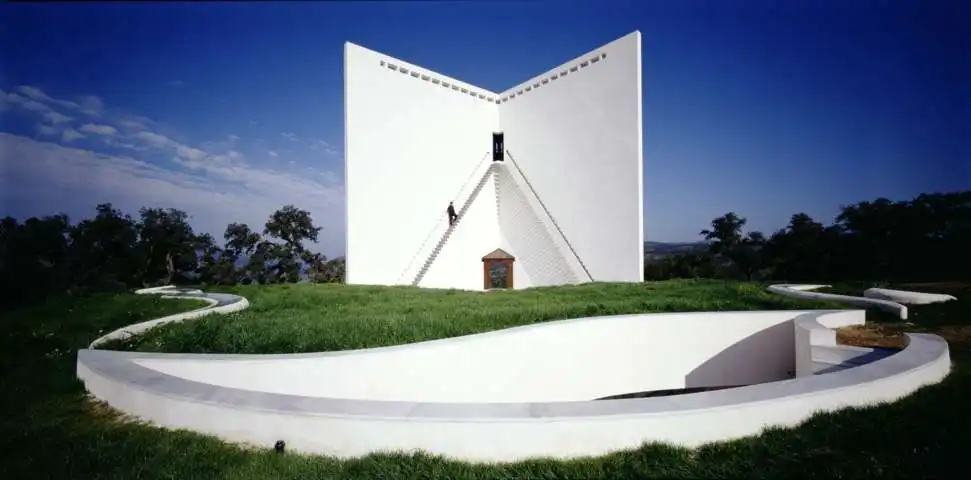
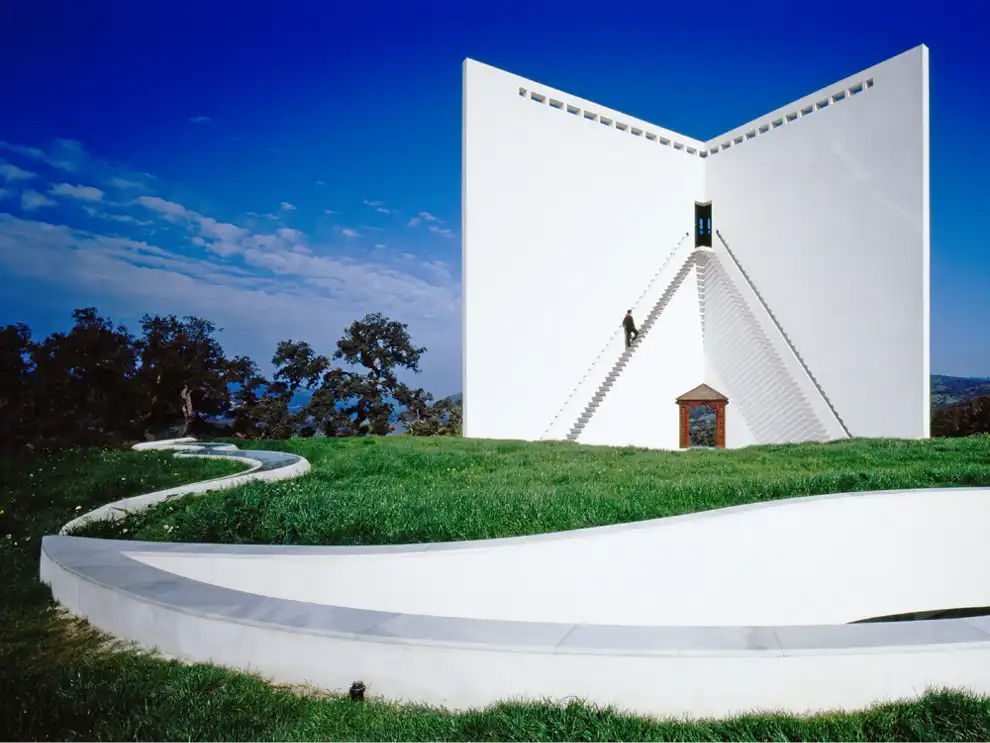
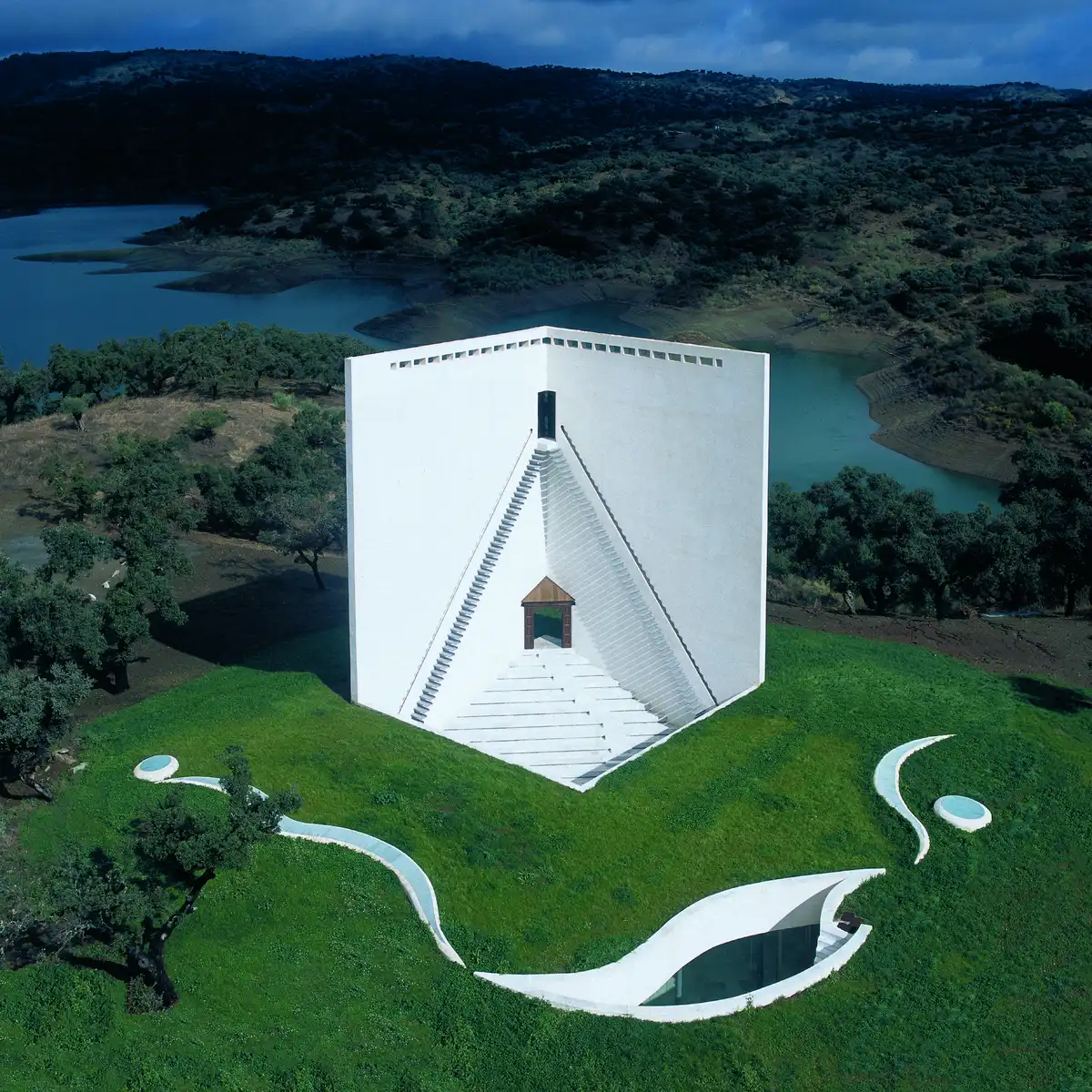
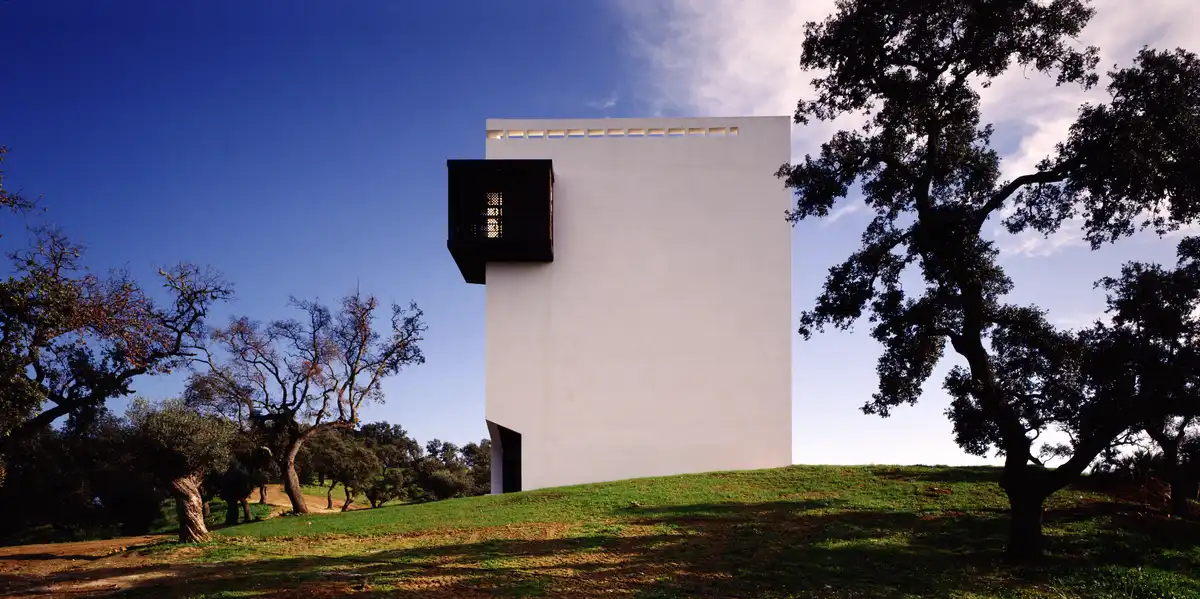
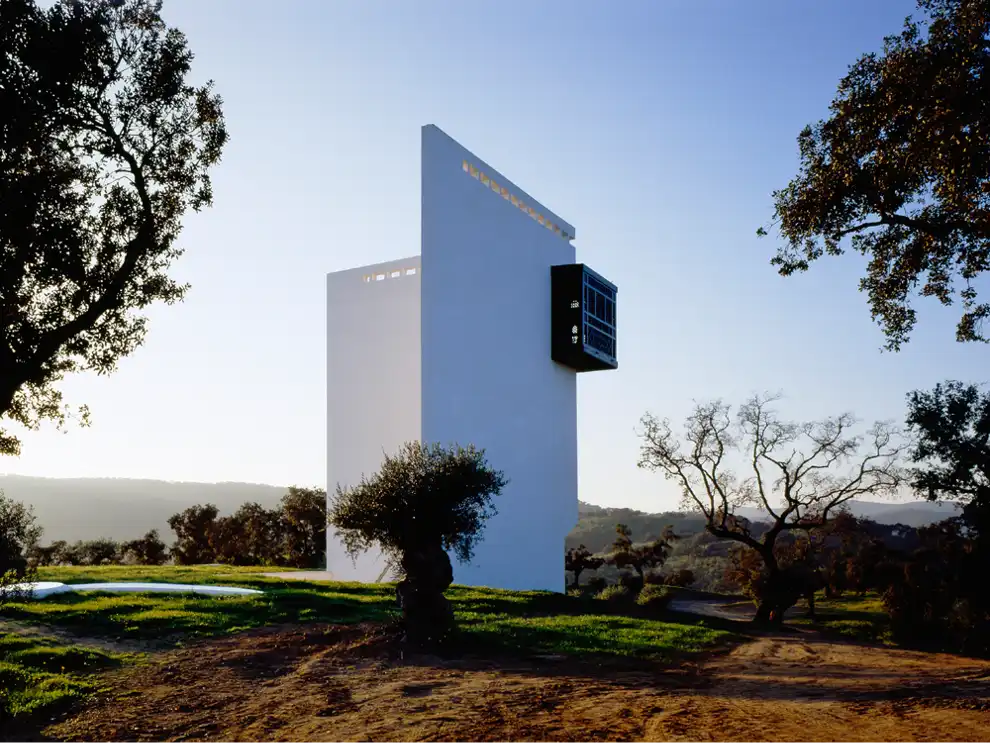
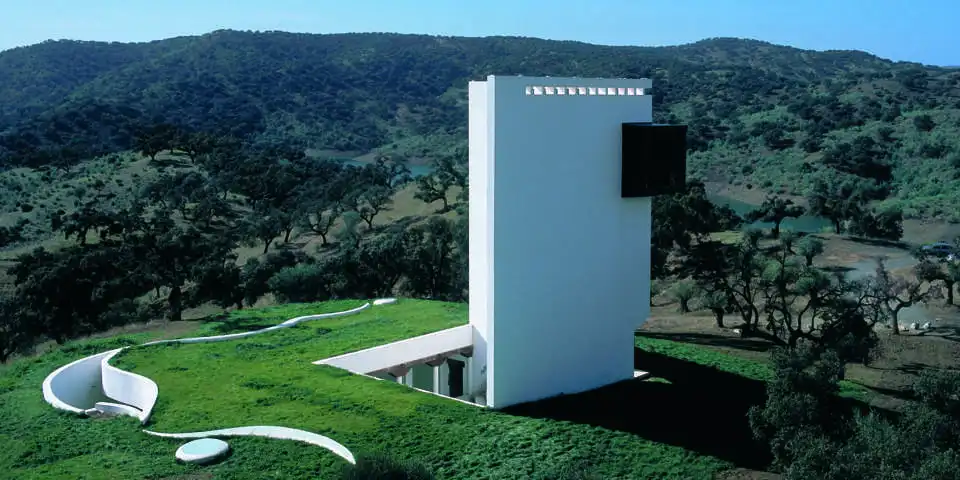
On the outside, the structure is defined by two enormous soaring white walls that meet at a right angle. There is no roof.
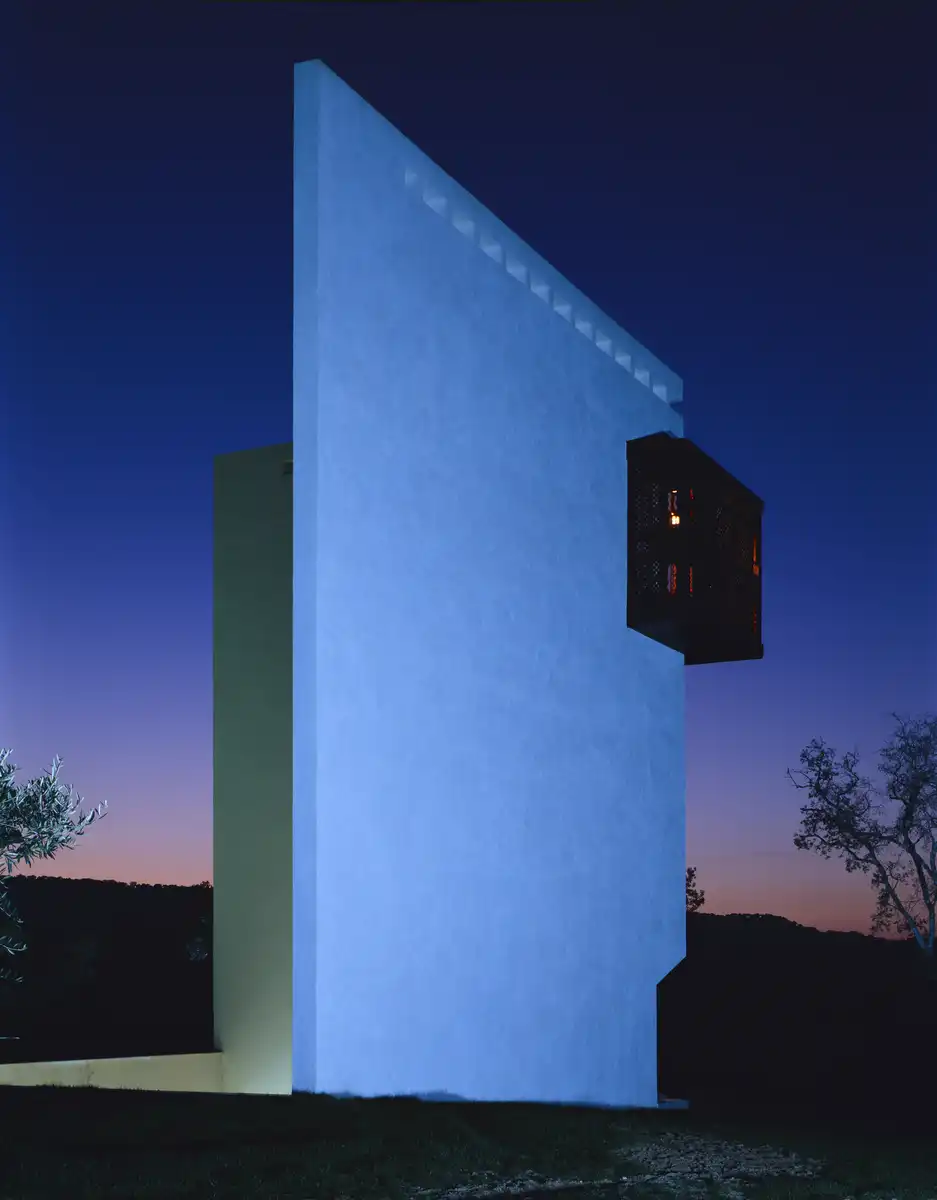
A marvellous belvedere placed almost at the top of the walls overlooks, suspended, 600 hectares of green immersed in the green hills of the Sierra Morena.
The large open book-like walls are crossed by two twin staircases anchored to the walls and jutting out into the void, accompanied by an undulating handrail that is also a water channel: the spring, placed at the top, pours downwards, running diagonally along the walls to collect in the quiet space of the patio, protected from the sun and wind.
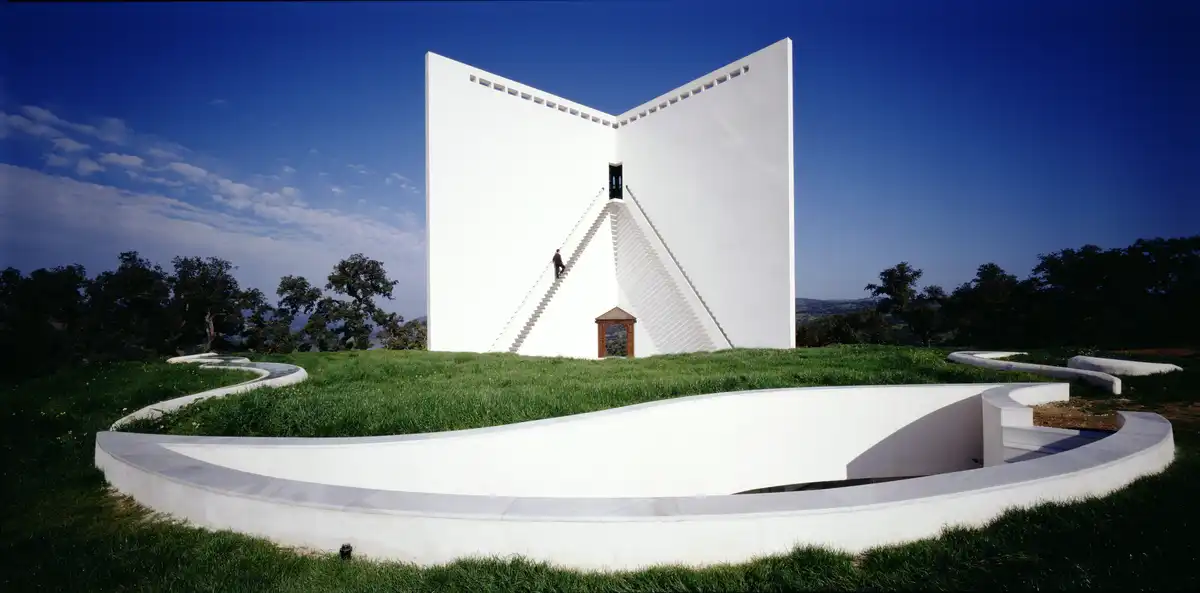
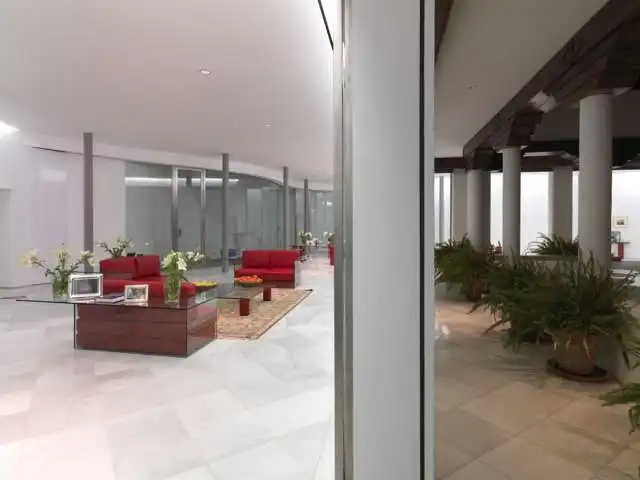
The architecture disappears into the landscape: the main rooms of the house, defined by sinuous walls, overlook the hypogeal courtyard. Everything is illuminated by skylights that exploit the changing effects of natural light.
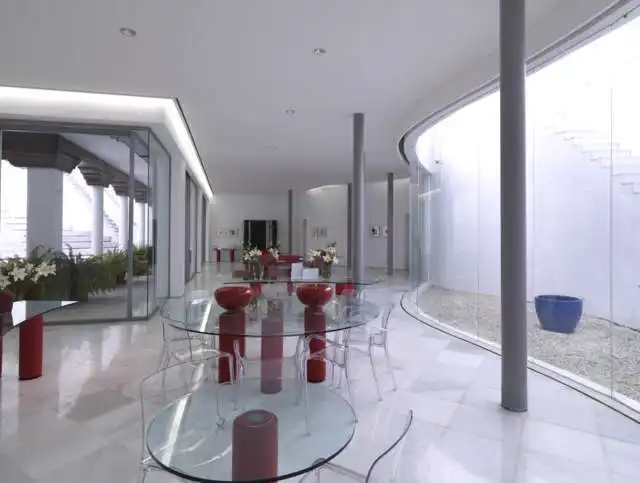
“What can be said – many wondered – of a house composed of a series of bedrooms and reception rooms covered with earth but properly illuminated?”
From a design point of view – states Barry Bergdoll, Meyer Schapiro Professor of Art History and Archaeology at Columbia University – the house is one of the first examples to attract attention for the use of vegetation and earth as tools for thermal insulation, well before these strategies were included in the global discourse on sustainability.

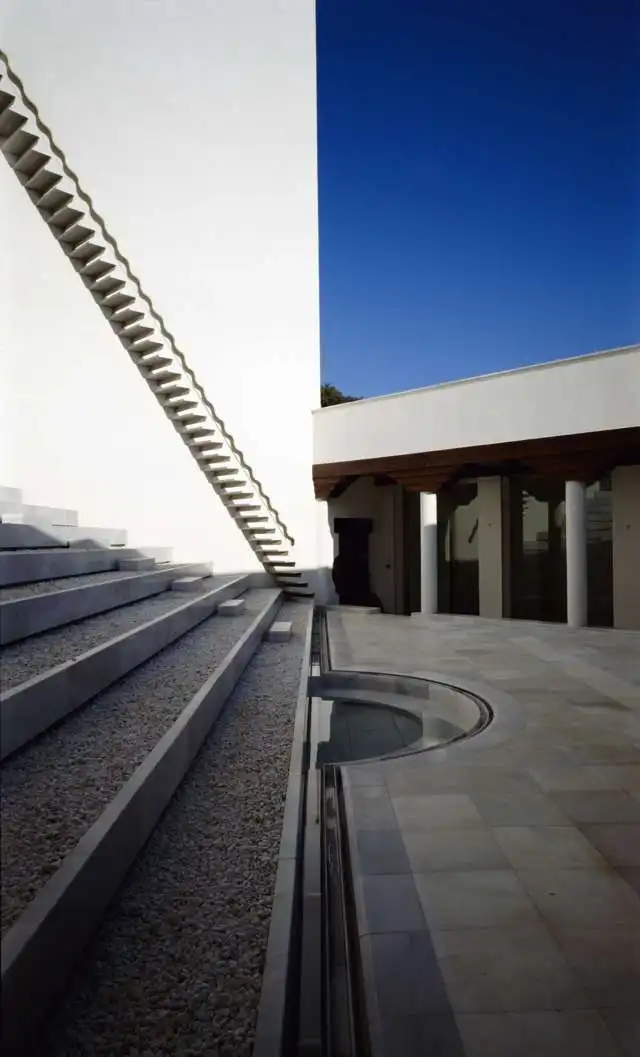
“Ambasz layered the building into the earth, using a combination of incisions and embankments, in a set of techniques where the practicality of thermal protection — against the extreme heat of southern Spain — meets the poetry of architecture as a work of landscape.”
The Casa de Retiro Espiritual is a work that operates on the regions between landscape and built, between the visible and the interior, between matter and myth: a manifesto-work, which places architecture not as technique or style, but as ritual.
According to Ambasz, an architectural project is a set of rituals that, as in fairy tales, gathers and gives shape to deep and universal emotions and feelings. “I consider architecture as the search for a spiritual dwelling,” he says. “An architect can be the guardian of the desert of cities created by man, or the magician who creates eternal forms. The context in which the architect is called to operate may change, but the task remains the same: to give poetic form to the pragmatic.
If an architectural work does not touch the heart,” says Ambasz, “it is just another building”.
Architect Emilio Ambasz
Honorary Member of the American Institute of Architects, of the Royal Institute of British Architects, and of the Italian National Institute of Architecture, Emilio Ambasz boasts an impressive list of global accolades: Honorary Degrees from the Politecnico di Torino and the University of Bologna, 4 Compasso d’Oro awards, the National Lifetime Achievement Award IN/Architettura, and dozens of international honors, including the President’s Award from the Consortium for Sustainable Urbanization.
Major solo exhibitions have been dedicated to him around the world: twice at the MoMA in New York and the Triennale di Milano, at the Reina Sofía in Madrid, and in Tokyo, Geneva, Bordeaux, Zurich, Chicago, Philadelphia, Mexico City, San Diego, St. Louis, and more.
A summary of his international awards is available on Emilio Ambasz’s Wikipedia page.
Emilio Ambasz new website: https://www.ambaszmuseum.com
+++
Emilio Ambasz Architect Designs
Ambasz-MoMA Annual Prize

photo : Brett-Beyer
The Museum of Modern Art, New York and the Legacy Emilio Ambasz Foundation (LEAF): launch of the Ambasz-MoMA Annual Prize and of a new Lecture Series. Ten-year agreement announced.
Emilio Ambasz Research Institute
Emilio Ambasz Compasso d’Oro award
Photography (at) Emilio Ambasz & Associates
Casa de Retiro Espiritual Seville building by Emilio Ambasz architect images / information received 111225
Location: Seville, Spain, southwestern Europe.
Seville Buildings
Contemporary Sevilla Architectural Projects
Joint Research Centre, Seville for the European Commission, EXPO ´92 Sevilla site, Isla de la Cartuja
Design: BIG – Bjarke Ingels Group
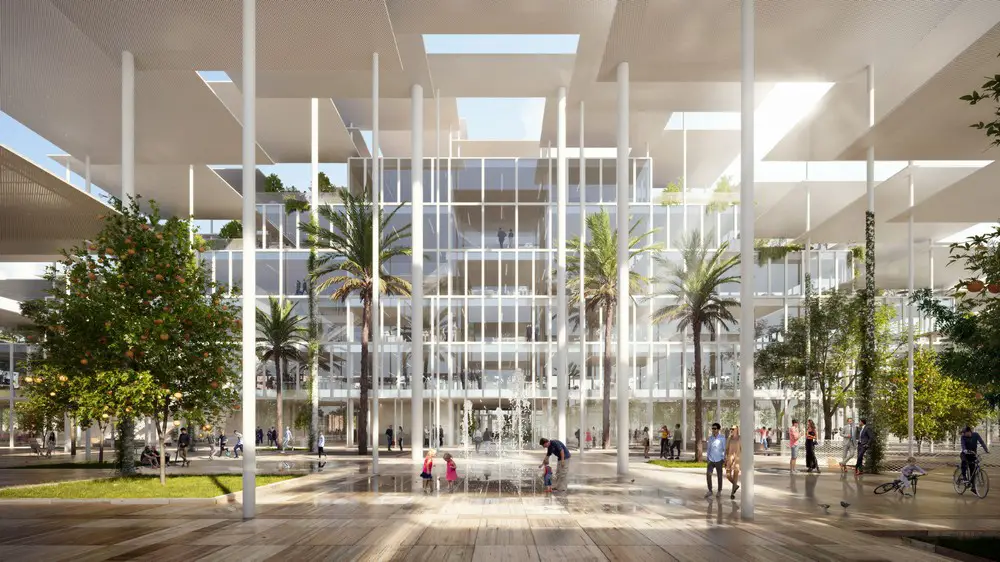
image © Playtime
Hotel Mercer 5* Sevilla, Southern Spain
Architects: Cruz y Ortiz Arquitectos
CMSS Camas Sevilla
Design: Antonio Blanco Montero
++
Spanish Architecture
Contemporary Spanish Architectural Projects
Spanish Architectural Designs – chronological list
The Holy Redeemer Church of Las Chumberas, La Laguna, Santa Cruz de Tenerife, Canary Islands
Architect: Fernando Menis
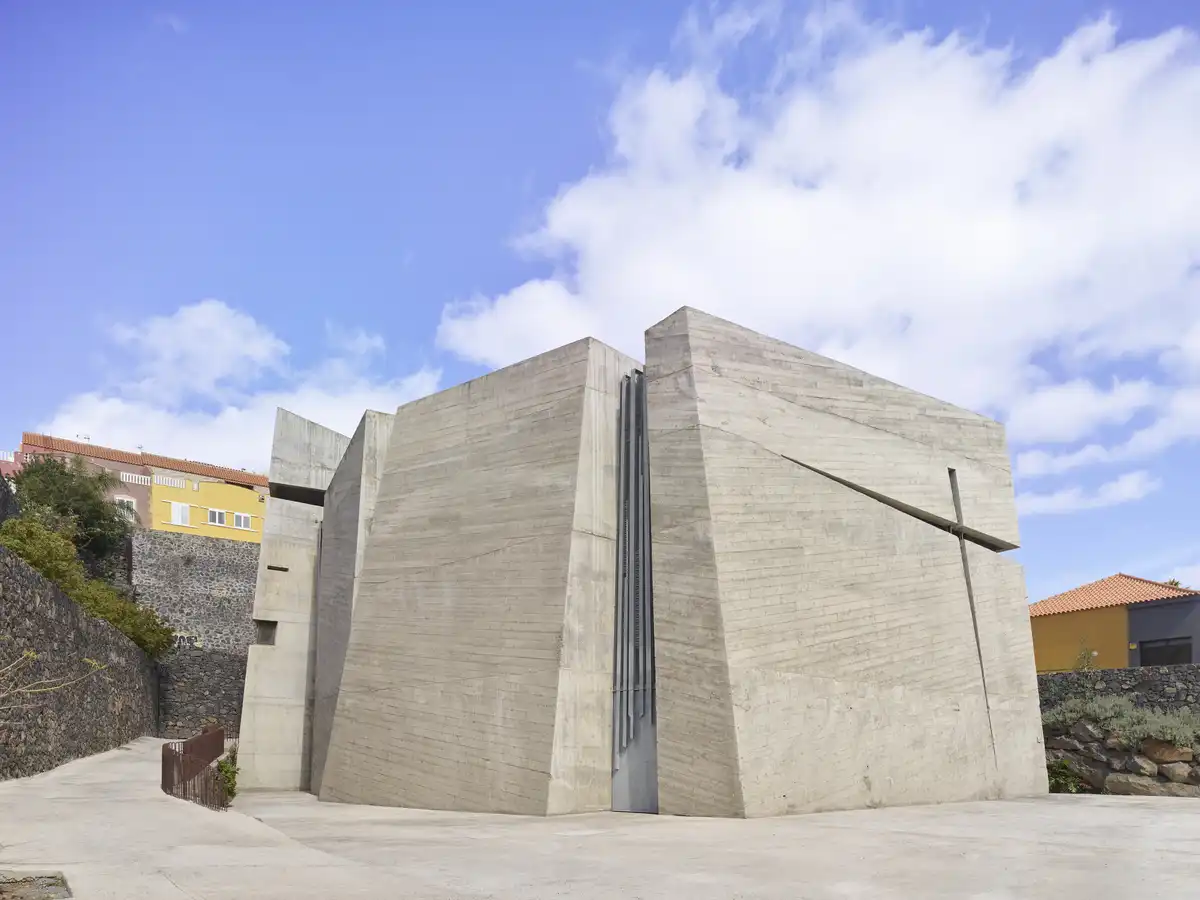
photo © Roland Halbe
Nuevo Sardinero Sports Arena, Santander, Cantabria, northern Spain
Architects: IDOM
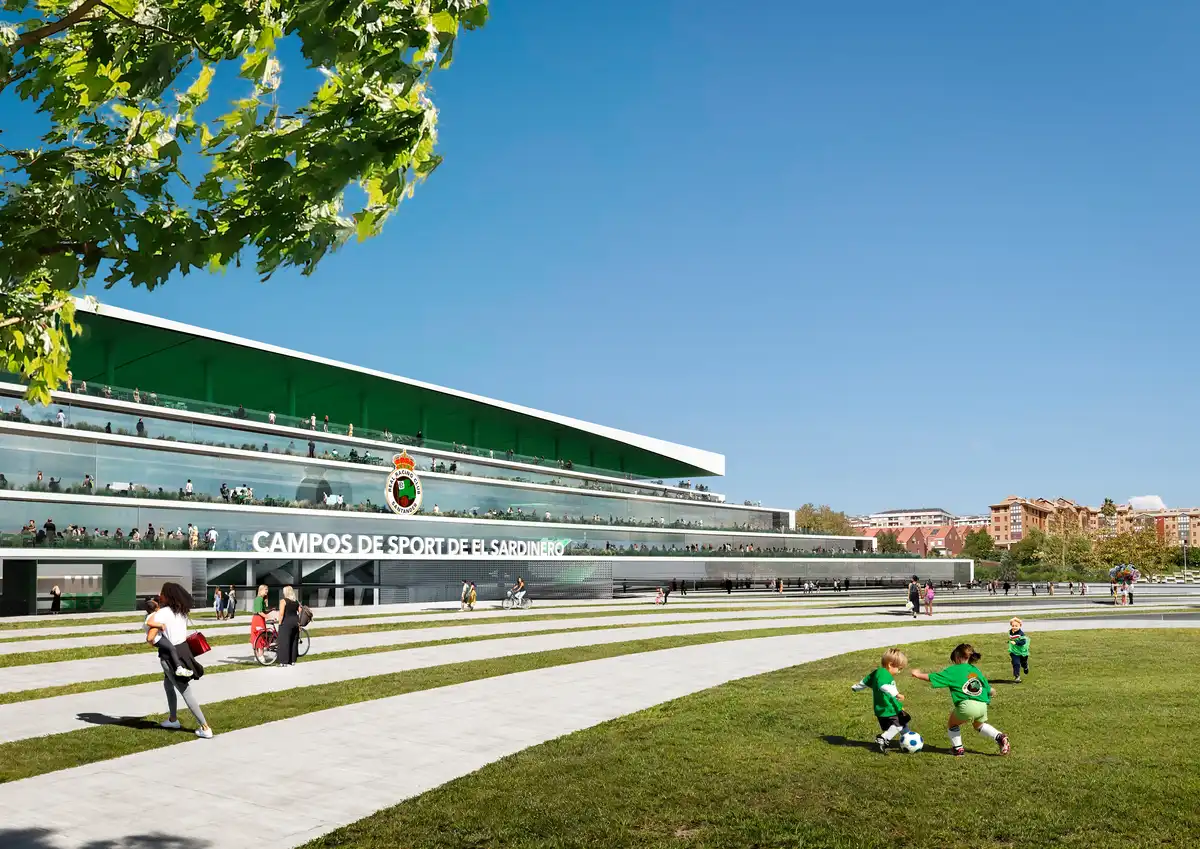
image : IDOM
Spanish Architecture Practices
Comments / photos for the Casa de Retiro Espiritual Seville building by Emilio Ambasz architect page welcome.


