U.S. Consulate General Nogales in Mexico
post updated July 10, 2026
Arquitectos: Ennead Architects
Location: Nogales, Mexico – 5 kilometers south of the Arizona border, USA.
Ennead Architects Celebrates Opening of Innovative U.S. Consulate Building in Nogales, Mexico.
New U.S. Consulate General in Nogales features a series of modern ramadas to create a comfortable, welcoming space for diplomatic affairs.
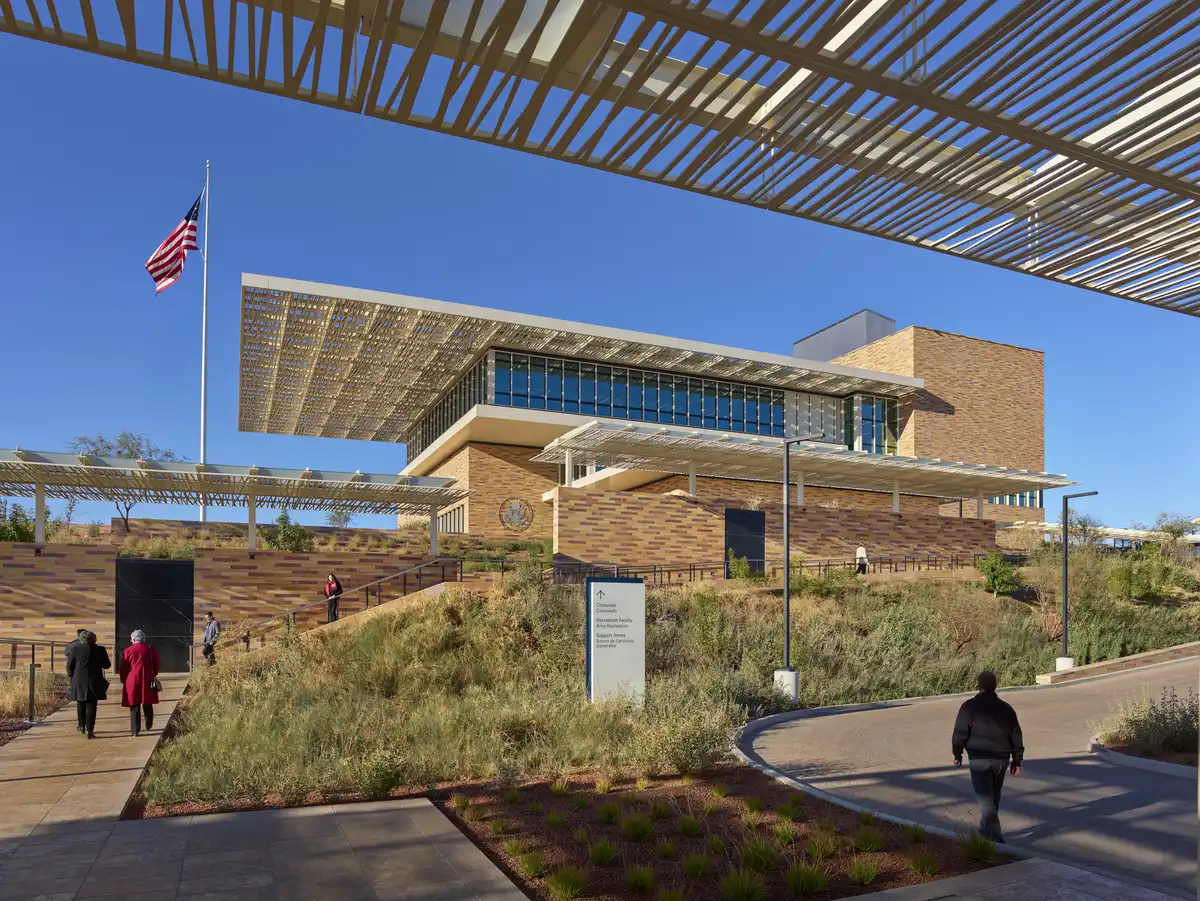
Photos © Alan Karchmer
July 28, 2025
NOGALES, Mexico – July 2025 – Internationally renowned architecture firm Ennead Architects, in partnership with the U.S. Department of State Bureau of Overseas Buildings Operations (OBO), is thrilled to celebrate the opening of the U.S. Consulate General Nogales in Mexico. The three-story, stone-clad building is nestled within a compact 8.45-acre site, defined by a strategic series of steel-and-aluminum shading structures—a contemporary interpretation of traditional Mexican ramadas—that gently choreographs the movement of visitors through the site while shielding them from the harsh sun of the surrounding Sonoran Desert. Ennead’s innovative design both adapts to the region’s extreme topography and heat conditions while honoring its rich cultural heritage, creating a dynamic diplomatic space where relations between two neighboring countries can flourish.
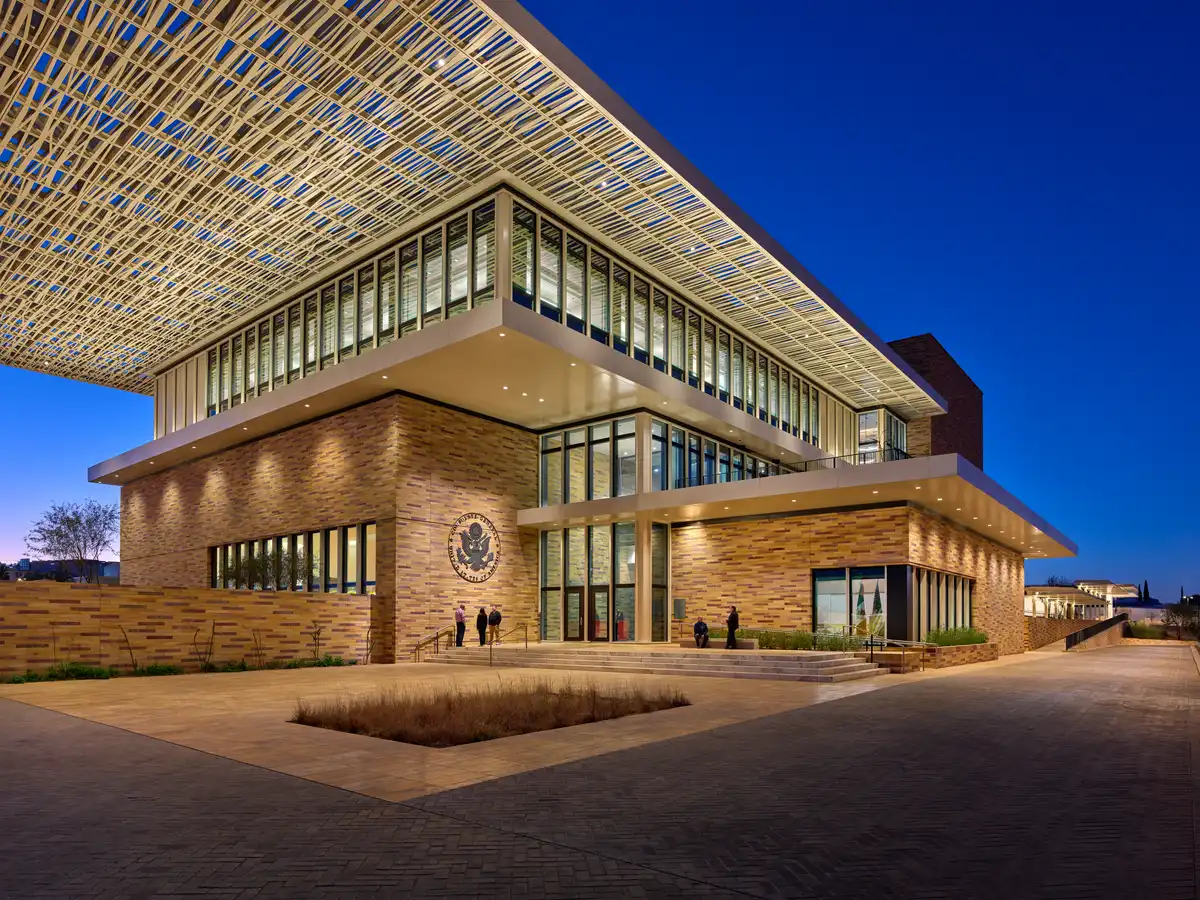
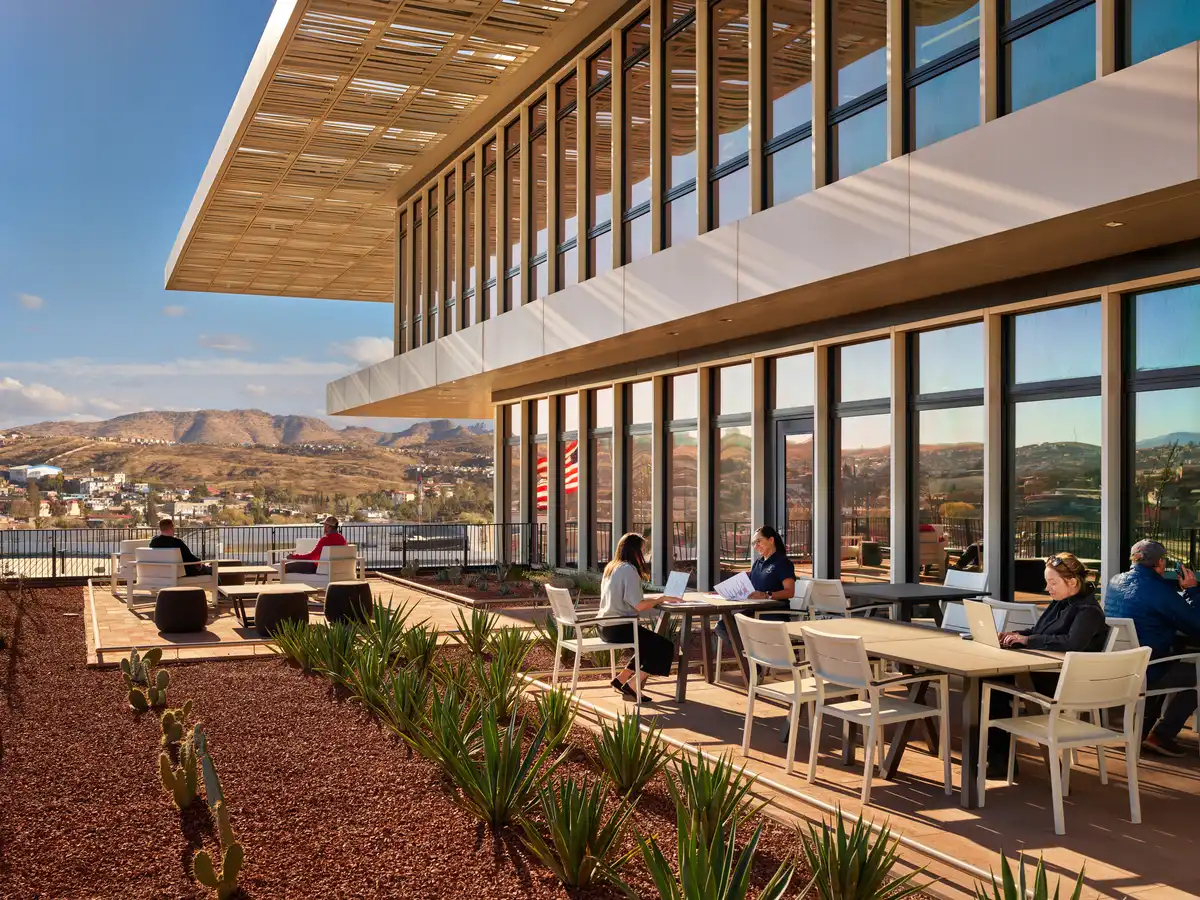
Located just five kilometers south of the Arizona border (one of the most active border crossings between the two countries), the new consulate serves as an important point of entry to the U.S., with its primary consular function being the processing of work visas. Conceived as three distinct, stacked volumes, the building’s facades are clad in custom stone ‘bricks’ that capture the rich ochre and terracotta palette of the surrounding landscape, and frame deep-set windows that reference centuries-old Mexican construction techniques. The robust stone volumes support a dramatic cantilevered glass and metal box on the top floor, featuring a shaded, northeast-facing terrace with views across the nearby border.
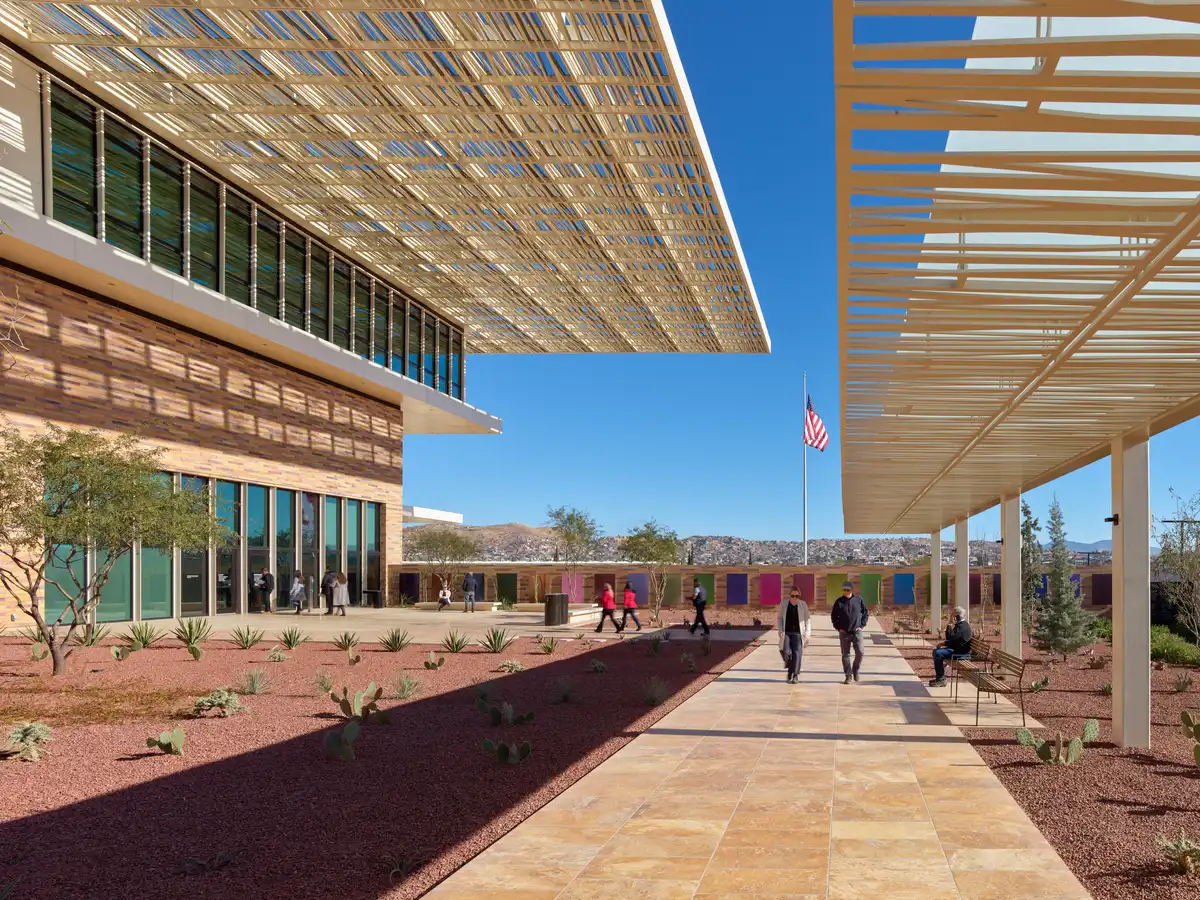
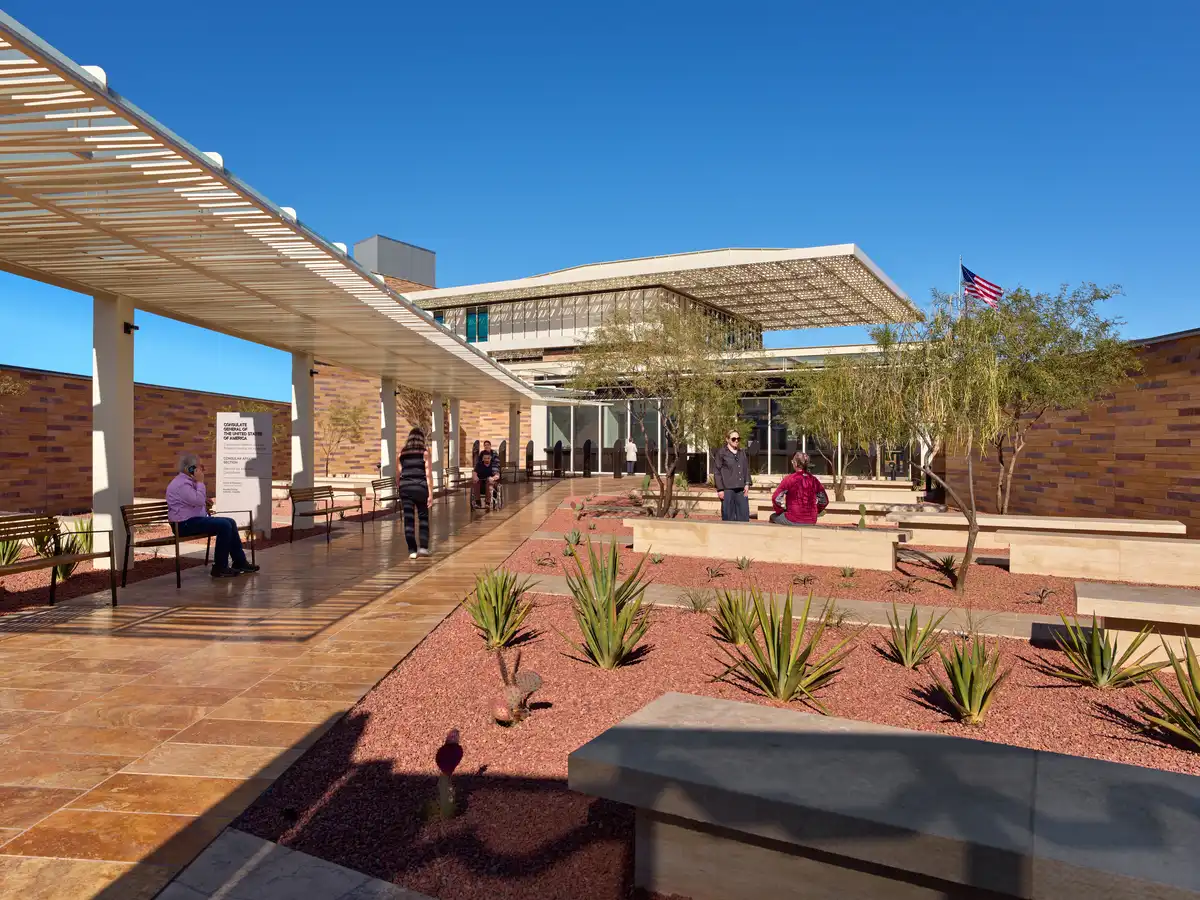
The ramadas serve as the project’s defining architectural innovation, creating a sophisticated network of protected pathways that guide visitors through the site’s dramatic 88-foot grade change. These modern interpretations of traditional desert shading structures create a choreographed sequence of gathering spaces and rest points, serving as both physical temperature mediators—reducing the building’s cooling load by 20 percent—and symbolic bridges between Mexican heritage and American diplomatic presence. The ramadas also double the site’s usable area for events, enhancing the consulate’s functionality as a hub for cross-cultural exchange and diplomatic activity.
“We sought to create a building that emerges from the landscape itself—both literally and metaphorically—and serves as a physical manifestation of international cooperation,” said Richard Olcott, Design Partner at Ennead Architects.
“We confronted a steeply sloping site defined by a number of regional challenges, including water management and extreme heat conditions, while demanding both human-scale functionality and a monumental diplomatic presence,” said Felicia Berger, Principal and Project Manager at Ennead Architects. “Our design strategy embraced these extremes, allowing diplomacy to flourish.”
Site Context
Located within the dense Colonia Jardines Kalitea district, the consulate sits on a complex, irregularly shaped parcel surrounded by residential and commercial buildings. This urban setting required careful balance between diplomatic security requirements and neighborhood integration. The design establishes a clear public presence while respecting the mixed-use character of its surroundings and also creates enduring infrastructure that serves community needs.
The site’s significant grade change presented the project’s primary design challenge. The team addressed this through a strategic 40-foot excavation, creating a stable, level building platform from what was previously an inaccessible slope. This intervention transformed the steep terrain into a series of accessible levels, with integrated stairs and ramps providing universal access. Strategically placed landings offer respite and views, turning the uphill journey into a deliberate architectural sequence.
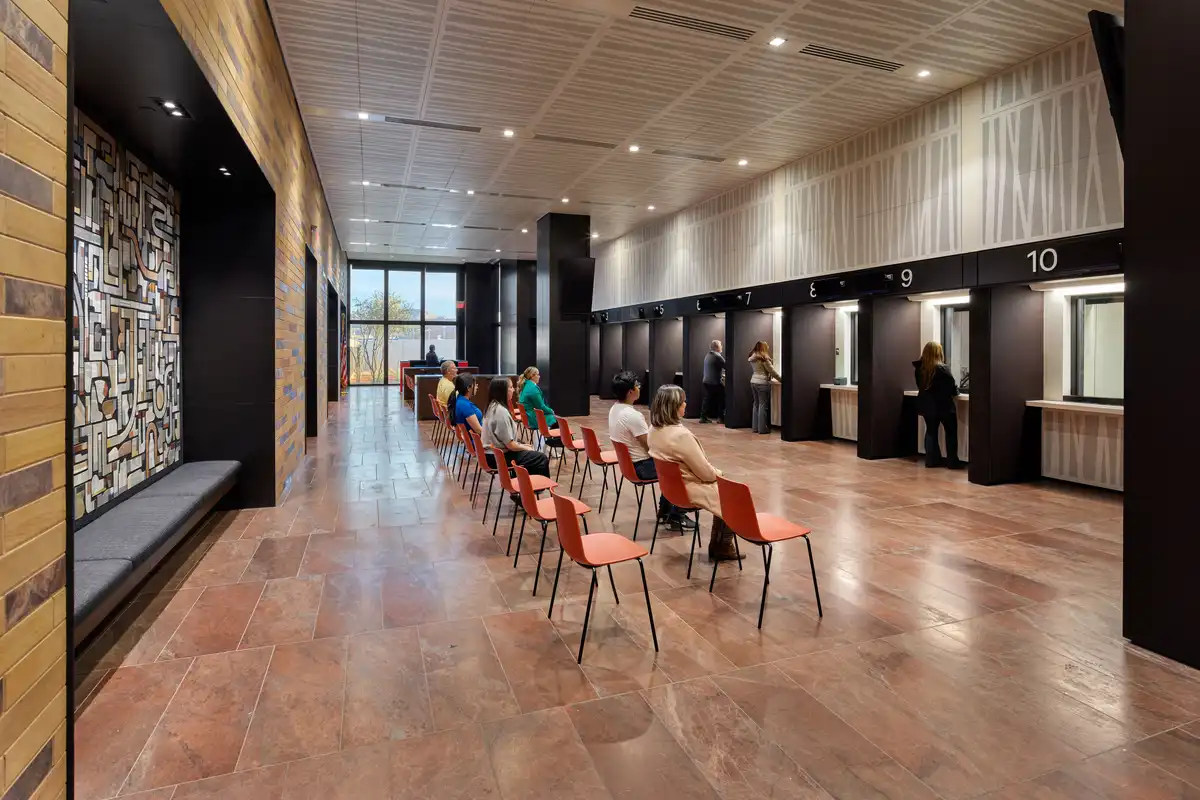
The project’s infrastructure extends beyond site preparation to include comprehensive water management and temperature control. The excavation strategy limits water runoff into the community, which has a history of flooding, by integrating funnels that drain into onsite cisterns, reducing dependence on the municipal water systems. By harnessing solar energy through photovoltaics and tactical thermal comfort innovations, such as the ramadas, the team efficiently reduced the impact of the region’s extreme heat and sun conditions across the site, both indoors and out.
The landscape design celebrates regional character through native species reintroduction, including the restoration of the Nogales walnut tree. These drought-tolerant plants require minimal irrigation while supporting local wildlife, particularly migratory birds and butterflies. This approach positions the consulate as both a diplomatic facility and a responsible ecological steward within the existing urban context.
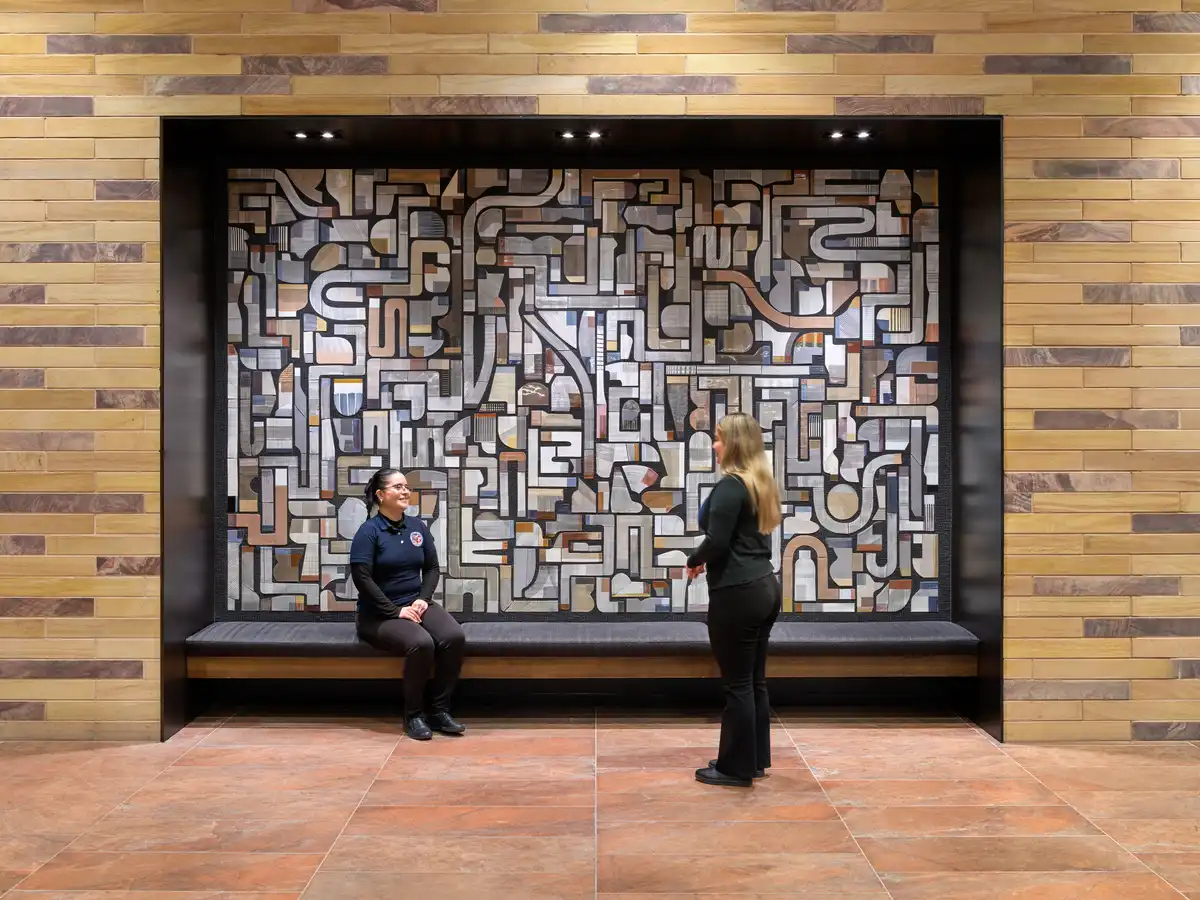
“Throughout the meticulous design and construction phases of this landmark project, the Ennead team has demonstrated unparalleled diligence, an extraordinary depth of understanding, and an unwavering commitment to the mission,” said Curtis Clay, OBO’s Architectural Design Division Chief. “The Consulate stands as a resounding testament to Ennead’s collaborative spirit and architectural expertise, embodying not only the values of diplomacy but also the innovative strides taken to harmonize with the unique challenges of the Sonoran Desert environment. From the integration of advanced water conservation systems to the seamless integration of art, this facility exemplifies a profound respect for the delicate ecosystem in which it resides, setting a new standard for environmentally conscious design.”
The project in Nogales represents an important milestone in the ongoing partnership between OBO and Ennead Architects. Building on their successful collaboration on the U.S. Embassy Ankara, Turkey (opened in 2023), the team continues to explore how contemporary diplomatic architecture can serve as a bridge between cultures while maintaining the highest standards of functionality, performance, and security. Currently, Ennead is working on the U.S. Embassy Nassau, The Bahamas, and U.S. Consulates General Chiang Mai, Thailand, and Lagos, Nigeria.
About the U.S. Department of State’s Bureau of Overseas Buildings Operations (OBO)
The U.S. Department of State Bureau of Overseas Buildings Operations is the single real property manager for the planning, acquisition, design, construction, operations, maintenance, and disposal of U.S. governmental diplomatic and consular property overseas.
OBO’s secure, functional, and adaptable facilities enable U.S. foreign policy through building technologies, art, and culture.
Photographs © Alan Karchmer
U.S. Consulate General Nogales in Mexico building images / information received 260725 from Ennead Architects
Location: México, North America
Mexican Architecture
Contemporary Mexican Buildings
Mexican Architectural Designs – chronological list
La Pedrera Clubhouse, Puebla City, east-central Mexico
Arquitectos: Taller Ezequiel Aguilar Martínez
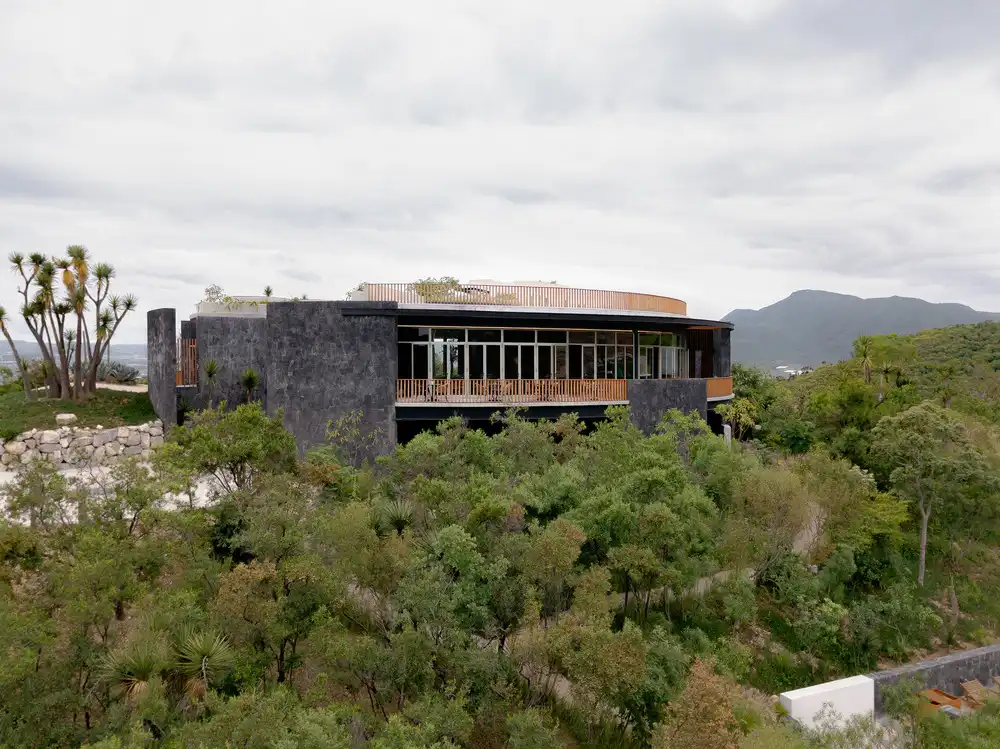
photo : Amy Bello
Mercado de Tepoztlan, Morelos Marketplace
Design: Ramírez Suarez Arquitectos + Laboratorio Regional de Arquitectura
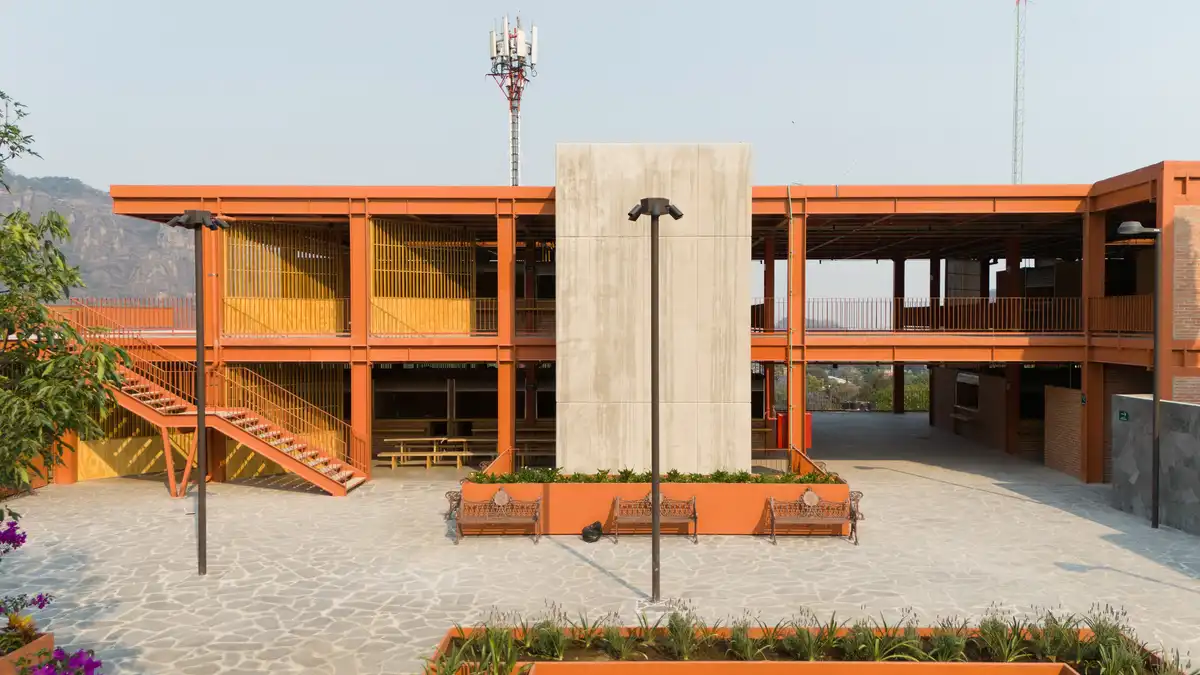
photos : Ana Paula Álvarez, Miguel Cobos
The Orchid Pavilion, Puerto Escondido, Mexico
Architect: Centro de Colaboración Arquitectónica
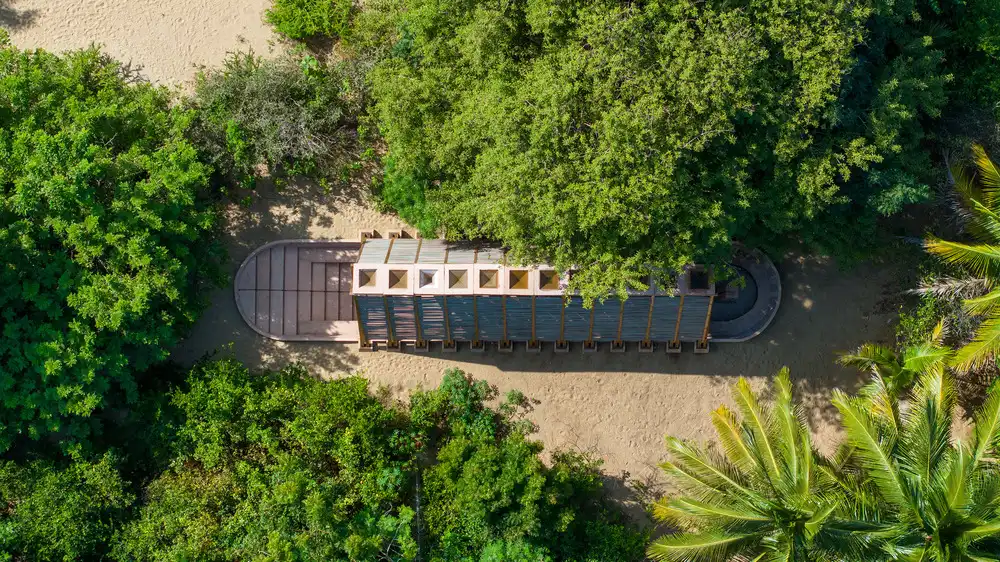
photo © Jaime Navarro
++
Mexican Property Designs
Comments / photos for the U.S. Consulate General Nogales in Mexico building designed by Ennead Architects page welcome.