

Copper Garden House in Hamilton Terrace, London
7 May 2026
Design: London Atelier
Location: St John’s Wood, NorthWest London, England, United Kingdom

Photos: Ralf Eikelberg
This project reworks a Grade II listed Georgian terrace in the St John’s Wood Conservation Area, focusing on restoring spatial clarity and improving the relationship between the house and its garden. While the principal façade and overall proportions remain intact, interventions are concentrated to the rear and within areas of reduced historic significance.


A new extension replaces a late twentieth-century conservatory and is defined by two gently sloping standing seam copper roofs. Their form mediates between neighbouring conditions while remaining visually recessive. Integrated rooflights are set within the roof planes, introducing daylight into the depth of the plan and allowing the lower ground floor to function as the primary living space.
Internally, non-original partitions are removed to re-establish a legible sequence of rooms, guiding movement from the more enclosed front spaces to an open kitchen and dining area overlooking the garden. A secondary extension at ground floor half-landing level introduces a dedicated study with direct views to the landscape.
Material interventions are restrained, with existing brickwork repaired and extended, timber flooring reinstated, and new joinery integrated within the existing fabric.
The result is a considered adaptation of a listed building, balancing preservation with carefully judged contemporary interventions.

Given the specific location at Hamilton Terrace, London, were there any unique site constraints or opportunities that significantly influenced the design process and outcome?
Yes – Hamilton Terrace introduced a set of specific constraints that directly shaped the design, but also offered clear opportunities.
Context and designation
The house sits within the St John’s Wood Conservation Area as part of a Grade II listed Georgian terrace. The principal façade and overall proportions are protected, which limits intervention to the front and requires that change is concentrated to the rear and internally. This constraint establishes a clear hierarchy – retain and repair to the street, adapt and extend to the garden.
Existing condition
The interior, particularly at lower ground level, had been heavily altered over time. While this reduced the amount of significant fabric, it also created an opportunity to reorganise the plan more freely, restoring a coherent spatial sequence without compromising key heritage elements.
Rear condition and neighbours
The rear elevation presented a fragmented condition, with inconsistent extensions across the terrace and varying party wall heights. This led to the adoption of two folded, mono-pitched copper roofs, which mediate between adjacent buildings and aligns with neighbouring geometries while remaining visually recessive.
Light and orientation
As with many London terraces, daylight penetration was limited to front and rear façades. The introduction of rooflights within the extension became a key move – bringing light down into the depth of the plan and allowing the lower ground floor to function as the primary living space.


Garden depth
The long, narrow garden offered a strong opportunity. Rather than treating it as separate, the design draws it into the house through full-width glazing and a continuous threshold, extending the spatial sequence outward. The same in principle applies to the extension at ground floor half landing and the smaller rear extension – a band of glazing wraps around the study area offering 270degree views into the gardens. The placement of a modest summerhouse at the far end reinforces the full length of the plot.
Planning and heritage balance
Working within Westminster’s planning framework required careful calibration – extensions needed to remain subordinate, respect the terrace rhythm, and avoid visual impact. This informed both the scale and material expression of the intervention. Overall, the constraints clarified the strategy: preserve the street-facing heritage, work precisely within the existing fabric, and use the rear as a place to introduce light, spatial continuity, and a stronger connection to the garden.

What were the primary challenges and considerations when reworking a Grade II listed Georgian terrace? How did you balance the need to preserve historical integrity with the desire to introduce modern design elements and functionality?
Reworking a Grade II listed Georgian terrace involves a precise balance between preservation and adaptation.
Understanding significance
The primary consideration is identifying where the building holds its value. In this case, the principal façade, proportions and overall composition of the terrace define its heritage significance, while the interior – particularly at lower ground level – had already been altered over time. This allowed the strategy to focus on retaining what is essential, while working more freely where significance had been eroded.
Working within constraints
Listed status and conservation area controls limit intervention, particularly to the street-facing elevation. Any new work must remain subordinate, legible and reversible where possible. This requires a disciplined approach to scale, material and detailing, ensuring that new elements sit comfortably within the existing fabric.
Restoring spatial clarity
A key challenge was the fragmented plan created by incremental alterations. Removing non-original partitions allowed the original spatial order to be re-established, creating a clearer sequence from front to rear while improving usability for contemporary living.
Introducing light and connection
Georgian terraces are often constrained in terms of daylight. The introduction of rooflights within the new rear extension brings light into the depth of the plan, allowing the lower ground floor to become a primary living space and strengthening the relationship with the garden.
Material and architectural language
New interventions are expressed with restraint. Existing brickwork is repaired and extended, while the standing seam folded copper roof introduces a contemporary layer that is clearly distinguishable yet complementary. The aim is not to replicate the historic fabric, but to create a dialogue between old and new.


Integrating modern function
Contemporary requirements – such as improved layouts, bathrooms, and a dedicated study – are carefully inserted within the existing structure, often aligned with chimney zones or existing voids to minimise impact. Environmental upgrades, including insulation and improved glazing, are integrated within the fabric to enhance performance without compromising character.
Balancing continuity and change
The overall approach is to preserve the legibility of the original building while allowing it to function as a contemporary home. Rather than imposing a new language, the design works with the existing structure – clarifying spatial relationships, introducing light, and extending the connection to the garden.
The result is a measured intervention where historical integrity is maintained, and new elements are introduced with precision, ensuring the building remains both relevant and enduring.

Copper Garden House in Hamilton Terrace, London – Building Information
Architects: London Atelier – https://www.londonatelier.com/
Project size: 240 sqm
Site size: 260 sqm
Completion date: 2023
Building levels: 5


Photography by Ralf Eikelberg
Copper Garden House, Hamilton Terrace, London images / information received 070526
Location: St John’s Wood, London, England, UK
London Building Designs
Contemporary London Architectural Designs
London Architecture Links – chronological list
London Architecture Tours – bespoke UK capital city walks by e-architect
London Architect Offices
+++
Northwest London Properties
North London Houses – architectural selection below:
Monument House, Hampstead, North London
Design: WILLIAM TOZER Associates
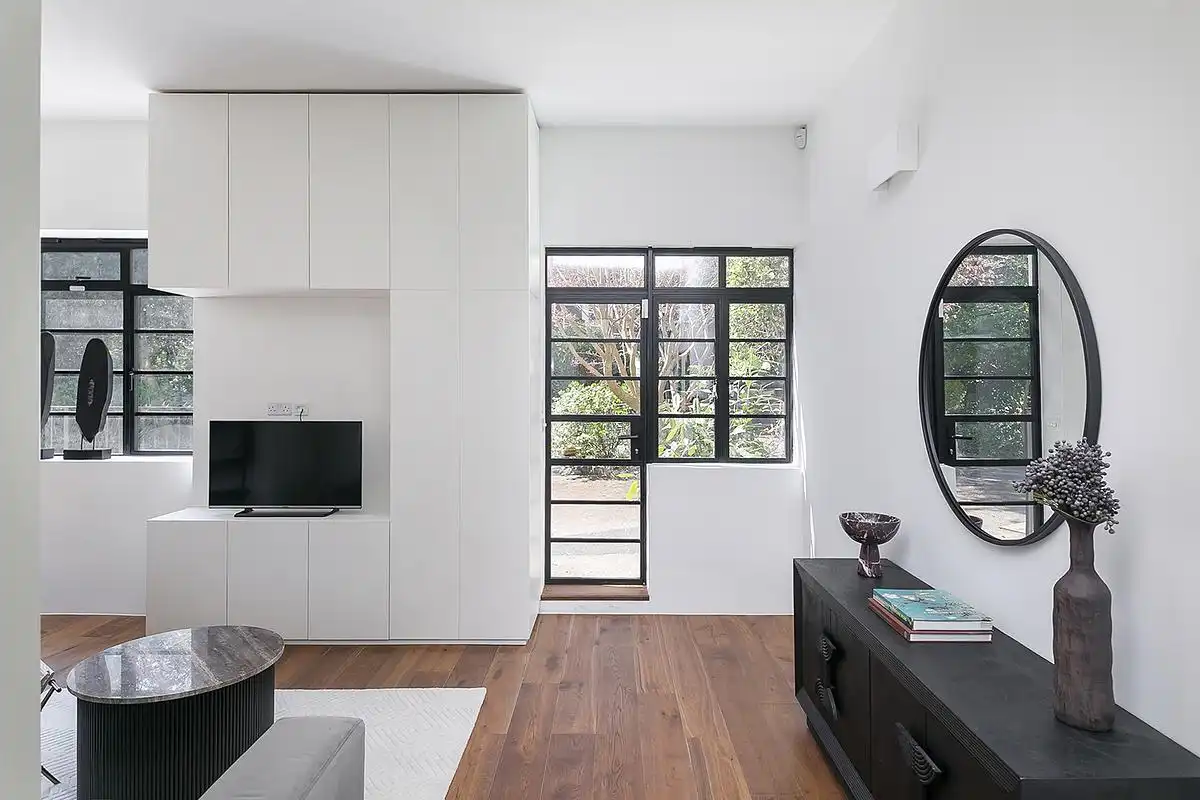
photo : Lukasz Wielkoszynkski
Branch Hill House, Branch Hill Road, Hampstead
Design: Stanhope Gate Architecture
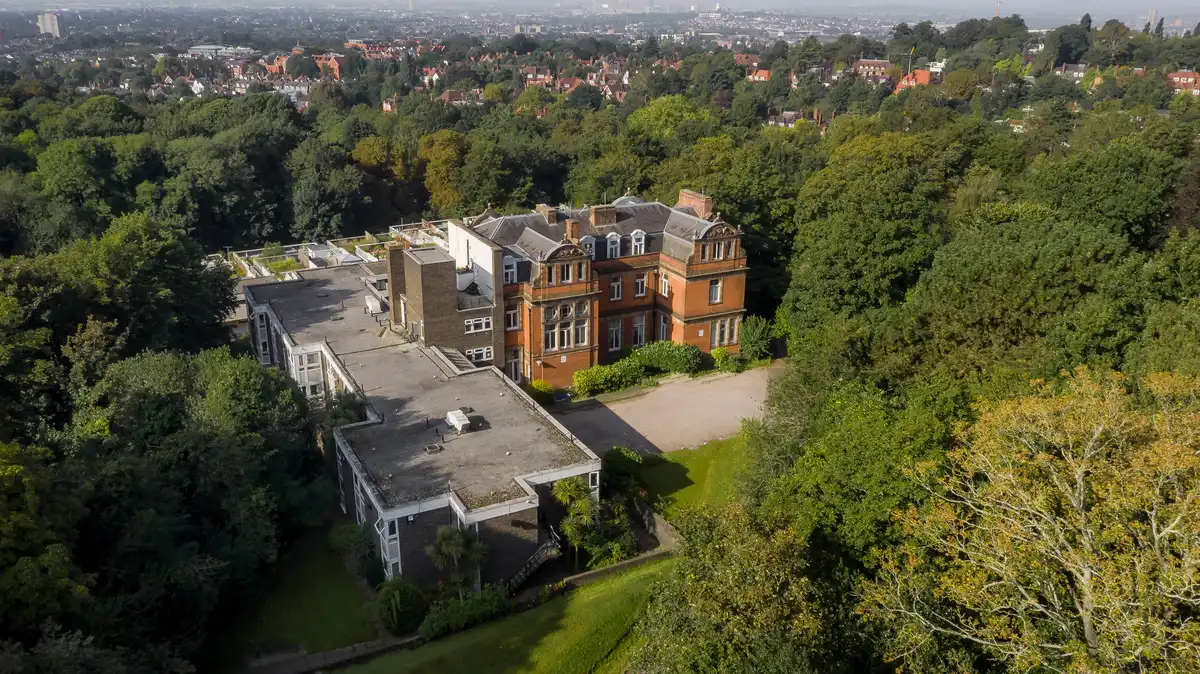
images : Bentry Capital / Stanhope Gate Architecture
Structuralist Estates, Belsize Park, London terrace houses
Architects: WILLIAM TOZER Associates
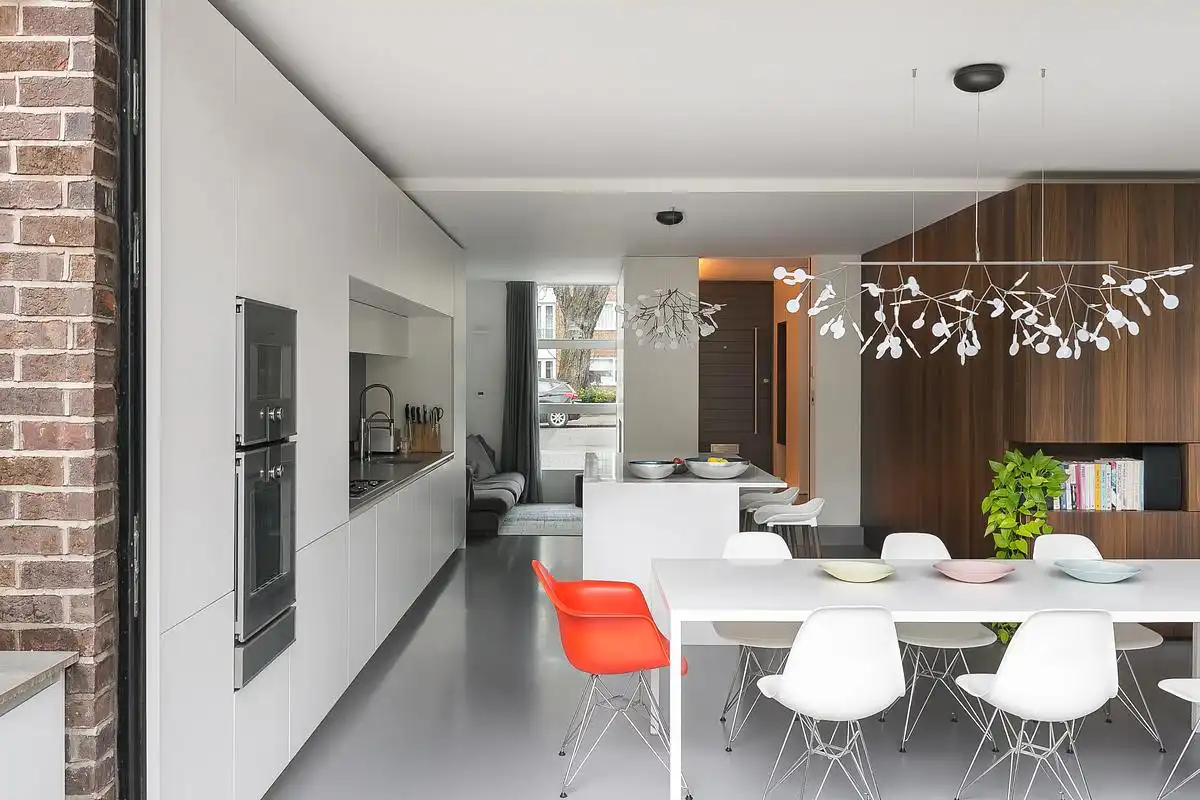
photo © Lukasz Wielkoszynski
++
Contemporary Houses in North London
London House Extension Competition
Comments / photos for the Copper Garden House, Hamilton Terrace, London design by London Atelier page welcome

