Wishing Well Jersey home
3 February 2026
Modern Home on the Jersey coast
Design: Fieldwork Architects and Singh Studio
Location: Isle of Jersey, Channel Islands, UK
Photos by French and Tye
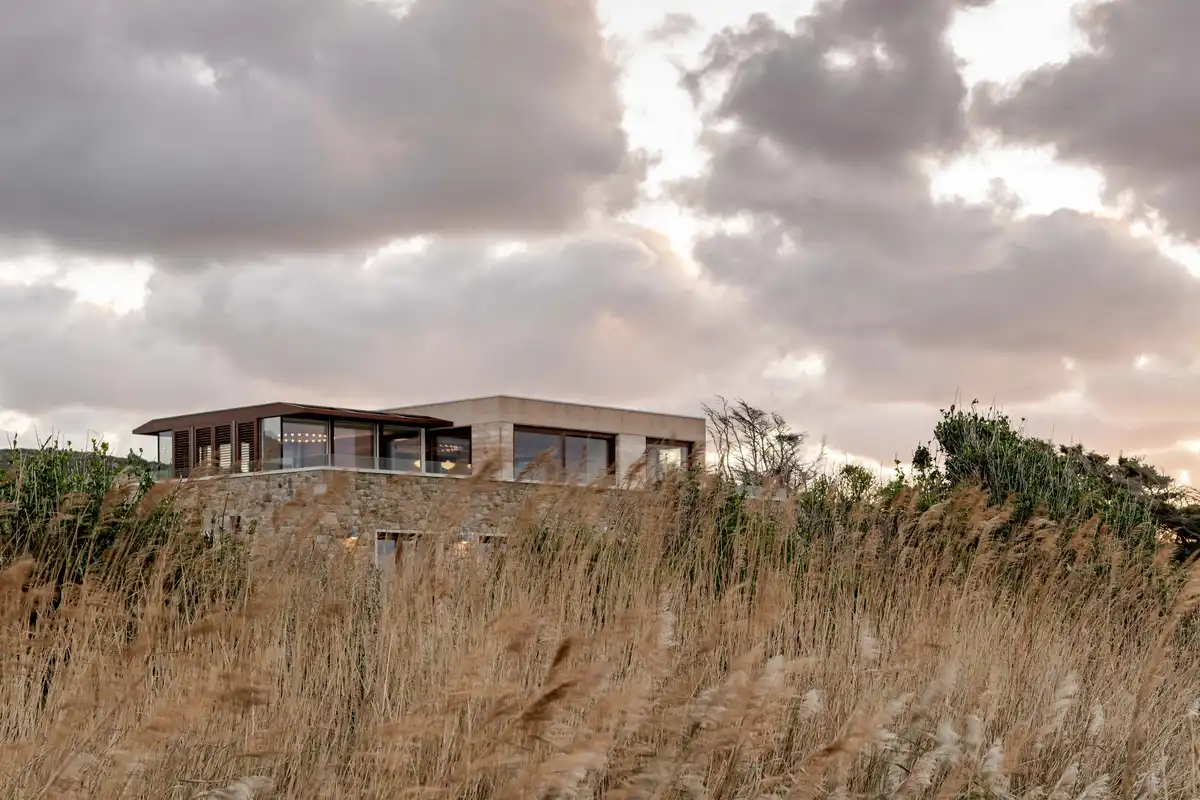
Anchored along Jersey’s windswept western coastline, Fieldwork has transformed a dilapidated dormer bungalow into a three-bedroom house, shaped by the raw beauty of its surroundings.
Designed for a returning resident after several years living in London, the house departs from the island’s conventional architectural language. It embraces a contemporary, elemental character, expressed through rammed earth and locally quarried granite; materials drawn from the landscape itself and chosen to resist the island’s fierce coastal conditions.
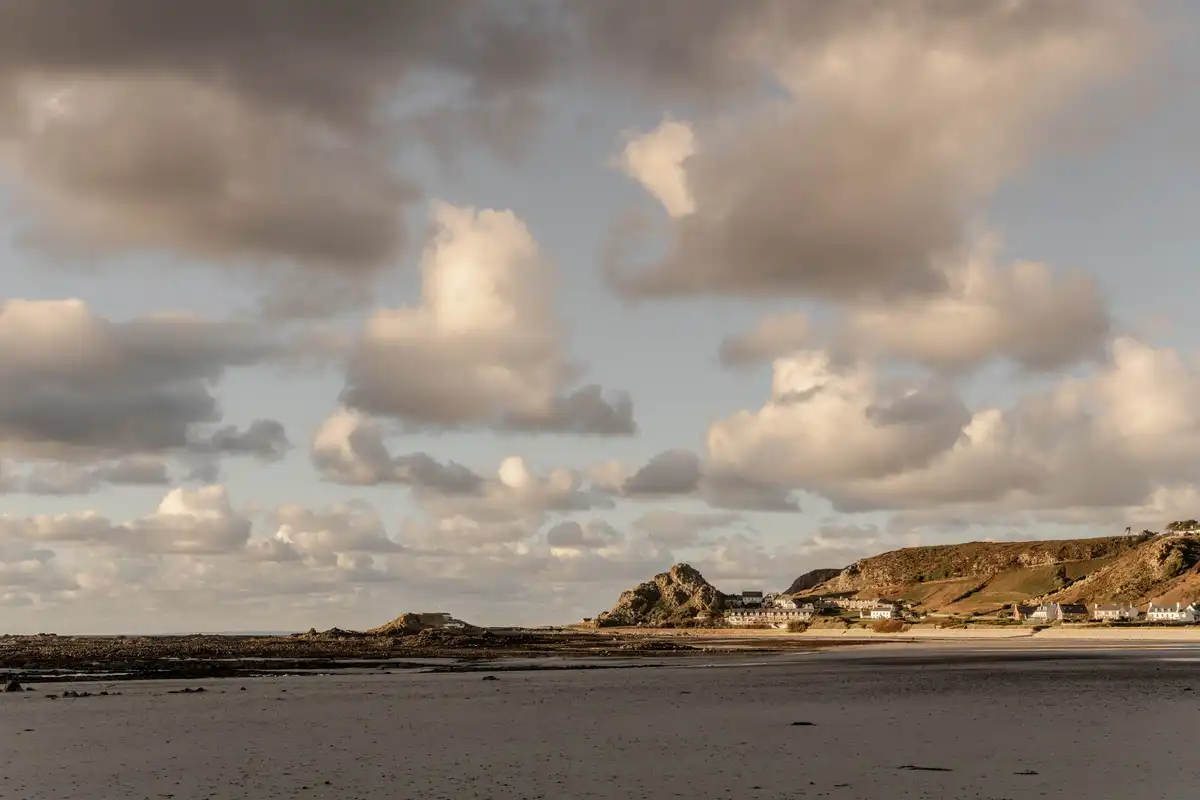
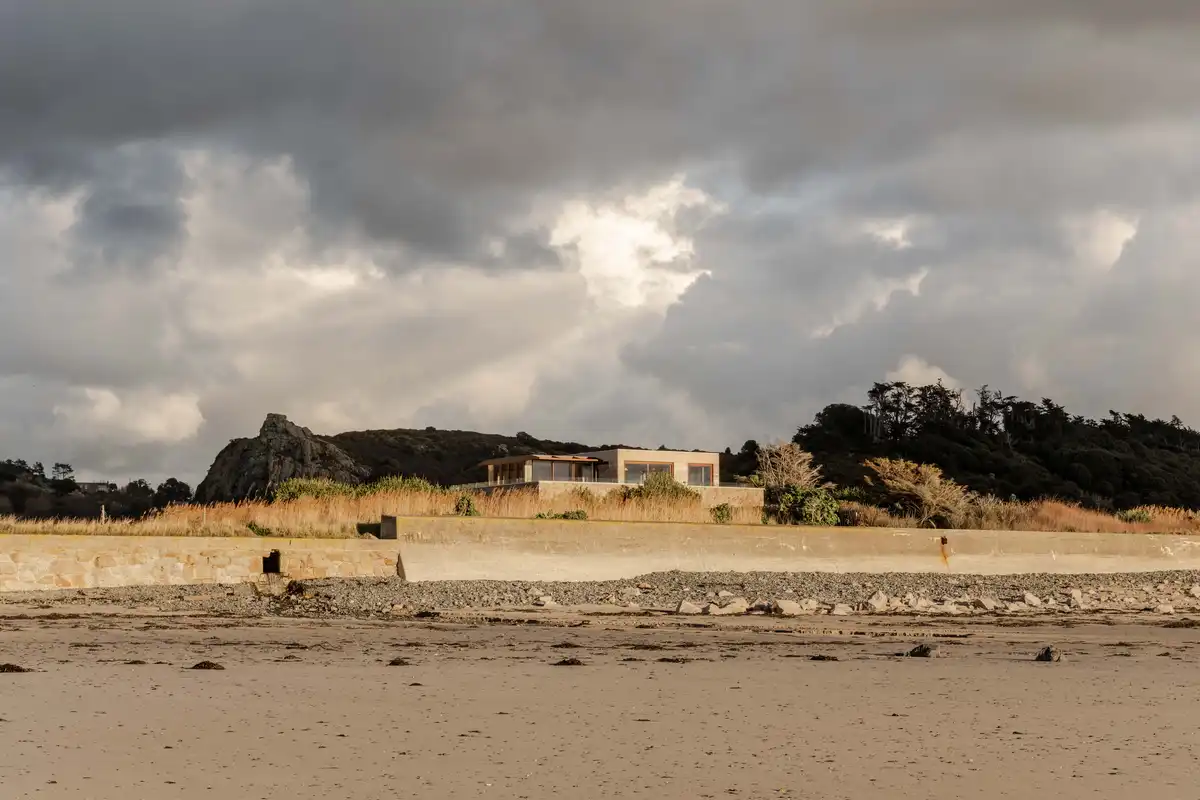
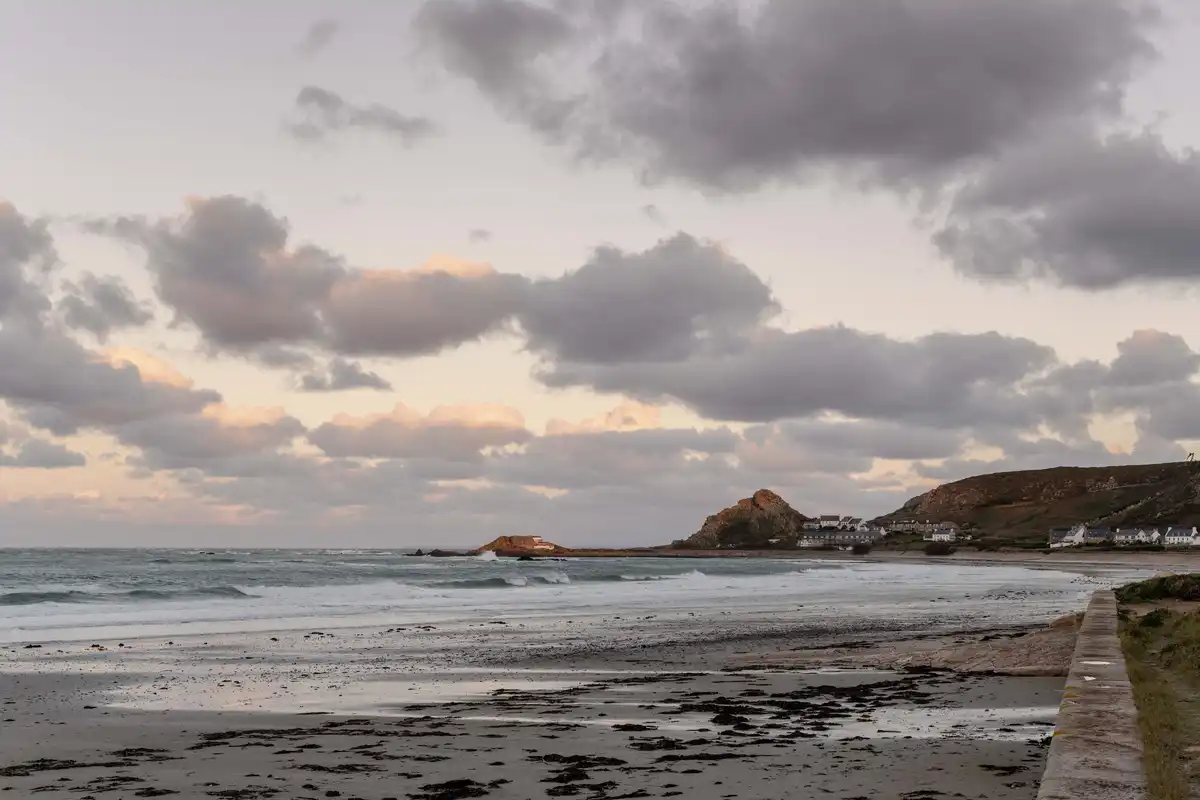
The house is located in an area of outstanding beauty along St Ouen’s bay, where miles of flat sandy beach collides with Atlantic swells and the land behind rises up into the undulating hills of Jersey’s National Park. Working within the island’s planning regulations, Fieldwork developed a language of material honesty and context-driven design adapted to the distinct conditions of Jersey’s western coast.
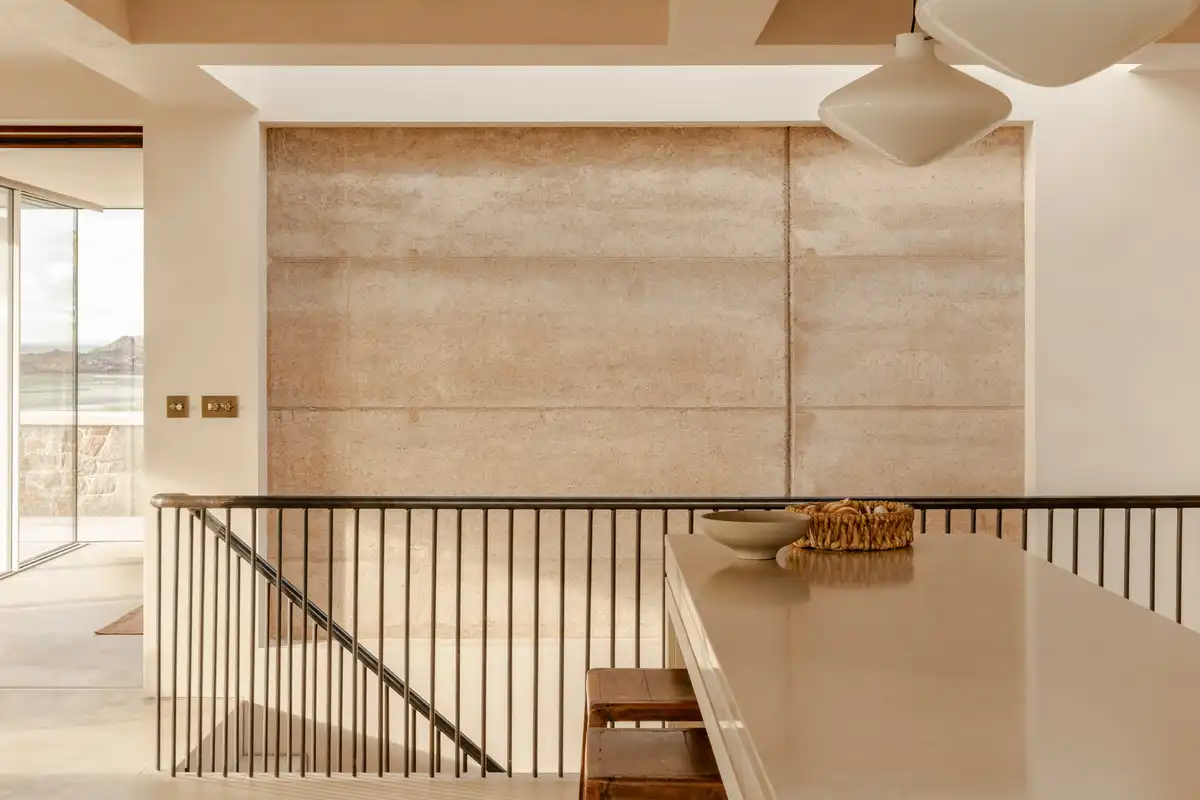
Due to strict planning constraints, the architects were required to work with the existing bungalow, carefully keeping a section of the existing wall in place throughout construction and submitting the proposal as an extension rather than a new build.
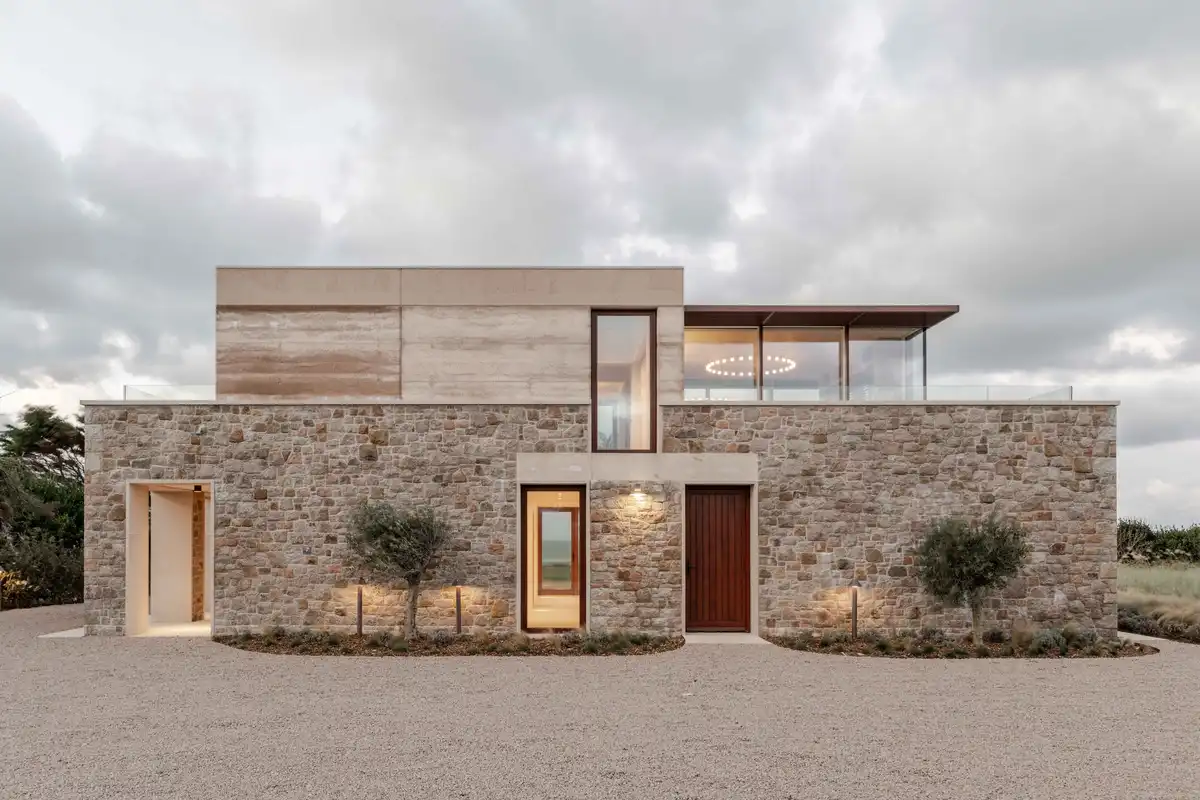
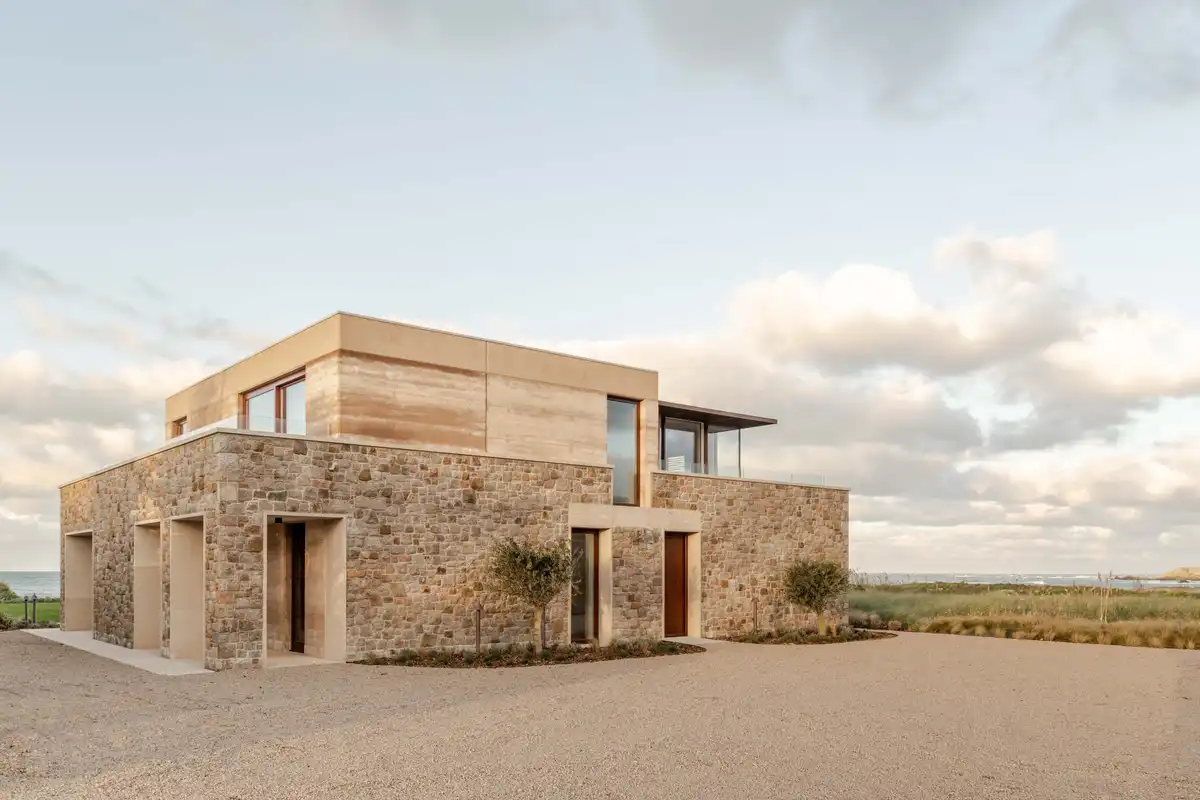
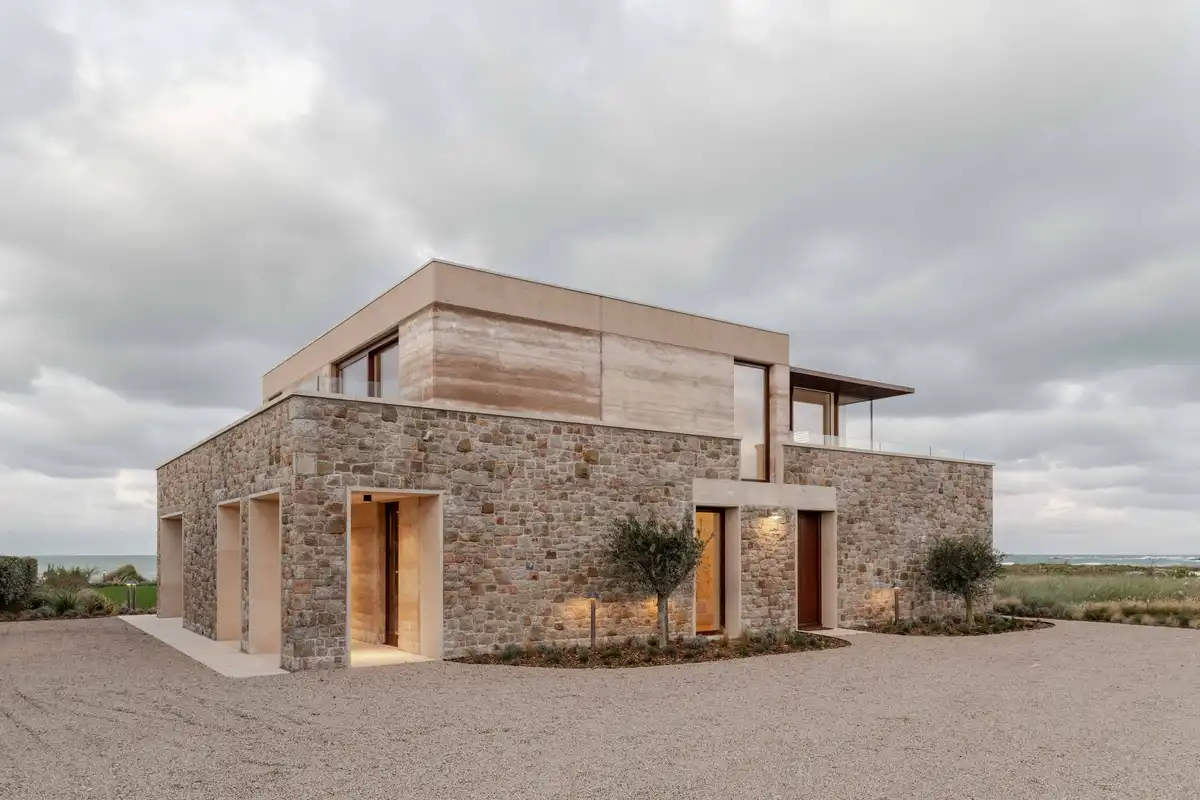
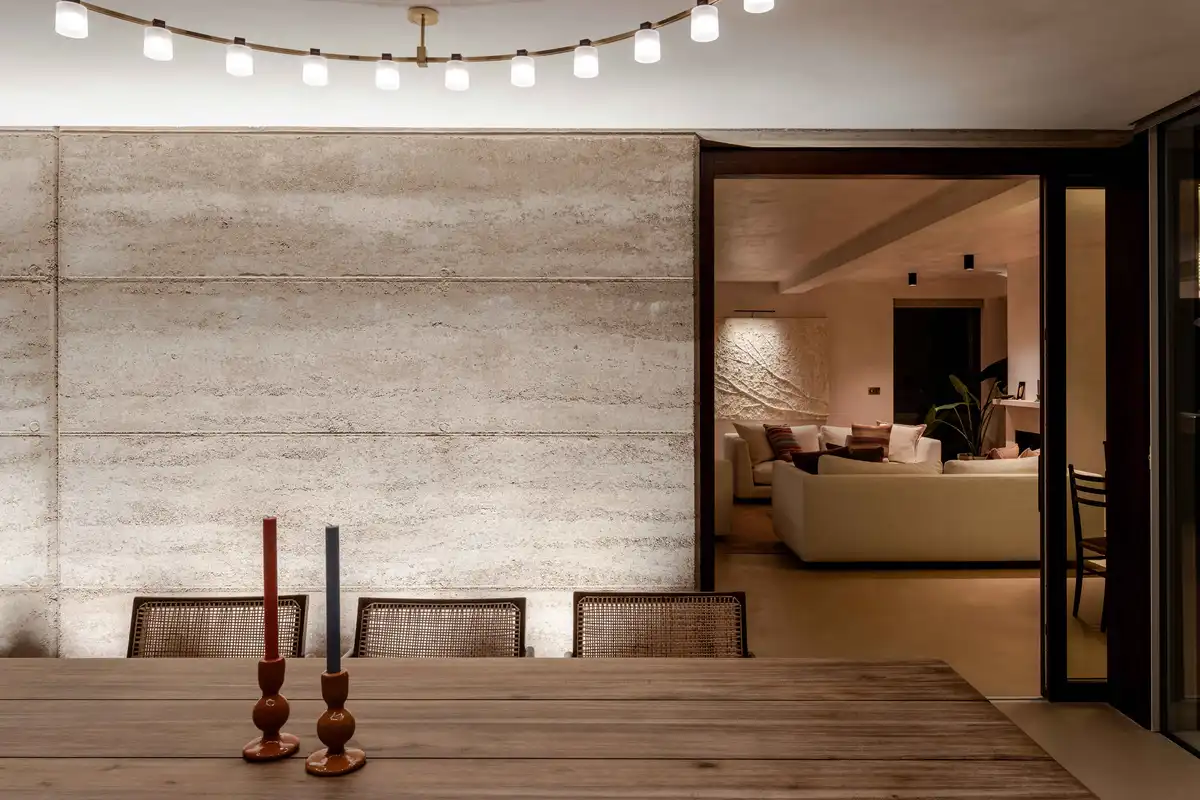
This limitation became the conceptual starting point for the project. The new home was conceived around the ghost of the original structure: its rectangular footprint is traced by a two-storey stabilised rammed earth wall with the remnants of the bungalow encased within. The handcrafted, textural finish of the earth draws on the island’s raw geology while the material’s inherent thermal mass helps to naturally regulate temperature, keeping the home cool in summer and insulated during Jersey’s damp winters.
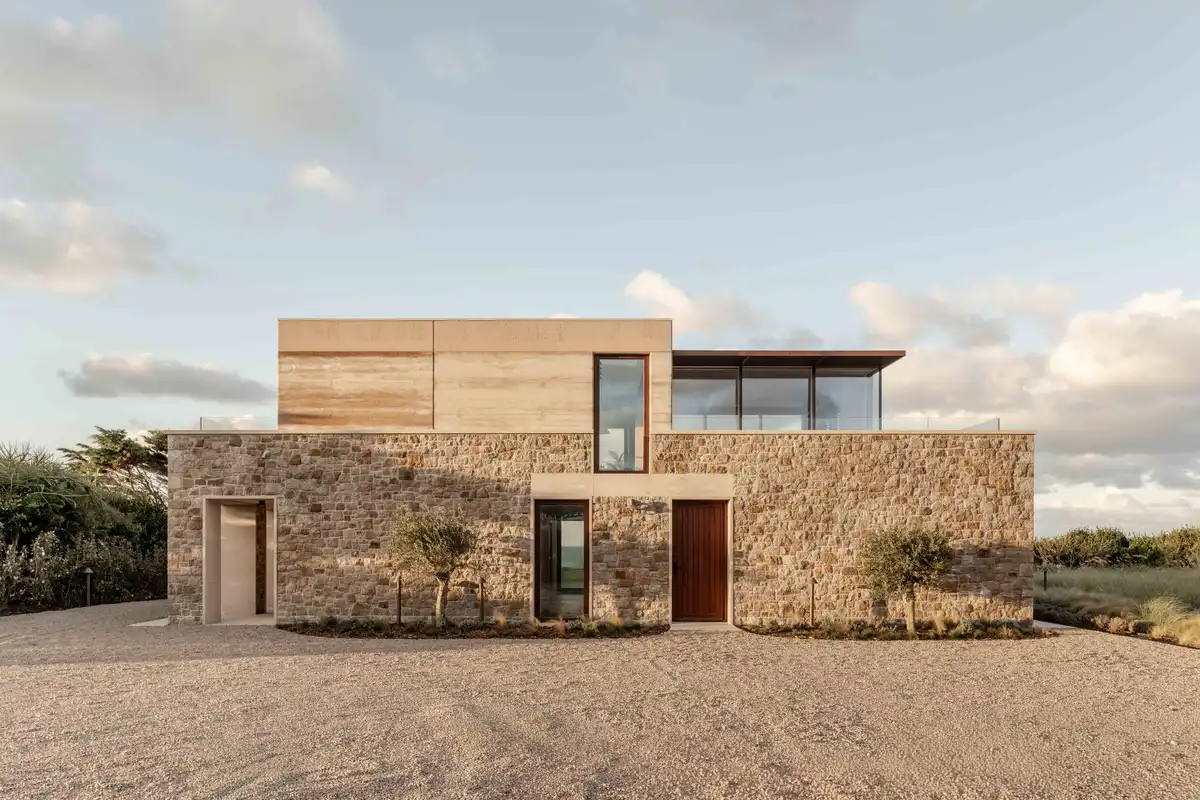
At ground level, an extra layer of local Jersey granite wraps around the rammed earth core, forming a highly solid, protective wall that shelters the interior from the turbulent elements. A colonnade runs along two sides of the house, forming a covered terrace that offers shade and protection from rain while still maintaining a connection to the landscape.
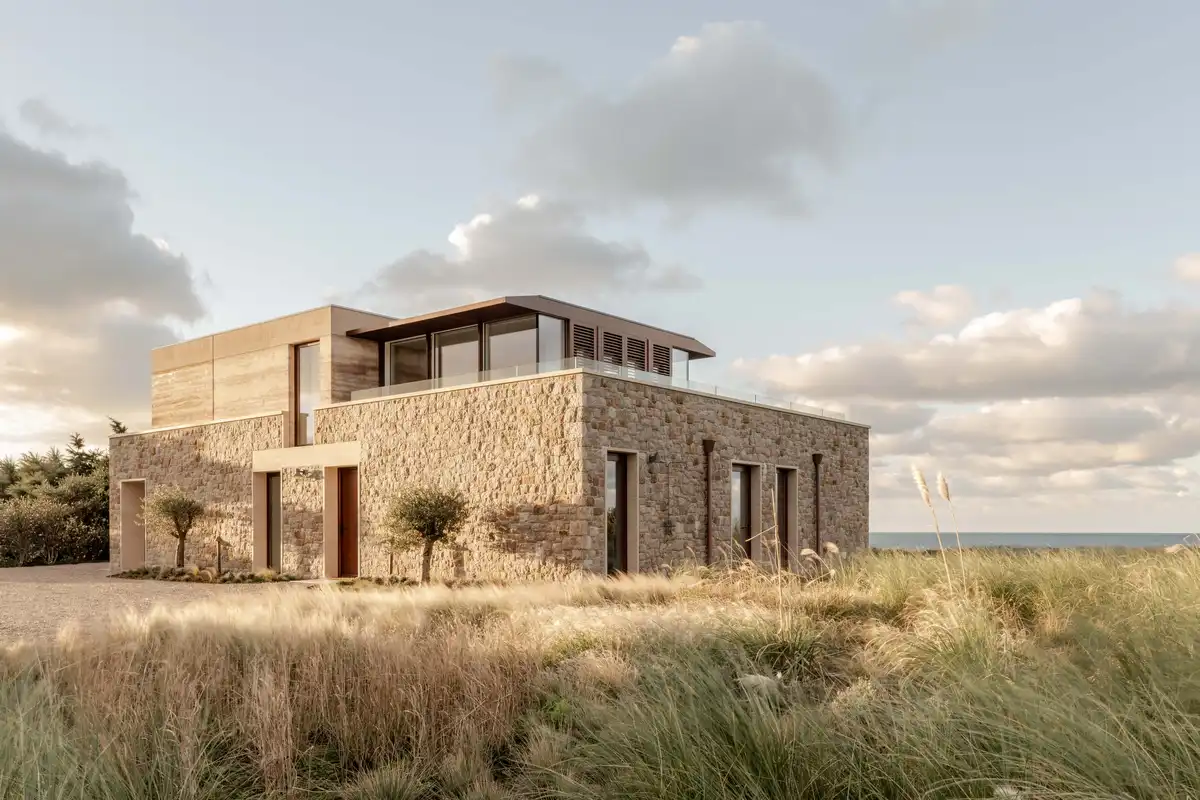
The local granite, characterised by its natural pink hue, was ground down to form a fine dust which was then mixed into a stabilised rammed earth aggregate—a custom material developed by Fieldwork specifically for the house. This iterative process involved extensive research and testing, working closely with Rammed Earth Structures and Elliott Wood to support the learning process. Testing started with small samples that gradually increased in size, subtly pulling the delicate tones into the building’s structure while ensuring the exacting texture and tone were achieved.
In the centre of the home, a section of the rammed earth core has been left exposed, offering a window into the building’s construction while repositioning the material as a sculptural focal point that showcases the beautiful, hard-won finish.
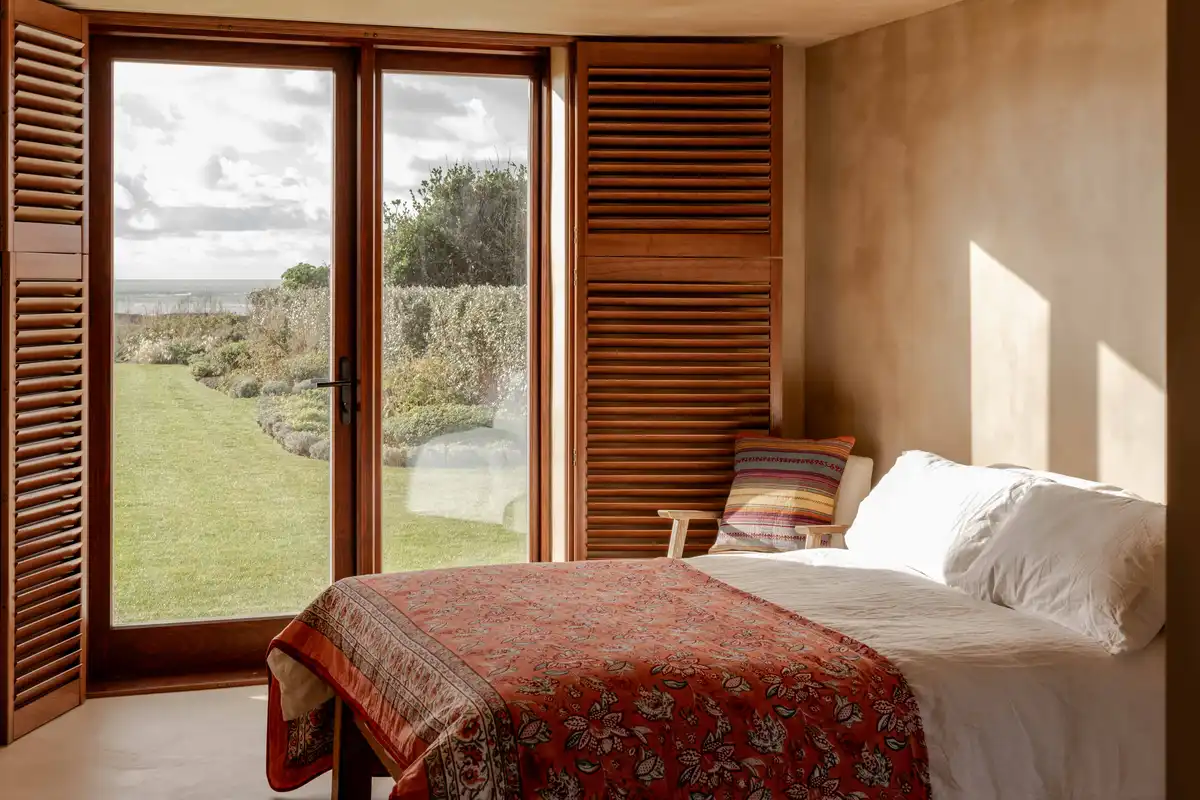
The interior layout is somewhat inverted, with the ground floor housing the private bedrooms; a calm, sheltered layer beneath the light-filled living spaces above. The primary suite faces the sea, cocooned by solid walls and the protective colonnade. Arched openings soften the hard geometry, introducing a quiet romanticism to the robust materiality. A vaulted ceiling in the dressing area enhances this sculptural quality, as if carved into the solid mass itself.
Entry to the home is via the ground floor, which features a thoughtful utility zone affectionately known as the “boardroom”, a space designed for rinsing off after swimming or surfing, complete with shower, surfboard storage and direct access to the outdoors.
The main staircase is the organising spine of the home, from which the internal layout and journey is shaped. It stretches upwards to meet the exposed rammed earth wall, connecting the private ground floor spaces with the elevated living areas above. Openings in the facade ensure direct sightlines to the surrounding landscape in either direction of travel.
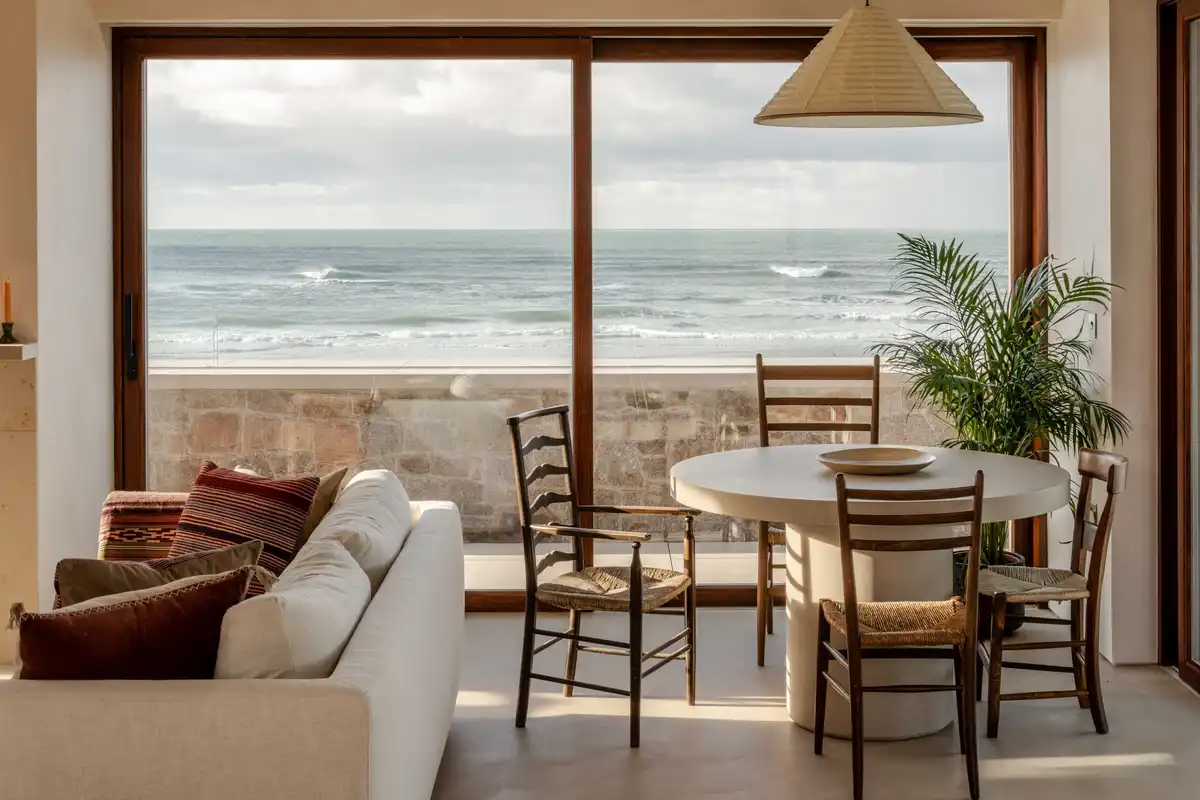
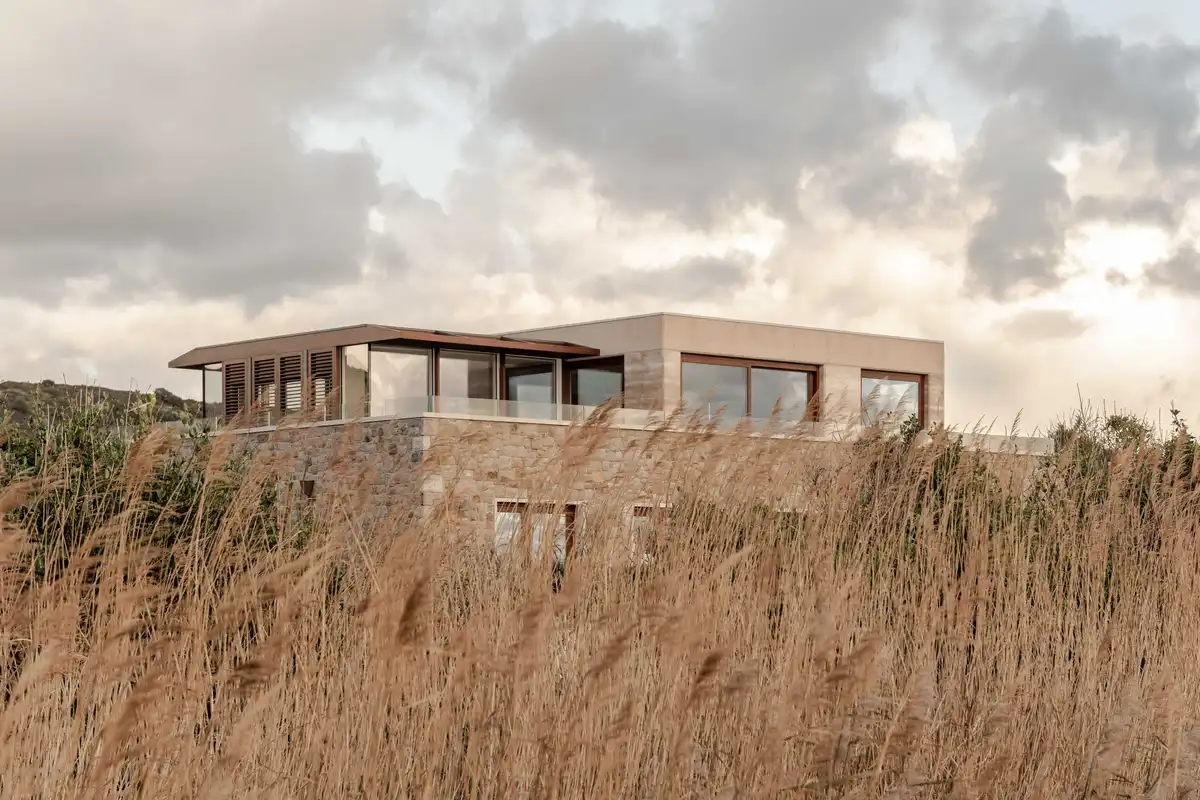
Moving upstairs, the atmosphere shifts and brightens beneath a large rooflight, opening to an open-plan kitchen and lounge with an adjacent dining room. The first floor stands in contrast to the calm sense of shelter below. Here, the architecture reaches outward through extensive glazing and east- and west-facing terraces that frame panoramic views and capture the changing light throughout the day.
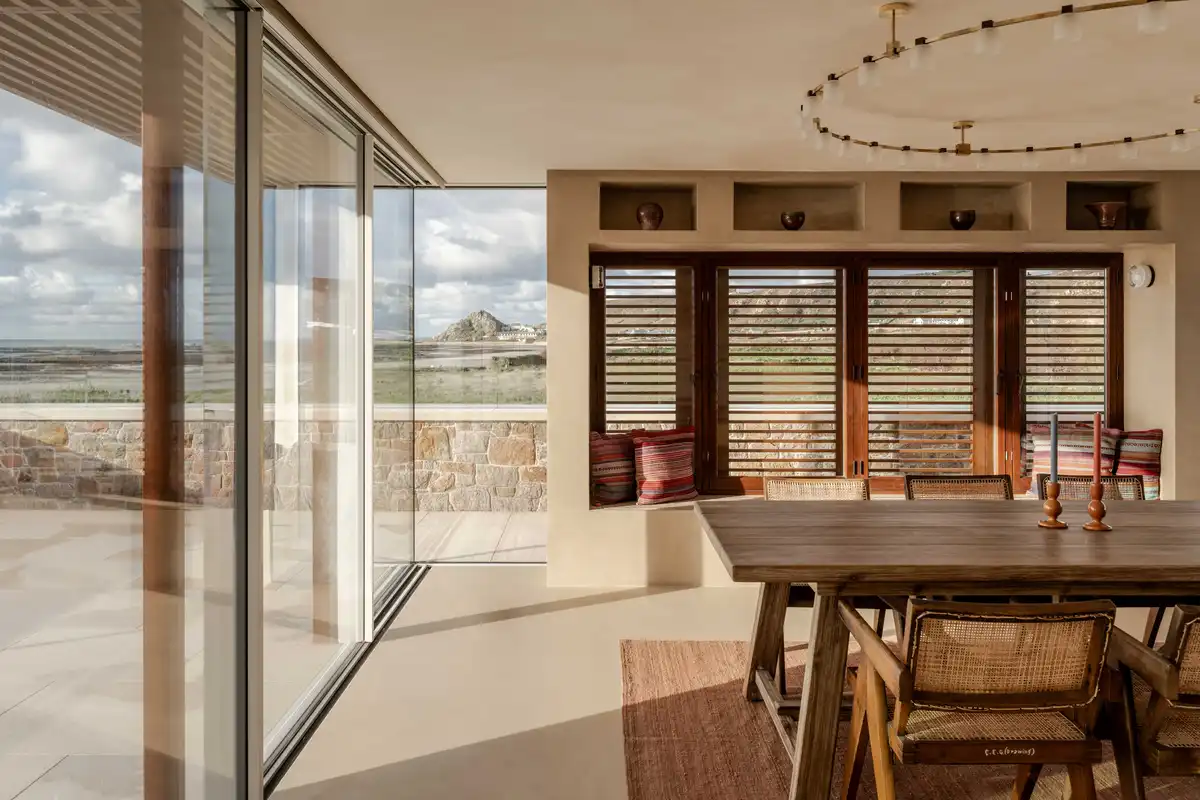
The dining room is located in a timber pavilion that was introduced later in the design process to create additional space and balance the overall massing. The pavilion provides summer shading and its dark timber cladding complements the home’s window frames and joinery while remaining visually subservient to the granite and rammed earth volumes.
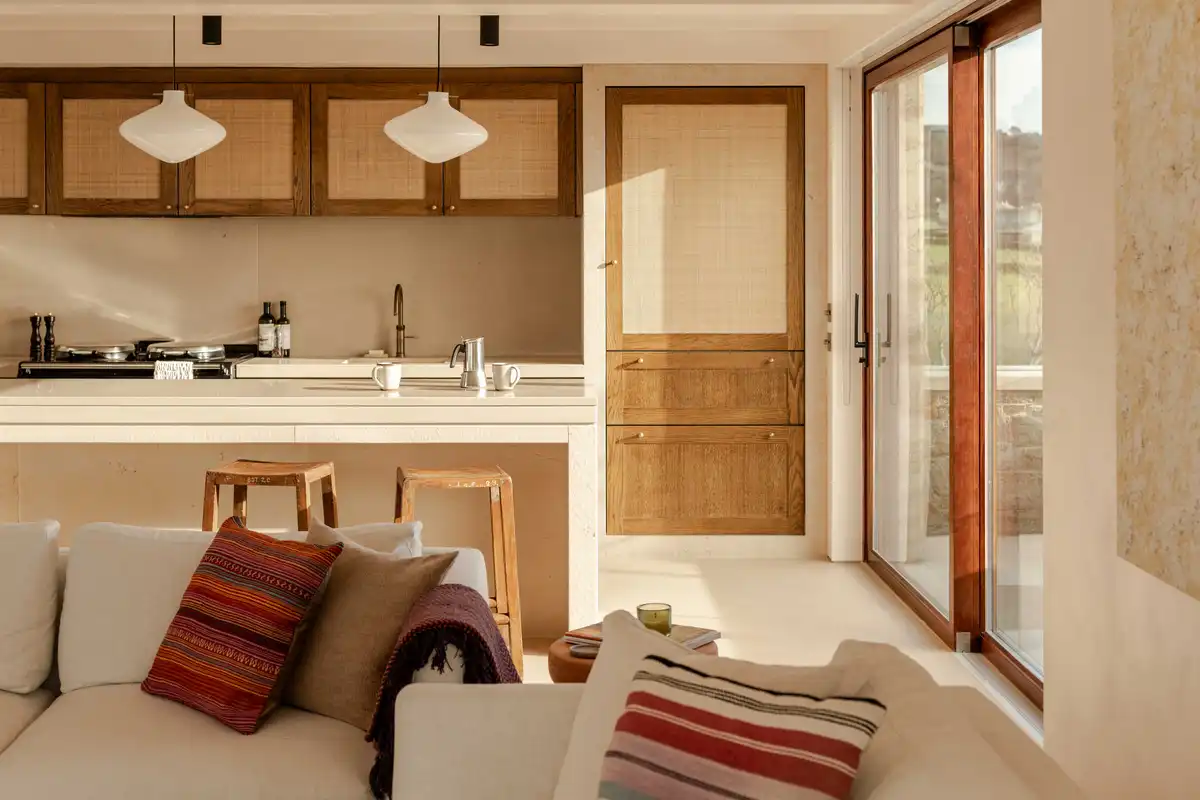
Inside, material continuity links the two floors through the strategic use of cream-coloured limestone. Used for the exterior window reveals, it reappears as a continuous band that travels up the staircase and around the floor opening. It forms the kitchen worktops and stone framework that houses custom timber cabinetry designed by Fieldwork. The limestone’s finish shifts according to function: a flamed texture underfoot reveals tiny fossilised shells, while countertops are polished smooth.
The project celebrates Fieldwork’s collaborative approach and the value of collective expertise throughout the process. Developed from initial concepts alongside Singh Studio, the scheme was shaped early on through close engagement with leading SRE engineer Elliot Wood, informing the structural and material possibilities of SRE and local granite. Rigorously explored with specialist contractors, the completed project stands as a testament to the shared knowledge, design, and craft of all those involved.
Tim Gibbons, Director, Fieldwork Architects, said:
“Wishing Well sits on Jersey’s most exposed coastline and provided an opportunity to balance contemporary design with the rugged surroundings . Working closely alongside the client, who welcomed our ideas and supported our approach throughout, we were able to create a home that was a celebration of the surrounding environment and local craftsmanship.”
James Owen, Director, Fieldwork Architects, said:
“We wanted the house to feel rooted in its surroundings, with the arrangement of the home connecting with the land and sea, by way of framing views to the outside and utilising natural materials throughout. The bedrooms sit within thick granite walls at ground floor, creating a sense of protection from the exposed coastline. A central axis is carved out to cast natural light down from the stairway above, with the upper floors opening up to the surroundings.”
Amber Warner, client and homeowner, said:
“It was very important for me to frame as much of the view as possible from all parts of the house. I wanted to create a space that is both cosy during the dramatic coastal winters as well as cool and open in the summer.
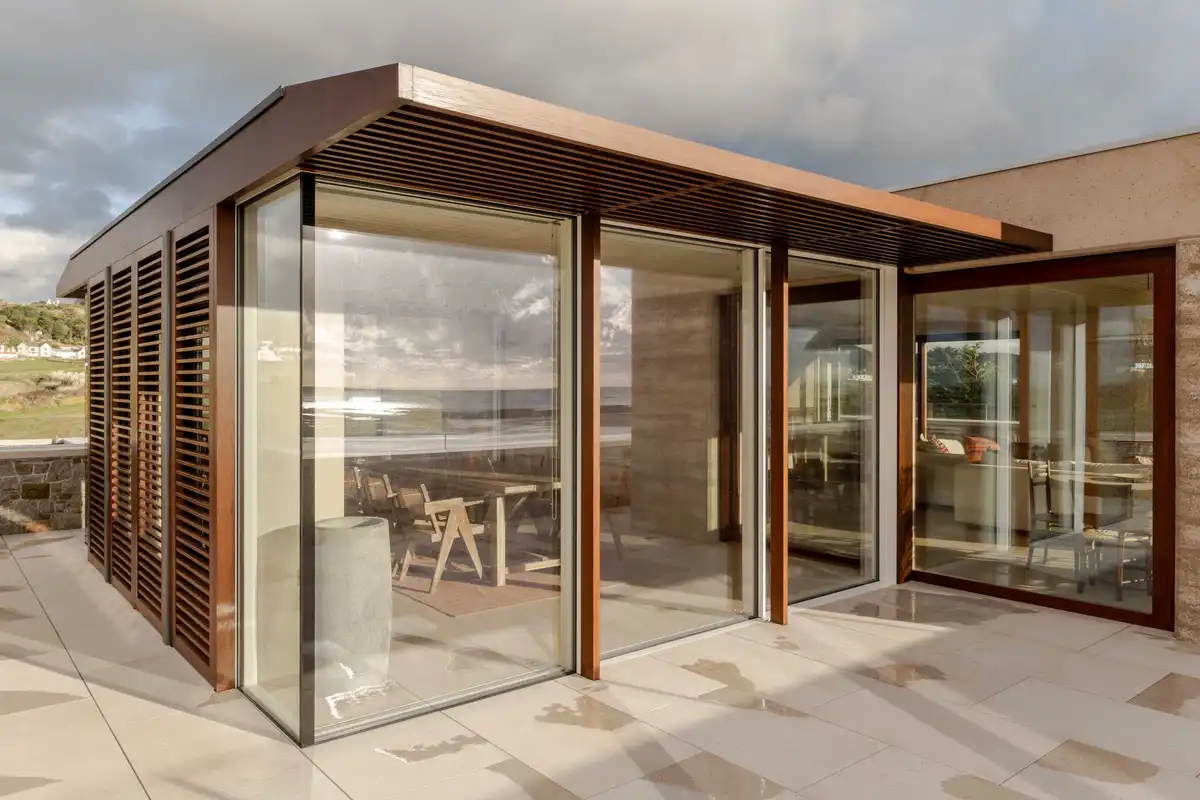
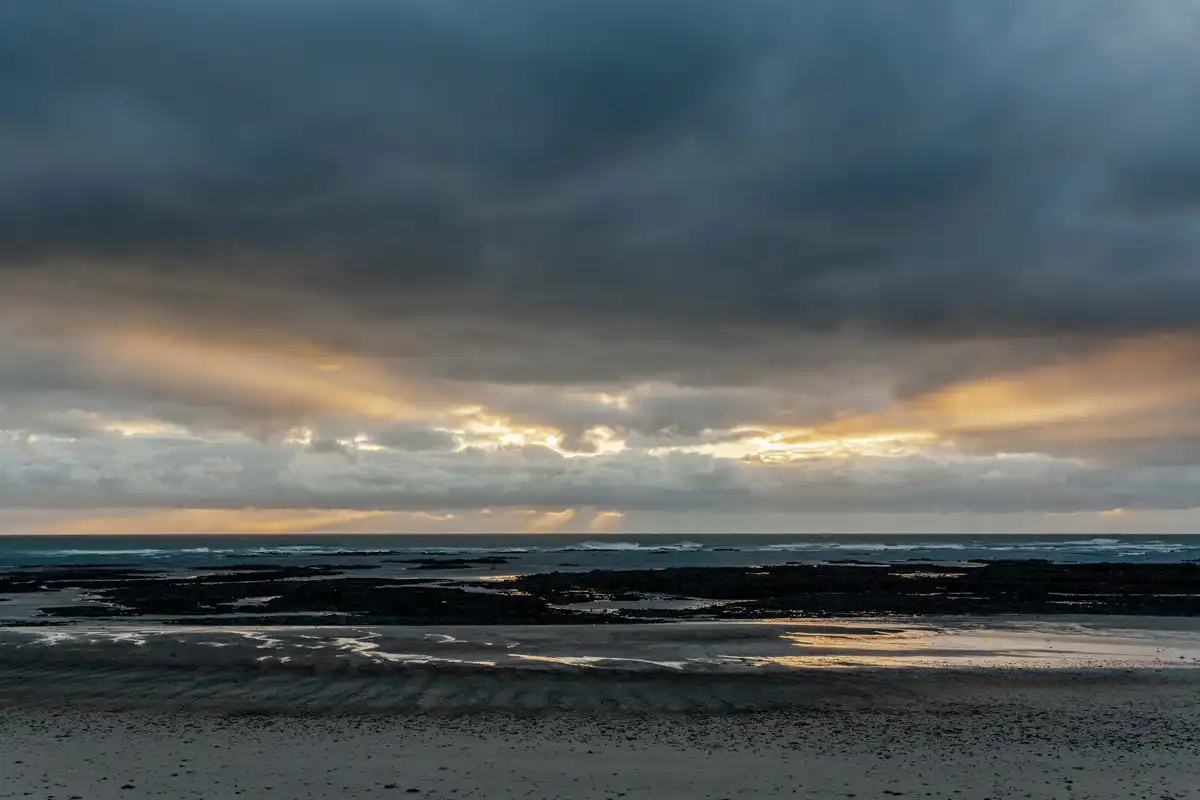
I wanted the house to feel embedded in its surroundings. The pinky tones in the Jersey granite reflect the colour of the sunsets, the tones and textures of the walls inside are earthy and sandy, and in the landscaping the grasses that I planted replicate the coastal vegetation of the area.”
Fieldwork
Founded in 2018 by James Owen and Tim Gibbons, Fieldwork Architects is an architecture and interior design studio based in London who take a creative and exploratory approach to their work. Each project is treated individually, responding thoughtfully to context and client briefs to create bespoke and crafted homes through 3D design, physical models, and technical expertise.
Research and development are central to the studio’s process, with each project informing the next and expanding its creative and technical capabilities. Working across all RIBA stages, Fieldwork delivers designs from concept to completion, including new build homes and bespoke interior joinery.
Website: www.fieldworkarchitects.co.uk
Instagram: (at)fieldworkarchitects
Wishing Well by Fieldwork Architects – Property Information
Project credits
Location: Jersey
Gross internal floor area: 225.5 square metres
Local Authority: Jersey
Start on site date: June 2022
Completion date: September 2025
Architect: Fieldwork Architects
Client: Amber Warner
Form of contract/procurement: Standard Procurement
Interior Design: Fieldwork Architects
Planning consultant: MS Planning
Structural engineer: Elliot Wood
M&E consultant: WBSheils
SRE Specialist: Rammed Earth Structures
Quantity surveyor: Colin Smith Partnership
Principal designer: Fieldwork Architects
Lighting consultant: Strom
Main contractor: V+V Jersey
Stone Specialist: Le Pelley
CAD: Auto Cad and Revit
Photographer: French and Tye
Building Products
Paint: Bauwerks
Floors: Mortex
Joinery: Bespoke design by Fieldwork
Kitchen: Bespoke design by Fieldwork
Lighting: Strom
Windows: Bespoke
Stabilised Rammed Earth: Developed with Rammed Earth Structures and Elliot Wood
External and Internal Stone: Creme Noblesse
Wishing Well Jersey home images / information from Fieldwork Architects
The architectural design was developed with Singh Studio, who developed the concept for the building’s external expression, including the stabilised rammed earth material strategy and the building’s external massing and elevation design. Fieldwork developed the internal layout, before leading the project through detailed design, interiors and construction.
Singh Studio: www.singhstudio.co.uk
Location: Jersey, Channel Islands, United Kingdom.
Channel Islands Property Designs
Jersey Property Designs
Jersey International Finance Centre
Design: MJP Architects with Eric Parry Architects
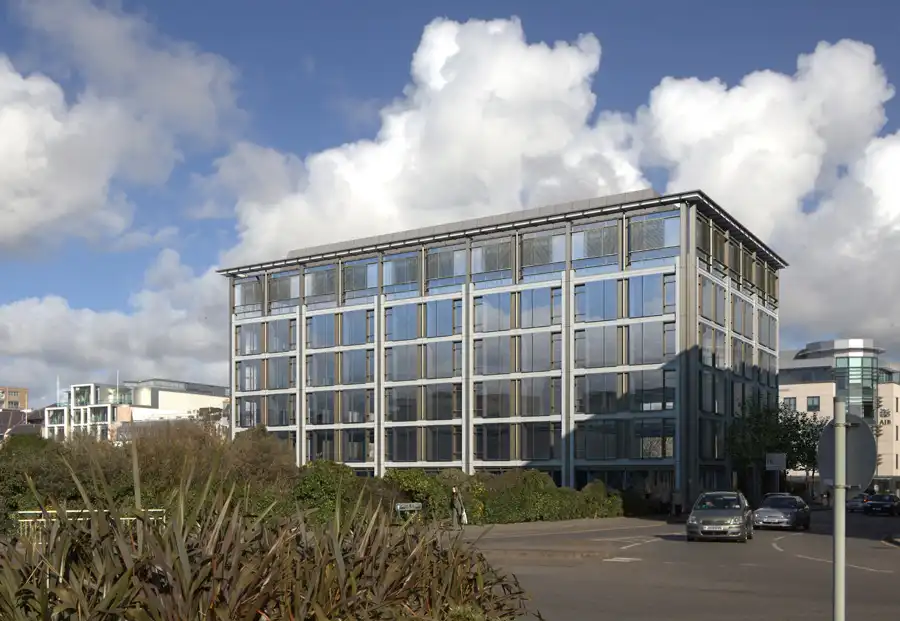
picture from architects
St Saviour Houses, Jersey
ADAM Architecture
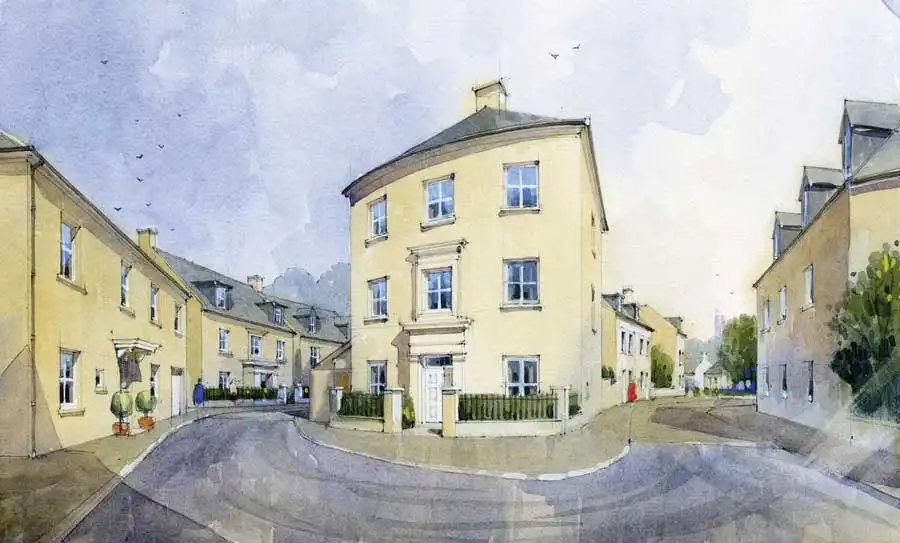
picture from architects
Jersey houses
Design: Robert Adam Architects
++
M House in Guernsey
Design: Jamie Falla Architecture
Architecture adjacent to Isle of Jersey
Comments / photos for the Wishing Well Jersey home by Fieldwork Architects page welcome
Website : England