National Railway Museum Station Hall
Location: National Railway Museum (NRM) in York, North Yorkshire, northern England, UK
Building renewal design: Buttress Architects
Station Hall at the National Railway Museum reopens following an £11million transformation
Buttress’s restoration and conservation work includes refreshing the entire interior and exterior of the building; the installation of 632 solar photovoltaic roofing panels across a new insulated metal-clad roof; and new glazing to the south and west elevations to allow for future train vehicle moves.
Exterior of Station Hall with the restored original doors and new glazed screen windows to bring daylight into the building:
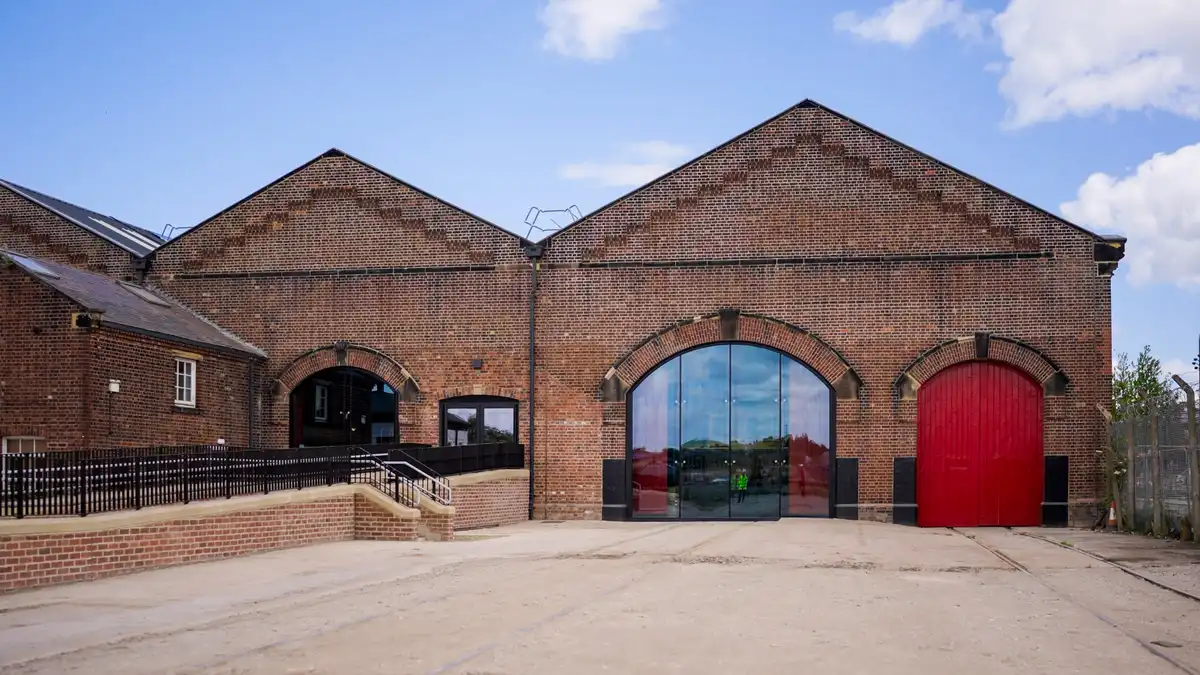
photo : NRM
25 September 2025
National Railway Museum Station Hall Building Refurbishment
On Friday 26 September, the refurbished Grade II listed Station Hall reopens after an £11m transformation in time to celebrate the National Railway Museum‘s 50th birthday weekend (27–28 September) and Railway 200, the bicentenary of the modern railway.
As part of the restoration works which started in 2023, Buttress Architects have undertaken a major re-roofing project which saw the entire 6000m² roof come off the Station Hall building, whilst the historic locomotives were left in-situ and shrouded with protective scaffolding to shield them whilst the works were carried out. This is the museum’s biggest structural project since its opening in 1975.
Buttress worked alongside the National Railway Museum team in York to painstakingly ensure that all the historical locomotives and carriages – including Queen Victoria’s train, King Edward’s train Queen Mary’s and the Queen Mother’s train – were protected from the works above.
Historic carriage as part of the National Railway Museum’s historic collections:
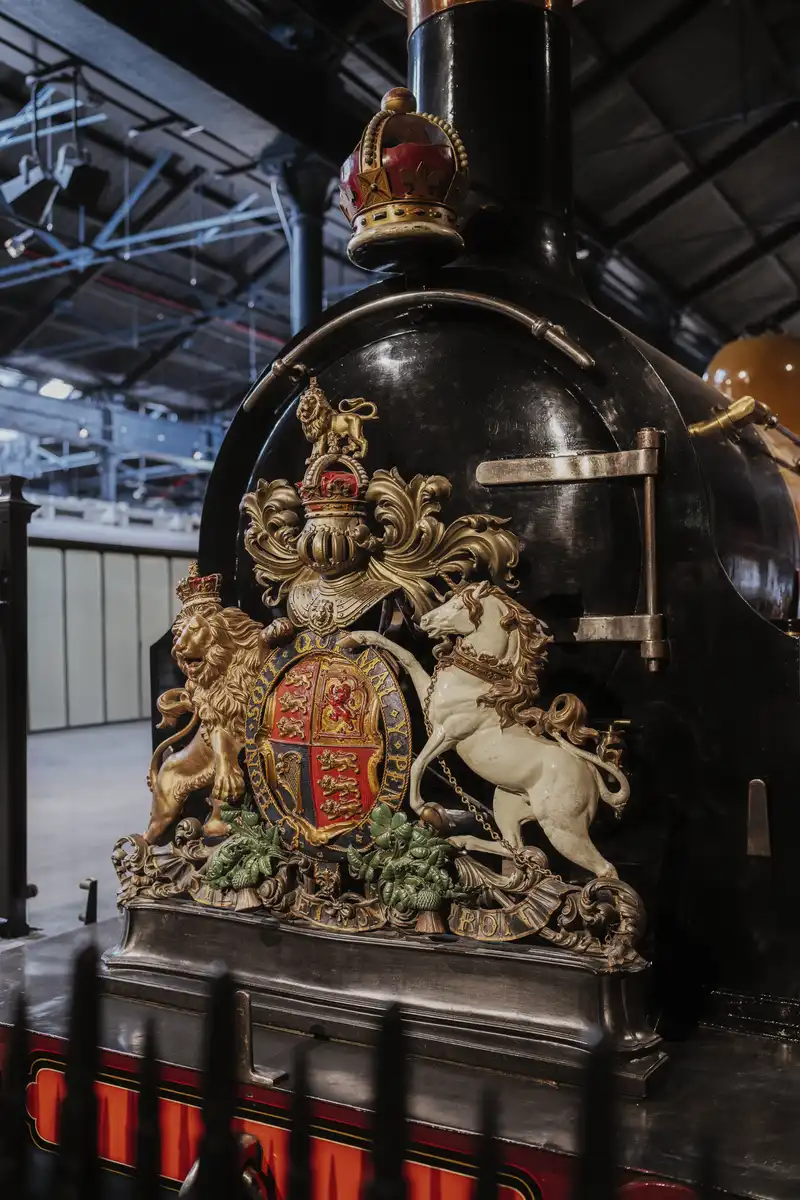
photo : NRM and Drew Forsyth
Alex Scrimshaw, Associate Technologist, Buttress said: “This was one of the biggest challenges of the project. Before any building construction works could start, the existing locomotives and vehicles were encapsulated within mobile scaffold frames, clad with solid steel sheeting to the roof and membrane wrap. The scaffold frames were constructed within the Hall and moved on tracks over the locomotives. This created an impact-resistant envelope that protected the collection from potential damage. It also allowed a full scaffold crash-deck to be installed above, giving contractors safe access to complete the re-roofing and high-level fabric repairs. As the project did not have an external temporary roof, the internal crash-deck was covered with scaffold sheeting to provide a secondary barrier against potential water ingress from inclement weather.”
Exterior drone shot of Station Hall, National Railway Museum, with the new thermally efficient roof and 632 solar photovoltaic panels across the roofscape:
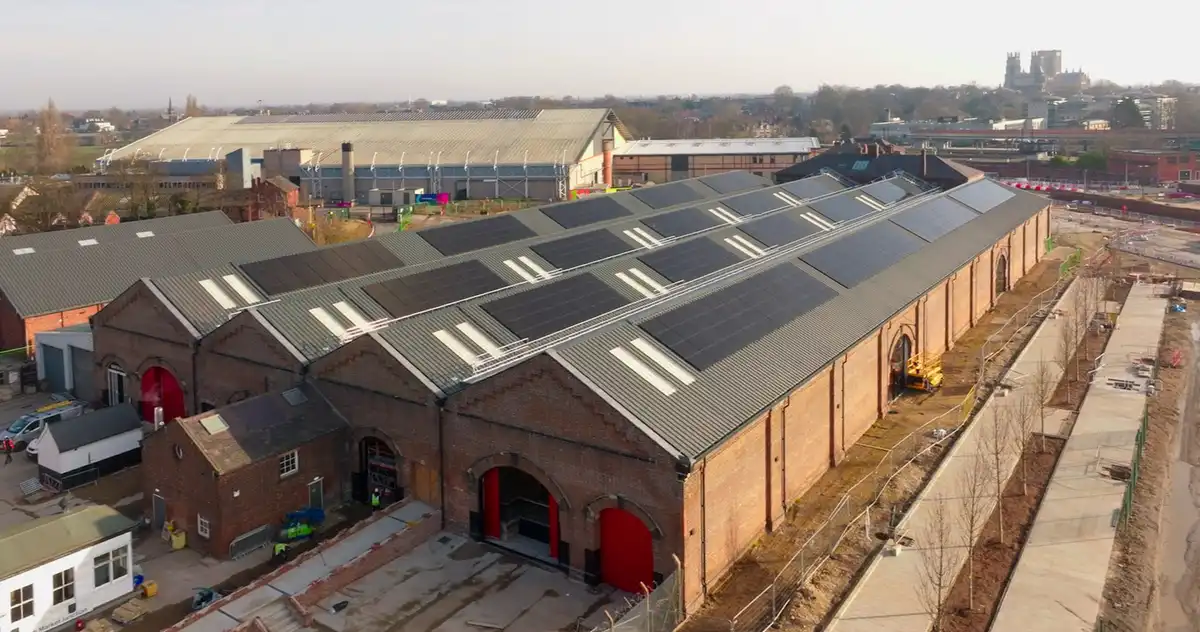
photo : NRM
Water ingress was an issue with the old roof, so making it water-tight and sound was as basic requirement of the project. In addition, there were a lot of gaps identified in building meaning warm air was escaping and cold air was getting inside so fixing this and making sustainable improvements was a priority.
The extensive works also included:
- A new thermally efficient roof, providing a weather-tight solution to keep the collection fully protected and preserve the historic structure for future generations. This major job involved the installation of 632 solar photovoltaic panels across the roofscape (spanning nearly 6,000m2), including the provision of rooflights with UV film to prevent degradation of interior collections and the installation of safe accessible platforms across roof slopes and valleys, to aid maintenance tasks in the future. The result is that natural light covers the entire Station Hall and lights the magnificent locomotives and carriages across the platforms.
- Restoration of the original shutter doors whichonce allowed locomotives to transfer from the Hall onto the main railway line, as well as horse-drawn vans. The shutter doors themselves were in reasonable condition but sliding tracks and the door gear had to be restored to bring this back to an operational condition.
- New glazed screens installed on the south and west elevations of the building, specially designed to be demountable, and to increase the thermal performance of the Hall allowing for train moves in the future. Most sites do not have to contend with vehicles of this size moving in and out of a building. The new windows bring natural daylight into the space and allow for magnificent views both from within the Hall looking out, and from the outside looking in. For the first time, the public can glimpse the collections and locomotives, day and night. Originally, shutter doors would have been opened when the Hall was used as a goods station; installing windows in the arches restores lighting that is closer to what it would once have been.
Interior of Station Hall. Historic collection:
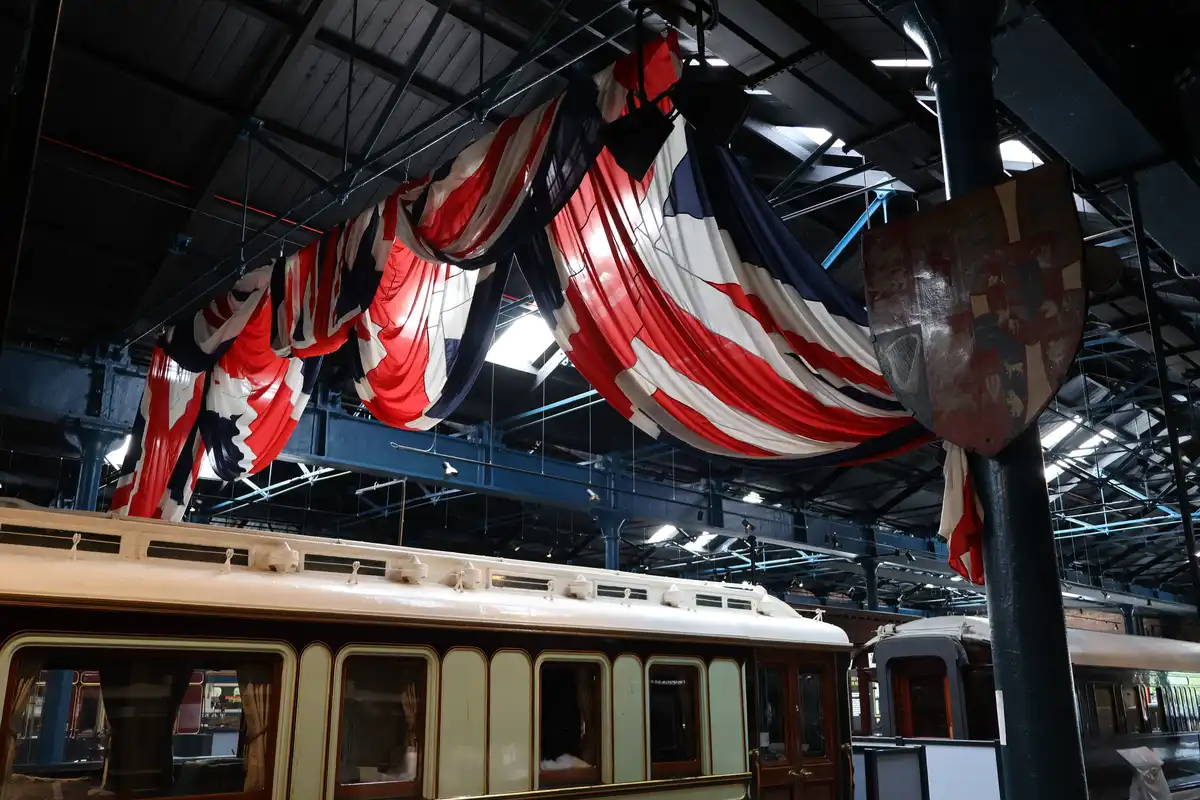
photo : NRM
Alex, an experienced architectural technologist working within Buttress’ historic buildings team, adds: “We drew inspiration from the Burgos Railway Station in Spain for the new glazed screens. They are essentially a large Meccano set, nuts, bolts and components, allowing parts to be deconstructed and reconstructed.
He concludes: “Seeing Station Hall reopen after our restoration works has been a real privilege. Protecting such an important Grade II listed building was both a challenge and a responsibility that we are proud to be part of. The re-roofing project was not merely about maintaining a building; it’s about safeguarding the essence of British railway history. The significant collection are the vessels that carry the stories of a nation. The legacy of these trains and locomotives will continue to inspire and educate generations to come. To complete the project in time for the museum’s 50th anniversary feels especially fitting.”
Station Hall’s new thermally efficient roof and 632 solar photovoltaic panels across the roofscape:
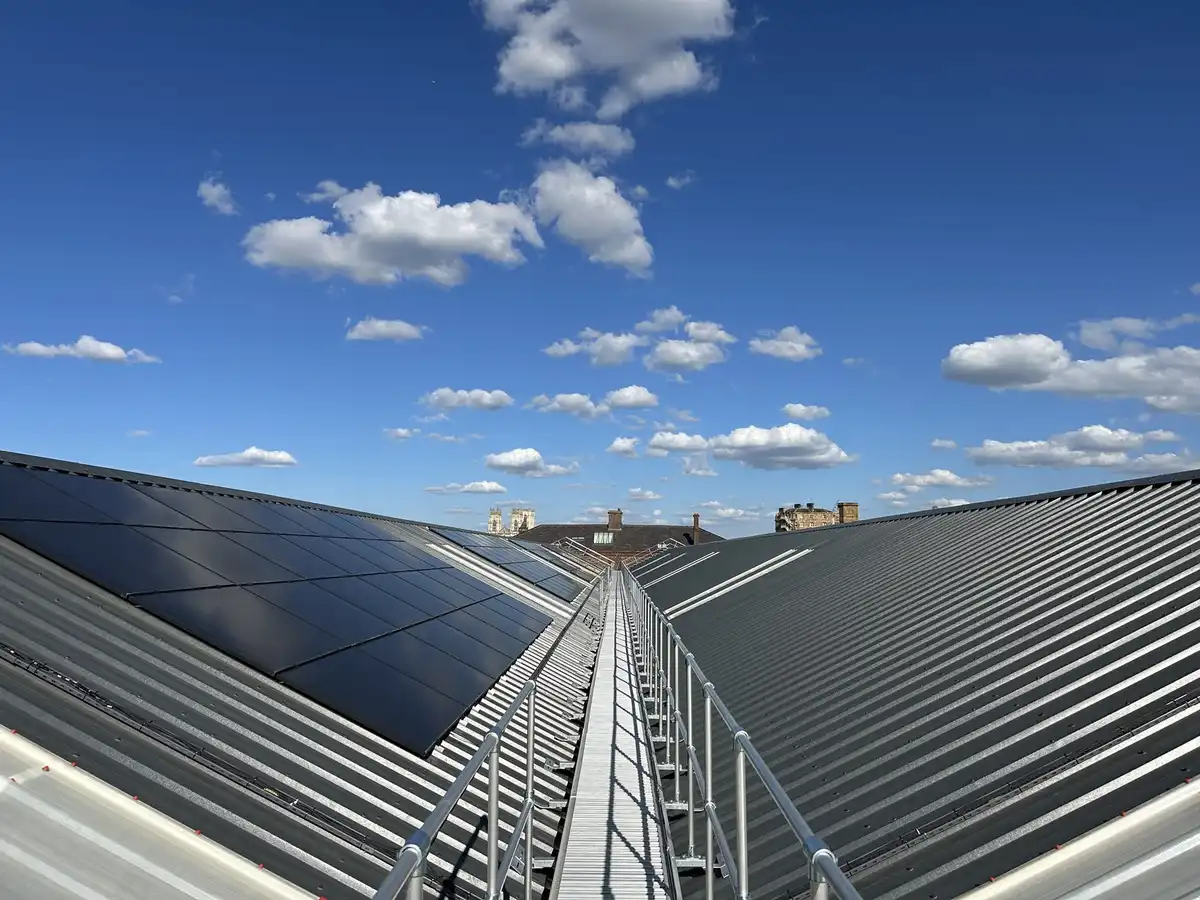
photo : Buttress Architects
Station Hall
Built in the 1870s, Station Hall started as York’s main goods station with everything from everyday essentials to luxury items, World War Two munitions and even exotic animals passing through on their way around the country. It was a fully working railway right up until the 1960s. More information about the National Railway Museum can be found here.
More information about Buttress’ project work on Station Hall, National Railway Museum can be found here.
Buttress
Established in 1988, Buttress is a 100% employee-owned architecture and design studio based in Manchester and Leeds. Its award-winning work encompasses heritage and conservation, residential, arts and culture, faith, commercial, workplace, hotels and leisure, community and education sectors. Buttress also offers heritage consultancy services, a positive forward-thinking service that helps clients identify how the past can inform the future.
A certified B Corporation, the practice is committed to ‘Architecture for an equitable tomorrow’ creating spaces that are inclusive, sustainable, and socially impactful.
LinkedIn – Buttress
Instagram – (at)buttressarchitects
National Railway Museum Station Hall building design, York, Yorkshire, images / information received 250925
++
Wonderlab: The Bramall Gallery at NRM
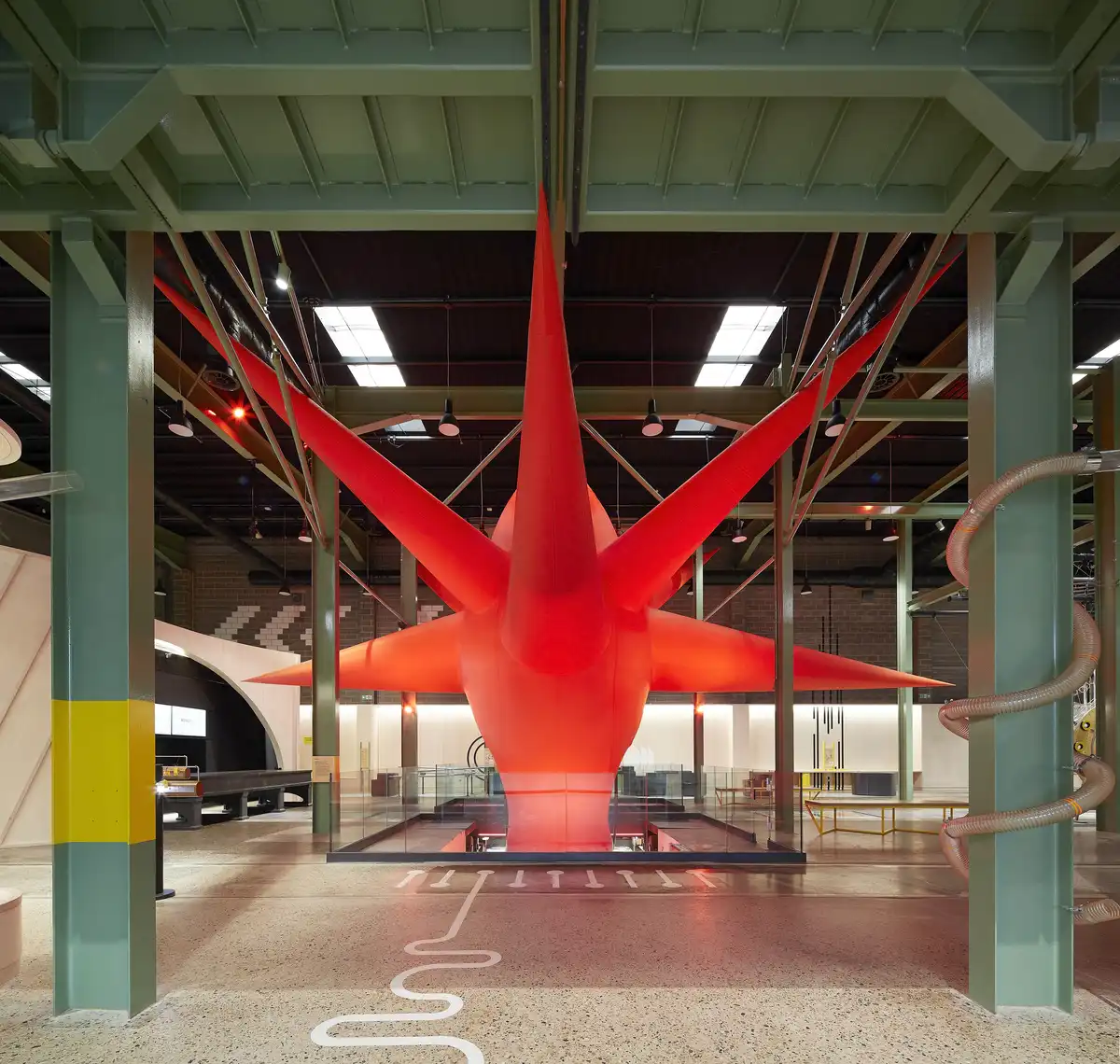
Wonderlab The Bramall Gallery, National Railway Museum Yorky – winner of RIBA Yorkshire Building of the Year Award 2025:
photograph © Hufton+Crow
The National Railway Museum (NRM) in York has long been a much-loved cultural destination for railway and heritage enthusiasts.

photo © Hufton+Crow
Housed in the former locomotive repair workshop.
Design: De Matos Ryan
RIBA Yorkshire Awards 2025 winning project
++
National Railway Museum’s Central Hall Finalist design concepts
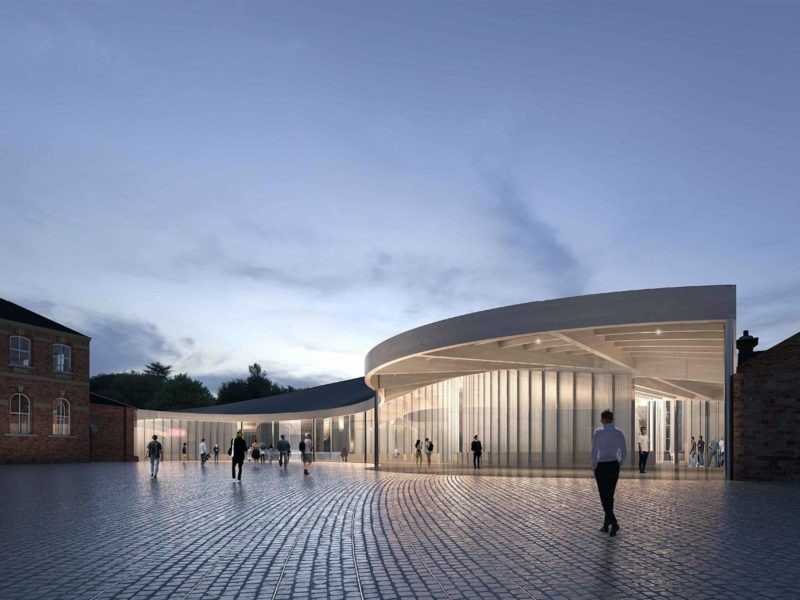
image courtesy of architects
National Railway Museum York Design Competition News
Location: National Railway Museum York, Yorkshire, northern England, UK
York Architecture Design
York Architecture Designs – selection:
New Lodge in New Earswick, near York, North Yorkshire
Design: PRP Architects
York Minster Stonemasonry Training Centre
Design: Tonkin Liu
Malmaison York luxury hotel
Design: Dexter Moren Associates
National Railway Museum York Design Competition News
Design: Heneghan Peng Architects
++
Yorkshire Architecture
Comments / photos for the Wonderlab: The Bramall Gallery, National Railway Museum York design by De Matos Ryan – 2025 RIBA Yorkshire Awards Winners page welcome