William Sutton Prize 2025 Winners
post updated 8 July 2026
5 August 2025
Clarion Housing Group has revealed the finalists for the sixth William Sutton Prize as the organisation marks its 125th anniversary and celebrates the legacy of its founder.
The shortlist for The William Sutton Prize for Sustainability includes innovative proposals ranging from transforming agricultural waste into insulation panels and adaptive heating systems to support decarbonisation objectives to a new model transforming overlooked urban spaces into new homes using reclaimed building materials.
Five projects have been shortlisted for The William Sutton Prize for Connected Communities, developed in partnership with the Helen Hamlyn Centre for Design at the Royal College of Art (RCA). These include an AI-powered digital “super-neighbour” to bring communities together, the creation of a new outdoor gym in Bromley built from knives removed from the streets, and a programme that empowers under-represented young social housing residents aged 14-16 to become environmental innovators and future STEM leaders.
Winners will be able to take home a share of £125,000 in funding, with shortlisted applicants bidding for a grant of up to £50,000 for the sustainability category and up to £25,000 for the connected communities category.
In addition to funding, the winners will also receive a tailored package of business support and the chance to collaborate with Clarion and sector-leading experts to turn their bright ideas into reality.
Named after the Victorian philanthropist whose legacy created Clarion Housing Group, The William Sutton Prize aims to honour that legacy by turning groundbreaking concepts into real-world solutions that make lasting improvements to the built environment and local communities.
Clare Miller, Chief Executive of Clarion Housing Group, said:
“Innovation is the engine that drives progress in sustainability and in building stronger, more connected communities. At Clarion, we believe that empowering people to turn bold ideas into reality is essential for building a better future, and that’s why we created The William Sutton Prize.
“The William Sutton Prize not only unlocks funding – it unlocks potential. It’s about backing the thinkers, the doers, and the dreamers who are shaping homes, places, and lives for generations to come, and it’s inspiring to see such cutting-edge, creative thinking reflected in this year’s shortlist.”
Past William Sutton Prize winners include well-known architecture practices including Bell Phillips Architects, Mole Architects and Jas Bhalla Works, alongside social enterprises and charities such as the Hackney School of Food and Pride of Place Living.
As part of Clarion’s 125th anniversary celebrations, this year has seen the launch of a new William Sutton Prize scholarship programme. Delivered in partnership with the London Neighbourhood Scholarship Trust and financial education specialists Blackbullion, the initiative aims to increase diversity in architecture and sustainability, providing funding to support students from low-income households and social housing backgrounds through their degree courses.
Winners and scholars will be announced at an awards ceremony on 25 September sponsored by The Wiggett Group.
To find out more about The William Sutton Prize visit www.clarionhg.com/william-sutton-prize.
+++
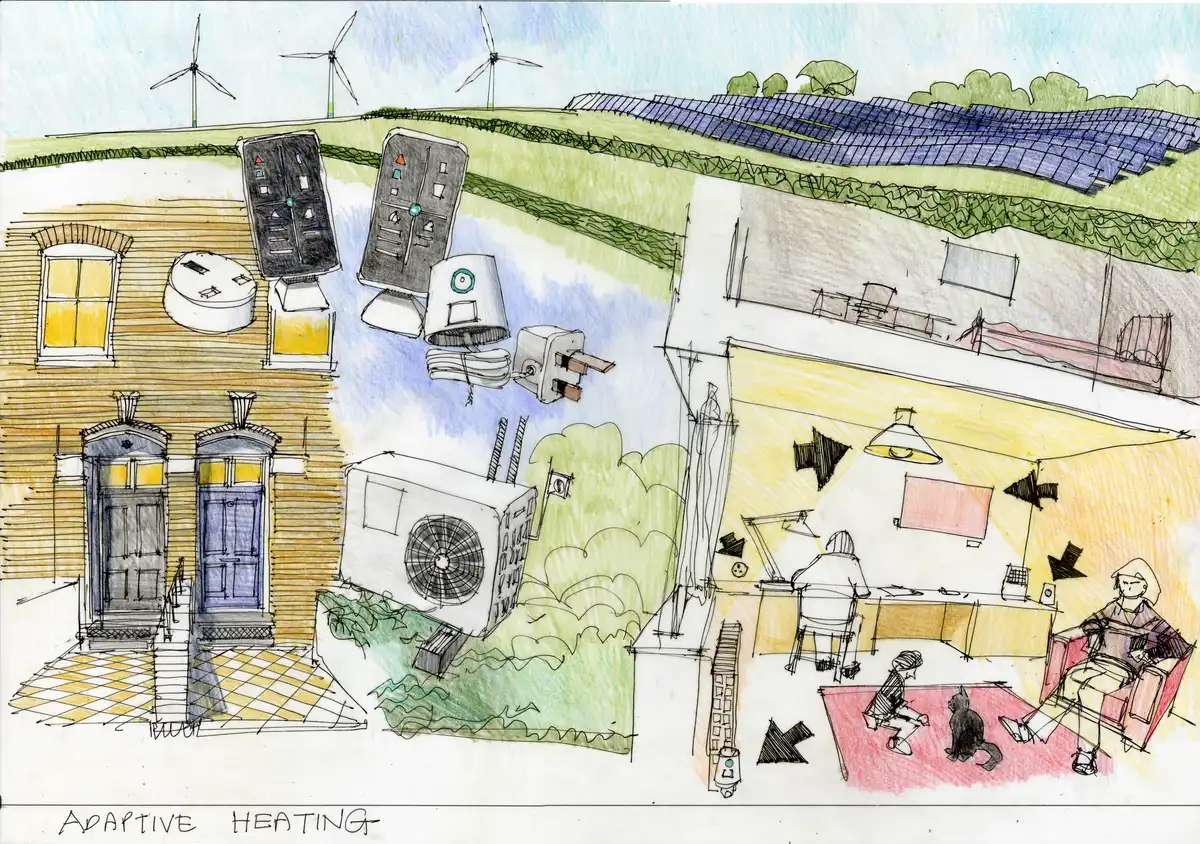
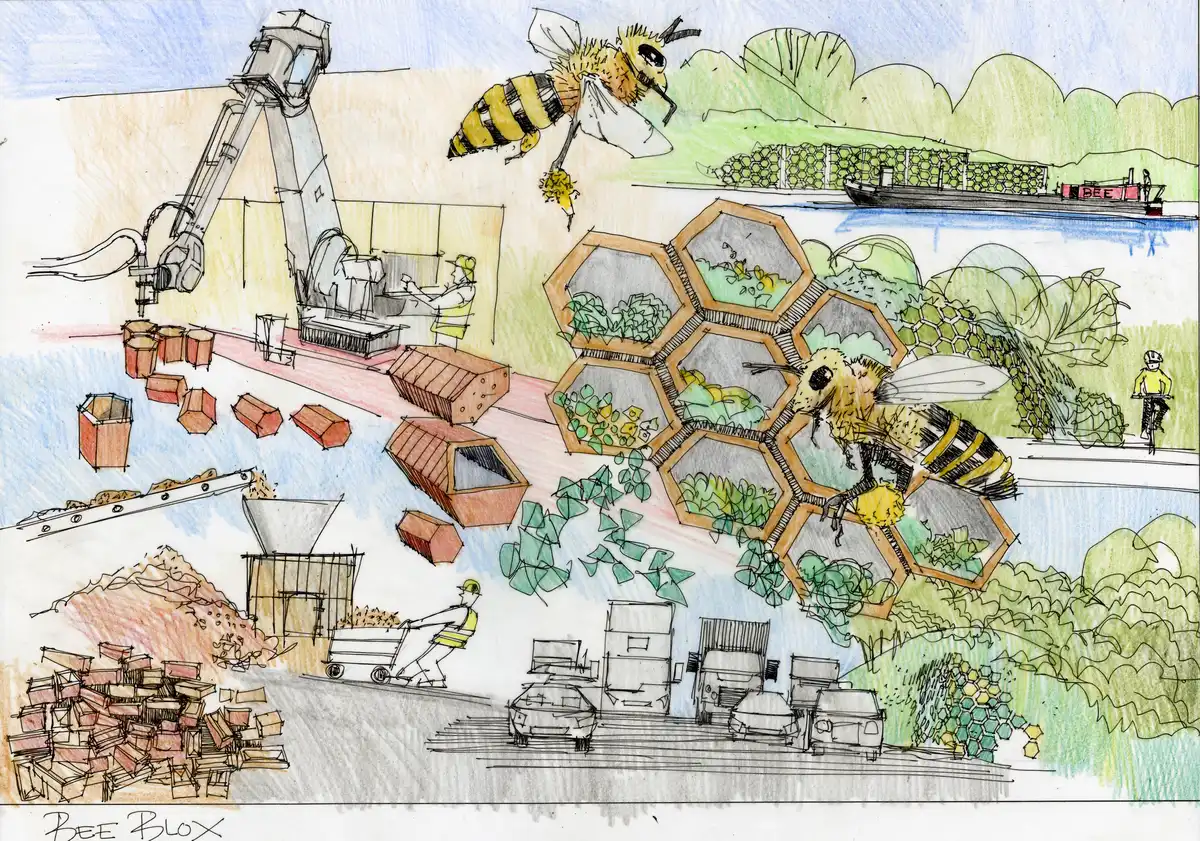
Illustrations of the shortlisted concepts by Richard Carman.
The full list of shortlisted entries for the sixth William Sutton Prize is as follows:
The William Sutton Prize for Sustainability
AdaptiveHeat
Eyesea Green Limited
AdaptiveHeat addresses the urgent challenge of decarbonising heating in heritage and hard-to-retrofit homes, where traditional retrofit approaches are often unfeasible. The solution combines low-temperature air source heat pumps, infrared ceiling panels and an AI-powered control platform called Eyesense to deliver more precise, resident-responsive heating.
By heating only occupied spaces in real time, it can reduce energy use by over 40% while enhancing comfort. This plug-and-play system enables low-cost, non-invasive retrofitting, particularly suited to social housing and listed buildings. For Clarion, it could offer a way to meet carbon reduction targets across complex housing stock, with minimal tenant disruption. More broadly, it could support national decarbonisation goals, lower energy bills, reduce fuel poverty and improve resident wellbeing.
BeeBlox
NoMAD
BeeBlox addresses two urgent challenges: the rapid decline of pollinators due to habitat loss and the environmental impact of concrete, which contributes 8% of global CO₂ emissions. This innovative solution replaces solid concrete retaining walls with beautiful, modular green 3D printed walls made from 96% local waste materials.
Each hexagonal unit supports native wild bees by providing tailored soil, shelter, and seasonal forage, co-designed with experts from Kew Gardens. Suitable for use along roads, railways and canals, BeeBlox reconnects fragmented ecosystems and brings biodiversity into everyday infrastructure. For Clarion and the sector more widely, it could offer a solution to meet biodiversity net gain targets, become an off-the-shelf ‘net zero net gain’ alternative to solid concrete walls, and regenerate grey infrastructure into nature-rich, climate-resilient places.
Home Schooling
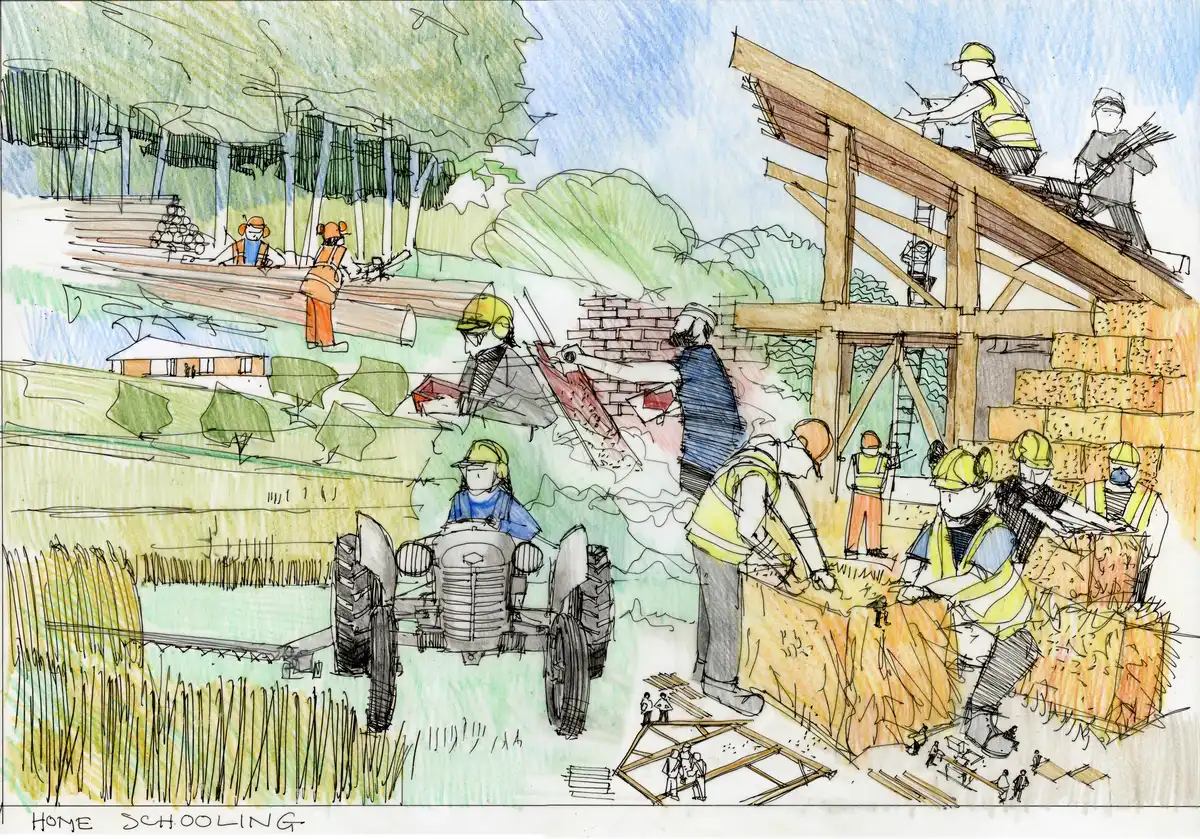
Material Cultures
Home Schooling is a forward-thinking development model that transforms housing construction sites into live learning environments that teach biobased building skills, support local material supply chains and restore biodiversity. It tackles three interlinked challenges: the housing crisis, the green skills gap, and the environmental toll of conventional development.
Each pilot is a small-scale housing project built with local, low-carbon materials, rooted in bioregional supply chains and delivered through Community Land Trusts. By linking sites of cultivation (like forests and farms) with design, planning, on-site construction and accredited training, the model builds skills, biodiversity and new homes simultaneously. With replication, it has the potential to seed a nationwide network of regenerative housing projects, creating a new generation of climate-conscious builders while revitalising local economies and ecosystems.
ReHarvest Board
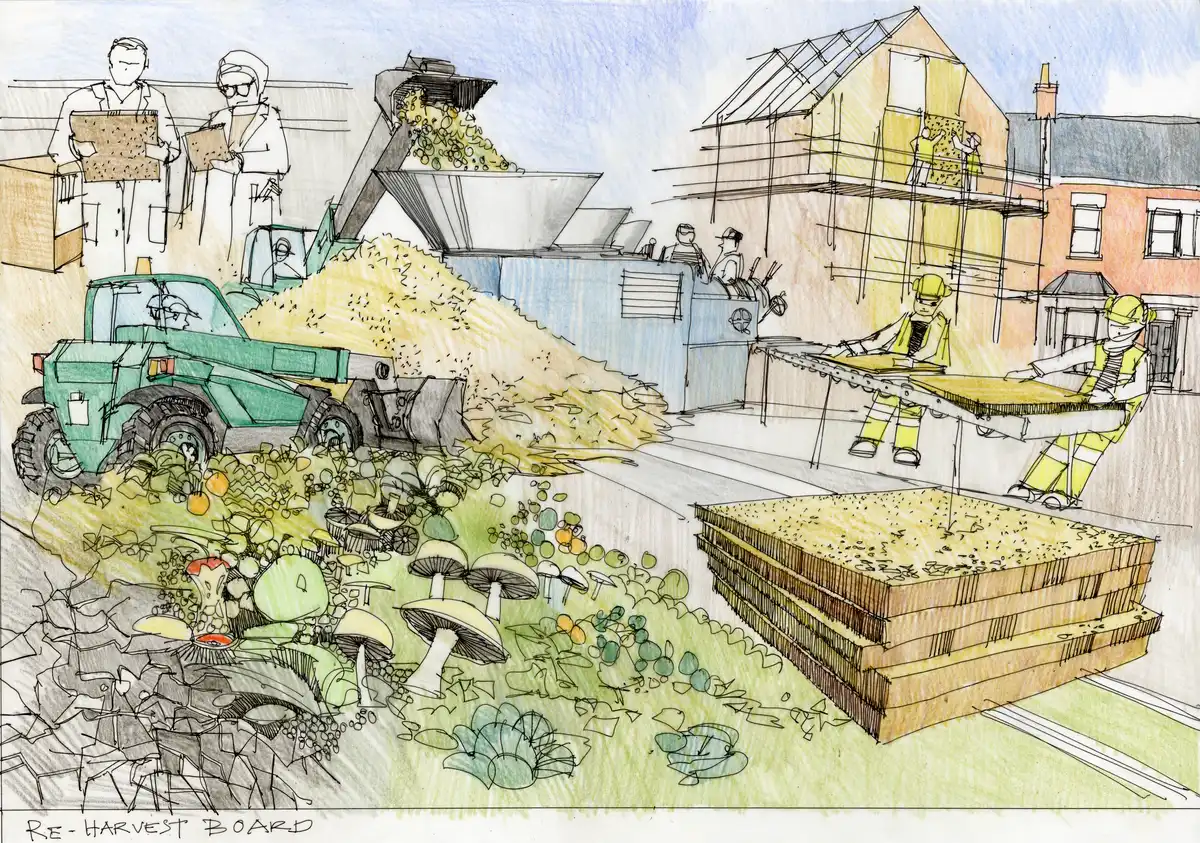
Agricycle Innovation Ltd
ReHarvest Board turns agricultural waste – such as spent mushroom substrate, fruit pulp, and vegetable residues – into low-carbon, high-performance insulation and wall panels. Manufactured using low-energy, non-toxic methods, each panel is lightweight, fire- and water-resistant, and can reduce embodied carbon by up to 80% compared to traditional plasterboard and insulation.
With over one million tonnes of agricultural waste generated annually in the UK, much of it landfilled or incinerated, ReHarvest Board offers a scalable solution that diverts waste, cuts emissions, and lowers energy use in buildings. It supports both retrofits and new-builds, promoting healthier, more sustainable homes. Aligned with Clarion’s ESG goals, this innovation tackles waste, energy, and affordability challenges – bringing material science into real-world impact and advancing Clarion’s leadership in low-carbon, circular construction.
Retrofit Automation Tool
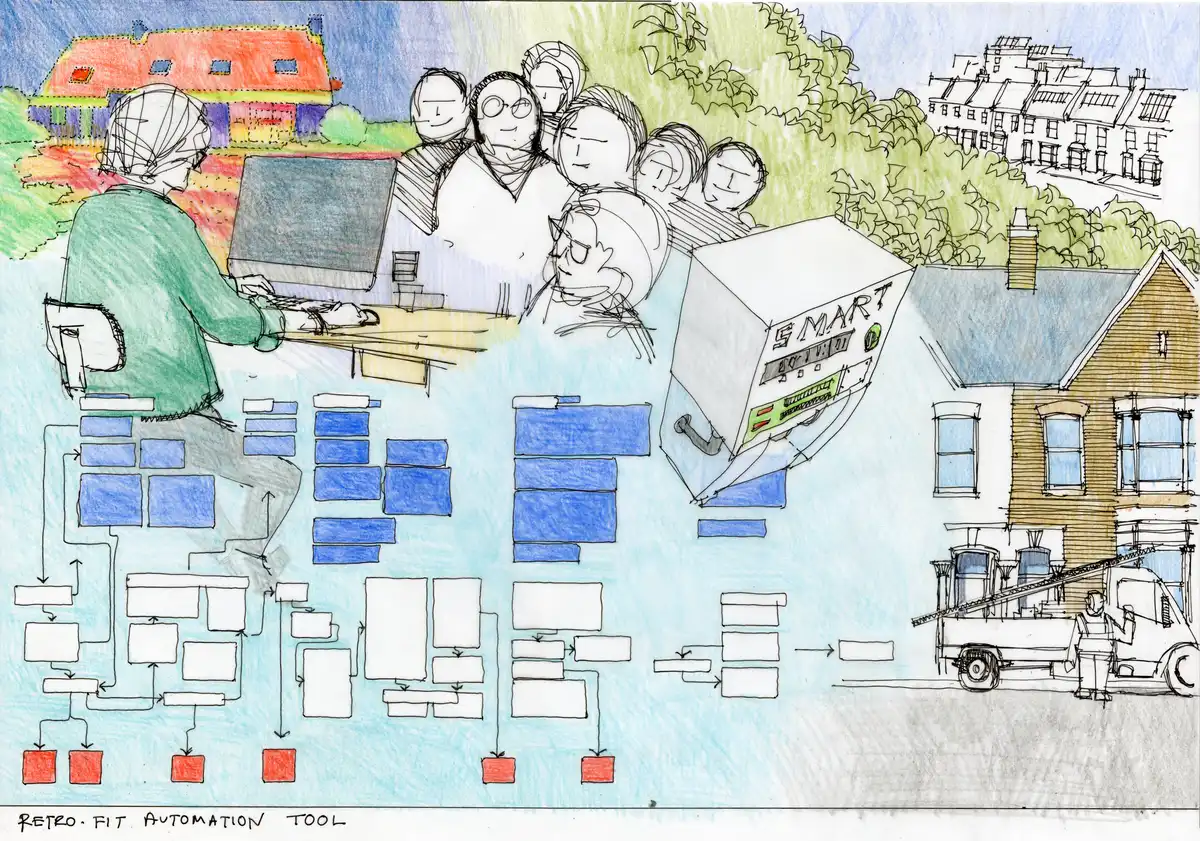
Bioregional
Bioregional’s Retrofit Automation Tool addresses the urgent need for faster, more reliable retrofit planning across housing portfolios. Built on empirical data (rather than just theoretical models), the tool can process messy datasets, integrate them with geographic property data and smart meter readings, and generate decarbonisation pathways based on real-world performance.
It compresses 6-12 months of manual analysis into clear, actionable strategies, enabling housing associations to move quickly, implement solutions and cut carbon emissions. The tool complements existing platforms like Parity by unlocking smart meter-level insights and supports both domestic and non-domestic properties. For Clarion, it could offer a new data-driven route to estate-wide decarbonisation and retrofit programmes.
Re-Use House
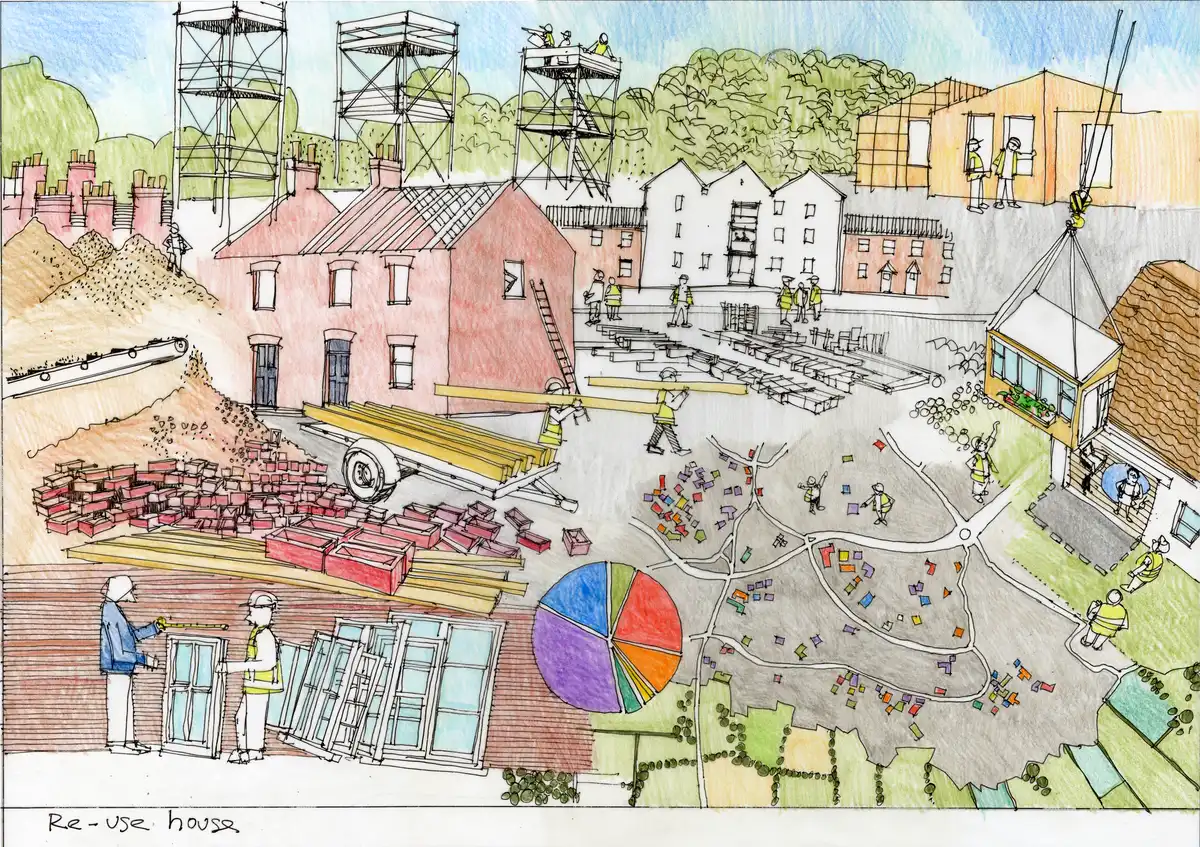
WeCanMake
ReUse House tackles the climate and housing crises by transforming overlooked urban spaces into new homes using reclaimed building materials. It identifies small infill plots, like garage sites, and combines them with reclaimed materials from nearby end-of-life buildings. These materials are processed in a local neighbourhood factory and used to build high-quality, co-designed homes for social rent.
The model includes open-source tools for mapping materials, recertifying components, and training local trades in reuse techniques. Environmentally, this approach reduces embodied carbon, preserves biodiversity by avoiding greenfield development, and reduces waste. In South Bristol alone, it could deliver up to 5,620 new affordable homes across 853 public land sites, while saving 20% of infrastructure costs compared to greenfield development, demonstrating that circular housing can benefit people, places and the planet.
+++
The William Sutton Prize for Connected Communities
Betts Park Outdoor Gym
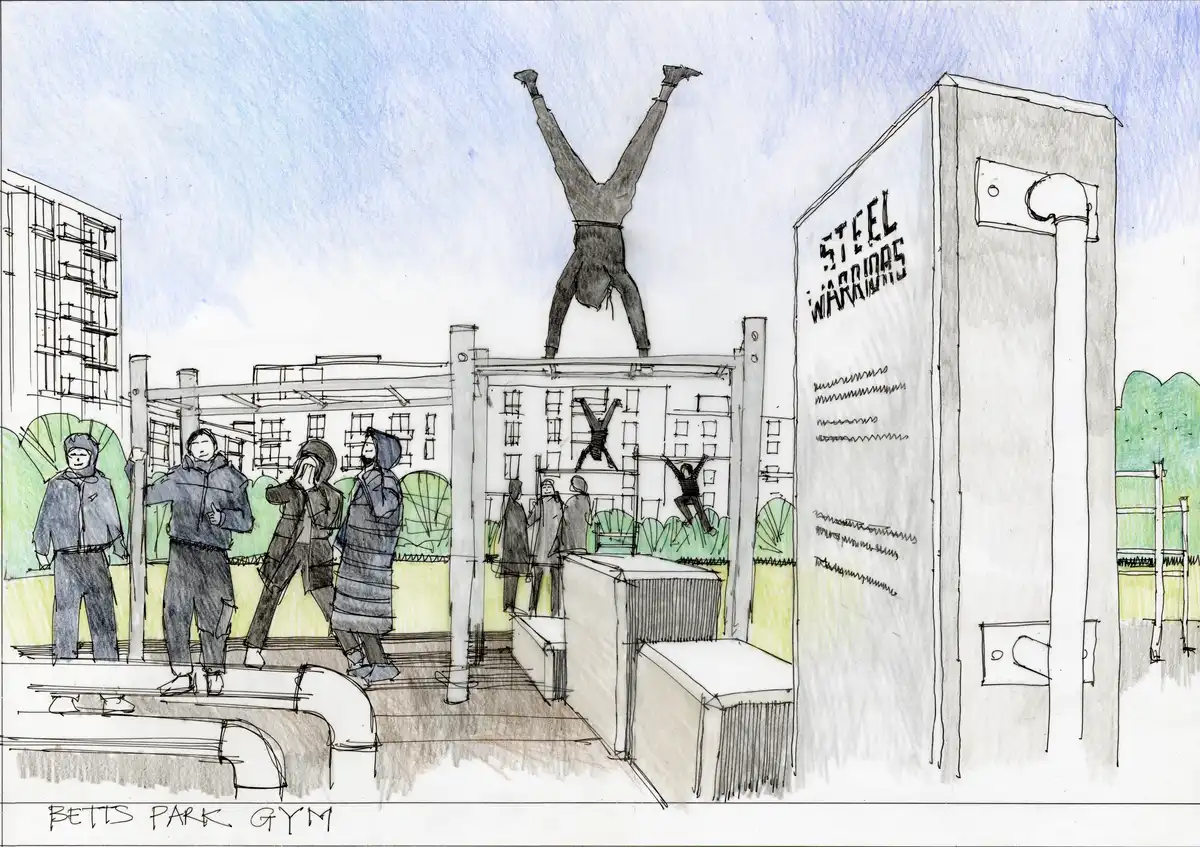
Steel Warriors
Steel Warriors is revitalising underused public spaces in urban environments – areas with a history of crime, deprivation, and broken infrastructure – by co-creating new outdoor gyms built from knives removed from the streets. Working with local residents, councils, and social housing communities, the project will replace a broken gym in Bromley’s Betts Park with a striking, high-quality space for exercise, training and events.
The outdoor gym will host free weekly classes for all ages, including targeted sessions for young people and women, plus mentoring and qualifications for local young people not in employment, education or training. For the sector, this could be a replicable blueprint for turning neglected spaces into safe, inclusive hubs of activity, strengthening wellbeing, reducing isolation, and improving local connection through community-led design.
Building Connected Communities
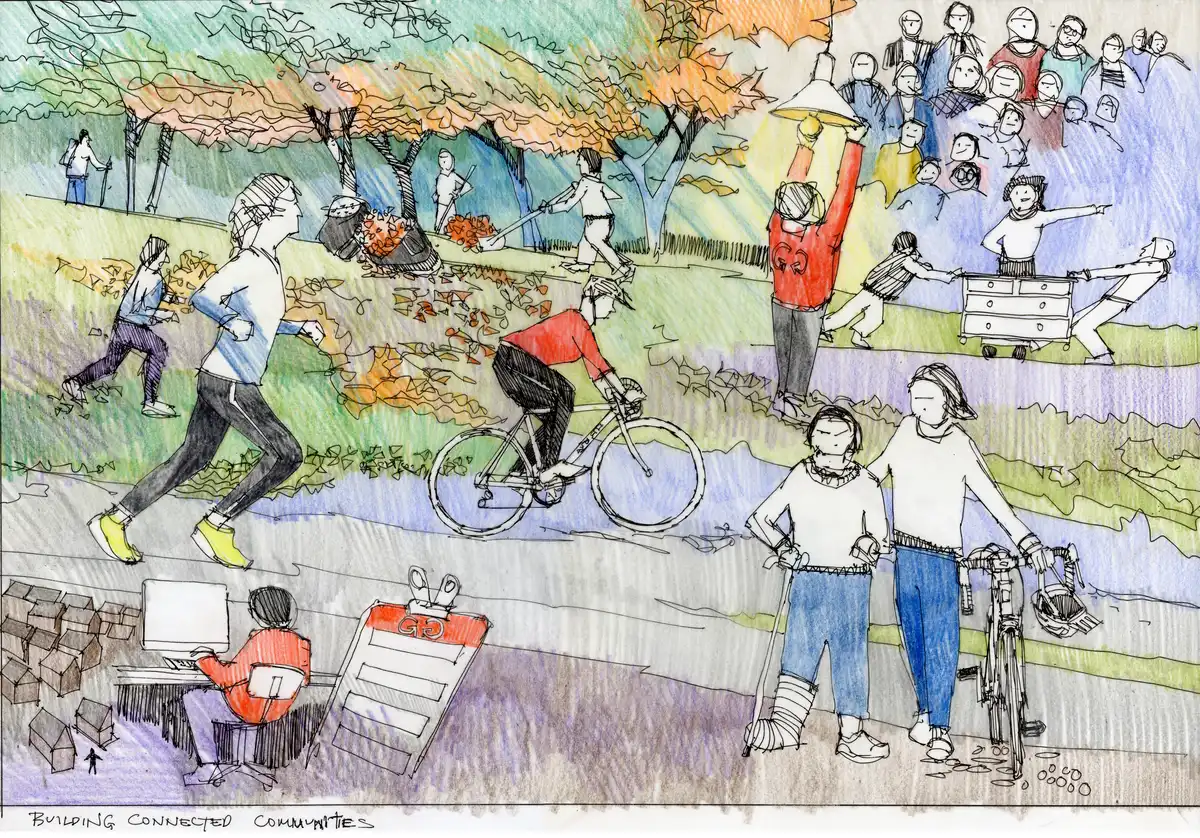
GoodGym
GoodGym tackles loneliness, poor mental health, and rising safety concerns among older social housing residents, many of whom live alone and feel increasingly isolated. The initiative attracts, trains and mobilises local volunteers to run, walk or cycle to visit residents for friendly chats (Social Visits) or to complete practical tasks (Missions).
These include changing lightbulbs, moving furniture, clearing gardens, prescription pick-up and fixing safety risks – small jobs that help people live independently. GoodGym aims to train 200 new volunteers and deliver 2,000 visits and missions in Clarion communities. Independent evaluations from similar programmes show drops in loneliness amongst residents and improvements in mental health.
Neya AI Super-Neighbour for Connected Thriving Neighbourhoods
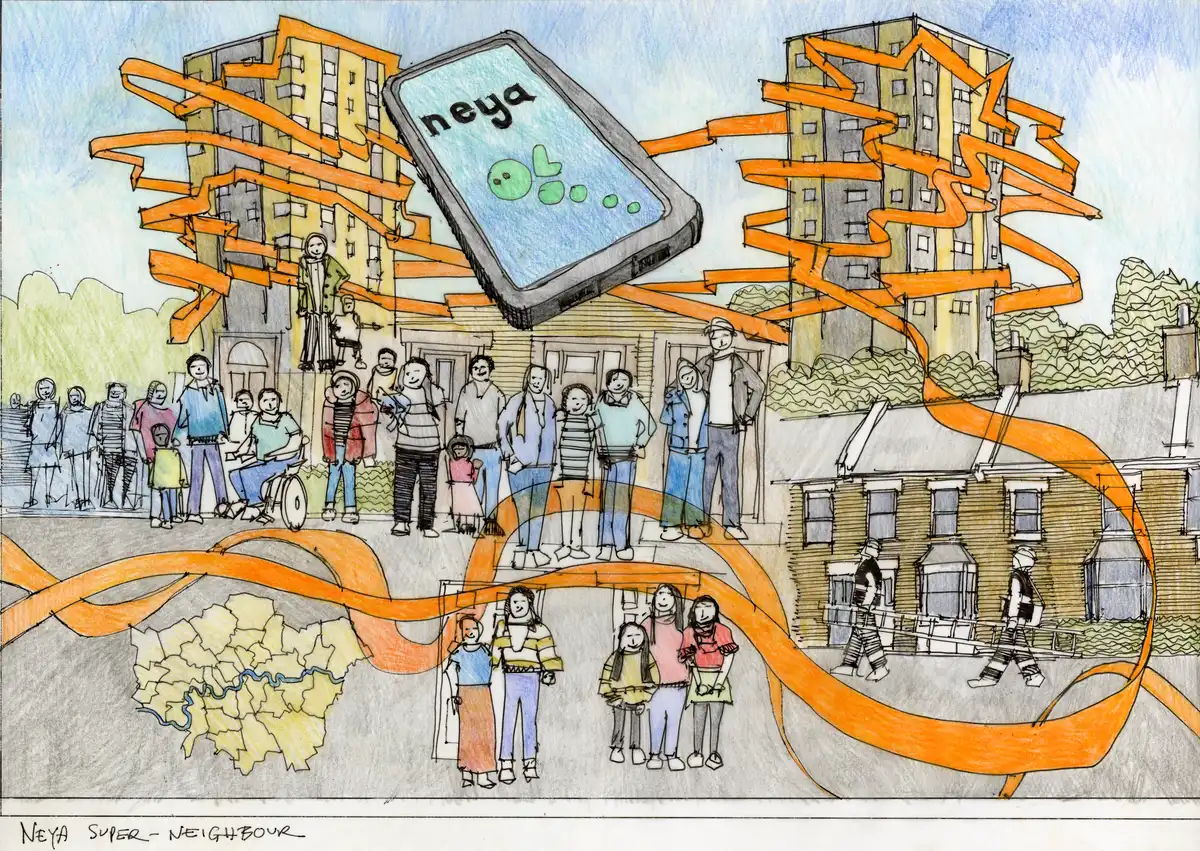
NeighbourlyLab and Neya
Neya is a digital “super-neighbour” designed to spark connection, sharing, and mutual support within local communities. Through a friendly, AI-powered messaging platform, Neya introduces neighbours, answers everyday questions, and encourages simple, positive interactions, such as borrowing a ladder, finding a walking buddy, or sharing surplus food.
It can also connect residents to nearby events, services, or groups based on their needs and interests. Especially helpful for those new to an area or living alone, Neya helps foster a stronger sense of belonging, safety, and pride. By making it easier to ask for help, offer support, or simply say hello, Neya builds resilient, more connected communities where people are empowered to take part in everyday life together.
Populated Planters
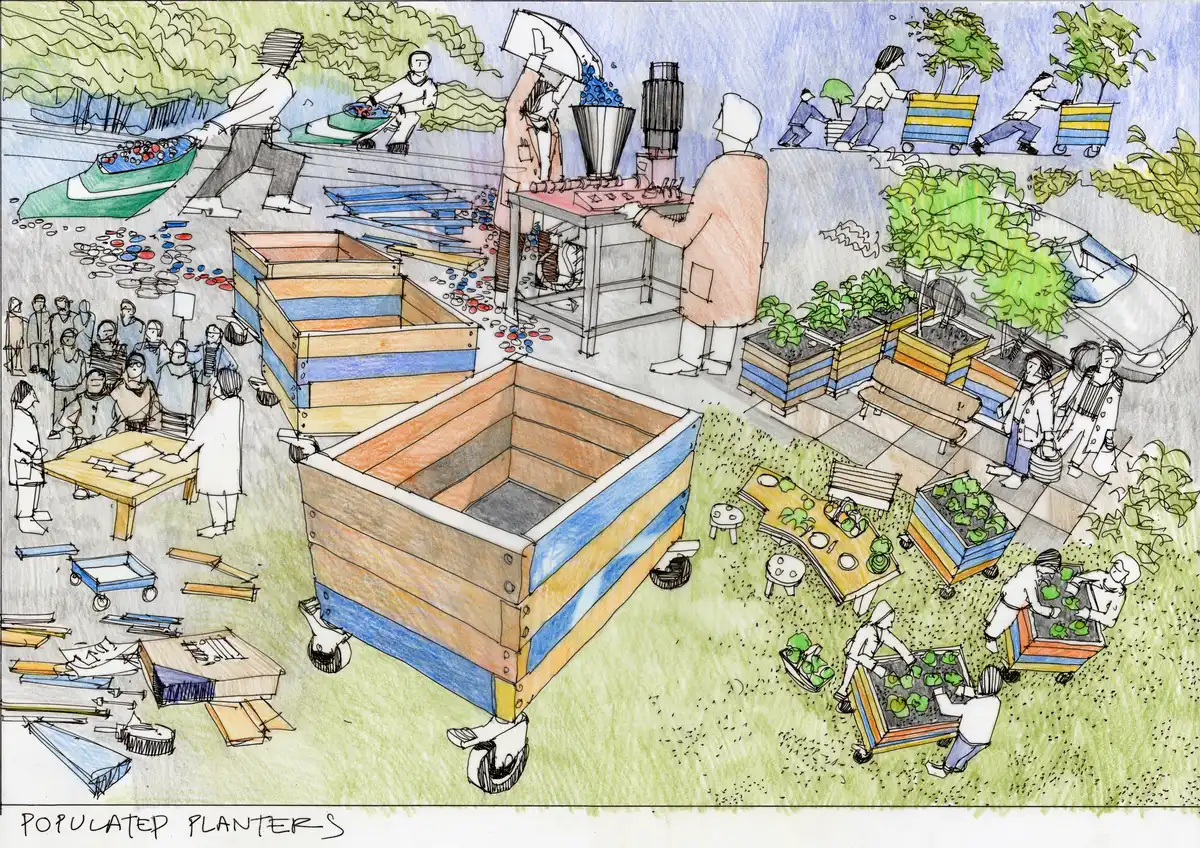
Wastesmiths CIC
Populated Planters reimagines how shared spaces in social housing are shaped by turning the installation of planters into a hands-on community experience. Rather than using off-the-shelf products, residents co-design and help build bespoke planters using recycled wood and plastic they’ve collected themselves. Delivered in outdoor workshops using mobile, low-energy machinery, the process builds relationships, ownership, and pride in place.
It fosters intergenerational connection, increases biodiversity, and activates overlooked areas. For Clarion, it offers a model for regenerating neglected communal spaces through low-cost, high-impact resident-led making. In doing so, it strengthens community bonds and resilience, reduces social isolation and creates visible change driven by the people who live there.
Sustainable London
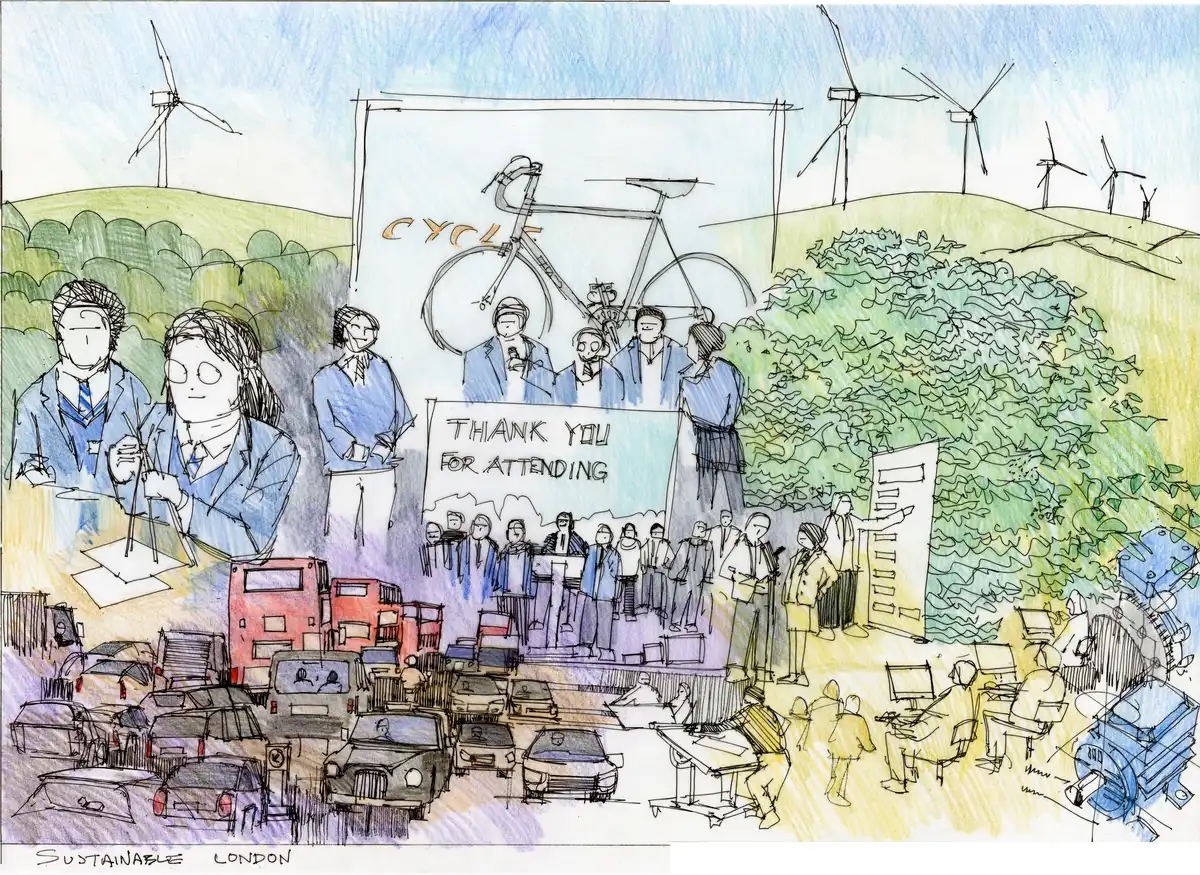
Motivez
Sustainable London empowers under-represented young people aged 14-16 (from social housing) to become environmental innovators and future STEM leaders. It aims to tackle environmental inequality and poor air quality in deprived London communities, which disproportionately impacts the health and wellbeing of social housing residents – particularly young people. Through a year-long development programme that includes workshops, mentoring, industry site visits, and a STEM-based hackathon, participants design solutions to local and global environmental challenges.
They learn from relatable role models, pitch to professionals, and access environments – like corporate offices – they wouldn’t normally see. The programme builds confidence, creativity, resilience, and climate leadership where it’s needed most. A recent pilot showed 70% were more likely to pursue STEM careers and 88% gained soft skills to lead change.
William Sutton Prize 2025 Shortlist images / information received 050725
Previously on e-architect:
The William Sutton Prize for Sustainability and Placemaking Winners
2023 – Bell Phillips Architects and Building with Nature were named the winners.
William Sutton Prize 2023 Winners
2022 – Mole Architects crowned winners of Clarion’s William Sutton Prize
William Sutton Prize 2022 Shortlist
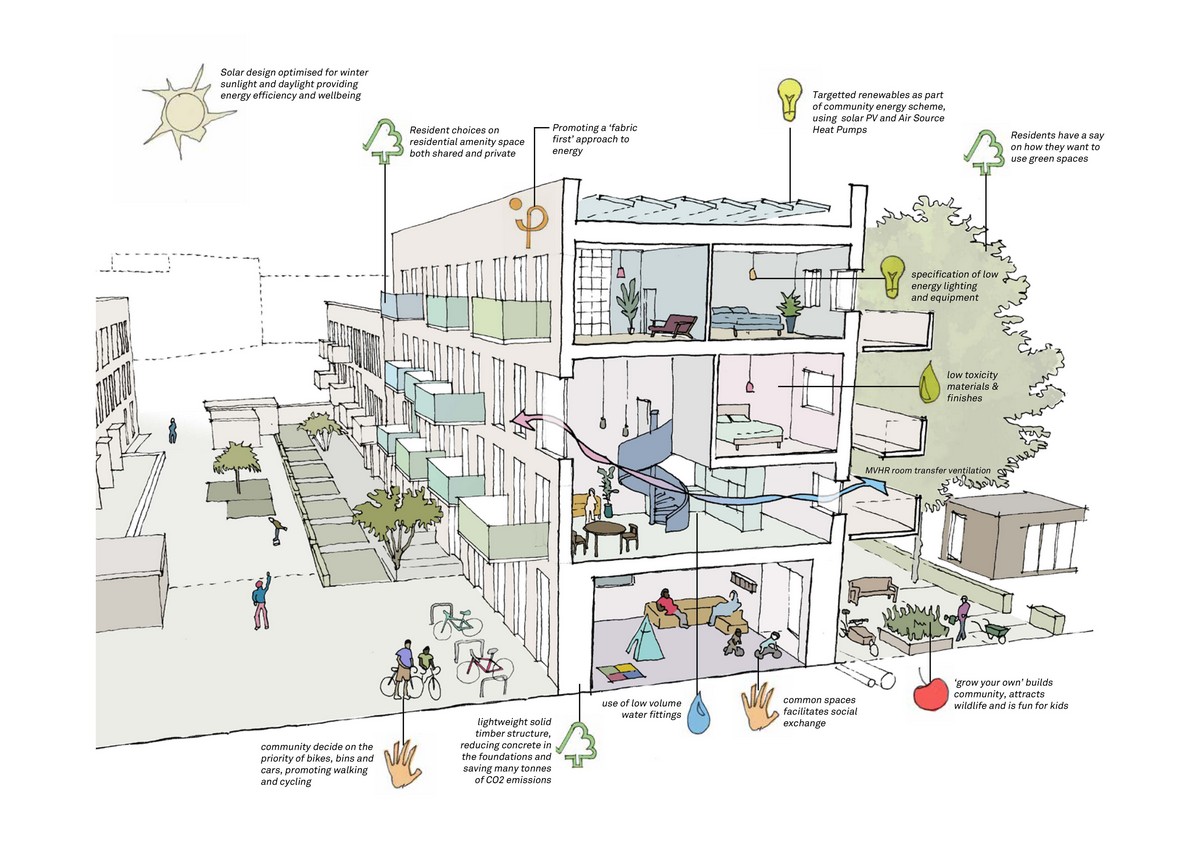
William Sutton Prize for Sustainability and Placemaking
William Sutton Prize 2021 Winner
www.clarionhg.com/william-sutton-prize
Location: London, UK
Architectural Design
London Architecture Design – chronological list
Comments / photos for the William Sutton Prize 2022 Winner: Mole Architects page welcome