Stephen Lawrence Prize 2025 Shortlist
post updated 8 July 2026
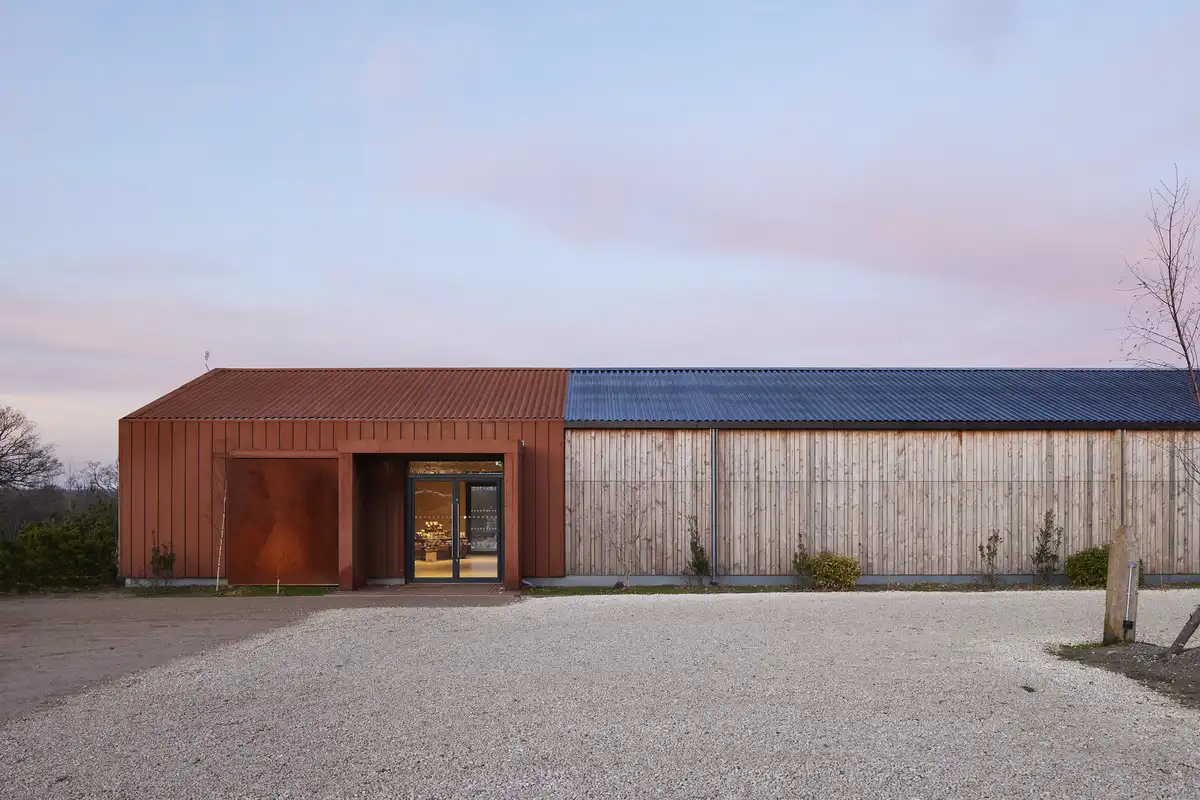
Knepp Wilding Kitchen and shop by Kaner Olette Architects photo © Richard Chivers
29 July 2025
RIBA announces shortlist for the Stephen Lawrence Prize 2025
The Royal Institute of British Architects (RIBA) has announced the shortlist for the Stephen Lawrence Prize 2025. Founded by Baroness Doreen Lawrence OBE and the Marco Goldschmeid Foundation in 1998, the annual award, now in its 27th year, was established in memory of Stephen Lawrence, a teenager and aspiring architect who was the victim of a fatal racially motivated attack in 1993.
Intended to encourage new talent and inspire others in the early stages of their architectural career, the award exclusively recognises projects led by an early career project architect. This is typically someone who has qualified within five years prior to the project’s completion date.
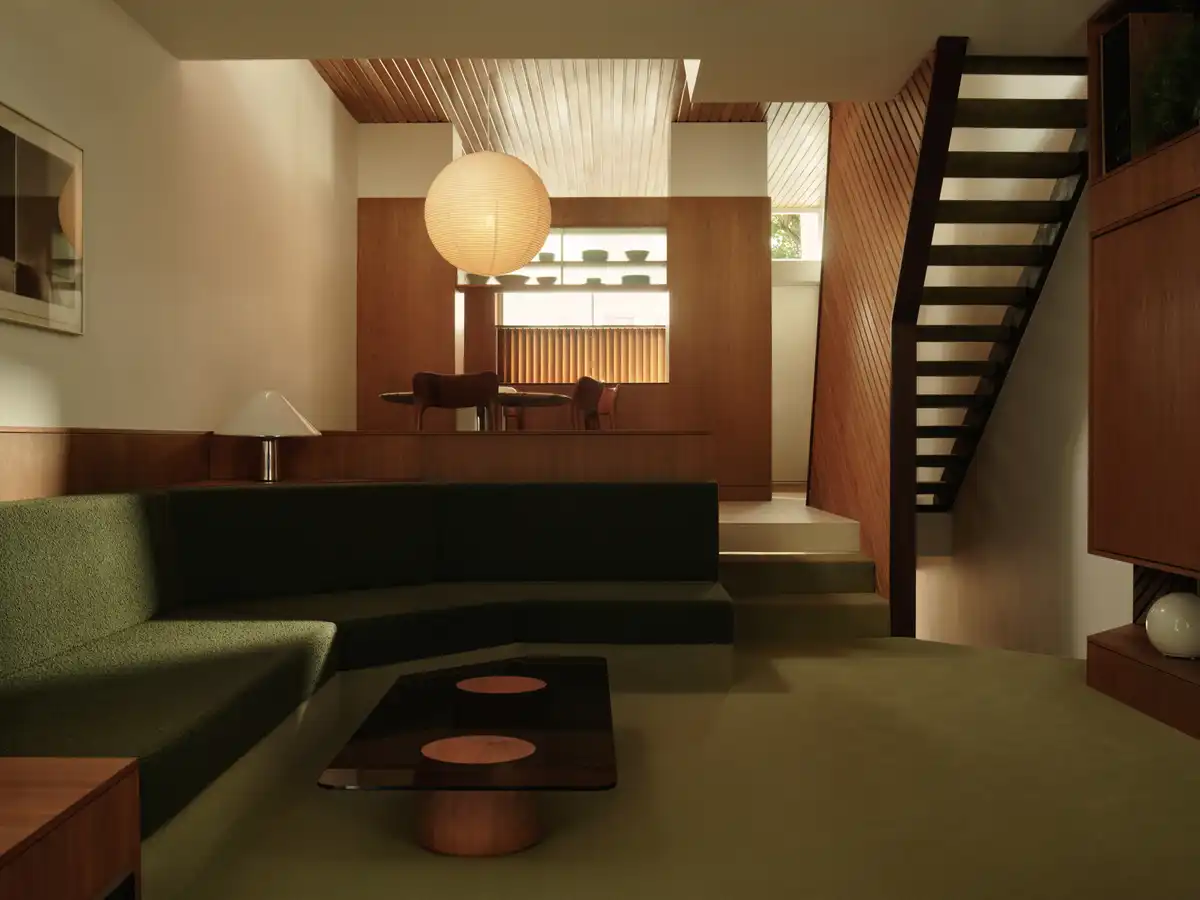
Pine Heath by Studio Hagen Hall – photo © Felix Speller
With themes of history and heritage revival, community inclusivity, social benevolence and ecological responsibility, this year’s shortlisted projects highlight the brilliant work of early career architects placing humanity, culture and emotional integrity at the heart of their projects.
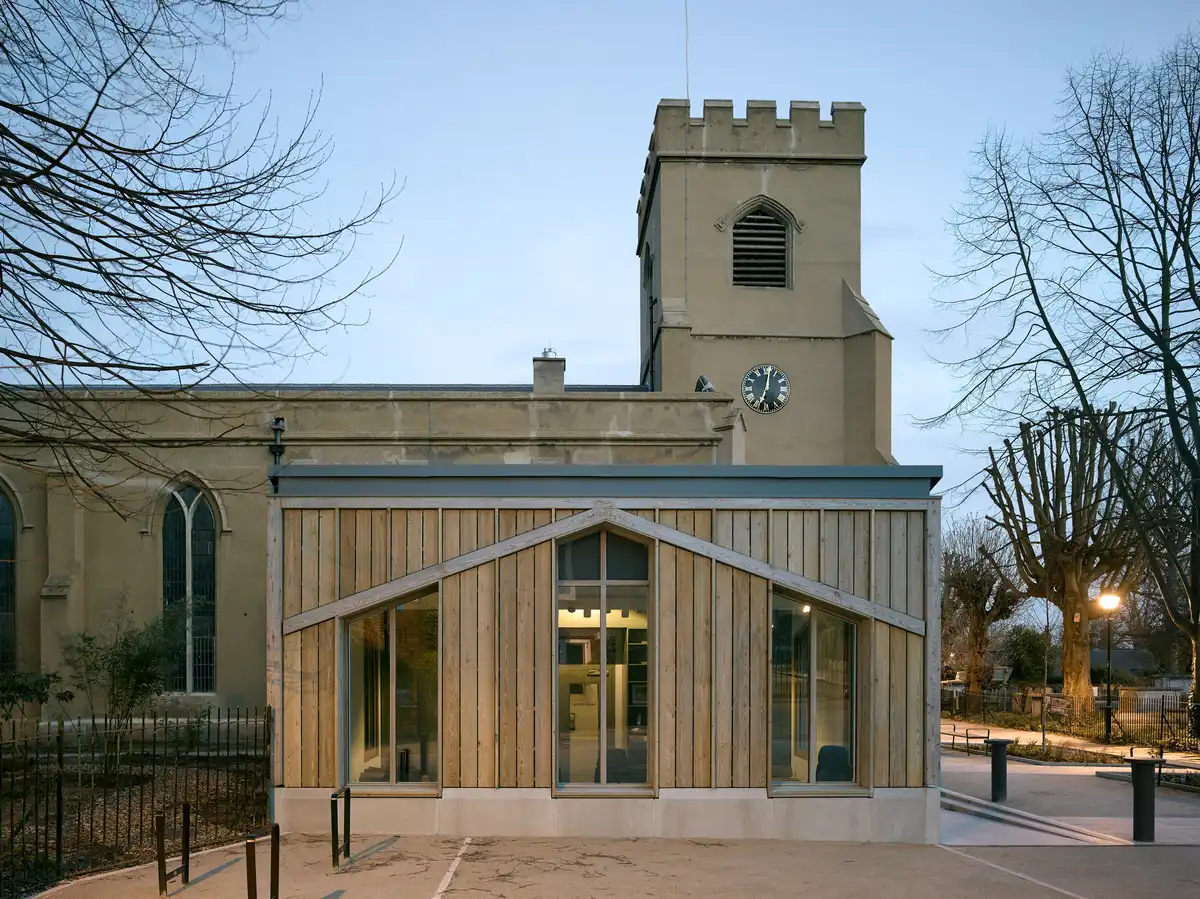
St. Mary’s Walthamstow by Matthew Lloyd Architects – photo © Tim Crocker
Matthew Goldschmied, Jury Chair, Managing Trustee at the Marco Goldschmied Foundation, said:
“The Stephen Lawrence prize celebrates the achievements of early career architects and this year’s shortlist reflects the eclectic magic of architectural endeavour. Many stories are told through these buildings; narratives of delight, integrity and generosity to people, place and planet.
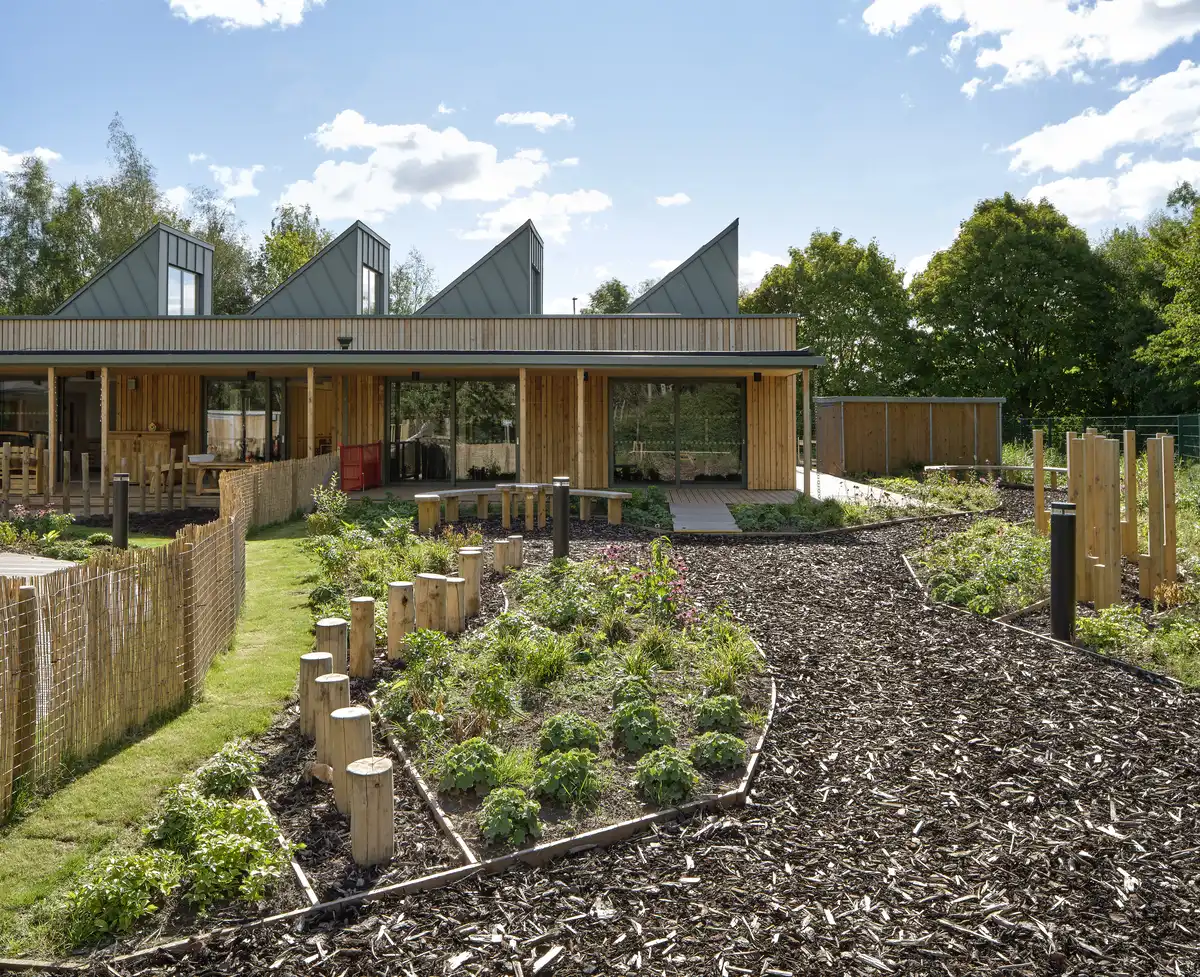
University of Staffordshire Woodlands Nursery building by Feilden Clegg Bradley Studios – photo © Daniel Hopkinson
For the jury, these projects will offer memorable visits to a diverse collection of exceptional buildings. We are excited to meet the talent who brought these spaces to life and to hear how their dedication, perseverance and skill overcame the challenges faced. We are privileged to celebrate architectural excellence each year and to sustain the living memorial to Stephen.”
The six shortlisted projects are:
Knepp Wilding Kitchen and shop by Kaner Olette Architects (Project Architect: Toko Andrews) The first rewilding project in the UK, formerly a collection of decaying and underused farmyard buildings. It is now a multi-functional series of spaces featuring a café/restaurant and farm shop showcasing sustainable, local produce, alongside dedicated visitor facilities.
Knepp Wilding Kitchen and shop Jury citation:
Knepp describes itself, on its website, as ‘a 3,500-acre rewilding project that has changed the way we think about nature and how we can heal our planet’. The Knepp Wilding Kitchen and Shop has been born out of a collection of decaying and underused farmyard buildings to offer the missing piece in the Knepp experience. It provides visitors with an opportunity to refuel and reflect on their visit, enjoying the farm produce (both animal and vegetable) and supporting the Knepp project.
The architect carved the new venue out of buildings and yards, with selective demolition and retention, to create a car park, shop/entrance, courtyard/garden and restaurant/café supported by service access and storage. The courtyard is currently bounded by buildings on three sides, with a potential fourth building under consideration for the courtyard’s west side; this would become an important final piece, providing a venue for talks, exhibitions and interpretation, currently loosely accommodated within the shop. In the spirit of Knepp, the place that has been made from the carefully crafted conversions and extensions is neither overly refined nor entirely ‘complete’, retaining a sense of potential and a relaxed feeling that time will tell. Its incremental quality will happily accommodate future opportunity: the numerous nesting boxes and roosting features may or may not be occupied!
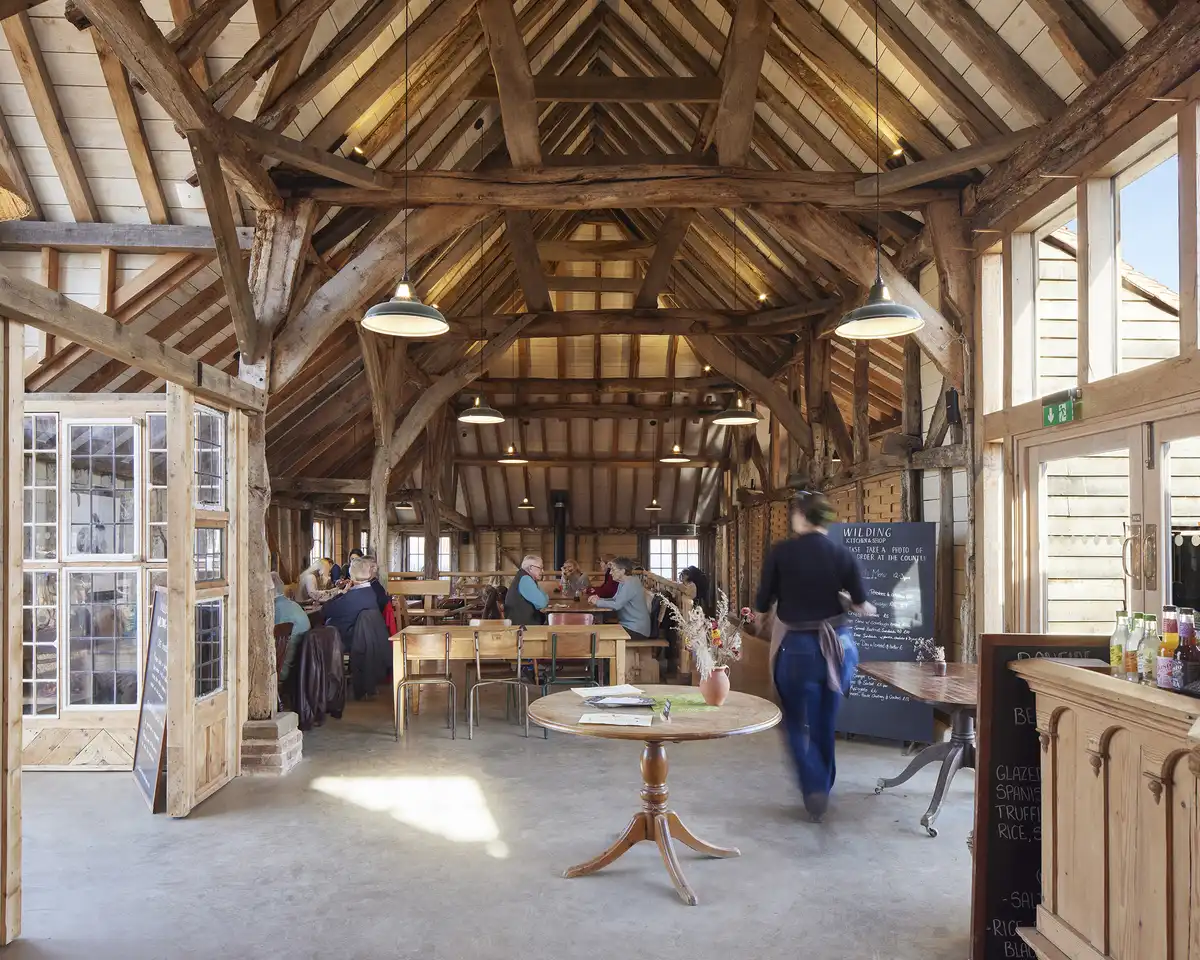
Knepp Wilding Kitchen and shop by Kaner Olette Architects – photo © Richard Chivers
The impressive but unlisted 18th-century timber-framed Sussex barn has been repaired with good traditional techniques. The architectural interventions here are limited to a reinstated entrance bay, polished concrete floor, salvaged glazed screens and woven oak partitions. A contemporary extension ‘shed’ clad in red-oxide steel sheeting sits comfortably alongside the vast red-clay-tiled roof of the barn. Internally the long bar supported on rammed earth, and a striated plaster end wall, both refer to the importance of the soils at the heart of Knepp. The barn and extension open onto the loosely organised courtyard, with decaying red-brick paths breaking up loose gravel seating areas. The retention of an unexceptional cow shed for conversion into the shop is interesting. An analysis of the embodied carbon of a replacement building of steel or glulam (glue-laminated timber), that would meet required performance requirements, made it clear that the better course was to retain, strengthen and upgrade the existing. Its workaday characteristics are a perfect fit. Reinforced and re-clad in Douglas fir sourced from the estate, with a new corrugated roof over wood-fibre insulation, the shed’s profile is extruded by an extension clad in CorTen weathering steel. This provides a visually compelling main entrance from the car park, with flexibility for adaptation as the needs of the estate’s visitors evolve. Visitors to the Wilding Kitchen and Shop are treated to delicious local produce in a setting that speaks clearly of the ethos and values of the place, seemingly effortlessly preserving the Knepp character as a regenerative enterprise.
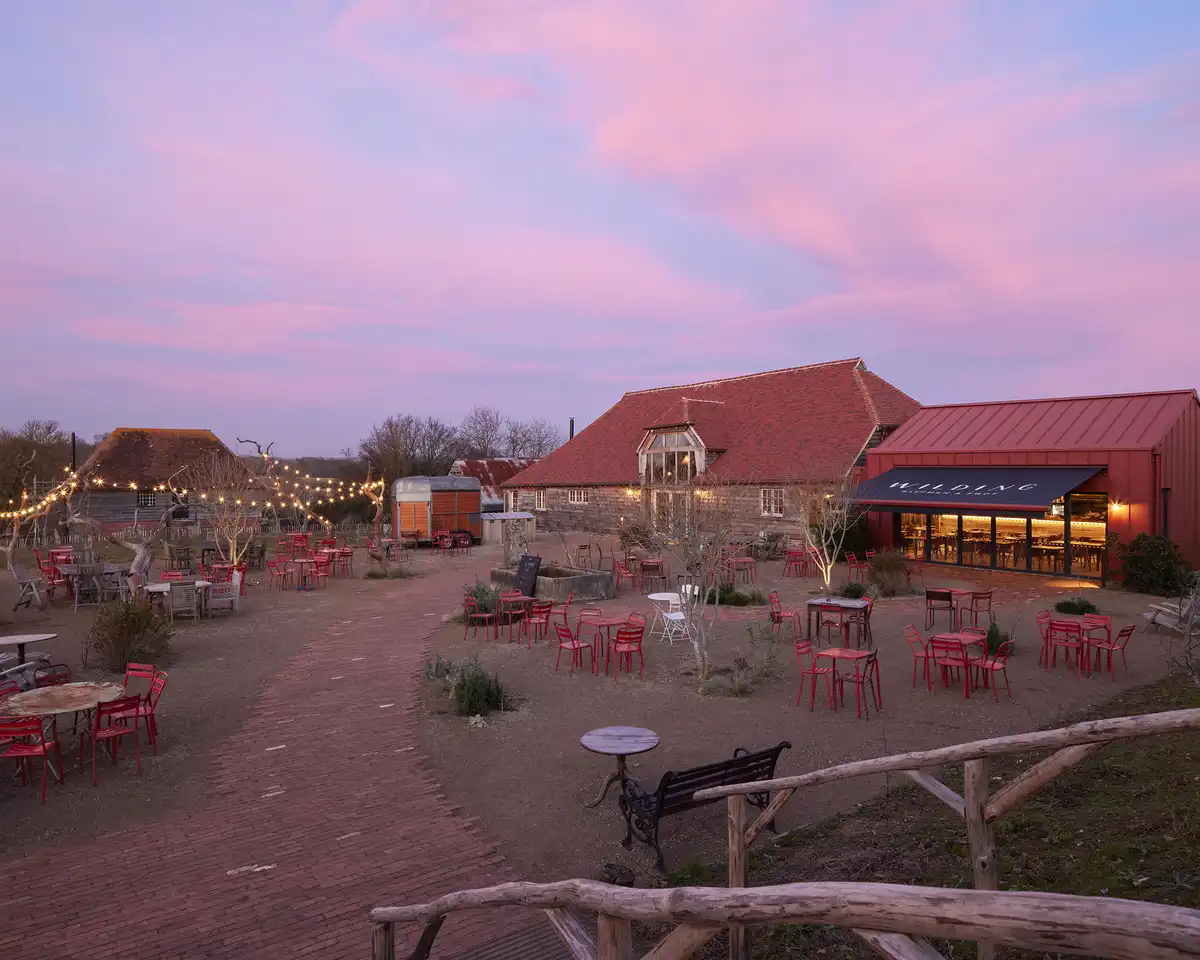
Knepp Wilding Kitchen and shop by Kaner Olette Architects – photo © Richard Chivers
Hallelujah Project by Peregrine Bryant Architects (Project Architect: Helena Tunbridge) A conservation project in the Grade I-listed former home of George Frideric Handel and later Jimi Hendrix, now a museum offering exhibition spaces celebration the lives of the two musicians and their time in London.
Hallelujah Project Jury citation:
The first occupant of 23–25 Brook Street was renowned composer George Frideric Handel. The Grade I listed Handel House has been creatively adapted to provide it with a sustainable long-term future celebrating its associations with not just Handel but also Jimi Hendrix, who lived in a flat on the top floor of no.23 in the late 1960s. This exemplary conservation project reinstates the plan form of the original house following forensic study and research to understand and identify the original fabric and reverse some of the subsequent alterations.
Much time and care were taken to unpick the many layers of unsympathetic adaption and restore the original street frontage, replacing a later shopfront with a domestic brick frontage and reopening the basement area. The layout of Handel’s lower-ground-floor kitchen was reinstated as it had been 300 years ago. Where replacements were required, the team sourced reclaimed flagstones and timbers from similarly aged buildings, ensuring that the provenance was recorded on the underside of the element before relaying.
The client team placed very significant weight on ensuring that the entry point was repositioned from where it had been at the rear of the property to the street front, so that wheelchair users can enjoy visiting the house as easily as the able-bodied. Peregrine Bryant Architects have incorporated access and catering facilities intelligently. Much thought has been given to providing space to accommodate school parties, concerts, corporate functions and group dining events, allowing the House income-generating opportunities to sustain its future. The client employed an intelligent approach to sustainability. Despite the buildings being Grade I listed, the design team have managed to deliver a mechanical, electrical and plumbing solution that has proved to operate even more economically in actual use than was predicted. Plant equipment has been painstakingly routed through the existing fabric, concealed underneath floorboards and in nooks. The external fabric has been very sensitively upgraded through window replacement and insulation inserted behind the historical panelling.
This project was impressive in so many ways. The team has secured the future of a cultural gem that was previously lost, having been altered beyond recognition. In restoring the building’s fabric they have also recovered the enjoyment of current and future generations of music lovers. Through the sensitive and intelligent restoration and interpretation of this building, Handel’s and Hendrix’s stories are now infinitely more accessible, both intellectually and physically, than ever before.
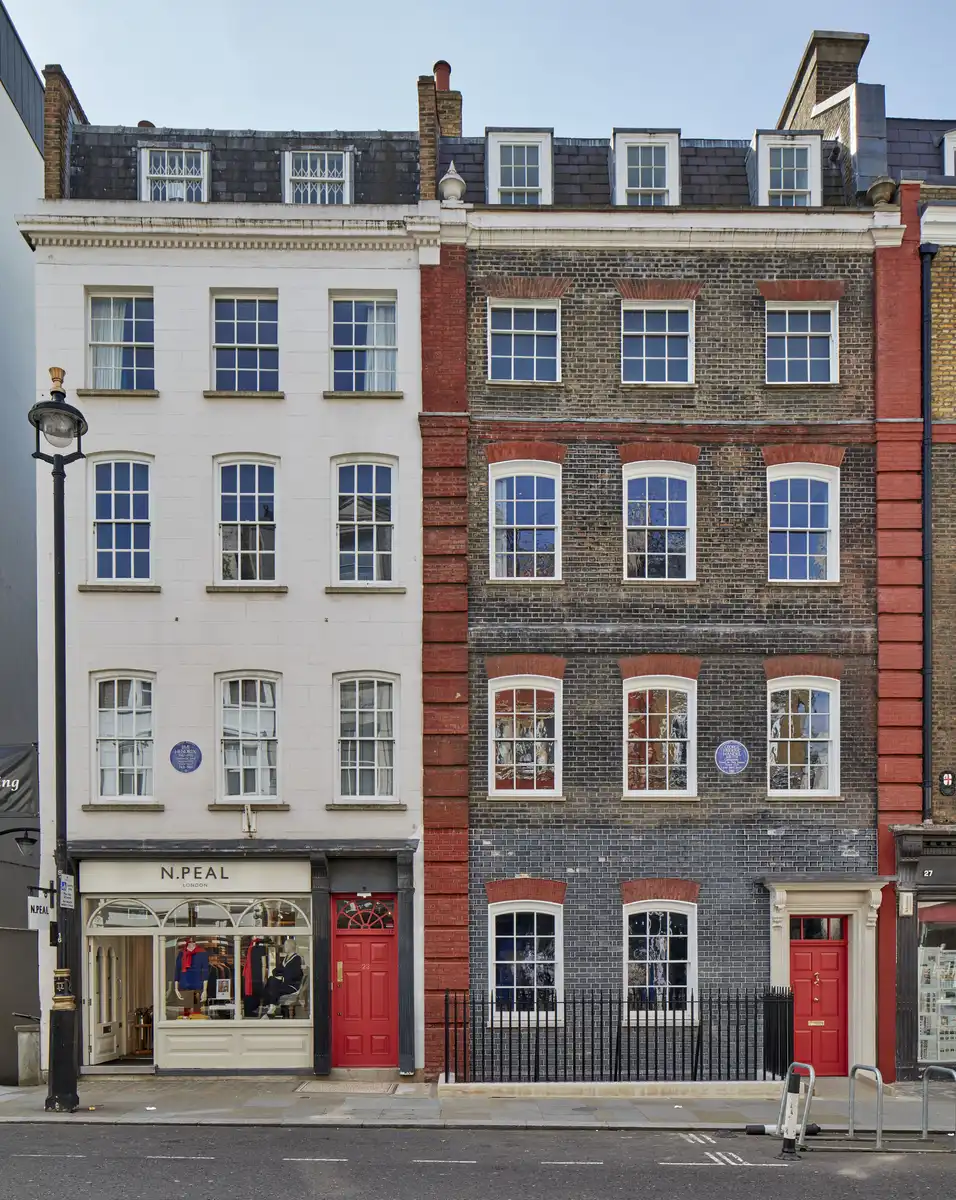
Hallelujah Project by Peregrine Bryant Architects – photos © Robin Forster
Pine Heath by Studio Hagen Hall (Project Architect: Louis Hagen Hall) An extensive whole house renovation and sensitive energy focused transformation of a modernist townhouse. This focused around retaining as much of the existing fabric and structure as possible, while upgrading key elements that contributed to the building’s poor thermal performance, energy efficiency and carbon emissions.
Pine Heath Jury citation:
Pine Heath is an extensive, yet sensitive, whole-house refurbishment and low-energy retrofit of a late-modern terraced house in a North London conservation area. The house, built as part of a small speculative development in the 1960s, was originally designed by Ted Levy, Benjamin & Partners. When purchased by its current owners, while uncherished, the house retained its original spatial configuration and many of its original internal finishes. With one of the clients being professionally involved in the energy industry, and together looking to create a long-term home for their young family, sustainability was rigorously considered from the outset.
Critical elements of the thermal envelope, such as windows, uninsulated walls and floors, and the roof, have been discreetly either replaced or enhanced. Vacuum glazing was chosen to minimise heat loss through the bespoke replacement windows. Roof-mounted photovoltaic panels connected to an air-source heat pump on the uppermost terrace replace the previous gas boiler.Equal diligence has been given to minor alterations to the previous layout to facilitate the young family’s life, with a new kitchen, bathrooms and built-in storge. Additional spaces have been ‘found’ within the existing volume of the house – a study-snug under the roof and an additional utility space under a slightly raised living-room floor. Every element of the refurbishment has been considered in detail, from reconfiguring layouts to creating bespoke joinery.
Existing finishes such as the Paraná pine cladding to the ceilings and stair have been respectfully retained, and new joinery sympathetically matched using sustainable timber.The client closely monitored the focus on low energy. This gives confidence in the stated fabric improvements at Pine Heath delivering a reduction in heating demand of 77%, and when combined with the installed renewable technologies, a reduction in annual carbon emissions by 93%. As well as significantly improving comfort in the house, these have delivered a reduction in energy costs of 75%. The client has already identified a location for on-site battery storage to improve these figures further.The jury felt that the scheme exemplifies an approach to significantly enhancing the energy performance and comfort of post-war residential architecture, while giving due reverence to the existing character and spatial qualities when making necessary contemporary interventions.
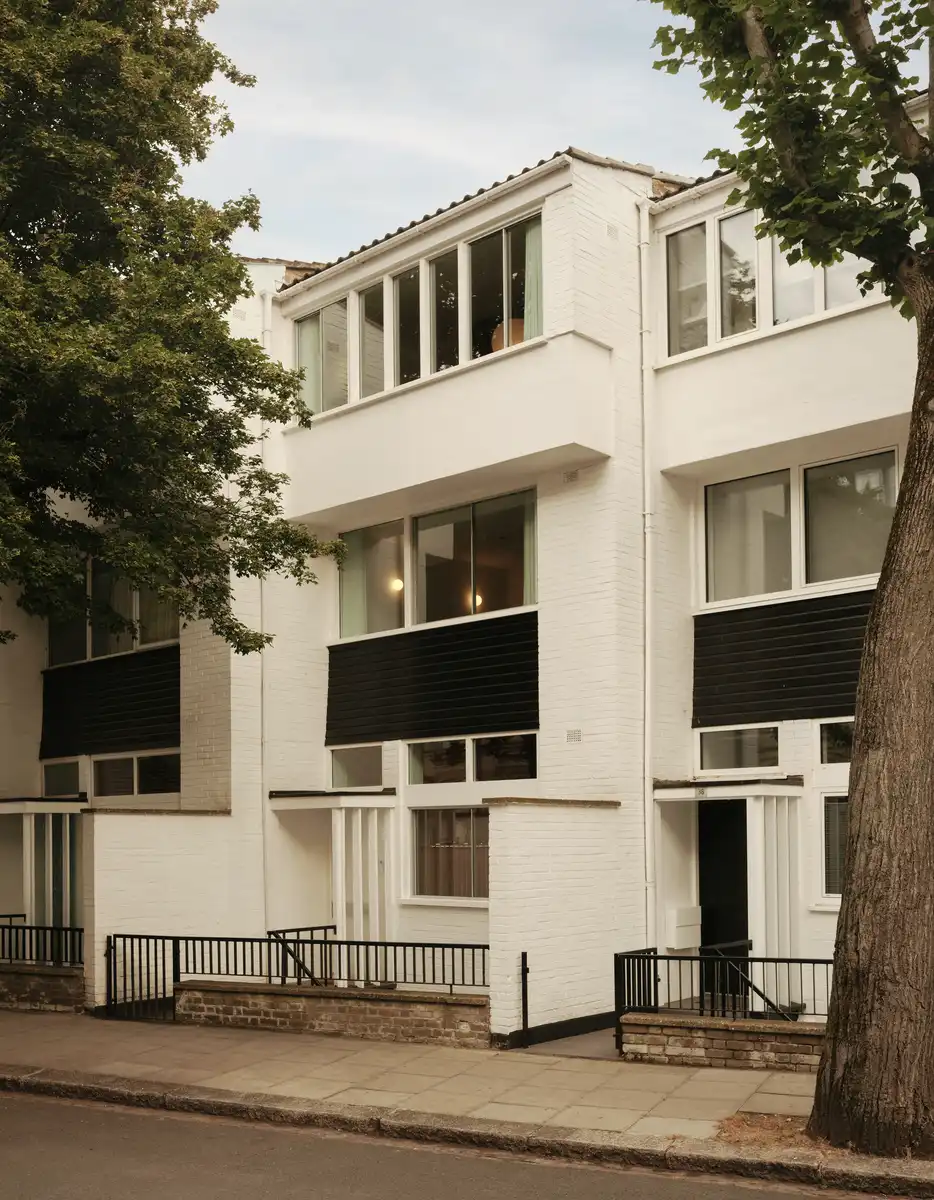
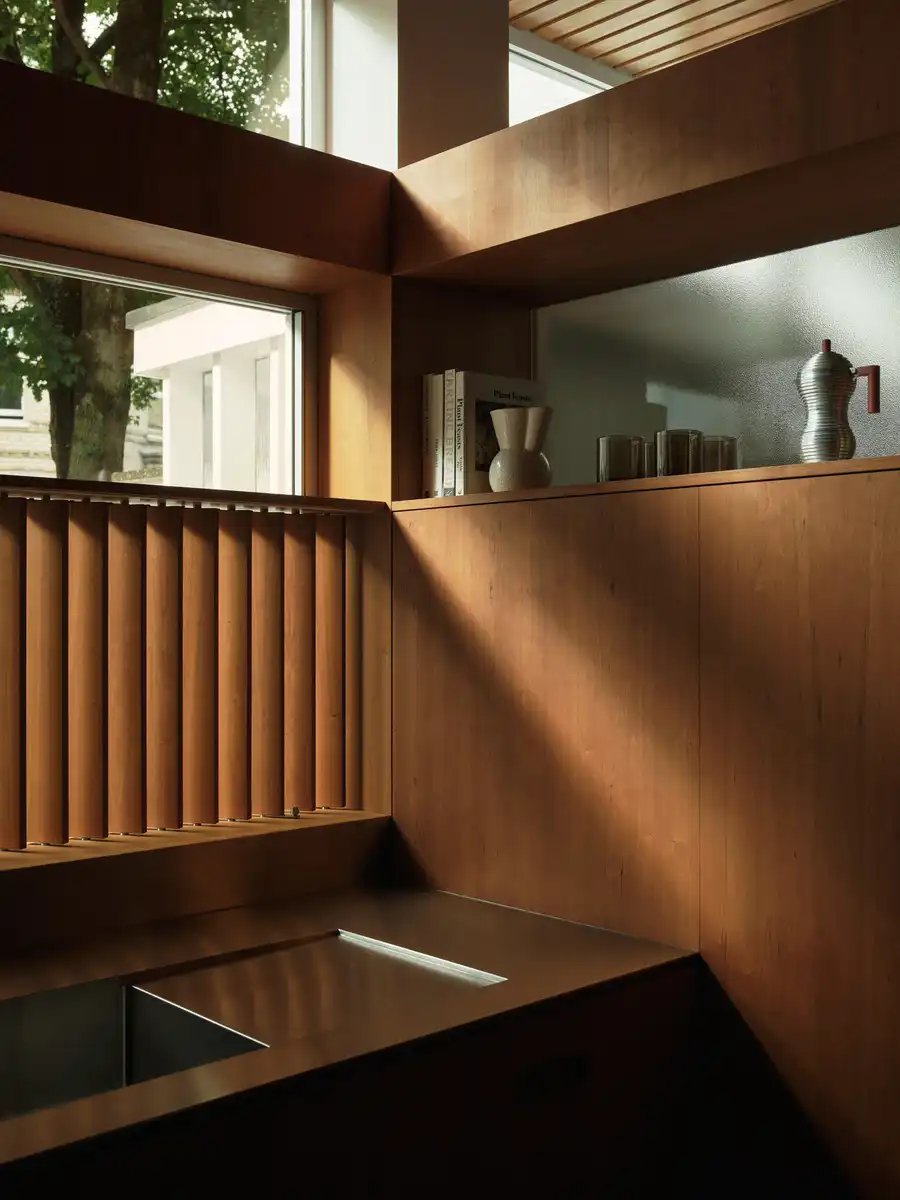
Pine Heath by Studio Hagen Hall – photos © Felix Speller
St. Mary’s Walthamstow by Matthew Lloyd Architects (Project Architect: Alex Spicer) An ageing Grade II* listed church which has been transformed into a bright, uplifting space that serves the wider community.
St. Mary’s Walthamstow Jury citation:
The Vicar of the Grade II* listed St Mary’s Walthamstow shared a sad anecdote with the jury, of people walking past the church before the works were carried out saying ‘it used to be a church but now it’s closed’. Although this had not been the case, the sentiment was understandable. The main pedestrian approach to the church had been a car park and the building offered no signs of life to visually connect with the community or suggest an invitation to enter. As both the most protected and oldest surviving building in Walthamstow, St Mary’s required significant fabric repairs and upgrades to extend its life. In tandem with this, an ambitious brief sought to redefine the church beyond its function as a place of worship and revive it for the whole community, for activity and interaction – every day of the week. This required it to be flexible, inclusive and welcoming and necessitated complete reordering of the interior. In this it has triumphed. The jury found the building warm, bright, uplifting and full of life. Externally, the modest new single-storey extension takes the place of the former car park. This contains the parish office and an exhibition space, affording glimpses of light and human activity within. In turn it now offers passive surveillance to the adjacent path. This neat move is successful in reorientating the building to the north – passers-by will no longer wonder if the church is still open.
The structure is expressed externally, and, together with a reconstituted stone plinth, larch cladding and window frames, the materials of the extension harmonise tonally with the render of the existing building, giving a calm cohesion to the whole. The main roof of the existing building was replaced with Welsh slate and insulated to improve energy performance.
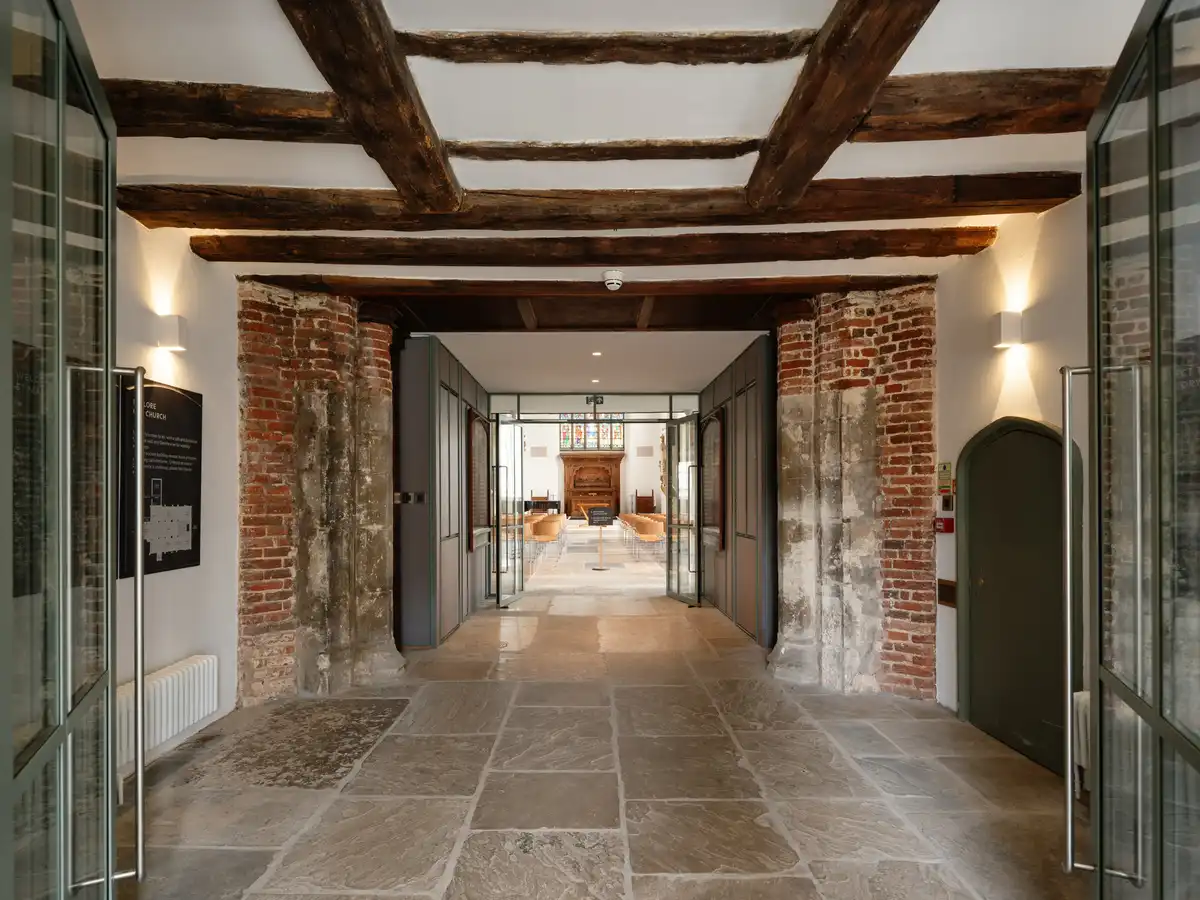
St. Mary’s Walthamstow by Matthew Lloyd Architects – photo © Tim Crocker
Internally the works have been carried out with expert discretion to the extent that one could imagine they had always been there. New secondary glazed doors have been added inside the east entrance, allowing a visual connection to the space within and creating a draught lobby. Two generous WCs have been neatly inserted under the balcony, and, adjacent, a new café servery can be concealed behind folding panels. Creating a new opening in the wall of the south aisle to the south vestry has effectively given the church a new space – awkward access meant that this was previously underused. To further improve accessibility and create the required flexible community space, all of the ‘benches’ (not pews) were removed, and the stone floor carefully lifted, labelled and relaid to allow underfloor heating to be installed. This significant intervention in the Grade II* building has been carried out almost invisibly, and successfully created full level access.
The conservation works and new enhancements successfully extend the life of St Mary’s Walthamstow and offer a new hub for the whole community. That they have been executed with such subtlety and control is a tribute to the architects’ skill.
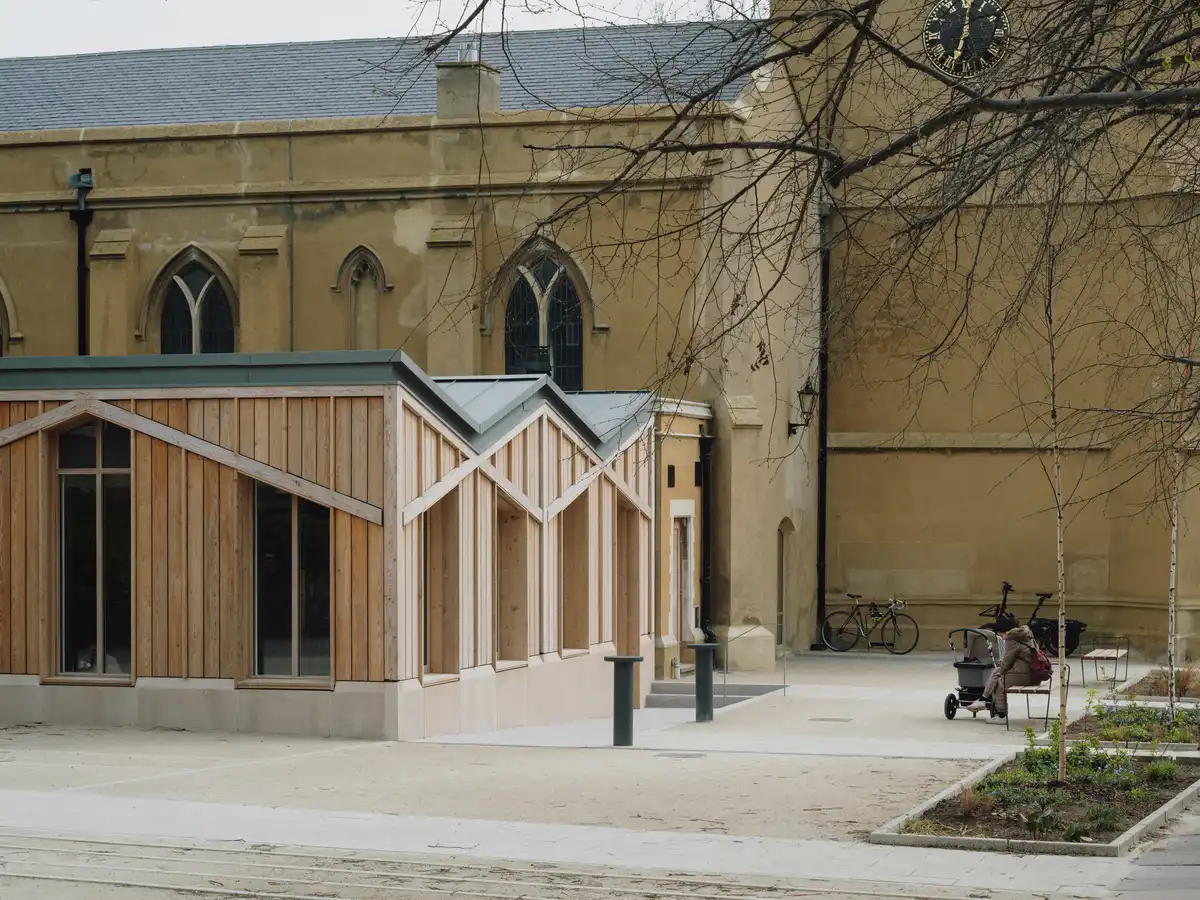
St. Mary’s Walthamstow by Matthew Lloyd Architects – photo © Tim Crocker
University of Staffordshire Woodlands Nursery design by Feilden Clegg Bradley Studios (Project Architect: Jack Baker) A timber-clad, carbon-neutral nursery built on a former car park.
University of Staffordshire Woodlands Nursery Jury Citation:
The new University of Staffordshire Woodlands Nursery and Forest School is driven by the ambition to create a positive environment for young children. This building is a showcase of social and environmental sustainability. Situated on the university campus in Stoke-on-Trent next to a nature reserve with a river, pond, woodland and meadows, it replaces a car park with a new carbon-neutral building of exceptional quality. It is home to a day nursery providing 100 places for children up to five years old, with a small forest-school outdoor classroom for use by school-age children, university trainees and students. Nursery spaces are provided equally for the children of staff, students and the wider community.
The building is a modest timber-clad volume marked by distinctive rooflights and a continuous porch. The plan is excellent, efficient and highly considered. It comprises an L-shaped set of layers: the classrooms, with darker sleeping areas to the outer façade; then play and learning areas in daylight beneath the rooflights; next the covered porch outside; and lastly the outdoor courtyard and play area, the focal point and heart of the design. It is a simple structure with a complex spatial layering and organisation that makes safeguarding aspirational and puts outdoor play and learning at the centre.
The covered porch creates a wonderful transitional space between inside and outside. It is an outdoor room, like a Japanese ‘engawa’, a space for play and learning as well as facilitating drop-off and pick-up by parents and carers. One can imagine that it is just as nice on a rainy day, with children playing outside and enjoying the outdoors on their generous covered porch, as it was on the sunny day when the jury visited. The covered porch also protects the interior from direct sun and overheating.
The architects’ design for Woodlands Nursery is driven by sustainability. The jury were especially impressed by the innovative natural ventilation system. Fresh air is drawn and cooled through underground earth pipes before entering the classrooms, while warm air exits through high-level opening rooflights. All windows also open to facilitate cross-ventilation. Abundant daylight enters the classrooms through large opening windows and rooflights. Materials are natural, with low embodied energy. The building is constructed of a highly insulated lightweight timber frame clad with UK-sourced larch, which has a natural preservative and therefore is left unfinished to weather gracefully. Internally, rubber, birch plywood and woodwool boards provide sustainable finishes and character. Rooftop photovoltaic panels provide 100% of the electricity needed, with excess being used on the campus. The client is to be commended for their commitment to net zero carbon and creating a place that nurtures positive futures through outstandingly high-quality architecture.
During the jury visit, the overriding impression was of very happy children playing outside. This is an exceptional building that enables a positive vision of childcare for the families of staff, students and the local community.
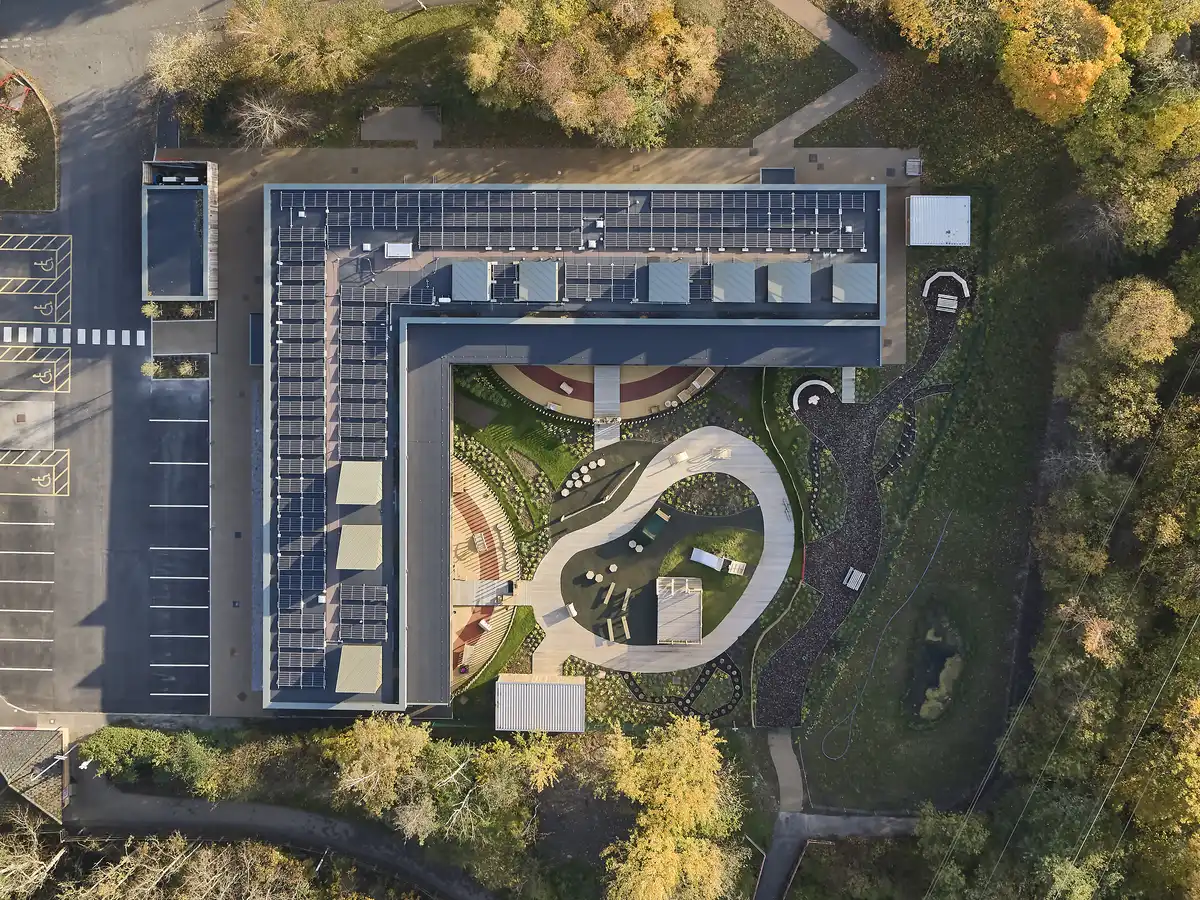
University of Staffordshire Woodlands Nursery by Feilden Clegg Bradley Studios – photograph © Daniel Hopkinson
The Jackson Library, Exeter College, Oxford, by Nex (Project Architect: Joe Dent) A radical transformation of a deteriorating library in Exeter College has created a fresh, robust and light-filled environment for studying.
The Jackson Library Jury citation:
The Grade II listed Jackson Library stands in the historically sensitive heart of Oxford and within Exeter College, surrounded by other listed buildings. Built to George Gilbert Scott’s designs in the 1850s, its fabric had deteriorated and its facilities were inadequate in terms of comfort, accessibility and energy consumption. The client knew their building and produced a careful brief for its refurbishment, giving clear guidance to architects and establishing priorities to support interventions. The architects were then appointed through a competition, focusing on the approach to the brief rather than a preconceived design. This process has led to a close collaboration, evident in the project’s success.
The work has radically transformed the library through sensitively yet confidently designed new circulation, adaptions to the structure and a range of natural materials tying together old and new. Externally, the repairs and conservation of the existing building are discreet and robust. A new entrance in Clipsham stone mediates between the original library building and the adjacent Bodleian Library. Internally, the new entrance works hard, providing many functional elements such as a WC and lockers while also creating clear new wayfinding to the two wings. This space also provides a thermal and acoustic lobby protecting the two study spaces that lead off it. A new lift core connects a variety of challenging levels and is complemented by a sumptuous curving timber stair, top-lit by an oculus.
A material palette of timber, stone and steel has created warm tones which complement the existing building and historic fabric. Discreet conservation works have been undertaken to the bookcases along with strengthening the floors, re-roofing and improving the thermal performance. New elements, such as the balcony and bespoke furniture, carefully dovetail with the existing structural grid. A balcony within the annexe reading room has reduced the balcony and revealed the original windows while respectfully marking earlier adaptions to the building, such as a former structure of the mezzanine level. This project required a high degree of coordination to produce a deceptively simple design full of intricate details and clever adaptions. The refurbishment prioritised reuse and conservation to minimise embodied carbon and enhance environmental performance and user comfort. Historic elements were retained and refurbished, while prefabricated timber and sheep wool insulation reduced embodied carbon.
Operational energy use was optimised through thermal insulation, low-carbon heating systems and natural ventilation. Indoor health and wellbeing were enhanced with natural light, improved air quality and acoustic comfort. The Fellows’ and Rector’s Gardens were replanted with native species to promote biodiversity and connect users to nature. Overall, this intelligent renovation has taken a tired listed building with limitations and turned it into a fresh, robust and light-filled environment for studying, much loved by its users.
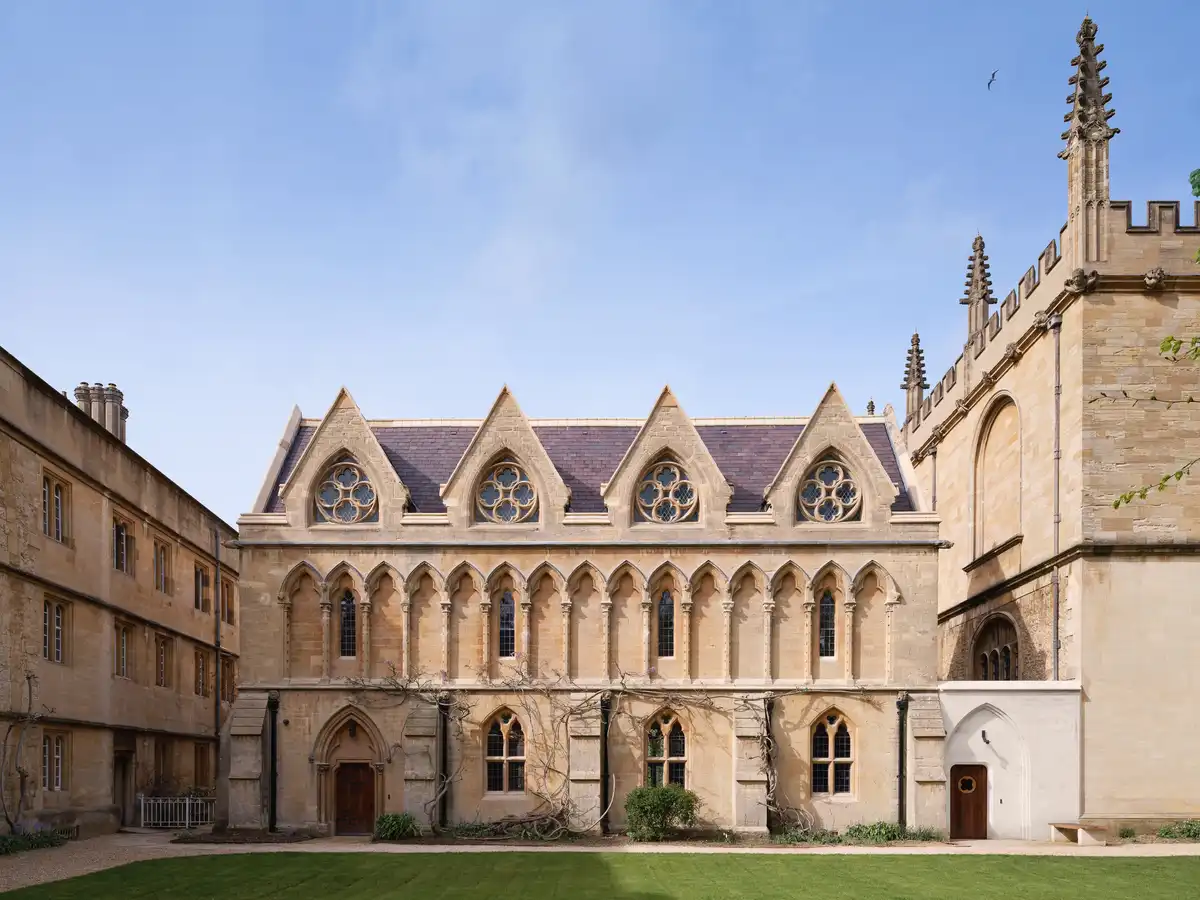
The Jackson Library by Nex – photo © Will Pryce
The Stephen Lawrence Prize 2025 jury comprised: Baroness Doreen Lawrence, Matthew Goldschmied, Chair of the Marco Goldschmied Foundation, Clementine Blakemore, Clementine Blakemore Architects and 2024 Stephen Lawrence Prize winner, Dianne Orliaku, architecture student at University of Greenwich
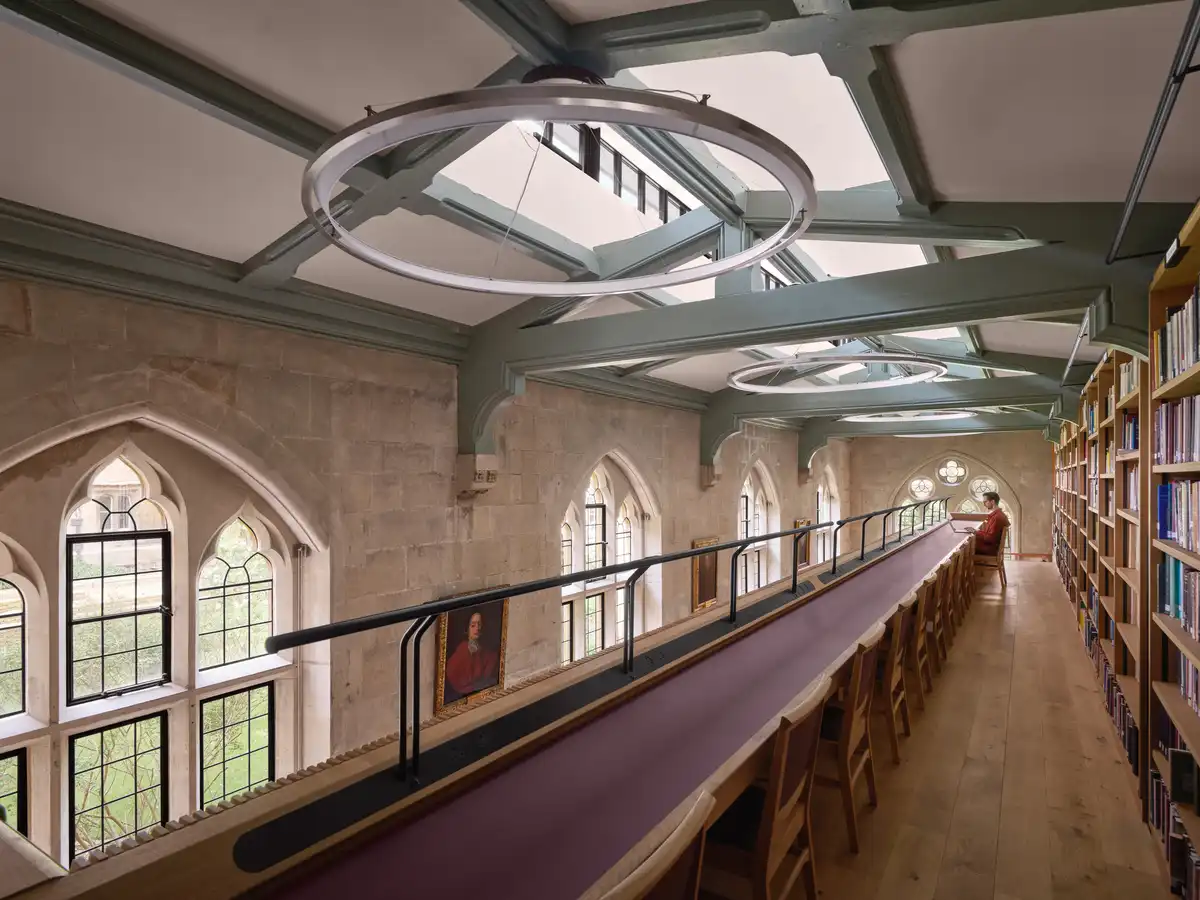
The Jackson Library by Nex – photo © Will Pryce
The Stephen Lawrence Prize shortlist is selected from winners of the RIBA Regional Awards 2025. Project Architects – including their year of qualification – were identified at the point of entry. The winner will be announced at the RIBA Stirling Prize ceremony on Thursday 16 October 2025 at The Roundhouse in London.
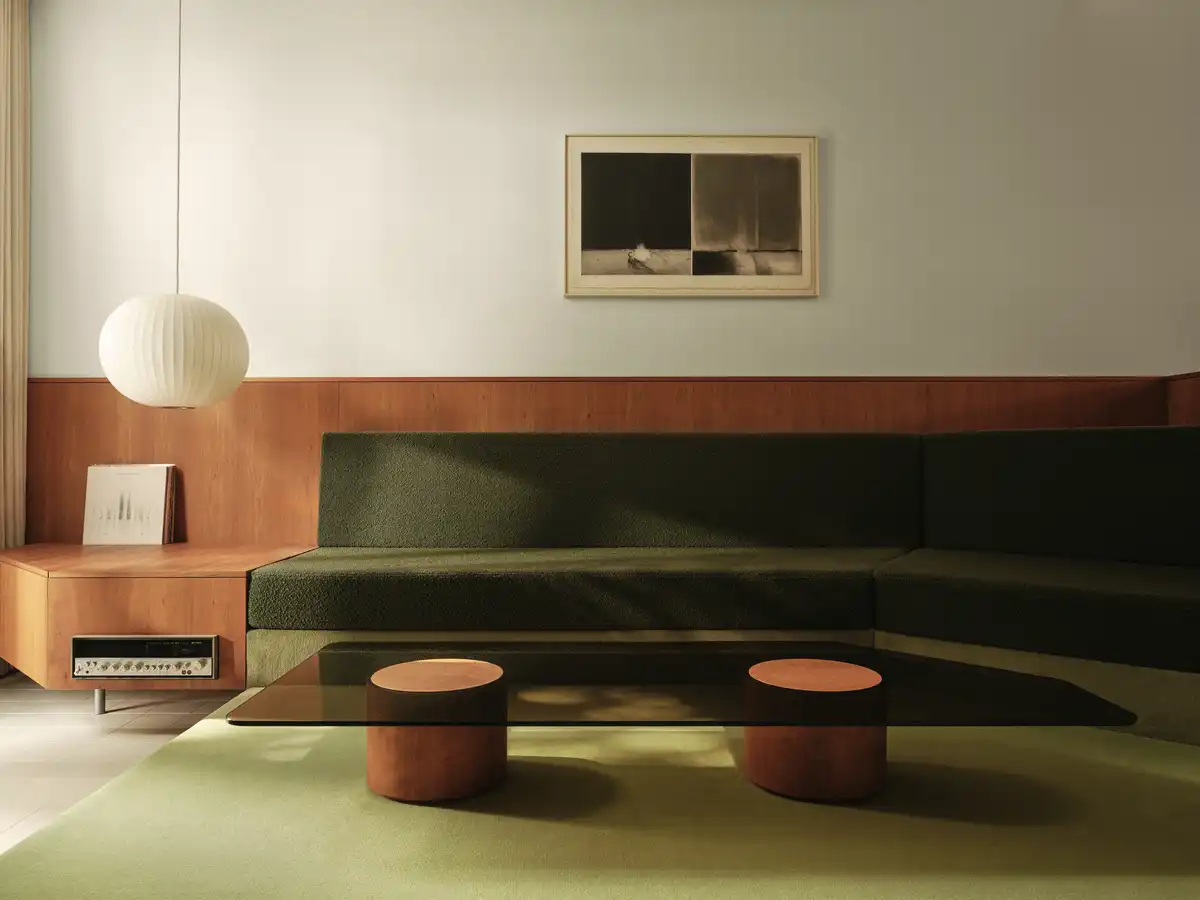
Pine Heath by Studio Hagen Hall – photo © Felix Speller
Stephen Lawrence Prize 2025 Shortlist buildings and architects information received from RIBA 290725
Previously on e-architect:
Stephen Lawrence Prize Winners
2019 RIBA Stephen Lawrence Prize Winner
Stephen Lawrence Prize 2021 Winner News
Cork House, Berkshire, Southern England
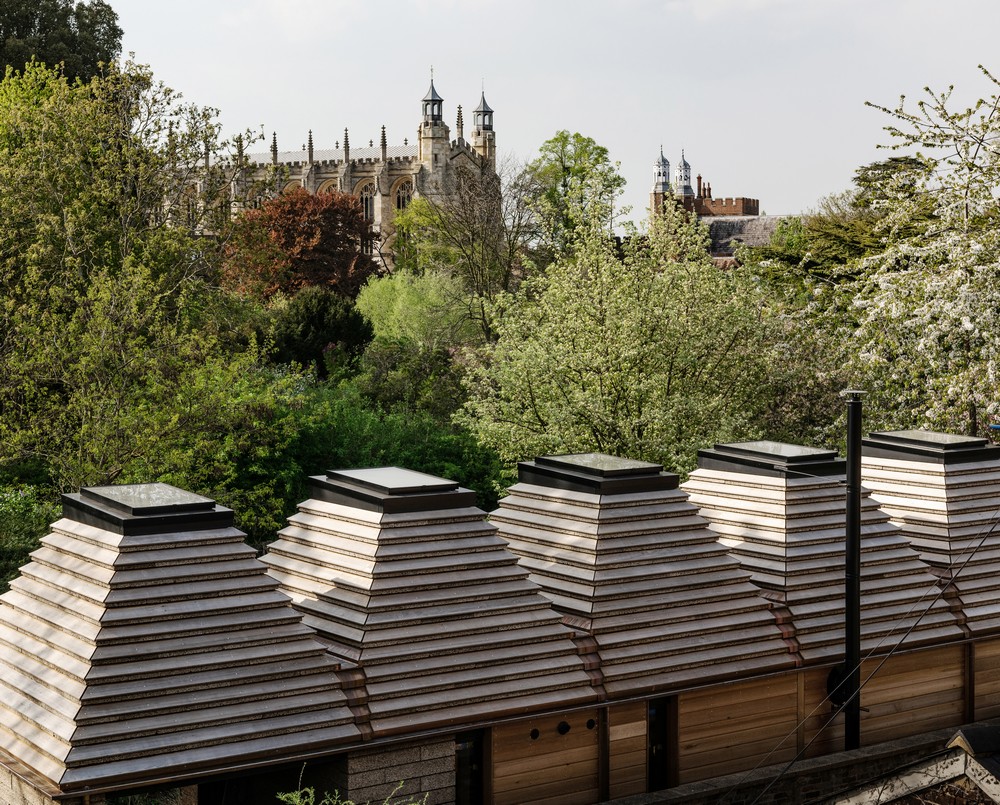
photo © Ricky Jones
2019 RIBA Stephen Lawrence Prize Winner
2018 RIBA Stephen Lawrence Prize Winner
2018 RIBA Stephen Lawrence Prize Shortlist
2017 RIBA Stephen Lawrence Prize Winner
The Houseboat, Poole Harbour, Dorset, Southern England
Design: Mole Architects and Rebecca Granger Architects
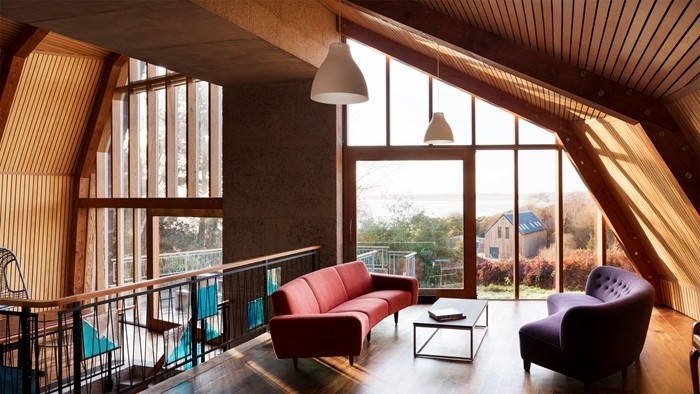
photo © Rory Gardiner
The Houseboat near Poole Harbour winner of Stephen Lawrence Prize 2017 – Stephen Lawrence Prize 2017 Shortlist
2016 RIBA Stephen Lawrence Prize Winner
House of Trace, London by Tsuruta Architects

photo : Tim Croker
House of Trace – Stephen Lawrence Prize 2016 Shortlist
2014 Stephen Lawrence Prize Winner
House no 7, Isle of Tiree
Stephen Lawrence Prize Winner in 2013
Montpelier Community Nursery, Brecknock Road, N19 by AYA
Stephen Lawrence Prize Winner 2012
Kings Grove London – Stephen Lawrence Prize 2012
++
Royal Institute of British Architects Awards
Stephen Lawrence Memorial Lecture
Comments / photos for the Stephen Lawrence Prize 2025 Shortlist page welcome
Website: RIBA Stephen Lawrence Prize