
What Is a Fire Exit?
2 December 2025
A fire exit is a designated route that allows people to escape safely from a building in the event of a fire. It includes both the doors used to exit and the pathways leading to and from them. Fire exits must provide a safe, unobstructed route to a place of safety outside the building.
A fire exit consists of escape routes, which include corridors, stairwells, and other paths leading to an exit. Fire-resistant doors are part of the route, designed to slow the spread of fire and smoke, allowing time for evacuation. The final exit doors are the last doors people pass through before reaching a safe location outside.
Fire exits must comply with strict regulations, including clear signage, emergency lighting, and an unobstructed path. They play a vital role in minimising injury and preventing loss of life during a fire emergency.

5 Things You MUST Do with Fire Escapes
Fire escapes play a crucial role in ensuring the safety of building occupants in the event of an emergency. However, simply having fire exits in place is not enough-steps must be taken to ensure they are accessible, functional, and clearly visible at all times. Neglecting fire escape maintenance or allowing obstructions can lead to serious safety risks and potential legal consequences. To comply with fire safety regulations and protect lives, there are essential measures that must be followed.
Keep Them Unlocked
Fire exits must never be locked when a building is occupied. Regulations require that people can open them quickly and easily without needing a key, code, or special tool. The most common mechanism for ensuring compliance is a panic bar or push pad, which allows immediate exit. While security concerns may lead some businesses to consider locking fire exits, this is unlawful if it prevents safe escape. In cases where security is necessary, alternatives such as alarmed exit doors or monitored emergency exits should be used instead.
Keep Them Unblocked
A fire exit is useless if it is blocked. Items such as furniture, stock, or deliveries must never obstruct escape routes. Even temporary obstructions, like leaving deliveries in front of an exit for a short period, can be dangerous. Fire risk assessments should include checks to ensure all fire exits remain clear at all times. Staff should be trained to recognise the importance of maintaining unobstructed escape routes.
Know Where They Are
All building occupants should know the location of fire exits. Employers, landlords, and building managers must ensure that employees, visitors, and residents can easily locate escape routes. Fire drills and training help familiarise people with the exits. Additionally, clear signage must be installed in prominent locations, guiding people to the nearest exit.
Ensure That They Are Visible
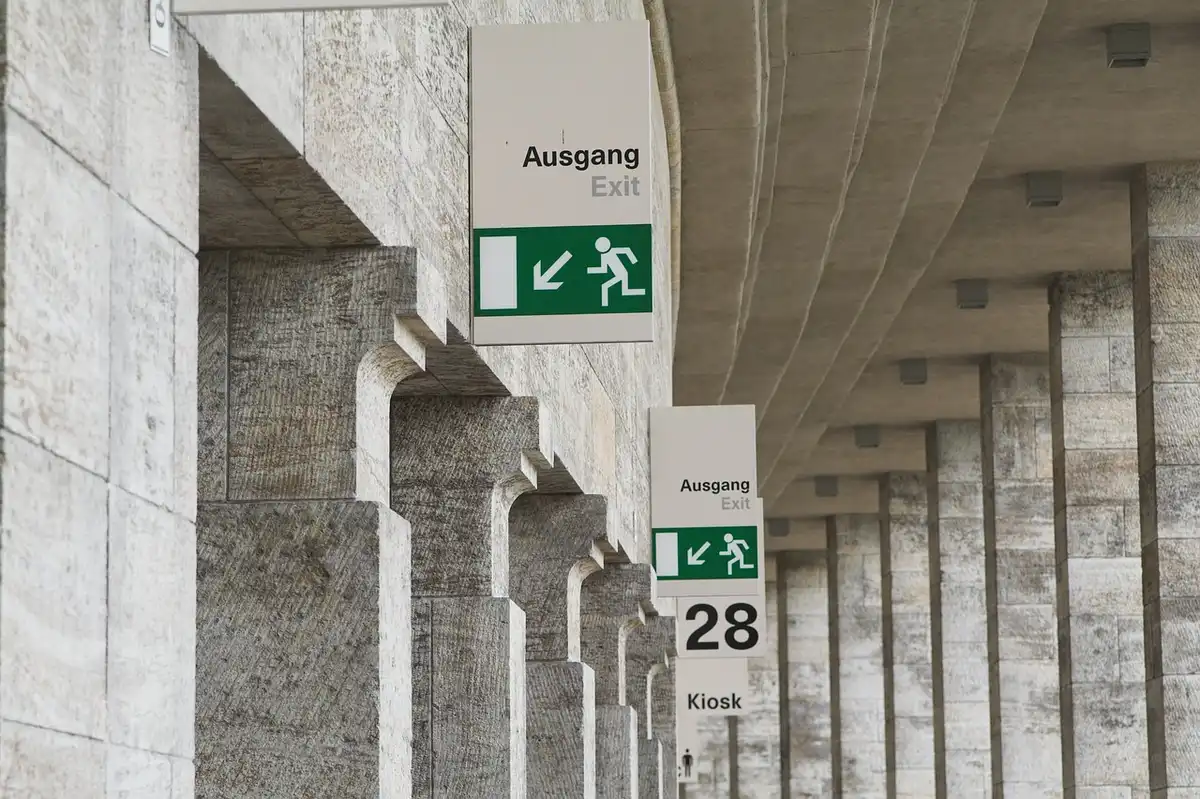
Fire exits must be easy to identify. The Health and Safety (Safety Signs and Signals) Regulations 1996 require appropriate signage, such as a green “Fire Exit” sign with a running figure and an arrow pointing towards the exit. Signs must be placed at every decision point along an escape route. This includes areas where a corridor turns or where multiple exits are available. Signs should be clear, illuminated, and not obscured by furniture, decorations, or other objects.
Keep Them Well Lit
In an emergency, people must be able to find their way to safety even if the main power supply fails. Fire exit routes must be equipped with emergency lighting to ensure visibility. Emergency lighting should be installed along escape routes, near exit doors, and on staircases. It must activate automatically during a power failure, providing enough illumination to allow safe evacuation. Regular testing is essential to ensure it functions properly.
Who Is Responsible for Maintaining Fire Exits?
Under the Regulatory Reform (Fire Safety) Order 2005, the “responsible person” is legally accountable for fire safety within a building. This is usually the employer, owner, landlord, or building manager. Their duties include ensuring that fire exits are well-maintained and comply with regulations.
Responsibilities include conducting regular fire risk assessments, keeping fire exits clear and accessible, ensuring signage and lighting are functional, testing fire doors and emergency exit mechanisms, and providing training and fire drills for occupants. Failure to maintain fire exits can lead to legal consequences, including fines and prosecution. More importantly, it endangers lives in the event of a fire.
What If I Don’t Provide Enough Fire Exits?
Failing to provide adequate fire exits is a serious legal offence under UK fire safety law. Consequences include prosecution and fines, as authorities can impose significant penalties for non-compliance. Those responsible may also face legal liability if a fire causes injury or death due to inadequate fire exits. Additionally, many insurance policies require compliance with fire safety regulations, and non-compliance could result in the refusal of claims following a fire.
Beyond legal and financial consequences, a lack of fire exits puts lives at risk. Ensuring a safe and sufficient number of exits is a fundamental aspect of fire safety planning.
What Types of Doors Are on Fire Escape Routes?
Fire escape routes rely on different types of doors to ensure a safe and efficient evacuation during an emergency. These doors serve distinct purposes, with some designed to contain fire and smoke, while others provide a clear and unobstructed exit to the outside. Understanding the role of internal fire doors and final exit doors is essential for maintaining compliance with fire safety regulations and ensuring that occupants can escape quickly and safely in the event of a fire.
Internal Fire Doors
Internal fire doors are used along escape routes within a building. These doors are designed to contain fire and smoke, preventing them from spreading and allowing people more time to evacuate safely. Fire doors must comply with British Standards (BS 476-22 or BS EN 1634-1), ensuring they meet specific fire resistance requirements.
Fire doors are usually rated by the duration they can withstand fire, such as FD30 (30 minutes) or FD60 (60 minutes). They should be kept closed at all times unless fitted with an automatic release mechanism linked to the fire alarm system.
Final Exit Doors
Final exit doors are the last doors that people pass through to reach safety outside. Unlike internal fire doors, these doors do not need to be fire-resistant, but they must be easy to open from the inside without delay.
Final exit doors should open outward to facilitate quick evacuation. They must have panic bars, push pads, or other emergency release mechanisms. It is also essential that they are free from obstructions, both inside and outside, and have clear signage indicating that they are fire exits. In some buildings, final exit doors may double as security doors when not in use for emergencies. However, they must never be locked in a way that prevents immediate escape.
The Importance of Fire Exit Compliance
Fire exits are a critical component of fire safety. Legal requirements ensure that buildings provide enough exits, maintain clear escape routes, and use appropriate doors for different parts of the evacuation process.
Building owners and employers must take responsibility for fire safety, conducting regular risk assessments, ensuring exits are accessible, and training occupants in emergency procedures. Non-compliance can result in legal penalties, but more importantly, it can lead to loss of life.
Ensuring fire exits meet regulatory standards is not just a legal obligation – it is a fundamental duty to protect those within a building.
Comments on this guide to What is a fire exit, buildings safety advice article are welcome.
Fire Safety
Fire Safety Posts
Fire Safety Engineering for Buildings
How to make your house fire safe
Fire Damage Restoration and Remediation
Safety Precautions Against Home Fire
Fire-Safe Aluminium Rainscreen Cladding
++
Building Articles
Comments / photos for the What is a fire exit, buildings safety advice page welcome


