
Natural Design in Tropical Towers: Singapore’s Coastal Buildings
2 February 2026
Modern architecture faces a fundamental challenge: reconciling density with human wellbeing. As urban populations concentrate vertically, designers must reimagine how buildings connect residents to natural environments. Singapore’s latest coastal projects offer compelling case studies in solving this design paradox.
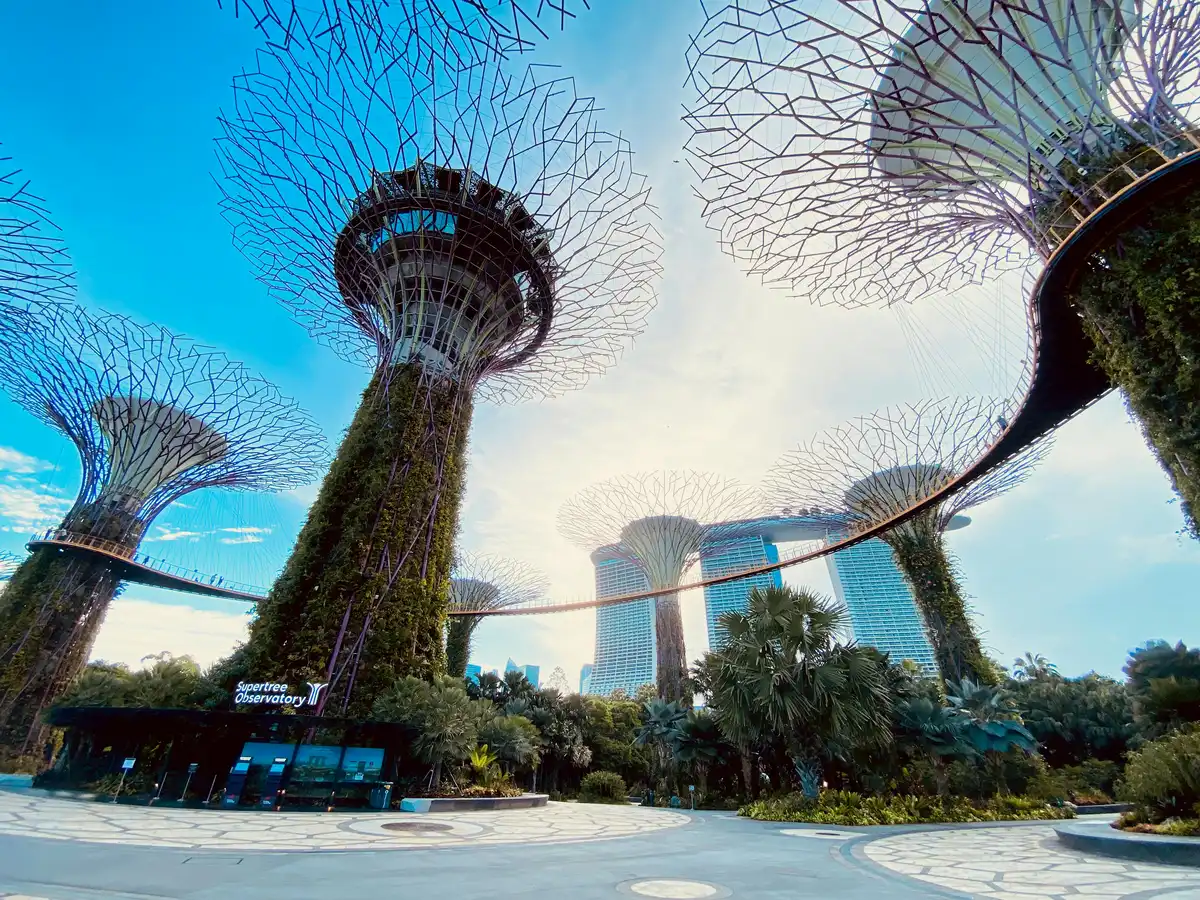
The Psychology of Bringing Nature Upwards
Research from the International Journal of Environmental Research and Public Health reveals that residents in nature-integrated buildings report 28% lower stress levels compared to conventional high-rise occupants. This isn’t merely about aesthetics. Strategic vegetation placement, natural ventilation corridors, and visual connections to landscape features trigger measurable physiological responses.
The mechanism centers on prospect-refuge theory. Humans instinctively seek environments offering both open views (prospect) and protective enclosure (refuge). Tropical high-rise design must engineer these contradictory needs simultaneously, particularly challenging in equatorial climates where heat gain and monsoon exposure complicate facade strategies.
Material Honesty in Coastal Construction
Salt-laden air and high humidity create punishing conditions for building materials. Authentic tropical architecture acknowledges these forces rather than fighting them. Aluminum composite panels weather poorly. Maintenance-intensive materials betray initial design intentions within five years.
Japanese architect Kengo Kuma’s research into material longevity demonstrates that exposed concrete with proper admixtures outperforms rendered finishes in coastal zones by 40% over twenty-year periods. Surface treatments fail. Mass and permeability succeed.
Singapore’s eastern waterfront developments increasingly specify through-body porcelain tiles, anodized aluminum extrusions, and engineered timber treated for marine exposure. These choices reflect maturation beyond decorative materialism toward climate-responsive pragmatism.
Ventilation Choreography in Dense Configurations
CFD modeling has revolutionized tropical tower design. Wind tunnel testing now reveals how tower spacing, podium heights, and facade articulation create or destroy natural airflow patterns at pedestrian levels.
Data from National University of Singapore’s building performance studies shows that developments achieving cross-ventilation in 60% of units reduce annual cooling energy by 34% compared to fully sealed buildings. The sweet spot involves 45-meter tower separation with staggered floor plates that prevent wind shadow effects.
The Vela Bay project on Bayshore Road illustrates this evolution. Site analysis identified prevailing southeast breezes, informing tower orientation and facade porosity. Reviewing the Vela Bay floorplan demonstrates how operable ventilation panels integrate with air-conditioning systems, allowing seasonal mode switching rather than year-round mechanical dependency.
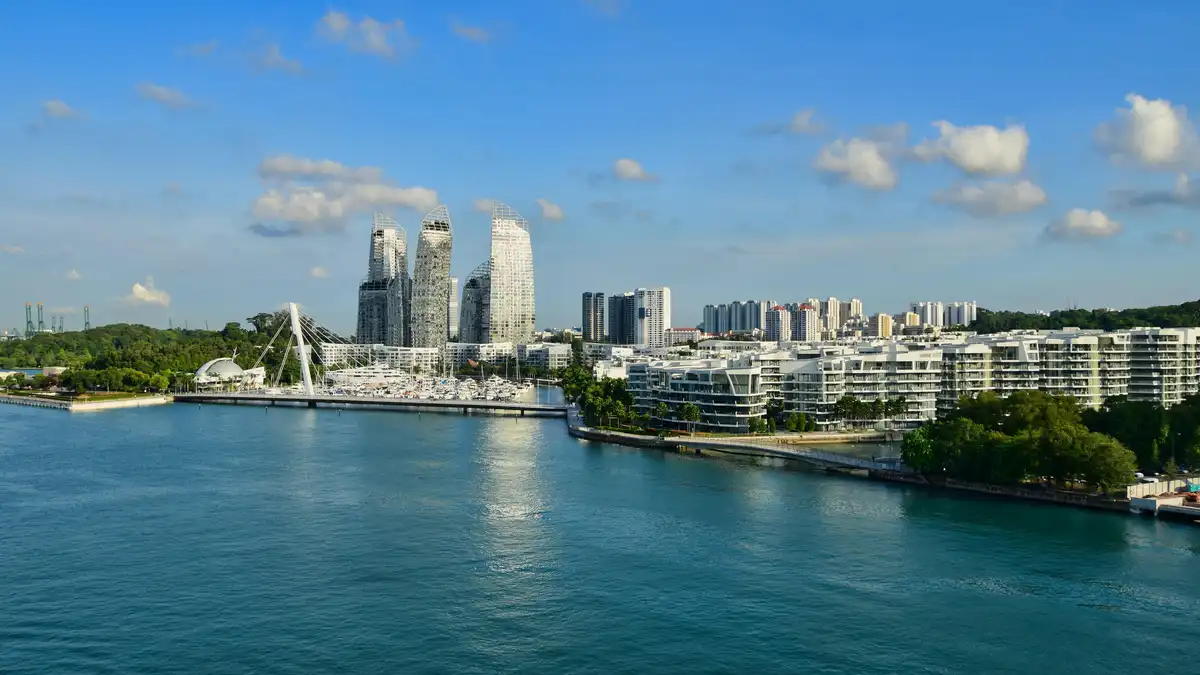
Threshold Spaces and Climate Transition
Singapore’s traditional shophouse architecture understood something contemporary towers often miss: the criticality of transitional zones. Deep verandahs, perforated screens, and layered thresholds mediated between exterior intensity and interior comfort.
Modern interpretations adapt these principles vertically. Sky terraces at mechanical floors function as thermal buffers. Planted balconies create microclimates that pre-cool incoming air. Double-skin facades with automated louvers respond to solar angles throughout the day.
Measured data indicates that 2.5-meter balcony depths reduce direct solar gain on glazing by 67% during equatorial noon conditions. This isn’t decorative; it’s environmental performance disguised as amenity.
Structural Expression and Tectonic Clarity
Waterfront sites permit architectural expressiveness that landlocked plots cannot justify economically. Reduced land costs relative to urban core locations allow longer spans, cantilevers, and structural features that communicate design intent.
Exposed post-tensioned slabs, expressed transfer structures, and articulated core walls transform engineering into architecture. Singapore’s Marina Bay developments pioneered this vocabulary. Newer eastern corridor projects refine it with greater material restraint and proportional discipline.
The contrast between structure and infill becomes the primary compositional language. When done skillfully, this tectonic honesty reads clearly from both distant waterfront vantage points and intimate street-level experiences.
Landscape as Infrastructure
Progressive developments integrate stormwater management, urban heat mitigation, and biodiversity support within landscape design. Rain gardens process 40% of site runoff. Native planting reduces irrigation demands by 55% compared to conventional tropical landscaping.
These systems require architectural coordination during design phases, not landscape add-ons after building forms finalize. Soil depth calculations influence structural loading. Irrigation infrastructure affects MEP coordination. Maintenance access determines hardscape detailing.
Australian landscape architect Bruce Mackenzie’s research demonstrates that edible gardens in residential developments increase social interaction frequency by 73%. Productive landscapes create programming density that purely ornamental schemes cannot match.
Daylight Calibration in Tropical Contexts
Equatorial sunlight operates at different intensities than temperate precedents that dominate architectural discourse. Direct sun exceeds 100,000 lux, far beyond human visual comfort thresholds. Northern hemisphere daylighting strategies fail in tropical application.
Effective solutions involve reflection rather than transmission. Light shelves bounce diffused illumination deep into floor plates while blocking direct radiation. Automated blinds respond to real-time solar intensity rather than fixed schedules. Warm white LED supplementation blends seamlessly with controlled natural light.
Monitored buildings using these integrated approaches maintain 300-500 lux task lighting with 60% less artificial illumination during occupied hours compared to conventional curtain wall buildings.
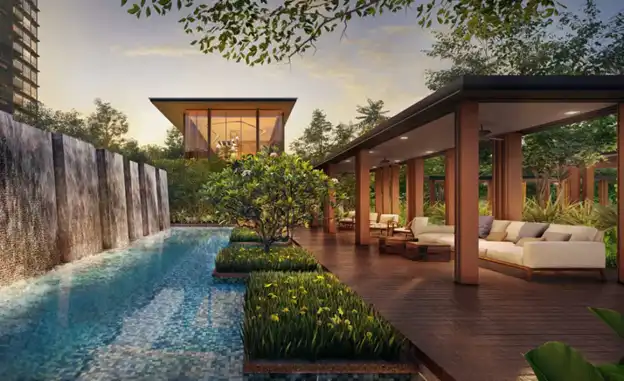
Implementation Realities
Theoretical design excellence means little without contractor capability and maintenance commitment. Material specifications must align with local supply chains. Detailing must acknowledge actual construction tolerances, not idealized drawings.
Singapore’s regulatory environment enforces baseline performance through CONQUAS scores and Green Mark requirements, but transcendent architecture requires ambitions beyond compliance minimums. Developer commitment to long-term building performance rather than initial sales impact separates enduring projects from quickly dated ones.
Coastal high-rise architecture in tropical climates has evolved beyond importing temperate typologies. The most compelling projects demonstrate climate-responsive thinking at every scale, from urban massing to material junctions, creating buildings that enhance rather than merely house human experience.
Comments on this guide to Tropical towers natural design: Singapore’s coastal buildings article are welcome.
Singapore Architecture
Contemporary Architecture in Singapore – architectural selection below:
Singapore Architectural Designs – chronological list
++
Property Design
Contemporary Property Designs – recent architectural selection from e-architect below:
Modern residences in Singapore real estate
Lentor Gardens Singapore nature boosts wealth
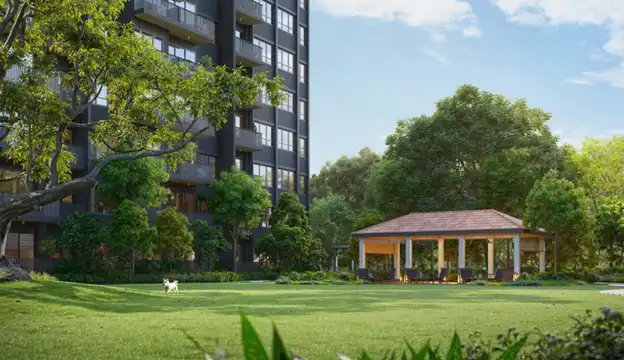
Singapore skyline urban design
Upperhouse at Orchard Boulevard Singapore condos
Comments / photos for the Tropical towers natural buildings design – Singapore’s coastal property design page welcome.


