
Rethinking Building Waste Towards More Sustainable Construction
post updated 11 September 2026
11 September 2025
The construction industry is a vital driver of growth and innovation, but it is also one of the world’s largest producers of waste. According to the World Bank, construction and demolition activities generate over a third of the world’s solid waste – hundreds of millions of tonnes each year. From concrete rubble to timber offcuts and packaging, building waste presents both a challenge and an opportunity.
As sustainability takes centre stage in architecture, reducing and managing this waste stream is no longer just good practice – it is an essential part of designing for the future. This article explores practical strategies for reducing building waste and integrating responsible disposal into modern projects.
The Scale of the Problem
Construction waste doesn’t just occupy landfill space; it contributes to carbon emissions, environmental degradation, and unnecessary material costs. In many countries, construction and demolition debris can represent up to 40% of all solid waste generated annually. Common waste streams include:
- Concrete and masonry from demolition.
- Wood, steel, and plasterboard offcuts during construction.
- Packaging such as plastics, cardboard, and pallets.
- Hazardous materials like paints, solvents, or asbestos.
Managing these streams effectively is one of the biggest challenges in delivering sustainable projects. According to research on Construction Waste, much of this material could be diverted from landfill through better planning, recycling, and reuse strategies.
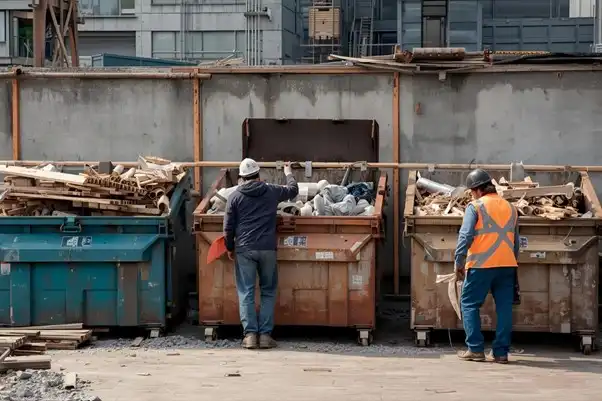
image created with Canva AI
Designing with Waste in Mind
Waste prevention begins at the design stage. Architects and contractors can make smarter material choices and plan projects with waste reduction in mind. Ordering materials to precise quantities, designing for modularity, and selecting recyclable or reusable materials can dramatically reduce on-site waste.
Lifecycle thinking – considering how materials will be used, maintained, and eventually disposed of helps avoid locking unnecessary waste into a building’s future. For example, specifying cross-laminated timber (CLT) for structural systems not only reduces embodied carbon but also ensures easier recycling at the end of the building’s life. Resources like e-architect’s Sustainable Building Design Guide provide further insights into integrating waste reduction into early project planning.
Prefabrication and Off-Site Construction
One of the most promising methods of reducing building waste is prefabrication. By manufacturing components in controlled environments, precision cutting and assembly lead to less material discarded. Factories are also better equipped to recycle offcuts, making the entire process more efficient.
Off-site construction also speeds up building timelines and reduces the environmental impact on site. Projects using prefabricated systems often report waste reductions of 30% or more compared to conventional building methods. In addition, modular buildings can be dismantled and reassembled elsewhere, extending their useful life and reducing demolition waste.
Recycling and Reuse on Site
While some waste is unavoidable, separating it on site can make a huge difference. Providing dedicated bins or collection points for timber, metals, masonry, and packaging encourages recycling and makes later processing easier. Salvaging doors, windows, bricks, and other fixtures for reuse not only reduces landfill but also adds value to future projects.
Innovative recycling practices are advancing rapidly. Crushed concrete can be reused as aggregate in new concrete or as road base. Gypsum from plasterboard can be reprocessed into new panels. Even “urban mining” recovering metals from demolition waste is emerging as a valuable practice in cities with limited raw resources.
Waste Removal and Compliance
Even with prevention and recycling, significant amounts of waste need to be removed from sites. This is where safe and compliant handling becomes critical. Regulations around hazardous materials, transport, and disposal vary by region, and failure to meet them can be costly.
In Australia, for instance, builders can face heavy fines for improper asbestos handling, while in the EU strict landfill diversion targets mean contractors must document exactly how waste is sorted and recycled. For larger projects, the simplest approach is often to hire a professional rubbish removal team familiar with building debris, recycling processes, and local compliance requirements. This ensures that materials are handled responsibly and valuable resources are not lost to landfill.
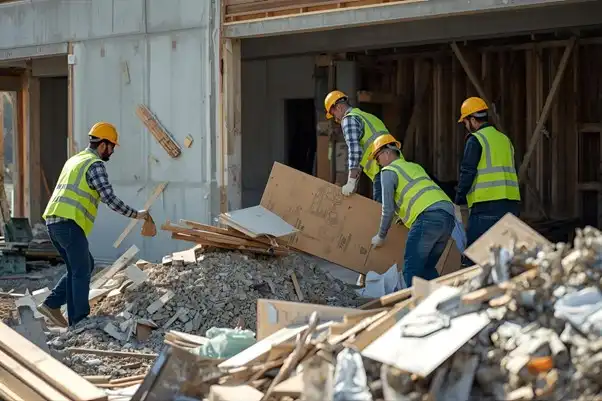
image created with Canva AI
Adaptive Reuse and Deconstruction
Instead of demolishing entire structures, adaptive reuse allows old buildings to be transformed into new spaces with minimal waste. Where demolition is unavoidable, careful deconstruction methods can salvage usable bricks, timber, and fixtures, reducing the burden on landfills and supplying the growing market for reclaimed materials.
Examples can be seen worldwide: former factories converted into residential lofts, warehouses adapted into cultural centres, or schools repurposed into community hubs. In each case, adaptive reuse conserves materials while also preserving architectural heritage. Deconstruction takes more time than demolition but can recover up to 80% of a building’s materials for reuse or recycling.
Tracking Progress
Sustainability in waste management isn’t static – it requires ongoing measurement and improvement. Tracking waste streams during and after projects provides valuable data, helping contractors and architects identify where waste reduction strategies are working and where they need adjustment.
Digital platforms and smart monitoring systems are increasingly being used to manage construction waste, offering transparency for clients and accountability for builders. Some platforms now integrate with BIM (Building Information Modelling), allowing teams to forecast waste before it occurs and plan accordingly.
Conclusion
Construction waste is one of the biggest challenges facing the built environment today, but it also presents an enormous opportunity. Through smarter design, prefabrication, recycling, adaptive reuse, and responsible removal, the industry can significantly reduce its environmental footprint.
By embedding these strategies into everyday practice, architects and builders can deliver projects that are not only sustainable but also economically and socially resilient helping shape a greener, more resource-efficient future.
Comments on this guide to Rethinking building waste: more sustainable construction article are welcome.
Waste / Rubbish
Rubbish Removal

Handy tips for rubbish removal in DIY projects
Rubbish Removal Tips Before and After Renovation
Get Rid of all Extra Junk in Your House
++
Building Articles
Residential Architecture
Comments / photos for the Rethinking Building Waste Towards More Sustainable Construction advice guide page welcome.


