Explaining the Poor Urban Planning of Metro Manila
15 January 2026
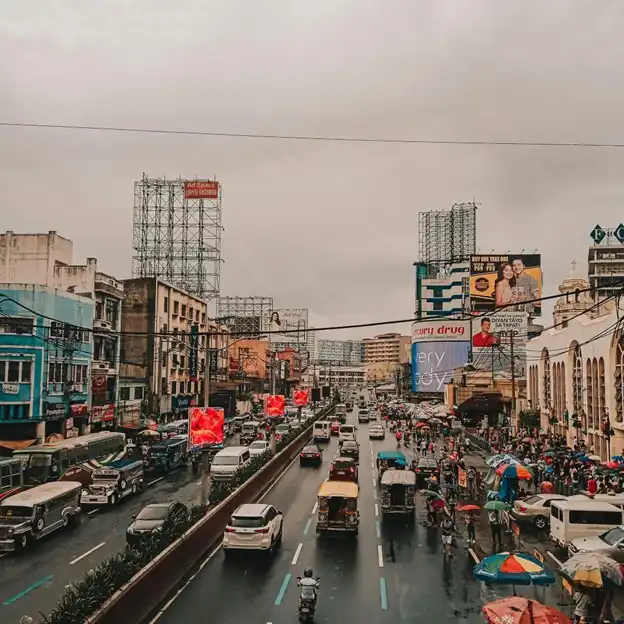
Metro Manila is often cited as an example of urban dysfunction, marked by congestion, flooding, fragmented districts, and uneven access to public space. Within architectural and planning circles, however, the prevailing view is more measured.
The city’s condition is generally not attributed to a lack of planning expertise but to systemic constraints that have limited the effectiveness of urban planning over decades.
This understanding is echoed in John Dang’s interview, “40 Years of Urban Planning: What’s Really Wrong With Metro Manila,” where an experienced urban planner reflects on long-term patterns in the city’s development.
When considered alongside broader professional assessments, a consistent theme emerges: Manila’s challenges stem less from missing ideas and more from governance, continuity, and enforcement.
A City That Has Always Had Plans
One of the interview’s central points is that Metro Manila has never lacked urban plans.
From the Burnham Plan in the early 20th century to numerous postwar and contemporary master plans, the city has repeatedly articulated visions addressing transport, land use, housing, and open space.
The problem lies in execution. Many plans were only partially realized, diluted over time, or abandoned altogether as political priorities shifted.
Planning, in this sense, became episodic rather than cumulative. Each new administration introduced a unique framework, often without fully committing to or completing the previous one.
Fragmented Governance at the Metropolitan Scale
Metro Manila does not function as a single planning authority. It is composed of multiple cities and a municipality, each with independent political leadership, budgets, and zoning powers.
Metropolitan agencies exist, but their capacity to enforce unified, long-term strategies across jurisdictions is limited. This fragmentation complicates coordinated planning.
Infrastructure decisions in one city are often made without full alignment with neighboring areas, resulting in disconnected road networks, inconsistent densities, and uneven service provision.
The interview emphasizes that this structural condition undermines even well-conceived metropolitan plans.

Transportation as a Symptom, Not a Cause
Traffic congestion is the most visible manifestation of Manila’s planning issues, but planners typically view it as a consequence rather than a root problem.
Concentrated employment centers, limited affordable housing near jobs, weak mass transit integration, and car-oriented road design all interact to produce congestion.
Addressing traffic in isolation has proven ineffective because it ignores these interrelated factors.
Without coordinated land use, housing, and transport planning across the entire metropolitan area, mobility problems persist regardless of incremental infrastructure improvements.
Changing Use of Urban Space through Digital Access
The pandemic accelerated public acceptance of remote work and digital services, briefly demonstrating how reduced daily travel could ease pressure on urban systems.
While this shift has not been fully sustained or universally adopted, it has altered long-held assumptions about the need for physical presence in work, commerce, and leisure.
As more aspects of daily life move online, ranging from professional services to digital entertainment, bringing classic Filipino card games like Pusoy Dos or Tongits online, some activities no longer require a dedicated urban space or regular travel.
This does not solve congestion or structural planning issues, but it contributes incrementally to reduced demand on dense city centers.
More broadly, it reflects a growing awareness that access, rather than proximity, can shape how people allocate time and move through cities.
The Weak Enforcement of Zoning and Its Eventual Erosion
Zoning regulations and land-use policies exist across Metro Manila, but enforcement has been inconsistent.
Developments often proceed through exemptions, reclassifications, or informal arrangements that undermine long-term planning objectives.
Over time, this weak enforcement erodes the credibility of planning itself. The normalization of incompatible land uses, overcrowding, and infrastructure strain make corrective measures more politically and economically difficult.

Private Development and Uneven Urban Quality
Private developers have played a major role in shaping Manila’s urban landscape.
Areas such as Makati and Bonifacio Global City are frequently cited as examples of coordinated planning, but they function largely as privately managed enclaves rather than integrated components of the wider metropolis.
Districts highlight a broader pattern: planning coherence in Manila prioritizes private capital rather than public coordination.
The result is a city of sharp contrasts, where pockets of order coexist with surrounding areas that lack basic urban amenities.
Informality, Housing, and Environmental Risk
Informal settlements are commonly framed as planning failures, yet contemporary planners increasingly recognize them as responses to structural housing shortages and job accessibility.
Relocation efforts that ignore livelihoods and commuting realities have historically struggled, reinforcing the need for integrated social and spatial strategies.
Environmental vulnerability further complicates planning efforts. Flooding, heat stress, and climate risk intensify due to development on floodplains, loss of natural waterways, and limited green space.
While resilience has gained prominence in recent planning discourse, existing urban conditions constrain large-scale corrective action.
A Case Study in Constraint-Driven Urbanism
Taken together, the interview and broader professional discourse suggest a reframing of responsibility.
Manila’s challenges are not primarily the result of poor planning knowledge but of limited institutional continuity and weak implementation. Plans exist, but the systems required to sustain them over decades remain fragile.
For architects and urban planners, Manila continues to be viewed as a case study in constraint-driven urbanism as a city that shows what happens when governance, policy, and enforcement are misaligned.
Its experience underscores a fundamental lesson: effective urban planning depends not only on vision but also on the capacity to carry that vision forward over time.
Comments on this guide to Metro Manila poor urban planning, Philippines city system article are welcome.
Philippines Architecture Design
The Philippines Architecture Designs – chronological list
Philippines Architecture Designs – selection on e-architect:
BWDC Residential Tower Manila Apartment Building
Design: Foster + Partners

image : Foster + Partners
La Salle Church Binan City Building
++
Property
Residential Architecture
Comments / photos for the Explaining Metro Manila poor urban planning, Philippines city system page welcome