Jinhui He – Integrating Technology, Sustainability, and User-Centered Design
10 November 2025
Author: Adrian Welch
About Jinhui:
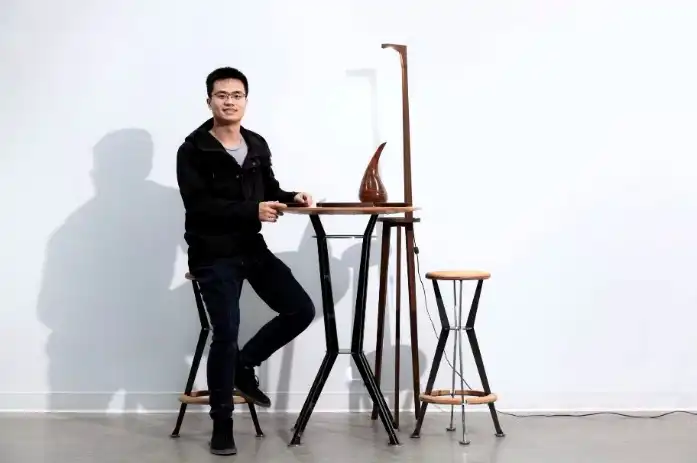
Jinhui He, AIA, LEED AP BD+C, is a Seattle-based architect, designer, independent artist, and Associate at ZGF Architects with degrees from the University of Michigan and Chongqing University. His architectural art practice centers on user-focused design, environmental sustainability, and technology-driven delivery that elevates architecture as a creative art form. He received DNA Paris Design Awards Winner (2025) and MUSE Design Awards Platinum Winner (2023).
His previous experience at TEG Design, CSWADI, and SCB showcases versatility from award-winning exhibitions and restaurants to large institutional facilities, while serving as jury member for the Global Awards Community demonstrates his standing as a leading figure in the field. As co-founder of ArchiCopilot, he advances computational design, robotics, and fabrication, demonstrating original contributions of major significance and recognition as prominent, renowned architect and designer.
Design Philosophy
User-Focused Design
He employs a methodology prioritizing end-user needs before design begins, using empathy to inform conceptual development and artistic expression. This ensures spatial compositions and adjacencies respond to how occupants experience and connect with spaces. He researches user groups, workflows, and behavioral patterns to develop designs enhancing productivity, comfort, and well-being through artistic interventions.
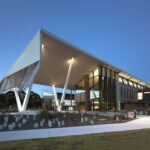
In healthcare projects like the NIH Surgery, Radiology and Laboratory Medicine Building, clinical workflows and patient safety informed decisions from equipment placement to infection control. At Bee’s Trattoria, He’s artistic vision created spatial sequences blurring interior-exterior boundaries through sculptural wood slat installations. This philosophy balances functional requirements with experiential qualities resonating on practical and emotional levels.
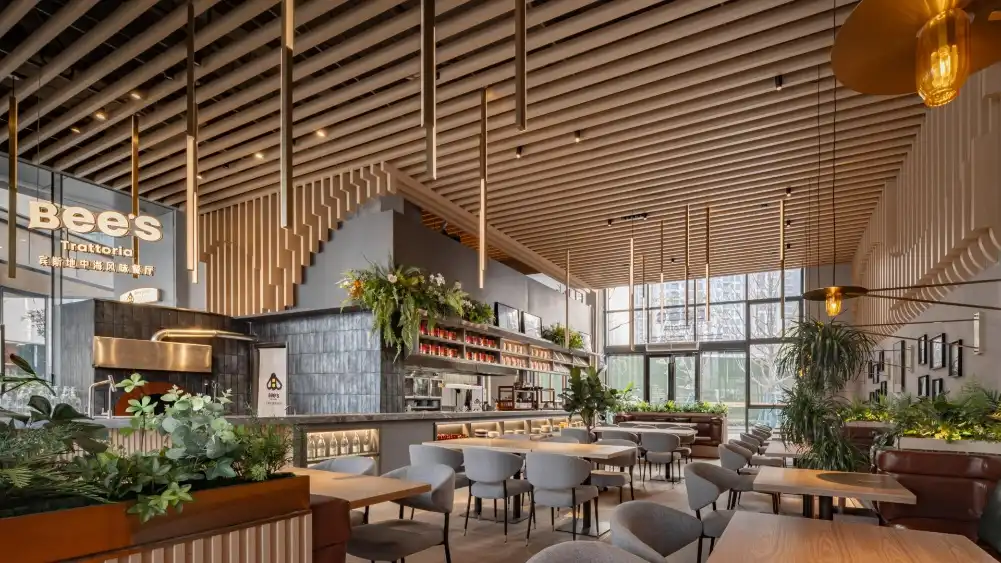
(Image of Bee’s Trattoria Restaurant)
Environmental Sustainability
Sustainability operates as foundational artistic principle, integrating environmental considerations from conceptual massing through material specification. He employs parametric modeling and computational design to test iterations against climate data, enabling real-time feedback on energy performance, daylighting, and envelope thermal characteristics. His building exterior performance toolkit, developed using Rhino SDK, Grasshopper, and Python, demonstrates mastery of artistic and technical domains.
As LEED AP BD+C designer, He applies holistic frameworks addressing site ecology, water efficiency, energy optimization, materials selection, and indoor environmental quality as interconnected systems. His sustainable delivery station template demonstrates how standardized strategies—passive design, prefabricated low-carbon components, and streamlined workflows—achieve scalability without compromising excellence.
Economic Value Through Design
He’s artistic approach balances high-performance solutions with economic viability through life-cycle thinking, recognizing design decisions affect construction costs, operational expenses, and cultural value. This particularly informs mission-critical facilities like data centers and energy plants, where operational efficiency impacts client returns through innovative interventions. He employs value engineering as optimization, identifying strategic investments delivering disproportionate aesthetic and performance benefits.
Through prefabrication strategies informed by DfMA principles, He coordinates design and construction technology to reduce waste, accelerate timelines, and improve quality while maintaining artistic integrity. His experience from institutional facilities at ZGF to award-winning hospitality and exhibition projects at TEG Design demonstrates versatility in calibrating ambition to budget realities.
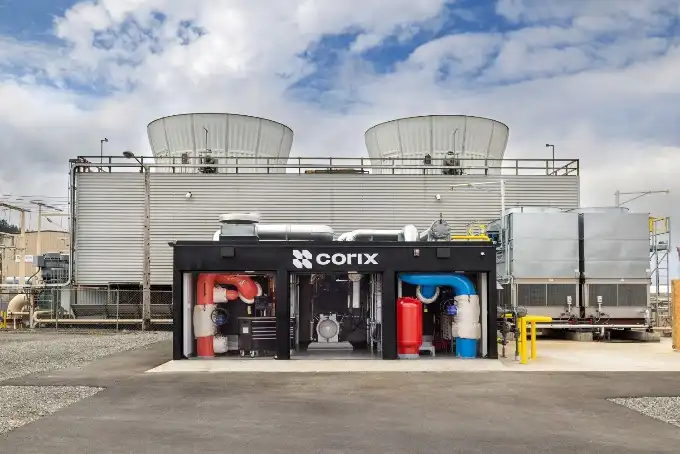
(Image of Bellingham District Energy Utility)
Design Methodology
BIM Leadership and Integration
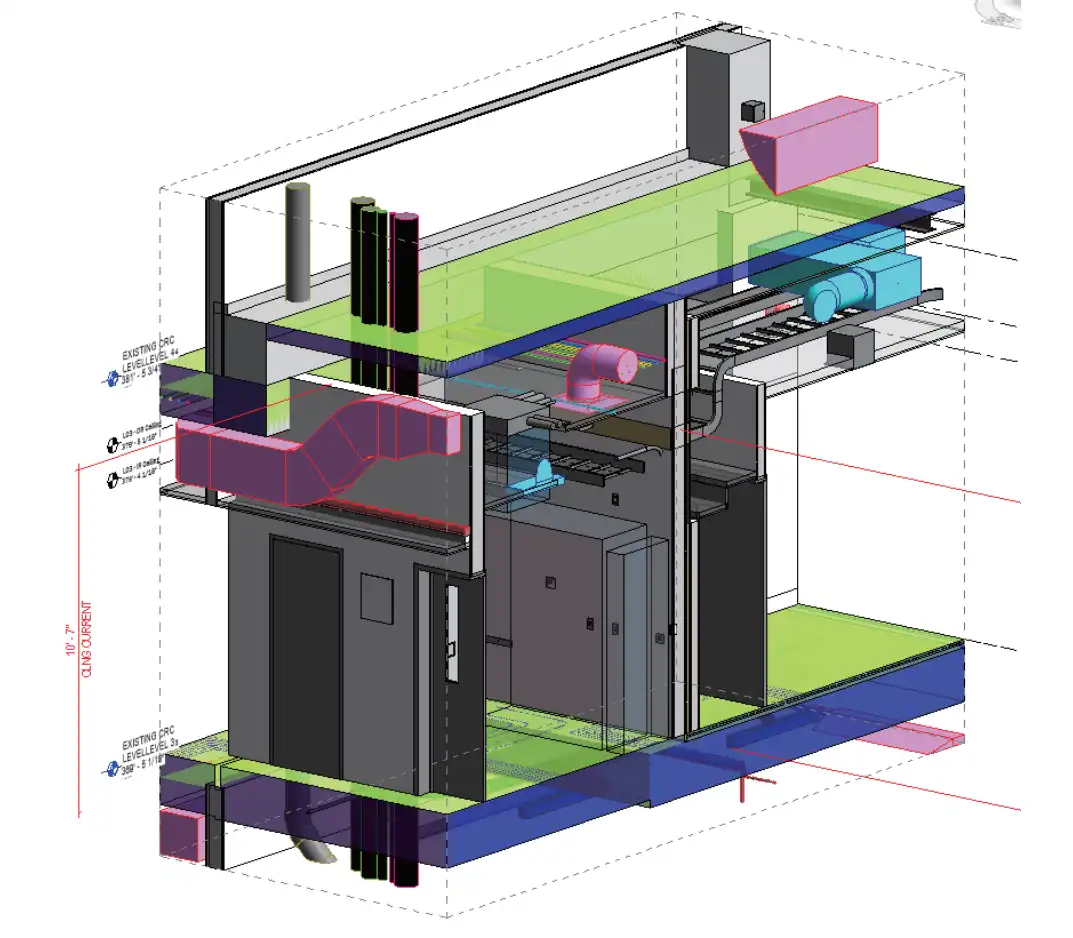
He’s BIM methodology extends beyond software proficiency to strategic thinking about how digital coordination transforms workflows and enables complex artistic visions. He establishes BIM as the central platform integrating architectural, structural, and MEP disciplines, enabling clash detection, quantity takeoffs, and sequencing that reduce conflicts while preserving design intent. His leadership involves evaluating collaboration infrastructure—cloud platforms like ACC versus local hosting—based on team capabilities and complexity.
He establishes BIM execution plans defining LOD progression, model ownership protocols, and coordination cadences tailored to project requirements. On the NIH facility, federated model coordination in Navisworks enabled systematic conflict identification before construction, ensuring the designer’s vision translated to built form. His experience developing computational tools using Dynamo demonstrates how customization enables sophisticated artistic expression.
Research-Driven Sustainability
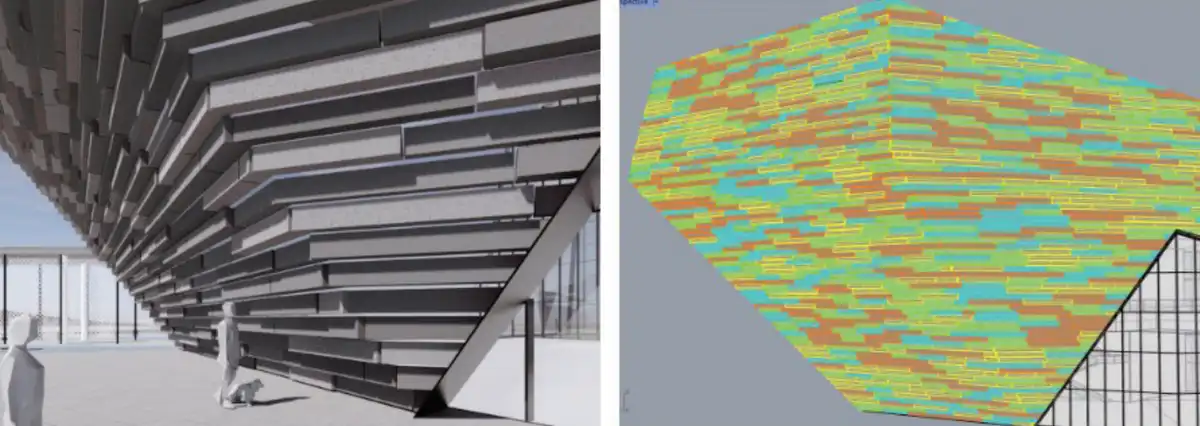
He treats sustainability as measurable science requiring validation through quantitative analysis. This integrates building performance simulation early, using energy modeling to test envelope assemblies, daylighting studies to optimize glazing ratios, and U-value calculations to validate thermal performance. By establishing performance benchmarks during schematic design, this methodology ensures sustainability commitments translate to outcomes without compromising artistic vision.
His computational toolkit parametrically links design variables—window-to-wall ratios, orientation, shading depths—to environmental outputs like energy consumption and daylight autonomy. This real-time feedback enables iteration where aesthetic and performance considerations evolve simultaneously. His work applying Grasshopper Python scripting to high-rise envelope design at SOM demonstrates sustained commitment to methodologies enhancing environmental performance and architectural artistry.
Looking Forward
He continues advancing architecture as art through three commitments addressing human, economic, and technological dimensions. His user-focused design prioritizes healthier spaces enhancing occupant well-being through artistic spatial interventions.
His commitment to economic value catalyzes local development by prioritizing local resources and trades, with adaptive reuse ensuring resources remain within communities while reducing embodied carbon. Through design technology leadership as co-founder of ArchiCopilot, He explores how computational design, robotics, and fabrication enhance creative efficiency, with advanced BIM coordination enabling faster execution that amplifies positive outcomes for people, communities, and the environment while elevating architecture’s artistic potential.
Comments on this guide to Jinhui He: Integrating Technology, Sustainability, and User-Centered Design article are welcome.
Home Design
Property Posts
How emergency plumbers stop structural damage

Comprehensive real estate title search services
++
Building
Residential Property
Comments / photos for the Jinhui He: Integrating Technology, Sustainability, and User-Centered Design page welcome.