Industrial Cooling in Modern Commercial Architecture is Important
post updated 30 September 2026
Modern commercial buildings are designed to do more than simply provide space. They are built to meet the demands of energy efficiency, sustainability, comfort, and long-term operational reliability. One of the elements that often goes unseen, but plays a central role in achieving these goals, is industrial cooling. From offices and shopping centres to manufacturing facilities and hospitals, effective cooling systems are shaping how commercial architecture is approached today.
30 September 2025
Why Cooling Matters in Commercial Buildings
Every commercial building generates heat, whether through people, lighting, electronics, or machinery. Without cooling, indoor spaces would quickly become uncomfortable, productivity would suffer, and sensitive equipment could be damaged. This is why industrial cooling solutions are not simply a finishing touch, but a core feature of architectural planning.
Industrial cooling systems go beyond the needs of residential air conditioning. They are designed to handle larger loads, regulate temperatures across wide areas, and support the infrastructure of high-demand environments. By integrating these systems into the architectural framework, designers can create spaces that perform well under pressure and adapt to the unique requirements of their occupants.
Supporting Modern Design Trends
In recent years, commercial architecture has leaned towards open-plan layouts, glass-heavy façades, and multi-functional spaces. While these designs offer style and flexibility, they also introduce fresh challenges in temperature control. Glass surfaces, for example, absorb and release heat at a much faster rate than solid walls. Open plans can make it harder to regulate temperature evenly.
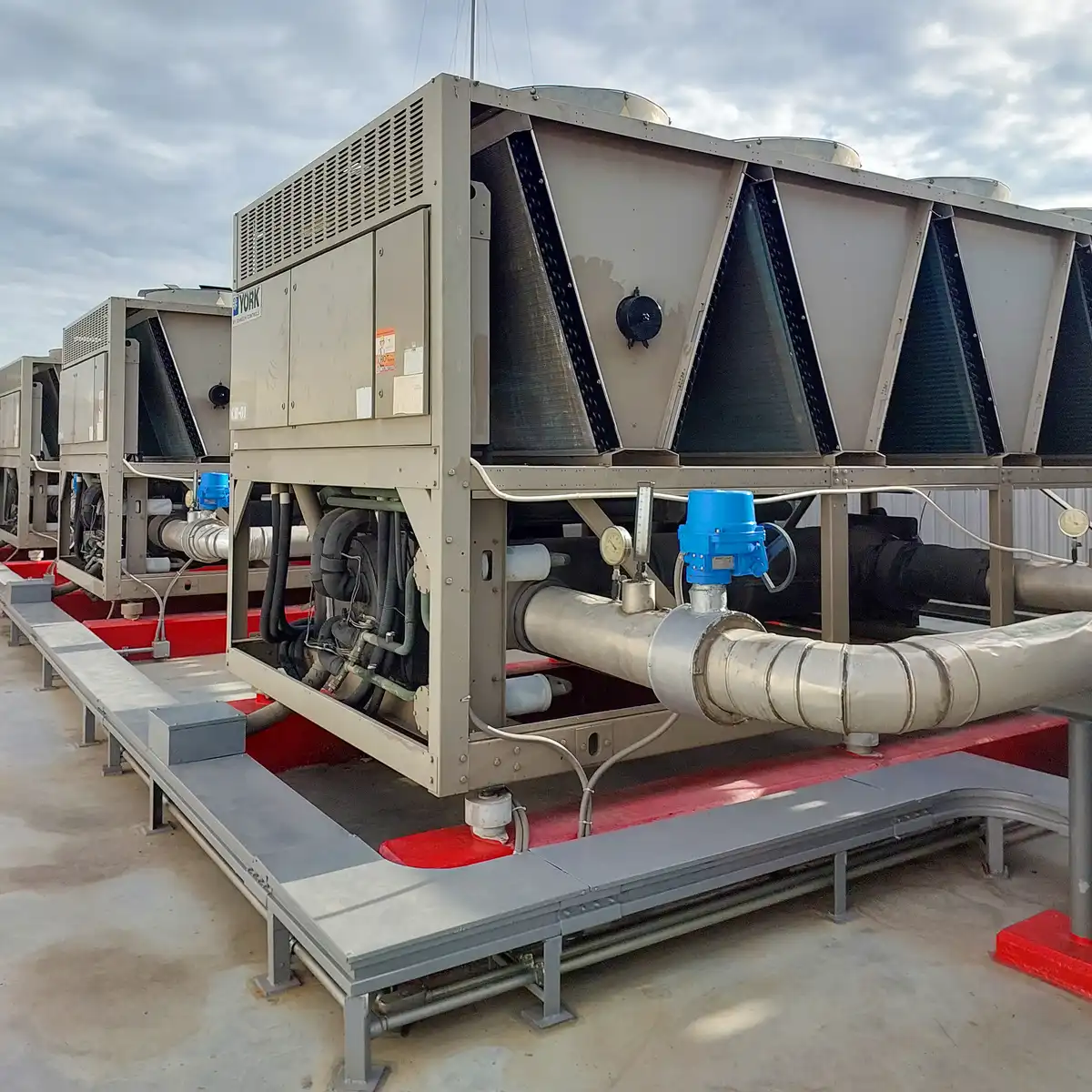
Industrial cooling systems make these trends possible. By using advanced chillers such as air-cooled, water-cooled, or glycol units, architects can create comfortable environments even in designs that would otherwise be difficult to manage. Cooling is not a barrier to creativity but a partner in enabling it.
Energy Efficiency and Sustainability
One of the biggest pressures on modern architecture is sustainability. Businesses want buildings that reduce their environmental impact and help manage long-term costs. Cooling systems are central to this effort.
Energy-efficient chillers can significantly reduce the amount of electricity used, especially when paired with smart controls that adjust output based on demand. Water-cooled chillers, for instance, are often chosen for their ability to deliver high performance with lower energy use in larger projects. Similarly, heat pumps can provide both cooling and heating, reducing the need for separate systems and helping buildings reach ambitious sustainability targets.
By integrating efficient cooling technologies into the structure of a building, architects and engineers can balance environmental responsibility with practical performance.
Comfort and Productivity
The quality of an indoor environment has a direct effect on those who use it. In offices, comfortable temperatures support productivity and reduce complaints. In retail spaces, a pleasant atmosphere keeps customers browsing for longer. In healthcare settings, controlled cooling is a matter of safety, helping protect patients and equipment.
Modern cooling systems are designed with these outcomes in mind. They regulate temperatures consistently, reduce humidity where necessary, and support air quality. By placing industrial cooling at the centre of design planning, architects can deliver buildings that people genuinely enjoy spending time in.
Meeting the Demands of Industry
Not all commercial buildings are designed just for people. Many house processes, machinery, and technology that cannot function without reliable cooling. Data centres are an obvious example, as servers generate vast amounts of heat that must be managed to prevent downtime. Food and beverage facilities also depend on precise temperature regulation to protect product quality. Manufacturing plants need cooling to keep production lines running smoothly and safely.
In these cases, cooling is more than an architectural support system. It is the backbone of operations. Industrial chillers, whether air-cooled, water-based, or glycol-powered, provide the strength and flexibility to meet these demands. By designing buildings with cooling at their heart, industries can rely on facilities that never compromise on performance.
Flexibility for the Future
Commercial buildings are long-term investments, and their design needs to take into account how they may be used in the decades ahead. >Water cooling systems play an important role here too. Modular chiller units and scalable technologies allow for expansion or reconfiguration as businesses grow or change direction.
This adaptability is particularly valuable in sectors such as manufacturing, where equipment and processes evolve quickly. By planning for flexible cooling, architects give buildings the ability to remain relevant, useful, and efficient for far longer than if systems were fixed and unchangeable.
A Silent Partner in Architecture
The most impressive commercial buildings are often remembered for their design, their size, or their innovative use of materials. Yet much of their success depends on elements that are less visible. Cooling systems are rarely the star of the show, but they make everything else possible.
By supporting energy efficiency, enabling modern design trends, improving comfort, and meeting industrial demands, cooling proves its importance time and time again. For architects, developers, and business owners, the lesson is clear. Industrial cooling should not be seen as an afterthought but as a central part of modern commercial architecture.
Comments on this The Importance of Industrial Cooling in Modern Commercial Architecture article are welcome.
Air Conditioners
Buildng AC Installations – Property Air Conditioners Posts
6 reasons why ducted air conditioning installation are best
AC repair Easton, PA: home air conditioning in Pennsylvania
AC Replacement and Installation in Lexington KY
++
Building Designs
Architecture Articles
Comments / photos for the The Importance of Industrial Cooling in Modern Commercial Architecture page welcome