Layered Lighting: How to Light Every Room in Your Home Guide
23 September 2026

Good home lighting is rarely produced by a single fixture. Different activities need different kinds of light, and the most comfortable rooms allow those sources to work together. Layered lighting creates that flexibility by combining general illumination, focused task light, and selective accent or decorative sources.
Quick Answer: Start every room with enough ambient light to move around comfortably. Add task lighting exactly where activities happen, then use accent or decorative fixtures to create depth and character. Not every room needs every layer; each fixture should have a clear job.
The Core Layers of Home Lighting
| Layer | What It Does | Examples |
| Ambient | Provides general visibility | Ceiling fixtures, recessed lights, floor lamps |
| Task | Supports a specific activity | Desk lamps, under-cabinet lights, vanity lights |
| Accent | Highlights a feature | Picture lights, directional spots, shelf lighting |
| Decorative | Adds style and can contribute light | Chandeliers, pendants, statement sconces |
KB Authority’s lighting collection includes fixture categories that can support each layer.
How to Build a Layered Lighting Plan
- Identify what people do in the room.
- Establish the general ambient layer.
- Add task lighting to work, reading, grooming, or food-preparation areas.
- Use accent light only where there is a feature worth emphasizing.
- Choose decorative fixtures in proportion to the room and furniture.
- Put useful layers on separate controls where practical.
Living Room Lighting
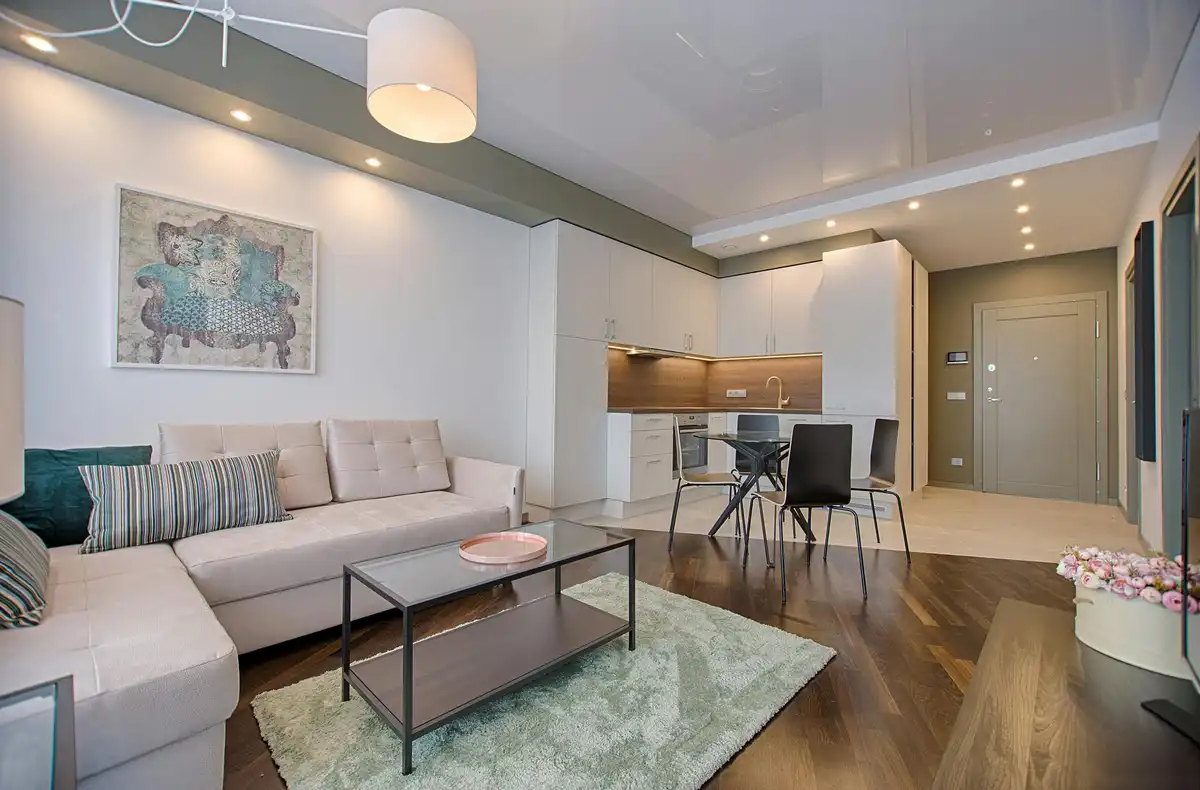
Living rooms often need the most flexibility because the same space may be used for conversation, reading, television, entertaining, and cleaning. One bright ceiling source rarely handles all of those activities well.
- Ambient: ceiling fixture, recessed lighting, or floor lamps
- Task: reading lamp beside a chair or sofa
- Accent: artwork, shelves, or architectural details
- Decorative: chandelier, pendant, or statement lamp
Kitchen Lighting
Kitchen lighting should prioritize work surfaces. General ceiling light helps with movement, but counters, sinks, ranges, and islands often need focused illumination.
| Kitchen Area | Useful Layer | Typical Approach |
| General floor area | Ambient | Ceiling or recessed lighting |
| Counters | Task | Under-cabinet lighting |
| Island | Task + decorative | Pendants or linear fixture |
| Display shelving | Accent | Integrated or directional light |
| Dining nook | Ambient + decorative | Pendant or chandelier |
For a room-specific example, see Kitchen Lighting Ideas to Transform Your Space.
Bedroom Lighting
Bedrooms benefit from a calmer hierarchy. General light supports dressing and cleaning, while bedside lamps or sconces provide focused reading light. Separate controls can prevent the entire room from needing to be brightly illuminated at night.
Bathroom Lighting
Bathrooms need both general visibility and careful task lighting at the mirror. Larger rooms may also require lighting for shower, tub, or circulation zones. Because moisture is present, fixture suitability must be checked for the intended location.
Dining Room Lighting
The dining fixture often becomes the visual center of the room. Its scale should relate to the table and ceiling, but the room may still need supplemental ambient light so the surrounding space does not disappear when the central fixture is dimmed.
Home Office Lighting
A home office needs comfortable general light plus task lighting that supports reading, writing, and screen work without creating distracting glare. Positioning matters as much as brightness.
- Use a desk lamp for focused work
- Avoid strong reflections on monitors
- Use ambient light to reduce contrast between the screen and room
- Take advantage of daylight without placing the screen directly in glare
Foyer and Hallway Lighting
Entry areas need enough light for safe movement while also setting the visual tone for the home. In taller foyers, fixture scale becomes especially important.
For entry spaces, compare options in KB Authority’s foyer lighting category.
Layered Lighting by Room
| Room | Ambient | Task | Accent / Decorative |
| Living room | Ceiling or floor lamps | Reading lamps | Artwork, shelves, statement fixture |
| Kitchen | Ceiling/recessed | Counters and island | Pendants, display lighting |
| Bedroom | Ceiling or lamps | Bedside reading | Decorative sconces |
| Bathroom | Ceiling/recessed | Vanity mirror | Niche or decorative light |
| Dining room | Chandelier/pendant | Serving area if needed | Wall or artwork lighting |
| Office | Ceiling/floor lamp | Desk lamp | Shelf or artwork lighting |
| Foyer | Ceiling fixture | As needed | Statement chandelier/sconce |
Common Layered-Lighting Mistakes
- Using one bright source for the entire room
- Adding decorative fixtures without solving task needs
- Over-lighting every surface
- Ignoring glare and fixture sightlines
- Choosing fixtures before understanding furniture placement
- Putting every light on one control
- Using accent lighting without a clear focal point
If you want to understand the foundational layer first, read What Is Ambient Lighting?.
Final Takeaway
Layered lighting is successful when the room can adapt. Start with general visibility, add focused light where people actually perform tasks, and use accent or decorative sources to shape the atmosphere. The goal is not more fixtures; it is a better reason for every fixture that is installed.
Frequently Asked Questions
What are the three main layers of lighting?
Ambient, task, and accent lighting are the three core layers. Decorative fixtures can also contribute to one or more of them.
Does every room need all three layers?
No. A simple room may need only ambient and task light. Add layers based on activities and design needs.
What is the difference between task and accent lighting?
Task lighting helps someone perform an activity, while accent lighting emphasizes a feature or creates visual depth.
Can lamps be used as ambient lighting?
Yes. Floor and table lamps can contribute useful general illumination depending on their shades, placement, and output.
Should all fixtures match?
No. Coordinating scale, finish, shape, or design language can create cohesion without making every fixture identical.
Why are separate lighting controls useful?
They let the room change with the activity and time of day instead of forcing every fixture to operate at once.
Comments on this guide to Layered lighting: how to light every room in your home article are welcome.
Home Lighting Articles
House Lighting Posts
Getting your home filled with light
How Lighting Influences Mood and Productivity
How to Use Lighting, Space and Material in Architectural Design

++
Building Articles
Residential Architecture
Comments / photos for the Layered lighting: how to light every room in your home page welcome