
The rug as a functional layer in today’s flexible living spaces
5 May 2026

How a Luxury Rug Transforms a Room: The Interior Designer’s Guide to Choosing the Right Piece
There is a moment in every well-designed room when everything clicks. The furniture feels balanced, the light falls correctly, and the space has a coherence that is difficult to articulate but immediately felt. Knowing how to use a luxury rug in a room is often the difference between a space that looks assembled and one that feels truly designed.
Yet the rug is still, for many people, an afterthought. Something selected once the walls have been painted, the sofa delivered, and the curtains hung.
The most accomplished interior designers work in precisely the opposite direction: the rug comes first, and everything else follows.
The Rug as the Starting Point, Not the Final Touch
Ask any experienced interior designer where they begin, and a surprising number will say: the rug.
Why? Because a rug is the largest horizontal surface in a room. Its colour, pattern, and texture radiate outward and influence every other decision that follows.
Why choosing the rug first makes everything easier
- It sets the colour palette for walls, upholstery, and accessories
- It defines the scale of the room before furniture is placed
- It anchors zones in open-plan spaces, giving each area a clear identity
- It prevents costly mismatches between flooring and soft furnishings
- It gives you a starting point for bespoke decisions, from curtain fabric to paint colour
When you choose the rug last, you are forced to find something that fits around dozens of decisions already made. When you choose it first, you give yourself freedom and coherence.
A luxury hand-knotted rug is not a background element. It is a statement of intention, as considered as any piece of art hung on the wall.
Why Hand-Knotted Rugs Are in a Class of Their Own
Understanding how a rug is made changes how you see it
Not all rugs are equal, and the difference goes far beyond aesthetics. The construction method determines how a rug wears, how it feels underfoot, and whether it is a purchase or a long-term investment.
Here is how the three main types compare:
| Type | How it is made | Durability | Best for |
| Hand-knotted | Individual knots tied by hand on a loom | Exceptional, lasts generations | Luxury interiors, investment pieces |
| Hand-tufted | Yarn punched through canvas with a tufting gun | Moderate, backing deteriorates | Mid-range projects |
| Power-loomed | Machine-produced | Lower, prone to crushing | Budget interiors |
The gold standard is hand-knotting. Skilled artisans work on a wooden loom, tying individual knots of wool or silk around cotton warp threads, row by row.
A single rug measuring 300 x 240 cm can take over six months to complete and contain more than one million hand-tied knots. The result is a structure of extraordinary density and resilience.
The word “handmade” is frequently misleading in the rug market. It is a loose term that may cover anything from hand-knotted pieces to hand-tufted ones. Before purchasing, always ask specifically: is this hand-knotted?
Materials matter as much as method
Within hand-knotted rugs, the choice of material shapes the final character of the piece:
- Wool is the most practical choice. It is resilient, naturally stain-resistant, and has a warmth that synthetic fibres cannot replicate.
- Silk introduces a luminous sheen and extraordinary detail, but is more delicate and better suited to lower-traffic areas.
- Wool and silk combined is where many of the finest luxury rugs sit. Wool forms the primary pile for durability; silk acts as a highlight, catching the light and defining intricate motifs. The contrast between matt and sheen can be quietly spectacular.
Scale and Proportion: The Most Common Mistake
Getting the size wrong undermines everything else
The most frequent error in rug selection is choosing a piece that is too small. A rug that floats in the middle of a seating arrangement, touching nothing, reads as indecisive and makes the furniture feel unmoored.
Size is not decorative. It is structural.
Quick guide to rug sizing by room
Living room
At least the front legs of the sofa and armchairs should rest on the rug. This visually connects the seating group and gives the arrangement a sense of intention. In larger spaces, all four legs of each piece of furniture can sit fully on the rug.
Dining room
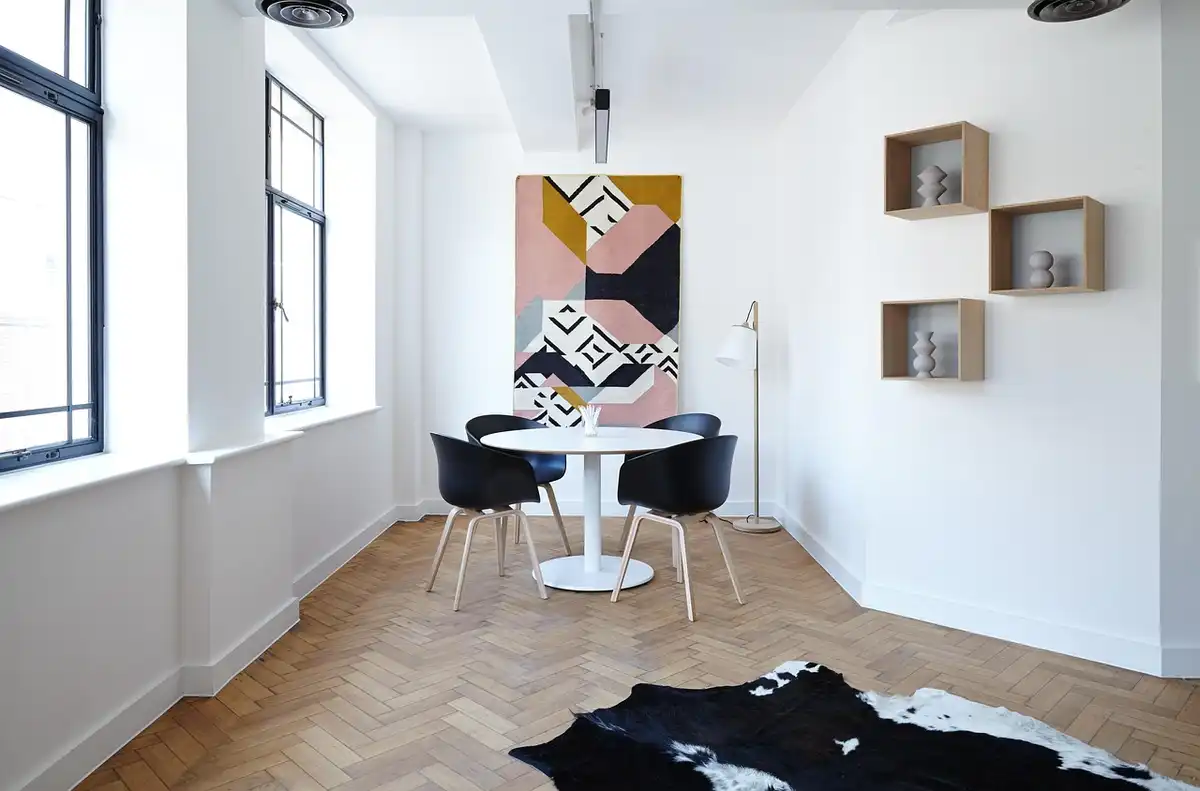
The rug must extend far enough that chairs remain on it even when pulled back from the table. A rug that chair legs scrape off as guests sit down is both impractical and visually disruptive. Allow at least 60 cm beyond the table on each side.
Bedroom
A generous rug placed beneath the bed, extending at least 60 cm on either side, creates a sense of comfort that narrow runners along the sides can never quite match.
When in doubt: go up a size. A rug that is slightly too large is a far easier problem to live with than one that is too small.
Colour and Pattern: Anchoring Versus Transforming
The rug can lead or follow, but it must do one clearly
A luxury rug presents two distinct design opportunities:
- A neutral foundation. A stone, ivory, or warm grey ground that allows furniture and art to speak. The interest comes from texture and pile, not from pattern.
- The centrepiece of the room. The boldest element, from which the surrounding palette is drawn. Identify two or three colours within the rug and echo them in upholstery, cushions, and accessories.
Both approaches work well. What does not work is a rug that attempts to do neither.
When working from a neutral palette, a rug with a subtle geometric or tonal weave introduces depth without competing with other elements.
When the rug leads the room, build everything outward from it. Let it set the mood before a single piece of furniture is chosen.
Layering rugs: a considered approach to depth
Layering is one of the more interesting directions in contemporary luxury interiors. The principle is simple: a smaller, patterned rug placed on top of a larger, plainer one.
Done well, it introduces texture and pattern without committing to a single large statement piece. The key considerations are:
- Different scales of pattern between the two rugs
- Contrasting textures (a natural jute beneath a hand-knotted Oushak, for instance)
- A clear difference in pile height so the layering reads as intentional
The Bespoke Route: When Ready-Made Is Not Enough
A bespoke rug is more achievable than most people assume
For projects with specific spatial or aesthetic requirements, a bespoke commission is often the most practical solution, as well as the most satisfying.
The process typically works in stages:
- Recolouring an existing design to match a specific palette. The fastest and most cost-effective bespoke option.
- Adjusting size and composition of an existing pattern to fit exact room dimensions.
- Creating a design from scratch, starting from a client’s own reference: a piece of fabric, a painting, an architectural detail, or a mood board.
For interior designers and architects, this kind of collaborative approach transforms the rug from a sourced element into an original, site-specific work. Proportions are exact. No compromises on size, and no adjustments to the furniture layout to accommodate a standard dimension.
The key is finding a studio with both the design expertise and the craft infrastructure to see the process through from concept to finished piece. That combination is rarer than it sounds.
London-based Bazaar Velvet specialises in luxury rugs that are hand-knotted to the highest standard, working with both private clients and trade professionals worldwide. With over thirty years of experience, their in-house design team handles everything from simple recolouring to complex commissions created entirely from scratch. Their showroom holds hundreds of pieces across two floors, and their home viewing service brings a curated selection directly to the client’s space for viewing in situ.
For anyone navigating a bespoke project, this kind of end-to-end service removes the guesswork entirely and ensures the final piece is as considered as every other element in the room.
Rugs Across Interior Styles
The right rug works with any aesthetic, if chosen correctly
Contemporary and minimalist interiors
These benefit most from rugs that offer texture over pattern. A plain, high-pile wool rug in a warm neutral adds softness and warmth without visual noise. Subtle geometric weaves work equally well: enough structure to feel intentional, quiet enough to recede.
Classic and traditional spaces
The natural home of hand-knotted oriental and antique rugs. A genuine Persian or Turkish piece brings the kind of depth and character that no new rug, however well-made, can fully replicate. Each antique rug is unique, carrying a design history that connects a contemporary interior to something much older and more layered.
Eclectic and maximalist rooms
Here the rug can be a vivid focal point: a large abstract piece in jewel tones, or a vintage kilim used as the chromatic anchor for a room full of collected objects and contrasting textures. Layering is particularly at home in these spaces.
Mid-century modern interiors
Geometric rugs in warm ochres, terracotta, and deep teal echo the era without becoming pastiche. Look for strong repeat patterns with a restrained palette.
Caring for a Luxury Investment
A well-made rug, properly maintained, lasts generations
One of the most compelling arguments for investing in a hand-knotted rug is longevity. A quality piece, properly cared for, does not merely last decades. It can last lifetimes, improving in character with age in ways that machine-made rugs simply cannot.
The essentials of care are straightforward:
- Rotate the rug every six to twelve months to prevent uneven wear, particularly in areas of directional foot traffic
- Blot spills immediately, working from the outside of the stain inward and never rubbing
- Use a quality rug pad to prevent slippage, reduce pile wear, and add cushioning underfoot
- Arrange professional cleaning for deep cleans rather than domestic shampooing; wool and silk respond differently to chemicals
- Limit direct sunlight on silk rugs, which can fade the fibre over time
Wool, by contrast, is remarkably resilient: naturally resistant to dirt and moisture, with a pile that recovers well from compression. For most living spaces, a wool or wool-and-silk rug is the most practical luxury investment available.
The Final Word
A luxury rug is not a finishing touch. It is, in the truest sense, a foundation: the element from which a room’s character, warmth, and coherence grow.
Chosen well, it outlasts every other piece in the space. Chosen carelessly, it undermines them all.
Whether you are beginning a room from scratch, rethinking an existing scheme, or commissioning something entirely bespoke, a genuinely well-made rug is one of the most enduring decisions a space can contain. The floor is where everything begins.
Comments on this guide to How a luxury rug transforms a room article are welcome.
Rugs
Rugs Posts
Why area rugs are essential for home design
How To Decorate Your Home With Rugs
Rugs in interior design: ways to uplift a room
++
Building Articles
Residential Architecture
Comments / photos for the How a luxury rug transforms a room advice guide page welcome.


