Heritage House Underpinning with No Street Closure in Toronto
28 October 2025
When heritage structures require structural intervention, the challenge intensifies exponentially. A recent Toronto project demonstrates how modern basement underpinning services can breathe new life into century-old architecture while preserving its historical integrity. This particular case study showcases comprehensive basement underpinning solutions that achieved remarkable results without disrupting neighborhood traffic flow or compromising the building’s historic character.
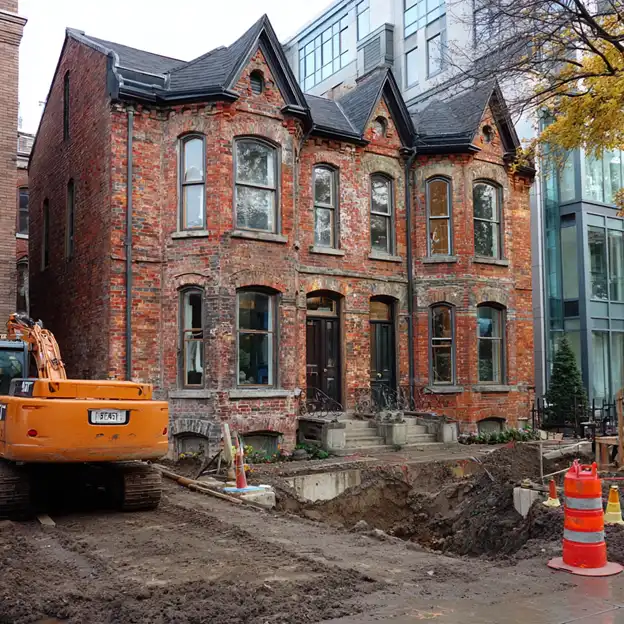
Like a surgeon performing delicate work on a living patient, this Toronto intervention required precision, expertise, and an understanding that every brick and timber told a story worth preserving. The project team managed to lower the basement floor nearly three feet while maintaining the home’s original 1890s facade and load-bearing walls. Even more impressive was their achievement of underground transformation through smart basement underpinning without closing a single street or disrupting neighboring properties.
The Challenge of Historic Fabric
Toronto’s architectural heritage represents more than aesthetic appeal. These structures embody construction methodologies from eras when craftsmanship reigned supreme and materials were selected for longevity rather than speed. The heritage house in question featured traditional stone foundations, hand-hewn timber beams, and masonry techniques that modern builders rarely encounter. Historic preservation architecture demands respect for original materials while incorporating contemporary structural understanding.
Working within these parameters meant the underpinning team couldn’t simply follow standard protocols. They needed to understand how 19th-century builders approached foundation work, recognize the inherent strengths and weaknesses of period construction, and develop intervention strategies that honored both. Think of it as conducting a conversation between centuries, where modern engineering speaks respectfully to Victorian craftsmanship.
The homeowners wanted additional ceiling height for their basement level, transforming it from a cramped storage area into functional living space. However, the property’s heritage designation meant any work required approval from municipal heritage committees, architectural review boards, and building officials simultaneously concerned with preserving history and ensuring safety.
Engineering Solutions Without Disruption
Traditional underpinning projects often require excavation equipment, material delivery trucks, and waste removal vehicles that necessitate street closures or parking restrictions. This Toronto project took a different approach entirely. The engineering team designed a methodology that operated exclusively from within the property boundaries, utilizing smaller equipment that could navigate through existing doorways and corridors.
Rather than excavating the entire basement simultaneously, which would have destabilized the structure, the team implemented a segmented approach. They worked in carefully calculated sections, typically spanning two to three feet at a time. Each section received temporary shoring before excavation began, ensuring the foundation above remained fully supported throughout the process.
This methodical progression resembled assembling a complex puzzle where removing one piece required securing all adjacent pieces first. The technique demanded more time than conventional methods but delivered two crucial advantages: zero impact on neighborhood traffic patterns and minimal disruption to the heritage structure itself. The work proceeded without generating the typical construction chaos that makes residents dread renovation projects.
Preserving Character While Adding Function
The beauty of this particular underpinning lies in its invisibility. Walk through the finished basement today and you encounter a space that feels entirely appropriate to the home’s age and character, despite being fundamentally transformed. The original stone foundation walls remain exposed in strategic locations, celebrating rather than concealing the building’s history.
Modern waterproofing systems hide beneath historically appropriate finishes. New structural steel supports bear the load while staying concealed within walls and ceilings. The added ceiling height allows for proper HVAC systems, contemporary lighting, and comfortable proportions without announcing their modernity through jarring contrasts.
This approach reflects a sophisticated understanding that heritage preservation doesn’t mean freezing buildings in time like museum pieces. Instead, it means allowing them to evolve and remain relevant while maintaining the qualities that made them architecturally significant in the first place. Your grandmother’s antique table becomes more valuable when it continues serving family dinners rather than gathering dust in storage.
The basement now accommodates a home office, guest suite, and recreation area. Each space benefits from nine-foot ceilings that eliminate the oppressive feeling typical of period basements. Natural light enters through carefully enlarged window wells that respect the home’s exterior proportions while dramatically improving interior ambiance.
Technical Innovation Meets Heritage Sensitivity
Perhaps the most impressive aspect involves how the team addressed moisture management. Historic basements typically suffered from chronic dampness, a problem that conventional solutions often handled through aggressive interventions that damaged original materials. This project instead employed breathable waterproofing systems compatible with heritage masonry, allowing the stone foundation to function as it was designed while preventing water intrusion.
The drainage system incorporates modern weeping tile and sump pump technology discretely integrated into the floor structure. These contemporary elements remain completely hidden, preserving the aesthetic of exposed stone walls and original brick where appropriate. It’s architecture as time travel, where 21st-century comfort systems support 19th-century architectural expression.
Structural engineers calculated loads with extraordinary precision, determining exactly where additional support was necessary and where existing elements remained adequate. This analysis prevented over-engineering, which in heritage work can be as problematic as under-engineering. Adding excessive structural elements often damages historic fabric unnecessarily and compromises the building’s original character.
Neighborhood Integration and Minimal Disruption
Zero street closure wasn’t simply a convenient achievement. In Toronto’s dense heritage neighborhoods, maintaining traffic flow and resident access represents a significant quality-of-life consideration. The project team coordinated material deliveries for early morning hours, used hand-carried supplies wherever possible, and scheduled noisy operations during mid-day periods when neighborhood impact remained minimal.
Neighbors barely noticed the transformation occurring next door. No dumpsters occupied parking spaces. No excavators blocked sidewalks. No concrete trucks idled in residential streets. The work progressed quietly and steadily over several months, demonstrating that significant structural interventions needn’t generate the disruption typically associated with major construction projects.
This consideration extends beyond mere courtesy. In heritage districts, maintaining neighborhood character means preserving not just individual buildings but also the urban fabric connecting them. When construction projects treat context as seriously as individual structures, communities retain the qualities that made them desirable in the first place.
Lessons for Future Heritage Interventions
This Toronto case study offers valuable insights for architects, engineers, and homeowners contemplating similar work. First, heritage constraints don’t prevent meaningful improvements. They simply require more thoughtful approaches than standard construction methodologies.
Second, modern building science can enhance rather than compromise historic structures when applied intelligently. Waterproofing, insulation, mechanical systems, and structural reinforcement all belong in heritage buildings. The key lies in implementation that respects original construction while delivering contemporary performance.
Third, community impact matters. Projects that minimize disruption generate goodwill, satisfy regulatory requirements more easily, and contribute to heritage preservation’s broader goals. When neighbors view heritage work as enhancement rather than annoyance, support for preservation grows organically.
The basement now provides space that increases the home’s functionality and value while preserving everything that made it architecturally significant. Children play in rooms where previous generations stored coal. Home offices occupy spaces once dedicated to preserves and root vegetables. The building continues serving family life just as its original builders intended, albeit in ways they couldn’t have imagined.
Heritage underpinning represents architecture at its most nuanced. It requires understanding history, respecting craftsmanship, applying contemporary knowledge, and maintaining humility about our role as stewards rather than creators. This Toronto project exemplifies all these qualities while demonstrating that heritage preservation and modern functionality aren’t opposing forces. When approached thoughtfully, they become collaborative partners in creating buildings that honor their past while serving their present.
Comments on this Evolution of Toronto Case Study: Heritage House Underpinning with Zero Street Closure article are welcome.
Plumbers Articles
Plumbers Posts
How emergency plumbers stop structural damage
DIY solutions for common plumbing mishaps
How plumbing factors into your new home build
++
Building Articles
Residential Architecture Articles
Comments / photos for the Toronto Case Study: Heritage House Underpinning with Zero Street Closure page welcome