8 Design Essentials for a Successful Ghost Kitchen
post updated 10 September 2026
10 September 2025
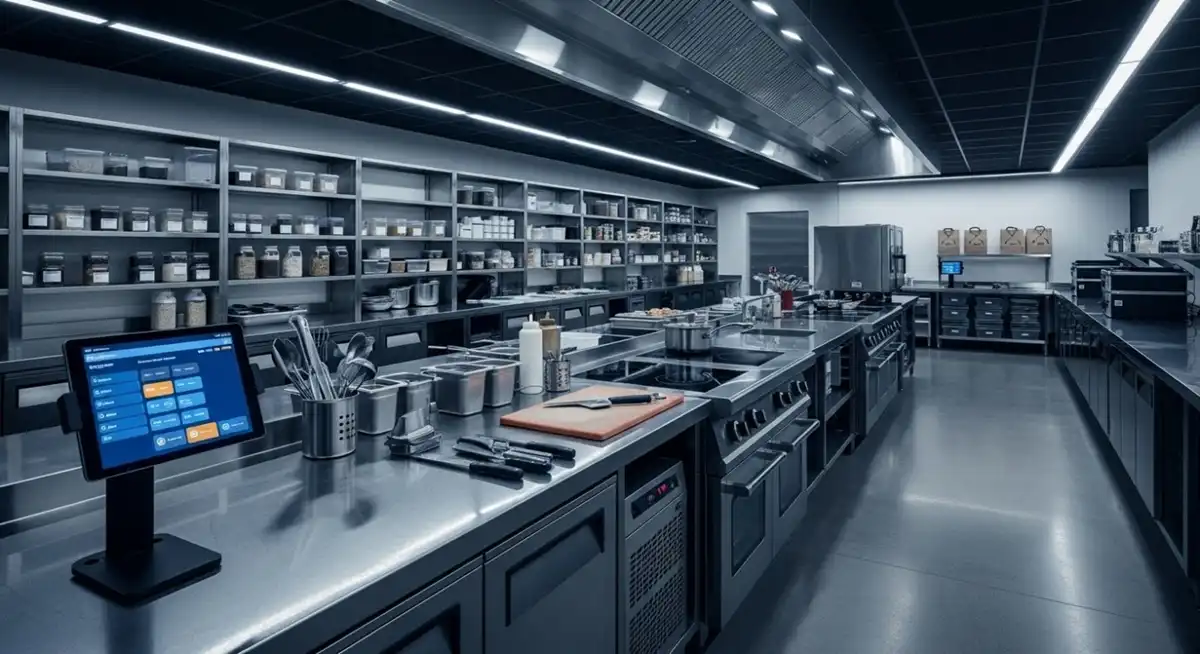
Image generated by Gemini
This guide explores the key architectural requirements for optimizing delivery-only food service operations, from workflow and technology to safety and scalability.
The rise of delivery-only dining has fundamentally changed restaurant design. With no front-of-house to consider, the focus shifts entirely to back-of-house efficiency, speed, and safety. This model, known as a ghost or cloud kitchen, eliminates the need for customer-facing aesthetics and instead demands a design that functions like a high-performance logistics hub. According to KBV Research, the global cloud kitchen market is predicted to reach $118.5 billion by 2027, highlighting the growing need for efficient and optimized operational spaces.
This guide explores the essential design principles for creating a successful ghost kitchen. It features insights from key industry players on technology, workflow, and equipment.
Ghost Kitchen Design Essentials
A successful ghost kitchen is engineered for speed and volume. Unlike traditional restaurants, every square foot must serve a functional purpose directly related to order fulfillment while complying with the requirements of getting a food and beverage license. The design must anticipate bottlenecks, streamline station communication, and integrate seamlessly with digital ordering platforms. According to a National Restaurant Association report, off-premise dining has become a key revenue driver, with 58% of limited-service operators and 41% of full-service operators reporting that it now accounts for a larger share of their sales compared to 2019—underscoring the importance of designing for this shift.
- A Streamlined, Linear Workflow
The foundation of an efficient ghost kitchen is a workflow that moves from order receipt to driver handoff with minimal friction. An assembly-line or linear layout is ideal, arranging stations in chronological order: food prep, cooking, quality control, packaging, and finally, dispatch. This configuration prevents staff from crossing paths, which reduces ticket times and minimizes the potential for errors during high-volume periods. Companies specializing in designing these bespoke workflows map out every step of the fulfillment process to create a logical, efficient flow. This approach ensures equipment placement and station design support a fast-paced environment.
- Seamless Technology Integration
Technology is the backbone of a ghost kitchen. An integrated system that combines a Point-of-Sale (POS), Kitchen Display System (KDS), and delivery app aggregator is essential. This tech stack ensures that orders from multiple platforms are consolidated into a single queue, sent directly to the correct kitchen station, and tracked through completion. For instance, Toast and Eats365 platforms excel at managing online orders from multiple sources, providing real-time analytics that help operators monitor performance and make data-driven decisions.
- Dedicated Order and Handoff Zones
To avoid chaos during peak hours, a ghost kitchen requires physically separate zones for different stages of the handoff process. A dedicated order packing station should be fully stocked with all necessary supplies like containers, bags, and cutlery, where orders are double-checked for accuracy before being sealed. A separate waiting area for delivery drivers, kept apart from the kitchen’s operational flow, prevents congestion. Finally, a clear and organized dispatch window or shelving system, often featuring heated shelves, allows drivers to collect orders efficiently with minimal interaction, keeping them out of the main kitchen area.
- Compact and Optimized Equipment
Since space is at a premium in most ghost kitchens, equipment selection is a crucial design consideration. Multi-functional equipment, such as combi ovens or high-speed cookers, can save valuable floor space while performing the work of several appliances. Compact, energy-efficient models also help manage overhead costs. The layout should prioritize placing frequently used equipment within easy reach to reduce unnecessary staff movement. This trend reflects a broader industry shift toward ‘rightsizing’ equipment to maximize the utility of every square foot.
- Maximized Vertical and Cold Storage
Ghost kitchens often support multiple virtual brands from a single location, dramatically increasing storage requirements. An effective design utilizes vertical space with floor-to-ceiling shelving for dry goods, making the most of a compact footprint. Walk-in coolers and freezers should be well-organized with dedicated sections for each brand’s inventory to prevent cross-contamination and ensure stock accuracy. Proper storage is foundational for operational efficiency, maintaining food safety compliance, and passing health inspections.
- Robust Ventilation and Safety Systems
A high density of cooking equipment operating simultaneously in a compact space generates significant heat, grease, and smoke. A powerful and compliant commercial ventilation system is essential for maintaining clean air quality and ensuring staff safety and comfort. Designs from specialists incorporate end-to-end ventilation solutions that are custom-fitted to the kitchen’s layout and equipment load. This proactive approach ensures the entire setup meets fire safety regulations and local health codes from the very beginning of the project.
- Scalable and Flexible Design
The food delivery market is dynamic, and a ghost kitchen’s design must be adaptable to changing consumer tastes and business needs. Using mobile equipment on casters allows for the easy reconfiguration of the kitchen layout to test new concepts or adjust workflows without major renovations. A modular design can help operators scale their operations, adding or removing virtual brands as demand shifts. This flexibility has become key, as seen in the recent surge of ghost kitchens catering to specific niches like vegan meal kits, which require unique prep and storage setups.
- Multi-Brand Kitchen Efficiency
The design must prevent operational overlap and confusion when a single kitchen serves multiple virtual brands. This can be achieved through implementing simple yet effective organizational systems like color-coding stations, where different brands are assigned unique colors for KDS screens, prep areas, and packaging. Allocating dedicated prep areas for individual brands helps streamline their unique menus. Furthermore, a central commissary station can prepare common ingredients (e.g., diced onions, shredded cheese) for all brands, increasing overall efficiency. This approach allows a small team to execute diverse menus and maximize the revenue potential of the kitchen footprint.
Key Solutions for Ghost Kitchen Operations
Building a successful ghost kitchen requires partnering with the right providers for design, technology, real estate, and equipment. Below are key companies shaping the delivery-only ecosystem.
Airedale Group
The Airedale Group is a UK-based leader in end-to-end commercial kitchen design, manufacturing, and installation. For ghost kitchens, they provide bespoke solutions that focus on creating highly efficient, safe, and compliant operational environments. Their services extend from initial concept and layout design using BIM technology to installing custom ventilation and fabrication.
| Service Type | Best For | Core Services | Specialization |
| Design & Installation | Operators needing a fully managed, custom kitchen build from concept to completion. |
| High-density cooking environments and regulatory compliance. |
Toast
Toast offers a comprehensive, cloud-based restaurant management platform that is exceptionally well-suited for ghost kitchens’ high-volume, digital-first nature. Its integrated system combines point-of-sale (POS), kitchen display systems (KDS), online ordering, and third-party delivery integrations into a single, unified dashboard.
| Service Type | Best For | Key Features | Integration Capabilities |
| SaaS (Restaurant Platform) | Single or multi-brand ghost kitchens seeking an all-in-one technology stack. |
| Natively integrates with major delivery platforms like DoorDash, Uber Eats, and Grubhub. |
Eats365
Eats365 provides a flexible, cloud-based POS system built on a modular architecture. This makes it a strong choice for ghost kitchens that manage multiple virtual brands from a single location. Operators can choose from over a dozen modules to build custom solutions, from order aggregation to multi-kitchen routing.
| Service Type | Best For | Key Features | Integration Capabilities |
| SaaS (Modular POS) | Multi-brand operators requiring a highly customizable and scalable POS system. |
| Offers a robust API for custom integrations and connects with various payment and delivery services. |
Uber Eats
As one of the world’s largest food delivery marketplaces, Uber Eats provides ghost kitchens with immediate access to a large customer base and a sophisticated logistics network. Beyond just delivery, the platform offers data-driven marketing tools, analytics, and options for creating branded digital storefronts to help virtual brands grow.
| Service Type | Best For | Key Features | Integration Capabilities |
| SaaS (Marketplace & Logistics) | New or established virtual brands looking to reach a large audience without building their own delivery fleet. |
| Integrates directly with leading POS systems like Toast and Eats365 to streamline order flow. |
CloudKitchens
Founded by Travis Kalanick, CloudKitchens provides the physical infrastructure for ghost kitchen operators. The company leases turnkey, delivery-optimized kitchen spaces in strategic urban locations. This model allows restaurant brands to launch and scale rapidly with lower upfront capital investment than building a facility from scratch.
| Service Type | Best For | Key Offerings | Business Model |
| Real Estate/Infrastructure | Restaurant entrepreneurs and chains looking to expand quickly into new delivery zones. |
| Leases individual kitchen units within a larger shared facility on a membership/rental basis. |
City Food Equipment
City Food Equipment is an e-commerce supplier of new and used commercial kitchen equipment, making it a valuable resource for outfitting a ghost kitchen. Their extensive inventory allows operators to source everything from compact combi ovens to specialized refrigeration, often at a reduced cost by opting for pre-owned items.
| Product Type | Best For | Key Offerings | Value Proposition |
| eCommerce (Equipment) | Ghost kitchen startups looking for cost-effective, reliable cooking and storage equipment. |
| Provides access to essential equipment with lower capital expenditure, ideal for new ventures. |
Nextbite
Nextbite helps existing restaurants increase revenue by adding established virtual brands. They provide a portfolio of delivery-optimized menus, branding, and training, allowing a restaurant to use its existing kitchen staff and equipment to serve new customers through delivery apps. This is a capital-light way to enter the ghost kitchen market.
| Service Type | Best For | Key Features | Business Model |
| SaaS (Virtual Brands) | Traditional restaurants with excess kitchen capacity seeking to add delivery revenue streams. |
| Revenue-sharing model where Nextbite takes a percentage of sales from its virtual brands. |
By focusing on these eight design essentials, restaurant operators can build a ghost kitchen that is not just a cooking space but a highly efficient engine for off-premise dining. The architecture of these facilities prioritizes function over form, creating a foundation for speed, accuracy, and profitability in the rapidly growing food delivery market.
Comments or photos for the 8 design essentials for successful ghost kitchen guide are welcome.
Building Design
Building Articles
Office building designs
Interior designs + architects
Comments on this guide to Kitchen remodel style and budget balance article are welcome.
Kitchen Design
Kitchen Articles
Photo by Jens Behrmann on Unsplash
Installing Modular Kitchen in Your Home
Selecting the Right Storage Cabinets for Your Kitchen
++
Property Design
Contemporary Property Designs – recent architectural selection:
Comments / photos for the 8 design essentials for successful ghost kitchen advice page welcome.