
Driveway Ideas UK: A Practical Guide to Materials, Designs and Costs
19 May 2025
A driveway is the first thing visitors see and the surface you use every day, so the design needs to balance kerb appeal with day-to-day practicality. Materials behave differently in the UK climate, costs vary widely, and recent drainage rules mean the wrong specification can land you with a planning issue.
We’ve pulled together the most useful driveway ideas for UK homes in 2026, with realistic costs, the homes each material suits best, and the practical decisions you’ll need to make before quoting starts.

What makes a good driveway in the UK?
A good UK driveway combines a durable, weather-resistant surface with proper drainage, a solid sub-base, and a design that complements the property. The most popular materials are block paving, resin-bound, tarmac, concrete and gravel, with costs typically ranging from £45 to £150 per square metre fully installed.
Driveway material options
Material choice drives the look, the price and the maintenance burden of a driveway more than any other decision. Here’s how the main options compare:
Block paving
Block paving is the most popular driveway material in the UK because it’s versatile, easy to repair (just lift the affected blocks), and works in both traditional and contemporary settings. Concrete blocks, clay pavers and granite setts all fall under this category.
Expect £80 to £120 per m² for a quality installation. The downside is upkeep – sand joints need topping up, weeds can establish, and individual blocks can lift over time if the sub-base wasn’t done properly.
Resin-bound
Resin-bound surfaces are gravel aggregate mixed with a clear resin and trowelled onto a solid base. The finish is smooth, permeable and modern. There’s no loose gravel to migrate onto the road, and the colour options are broad.
Cost runs £70 to £120 per m² fully installed. Lifespan is typically 15 to 20 years. The catch: resin-bound needs a sound concrete or tarmac base, so if your existing surface needs replacing, that’s an extra layer of cost.
Tarmac
Tarmac (asphalt) is the cheapest full driveway surface and the workhorse choice for larger plots. It looks sharp when first laid, takes heavy vehicles well, and is straightforward to repair. Cost typically falls between £45 and £80 per m². For a regional reference point, driveways in Wolverhampton tend to sit close to the national average.
Coloured tarmac (red, green or buff) costs around 10 to 20% more than standard black. Tarmac driveways pair well with a block paving border to lift the appearance.
Concrete and pattern-imprinted concrete
A concrete driveway offers a clean, modern look with no joints to weed and no individual blocks to settle. Plain concrete runs £60 to £100 per m². Pattern-imprinted concrete (PIC) imitates stone, brick or slate at a fraction of the cost and adds £20 to £40 per m² over plain.
Both options need expansion joints to handle ground movement, and the finish quality varies widely between installers. Ask to see recent local jobs before committing.
Gravel
Gravel is the cheapest option at £40 to £60 per m² and the most cottage-appropriate. It’s permeable by default, drains well and is easy to repair. Loose gravel can migrate, though, and snow clearing is awkward.
A gravel grid system – typically 100% recycled plastic honeycomb panels laid before the gravel – locks the surface in place, supports heavier vehicles and prevents the rutting that plagues traditional gravel drives.
Driveway design ideas that work
Beyond the material, the design choices below consistently make driveways look more considered:
- Mix materials A block paving border around a tarmac or resin centre lifts the whole drive without major cost.
- Plan for plants Don’t pave the whole front garden. A strip of planting along the boundary softens the look and helps with drainage.
- Use patterns sparingly Herringbone, basket weave or running bond work well on block paving. Complex patterns on small driveways look busy.
- Match the house Modern rendered houses suit grey or charcoal finishes; period properties suit warmer tones and traditional setts.
- Light it Low-level edge lighting or recessed driveway lights transform kerb appeal in winter and make the drive safer to use after dark.
- Plan for EV charging New homes are now legally required to be capable of charging an electric vehicle. Route the cable run under the new surface during installation, not after.
- Add a turning area on tight plots Even a small radius can save the awkwardness of reversing onto a busy road. Mechanical turntables are an option on very narrow plots.
Edging and borders
Edging is what stops a driveway looking like a car park. A simple soldier course of block paving, granite setts or concrete kerbs frames the surface and prevents lateral migration of the main material.
Budget £10 to £25 per linear metre for edging materials and installation. On gravel and resin drives, proper edging is structural rather than decorative.
Drainage and planning rules
Any driveway larger than 5m² that drains directly onto a public road needs to be either built from permeable materials (gravel, resin-bound, permeable block paving) or directed to a soakaway in your own garden. The Planning Portal’s guidance on paving front gardens sets out the full rules.
If you need to lower the kerb where the drive meets the road, you’ll need a dropped kerb application through your local council. Costs vary but typically sit between £500 and £1,500.
Driveway costs at a glance
As a quick reference for a typical UK 50m² driveway, fully installed in 2026:
- Gravel: £2,000 to £3,000
- Tarmac: £2,500 to £4,500
- Plain concrete: £3,000 to £5,000
- Pattern-imprinted concrete: £4,000 to £6,500
- Resin-bound: £3,500 to £6,000
- Block paving: £4,000 to £6,000
- Granite setts: £8,000 to £12,000
Prices climb 10 to 20% in London and the South East and tend to be lower in the North, Wales and Scotland. Smaller driveways carry a higher rate per m² because fixed delivery and labour costs spread over a smaller area.
Choosing the right driveway for your home
The best driveway depends on the property style, how much wear the surface takes, the climate of the site, and the budget. As rough guidance:
- Period cottages and rural homes: gravel or natural setts.
- Victorian and Edwardian terraces: block paving in traditional tones.
- Modern detached and rendered houses: resin-bound or grey block paving for clean lines.
- Family homes with high traffic: tarmac with a block paving border for durability and kerb appeal.
- Tight budgets: tarmac or gravel with a grid system.
Whatever the choice, the sub-base does more for the lifespan of the drive than the surface material. Cutting corners underneath is the single most common reason driveways fail early.
Comments on this guide to Decorative Concrete Overlays: Upgrade Without Replacement article are welcome.
Home Articles
Residential Architecture
How to build your dream home tips
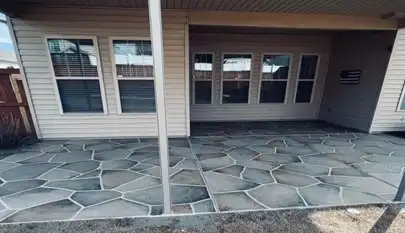
Photo credit: Zacharydanielconcrete.com
++
Real Estate
Real Estate Posts
Should You Move Your Real Estate Investment To Canada
How to find and buy a suitable condo in Canada
Comments / photos for the Decorative Concrete Overlays: Upgrade Without Replacement page welcome.


