Architectural Elements That Shape Outdoor Living Spaces
10 March 2026
Building a functional outdoor area transforms a simple backyard into a usable extension of the home. These spaces provide a place to relax and host friends without the walls of a traditional room. Modern design focuses on how physical structures guide movement and comfort. Choosing the right materials and layouts makes a significant difference in how often a family uses their exterior property.

Creating a Flow Between Inside and Out
The connection between the interior and the exterior is a major part of modern architecture. Designers aim to make the transition feel natural so that the patio feels like another room in the house. A recent article noted that one of the top trends for 2024 is creating a seamless transition between indoor and outdoor living areas.
This fluid design usually involves large glass doors or matching floor materials. When the flooring inside looks like the flooring outside, the eye sees one large space. This trick makes even small homes feel much larger than they actually are.
Selecting the Best Foundation
The ground beneath your feet sets the tone for the entire area. Patios and decks serve as the base for furniture and heavy grills. Nearly half (46%) of design experts say that composite decking is the top pick for patio flooring in 2025.
Composite materials are popular because they do not rot or require constant staining. They offer a clean look that stays consistent for years. Choosing a durable foundation prevents future repairs and keeps the space looking new.
Structuring Your Shade
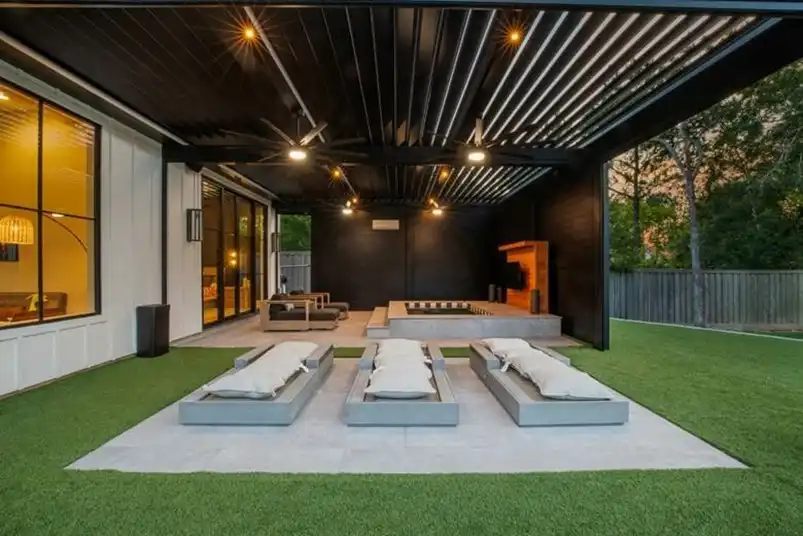
Sunlight is great, but constant heat can make a backyard unusable during the summer. Overhead structures provide the necessary relief from the sun. Many homeowners choose custom pergola installations to define their dining areas. These structures add a vertical element that draws the eye upward and creates a sense of enclosure.
Wood and metal are the most common materials for these builds. A wooden frame offers a classic look, while metal fits a modern aesthetic. Adding a roof or retractable canopy to these frames allows for use even during light rain.
Defining Zones for Activities
Large backyards can feel empty if they are not divided into specific sections. Zoning helps organize the space based on how it will be used. You might have one area for cooking and another for sitting by a fire.
Each zone should have its own clear boundary. This can be done with rugs, planters, or changes in floor height. Grouping furniture helps guests understand where they should gather.
Outdoor Kitchen Designs
Cooking outside has moved beyond a simple charcoal grill. Many people now install full kitchens with sinks, fridges, and stone counters. These setups allow the cook to stay part of the conversation instead of being stuck inside.
Durability is the most important factor for these features. Countertops must withstand freezing temperatures and direct sun. Using stone or stainless steel ensures the kitchen lasts for many decades.
Lighting for Safety and Mood
A well-lit yard is much safer to navigate after the sun goes down. Path lights prevent trips and falls on uneven ground. Accent lights can also highlight beautiful trees or architectural features.
Layering your light sources is the best approach. Use bright lights for cooking areas and softer, warmer lights for lounge spots. Solar-powered options are easy to install and do not require complex wiring.
Privacy through Natural Barriers
Feeling watched by neighbors can ruin the relaxation of an outdoor room. Fences are a standard solution, but plants can also provide a screen. Tall hedges or bamboo offer a green wall that blocks noise and sightlines.
Living walls are another way to add privacy in tight spaces. These vertical gardens take up very little floor space. They add a lush feel to the environment while serving a practical purpose.
Water Features and Sound
The sound of moving water can block out traffic noise and create a peaceful vibe. Small fountains or ponds add a sensory layer to the backyard. These features also attract birds and butterflies to the garden.
Modern water designs often use recycled water systems to save resources. A simple bubbler or a sleek waterfall can fit into almost any design style. The sight of water also helps lower the perceived temperature on hot days.
- Choose weather-resistant furniture fabrics.
- Add outdoor heaters to extend the season.
- Install plenty of power outlets for devices.
- Use rugs to soften hard stone surfaces.
Furniture Selection and Placement
The comfort of your outdoor space depends on the seating you choose. It is important to buy pieces that can handle rain and UV rays. Deep cushions and ergonomic frames make a patio feel as cozy as a living room.
Placement should encourage conversation. Facing chairs toward each other creates an intimate setting. Leaving enough space to walk around the furniture prevents the area from feeling crowded.
Using Color to Set the Mood
Colors influence how a space feels to those using it. Neutral tones like beige and gray are classic, but bold colors are becoming more common. Bright pillows or umbrellas can refresh the look of a yard without a full remodel.
Matching the colors to the exterior of the house creates a unified look. You can also use colors to highlight specific architectural details. Darker colors tend to hide dirt better in high-traffic areas.
Technology in the Garden
Modern outdoor spaces often include high-tech upgrades. Weatherproof televisions and sound systems allow for outdoor movie nights. Smart lighting systems can be controlled from a phone or tablet.
Integrating tech requires careful planning to hide wires and protect gear. Many products are now built specifically to survive the elements. These additions make the backyard a true hub for entertainment.
Maintaining Your Investment
Regular upkeep keeps architectural elements looking their best. Cleaning the deck and checking for loose screws should be done every spring. Plants also need pruning to stay within their designated zones.
Sealing stone and wood protects them from water damage. A little bit of work each year prevents the need for expensive replacements. A well-maintained yard remains a valuable part of the home for a long time.

Investing in quality structures and a smart layout pays off in daily enjoyment. A backyard is more than just grass and trees when it is designed with purpose. These elements work together to create a sanctuary for the family. Taking the time to plan each detail ensures the space meets every need. Your outdoor area should be a place where memories are made for years.
Comments on this help guide to Architectural elements shape outdoor living spaces article are welcome.
Building Articles
Architecture
+++
Home Gardens
Garden Design Posts
How to choose right furniture for your home
Planting perennials in your garden benefits
Water garden and landscape with aquatic plants
Comments / photos for the Architectural elements shape outdoor living spaces page welcome