6 Space Savers for Adaptive Restaurant Builds
29 January 2026
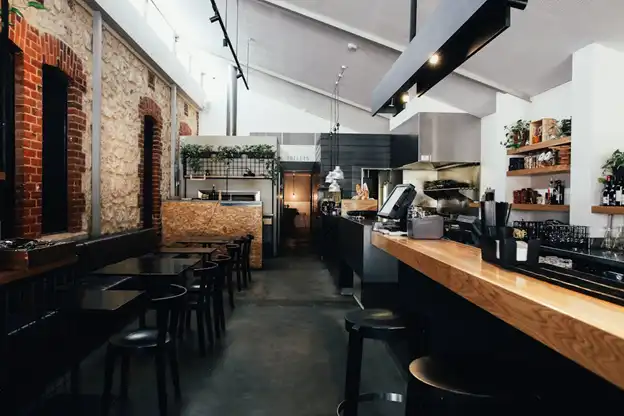
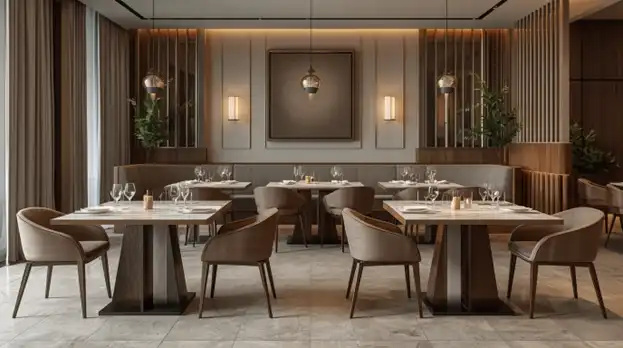
image source : pexels.com
Restaurants today are expected to do more with less space, from café conversions to pop-ups and tight urban builds. Your success in this field (even with small areas) depends on smart kitchen planning that never sacrifices excellent service. With the right equipment and thoughtful design, even the smallest footprint can run efficiently. These six space-saving solutions show how adaptive restaurants make it work.
1. Ventless Hood Systems
If you’re looking for a sure ticket to improve overall operational efficiency, you might want to look at ventless hoods for your restaurant’s kitchen. Standard hood systems require duct installation and ceiling height, and they require extensive building changes, which small conversion projects do not. Ventless hood systems solve this problem by using advanced filtration and recirculation technology.
Ventless Hood Systems Dimensions
The product’s dimensions allow it to be installed above standard cooking equipment. The system uses multiple-stage filters to strip grease, smoke, and odors, returning clean air to the kitchen.
Ventless Hood Systems Airflow considerations
A good ventless kitchen hood replacement method is to choose their locations to create the best airflow while keeping kitchen workers comfortable. Ventless systems have a couple of key benefits. They eliminate the need for those outside-air setups that seem useful and free up space in the building. Construction people can use that extra area to improve what’s already there.
2. Countertop Convection Ovens
Compact ovens are a great option for restaurants that need commercial-grade baking capacity but do not want to dedicate an entire wall to equipment. Countertop convection ovens for restaurants can offer you consistent, uniform heat distribution and take up very little space, making them an ideal choice for small kitchens.
Countertop Convection Ovens Dimensions
Most models come in sizes that easily fit on kitchen worktops, with widths that range from 18 to 30 inches.
Countertop Convection Ovens Airflow Considerations
Most convection fans play an important role in the even circulation of hot air, which in turn helps reduce heating time and maintain consistently high-quality food.
Countertop Convection Oven Coordination tips
For the most efficient workflow, ovens should be located next to the food preparation areas. Besides, capacity can be increased by stackable units if required.
Such ovens enable kitchens with non-ideal layouts to choose the right-sized equipment without compromising on high-performance quality. If it is a store operator just starting to consider the possibilities of compact cooking, then selecting a convection oven for a restaurant is one of the most straightforward ways to achieve commercial-grade results in minimal space. They come with excellent energy efficiency, reliability, and quite a few attractive features, rather indispensable qualities in those making the most out of their rental slot in adaptive builds.
3. Stackable Cooking Modules
Flexibility is one of the most essential characteristics of an adaptive build, like multifunctional spaces and cooking modules that can be easily stacked into place. You can save floor space while still getting different cooking functionalities by stacking (piling) these modular cooking units one on top of the other.
Stackable Cooking Modules Dimensions
Each module has a standard tread. So, you can stack three units at the same height.
Stackable Cooking Modules Airflow considerations
Ideally, leave some space between the modules so airflow can reach the heat and make it easier to escape.
Stackable Cooking Modules Coordination tips
Select different modules (grills, fryers, steamers) to create a cooking line that meets your needs.
In this way, stacking modules increases the number of units without extending floor space, making them very attractive for small, fast-growing concepts.
4. Fold‑Down Prep Surfaces
Most small kitchens have folding prep surfaces, which are usually the first thing to be sacrificed in favour of other items. If necessary, these surfaces can serve as an additional preparation area and be folded out of the way when not in use.
Fold‑Down Prep Surfaces Dimensions
A fold-down surface typically measures 24″ to 36″ wide and can be wall-mounted or mounted on the sides of equipment.
Fold‑Down Prep Surfaces Airflow Considerations
Folding down surfaces must not block or hinder any airflow or ventilation routes.
Fold‑Down Prep Surface Tips for Coordination
When selecting the spot for the folding prep area, consider how far the refrigeration and cooking equipment are, so the staff have the shortest possible route when preparing food.
Kitchen staff must be able to declutter quickly during the rush of service to maintain efficient operations.
5. Undercounter Refrigeration
Refrigeration is indispensable; however, full-size refrigerators can take up a great part of the kitchen in a small dwelling. Undercounter refrigeration allows cold storage to be combined with the existing workstation, eliminating the need for vertical space.
Undercounter Refrigeration Dimensions
These units are mostly 27 to 48 inches wide and are designed to fit under the counter very tightly.
Undercounter Refrigeration Airflow considerations
Ensure there is a 2-inch space around the refrigerator to allow heat to dissipate.
Undercounter Refrigeration Coordination tip
Put the most frequently used items, such as garnishes or proteins, in the undercounter refrigerators, if you have them. But keep the long aisle walk-in and accommodate your bulk storage instead.
6. Wall-Mounted and Ceiling Racks
Storage is a common feature that adaptive builds usually lack, yet it’s where you can easily spot efficiency. Most of the time, wall-mounted and ceiling racks use vertical space more efficiently by keeping tools and ingredients close at hand without occupying counter space.
Wall-Mounted and Ceiling Racks Dimensions
You can adjust the rack to fit prep tables or cooking lines.
Wall-Mounted and Ceiling Racks Airflow concerns
Do not put racks right over heat sources.
These types of racks make use of the vertical space that is often left unused in the kitchen, making them an excellent solution for keeping small kitchens tidy and safe.
Coordinating Space Savers for Maximum Efficiency
Each one of the changes mentioned above has great effects by itself; however, when they’re combined, you’ll experience their true power. It’s usually highly noticeable in ventless hoods, which are inherently compatible with stackable modules, whereas fold-down surfaces can also work well with undercounter refrigeration. Ceiling racks are your best friends in this configuration because they keep all these tools within arm’s reach.
When creating adaptive builds, you need not focus only on one aspect: a great balance needs to be achieved between airflow, workflow, and safety altogether. Making a room function well and be pleasant to work in is not only about taking accurate measurements, but also about leaving sufficient space for movement and getting your employees to participate in decision-making.
Small Footprints. Serious Performance
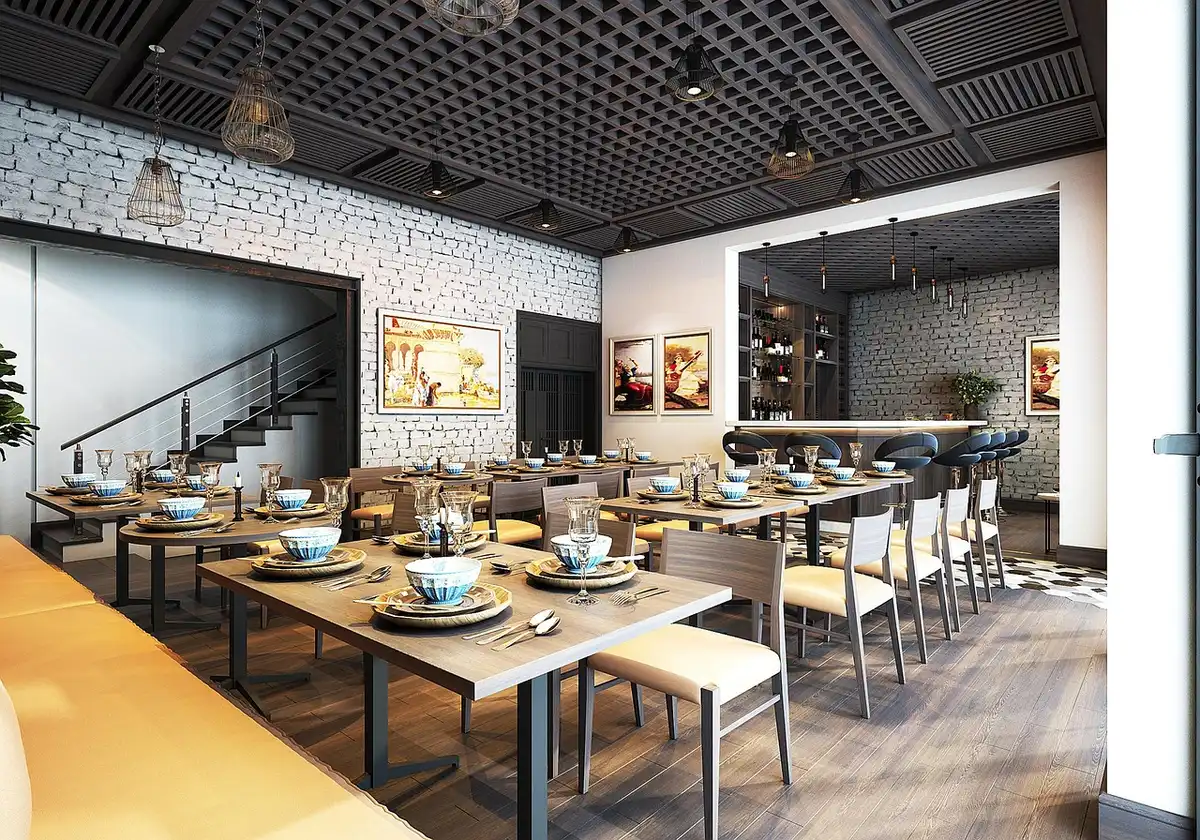
In adaptive restaurants, like yours, you can easily prove that space doesn’t limit your goals. These can still run cleaner, safer, and faster, even if they’re compact, as long as you get the right equipment and smart layout choices. So, don’t wait for more square footage to come by. Just rethink what you have, design with intent, and make every inch work harder for your enterprise.
Comments on this guide to modern dining designs – Adaptive restaurant builds space savers article are welcome.
Restaurant Furniture – Interior Architecture Design
Restaurants Furniture Articles
Restaurant furniture for modern interiors
How building design shapes restaurant furniture
++
Building Articles
Architecture
Comments / photos for the Adaptive restaurant builds space savers – modern dining design styles page welcome.