
Designing for Everyone: Accessibility, Wellness and the Evolution of Modern Commercial Spaces
24 April 2026

Contemporary commercial architecture is no longer evaluated solely on structural performance or aesthetic ambition.
The buildings and interiors that define the current design landscape are those that succeed equally across three converging priorities: inclusive access, experiential quality and operational adaptability.
As regulatory requirements tighten and occupant expectations evolve, the most accomplished commercial projects are those in which these considerations are not resolved in isolation but integrated from the earliest stages of design thinking.
This shift is reshaping how architects, interior designers and fitout specialists approach a broad range of building types, from mixed-use civic developments to purpose-built wellness facilities.
The Importance of Accessibility in Architecture
Inclusive design has moved considerably beyond minimum compliance in recent years.
The legislative baseline, established through building codes and disability access standards across most developed jurisdictions, defines a floor rather than a ceiling.
Forward-looking architectural practice treats that baseline as the starting point for a more holistic approach to spatial navigation that serves all building users regardless of age, ability or sensory capacity.
The design of horizontal circulation is among the most technically considered areas of accessible commercial architecture. Wayfinding systems must communicate spatial information across multiple sensory channels simultaneously, addressing the needs of users with visual impairments without disrupting the coherent aesthetic of the built environment.
Ground plane design is central to this challenge. The specification and placement of tactile floor indicators within pedestrian circulation routes provides navigational guidance for visually impaired users through a system of raised surface patterns that communicate both direction and hazard.
These elements must be integrated into the overall flooring strategy with precision: positioned consistently at decision points, transitions between spaces and the approach to level changes, and selected in materials that provide adequate contrast against the surrounding floor surface.
The technical requirements governing tactile indicator installation vary by jurisdiction and building type but consistently address factors including detectable warning patterns at stair heads and platform edges, directional indicators along primary circulation routes and the material specification needed to ensure long-term durability and slip resistance in high-traffic environments.
Where accessibility is treated as a design discipline rather than a compliance exercise, the results are spaces that perform better for all users, not only those with specific access requirements.
This principle is increasingly reflected in project briefs across commercial, civic and transport infrastructure typologies.
Designing for Functionality and User Experience
The relationship between spatial organisation and user experience is among the most studied areas of commercial interior design.
Research consistently demonstrates that the legibility of a space, the degree to which its layout communicates clearly how it should be navigated and used, directly influences occupant behaviour, dwell time and overall satisfaction.
In retail, hospitality and institutional contexts, this correlation has measurable commercial and operational implications.
Spatial legibility is determined not by complexity of design but by the clarity of the underlying organisational logic.
A well-designed commercial interior communicates its hierarchy of spaces intuitively: primary circulation routes are distinguishable from secondary ones, activity zones are differentiated without requiring explicit signage and transitions between areas of different character are managed through considered material and lighting changes rather than abrupt physical boundaries.
Acoustic design has emerged as an equally significant determinant of user experience in commercial interiors. The proliferation of hard surface materials in contemporary commercial fitouts, combined with larger and more open plan configurations, has created acoustic environments that consistently underperform in post-occupancy evaluations.
Specifying surface absorptivity, managing reverberation times and zoning acoustically incompatible activities are now standard components of interior design practice in hospitality, workplace and retail environments.
Natural light access and its integration with artificial lighting systems remains a primary variable in the overall quality of commercial interiors.
The shift toward occupant-centric lighting strategies, in which light levels and colour temperature are adjusted dynamically in response to occupancy patterns and time of day, has been accelerated by the commercial availability of adaptive control systems that interface directly with building management platforms.
The Rise of Wellness and Fitness Spaces
The integration of health and wellness facilities into commercial developments represents one of the most significant shifts in building programming seen over the past decade.
Purpose-built fitness facilities, once considered peripheral amenities within mixed-use developments, are now primary drivers of occupancy and tenant attraction in commercial real estate.
This shift has been accompanied by a substantial increase in the design complexity and fitout quality expected of these spaces.
The design brief for a contemporary commercial gym extends well beyond the provision of an adequate equipment footprint. Structural loading requirements for free weight zones must be resolved within the floor assembly.
Mechanical ventilation must deliver the air exchange rates necessary to maintain acceptable environmental conditions under high occupancy and physical activity loads.
Acoustic separation between fitness spaces and adjacent tenancies requires careful attention to both airborne and impact sound transmission paths.
Spatial zoning within fitness facilities has also become considerably more sophisticated.
The functional separation of cardiovascular training areas, strength zones, group fitness studios, recovery spaces and changing facilities requires a spatial hierarchy that supports efficient circulation without creating congestion at peak periods, while maintaining the visual openness that contemporary fitness users expect.
Specialist knowledge of this programme type is essential to delivering spaces that perform to the standard the market now demands.

Operators and developers seeking outcomes at this level work with providers who understand both the technical requirements and the experiential expectations of modern fitness users. Referencing how commercial gym fitouts are designed and delivered by specialist practitioners illustrates the level of integration between spatial planning, structural coordination and equipment specification that a quality outcome requires.
For those researching the broader landscape of fitness architecture and how design practice is evolving across global gym and wellness typologies, the range of completed projects demonstrates both the design ambition and technical rigour now applied to this building category.
Balancing Aesthetics and Practicality
The enduring tension in commercial interior design is the negotiation between visual ambition and operational performance.
Materials selected for their aesthetic contribution must also satisfy durability requirements under sustained commercial use.
Finishes that read well in architectural renderings frequently prove inadequate in practice when subject to the cleaning regimes, traffic intensities and maintenance budgets of commercial operation.
This tension is most productively resolved through the involvement of both the design team and the fitout delivery team at the specification stage, before material selections are finalised.
The knowledge that specialist fitout contractors bring to the durability, installation tolerance and maintenance implications of specific material choices is directly applicable to the quality of the finished result.
The increasing integration of technology infrastructure within commercial interiors adds a further layer of complexity to this negotiation.
Power distribution, data connectivity, audiovisual systems and building control interfaces must all be coordinated within the architectural envelope without compromising the spatial and material quality of the design.
In fitness environments specifically, the routing of power and data to equipment positions, the integration of audio systems into ceiling and wall construction and the design of lighting control systems that can be adapted to different training modes all require resolution at the intersection of architectural design and technical specification.
Conclusion
The commercial spaces that define contemporary architectural practice are those that hold multiple demands in productive tension: aesthetic coherence and technical performance, inclusive access and spatial quality, wellness programming and structural rigour.
These are not competing priorities. In the most accomplished projects, they are mutually reinforcing outcomes of a design process that integrates specialist knowledge across disciplines from the earliest stages of briefing and concept development.
As user expectations continue to rise and the regulatory framework for accessible and sustainable design becomes more demanding, the quality of commercial architecture will increasingly be measured not only by how a space looks but by how comprehensively it serves the full range of people who use it.
Comments on this guide to Accessibility, wellness and modern commercial spaces evolution article are welcome.
Home Gyms
Home Gym and Fitness
Upgrade Your Essex Home with a Modern Garden Gym Room
Creating a Home Gym in the Garage
Guide for building an in-home sports facility
Citizen Fitness Center in Heping District Tianjin
Dive into the all-in-one home gym experience
++
Building Articles
Residential Architecture
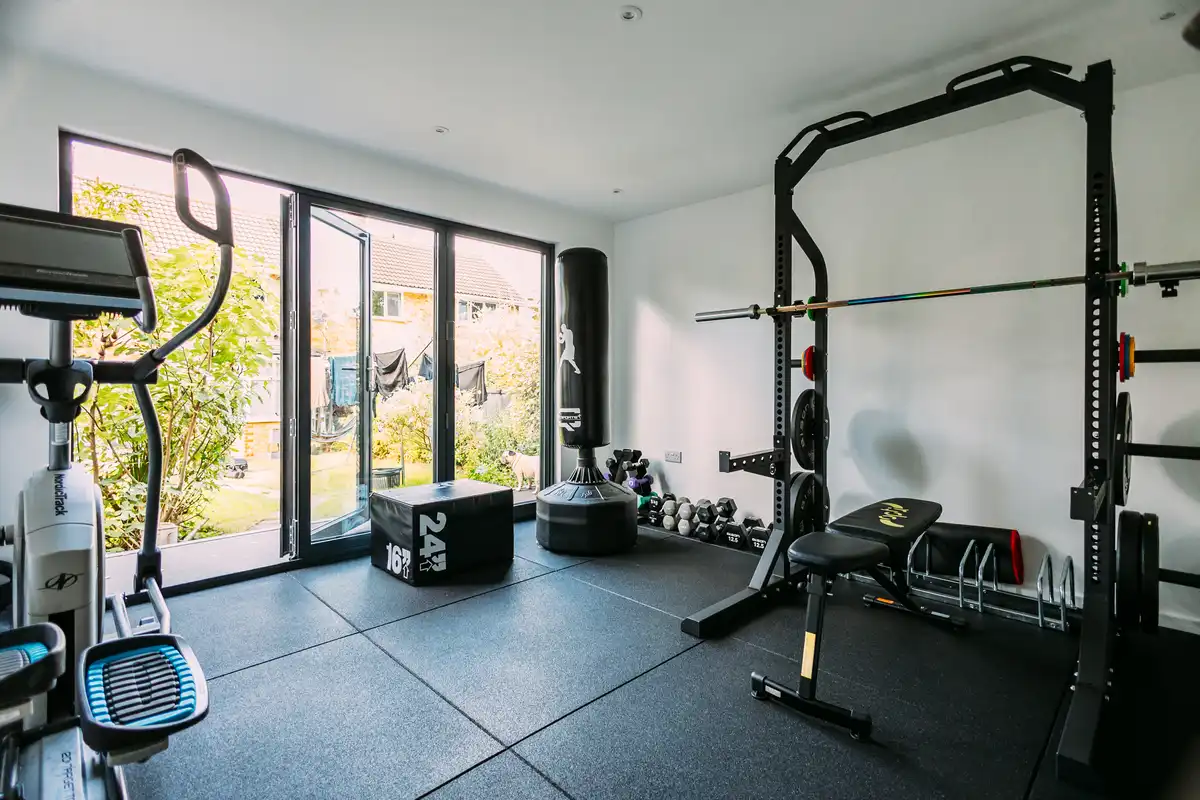
Comments / photos for the Accessibility, wellness and modern commercial spaces evolution – modern home gym space page welcome.


