Alfred Waterhouse Architect: Buildings
Gothic Architecture in England & Scotland, UK – Victorian Buildings
post updated 12 April 2026
This architect is well known in Britain for his significant 19th Century English Architecture, generally designed in the Neo-Gothic style.
Alfred Waterhouse – Key Projects
Alfred Waterhouse Buildings, alphabetical:
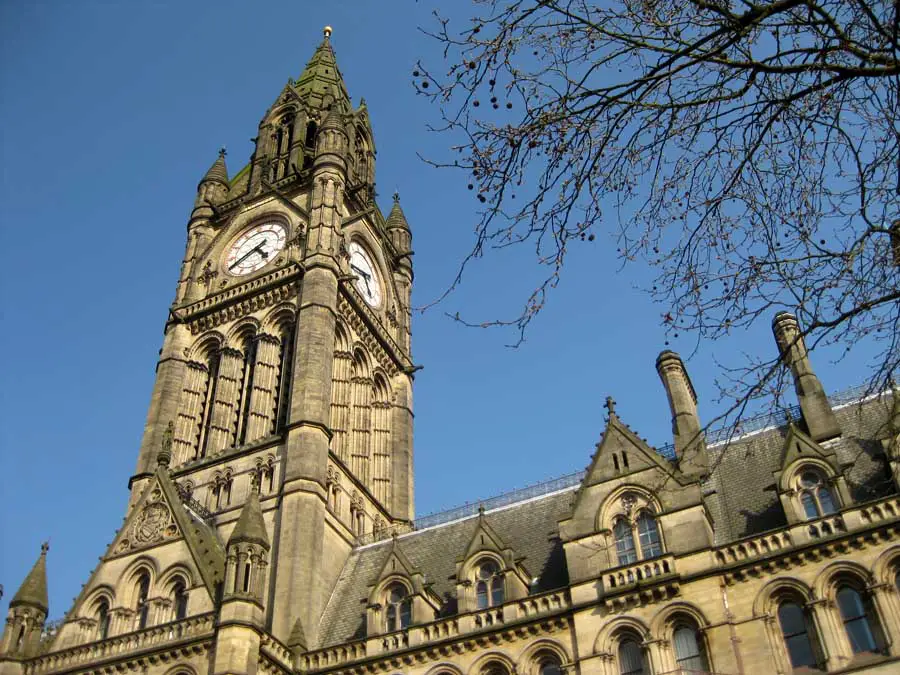
Manchester Town Hall, northwest England, UK
Date built: 1877
photograph © Adrian Welch
Manchester Town Hall
Powerfrul Victorian architecture, a proud symbol for the city at a time of great prosperity from its booming industry. The building is triangular in plan and in the neo-Gothic style. The interior is well worth a visit, the entry area and stairs are normally freely accessible. Along with the Natural History Museum in London, this is the architects’ key work.
Northwestern Hotel, Lime Street, Liverpool, England
Date built: 1871
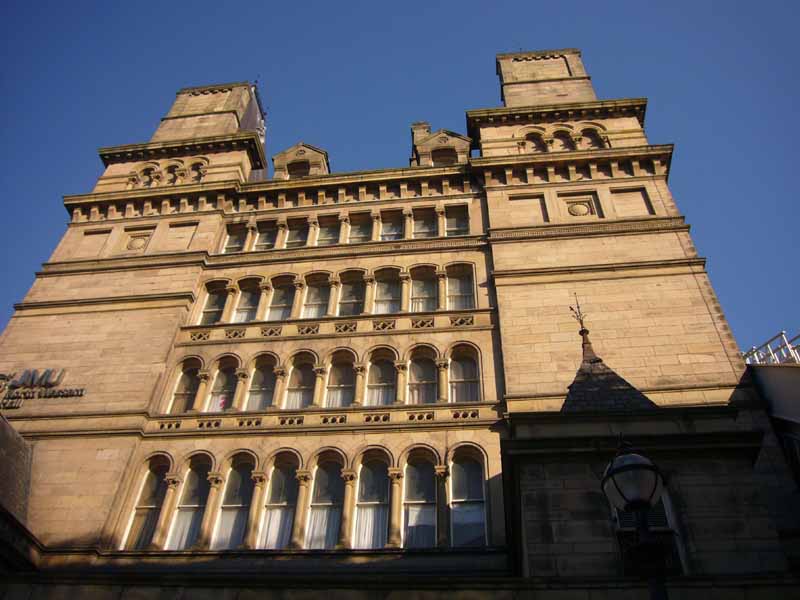
photo © Adrian Welch
Northwestern Hotel Liverpool
Prudential Assurance building, 14 South St Andrew St, Edinburgh, Scotland
Date built: 1895
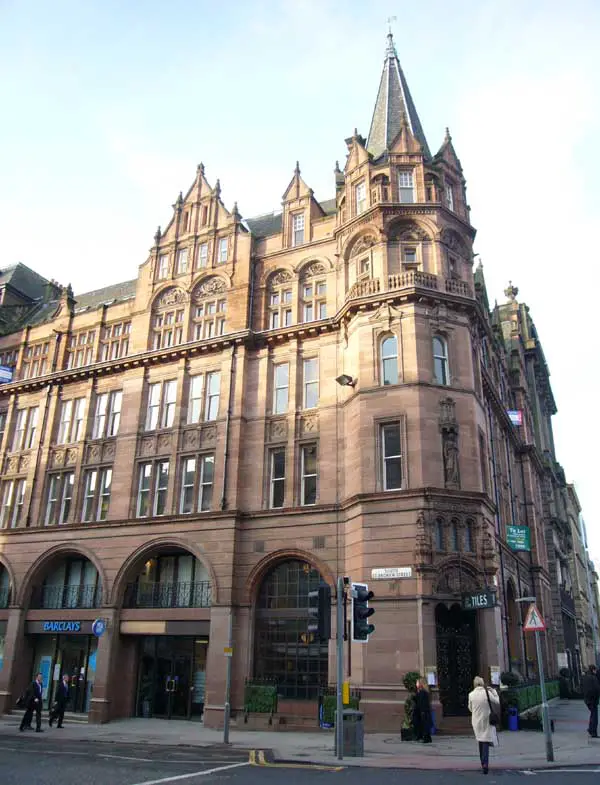
photo © AW
St Andrew Square – featured on the Edinburgh Architecture website
Natural History Museum, Cromwell Rd, South Kensington, London SW7
Date built: 1881
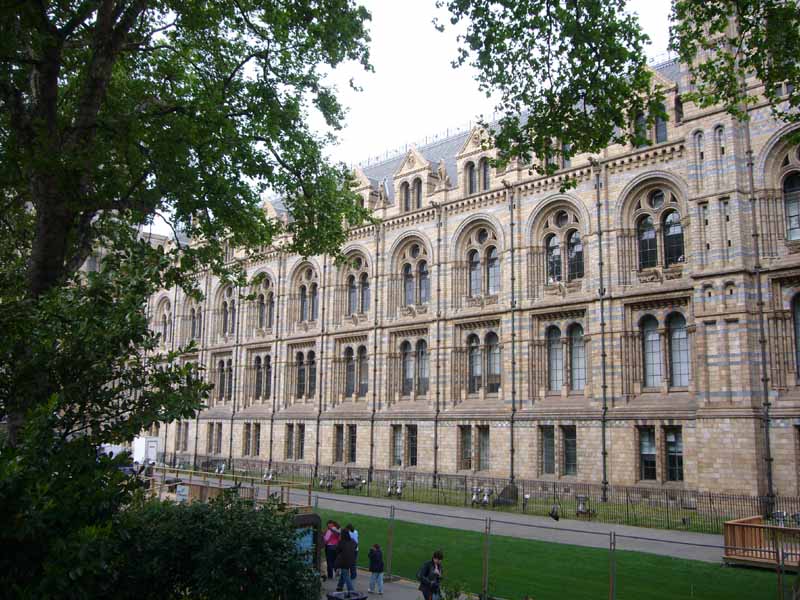
photo © AW
Natural History Museum Building
Major Neo-Gtohic building in west London, part of Albertopolis, a collection of various museums.
More projects by Alfred Waterhouse Architect online soon.
Location: UK
19th Century British Architect Practice Information
Alfred Waterhouse was a key British architect of the Victorian age. He was born in 1830 in Liverpool, Lancashire, north west England and died in 1905 in Yattendon, Berkshire, south east England.
Alfred Waterhouse was associated with Victorian Gothic Revival architecture. His key buildings were the Manchester Town Hall and the Natural History Museum in London. His architectural style varied from Neo-Gothic to Renaissance revival and Romanesque revival styles.
Natural History Museum London building:
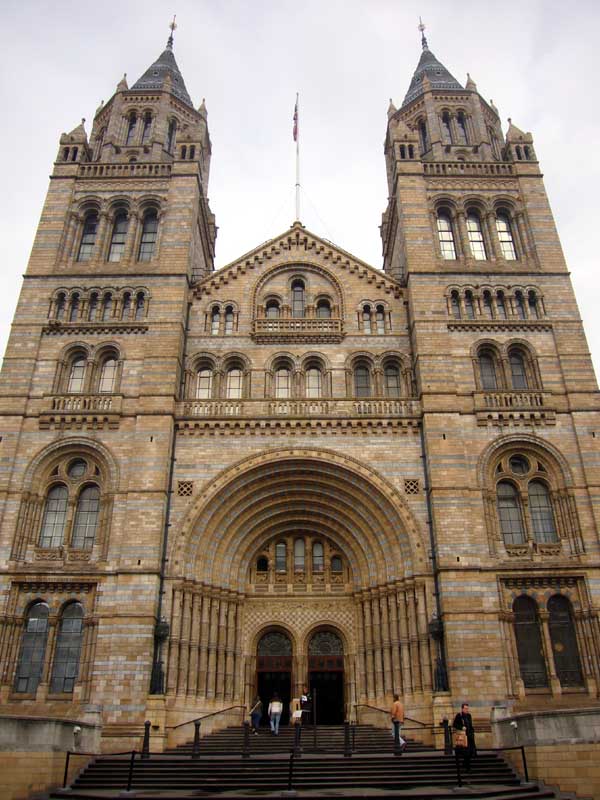
photo © Adrian Welch
Alfred Waterhouse (1830–1905) was a prominent English architect of the Victorian era, best known for his richly detailed buildings in the Gothic Revival and Romanesque Revival styles.
Waterhouse developed a reputation for combining bold architectural expression with practical planning and durable materials. He frequently used terracotta as a façade material, not only for its decorative qualities but also for its resistance to pollution—an important consideration in industrial-era cities.
Among his most famous works is the Natural History Museum in London, a landmark building celebrated for its Romanesque design, intricate ornamentation, and innovative structural approach. He also designed Manchester Town Hall, widely regarded as one of the finest examples of Victorian civic architecture, as well as numerous universities, banks, and country houses across Britain.
His architecture is characterized by strong massing, rhythmic façades, and carefully integrated decorative programs that often reflect the function or identity of the institution. Despite the richness of his designs, his buildings were highly rational in planning, demonstrating a balance between aesthetics and usability.
Waterhouse’s legacy lies in his ability to create monumental yet functional architecture that responded to the social and environmental conditions of his time, leaving a lasting imprint on the urban landscapes of Victorian Britain.
+++
English Architectural Designs
Contemporary Manchester Architecture Designs – architectural selection below:
Hulme Living Leaf Street Housing
Design: Mecanoo
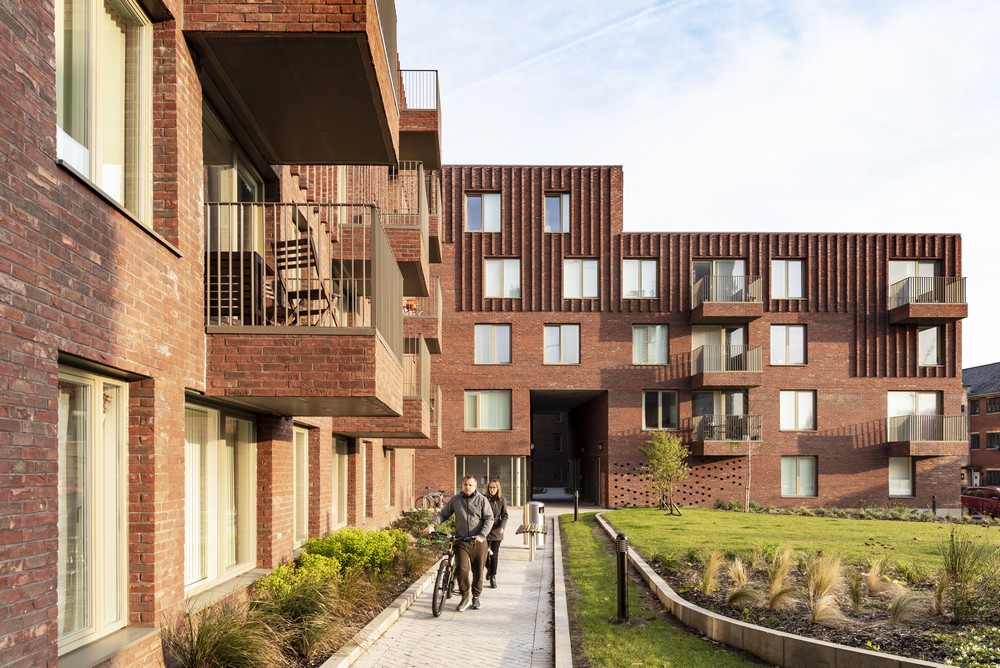
photo : Greg Holmes
Extension to Hallé St. Peter’s, Ancoats
Architects: Stephenson Studio
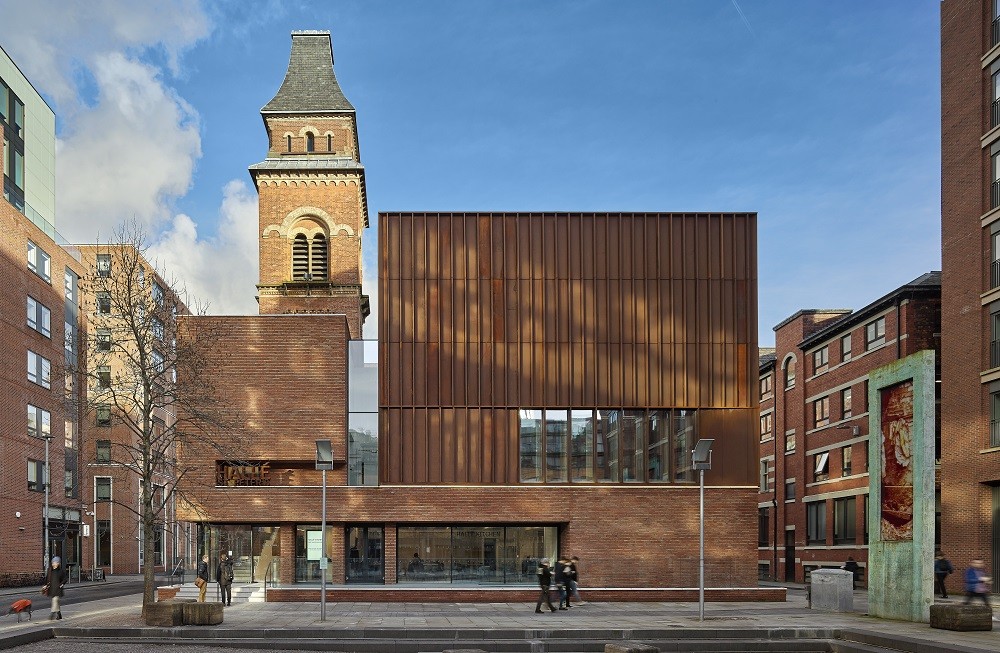
photos : Daniel Hopkinson Architectural Photography
Comments / photos for the Alfred Waterhouse Architect – 19th Century English Buildings page welcome