Palazzo dell’Arte Building Renovation
Dates built: 1931 – 1933
Original Design: Giovanni Muzio Architect
Location: Palazzo dell’Arte building & Triennale Milano Cucina restaurant and café, Parco Sempione, Milan, Italy
The Triennale di Milano is a museum of art and design in Parco Sempione in Milan, in Lombardy in northern Italy. It is housed in the Palazzo dell’Arte, built between 1931 and 1933 to designs by Giovanni Muzio and financed by Antonio Bernocchi and his brothers Andrea and Michele.
Address: Viale Emilio Alemagna, 6, 20121 Milano MI, Italy.
Cucina Triennale Milano:
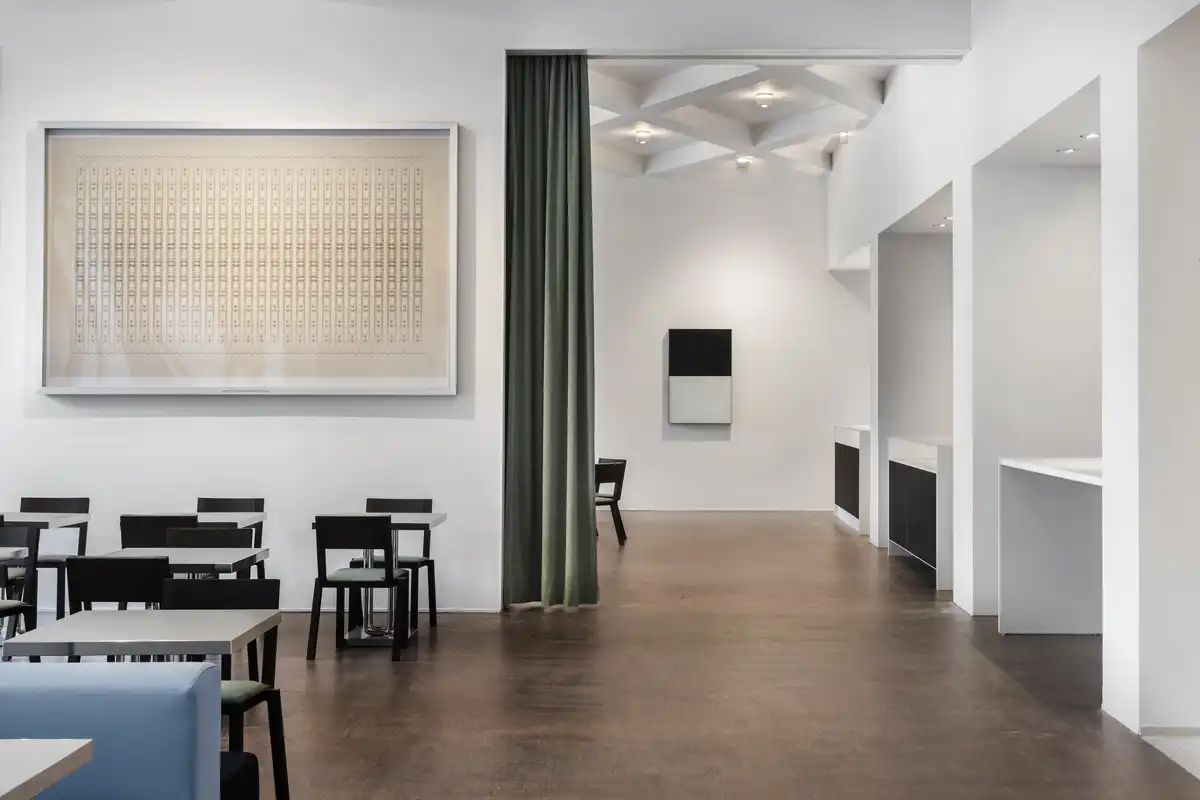
photo : Delfino Sisto Legnani-DSL Studio – per le opere courtesy Galleria Massimo Minini e Studio Alberto Garutti
25 September 2025
Cucina Triennale Milano
Cucina Triennale, the new restaurant and café at Triennale Milano
Cucina Triennale is the new restaurant and café at Triennale Milano, located on the recently renovated Park Level, overlooking a 7,300 square-meter garden.
Open from 10.30AM to 11PM (restaurant hours, 12-3PM and 7-11PM; café hours 10.30AM-9PM), Cucina Triennale is a unique place in Milan to enjoy at any moment of the day — for a leisurely brunch, outdoor lunch, afternoon snack with the family or dinner before a show or concert. Comprising 850 square meters of indoor space, a 215 square-meter triple portico serving as an outdoor terrace and seating for 186 (including 84 outdoors), Cucina Triennale offers an experience that combines conviviality, culture and hospitality.
The restaurant and café menu is curated by T’a Milano, a food company specializing in fine chocolate, catering and custom banqueting, promoting a revolutionary concept in restaurant and hotel services.
With an offering that ranges from breakfast and lunch to dinner and aperitifs, Cucina Triennale is the ideal destination to enjoy fresh food, served elegantly or more simply and informally, and to spend pleasant moments in a welcoming, convivial atmosphere.
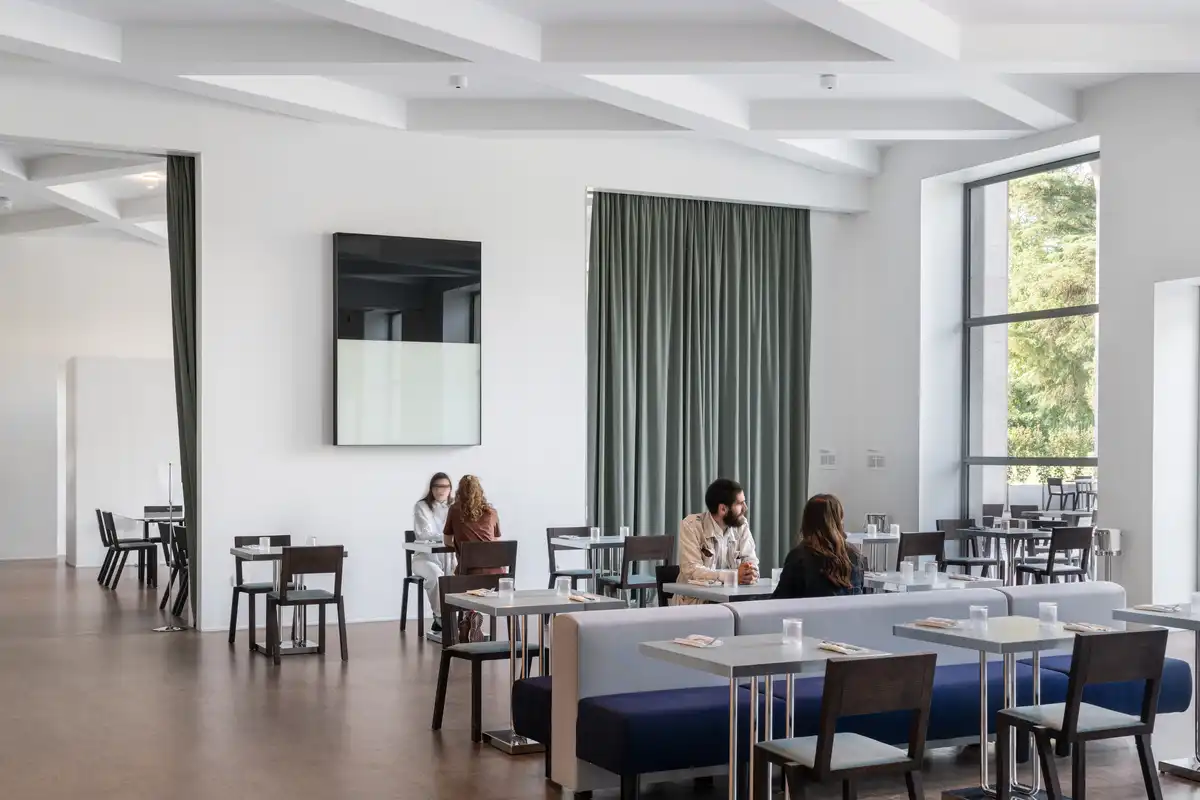
photograph : Delfino Sisto Legnani-DSL Studio – courtesy of Galleria Massimo Minini e Studio Alberto Garutti
Carla Morogallo, General Director of Triennale Milano, stated, “Cucina Triennale was conceived as a space for meeting and conviviality within Triennale Milano. It is a place resonating with the history of the institution where people can feel welcome and spend part of their day, designed for visitors to Triennale, for those coming for lunch or dinner, for families, groups of friends or tourists. The communication with our garden — home to works of art and design as well as numerous species of trees — the large windows and furnishings that evoke the 1930s all combine to make it an ideal space to relax and enjoy a pleasant sense of “suspension” from the hustle and bustle of daily life, while at the same time, being immersed in the dynamic cultural setting of Triennale.”
Alberto Alemagna, CEO of T’a Milano, stated, “We are thrilled with our new collaboration with Triennale Milano, an institution that represents Milan’s cultural excellence and its most authentic soul. This has been a natural step for us in that we share the same values of quality, innovation and deep connection with Milanese culture. Bringing our gastronomic offering into an iconic space like Triennale means creating an experience that goes beyond the food: it is an encounter of taste, art and design, where every dish tells a story and interacts with its surroundings. With this project, we want to offer a vibrant, inspiring place where flavors and ideas blend in a contemporary narrative of Italianness.”
Galleria espositiva Piano Parco:
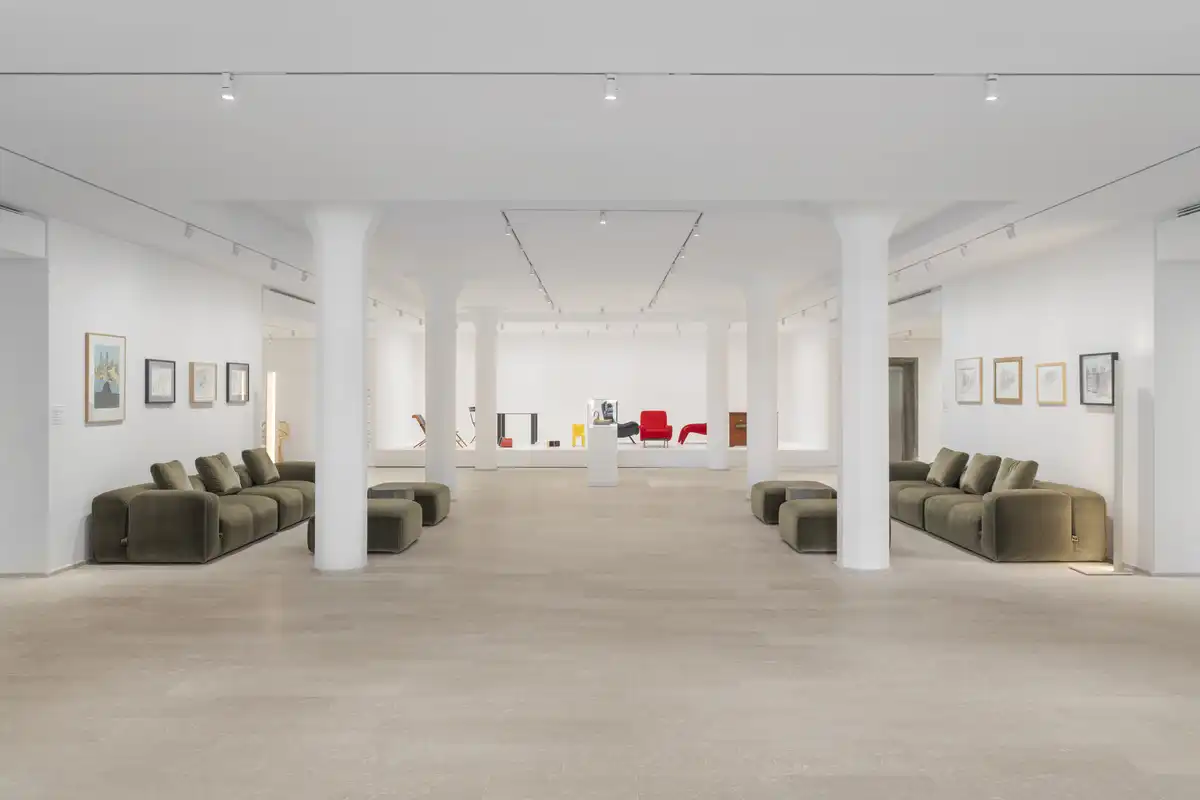
photo © Triennale Milano – foto Delfino Sisto Legnani-DSL Studio
The architectural design and furnishings
The restaurant and cafe have returned to the locations intended for them by Giovanni Muzio, thanks to the architectural design and fixed furnishings by AR.CH.IT Luca Cipelletti, Architectural Director of Palazzo dell’Arte since 2019.
The series of three rooms with industrial wood flooring and overlooking the park also offer the opportunity to enjoy the triple portico with its restored view of Giorgio De Chirico’s fountain Bagni misteriosi, which is finally well-lit and visible without obstructions.
The restaurant occupies two of the three rooms while the café is in the adjacent one, all remodeled to bring out the pleasing continuity of Muzio’s design. Two partitioned areas, also used for exhibitions, are equipped with retractable curtains made of a fire-retardant fabric by Dedar in a green tone that echoes the Triennale Milano lighter shades of the Palazzo’s Cipollino marble. In this way, the rooms can be joined or separated as needed.
Luca Cipelletti, Architectural Director of Palazzo dell’Arte, stated, “The six boiserie niches in Muzio’s original plan have been reinterpreted in a modern, functional key. Batten oak panels were used for the walls with the fixed furnishings, which lighten their appearance, give a vibrancy to the light and have an acoustic function as well. The structural framework is clearly visible with the contrasting white metal perfectly echoing the design of the large tripartite window on the opposite side facing the garden. This interaction is further enhanced by the glass window frames that bring the greenery of the park and de Chirico’s fountain into the interior spaces.”
The lines and volumes of the original rhomboid beam ceilings are ingeniously lit by lighting fixtures that required months of design work by ERCO, Triennale’s lighting partner for the entire level. It took four months of study, in fact, to find a solution capable of illuminating only the coffered ceilings, leaving the underside of the beams in shadow, while at the same time lighting the tables below. This solution marks the first time a contemporary lighting system — dimmable and RGBW — has been able to provide the right light for a ceiling that would otherwise be difficult to light, except with pendant lamps.
Tables and seats were manufactured by UniFor. Drawn and reengineered on the basis of archive images from 1933, the tables echo Gigiotti Zanin’s original design but are updated with a resistant Fenix top. There is also a taller, slimmer table version for the standing bar in the café. The seats, made entirely of wood, padded and stackable, were designed by Marco Maturo of Studio Klass.
The walls of Cucina Triennale display several works by Alberto Garutti, in a tribute to the artist created in collaboration with the Massimo Minini Gallery. The two distinct series of works, Orizzonti (1987 – 2023) and Campionario (2008 – 2018), interact with each other, both dedicated to describing a space for relationships.
At the entrance to the restaurant, in the space leading to the exhibition galleries, there is a set of Le Mura sofas, cushions and poufs, the Additional System armchair, the Mano Light floor lamp and the Altar coffee table designed by Tacchini, all made with fabrics by Dedar.
The restaurant and its menu
For Triennale’s new restaurant project, T’a Milano has created a menu celebrating the Italian culinary tradition, with timeless recipes prepared with a touch of originality alongside more contemporary and international dishes.
Naturally, the restaurant menu features classic Milanese recipes, including risotto al salto alla Milanese, served with a choice of fonduta, gremolada di ossobuco or a Sauternes reduction, veal cutlet with piccadilly tomatoes and rocket and cockerel al mattone, but there are also dishes based on other regional traditions, such as veal in tuna sauce with vegetables and crispy capers, tajarin in white meat ragù, beef tartare with mustard sauce, bread chips and mixed salad and warm Messina-style eggplant caponata. The menu also features a number of more international dishes, such as mini-French toast with truffles and mini lobster rolls or dishes made with meats from around the world, including Argentinian angus (grilled fillet with brown sauce), American angus (sliced with oil, rosemary and Maldon salt) and Wagyu (bresaola with raspberry purée and brioche). Also on offer are various vegetarian and vegan dishes. All Triennale Milano meals can be accompanied by a fine selection of sparkling wines, champagnes and Italian and French white, red and rosé wines.
A variety of desserts offer the final touch: reinterpretations of typical Italian desserts, such as tiramisù created directly at the table, freshly filled cannoli, caprese cake and pear and chocolate cake, and, of course, last but not least, gelato, cheesecake and a tasting of T’a Milano’s own pralines.
A children’s menu is also available.
Bar and café services
Cucina Triennale is ideal in the morning for breakfast, but also later for lunch, an aperitif or a relaxing gourmet break. The café menu, again curated by T’a Milano, offers a choice of hot and cold drinks — herbal teas, fresh squeezed juices, natural extracts, soft drinks, wines, aperitifs and alcoholic and non-alcoholic cocktails — a selection of sweet and savory pastries and an extensive menu of hot and cold dishes, from salads, cold cuts, appetizers, pasta and meat courses to fruit salads and desserts. In some cases, the menu may vary from day to day to ensure maximum freshness and quality.
The café is proud to serve blends from Lavazza’s “La Reserva de Tierra” line, obtained from sustainability projects in select territories. During the summer, the café also offers a selection of artisanal gelato produced by T’a Milano. A special Cucina Triennale line of pralines and desserts will also be available soon.
For aperitifs, the drink list offers classic and signature cocktails, accompanied by a selection of savory snacks and platters.
Voce’s cocktail bar
The cocktail bar, run by T’a Milano and entrusted to bartender Daniel dell’Olio, is open on evenings when concerts, dj sets or other initiatives are scheduled in Voce — the new space dedicated to music and sound. In addition to popular Spritz Cocktails and Classic Cocktails, the bar offers a selection of Sour Cocktails, Gin Tonics and Mocktails. There is also a wide range of bottled beers, both artisanal and traditional, spirits and soft drinks. Italian and French sparkling wines and red and white wines are available by the glass or bottle, providing an outstanding selection of refined labels and great vintages. Campari is Voce Triennale’s Experience Partner, accompanying the evenings dedicated to music.
Triennale Milano would like to thank its architectural lighting partner ERCO, design partner Unifor, Voce Triennale Experience Partner Campari, technical partner Cucina Triennale Grandi impianti AliGroup, technical partner Tacchini, textile partner Dedar, institutional partners of Triennale Deloitte and Fondazione Deloitte, the Lavazza Group and Salone del Mobile.Milano.
+++
Voce Triennale Milano
Voce Triennale, a new space dedicated to music and sound
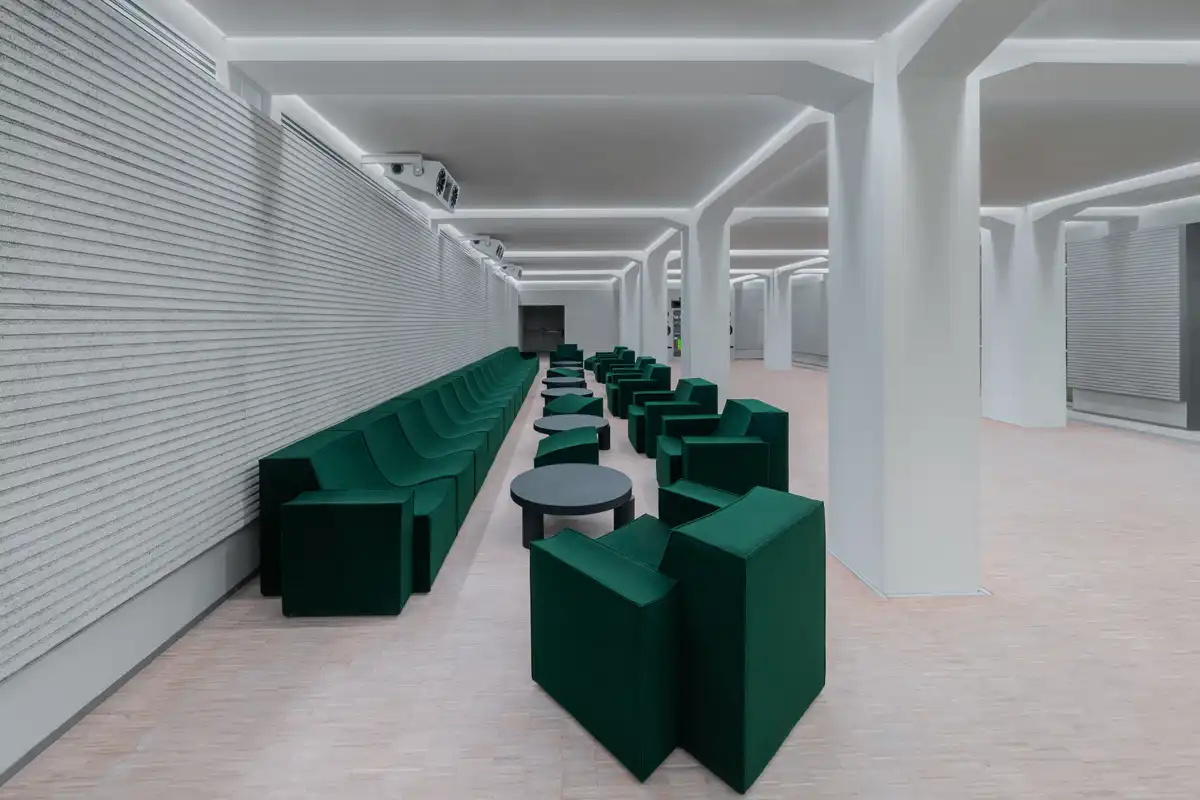
photograph : Delfino Sisto Legnani-DSL Studio
Triennale Milano unveils Voce, a new space dedicated to music and sound, an adaptable and multifunctional soundscape with exceptional acoustic and lighting qualities that will open its doors to the public on Tuesday, May 13, 2025.
Located on the park level at Palazzo dell’Arte, Triennale Voce is an independent 300-square-meter space with over 700 square meters of adjacent gardens, conceived to host Triennale’s music programming. The venue will present live concerts, DJ sets, listening sessions and sound installations, as well as a series of meetings, training activities and workshops devoted to sound and listening. Uniquely, Voce offers a collection of new musical works that can only be appreciated by the public in this space. There is also a cocktail bar, open from Tuesdays to Sundays from 6 pm to 2 am.
Voce was conceived as a venue for experimentation and cross-contamination between genres and expressive languages, promoting sound research and the preservation and enhancement of musical works, audio archives and intangible heritage. The space explores electronic and digital output in dialogue with contemporary research, much of which is squarely based in Milan. Voce’s remit was devised with scientific consultant Carlo Antonelli with the aim of creating a space for hosting intangible projects, with a prime focus on listening.
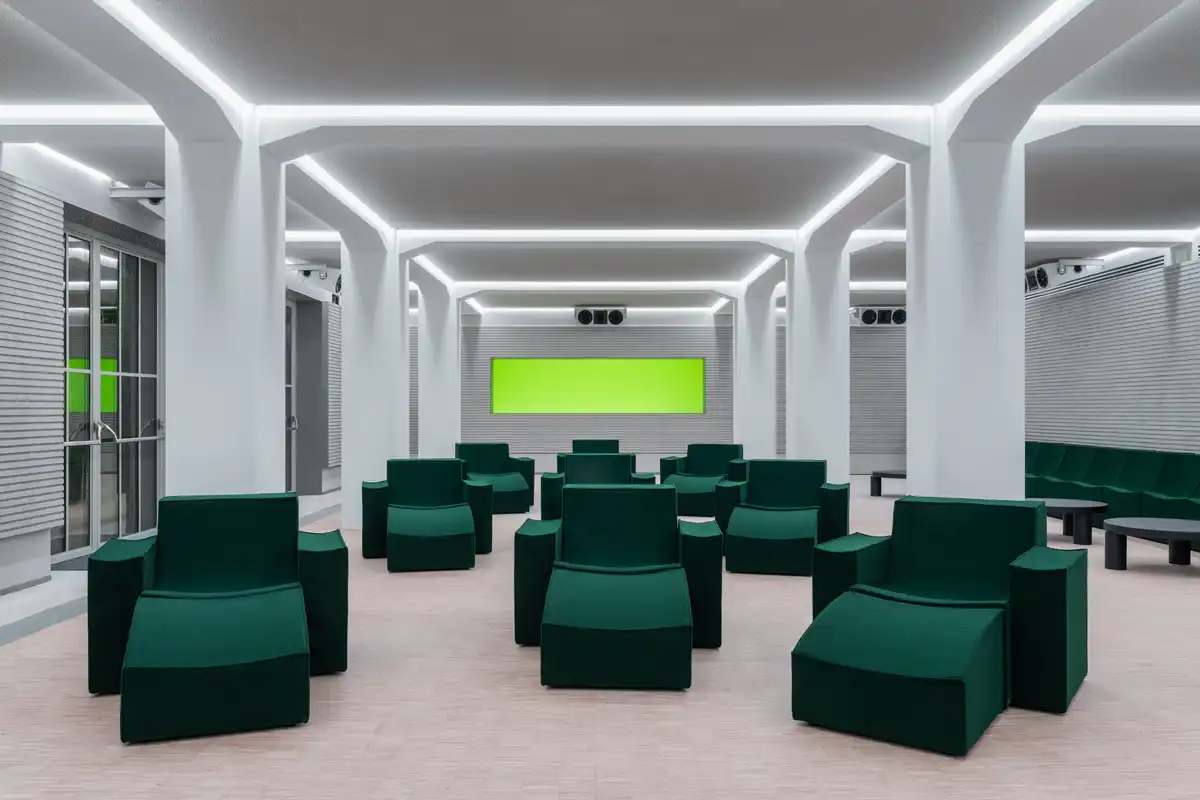
photo : Delfino Sisto Legnani-DSL Studio
Stefano Boeri, President of Triennale Milano, says, “Voce Triennale is a space totally dedicated to listening to music. In a Palazzo that for 90 years has hosted a unique and wide-ranging array of images, artworks and visual performances, we have decided to create a space for listening, for enjoying music—live and recorded, high quality and of diverse genres—in a sound and acoustic environment that is technically more appropriate and less distracting due to the absence of visual stimuli. Voce will be a place for music enjoyment of the highest quality and live music. It is also a space designed to trigger new ideas and creative accelerations—which only interaction with a single work, in a dedicated space, can do. That is why in Triennale Voce we want to create an actual collection of musical works that can only be appreciated in this space, in the same way that a Renaissance painting or Baroque sculpture can only be appreciated in an art museum.”
Carla Morogallo, Director General of Triennale Milano, says: “The birth of this new space marks a historic turning point in the life of the institution, which has taken over its direct management in January 2024. Reconnecting this space with the rest of the building means confirming disciplinary integration without spatial separations, with a view to evolutionary and continuous cultural experimentation. The birth of Voce follows that of Cuore, a space dedicated to the valorization of archives, with the intention of drawing a clear line of development of Triennale’s cultural strategy in dialogue with different types of audiences.”
Voce returns to Triennale a place dedicated to music, present since the inauguration of the Palazzo dell’Arte in 1933 (as “dancing”), a space that in the 1950s became the radiating point for Rai’s third channel programs and that from the mid-1960s welcomed the Piper, a “branch” of the much more famous Roman temple of the night, where in 1968 the legendary Jimi Hendrix concert took place.
Voce emerges out of a series of structural works conducted across the entire park level. Renovation of this floor is part of an architectural redevelopment of Palazzo dell’Arte that the institution is pursuing in order to achieve three main objectives: enhancing Giovanni Muzio’s original 1933 design; upgrading the building’s energy performance and sustainability; and restoring functionality to spaces to ensure greater accessibility and a more contemporary feel.
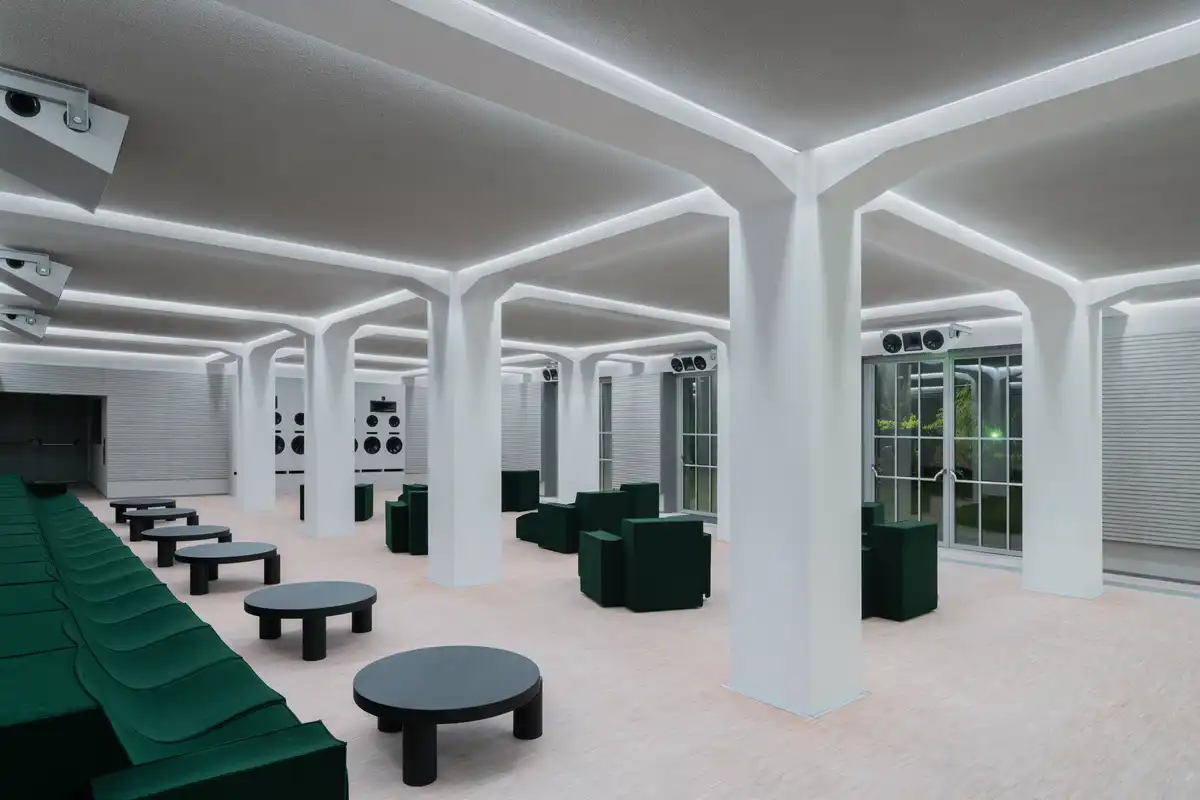
photo : Delfino Sisto Legnani-DSL Studio
Characteristics of the Architecture and Space
AR.CH.IT Luca Cipelletti developed the concept, architectural design and space layout. Originally conceived in 1933 by Giovani Muzio and revamped through this project, the architecture’s rectangular framework is supported by a system of pillars that carves out three asymmetrical naves. A 2.2-metre-high band of sound-insulating, sound-absorbing and sound-reflecting panels encircles all of the walls and covers the ceiling.
The centrepiece of the project is a soundwall that uses a sophisticated, distributed-mode speaker system to reproduce sound and enable top-quality immersive enjoyment of sound content. Giorgio Di Salvo, a designer, musician and builder of hi-fi systems, Lucio Visentini, an acoustic engineer who has previously worked for the Triennale Theatre, and Knauf, a leading manufacturer of acoustic panels, were all involved in the audio and acoustic design.
The space was also conceived with dynamic lighting to enhance the architectural features, designed by Alberto Saggia and Stefania Kalogeropoulos’s studio, Anonima Luci. A pixel-to-pixel digital LED system using 350 meters of LEDs and over eight kilometers of cabling (electrical, data and signal) architecturally cadences the space into bays, offering the option of creating both monochromatic and gradient animation effects across the space.
To ensure Voce’s adaptability to different scenarios and output, British-Canadian designer Philippe Malouin custom-designed a modular felt seating system with visible stitching, which was made by Meritalia. The layout consists of a long sofa along one of the side walls, with listening station armchairs and couches in the center of the space, and small lounges arranged around the perimeter, much like in a classic club.
Triennale commissioned Marcello Maloberti to design a luminous TRIENNALE VOCE sign in white neon. Traced out in the artist’s signature style, the sign is positioned on the institution’s exterior wall, near the entrance to the new space.
The word becomes light, stressing the importance of spoken language and sound as artistic and experimental practice. In the gardens there is a second installation by Maloberti: a neon MOON that stands out against the Milan sky: a kind of anti-monument monument, a poetic act.
Collection of Unpublished Musical Works
Triennale Milano has decided to create a collection of musical works produced especially for Voce, which can only be listened to at this venue. It is Triennale’s intention to restore an aura of uniqueness to the experience of listening to a musical production that has been both enhanced and transformed by various optimal conditions for enjoying the works, whether they are songs, symphonies or live recordings. The pieces that will be produced for or gifted to this collection— whether symphonic pieces, solos, vocals, choirs, compositions, or songs—, will be a tangible presence for all to experience exclusively in dedicated, carefully curated conditions at Voce, just as paintings are appreciated in a gallery.
At Voce music will acquire the status of a work of art among other artworks. Just as Mario Sironi’s sculptures and de Chirico’s I Bagni , or the prototype of Gio Ponti’s Superleggera did at Triennale. Triennale is gathering the first contributions, several of which were produced at Voce, which will steadily enrich the collection of musical works. Many of them are to be experienced as site-specific pieces.
Programming
Voce’s musical programming, thanks to the curatorial coordination by Damiano Gulli, will run throughout the year. Featuring established and emerging Italian and international artists, the venue will present some of the most interesting musical projects on the contemporary scene.
Triennial Voice unites different projects, experiences, and fields through the participation of numerous contributors: All Things Live Italia; Archivio Storico Ricordi; Associazione NoMus ETS; Big Picture Mgmt; CAM Sugar; Chora & Will; DNA Concerti ed Eventi; Elasi; Fondazione Teatro alla Scala; Francesco Fusaro; Davide Giannella; Hyperlocal; La Tarma; Le Cannibale; Alina Marazzi; Movement Entertainment; Nao Uao; Offbeat Agency; OTR Live; Lorenzo Palmeri; Carlo Pastore; Polifonic; Ponderosa Music & Art; Radio Raheem; Nicola Ratti; Lele Sacchi; Lorenzo Senni; SZ Sugar; Threes Productions; Tommaso Toma; TEMA; Virus Concerti.
Voce will present musical events and activities every evening. During the summer months, through two outdoor stages, the Triennale Garden will also be activated in an effort to further expand the offerings of events, concerts and activities.
Among the many artists who will be performing from mid-May to the end of July: the co-founder and keyboardist of Subsonica Boosta (May 16), the Danish band The Raveonettes (May 29), the emerging star of the Neapolitan scene La Niña (June 11), the protagonist of the contemporary electronic scene Christian Loffler (July 3), the historic voice of Portishead Beth Gibbons with her first solo album (July 11). The same period will also feature special collaborations with Kappa Future Festival and Terraforma Exo and two reviews developed with Polifonic and Le Cannibale, respectively.
In addition to live music, Voce has put together a packed schedule of meetings, lectures and events centering on sound-and listening-based themes. These include Orbita, a format produced by Chora and Will in collaboration with Triennale, dedicated to live storytelling, narrations and the exploration of themes arising from Chora and Will’s podcasts, and to the presentation of new series.
Other regulars are Unexpected Matches, a series of events conceived by director Alina Marazzi to investigate relationships between the filmic image and music, inviting musicians and DJs to create soundtracks for rare and little-known films and materials from archives and film libraries; Hyperlocal, a talk format produced by the media platform Zero which focuses on cultural scenes and related neighborhoods; Matinée, a strand of acoustic and electro-acoustic morning concerts curated by Nicola Ratti; Anatomia del suono, a feature curated by Lorenzo Palmeri that triggers dialogue between musicians, producers and singers, building bridges between design and music culture; and a cycle curated by Tommaso Toma featuring The Hives and other international star guests. There will also be an investigation into Archivi Sonori, based on the themes of preservation, archiving, and the enhancement and narration of sound materials, with the participation of Fondazione La Scala, Casa Ricordi, Associazione NoMus ETS and SZ Sugar. Voce will be also devoted to radio production, starting with the cultural contribution made by web radio, including Radio Raheem, which has been broadcasting from Triennale since 2019.
Autumn events at Voce include Milano Music Week and JAZZMI, regularly featured at Triennale’s theatre and now extended to Voce. A number of new formats will be launching in the autumn: When Tradition Meets Synthesizer, a series of events curated by Elasi to foster dialogue among traditional musicians and young producers, resulting in genre-hopping, boundary-free jam sessions; Musica Infinita, a feature curated by NTS radio host Francesco Fusaro on contemporary classical music; a series of concerts and performances curated by musician Lorenzo Senni; and The Night We Met, curated by Davide Giannella, in which research and experimentation in the visual and performing arts are explored in relation to that in music and sound, revealing the interaction between the two.
Cocktail Bar
The Voce cocktail bar—open from Tuesday till Sunday, from 6 pm to 2 am—will be managed by T’a Milano. In the tradition of the great Italian cocktail bars, bartender Daniel dell’Olio has created a drinks list of classic and signature cocktails: mirror and memory of the venue’s previous incarnations. There are Spritz, Classic and Sour Cocktails, Gin & Tonic and Mocktails. These are accompanied a large selection of craft and traditional bottled Beers, a line of soft drinks, and spirits embracing niche brands and all-time greats. Italian and French bubbly, red and white wines are available by the bottle or glass, and the connoisseur labels and grands millésimés make this an even more attractive offer.
Opening Times
Triennale Voce will be open from Tuesdays to Sundays, from 6 pm to 2 am. Voce is accessible both from inside Palazzo dell’Arte and from Viale Camoens. In the first month, Voce will also be open for daytime visits from 10:30 am onward. The space launches to an audio-visual track showcasing its cutting-edge technical potentialities. This sequence sprang from the dialogue and collaboration between Carlo Antonelli, Giorgio Di Salvo, Anonima Luci, and Lorenzo Senni, who created two new pieces for Voce.
Triennale Milano thanks Partner Campari, Textile Partner Dedar, Technical Partners Remuzzi Marmi, CeaDesign and Lualdi, and Institutional Partners Deloitte and Fondazione Deloitte, the Lavazza Group, and Salone del Mobile.Milano for supporting this project.
+++
Gioco Triennale Milano
Triennale has a new creative space for kids: Gioco
photograph © smarin
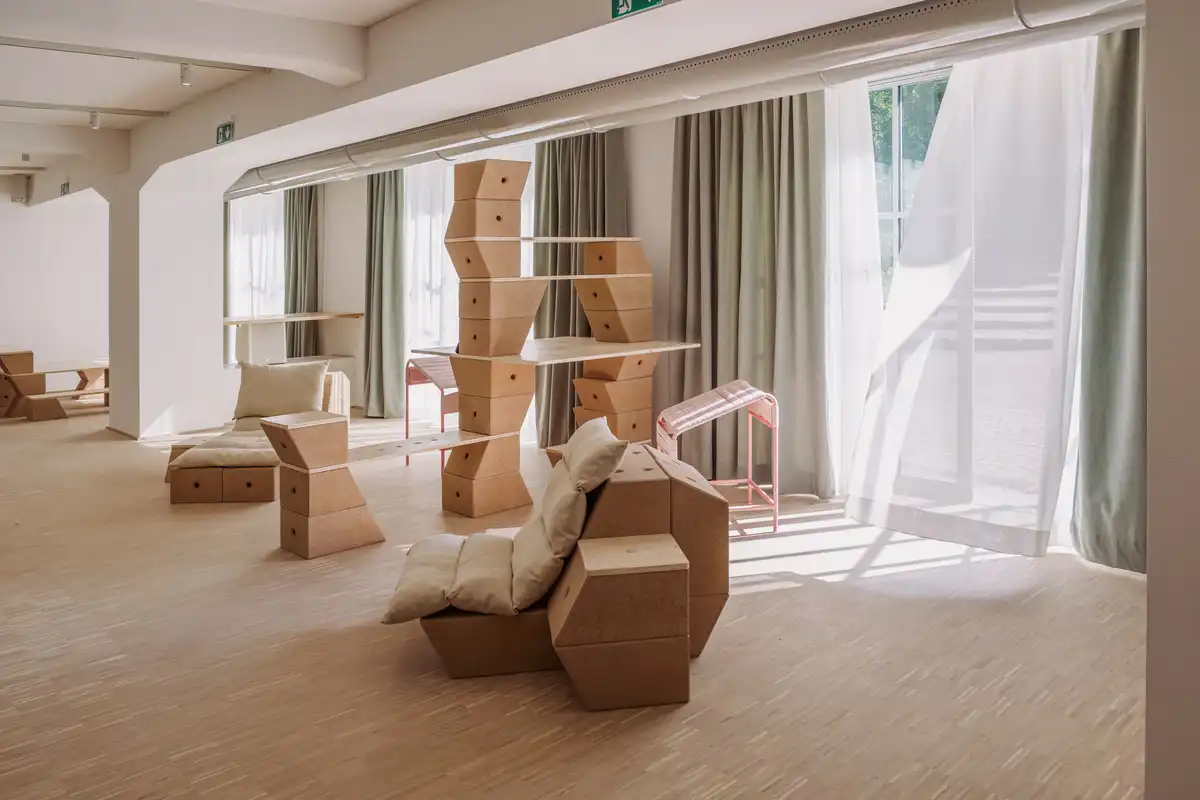
As part of the redesign of the Piano Parco, which has been completely renovated and was opened to the public last May, Triennale Milano has created Gioco, a new space dedicated to kids of all ages. A place that is open to everyone all day long, offering space for imagination and creativity to thrive and embracing different kinds of activity, both active and contemplative. Gioco hosts events and workshops led by Triennale Education Department, but families can also make free use of the space.
The opening of Gioco is an important step forward on the road that Triennale launched with its strategic plan 2022-2026 and the Triennale Manifesto for families, presented in February 2025, which sets out the principles guiding the institution on its path towards visitor welcome and accessibility, directed at all components of all family units.
Like the rest of Piano Parco, the design of the Gioco space was entrusted to AR.CH.IT Luca Cipelletti, while the furnishings were designed by the French studio smarin, which specializes in the creation of spaces for interaction and collective invention.
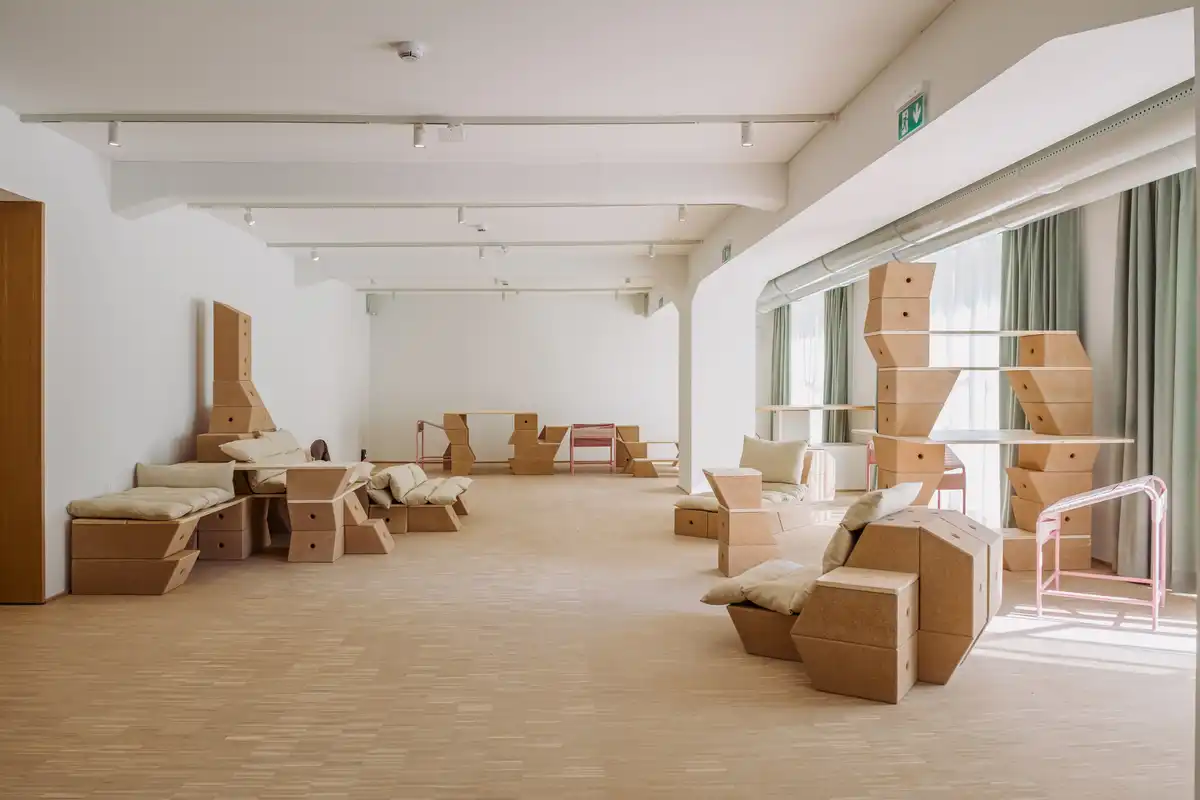
photo © smarin
The furnishings are based on modular blocks of cork and flat surfaces in solid pine, materials selected for their sustainability, longevity and sensory qualities. Assembled without nails or screws, the blocks can be combined to create desks, seats, partitions, loungers, storage units or play structures. The smarin studio has proposed a flexible solution that meets Triennale’s needs for a space that can be quickly reconfigured based on the uses to be made of it.
In just a few minutes, the environment can be transformed to create a work space, a dance studio, a screening room, a play area or a haven for peaceful relaxation. The lightweight modular elements allow the space to open up or divide fluidly, encouraging spontaneous and creative use. When more free space is required, the blocks can be stacked and compactly stored to keep the environment free and adaptable without effort. Rooted in the cultural life of the institution, Gioco is a shared experiment in design, where girls and boys are free to move, think and create.
The space has been designed taking into account the needs of museum visitors with children: there is a stroller parking area, lockers for personal belongings, a water dispenser and a toilet with baby-changing facilities. For snacks, lunch and dinner, a children’s menu is available at the restaurant and café Cucina Triennale, also located in the Piano Parco.
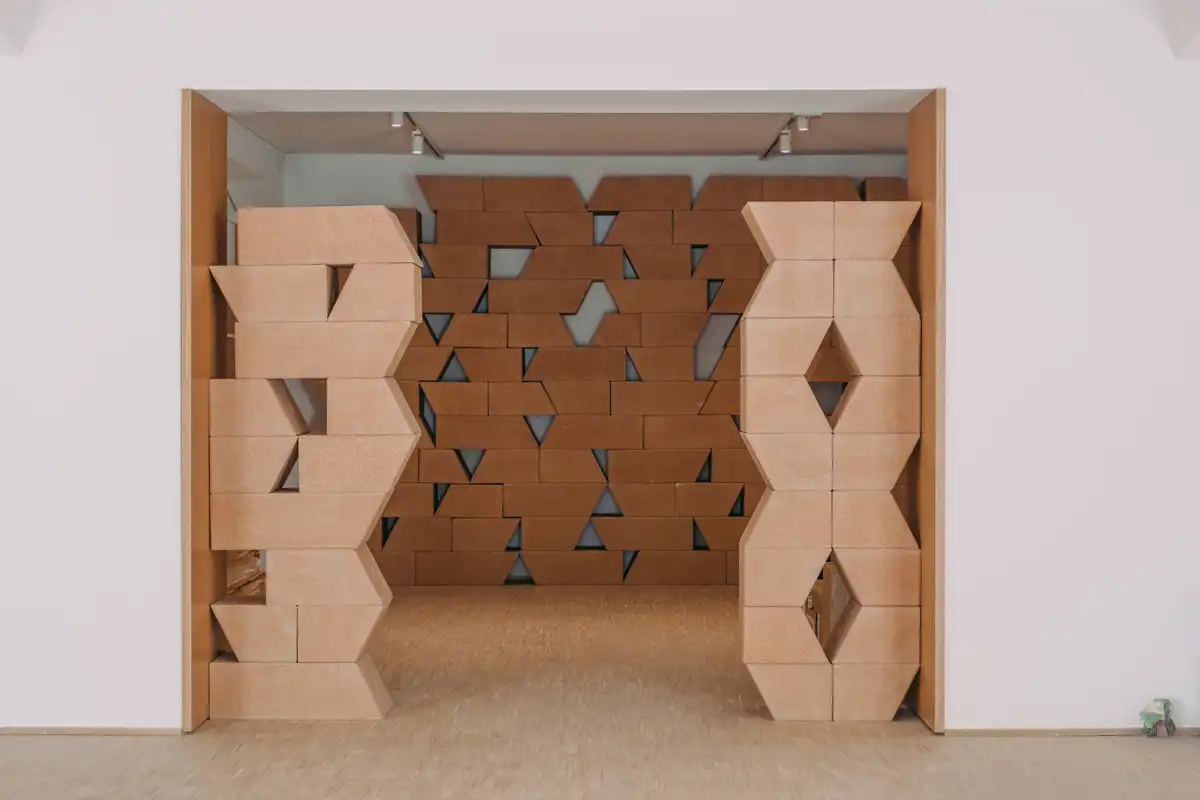
photo © smarin
Gioco is open from Tuesday to Sunday, from 10.30 am to 20.00 pm: families visiting Triennale will find a wealth of materials here that attract kids to play and interact, to consult and use as they like. There are modules and tools for playing, planning, building and designing in a dedicated, cozy space, to encourage creative thought and concentration. There is also a wide range of books and illustrated books in Italian and English, selected from leading international children’s authors. For greater accessibility, the book collection includes AAC (augmented and alternative communication) books, silent books (in which the story is told through the illustrations alone) and books that introduce children to LIS (Italian sign language). All the Triennale Junior Albums are also available: these are a series of illustrated publications with activities, interesting information and further details focusing on the exhibitions.
Gioco hosts workshops for children, initiatives aimed at schools of all levels and age groups and educational experiences inspired by the exhibitions and shows on Triennale’s program. Until November 9, there will be workshops and activities on offer dedicated to the 24th International Exhibition, Inequalities.
Gioco also hosts events from the public program aimed at families: a series of educational sessions for adults and courses to accompany growth, such as the cycle of seminars titled Officina Famiglie Let’s Talk! devoted to topics such as emotional education, food education and gender identity.
The creation of this space is part of the recent works involving the whole of the Triennale Piano Parco: it is the largest project in the architectural and functional redevelopment of the Palazzo dell’Arte to be carried out so far, in a remarkable work of design and collaboration involving all the Piano Parco interiors, covering 2,300 sqm (excluding the Theater auditorium, which underwent redevelopment in 2020), as well as the exteriors, with 7,300 sqm of gardens, the portico and the facade.
Triennale Milano would like to thank our Education Partner, Scalo Milano, our Textile Partner, Dedar, and our institutional Partners Deloitte and Fondazione Deloitte, Lavazza Group and Salone del Mobile.Milano.
Triennale Milano Opening Times
Tuesday – Sunday
10.30 – 20.00 (last admittance 19.00)
Triennale Milano
Viale Alemagna 6
20121 Milan
Tel. +39 02 724341
www.triennale.org
Palazzo dell’Arte building renovation, Triennale Milano, Milan, Italy images / information received 250925
Location: Milan, Lombardy, north Italy, southern Europe
Milan Architecture
Milan Building Designs – chronological list
Milanese Building Designs
Contemporary Milanese Architecture
Magnifica Fabbrica Milan for La Scala, Lambrate district
Design: FRPO, Walk, and the SD Partners studio
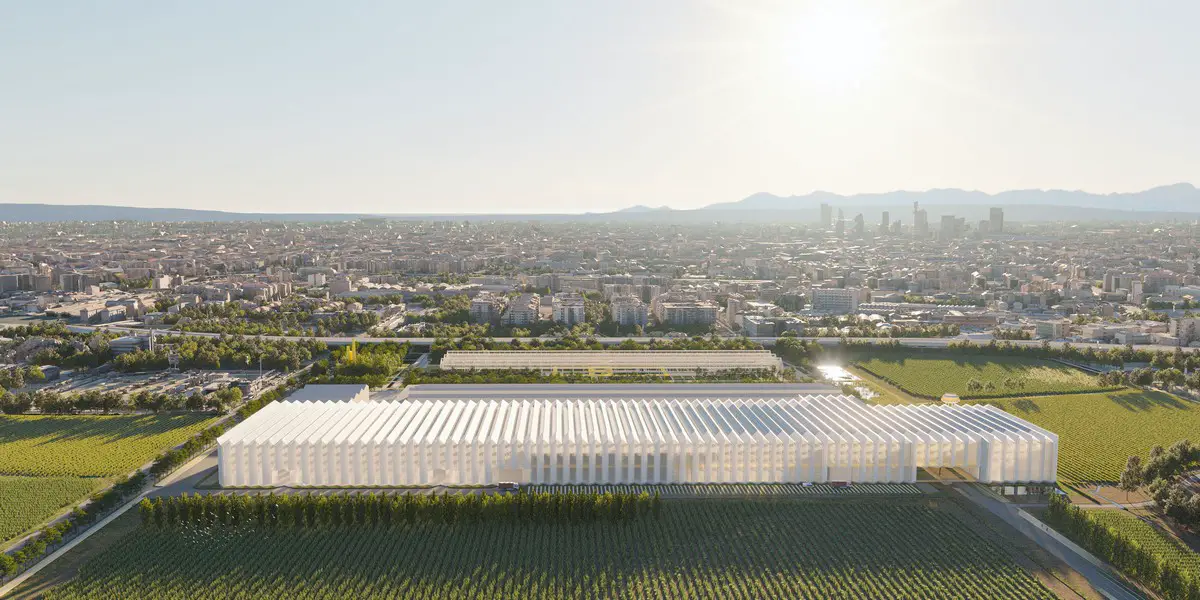
image courtesy of architects practice
Generali Tower Building in Milan
Design: Zaha Hadid Architects
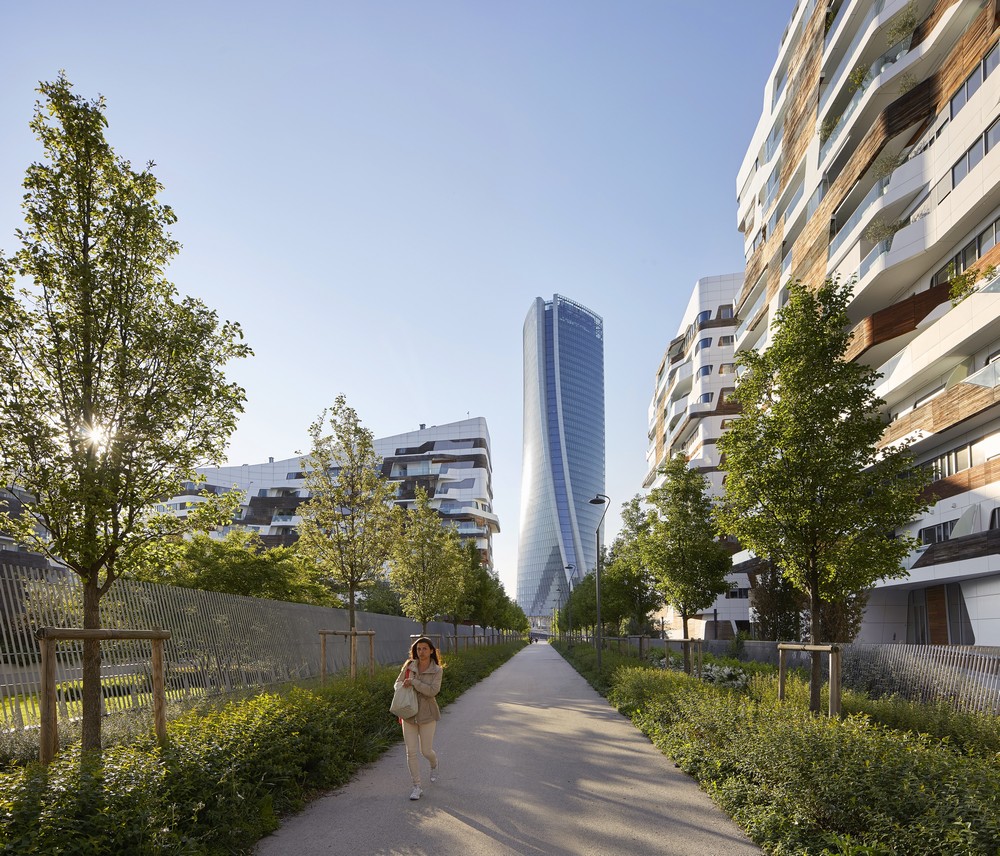
photo © Hufton + Crow
Gucci Hub Milan Headquarters Building
Triennale Milano: Ukrainian Pavilion News
+++
Italy Architectural Designs
Italian Architecture Designs – chronological list
Comments / photos for the Palazzo dell’Arte building renovation, Triennale Milano, Milan, Italy design page welcome.