
Voco Osaka Central Hotel in Japan
29 March 2026
Design: NAO Taniyama & Associates
Location: Nishi Ward, Osaka, Japan

Photos by Kentaro Kumon
Located in the heart of Osaka, Japan, voco Osaka is a premier hotel that offers a unique and unforgettable experience for its guests. Situated in the Nishi Ward, the hotel is nestled in a bustling area surrounded by vibrant streets, restaurants, and entertainment options. With its stunning architecture and modern design, voco Osaka is a standout landmark in the city.
The hotel boasts a range of luxurious amenities and services, providing guests with a comfortable and relaxing stay. From its elegant rooms to its state-of-the-art facilities, voco Osaka is the perfect destination for both business and leisure travelers. With its convenient location and exceptional hospitality, the hotel is an ideal choice for those looking to explore the city and all it has to offer.

Whether you’re interested in history, culture, or entertainment, voco Osaka is the perfect base for your Osaka adventure, offering a truly unforgettable experience.
Project Overview
voco Osaka Central marks the debut of IHG Hotels & Resorts’ premium brand voco in Japan, established in Kyomachibori, Osaka. The hallmark of this project lies in the reconstruction of the history and memories engraved in the land into a contemporary spatial experience, rather than a superficial reproduction. Using the context of the 1926 Kyomachibori Building site as a guide, we transformed a wooden structure inspired by the Kura (storehouses)—symbols of the city’s past as a center of logistics and commerce—into an installation using reclaimed wood and traditional carpentry techniques. Furthermore, elements such as reliefs, doors, and mailboxes used in the former Kyomachibori Building were reconfigured and incorporated throughout as art and spatial elements. By abstracting memories of the past and converting them into new value, we have realized a unique urban hotel experience that brings tranquility and depth to the city.

What inspired you to come up with this project? What were your motives, thoughts etc? Where did you get the inspiration for this design or project? What is the technical or research background?
The inspiration for this project lay in reconstructing the memories accumulated within the land and architecture—often lost in dense urban environments—into a contemporary stay experience. The site, Kyomachibori in Osaka, developed as a hub for commerce and logistics, forming a cityscape lined with Kura (storehouses), while the 1926 Kyomachibori Building long served as a cherished landmark. Rather than a superficial reproduction of history, we abstracted the structural rationality of the storehouses and the memories of the original exterior reliefs and fixtures, re-editing them into spatial elements. The reconfiguration of reclaimed wood and existing components, along with the application of traditional carpentry techniques, is based on practical research aimed at updating past values and connecting them to the future. Our goal was to present a new form of urban hotel where the memories of architecture and the city breathe quietly.

How was the design made?
The production of this project began with an analysis of the history of Kyomachibori, where it developed as a hub for logistics and commerce, and where Kura (storehouses) supported both the cityscape and its functions. We focused on the rational philosophy and structure of the Kura—preservation, accumulation, and circulation—and adopted a design method that translates these concepts into a modern hotel space. The timber structure in the lobby, assembled using traditional carpentry techniques with reclaimed wood of various histories, functions as a spatial device that abstracts the framework of a Kura. This structure is not merely decorative; it was planned as a frame to generate human flow, sightlines, and areas for lingering. Throughout the overall design, the concepts of repetition, depth, and margin found in Kura were applied to the spatial composition, integrating historical rationality with contemporary comfort. By reinterpreting the memory of the land at a structural level, we realized a new form of urban hotel.

Please tell me more about the timber structure which is the feature of the hotel?
The timber structure at the center of the lobby is an installation that modernly reinterprets the framework of an Edo-period Kura (storehouse). The reclaimed wood used was meticulously selected and reinforced, assembled with joints based on traditional carpentry techniques, and designed with a modular layout considering load-bearing capacity and visual depth. The repetitive patterns and layered structure of the beams and columns project the rhythmic qualities and Yohaku (margins) unique to Kura into the space. By finely adjusting the texture of the materials, the expression of the knots, and the color tones of the finishes, a tranquil experience that suppresses urban noise is provided. The structure itself maintains its own artistic integrity; integrated with lighting and circulation planning, the design naturally guides visitors’ gaze, allowing them to experience the spirit of the Kura and the memory of the city.
How can this object be operated, how does it transform, how the interaction happens, what are the key frames, how does it deal a better result, why does it perform better:
Upon arrival, visitors are welcomed by a large decorative timber structure at the entrance, leading them into the lobby while evoking the history and memories of Kyomachibori. Guests can freely circulate through the reception, restaurant, and cafe & bar, where decorative elements and artwork from the former Kyomachibori Building are scattered throughout, gently connecting the past and the present. The design, which abstracts the timber devices and the forms of Kura (storehouses), creates a sense of unity and warmth within the space, allowing visitors to naturally enjoy their own time while remaining distanced from the urban bustle. This experience achieves a balance between uniqueness and comfort by transforming historical elements into contemporary design.

Voco Osaka Central hotel building in Japan – Building Information
Architects / Designers: NAO Taniyama & Associates – https://nt-a.jp/

Photographer: Kentaro Kumon
Voco Osaka Central, Japan hotel building images / information received 200326
Location: Osaka, Kansai Region, island of Honshu, Japan, East Asia.
Osaka Buildings Designs
W Hotel Osaka
Design: Concrete

photo : marriott international
Buildings in Osaka, Kansai Region, island of Honshu
Tojiro Knife Gallery, Osaka
Design: Katata Yoshihito Design (L/O)
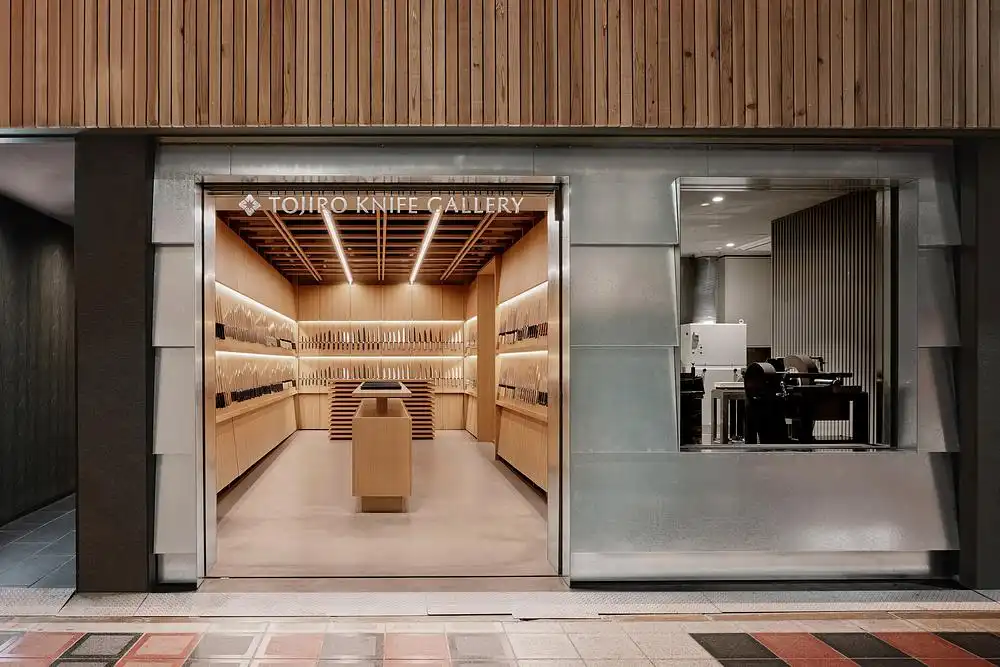
photo : Masaaki Inoue
Czech Pavilion at Expo 2025 Osaka, Japan building
Design: Apropos Architects
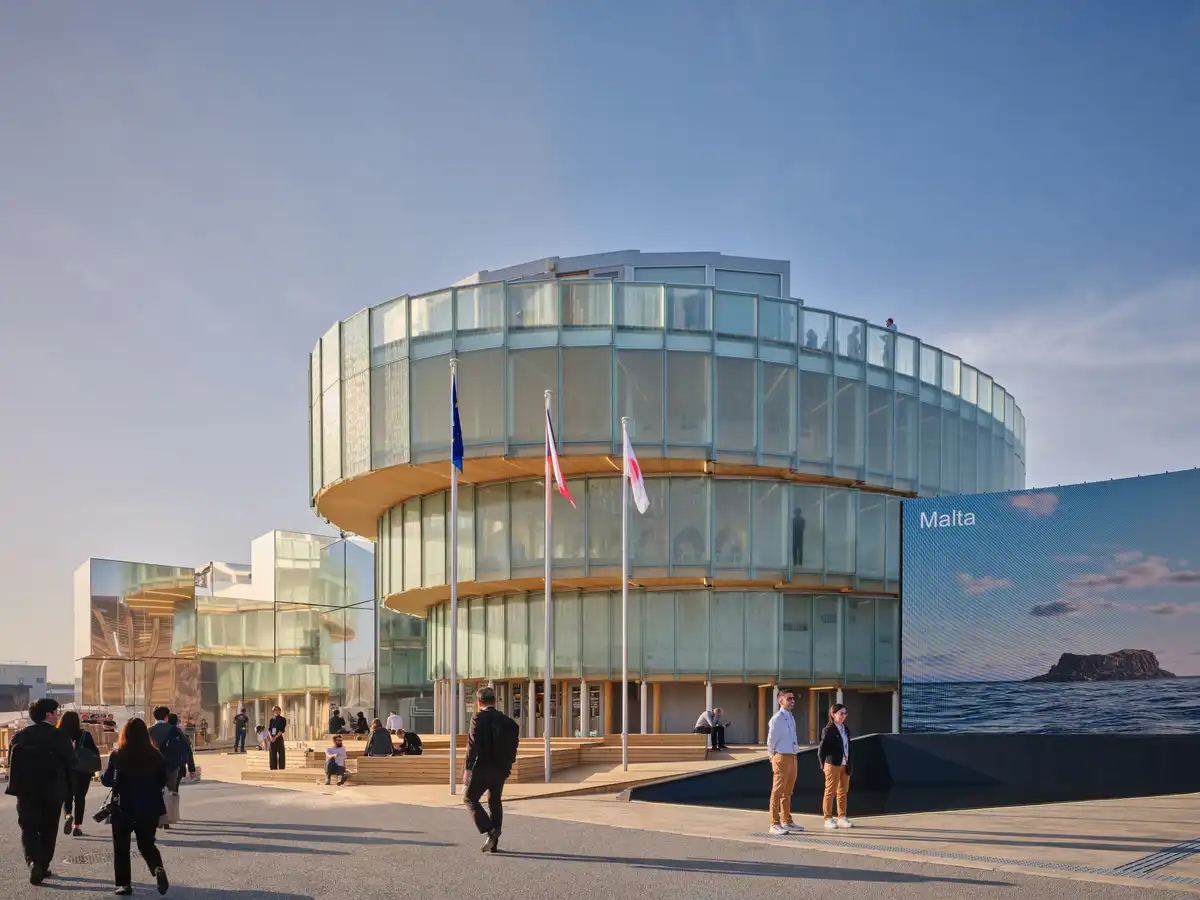
photo : BoysPlayNice
Qatar Pavilion at Expo 2025 Osaka, Japan
Design: Kengo Kuma and Associates
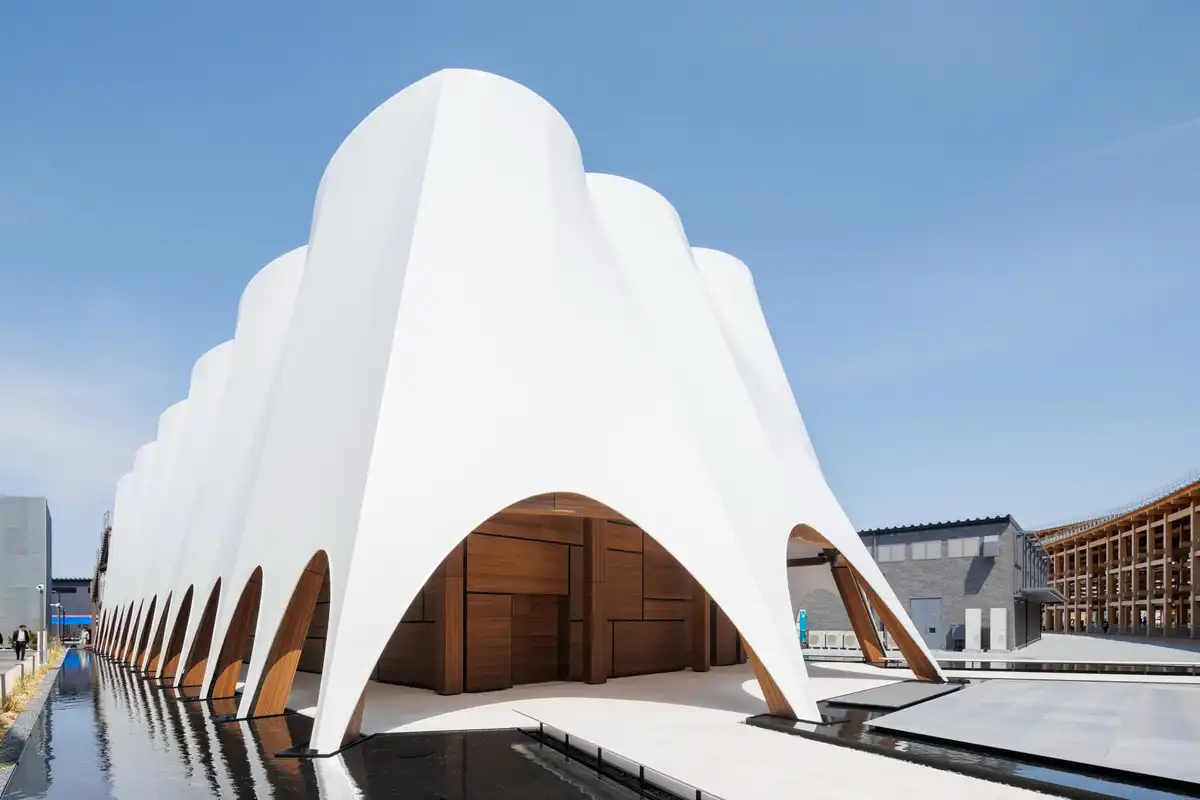
photo : Iwan Baan
KSA Pavilion at Expo 2025 Osaka Building
Design: Foster + Partners
++
Japanese Architecture
Japanese Architecture Design – chronological list
Japanese Architecture – Selection
++
Japanese Hotel Designs
vertex by NOT A HOTEL, island of Okinawa
Design: Zaha Hadid Architects (ZHA)
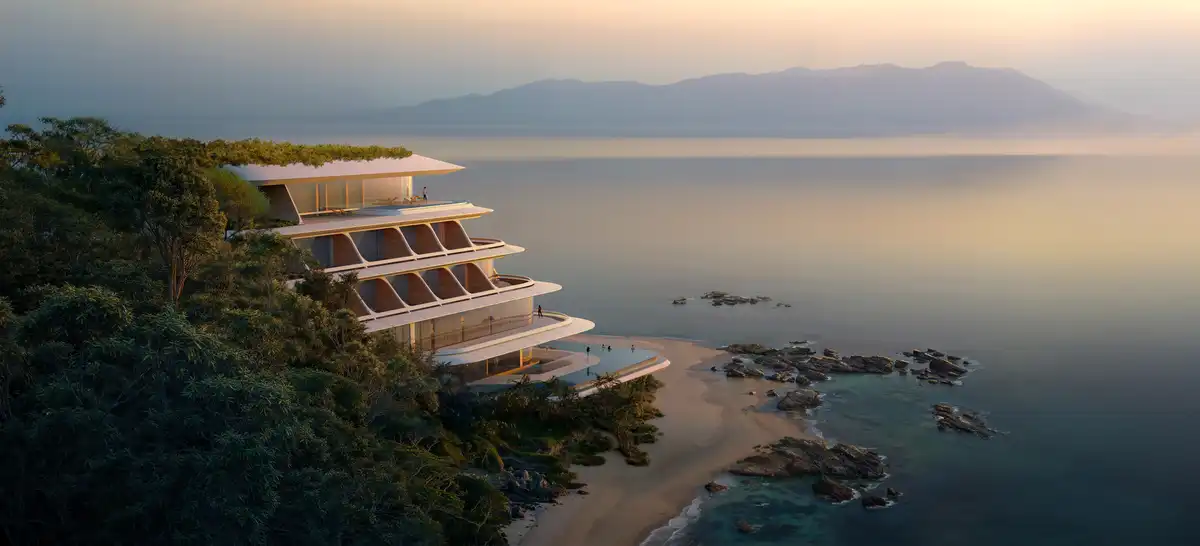
render : Negativ
NOT A HOTEL Setouchi, Sagi Island, Seto Inland Sea
Design: BIG – Bjarke Ingels Group
Dogo Hakuro Hotel, Matsuyama
Architects: CHIASMA FACTORY
Comments / photos for the Voco Osaka Central, Japan hotel building – New Japanese Architecture design by NAO Taniyama & Associates page welcome


